
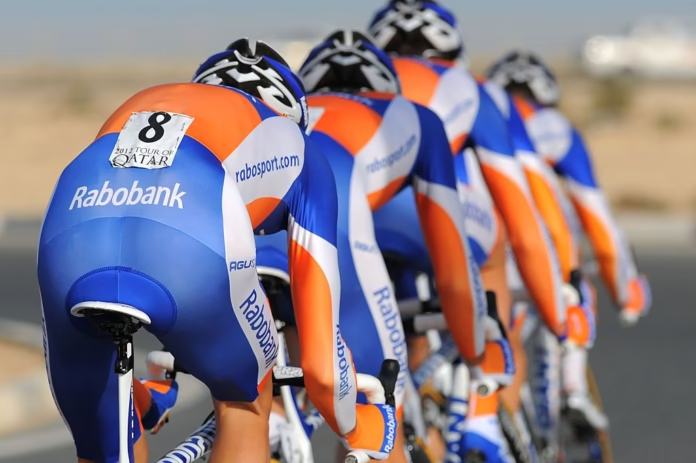
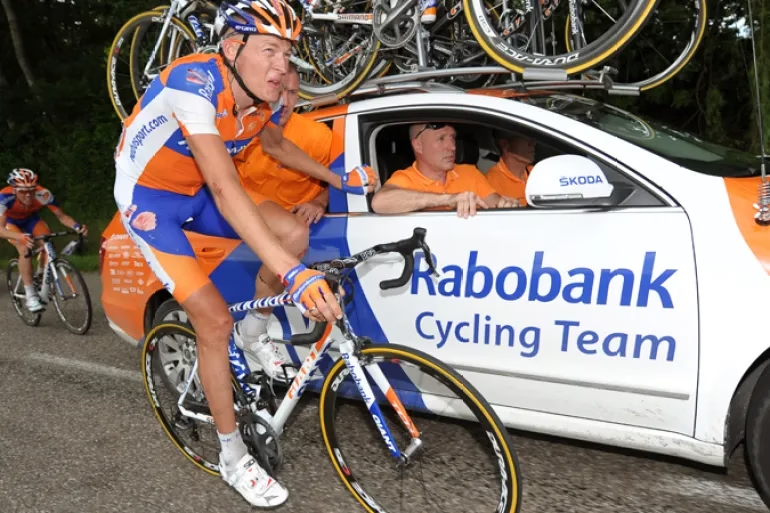
Rabobank was never the loudest superteam in men’s cycling, but it was one of the most recognisable. For more than 15 years, the orange-and-blue Dutch squad was a fixture in the peloton: steady, deep, highly organised and almost always present near the front of important races.
It did not have the single identity of Banesto with Miguel Indurain, Mapei in the Classics or US Postal around the Tour de France. Rabobank’s story was more complicated. It was a Dutch national project with international reach. It was a Classics team, a development system, a Grand Tour contender, a home for stage hunters, a producer of Dutch talent and, eventually, another team pulled into the credibility crisis of its era.
That is what makes Rabobank interesting. Its best years were built on consistency rather than short bursts of domination. Michael Boogerd, Erik Dekker, Oscar Freire, Michael Rasmussen, Denis Menchov, Robert Gesink, Bauke Mollema and others all gave the team different shapes at different times. Some represented Dutch road culture. Some gave Rabobank world-class finishing power. Some pushed it towards Grand Tour ambition. Some became part of the darker edge of the team’s legacy.
Rabobank, the sponsor, left the front of the jersey after 2012, but the team did not disappear. It moved through Blanco, Belkin, LottoNL-Jumbo, Jumbo-Visma and eventually Team Visma | Lease a Bike. That continuity matters. The modern Dutch superteam did not emerge from nowhere. Its roots run through Rabobank, through the old Dutch trade-team line, and through years of rebuilding after the sponsor walked away.
For more team-history context, see our men’s cycling history hub, Telekom team history, ONCE team history and Team Banesto history.
From Dutch trade-team roots to Rabobank
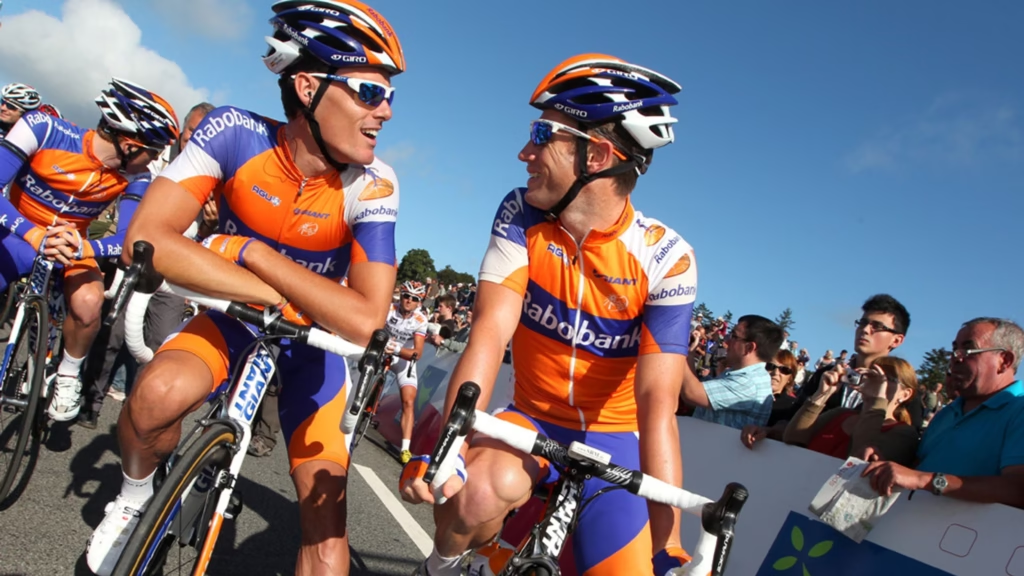
Rabobank’s men’s team did not appear out of thin air in 1996. It grew from a Dutch trade-team line that had already passed through several identities, including Kwantum, Superconfex, Buckler, WordPerfect and Novell. That older continuity gave Rabobank something many new sponsors lack: a ready-made cycling structure.
By the time Rabobank arrived, the team already had Dutch roots, Dutch staff, Dutch riders and a clear place in the European road calendar. The bank did not simply buy visibility. It attached itself to a national cycling institution.
That mattered because the Netherlands had always been a cycling country, but not always a Grand Tour-winning superpower on the men’s side. Dutch cycling had produced champions, classics riders and Tour stage winners, but Rabobank gave the country a stable, modern, corporate-backed team that could represent Dutch cycling across the full season.
The early Rabobank identity was immediately clear. Orange became a visual constant. Dutch riders were central. The team wanted to be competitive in the Classics, visible at the Tour and credible across the whole calendar. It was not a boutique squad chasing a narrow speciality. It was built to be present everywhere.
That broadness became both its strength and its limitation. Rabobank rarely disappeared. But it also spent much of its existence searching for the right balance between national development, one-day success, sprinting, stage hunting and Grand Tour ambition. That makes it a different kind of team-history case from the more concentrated Tour machinery explored in our US Postal team history.
The Rabobank identity
Rabobank’s identity was rooted in consistency. The team did not often look chaotic. It had depth, structure and an ability to place riders in meaningful positions across different types of races.
In the spring, it could attack the Ardennes and the cobbled Classics. In stage races, it had riders for breakaways, mountains and GC support. In the Tour, it often had Dutch visibility even when it did not have the outright favourite. In the development ranks, Rabobank became one of the most important pipelines in the Netherlands.
The team’s style was not always spectacular. It was often workmanlike, calculated and persistent. That suited Dutch cycling. Rabobank riders were frequently visible in long breakaways, hilly Classics, transition stages and hard one-day races. They were rarely anonymous.
The team also carried a particular national burden. Dutch fans wanted success, but not only any success. They wanted Dutch success. Rabobank had to win as an international team while still feeling recognisably Dutch. That made riders like Michael Boogerd and Erik Dekker especially important because they gave the project a face that matched the sponsor’s national identity.
At the same time, Rabobank understood that it needed international winners. Oscar Freire brought world-class finishing quality. Denis Menchov brought Grand Tour results. Michael Rasmussen gave the team mountain presence before his fall. The balance between Dutch identity and international recruitment was central to the team’s story.
Michael Boogerd and the Dutch face of the team
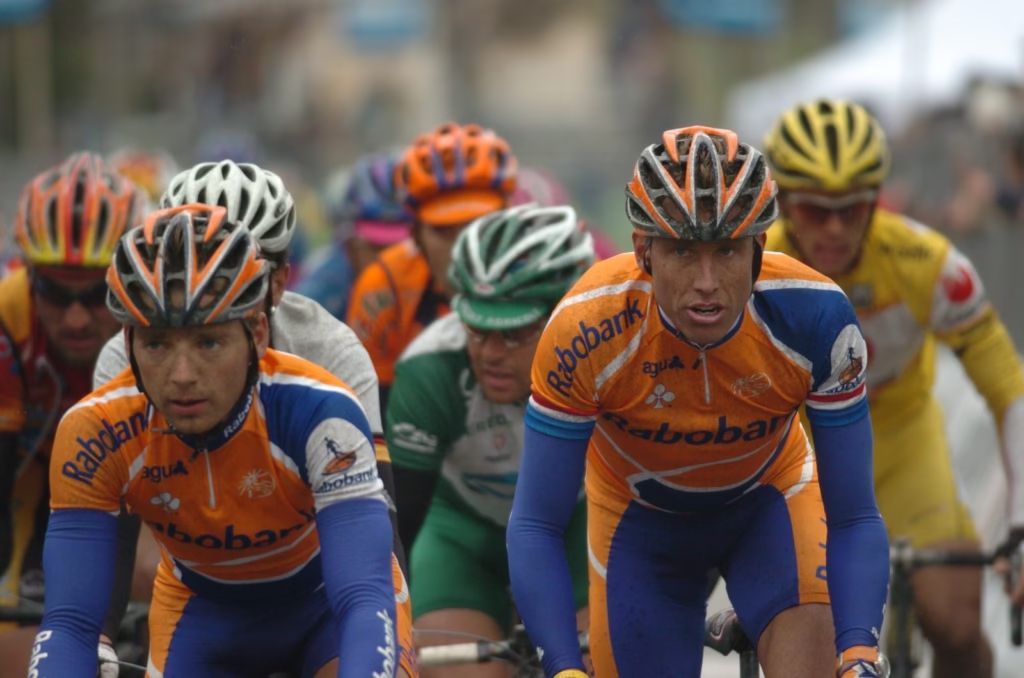
Michael Boogerd was one of the defining Rabobank riders because he embodied the team’s national identity. He was not the most decorated rider of his generation, but he was central to how Rabobank was understood.
Boogerd joined the team line before the Rabobank name and remained through its rise. He gave the Dutch public a rider they could follow at the Tour, in the Ardennes and across the spring. His 1996 Tour de France stage win gave the new Rabobank era an immediate point of visibility, while his later results made him one of the team’s most recognisable figures.
His 1999 Amstel Gold Race victory mattered far beyond the result sheet. A Dutch rider winning the Dutch World Cup classic in Rabobank colours was exactly the image the team wanted to project. It connected sponsor, country, rider and race in one moment.
Boogerd’s career also showed the limits of the Rabobank project in its earlier form. He was consistent, durable and often near the front, but he was not a rider who could dominate the Tour or win Monuments repeatedly. Rabobank could build around him, but it still needed more if it wanted to become a truly complete international team.
That is why Boogerd’s importance is symbolic as well as sporting. He made Rabobank feel Dutch. He kept the team visible. He gave it emotional weight at home. But he also sat at the point where Rabobank’s ambitions began to stretch beyond national representation.
For more background, see our feature on what happened to Michael Boogerd.
Erik Dekker and the Rabobank racing edge
If Boogerd was the face of Dutch consistency, Erik Dekker gave Rabobank a sharper racing edge. He was aggressive, intelligent and capable of winning big races through timing as much as raw superiority.
Dekker’s 2000 Tour de France was one of the great attacking performances of the era, with three stage wins that turned him into one of the race’s most visible riders. He was not a GC rider, but he understood how to exploit the Tour’s stage-by-stage rhythm. That suited Rabobank perfectly. The team could be relevant without carrying the entire burden of yellow jersey expectation.
His 2001 Amstel Gold Race victory and UCI World Cup success showed that he was more than a breakaway opportunist. Dekker could perform in the hardest one-day races, read finales and convert good positioning into major wins.
He helped define the Rabobank way of racing in the early 2000s. The team was not always built around overwhelming control. It could win by being present, persistent and tactically alert. Dekker made that approach look dangerous.
He also showed why Rabobank became so effective in the space between pure sprinting and pure climbing. The team often thrived in hard races where the strongest pure specialists cancelled each other out and a rider with timing, durability and nerve could win.
Oscar Freire and world-class finishing quality
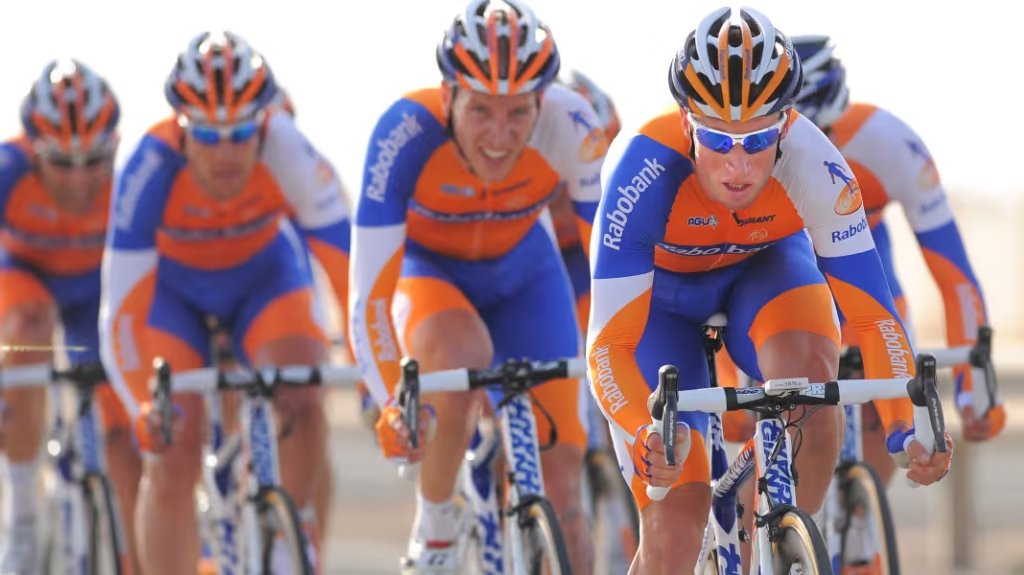
Oscar Freire changed what Rabobank could be. Before him, the team had strong Dutch identity and Classics depth. With Freire, it had one of the most efficient finishers of his generation.
Freire was not a normal sprinter. He did not need a giant lead-out train in the way some pure fast men did. He was subtle, skilful and capable of surviving races that eliminated more one-dimensional sprinters. That made him ideal for Rabobank, a team that was strong across terrain but not always built around blunt sprint control.
His victories in Milan-San Remo gave Rabobank genuine Monument status. Freire won La Primavera three times, and his 2004, 2007 and 2010 wins all carried the same lesson: he could disappear from view, conserve energy, read the final kilometres and finish with astonishing calm.
For Rabobank, Freire was proof that the team could win the biggest one-day races without abandoning its wider identity. It did not have to become a sprint factory. It could carry a rider who needed protection, timing and trust rather than a full mechanical train.
Freire also gave Rabobank an international quality that mattered. The team was Dutch, but it was not provincial. It could recruit and support a Spanish world champion, win Monuments and compete at the highest level without losing its national base.
Rabobank and the Classics
Rabobank’s Classics record is one of the strongest parts of its legacy. The team was never Mapei, but few squads were. Rabobank instead built a broad one-day presence across cobbles, Ardennes, Italian spring racing and late-season Classics.
Rolf Sørensen’s 1997 Tour of Flanders win gave the team an early Monument-level result. Boogerd’s Amstel Gold Race win in 1999 connected the team to its home race. Dekker’s Amstel success in 2001 added another Dutch layer. Freire’s Milan-San Remo victories gave Rabobank repeated success in one of cycling’s most prestigious races.
The team also had riders who were regularly visible in hard one-day racing even when they did not win. That matters because Classics depth is not only measured by victories. It is measured by how often a team can place riders in dangerous moves, influence the race and force others to respond.
Rabobank’s Classics strength came from variety. It had durable Dutch attackers, international finishers, climbers who could handle the Ardennes and all-rounders who were comfortable in messy tactical races. That made the team difficult to ignore across the spring.
The limitation was that Rabobank did not always turn presence into dominance. It could win big, but it was not the kind of squad that swallowed the Classics calendar whole. Its strength was recurring relevance rather than complete control.
For comparison with a more specialised Classics machine, see our Mapei team history.
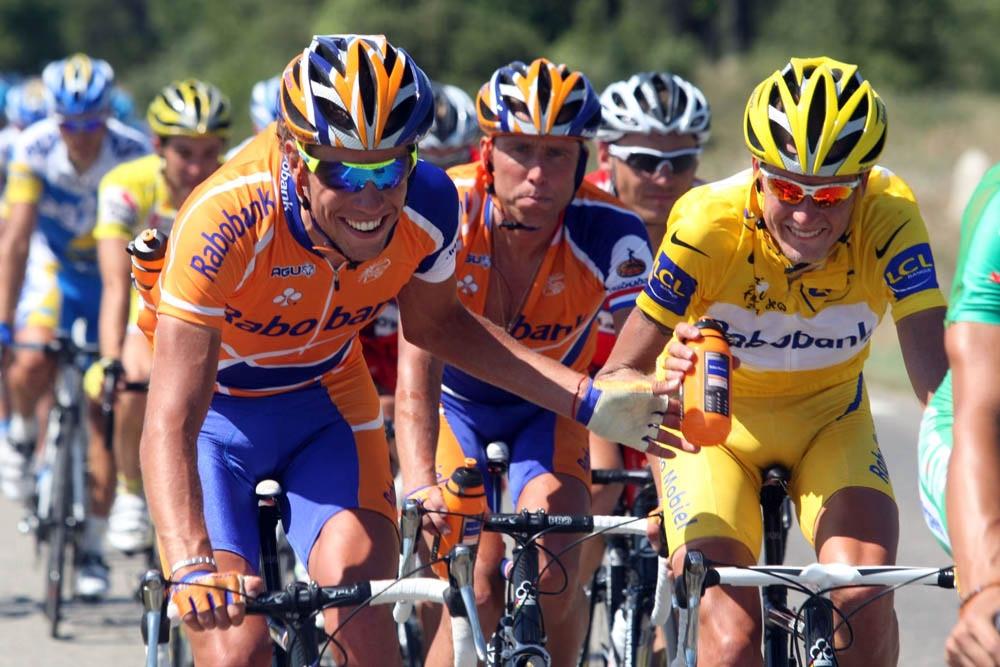 Photo Credit: Graham Watson
The Grand Tour question
For much of its history, Rabobank faced the same question: could a Dutch-backed team become a true Grand Tour force?
The team had Tour stage winners, climbers and solid GC riders, but turning that into a three-week victory project was harder. Rabobank was good enough to be visible, but visibility is not the same as winning the Tour. The team needed a rider who could survive the mountains, time trial well enough and carry leadership pressure.
Denis Menchov gave Rabobank the Grand Tour results it had been chasing. He won the Vuelta a España after Roberto Heras was disqualified from the 2005 race, then won the 2007 Vuelta outright and the 2009 Giro d’Italia. Those wins matter because they changed the team’s status. Rabobank was no longer only a Classics and stage-hunting team. It had Grand Tour victories on its record.
Menchov’s style suited the team in some ways. He was understated, controlled and often unreadable. He did not give Rabobank a charismatic national figure in the way Boogerd did, but he gave them results that Dutch cycling had been waiting for.
Still, Rabobank never became a Tour de France-winning machine. It got close to the centre of the race through Michael Rasmussen in 2007, but that story collapsed in the most damaging way. The team had Grand Tour success, but not the clean, stable Tour-winning identity that later generations of the same organisation would build under Jumbo-Visma.
For broader Tour-winning context, see our Tour de France winners list.
Michael Rasmussen and 2007
No Rabobank history can avoid Michael Rasmussen and the 2007 Tour de France. It is the moment where the team’s sporting ambition, internal control and the credibility crisis of the era collided.
Rasmussen was in the yellow jersey and looked capable of winning the Tour. He had already built his reputation as a climber and mountains classification winner, but in 2007 he moved from specialist to potential Tour champion. For Rabobank, it should have been the greatest moment in the team’s history.
Instead, he was withdrawn from the race by the team after issues around missed out-of-competition tests and incorrect whereabouts information. The image was brutal: the yellow jersey gone, the team exposed, and what might have been a historic Tour victory turned into one of the race’s defining scandals.
The episode damaged Rabobank deeply because it did not feel like an isolated sporting failure. It raised questions about governance, trust, medical culture, team control and the credibility of the wider peloton. It also came in a period when cycling was already struggling to contain the consequences of previous scandals.
Rasmussen later admitted to doping during his career, further darkening the legacy. The 2007 Tour remains the point where Rabobank’s image of consistency and professionalism broke most visibly.
For more on that story, see our feature on what happened to Michael Rasmussen.
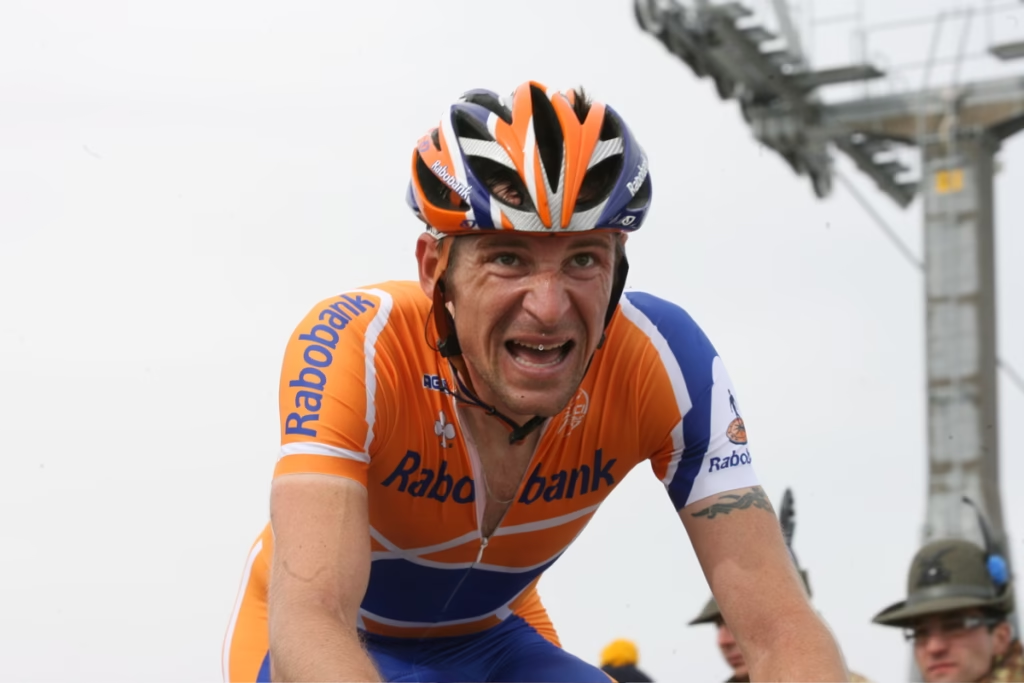
Denis Menchov and the Grand Tour wins
Denis Menchov is essential to Rabobank’s sporting history because he gave the team its biggest stage-race achievements. He was not always easy to read, but he was one of the most effective Grand Tour riders of his era.
His Vuelta victories and Giro d’Italia win gave Rabobank something it had long pursued: overall success in three-week races. The 2009 Giro, in particular, stands as one of the team’s clearest Grand Tour high points. Menchov survived pressure, time-trialled strongly and held firm when the race became tense.
For a Dutch-backed team, there was some irony in the fact that its biggest Grand Tour wins came through a Russian rider rather than a Dutch one. But that also reflected Rabobank’s evolution. It had started as a Dutch-anchored project, yet its ambitions required international leadership.
Menchov’s success also shows how Rabobank was trying to move beyond being a team of strong attackers and Classics riders. The team wanted to win the biggest stage races. It did not become the most dominant Grand Tour squad of its time, but Menchov gave it victories that cannot be dismissed.
The complexity is that those years sit inside a broader era of unstable trust in men’s cycling. Rabobank’s results belong to the record, but they also belong to a period where almost every major team history has to be told with caution.
Development and the Dutch production line
One of Rabobank’s most important contributions was not a single victory, but its development structure. The Rabobank Development Team became a key part of Dutch cycling’s talent pathway, helping prepare riders for the professional peloton.
That mattered because Rabobank was more than a top-level sponsor. It was a system. Young Dutch riders could see a route from national racing into one of the biggest teams in the world. That made the team central to the health of Dutch men’s cycling.
Riders such as Robert Gesink, Bauke Mollema, Lars Boom, Steven Kruijswijk and others all connect in different ways to the Rabobank generation and its wider ecosystem. They did not all have identical careers, but together they helped keep Dutch cycling present in Grand Tours, Classics and one-week races after the Boogerd-Dekker era.
This development focus is one reason the team’s legacy survived the sponsor’s departure. Rabobank had built knowledge, staff structures, talent pathways and a national expectation that could be carried into later identities.
The modern Visma | Lease a Bike organisation is far more international and far more performance-driven than old Rabobank, but the Dutch continuity is still visible. Development, structure and long-term planning were all part of the Rabobank inheritance.
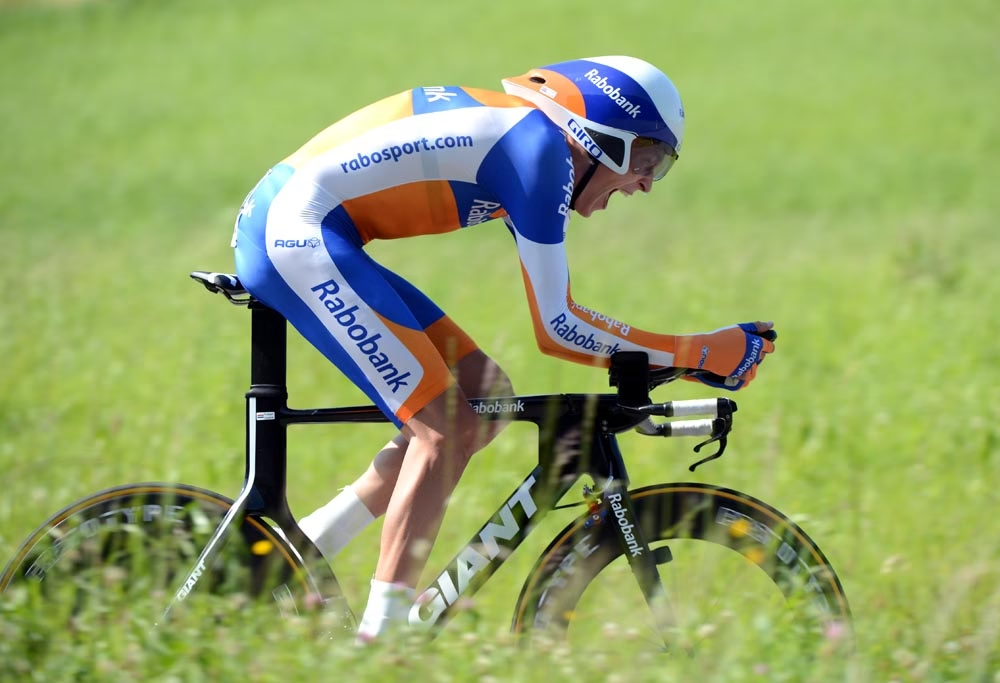
Robert Gesink, Bauke Mollema and the next Dutch GC hope
After Boogerd, Dekker and Freire, Rabobank needed a new generation. Robert Gesink and Bauke Mollema became central to that phase because they represented Dutch hopes in the mountains and Grand Tours.
Gesink was one of the most talented Dutch climbers of his generation. He had the build, engine and climbing ability to make Dutch fans dream of major GC results. Injuries, crashes and the unforgiving nature of Grand Tour racing made his career more complicated than early expectations suggested, but his importance to Rabobank was obvious. He gave the team a Dutch rider who could look at the high mountains without fear.
Mollema offered a different shape: durable, clever, consistent and hard to shake. He developed into a rider capable of Grand Tour top tens and stage wins, even if his biggest later moments came after leaving the Rabobank structure. He was part of the transition from old Dutch expectation to a more modern, internationally competitive generation.
Together, Gesink and Mollema showed Rabobank trying to renew itself. The team was no longer only about Boogerd’s Ardennes presence, Dekker’s attacks or Freire’s finishing. It was looking for Dutch riders who could survive three weeks near the top of the sport.
The challenge was that hope did not always become domination. Rabobank could produce and support serious riders, but turning them into Tour-winning leaders remained difficult.
Lars Boom and the cyclocross-road connection
Lars Boom added another thread to the Rabobank story: the Dutch cyclocross-road link. Boom arrived with a huge reputation from cyclocross and became one of the riders who gave Rabobank a harder edge on rough roads, short efforts and Classics-style terrain.
He was not a conventional Grand Tour leader. His value was in versatility, power and technical skill. Riders like Boom helped Rabobank stay connected to a wider Dutch cycling culture, where cyclocross, road racing and all-round bike handling overlapped.
Boom’s later Tour stage win on the cobbles came after the Rabobank sponsor era, but the rider himself was part of the pathway and identity that Rabobank helped sustain. He represented the sort of talent the Dutch system could produce: not always neatly categorised, but highly useful in the most awkward races.
That mattered because Rabobank’s best years were rarely about one simple formula. The team needed climbers, Classics riders, time-triallists, breakaway riders and technical specialists. Boom fitted that broadness.
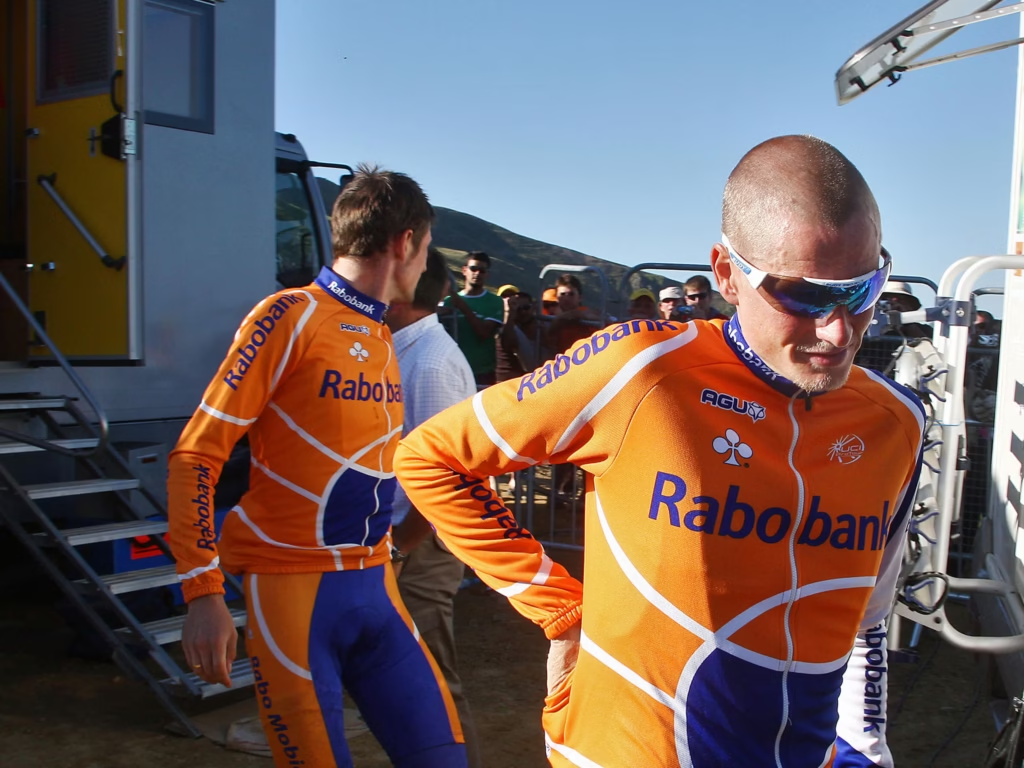
Rabobank and the Tour de France
Rabobank’s Tour de France history is mixed. The team was almost always visible, but it never won the Tour overall. That creates a strange legacy.
On one hand, the team produced stage wins, mountain stories, Dutch interest and major moments. Boogerd won a Tour stage. Dekker lit up the race. Freire gave the team sprint and classics quality. Rasmussen became one of the central figures of the 2007 race before everything collapsed. Menchov gave the team a credible GC option.
On the other hand, Rabobank never became the definitive Tour force it sometimes seemed to be chasing. It did not build the kind of sustained yellow-jersey machinery later associated with Team Sky, Jumbo-Visma or UAE Team Emirates-XRG. Its Tour presence was strong but incomplete.
That incompleteness is part of the team’s identity. Rabobank was too good to be seen as a supporting cast, but not quite successful enough at the Tour to be remembered as a Tour dynasty. It existed in the difficult space between national hope and global domination.
The modern version of the team eventually solved that problem through Jonas Vingegaard and Jumbo-Visma. But that was after years of reinvention. Rabobank supplied the roots, not the final Tour-winning form.
The sponsor withdrawal
Rabobank’s withdrawal after 2012 was a major moment because the sponsor had become part of cycling’s furniture. The team had been so stable for so long that its departure felt like the end of an era.
The bank’s decision came against the background of cycling’s wider doping crisis and a loss of confidence in the sport. Rabobank had spent years attached to a team that delivered visibility, but that visibility had become harder to separate from scandal, suspicion and reputational risk.
The important detail is that the team structure did not collapse immediately. Rabobank continued to fund the squad temporarily while it raced under the Blanco name in 2013, buying time for a new sponsor. That decision helped preserve the organisation even as the old identity disappeared.
Belkin then arrived, before the team moved into the LottoNL-Jumbo era and eventually became Jumbo-Visma and Team Visma | Lease a Bike. In hindsight, that survival was crucial. Without it, one of the most successful modern team structures in cycling might have disappeared before it had the chance to reinvent itself.
The Rabobank name left the jersey, but the team’s line continued.
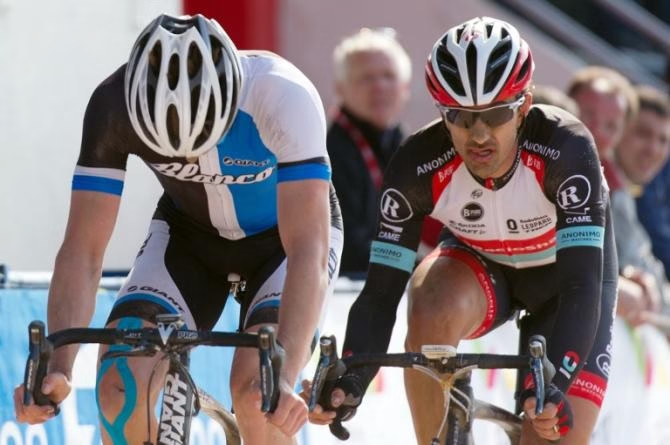
Blanco, Belkin and the road to Jumbo-Visma
The post-Rabobank years are part of the Rabobank story because they show how the team adapted after losing its defining sponsor.
Blanco was a strange identity: a team racing with a blank space where a title sponsor should have been. But it also represented survival. The riders, staff and organisation were still there. The team had not been wiped away.
Belkin gave the squad a new commercial identity, but only briefly. The sponsorship ended after 2014, forcing another reset. That could have been fatal for a less established structure. Instead, the team found a new path through LottoNL-Jumbo.
The LottoNL-Jumbo years were not instantly dominant. In fact, the team had to rebuild from a weaker position, collecting points, developing riders, changing culture and building towards a more ambitious future. That later transformation into Jumbo-Visma is one of modern cycling’s great organisational rebuilds.
This is where Rabobank’s deeper legacy matters. The old team had flaws, but it also left behind infrastructure, Dutch identity and institutional memory. The later organisation had to change drastically, but it did not start from zero.
For a modern overview of how the top-level calendar and team structure works, see our guide to the men’s WorldTour.
How Rabobank compares with other great teams
Rabobank does not fit neatly with the teams it is often compared to.
Banesto was built around Indurain and Tour control. Telekom became a German Grand Tour and sprinting powerhouse. Mapei became the defining Classics superteam. US Postal built one of the most infamous Tour-focused structures in the sport. Rabobank was different from all of them.
It was more balanced than Banesto, less dominant in the Classics than Mapei, less Tour-obsessed than US Postal and less explosive as a national phenomenon than Telekom. Its strength was being present across almost everything.
That made Rabobank less mythic, but more durable. It was not a team of one story. It had many: Boogerd at Amstel, Dekker at the Tour, Freire at San Remo, Menchov in Grand Tours, Rasmussen in 2007, Gesink as Dutch hope, the development team, the sponsor withdrawal and the later rebirth through Jumbo-Visma.
The team’s legacy is therefore not about one clean era of dominance. It is about continuity, reinvention and the difficulty of building a national cycling project in a sport that was changing around it.
For comparison, see our US Postal team history, Festina team history and HTC-Columbia men’s team history.
The doping shadow
Rabobank cannot be written about honestly without acknowledging the doping shadow. That does not mean reducing the entire team to scandal, but it does mean placing its results in the reality of the era.
The Rasmussen case was the most visible rupture. A rider in yellow being withdrawn from the Tour by his own team is not a footnote. It is central to how Rabobank is remembered. Later admissions and wider revelations only deepened the damage.
Rabobank’s story also overlaps with a period when many teams, riders and institutions were forced to confront how normalised doping had become. Some team histories can be told as clean lines of sporting progress. Rabobank’s cannot. Its consistency, success and development work sit alongside the uncomfortable fact that the sport itself was compromised.
That complexity is not unique to Rabobank. Telekom, Festina, US Postal and other major teams all carry their own credibility problems. But Rabobank’s case is particularly sharp because the team’s public image was built on stability, professionalism and national trust.
The sponsor’s eventual exit showed how damaging that loss of trust had become. The team survived, but the Rabobank brand no longer wanted to stand at the front of the men’s road project.
Rabobank’s place in Dutch cycling
Rabobank’s place in Dutch cycling remains huge. It gave the Netherlands a top-level men’s team that felt like a national reference point for more than a decade. It supported riders, created pathways and kept Dutch cycling visible across the sport’s biggest races.
Even when the team relied on international leaders, it still functioned as the Dutch peloton’s central institution. For young riders, it was a destination. For fans, it was the team. For the sponsor, it was a way to connect with cycling culture at home and abroad.
The later success of Jumbo-Visma and Team Visma | Lease a Bike changed the way the lineage is viewed. What once looked like the end of Rabobank now looks more like a painful middle chapter in a longer story. The old team had to lose its identity before the organisation could rebuild itself into something much stronger.
That does not absolve the past. But it does make Rabobank historically important. It was the bridge between older Dutch trade-team cycling and the modern Dutch-led superteam era.
For another regional identity built on a very different model, see our Euskaltel-Euskadi team history.
Rabobank and the women’s team connection
Although this article focuses on the men’s team, the Rabobank name also became deeply important in women’s cycling. The Rabobank women’s team later provided one of the strongest structures in the sport and became closely associated with riders such as Marianne Vos and the Dutch women’s boom.
That matters because Rabobank’s cycling identity was broader than one men’s squad. The sponsor became linked with Dutch cycling development, national pride and world-class results across disciplines and genders.
The women’s team had a different arc and deserves to be judged on its own terms, but the shared sponsor identity adds another layer to the Rabobank name. In Dutch cycling, Rabobank was not just a men’s WorldTour jersey. It became part of a wider national cycling infrastructure.
For more on that side of the story, see our Rabobank Women’s Team history and our wider women’s cycling team history guide.
Key Rabobank men’s riders
| Rider | Why they mattered |
|---|---|
| Michael Boogerd | Dutch face of the team, Amstel Gold Race winner, long-term leader |
| Erik Dekker | Tour stage hunter, Amstel winner, UCI World Cup success |
| Oscar Freire | Milan-San Remo winner, world-class finisher, international star |
| Denis Menchov | Vuelta and Giro winner, Rabobank’s main Grand Tour success story |
| Michael Rasmussen | Elite climber, 2007 Tour yellow jersey crisis |
| Robert Gesink | Dutch climbing hope and long-term GC figure |
| Bauke Mollema | Part of the next Dutch GC generation |
| Lars Boom | Cyclocross-road crossover and Classics-style power |
| Rolf Sørensen | Early Monument success with Tour of Flanders victory |
| Robbie McEwen | Early Rabobank sprinter before later success elsewhere |
Key Rabobank men’s victories and moments
| Year | Moment |
|---|---|
| 1996 | Rabobank takes over as title sponsor of the Dutch team structure |
| 1996 | Michael Boogerd wins a Tour de France stage |
| 1997 | Rolf Sørensen wins the Tour of Flanders |
| 1999 | Michael Boogerd wins Amstel Gold Race |
| 2000 | Erik Dekker wins three stages at the Tour de France |
| 2001 | Erik Dekker wins Amstel Gold Race and the UCI World Cup |
| 2004 | Oscar Freire wins Milan-San Remo |
| 2005 | Denis Menchov becomes Vuelta a España winner after Roberto Heras is disqualified |
| 2007 | Oscar Freire wins Milan-San Remo again |
| 2007 | Michael Rasmussen is withdrawn from the Tour while in yellow |
| 2007 | Denis Menchov wins the Vuelta a España |
| 2009 | Denis Menchov wins the Giro d’Italia |
| 2010 | Oscar Freire wins Milan-San Remo for the third time |
| 2012 | Rabobank announces its withdrawal as title sponsor |
| 2013 | Team continues as Blanco before Belkin arrives |
| 2015 onwards | LottoNL-Jumbo begins the pathway towards Jumbo-Visma and Visma |
-
 Photo Credit: Canyon SRAM (supplied media release)
 -
 Photo Credit: Park Tool

Why Rabobank still matters
Rabobank still matters because it was one of the teams that held the peloton together through a long period of change. Sponsors came and went, teams collapsed, identities shifted and the sport’s credibility was repeatedly damaged. Rabobank remained present for years, giving Dutch cycling a stable centre.
It was not always the best team in the world. It was not always the cleanest story. It did not deliver the Tour de France victory that Dutch fans wanted. But it won major Classics, took Grand Tour victories, developed talent and created a structure that survived beyond the sponsor itself.
The modern Visma | Lease a Bike organisation is not simply Rabobank with a new kit. It is a changed team, built in a different performance environment and shaped by different leadership. But the lineage matters. Without Rabobank, the later Dutch team structure would not look the same.
Rabobank’s story is therefore one of consistency, ambition and reinvention. It began as the orange face of Dutch cycling, became a deep international team, stumbled through scandal, lost its sponsor and still left behind the foundations for one of the most successful team rebuilds in modern cycling.
Final verdict
Rabobank’s men’s team history is not clean enough to be romanticised and not simple enough to be dismissed. It was a serious team with serious achievements. It won Monuments, Grand Tours, Tour stages and Classics. It developed Dutch riders and gave the Netherlands a central men’s team for more than 15 years.
It also carried the marks of its era. The Rasmussen crisis, the sponsor withdrawal and the wider doping shadow mean Rabobank cannot be treated as a purely nostalgic story of orange jerseys and Dutch reliability. Its legacy is layered.
That layering is what makes the team worth remembering. Rabobank was consistent without being predictable. Dutch without being closed. Strong in the Classics without being only a Classics team. Ambitious in Grand Tours without becoming a Tour dynasty. Damaged by scandal without disappearing completely.
The team’s greatest historical importance may be what came after. Rabobank left the front of the jersey, but the organisation survived, rebuilt and eventually became part of the Visma | Lease a Bike lineage. The modern Dutch superteam’s success does not erase the old Rabobank story. It gives it a second frame.
Rabobank was the long middle chapter between old Dutch trade-team cycling and the modern era of Dutch-led WorldTour dominance. That is its real place in cycling history.
For more cycling history features, visit our men’s cycling history hub, including 7-Eleven team history, La Vie Claire team history and TI-Raleigh team history.

