

The United States has six riders on the 2026 Tour de France start list, and it is a stronger group than the headline number first suggests. There is no single American yellow jersey favourite, but the USA presence is woven into some of the most important teams in the race.
Brandon McNulty is part of Tadej Pogačar’s UAE Team Emirates XRG support structure. Matteo Jorgenson and Sepp Kuss are central to Jonas Vingegaard’s mountain and stage-race platform at Team Visma | Lease a Bike. Quinn Simmons gives Lidl-Trek a durable attacking option. Sean Quinn fits into EF Education-EasyPost’s aggressive stage-hunting plan. Matthew Riccitello brings climbing talent and long-term GC potential to Decathlon CMA CGM Team.
That gives American fans a proper Tour to follow. The overall win may be led by Slovenian, Danish, Belgian and French storylines, but the USA riders at the 2026 Tour could shape the race in the mountains, in breakaways, in the team time-trial and across the long tactical days that decide who has control.
For the wider race picture, see our Tour de France 2026 full route guide and the full start list for the Tour de France 2026.
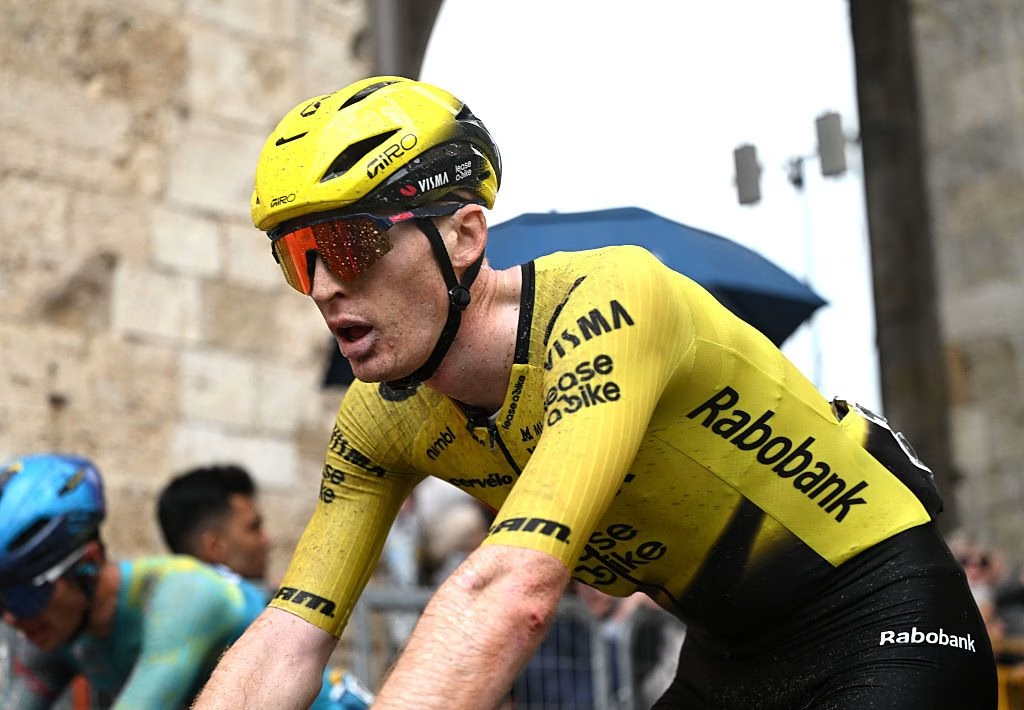
Quick answer: which American riders are at the 2026 Tour de France?
The American riders at the 2026 Tour de France are Brandon McNulty, Matteo Jorgenson, Sepp Kuss, Quinn Simmons, Sean Quinn and Matthew Riccitello.
| Rider | Team | Likely role |
|---|---|---|
| Brandon McNulty | UAE Team Emirates XRG | Pogačar support, climbing domestique, time-trial strength |
| Matteo Jorgenson | Team Visma | Lease a Bike | Vingegaard support, GC insurance, stage option |
| Sepp Kuss | Team Visma | Lease a Bike | Mountain domestique, high-altitude support, climbing specialist |
| Quinn Simmons | Lidl-Trek | Breakaway rider, rouleur, classics-style attacker |
| Sean Quinn | EF Education-EasyPost | Stage-hunting support, breakaway option, all-round worker |
| Matthew Riccitello | Decathlon CMA CGM Team | Young climber, stage-race prospect, mountain support |
The American riders at the 2026 Tour de France
Brandon McNulty
Brandon McNulty starts the 2026 Tour in one of the most important support roles in the race. UAE Team Emirates XRG are built around Tadej Pogačar’s bid for another yellow jersey, and McNulty gives that project exactly the kind of rider a Tour favourite needs: steady climbing power, time-trial strength and the ability to work deep into decisive stages.
McNulty is not merely a domestique who happens to be American. He is one of the most complete support riders in the peloton. He can help UAE in the opening team time-trial, ride on the front in the mountains and bridge difficult gaps when the race becomes unstable.
His own chances will depend on UAE’s race situation. If Pogačar is under pressure, McNulty’s job will be service. If UAE gain control and the race opens on a transition or mountain day, McNulty has the engine to become more than a helper.
For US fans, he is one of the riders most likely to be visible when the biggest names are fighting for control. For more on the type of support role he could play, see our guide to Tour de France 2026 domestiques who could decide the race.
Matteo Jorgenson
Matteo Jorgenson is arguably the highest-profile American rider at the 2026 Tour. His transformation at Team Visma | Lease a Bike has made him much more than a strong support rider. He has become a stage-race winner, a one-day threat and a rider with enough range to influence almost any type of hard stage.
At this Tour, his main role is likely to centre on Jonas Vingegaard. Visma need riders who can survive deep into the mountains, help manage difficult tactical situations and keep the pressure on UAE. Jorgenson fits that perfectly.
What makes him especially interesting is that he can also be used offensively. If Visma want to put UAE under pressure before the final climb, Jorgenson is the kind of rider they can send up the road. If Vingegaard needs support late in a mountain stage, Jorgenson can be there. If the race opens into a chaotic breakaway day, he has the quality to chase his own result.
He is not at the Tour as a pure GC leader, but he is one of the American riders most capable of creating a major race moment. His specific role is covered in more detail in our feature on Matteo Jorgenson at the Tour de France 2026.
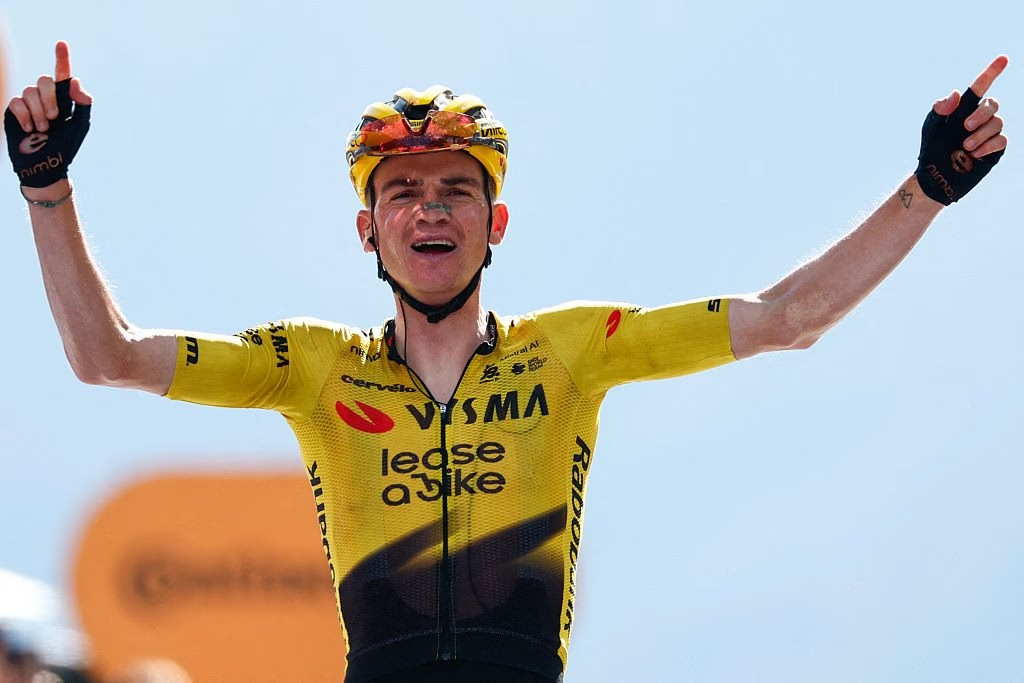
Sepp Kuss
Sepp Kuss remains one of the most important American Grand Tour riders of his generation. His 2023 Vuelta a España victory proved that he could do more than serve others, but the Tour de France has often shown his value most clearly as an elite mountain domestique.
That role may not sound glamorous, yet it is one of the hardest jobs in cycling. In the high mountains, Kuss can keep a leader calm, control pace, follow dangerous moves and make the final selection smaller before the favourites begin their own attacks.
At the 2026 Tour, Kuss gives Visma an extra layer of climbing security around Vingegaard. He also gives the team a rider who understands the rhythm of three-week racing better than almost anyone. That matters in the final week, when form, fatigue and judgement can shift quickly.
Kuss is unlikely to be judged by his own GC position. His Tour will be judged by how often he is still present when the race is at its hardest. For newer fans, our explainer on what a domestique does at the Tour de France gives useful context for why riders like Kuss can be decisive without winning the stage.
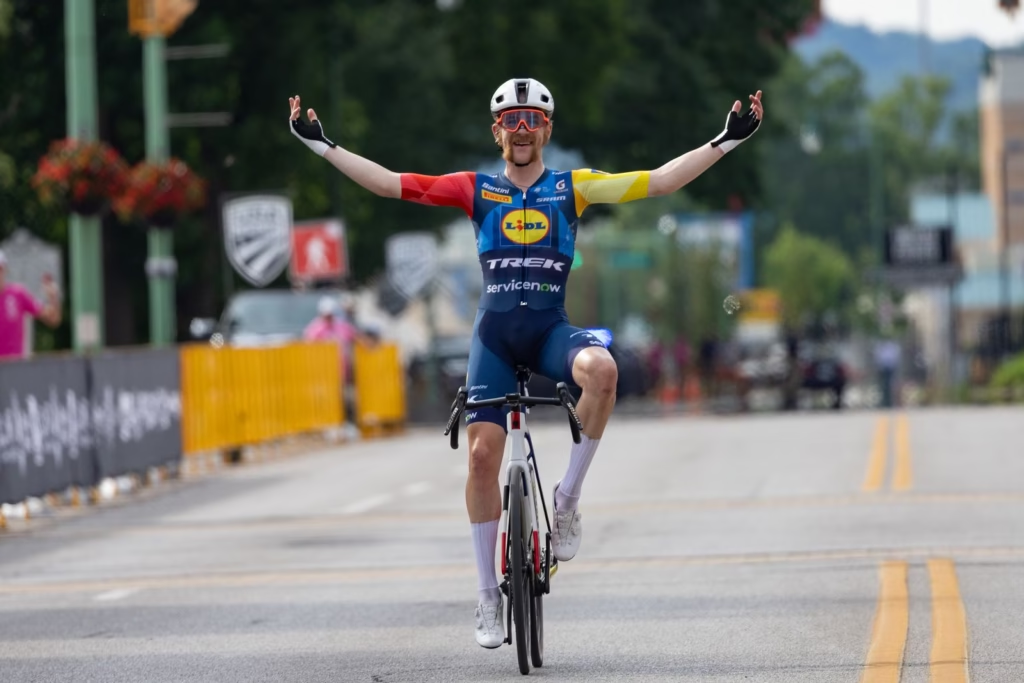
Quinn Simmons
Quinn Simmons gives Lidl-Trek a different kind of American presence. He is not in the race to ride anonymously through the mountains. His best value comes on rough, rolling, attritional days where power, positioning and aggression matter more than pure climbing numbers.
That makes him a natural breakaway rider. Simmons can take on long-range moves, contribute heavily in a group and make the race uncomfortable on terrain that looks simple on paper. Those stages are often where the Tour becomes harder than expected: wind, heat, rolling roads, nervous peloton, teams reluctant to chase and a breakaway that suddenly has a chance.
Lidl-Trek arrive with Juan Ayuso, Mads Pedersen and a deep support structure, so Simmons’ freedom may change stage by stage. On days for Pedersen, he may work. On harder days where the sprinters are under pressure, he could become part of the action himself.
For American fans, Simmons is one of the easiest riders to follow because his racing style is visible. He does not tend to hide when the race opens. He fits neatly into the broader group of Tour de France 2026 stage hunters to watch.
Sean Quinn
Sean Quinn starts with EF Education-EasyPost, a team that should suit his profile. EF are not at the Tour to control the race for a single yellow jersey contender. They are built to attack, adapt and find opportunities through riders such as Richard Carapaz and Ben Healy.
Quinn fits into that structure as a durable all-rounder. He can work for the team’s leaders, support breakaway plans and potentially join moves himself when the terrain is right. He has the engine to be useful on rolling stages and enough race craft to fit into EF’s more unpredictable style.
This is not the easiest role to explain to casual viewers, because the work is not always visible at the finish. A rider like Quinn may spend energy positioning a leader, helping form a move, shutting down a dangerous gap or keeping a teammate protected before the decisive phase.
But on a team built around opportunism, those roles matter. If EF are successful at this Tour, Quinn is likely to be part of the platform that makes it happen. The wider squad context is covered in our Tour de France 2026 team-by-team guide.
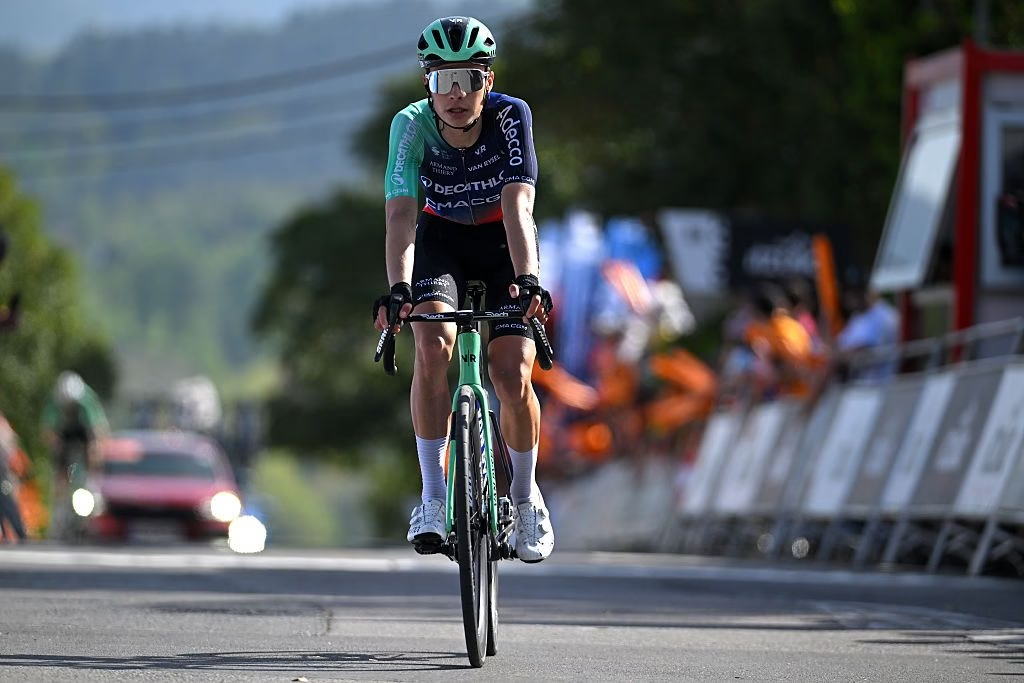
Matthew Riccitello
Matthew Riccitello is the youngest and most obviously developmental American storyline at the 2026 Tour. He brings a different profile from the rouleurs and support riders elsewhere in the USA group. Riccitello is a climber and stage-race prospect, the type of rider whose Tour value may grow across the next few seasons.
At Decathlon CMA CGM Team, his immediate role will depend on how the team balances its leaders. Paul Seixas brings huge French attention, Olav Kooij gives the team sprint opportunities, and the squad has enough depth to approach the race in several ways. Riccitello’s job may involve mountain support, learning the rhythm of the Tour and taking opportunities if the race breaks open.
For a young climber, the Tour is both a test and an education. The challenge is not simply one mountain stage. It is the repetition: three weeks of pressure, heat, transfers, positioning fights and recovery. Riccitello’s performance should be read with that in mind.
He may not be the American rider most likely to win a stage in 2026, but he could be one of the most important for the future. For the broader climbing picture, see our Tour de France 2026 climbers guide.
Who is the best American rider at the 2026 Tour de France?
Matteo Jorgenson is the most complete American rider on the 2026 Tour start list, while Sepp Kuss remains the most proven American climber in Grand Tour support roles.
Jorgenson’s range gives him the edge if the question is about overall influence. He can climb, time trial, attack, support Vingegaard and take advantage of tactical openings. Kuss is more specialised but invaluable in the high mountains.
Brandon McNulty also belongs in this conversation because of his role at UAE. He may not have the same freedom as Jorgenson, but he could be central to the strongest team in the race.
For the wider GC picture, including where Jorgenson fits among the broader contender group, see our Tour de France 2026 GC favourites ranked.
Which American rider is most likely to win a stage?
Matteo Jorgenson looks the strongest American stage-win candidate because he has the broadest route profile. He can win from a breakaway, survive hard climbing days and handle stages that require tactical judgement rather than a pure sprint.
Quinn Simmons is the next obvious option from a breakaway, especially on rolling or windy stages where Lidl-Trek may give him freedom. Brandon McNulty can win if UAE’s tactics allow him to ride for himself, though that depends heavily on Pogačar’s yellow jersey situation.
Sepp Kuss could win in the mountains if Visma use him offensively, but his primary role should remain Vingegaard support. Riccitello is more of a long-term bet, while Sean Quinn’s chances depend on EF’s tactical freedom.
 Photo Credit: Getty
American riders to watch by stage type
| Stage type | American riders to watch | Why |
|---|---|---|
| Team time-trial | Brandon McNulty, Matteo Jorgenson, Quinn Simmons | All three should be important to strong team efforts |
| High mountains | Sepp Kuss, Matteo Jorgenson, Brandon McNulty, Matthew Riccitello | The strongest USA climbing group in the race |
| Rolling breakaway stages | Quinn Simmons, Sean Quinn, Matteo Jorgenson | Best fit for aggressive, durable American riders |
| Transitional stages | Quinn Simmons, Sean Quinn, Brandon McNulty | Good terrain for rouleurs and opportunists |
| GC pressure days | Jorgenson, Kuss, McNulty | All three support major yellow jersey projects |
| Final week | Kuss, Jorgenson, McNulty, Riccitello | Recovery and climbing depth become more important |
The race starts with a Barcelona team time-trial, which immediately makes riders such as McNulty and Jorgenson important to their teams’ early GC position. Our Tour de France 2026 team time-trial explained guide breaks down why that stage is more than a ceremonial opener.
Why there is no obvious American yellow jersey campaign
The USA has several high-quality riders at the 2026 Tour, but none arrive as a pure team leader built around winning the race overall.
That is partly because the American riders are embedded inside major team structures. Jorgenson and Kuss are crucial to Visma’s plan for Vingegaard. McNulty is part of UAE’s plan for Pogačar. Simmons works inside a Lidl-Trek team with Ayuso and Pedersen. Quinn fits EF’s attacking strategy. Riccitello is still developing in a Decathlon squad with several priorities.
That does not weaken the American story. It changes it.
Instead of one rider trying to win yellow, the USA group could influence the race through support roles, breakaways and mountain tactics. In a Tour likely shaped by Pogačar, Vingegaard and Evenepoel, that still matters. The riders who support those leaders often decide when attacks are possible and when rivals are isolated.
For more on Vingegaard’s wider Tour challenge, see our feature on Jonas Vingegaard at the Tour de France 2026.
What this says about US cycling
American men’s cycling is in a more interesting place than it was a few years ago. There is no single Lance Armstrong-era comparison to be made, and that is probably healthier. The current USA group is broader, more varied and more embedded across the top European teams.
Kuss has already won a Grand Tour. Jorgenson has become a serious stage-race and Classics-level rider. McNulty is trusted inside the strongest team in the world. Simmons remains a visible attacking presence. Sean Quinn gives EF another American who can handle hard racing. Riccitello brings the next-generation climbing story.
That is a strong foundation. It may not produce a yellow jersey challenge in 2026, but it gives American fans multiple ways into the race.
There is also a historical line here. Greg LeMond remains the defining American figure at the Tour, not only because he won it three times, but because he changed what a non-European rider could represent in the race. His story is covered in our feature on Greg LeMond, the American who changed the Tour story, while our brief history of the men’s Tour de France places that era in the wider development of the race.
FAQs: American riders at the 2026 Tour de France
How many American riders are at the 2026 Tour de France?
There are six American riders on the 2026 Tour de France start list: Brandon McNulty, Matteo Jorgenson, Sepp Kuss, Quinn Simmons, Sean Quinn and Matthew Riccitello.
Is Matteo Jorgenson riding the 2026 Tour de France?
Yes. Matteo Jorgenson is riding for Team Visma | Lease a Bike and is expected to be one of Jonas Vingegaard’s key support riders, with possible freedom on selective stages.
Is Sepp Kuss riding the 2026 Tour de France?
Yes. Sepp Kuss is riding for Team Visma | Lease a Bike and should play a major role in the high mountains.
Is Brandon McNulty riding the 2026 Tour de France?
Yes. Brandon McNulty is riding for UAE Team Emirates XRG, where he is expected to support Tadej Pogačar’s general classification campaign.
Is Quinn Simmons riding the 2026 Tour de France?
Yes. Quinn Simmons is riding for Lidl-Trek and should be one of the most visible American breakaway options.
Is Matthew Riccitello riding the 2026 Tour de France?
Yes. Matthew Riccitello is riding for Decathlon CMA CGM Team and gives the USA a young climbing prospect in the race.
Which American rider can win a stage at the 2026 Tour de France?
Matteo Jorgenson is the strongest American stage-win candidate, with Quinn Simmons a realistic breakaway option. Brandon McNulty and Sepp Kuss could also win if their team tactics allow them freedom.
Which teams have American riders at the 2026 Tour de France?
UAE Team Emirates XRG, Team Visma | Lease a Bike, Lidl-Trek, EF Education-EasyPost and Decathlon CMA CGM Team all have American riders on their 2026 Tour squads.
Final word
American cycling at the 2026 Tour de France is not built around one obvious GC leader, but it is still deeply relevant to the race.
Brandon McNulty could be vital to Pogačar’s control of the Tour. Matteo Jorgenson and Sepp Kuss give Visma two American riders who can shape the mountain battle around Vingegaard. Quinn Simmons and Sean Quinn bring attacking depth on the harder middle-ground stages. Matthew Riccitello adds a young climber with room to grow.
That makes the USA group one of the more tactically interesting national blocks in the race. The biggest American success may not come from an overall podium. It may come from a mountain move, a breakaway stage, a decisive domestique turn or a young rider quietly proving that he belongs.
For American fans, that is still plenty to follow.

