
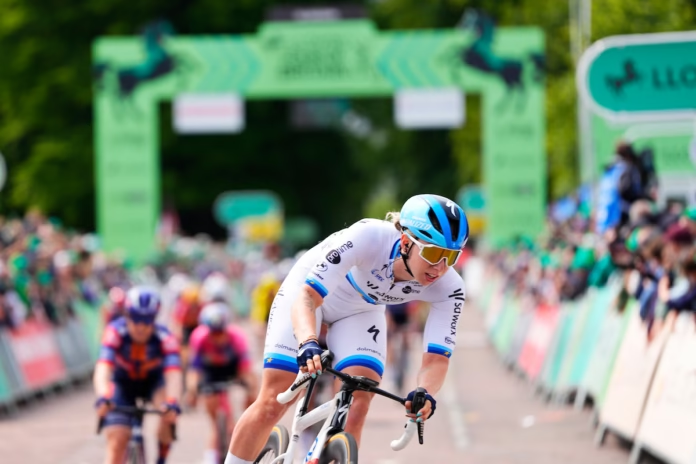
The Tour of Britain Women returns from Wednesday 19 August to Sunday 23 August 2026, bringing five days of Women’s WorldTour racing to England and Wales.
It is Britain’s leading women’s professional stage race and one of the easiest major cycling events to watch in person. The roads are open to spectators, there are no stadium tickets required and the race passes through towns, villages, climbs and city centres across the country.
The 2026 edition begins in Cockermouth, visits Blackpool and North Wales, crosses Mid Wales and finishes with a stage around Royal Leamington Spa.
For first-time viewers, the basic idea is simple: each stage has its own winner, but the rider with the lowest total time across all five stages wins the overall race.
Our full Tour of Britain Women 2026 route guide provides a closer look at all five stages and where the race is most likely to be decided.
 Photo Credit: Alex Whitehead/SWpix.com
Tour of Britain Women 2026 at a glance
| Detail | Information |
|---|---|
| Dates | 19-23 August 2026 |
| Number of stages | Five |
| Race level | UCI Women’s WorldTour |
| Countries visited | England and Wales |
| Opening stage | Cockermouth to Cockermouth |
| Final stage | Royal Leamington Spa to Royal Leamington Spa |
| Most important climbing stage | Mold to the Great Orme |
| Number of teams | 19 |
| Women’s WorldTour teams | 13 |
| Previous overall winner | Ally Wollaston |
The race has expanded from four stages in 2025 to five in 2026, making this the longest edition since British Cycling relaunched the event under the Tour of Britain name.
The expansion was first confirmed when the organisers announced that the Tour of Britain Women would grow to five stages in 2026.
What is the Tour of Britain Women?
The Tour of Britain Women is a professional road cycling stage race.
It is not the same event as the men’s Tour of Britain, although both are organised by British Cycling Events and share the same title sponsor. The women’s race takes place in August, with the men’s edition following in September.
Each day produces a stage winner. Riders are also given an overall time based on the combined time taken to complete every stage.
The fastest rider across the full race wins the general classification, commonly shortened to GC.
That means a rider can win the Tour of Britain Women without winning a stage. Consistency, positioning and avoiding time losses can be more important than crossing the line first on any single afternoon.
The event sits on the UCI Women’s WorldTour, the highest level of women’s professional road cycling.
That places it in the same season-long series as the Tour de France Femmes, Giro d’Italia Women, La Vuelta Femenina and the major Spring Classics. Our guide to the 2026 Women’s WorldTour explains how the calendar, teams and points system fit together.
The Tour of Britain Women also features in our guide to the most important races in women’s cycling.
When is the Tour of Britain Women 2026?
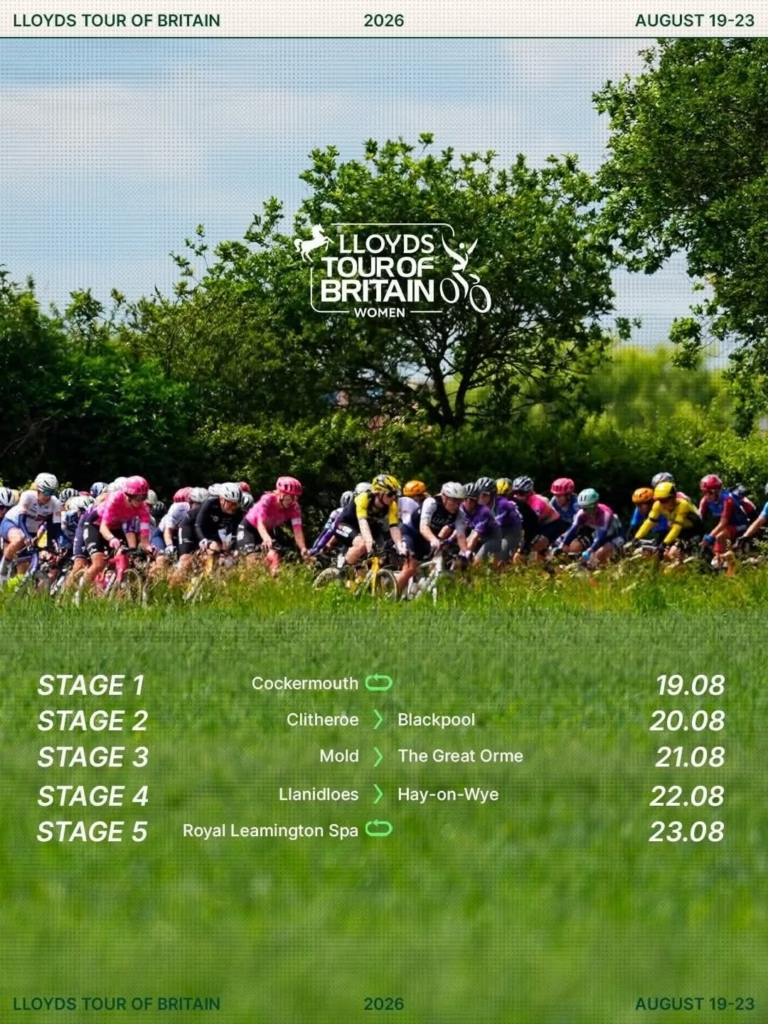
The race takes place over five consecutive days:
| Stage | Date | Route |
|---|---|---|
| 1 | Wednesday 19 August | Cockermouth to Cockermouth |
| 2 | Thursday 20 August | Clitheroe to Blackpool |
| 3 | Friday 21 August | Mold to the Great Orme, Llandudno |
| 4 | Saturday 22 August | Llanidloes to Hay-on-Wye |
| 5 | Sunday 23 August | Royal Leamington Spa to Royal Leamington Spa |
The change to five stages is significant.
An extra day gives the race more room for different rider types. Sprinters can target the flatter finishes, climbers have the Great Orme, while breakaway riders and Classics specialists can look towards the rolling stages through Cumbria, Lancashire, Wales and Warwickshire.
It also makes recovery more important. A rider who spends too much energy chasing a stage result early in the race may pay for it later.
What does the 2026 route look like?
The route begins in the north-west of England before moving through North and Mid Wales and finishing in the Midlands.
Full kilometre-by-kilometre details, timings and climb classifications will be released closer to the race, but the overall shape is already clear.
Stage 1: Cockermouth to Cockermouth
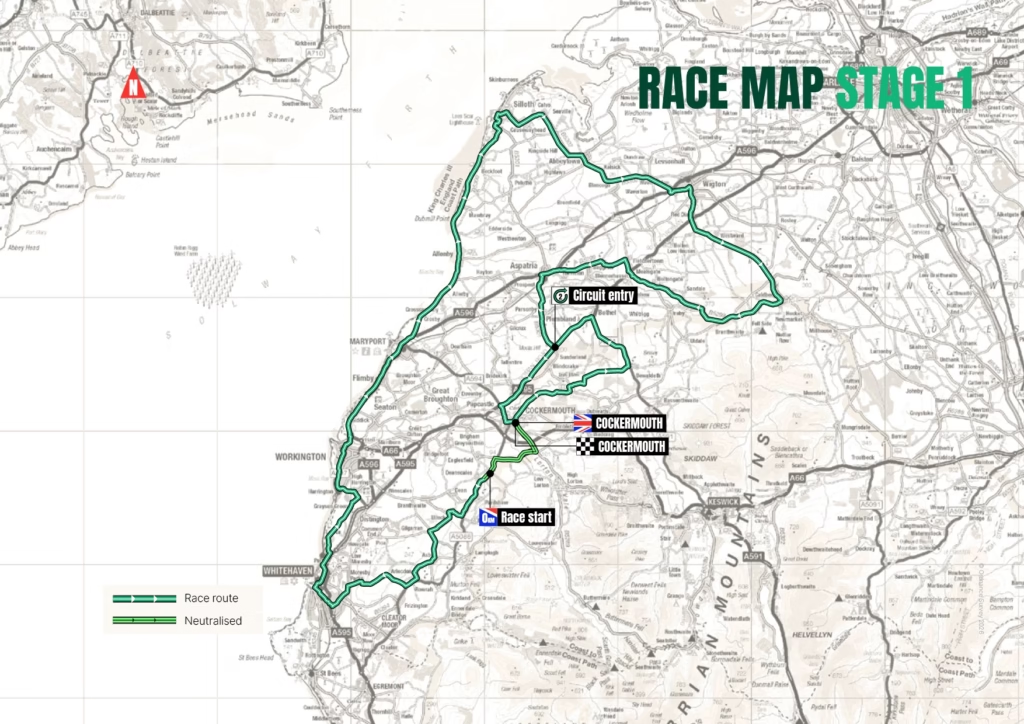
The opening stage starts and finishes in Cockermouth, taking the race through western Cumbria.
The Lake District setting suggests a rolling and potentially difficult opening day rather than a straightforward procession towards a bunch sprint. British roads rarely provide long periods of completely flat racing, and repeated short climbs can gradually reduce the peloton.
The opening stage is also important because it establishes the first race leader.
If a rider wins alone, even by a few seconds, she may create an immediate GC advantage. A bunch sprint would leave the leading riders much closer together, with bonus seconds likely to decide who wears the leader’s jersey.

Stage 2: Clitheroe to Blackpool
Stage 2 begins in Clitheroe and finishes on the Lancashire coast in Blackpool.
The route should offer one of the strongest opportunities for the sprinters, although the roads around the Ribble Valley can provide a demanding opening before the flatter approach to the coast.
Wind may become important near Blackpool.
A headwind could slow the race and help the peloton control attacks. A crosswind could create splits, particularly if the strongest teams move to the front and increase the pace on exposed roads.
The stage is likely to interest teams with fast finishers, but they will still need to control the breakaway and protect their sprinter through the earlier terrain.
Stage 3: Mold to the Great Orme
The third stage begins in Mold and finishes on the Great Orme above Llandudno.
This is the clearest general classification stage of the race.
The Great Orme is not an Alpine summit, but its gradients and exposed coastal setting can create meaningful gaps. The climb comes at the finish, so riders cannot recover lost time on a descent afterwards.
Pure sprinters are unlikely to contest the stage victory. The strongest climbers, puncheurs and GC riders should instead move to the front.
A puncheur is a rider who specialises in short, steep climbs and explosive accelerations rather than long mountain passes.
A rider who loses 20 or 30 seconds on the Great Orme may find it difficult to recover that time elsewhere because there is no individual time trial in the 2026 race.
The Great Orme should also be the best roadside location for spectators who want to see the main favourites under pressure.
Stage 4: Llanidloes to Hay-on-Wye
Stage 4 travels through Mid Wales from Llanidloes to Hay-on-Wye.
The roads of Powys are rarely easy. The stage should contain repeated climbing, narrow lanes and rolling terrain capable of creating an aggressive race.
This may be the hardest stage to predict.
A strong breakaway could survive if the GC teams are unwilling to take responsibility for the chase. Alternatively, the overall leader’s rivals may use the terrain to launch repeated attacks and isolate the race leader.
The stage comes one day after the Great Orme finish, making fatigue a major factor. Riders who climbed well on stage 3 must immediately defend their position across another demanding route.
It could become the most tactically complicated stage of the race, particularly if several teams still have riders within a minute of the overall lead.
Stage 5: Royal Leamington Spa to Royal Leamington Spa
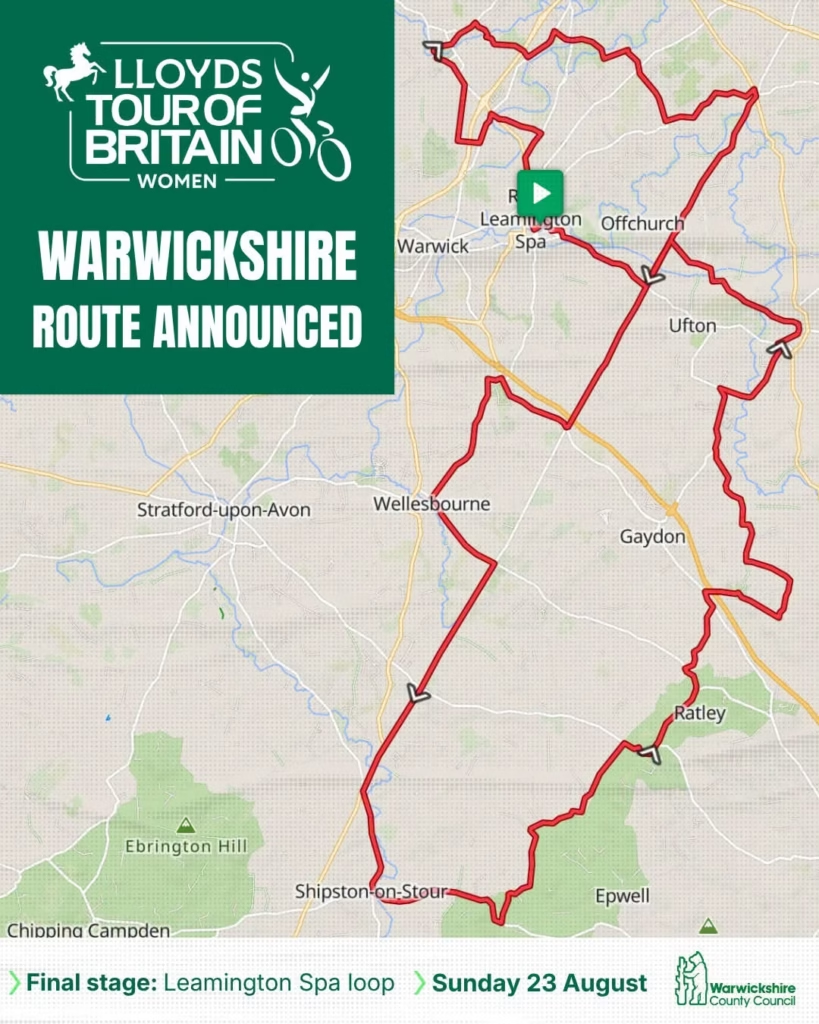
The race finishes with a stage starting and ending in Royal Leamington Spa.
The full route will determine whether the final day favours sprinters, attackers or a final GC battle, but a start and finish in the same town creates strong opportunities for spectators.
If the overall standings remain close, bonus seconds at intermediate sprints and the finish could decide the race.
That happened in 2025, when Ally Wollaston used finish-line bonus seconds on the final stage to overhaul Cat Ferguson and win the overall title by four seconds.
The final day therefore cannot be treated as a ceremonial stage. Unlike the Tour de France’s traditional finish in Paris, the Tour of Britain Women remains competitive until the final line.
How does the general classification work?
Every rider receives a finishing time on each stage.
Those times are added together. The rider with the lowest total time leads the general classification.
Imagine three riders finish the first stage with these times:
| Rider | Stage time |
|---|---|
| Rider A | 3:30:00 |
| Rider B | 3:30:05 |
| Rider C | 3:30:20 |
Rider A leads by five seconds over Rider B and 20 seconds over Rider C.
If Rider B gains ten seconds on the next stage, she moves ahead overall.
Most riders in a large bunch receive the same finishing time. That is why climbs, attacks, crashes, crosswinds and bonus seconds become so important. They create the small differences that shape the overall standings.
Our detailed explainer on what GC means in women’s stage racing covers cumulative time, gaps, bonus seconds and how a rider wins without taking a stage.
What are bonus seconds?
Bonus seconds are time deductions awarded to the first riders across selected sprint points or stage finishes.
A rider who wins a stage may receive ten seconds deducted from her overall time, with smaller bonuses for second and third. Intermediate sprints can also offer smaller bonuses.
The exact allocation is confirmed in the race regulations, but the principle is always the same.
A rider does not physically finish ten seconds earlier. The bonus is subtracted from her GC time.
This can make the difference between winning and losing the race.
In 2025, Wollaston entered the final stage behind Ferguson but collected enough bonus seconds to take the overall title. The result demonstrated why a rider with a fast finish can remain dangerous even if she is not the strongest climber.
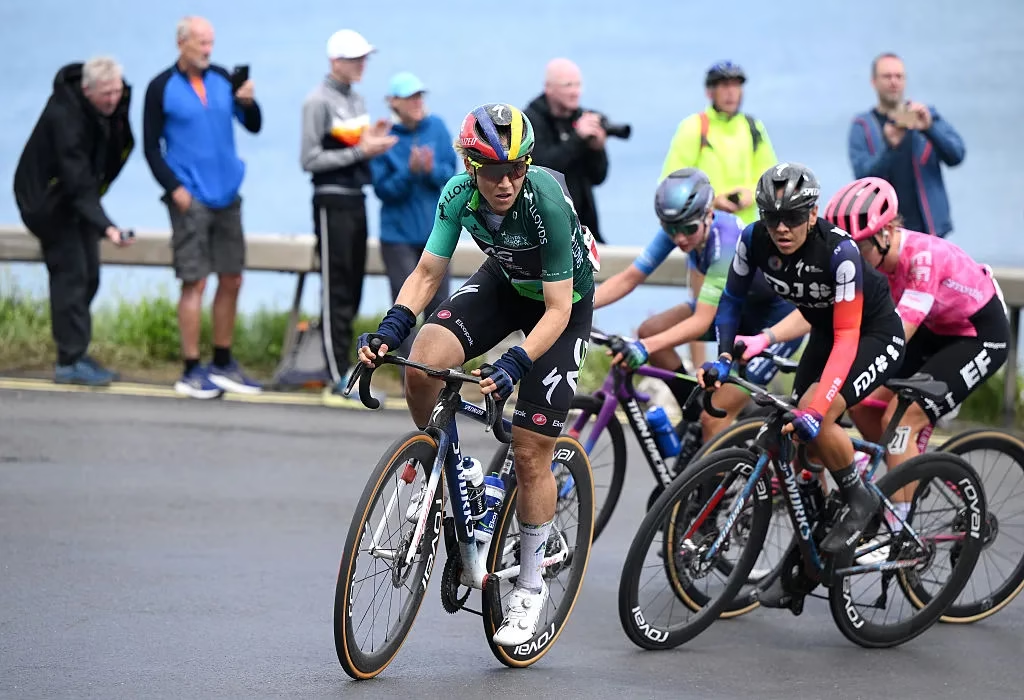 Photo Credit: Getty
What jerseys are awarded?
The exact colours and sponsors can vary, but stage races normally include several classifications.
Race leader
The race leader wears the main leader’s jersey.
At the Tour of Britain Women, this has traditionally been green rather than the yellow jersey used at the Tour de France.
The colour is different, but the meaning is the same. The rider wearing it has the lowest overall time.
Points classification
The points jersey rewards consistent high finishes.
Points are awarded at stage finishes and intermediate sprints. Sprinters usually target this competition, although an all-round rider can win by scoring on several different types of stage.
Mountains classification
The mountains leader collects points at classified climbs.
Harder climbs usually offer more points. Riders may enter breakaways specifically to cross climbs first, even when they have no realistic chance of winning the overall race.
Young rider classification
The leading eligible young rider is ranked using the same cumulative time as the general classification.
A rider can lead both the overall and youth competitions. In that situation, another eligible rider may wear the youth jersey on the road.
Team classification
Teams are ranked using the combined times of their best-placed riders on each stage.
This rewards depth rather than one exceptional leader.
How many riders and teams are taking part?
Nineteen teams have been announced for the 2026 race.
The field includes:
- 13 UCI Women’s WorldTeams
- Four British Continental teams
- The Great Britain Cycling Team
- Additional invited international representation
The confirmed teams include defending champions FDJ United-SUEZ and previous race-winning organisations Lidl-Trek, Movistar, Canyon-SRAM and SD Worx-Protime.
The complete rider start list will be confirmed closer to the race.
A team announcement does not guarantee that its biggest star will compete. Teams usually name their six-rider line-ups during the final days before the start, and injuries or changes in programme can alter the field.
The Women’s Cycling Race Hub will carry start-list updates, previews and stage coverage closer to the event.
Which riders should beginners watch?
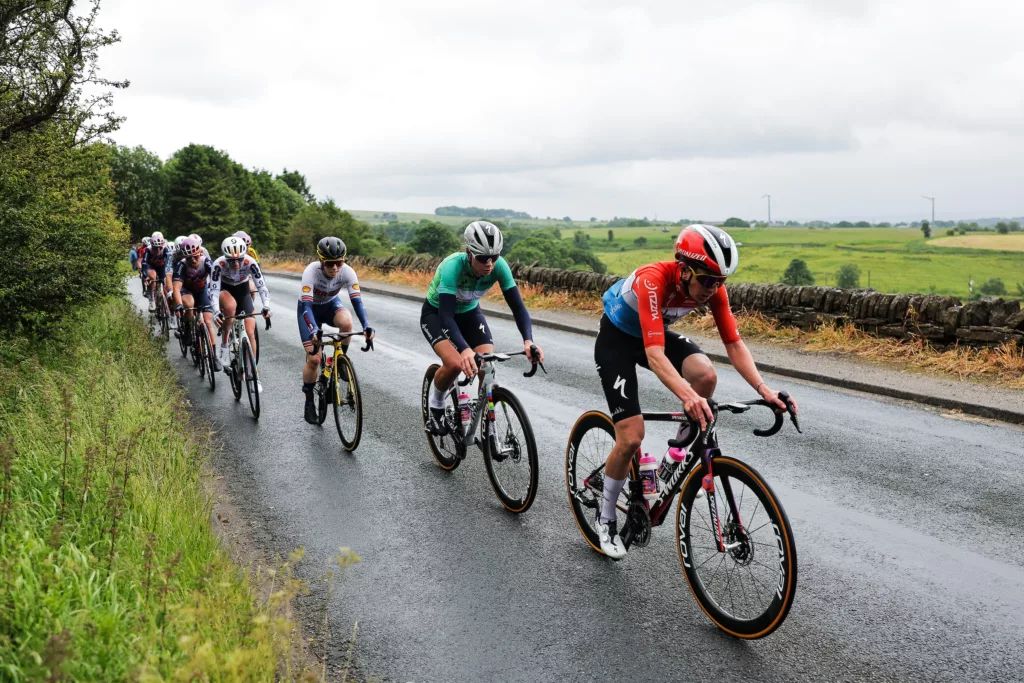
The final start list will determine the favourites, but several types of rider should shape the race.
General classification riders
The strongest climbers and all-rounders will target the Great Orme and the rolling stage through Mid Wales.
They need to remain close to the front during the flatter stages, avoid crashes and prevent rivals from gaining bonus seconds.
Sprinters
Fast finishers should target Blackpool and potentially the opening and final stages.
A sprinter with strong climbing ability could also challenge for the overall title if the Great Orme does not produce large time gaps.
Puncheurs
Puncheurs are riders who excel on short, steep climbs and rolling terrain.
The British route often suits them because climbs are shorter than those found in the Alps but come repeatedly and on narrow roads.
Breakaway specialists
These riders attack early and try to stay ahead of the peloton.
They can target stage victories, mountains points, television exposure or a temporary spell in the leader’s jersey.
Our guide to how a cycling breakaway works explains why riders attack, why the peloton sometimes lets them go and how teams decide when to begin the chase.
British riders
The Tour of Britain Women provides an important home opportunity for established British professionals and domestic riders.
Zoe Bäckstedt and Cat Ferguson are among the prominent British riders associated with the announced teams, although the final start list must still confirm their participation.
Ferguson finished second overall in 2025 after winning a stage and taking both the points and youth classifications.
Who won the Tour of Britain Women in 2025?
Ally Wollaston won the 2025 edition by four seconds over Cat Ferguson.
The race was decided on the final stage in Glasgow, where Wollaston used her sprint and bonus seconds to move ahead in the general classification.
Karlijn Swinkels finished third overall.
Ferguson won the points and young rider competitions, while Dominika Włodarczyk took the mountains classification.
The result is useful for understanding the Tour of Britain Women because it shows that the race does not always require a pure climber to win.
A rider who can survive the harder stages and repeatedly finish near the front may use bonus seconds to overcome a small climbing deficit.
 Photo Credit: Getty
Is the Tour of Britain Women the same as the Women’s Tour?
It is effectively the successor to the Women’s Tour, but the name and organising structure have changed.
The Women’s Tour began in 2014 and developed into Britain’s leading women’s stage race.
After financial and organisational difficulties caused the 2023 event to be cancelled, British Cycling took over the organisation and relaunched the race as the Tour of Britain Women in 2024.
The historical connection remains important. Previous winners of the Women’s Tour are part of the broader history of Britain’s leading women’s stage race, even though the modern event now carries the Tour of Britain name.
Our 2025 Tour of Britain Women race preview provides further context on the relaunched event and how it developed during its second year under the new name.
Is it connected to the Tour de France Femmes?
No.
The Tour of Britain Women and Tour de France Femmes are separate races run by different organisers.
The Tour de France Femmes is a nine-stage race in France and neighbouring countries. It is longer, usually contains larger mountains and carries the prestige associated with the Tour de France.
The beginner’s guide to the Tour de France Femmes 2026 explains how that race works and how its format differs from shorter Women’s WorldTour stage races.
The Tour of Britain Women remains a major Women’s WorldTour event, but it has its own history, classifications and route.
Riders can compete in both races. In 2026, the Tour of Britain Women takes place ten days after the Tour de France Femmes finishes in Nice, giving riders time to recover and travel to Britain.
Why do teams work when only one rider can win?
Professional cycling is a team sport with an individual winner.
Each team usually selects one or more protected riders and uses the others to support them.
A domestique may:
- Chase a breakaway
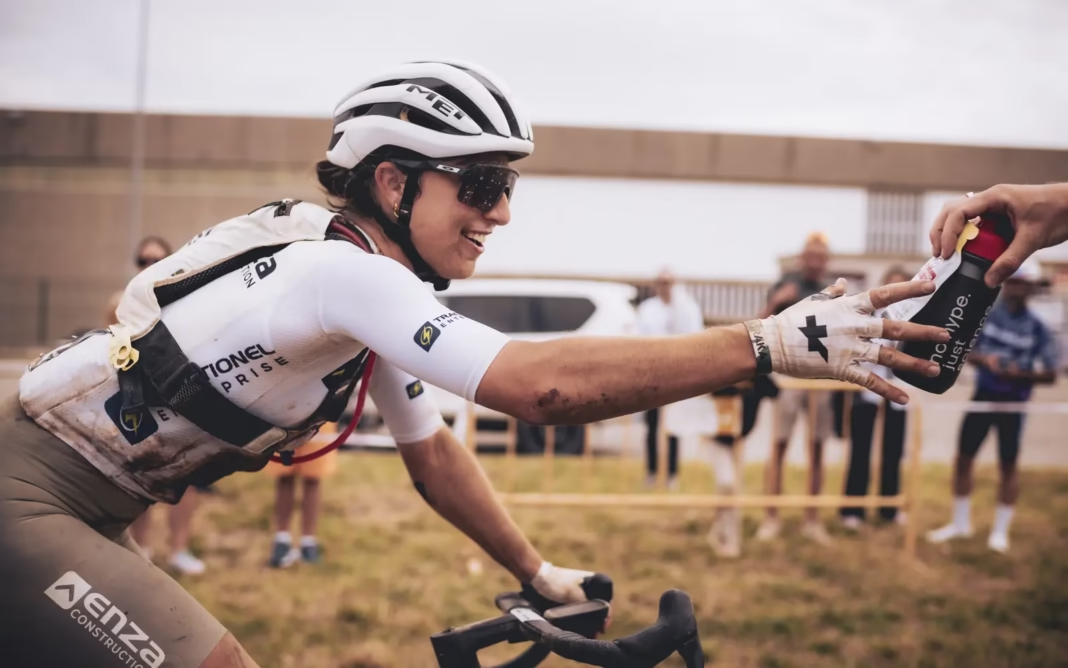
- Collect bottles and food
- Shelter the leader from the wind
- Help after a mechanical problem
- Set the pace on a climb
- Lead a sprinter into the final kilometre
- Attack to force rival teams to chase
A rider who finishes 70th may have played a major role in helping her teammate win.
Teams can also change strategy during the race. If the original leader loses time, another rider may become the protected GC option.
Our guide to how women’s cycling team tactics work explains how teams protect leaders, use multiple options and force rivals to take responsibility.
 Photo Credit: British Cycling via SWpix.com
Why does the peloton allow breakaways to escape?
The peloton does not always want to catch every attack immediately.
A breakaway containing riders far behind in the general classification may not threaten the race leader. Allowing it to gain time can make the stage easier to control.
The leader’s team may then keep the gap at a manageable level while teams interested in the stage victory decide whether to help with the chase.
Breakaways become dangerous when teams hesitate.
If no sprint team wants to use its riders, the escape may keep enough of an advantage to reach the finish.
British terrain can help attackers because narrow roads, repeated corners and short climbs reduce the aerodynamic advantage of the peloton.
What happens if a rider crashes?
A rider may remount and continue if she is able.
Teammates can wait and help her return to the peloton, while the team car may provide a replacement bike or medical assistance.
Race regulations sometimes apply the same finishing time to riders affected by crashes near the end of a flat stage. This reduces the GC impact of incidents during dangerous sprint finishes.
That protection does not normally apply on uphill finishes such as the Great Orme.
A rider who crashes, suffers an injury or cannot finish within the permitted time limit may be removed from the race.
Once a rider abandons, she cannot return on a later stage.
What is the time limit?
Each stage has a maximum permitted finishing time.
The limit is calculated using the winner’s time, the type of stage and the average speed.
Riders who finish too far behind can be classified as outside the time limit and removed from the race.
The rule prevents riders from taking an exceptionally slow day simply to save energy for another stage.
Race officials can extend the limit in exceptional circumstances, such as extreme weather or a large crash affecting many riders.
The principles are explained in more detail in our guide to how cycling time cuts work.
How can you watch the race in person?
Watching roadside is free.
Spectators can stand along most of the route, although some finish areas, hospitality zones and restricted sections may require accreditation or tickets.
The best locations usually include:
- The start area for rider presentations and team buses
- Categorised climbs
- Intermediate sprints
- Town centres
- Technical corners before the finish
- The finishing straight
- The podium area after the stage
Arrive early because roads close before the race reaches them.
Do not stand in the road, cross in front of riders or allow children, pets, flags or phones to obstruct the course.
The riders arrive much faster than they appear on television. A peloton can pass a roadside location in a matter of seconds.
Which stage is best to watch roadside?
Stage 3 on the Great Orme should provide the clearest view of the GC battle.
Climbs allow spectators to see riders for longer because the speed is lower and the peloton is more likely to split into smaller groups.
Stage 2 in Blackpool may be better for anyone wanting the atmosphere of a fast bunch sprint.
The final stage in Royal Leamington Spa should offer the strongest combination of racing and post-stage celebrations because the overall winner will be crowned there.
Cockermouth provides the opportunity to see the opening presentation and the first race leader, while Hay-on-Wye should suit viewers who prefer an unpredictable rolling stage.
How can you follow the race on television?
British Cycling will confirm full television and streaming details closer to the event.
As a Women’s WorldTour race, the event is expected to provide live coverage, but exact channels, broadcast times and international availability should be checked once the official schedule is released.
The race organiser’s website and social media channels will also carry timing updates, results and stage information.
Viewers should remember that advertised finish times are estimates. A fast stage, strong tailwind or long fight for the breakaway can put the race ahead of schedule.
Our Women’s Cycling TV Guide Hub will be updated with confirmed channels, streams and start times once the broadcast schedule is announced.
The wider women’s cycling TV rights guide by country explains the main broadcasters used across the season.

What makes racing in Britain different?
British professional races often look more difficult than their climb statistics suggest.
The roads can be narrow and exposed. Constant corners make positioning important, while short climbs arrive without the long, steady rhythm found on Alpine passes.
Weather can change quickly.
Rain makes road markings and corners more dangerous. Wind creates the possibility of splits, while cooler temperatures may favour aggressive racing.
Road furniture also matters. Roundabouts, traffic islands and urban approaches force teams to fight for position before the television cameras reach the final kilometres.
The strongest rider does not always win.
The winner also needs a team capable of managing the roads, weather and repeated tactical decisions.
What should beginners watch during each stage?
The final five kilometres are important, but much of the race is decided earlier.
Watch for:
- Which teams send riders into the breakaway
- Which team controls the peloton
- How large the time gap becomes
- Whether the race leader has teammates nearby
- Which riders are dropped on climbs
- Who contests intermediate bonus seconds
- Whether wind divides the peloton
- How teams position their leaders before narrow roads
- Which riders still have teammates for the finale
A rider sitting quietly in the peloton may be having an excellent day.
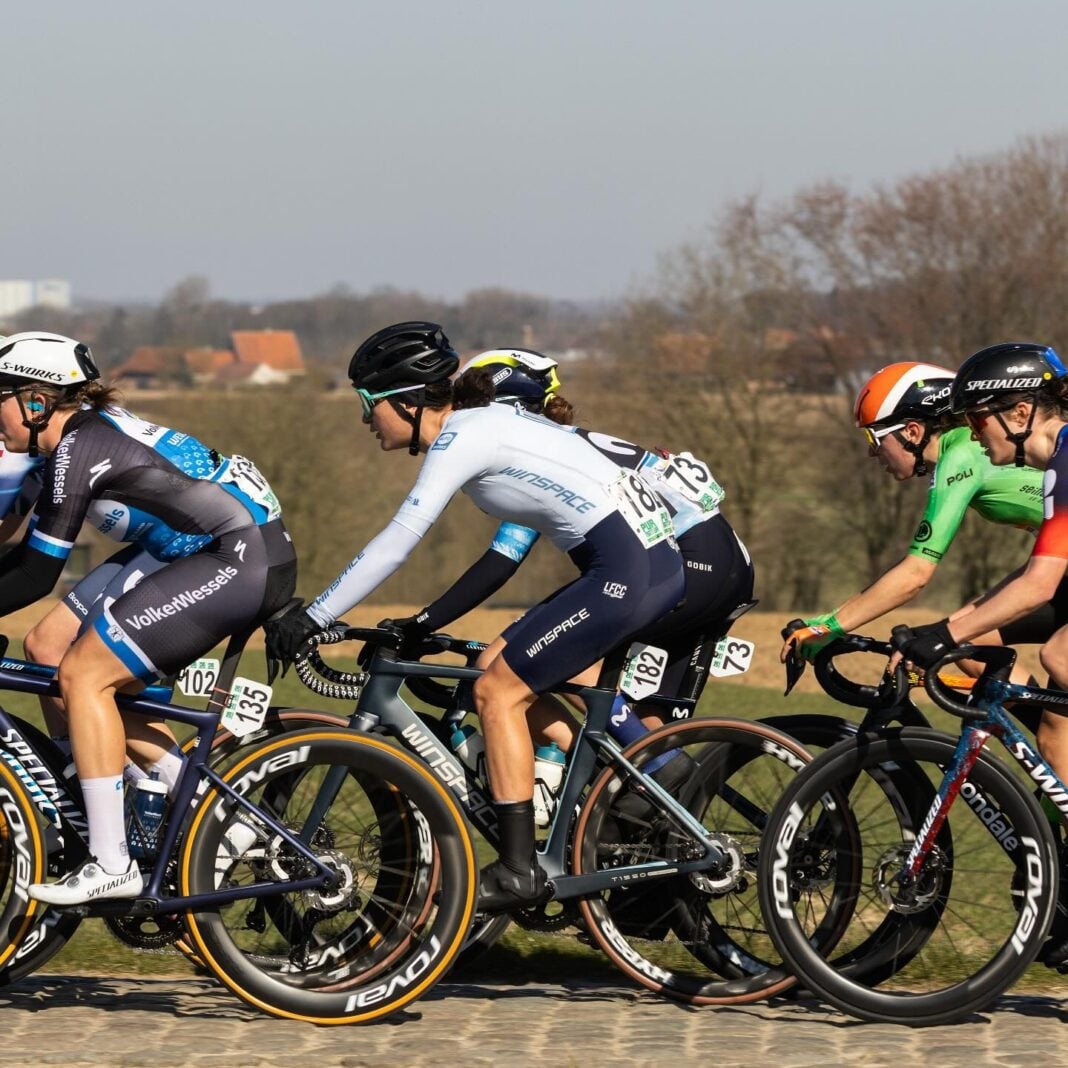
A rider repeatedly moving backwards, collecting bottles or losing teammates may be in difficulty even before a visible attack takes place.
-
 Photo Credit: quentinphotographiebe
 -
 Photo Credit: Getty

What will decide the 2026 race?
The Great Orme is likely to create the clearest time gaps, but it may not decide the race alone.
The winner will need to survive five different tests:
- Avoid losing time on the opening stage in Cumbria.
- Stay safe through the expected sprint approach to Blackpool.
- Climb strongly on the Great Orme.
- Defend or attack across the difficult Mid Wales stage.
- Manage bonus seconds and late attacks in Royal Leamington Spa.
A pure climber may gain time on stage 3 but struggle to collect bonuses elsewhere.
A sprinter may dominate the flat finishes but lose too much on the Great Orme.
The ideal winner is likely to be an all-round rider who can climb, position herself well and finish quickly from a reduced group.
The wider impact of route design on modern women’s racing is explored in our analysis of how race routes are shaping women’s cycling in 2026.
Tour of Britain Women 2026 beginner’s guide summary
The Tour of Britain Women is a five-stage Women’s WorldTour race taking place from 19 to 23 August 2026.
The race begins in Cockermouth and finishes in Royal Leamington Spa, with stages visiting Blackpool, the Great Orme and Mid Wales.
Each stage has its own winner, while the overall champion is the rider with the lowest combined time across all five days.
The Great Orme summit finish should be the most important stage for the general classification, but bonus seconds, wind, crashes and the difficult roads through Powys could also decide the result.
Nineteen teams are due to take part, including 13 Women’s WorldTour squads and Britain’s four Continental teams.
For a first-time viewer, the main competitions to follow are the overall classification, stage victories, points jersey, mountains jersey and young rider classification.
The most important lesson is that the race is rarely as simple as the first rider crossing the line.
Every breakaway, bonus sprint, narrow road and domestique’s effort can influence who reaches Royal Leamington Spa as the 2026 Tour of Britain Women champion.

