
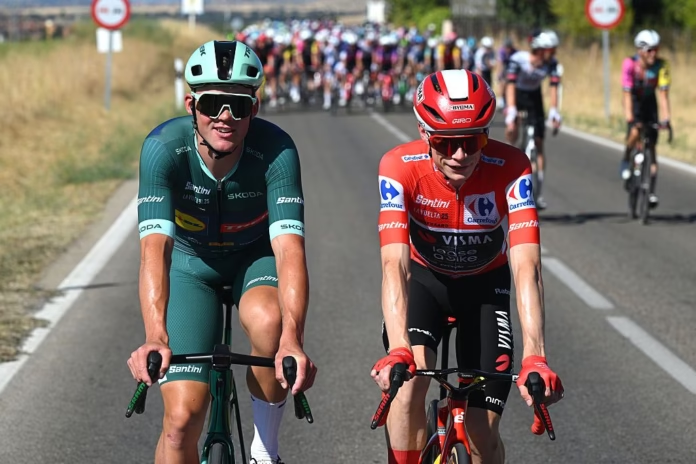
The Vuelta a España is the final men’s Grand Tour of the cycling season and usually the least predictable of the three.
It has the same basic format as the Tour de France and Giro d’Italia: 21 stages spread across three weeks, with the rider recording the lowest cumulative time winning the red jersey.
The character is different.
The Vuelta is known for steep summit finishes, exposed roads, intense heat, aggressive breakaways and general classification battles that can change quickly. Riders often arrive with very different objectives. Some have prepared specifically for the race, while others are trying to rescue a disappointing season or recover from the Tour de France.
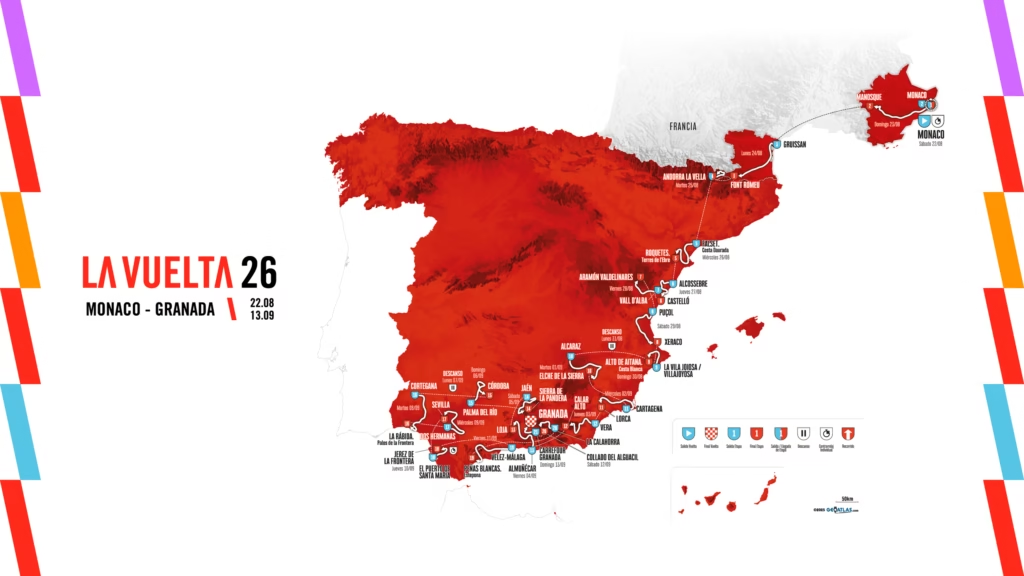
The 2026 edition runs from Saturday 22 August to Sunday 13 September. It begins with a short individual time trial through Monaco and finishes in Granada, with the final week based almost entirely in Andalusia.
The route covers 3,275km and includes two individual time trials, six officially classified mountain stages, four medium-mountain stages and more than 58,000 metres of climbing.
This guide explains how the Vuelta works, what makes the 2026 route distinctive and what new viewers should watch for during the race.
Vuelta a España 2026 at a glance
| Detail | Information |
|---|---|
| Dates | 22 August to 13 September 2026 |
| Number of stages | 21 |
| Total distance | 3,275km |
| Start | Monaco |
| Finish | Granada |
| Rest days | 31 August and 7 September |
| Individual time trials | Two |
| Mountain stages | Six officially classified mountain stages |
| Medium-mountain stages | Four |
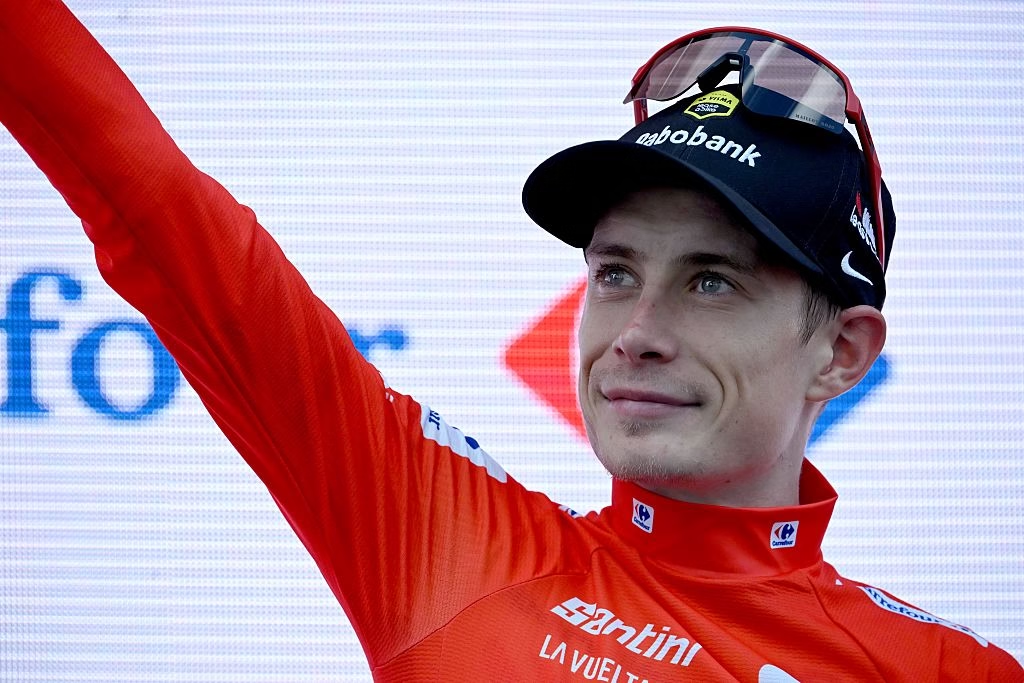
| Leader’s jersey | Red |
| Defending champion | Jonas Vingegaard |
| Race level | UCI WorldTour Grand Tour |
The race visits Monaco, France, Andorra and Spain before moving south towards a long final block in Andalusia.
For readers looking beyond one event, the men’s cycling route guide hub brings together guides to the Vuelta, Tour de France, Giro d’Italia and the biggest one-day races.
What is the Vuelta a España?
The Vuelta a España is one of cycling’s three Grand Tours, alongside the Giro d’Italia and Tour de France.
Each race lasts three weeks and contains 21 stages. Riders compete as part of teams, but the main overall classification is individual.
Every rider’s finishing time is recorded each day.
Those times are added together across the race. The rider with the lowest accumulated time leads the general classification and wears the red jersey on the following stage.
A rider does not need to win many stages to win the Vuelta.
The main requirement is consistency. A general classification contender must avoid losing significant time on mountain stages, time trials, crosswind days and technical finishes.
One bad day can erase two weeks of strong racing.
The principles are the same as those covered in our guide to how the general classification works at the Tour de France, even though the leader’s jersey and race route are different.
Why is the Vuelta leader’s jersey red?
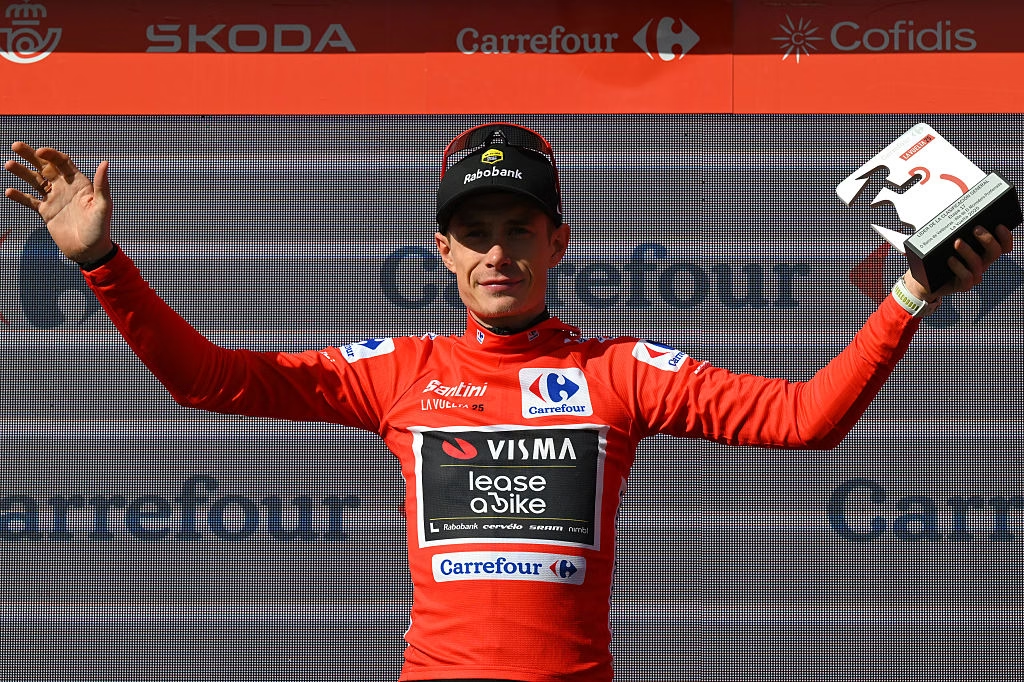
The general classification leader wears the red jersey, commonly known as La Roja.
It performs the same role as the yellow jersey at the Tour de France and pink jersey at the Giro d’Italia.
The colour has been used consistently since 2010, although the Vuelta leader wore several different jersey colours during earlier periods of the race.
The rider wearing red is not necessarily the rider who won the previous stage.
They are simply the rider with the lowest overall time after all completed stages.
A breakaway rider can take red during the opening week if the peloton allows the move a large advantage. The main favourites may then wait several days before taking control.
How does a rider win the Vuelta?
The winner is the rider with the fastest total time after Stage 21.
A typical general classification contender gains or loses time in four main ways:
- Mountain stages
- Individual time trials
- Time gaps caused by crashes, splits or crosswinds
- Bonus seconds awarded at selected finishes and intermediate points
Mountain stages create the largest visible differences, but time trials can be just as important.
A strong climber who loses two minutes against the clock may need several successful attacks to recover it.
Bonus seconds can also decide close battles. Winning or finishing near the front of selected stages can reduce a rider’s total time by a few seconds.
The system rewards riders who combine climbing, time-trial ability, positioning, recovery and tactical judgement.
Our explainer on how bonus seconds work in stage races shows why apparently small deductions can change the order of a close GC battle.
What makes the Vuelta different from the Tour de France?
The Tour de France is the biggest race in cycling, with greater media attention, more controlled team strategies and enormous pressure surrounding every favourite.
The Vuelta often feels less restricted.
Teams are more willing to attack, while riders who have already completed another Grand Tour may have uncertain form. Some squads arrive without one overwhelming leader, creating more tactical freedom.
The route also tends to favour steep uphill finishes.
The Tour frequently uses long Alpine or Pyrenean climbs. The Vuelta often combines those sustained ascents with shorter roads containing gradients above 15 or even 20%.
Those finishes create explosive gaps.
A rider may appear comfortable until the final two kilometres, then lose 30 seconds on one severe ramp.
The late-August and September dates bring another difference. Heat can become a major factor, particularly in southern Spain.
Why the 2026 Vuelta route is unusually hard
The official route contains more than 58,000 metres of elevation gain.
That makes it one of the hardest editions in the race’s recent history.
The difficulty is not concentrated only in the final week. The first four days already include a time trial, an uphill finish at Font-Romeu and a short but intense mountain stage entirely within Andorra.
The first week then continues with summit finishes at Valdelinares and Alto de Aitana.
After the opening rest day, the race moves towards southern and eastern Spain before spending the final ten stages in Andalusia.
The decisive final week includes the long time trial in Jerez de la Frontera, the uphill finish at Peñas Blancas and the final mountain stage to the new Collado del Alguacil.
The route offers very few prolonged periods in which the general classification riders can relax.
The Monaco Grand Départ explained
The race begins with a 9km individual time trial through Monaco.
The opening stage starts around Casino Square and finishes on Boulevard Albert I, part of the famous Monaco Formula 1 circuit.
It is a short, technical time trial rather than a conventional power test.
The smallest errors can decide the first red jersey. Riders must accelerate repeatedly, corner accurately and avoid taking unnecessary risks on roads where barriers and street furniture can make the course feel narrow.
Nine kilometres is not long enough to create decisive general classification gaps.
It is long enough for a specialist to gain 15 or 20 seconds over a weaker time triallist.
The stage also creates an immediate hierarchy before the race leaves Monaco.
The opening week moves quickly into the mountains
Stage 2 runs from Monaco to Manosque over 215.2km and is officially classified as hilly.
Stage 3 travels from Gruissan to Font-Romeu and introduces the first meaningful uphill finish.
The race then reaches Andorra on Stage 4.
That stage is only 104.9km long but contains the Port d’Envalira, Beixalis, Coll d’Ordino and Alto de la Comella. Its short distance encourages aggressive racing because there is little flat road on which teams can regain control.
A rider who arrives underprepared can lose the Vuelta during the first four days.
The opening stages are therefore more than a gentle introduction. They force the main contenders to reveal their form almost immediately.
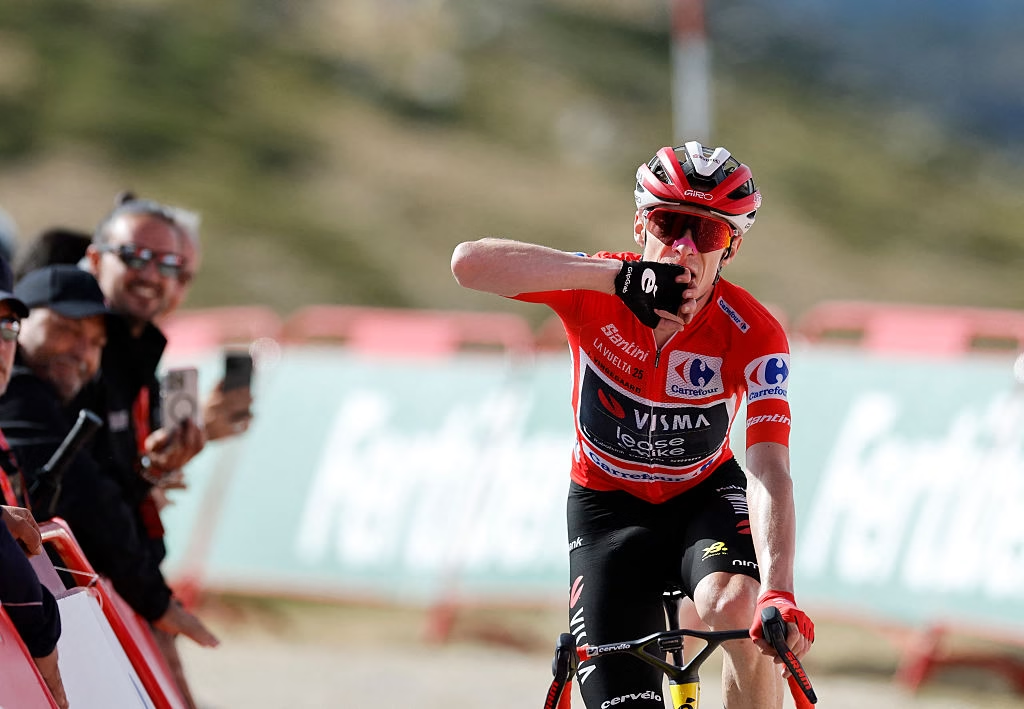
Valdelinares provides the next summit test
Stage 7 finishes at Aramón Valdelinares.
The climb has appeared in previous Vueltas and provides a more sustained mountain test than many of the race’s short, sharp walls.
By this point, the favourites should have settled into the race.
Teams can begin using their climbing domestiques to control the pace, while riders who lost time in Andorra may attempt to recover it.
The stage also arrives before the first genuinely flat day of the race.
That makes it an important marker. The red jersey contenders must survive several difficult stages before the sprinters receive a clearer opportunity.
For newer viewers, our guide to what a summit finish means in a Grand Tour explains why finishing at the top of a climb changes positioning, pacing and team tactics.
Alto de Aitana closes the first week
Stage 9 finishes at Alto de Aitana after 187.5km.
It is the final stage before the first rest day and one of the most important early mountain tests.
Aitana is a long, sustained ascent rather than a short ramp.
The stage therefore rewards riders able to maintain a high climbing pace for an extended period. Purely explosive climbers may find it harder to create a decisive advantage unless the race has already become selective.
The timing increases its importance.
Riders can commit fully knowing the following day is a rest day. Teams may also make the stage harder because there is no immediate need to preserve domestiques for the next afternoon.
The first major GC hierarchy should be established by the summit.
What happens on a Vuelta rest day?
The riders do not spend the entire day resting in bed.
Most complete a short training ride to keep their legs moving. They also attend press conferences, receive treatment, eat carefully and discuss the following week with team staff.
Rest days can still change the race.
Some riders respond well and return fresher. Others struggle to regain rhythm when racing resumes.
Illness can also spread through hotels, while accumulated injuries may become more obvious once the immediate adrenaline of racing disappears.
The 2026 Vuelta has rest days on Monday 31 August and Monday 7 September.
Our feature on why Grand Tour rest days matter explains how riders train, refuel and prepare rather than simply taking a complete day off.
The race enters Andalusia for its decisive second half
The final ten stages take place within Andalusia.
This gives the 2026 edition a strong regional identity and creates a concentrated final block of mountain roads, heat and difficult transitions.
The race visits climbs including Calar Alto, La Pandera and Peñas Blancas before the final mountain finish at Collado del Alguacil.
Andalusia can remain extremely hot in late summer.
Teams will need to manage hydration, cooling and recovery as carefully as climbing performance.
The terrain is also rarely straightforward.
Even stages not officially classified as mountain days can contain enough climbing to favour breakaways and punish tired riders.
Calar Alto is one of the key second-week climbs
Stage 12 finishes at Calar Alto.
The climb reaches one of mainland Spain’s highest paved points and is long enough to expose any weakness among the favourites.
Unlike a short Vuelta wall, Calar Alto allows teams to build pressure gradually.
A strong mountain squad can set a hard pace for several kilometres before its leader attacks. Riders who depend on one explosive acceleration may find fewer opportunities to surprise their rivals.
Altitude may also influence the effort.
The air becomes thinner near the summit, while temperatures can differ significantly from the roads below.
This is a stage where measured pacing is usually more valuable than an early emotional attack.
La Pandera can create brutal gaps
La Pandera is one of the Vuelta’s most recognisable summit finishes.
The gradients become irregular and severe, with exposed roads and little opportunity for a rider to hide once the strongest climbers begin attacking.
Its appearance deep in the race makes it particularly dangerous.
By the second and third weeks, riders are no longer competing with fresh legs. Small weaknesses in recovery, nutrition or illness become magnified on steep gradients.
La Pandera may not be the longest climb of the race.
It can still create some of the largest gaps because its hardest sections arrive when riders are already carrying two weeks of fatigue.
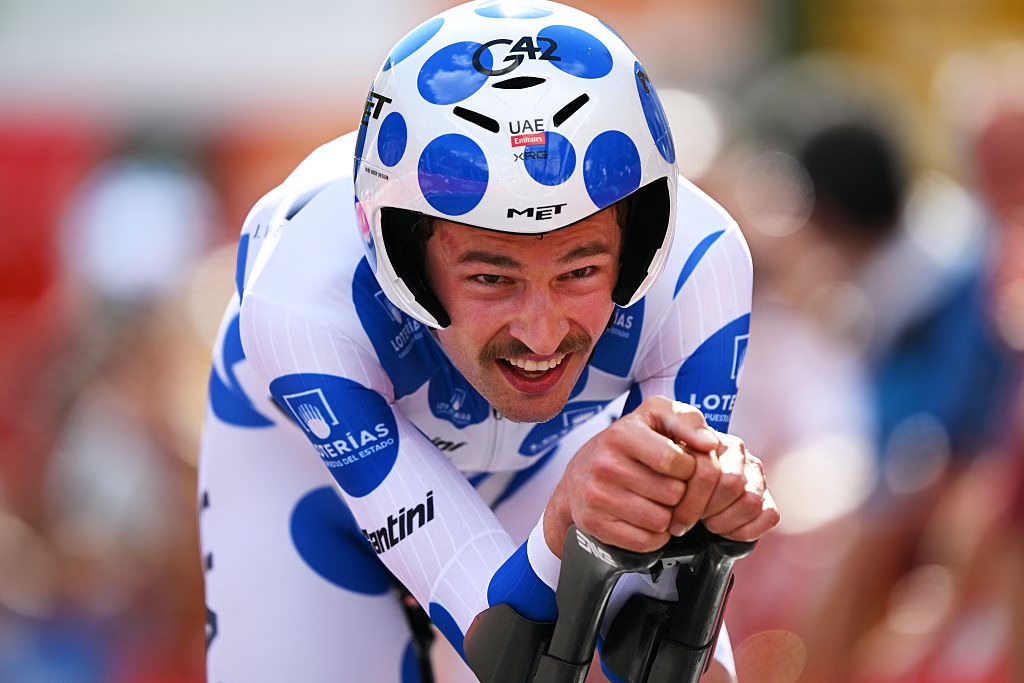
The Jerez time trial can reshape the final podium
Stage 18 is a 32.5km individual time trial from El Puerto de Santa María to Jerez de la Frontera.
This is the major test against the clock.
Unlike the short Monaco opener, 32.5km is enough for the strongest specialists to gain substantial time.
A climber who has built a narrow lead may lose it. A balanced rider can move several places up the general classification before the final mountain stages.
The position of the stage is crucial.
Riders reach it after more than two weeks of racing, so fatigue becomes part of time-trial ability. A cyclist who would normally dominate a flat test may perform below expectations after repeated mountain stages.
The favourites must also decide how much energy to spend.
The race finishes uphill at Peñas Blancas the following day and reaches its final mountain showdown on Stage 20.
Peñas Blancas comes immediately after the time trial
Stage 19 runs for 205.1km from Vélez-Málaga to an uphill finish at Peñas Blancas above Estepona.
This combination creates one of the hardest back-to-back sequences of the race.
The time trial rewards sustained solo power.
Peñas Blancas then requires climbing endurance and team support.
A rider who empties themselves completely in Jerez may pay the following afternoon. Equally, anyone losing time against the clock cannot afford to ride defensively on the summit finish.
The stage is officially described as hilly with an uphill arrival, but the distance and late climb make it a genuine GC day.
Collado del Alguacil is the final mountain decider
Stage 20 finishes at Collado del Alguacil after 187km.
The climb is new to the Vuelta and arrives on the final competitive day for the general classification.
This is the last realistic opportunity to gain time before Granada.
A rider trailing by one minute must attack.
A race leader may need to defend from a long way out because rival teams have nothing left to preserve.
Final mountain stages often become tactically unusual. Riders lower in the top 10 may attack early, teams may place several riders in the breakaway and cooperation can form between competitors with different objectives.
The result may decide the red jersey, podium places and top-10 positions simultaneously.
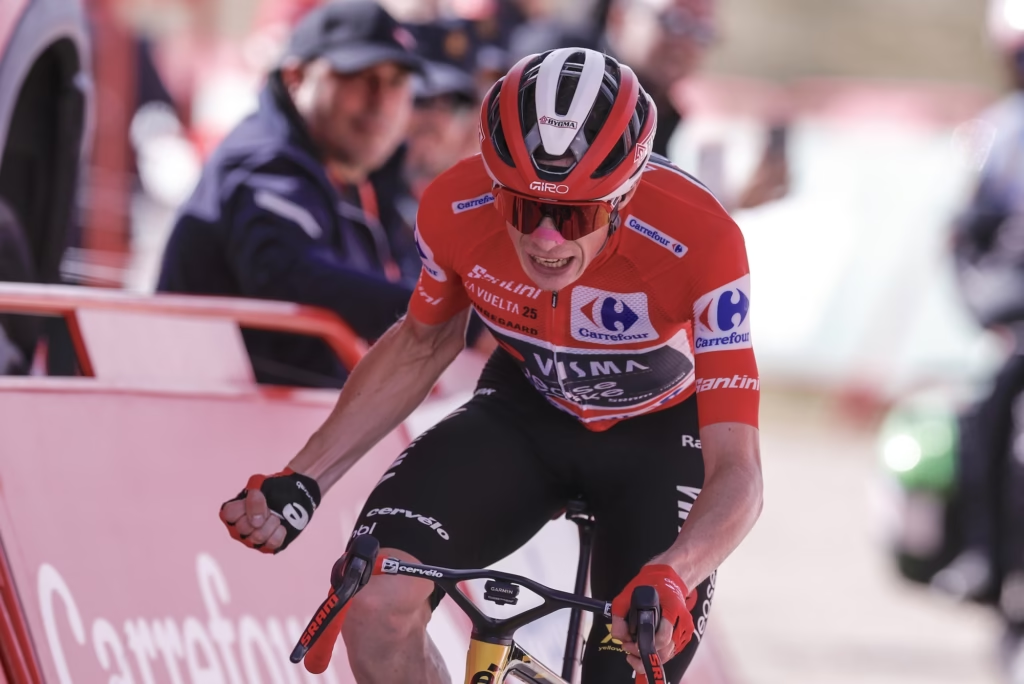
Why the Vuelta has so many summit finishes
Uphill finishes make time gaps easier to create and reduce the chance that a large peloton reaches the line together.
They also suit the landscape available across Spain.
Many mountain roads lead to ski stations, telecommunications facilities, observatories or isolated high points that provide natural stage finishes.
The Vuelta has increasingly used steep, unfamiliar climbs to create a distinctive identity.
Some become famous immediately because of their gradients.
Others disappear from the route for several years because the roads are narrow, remote or difficult to accommodate logistically.
For viewers, summit finishes offer simple visual drama. The strongest riders are eventually left alone, with every weakness visible.
What is a medium-mountain stage?
A medium-mountain stage contains significant climbing but may not finish on a major summit.
These stages often favour breakaways, puncheurs and versatile climbers.
They can be more unpredictable than major mountain stages because the general classification teams may not want to control the entire day.
A rider can attack over a late climb, use a technical descent or win from a reduced group.
GC contenders still need to remain alert.
Narrow roads, repeated climbs and aggressive racing can create gaps even when the stage profile does not look decisive.
The Vuelta frequently uses this type of terrain to make apparently transitional stages difficult.
What is a breakaway?
A breakaway is a small group of riders that attacks ahead of the main peloton.
Teams without a general classification contender often target breakaways because they provide a realistic way to win stages.
The peloton may allow the group several minutes if none of the riders threatens the red jersey.
Breakaways are especially important at the Vuelta.
The difficult terrain creates many stages where the main favourites are focused on one another rather than the stage victory.
A strong climber who has already lost time overall can therefore enter the break and target a summit finish.
The group must cooperate long enough to remain ahead, but that cooperation usually disappears near the finish.
Our full explainer on what a breakaway is and why riders join one covers how the escape forms, why the peloton sometimes allows it to survive and when cooperation begins to break down.
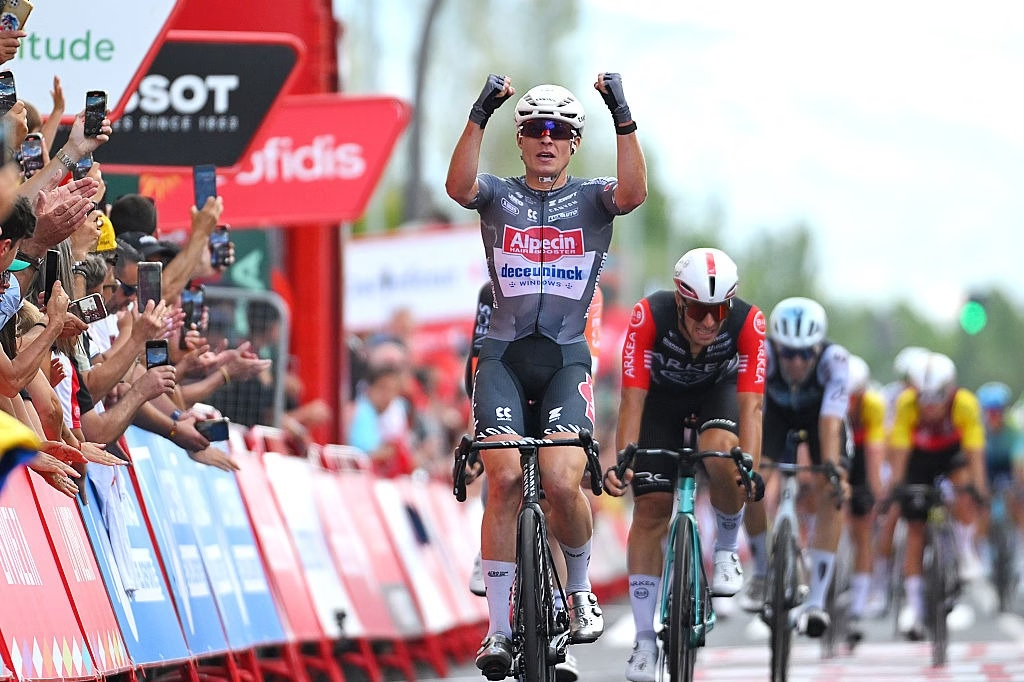
Why do GC riders sometimes let a breakaway win?
The red jersey team cannot chase every move for three weeks.
Controlling a breakaway requires several riders to spend hours riding at the front of the peloton.
If the escape contains no GC threat, allowing it to win can be tactically useful.
The breakaway riders collect the stage victory and bonus seconds, while the favourites conserve energy and race only during the final climb.
The race leader’s team may even prefer this outcome.
Removing bonus seconds from the finish prevents close rivals reducing their deficit simply by finishing second or third.
What are the Vuelta’s classification jerseys?
The Vuelta awards four main leader’s jerseys.
| Jersey | Classification | How it is decided |
|---|---|---|
| Red | General classification | Lowest cumulative time |
| Green | Points classification | Points from stage finishes and intermediate sprints |
| Polka dot | Mountains classification | Points collected on classified climbs |
| White | Young rider classification | Best eligible rider on GC |
The race also includes a team classification and daily combativity award.
The team competition is calculated using each squad’s three best finishing times on every stage.
The basic purpose of each classification is similar across professional stage races. Our guide to what the jerseys mean in stage racing provides a broader introduction to GC, points, mountains and young rider competitions.
How does the green jersey work?
Riders score points based on their finishing position on each stage and at intermediate sprints.
The rider with the highest total wears green.
At the Tour de France, the points competition usually strongly favours sprinters.
The Vuelta can be less predictable because the route contains fewer straightforward sprint stages and many uphill finishes.
A versatile rider who finishes highly on several types of stage may challenge a pure sprinter.
The green jersey winner must also survive the mountains and complete the race.
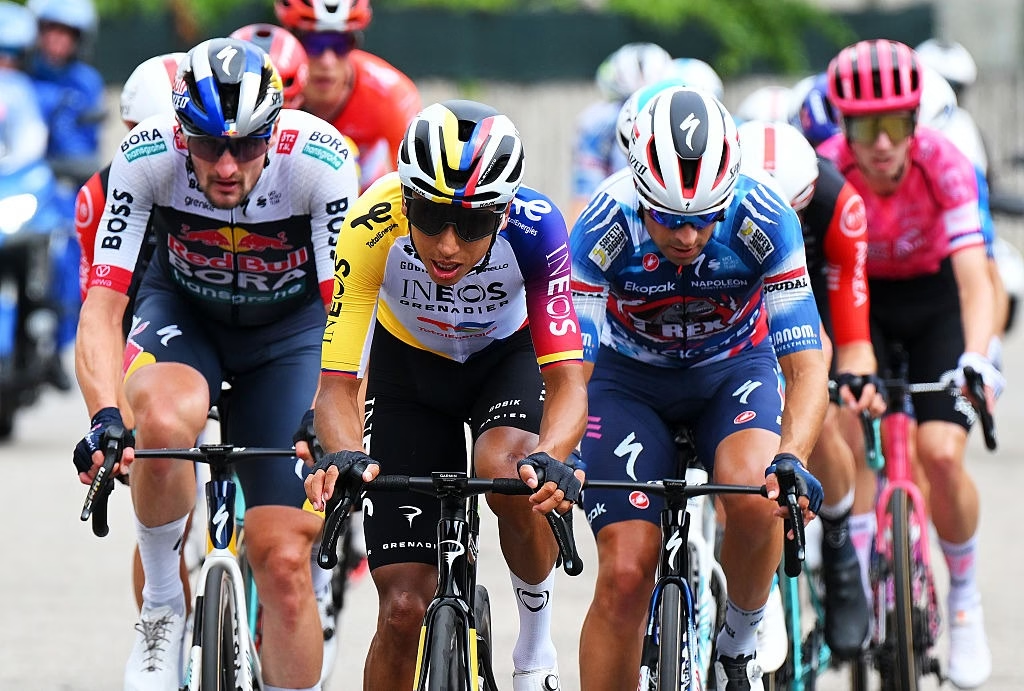 Photo Credit: Getty
How does the mountains classification work?
Riders collect points at categorised summits.
Harder climbs generally offer more points than smaller ones, while selected summit finishes may carry additional value.
The leader wears the blue-and-white polka-dot jersey.
A pure climber does not automatically win it.
The classification often rewards riders who repeatedly enter breakaways and target mountain points throughout the stage.
A GC favourite can take the jersey by winning summit finishes, but they may not actively defend it if doing so conflicts with the red jersey battle.
Who can wear the white jersey?
The white jersey goes to the highest-placed eligible young rider in the general classification.
The competition is based on time, not points.
That means the white jersey battle follows the same basic pattern as the red jersey contest. Riders must climb, time trial and avoid losing time across all 21 stages.
A young rider can lead both classifications simultaneously.
In that case, another eligible rider may wear white on the road while the official leader wears red.
How do teams work at the Vuelta?
Each team begins with eight riders.
Most squads divide their roles between:
- A general classification leader
- Climbing domestiques
- Road captains
- Breakaway specialists
- Sprinters
- Lead-out riders
- Time triallists
Not every team brings every type of rider.
A squad built around a GC contender may include several climbers and very little sprint support.
Another may abandon overall ambitions entirely and target breakaways.
The best teams remain flexible. If their leader crashes or loses time, riders previously assigned to domestique work can begin chasing stages.
Our guide to how Grand Tour teams divide their roles explains why eight riders can be pursuing several different objectives within the same race.
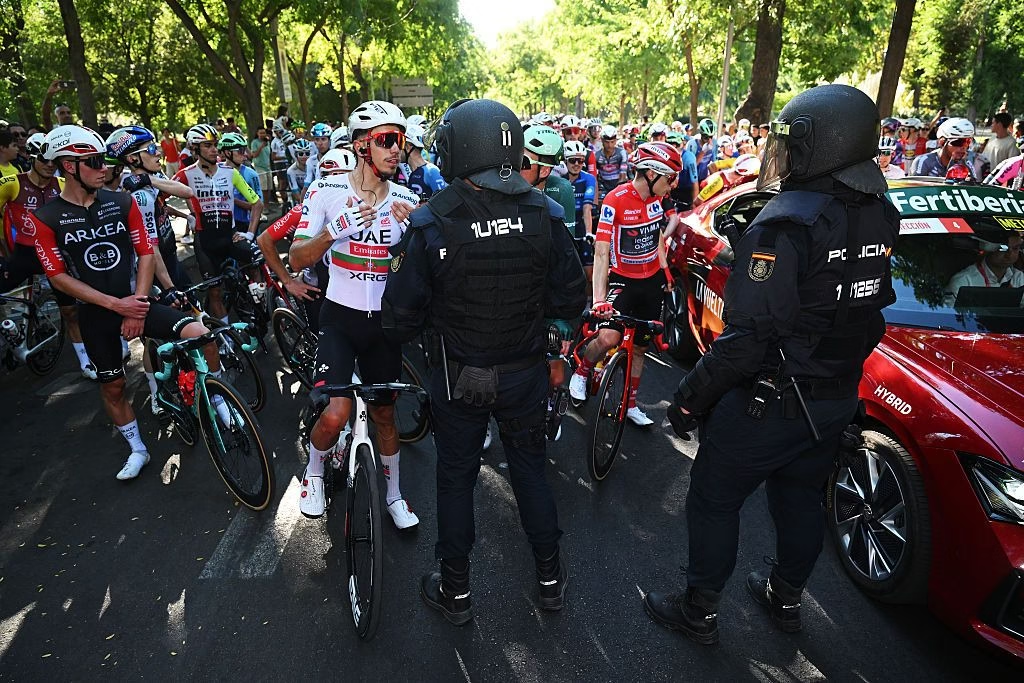
What does a domestique do?
A domestique works for the team’s protected riders.
They may collect bottles, control breakaways, provide shelter from wind, guide a leader through the peloton or set the pace on a climb.
Mountain domestiques are particularly important at the Vuelta.
They allow the leader to remain protected until the decisive kilometres.
A team with several riders remaining near the top of a final climb can control attacks and dictate the tempo.
An isolated leader must respond personally to every serious move.
The strongest domestiques sometimes become stage contenders themselves once their work is complete or if the team’s original plan changes.
For a detailed look at the role, see what a domestique does during a Grand Tour.
How do riders eat and drink during stages?
Riders cannot wait until the stage finish to refuel.
They eat and drink throughout the day, using bottles, gels, rice cakes, bars and food collected from team staff.
At designated feed zones, riders can receive a musette containing food and drinks without stopping.
Domestiques may also drop back to the team car, collect several bottles and distribute them to teammates.
Nutrition becomes especially important at the Vuelta because of the heat and repeated mountain stages.
A rider who fails to eat enough on one day may struggle to recover before the next.
Our guide to feed zones and how riders eat during stage races explains the full process.
Why do riders lose time on flat stages?
Flat stages are not always easy.
Crosswinds can split the peloton into smaller groups called echelons. Riders caught behind may lose minutes even though the stage contains no major climb.
Crashes and mechanical problems also become dangerous when the pace rises.
GC teams therefore spend significant energy keeping leaders near the front.
Positioning is not simply about avoiding danger. It prevents a rider becoming trapped behind a split when another team attacks.
The Vuelta’s coastal and exposed roads can make wind particularly important.
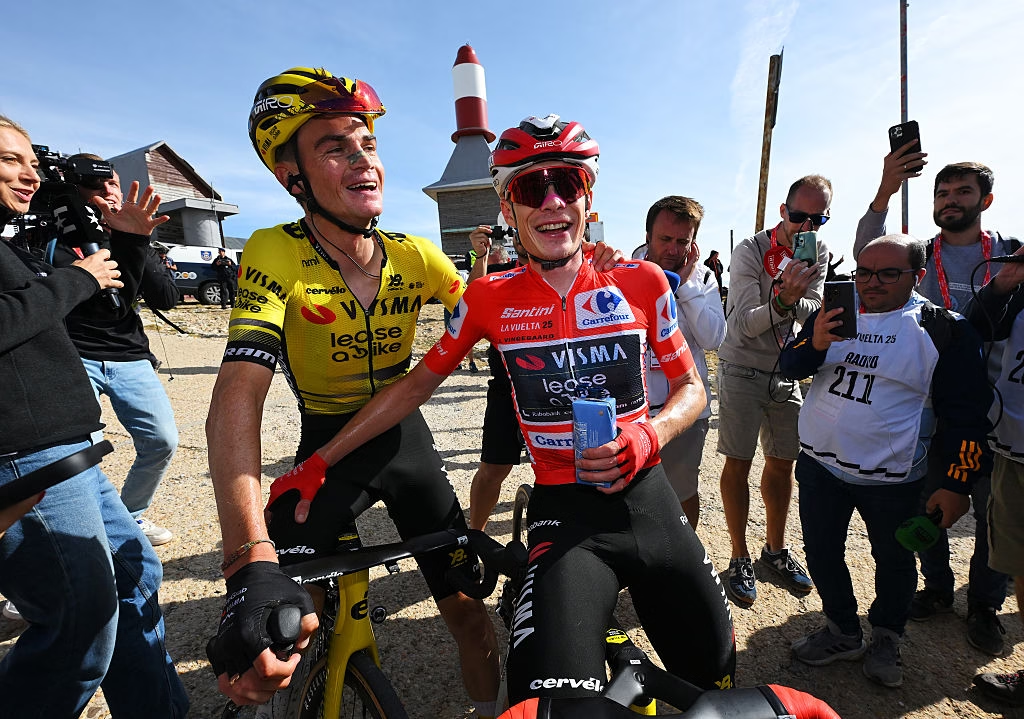 Photo Credit: Getty
How do time cuts work?
Every road stage has a maximum permitted finishing time.
The exact limit depends on the winner’s time, average speed and stage difficulty.
Riders arriving outside the limit can be eliminated.
This is a major concern for sprinters during mountain stages.
They often form a group known as the grupetto and ride together at a pace calculated to reach the finish safely inside the limit.
Race officials can occasionally reinstate a large group if exceptional circumstances caused many riders to miss the cut.
That should never be assumed.
Surviving the mountains is part of winning the green jersey or reaching Granada.
Our detailed Grand Tour time-cut explainer covers how the limit is calculated, why it changes each day and what happens when a rider finishes too late.
What happens if a rider crashes?
A rider may remount and continue if they are physically capable and the bike can be repaired or replaced.
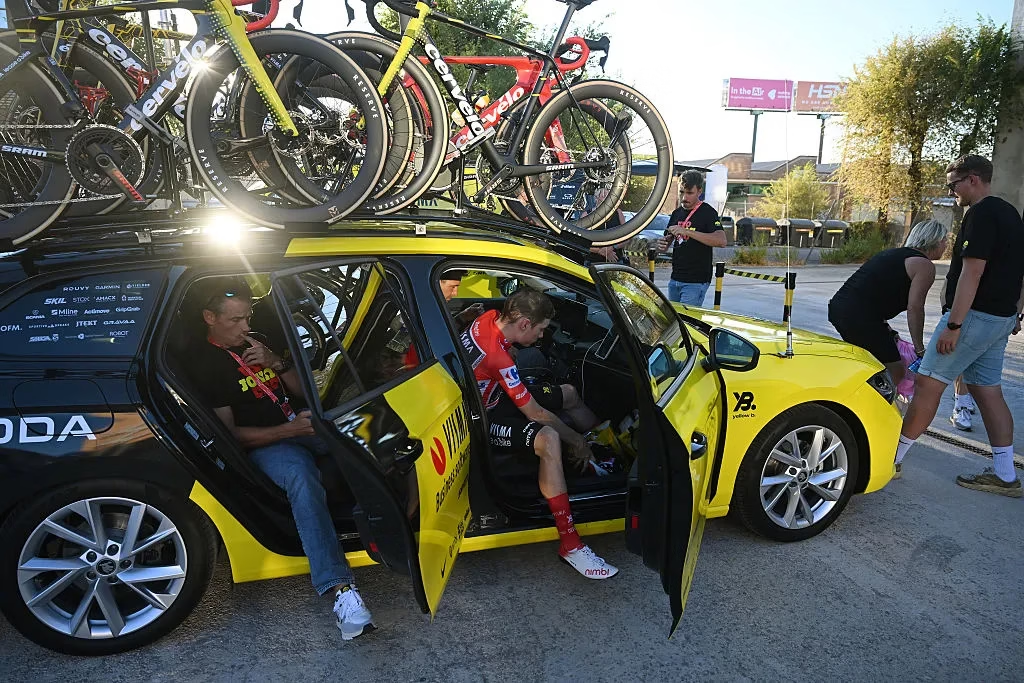
Team cars and neutral service vehicles provide assistance.
Teammates may wait and help pace a leader back towards the peloton.
A crash can still end the race immediately.
Fractures, concussion or other injuries may make continuing unsafe.
Even riders who finish the stage can withdraw before the next one if later medical checks reveal more serious damage.
The Vuelta’s narrow roads and technical descents make positioning and bike handling especially important.
What does DNF or DNS mean?
A DNF is a rider who starts a stage but does not finish.
A DNS is a rider who does not start the next stage.
A rider may finish after a crash and then be listed as DNS the following morning.
OTL means outside the time limit.
All three statuses mean the rider is no longer in the race.
Grand Tour start lists become gradually smaller through crashes, illness, fatigue and time-cut eliminations.
 Photo Credit: Getty
What are bonus seconds?
Bonus seconds reduce a rider’s overall time.
They are normally awarded to the first riders across selected stage finishes and intermediate bonus points.
This can make close sprint finishes important to the general classification.
A climber winning a summit stage may gain both the physical gap created on the road and additional bonus seconds.
Over three weeks, repeated small gains can become significant.
Teams may also chase bonus seconds tactically, particularly when only a few seconds separate podium positions.
Why is the Vuelta often unpredictable?
The race takes place late in the season.
Some riders arrive after completing the Tour de France. Others have spent weeks training specifically for the Vuelta.
Their form can be difficult to compare.
A major favourite may be physically strong but mentally tired. A younger rider may arrive fresh and improve throughout the race.
Team objectives also change quickly.
A rider who loses GC time can begin stage hunting. A domestique may become the leader. A breakaway can gain enough time to create an unexpected red jersey contender.
The demanding route magnifies those changes.
Does the strongest climber always win?
No.
The Vuelta winner must do more than climb well.
They must also:
- Time trial effectively
- Avoid crashes
- Remain well positioned
- Recover between stages
- Handle heat
- Descend safely
- Use teammates efficiently
- Avoid illness
- Judge attacks correctly
A rider may be the strongest on one summit and still lose the race through a poor time trial or badly timed mechanical problem.
Grand Tours reward the most complete and consistent rider rather than simply the best climber.
What should beginners watch during a mountain stage?
The decisive action often begins before the television pictures suggest.
Watch which team is setting the pace.
A team riding quickly may be trying to weaken rivals, discourage attacks or prepare its own leader.
Count how many teammates each favourite still has.
An isolated rider is more vulnerable, even if they appear physically comfortable.
Pay attention when domestiques begin dropping away. That normally means the pace is becoming serious.
The final attack may last only 30 seconds, but the conditions for it have been created over the previous hour.
What should beginners watch during a time trial?
The television graphics show each rider’s time at intermediate checkpoints.
Compare riders at the same point rather than their live finishing times.
Wind and weather can change during the day, potentially helping early or late starters.
Look at pacing as well as speed.
A rider may begin quickly and fade near the finish. Another may lose time on the opening climb before recovering strongly.
GC riders are competing against several people simultaneously.
The stage winner matters, but a rider finishing fifth may still be delighted if they gain time on every podium rival.
How are start times decided in a time trial?
Riders start individually at fixed intervals.
The order usually follows the reverse general classification.
The lowest-ranked rider begins first, while the red jersey starts last.
The top contenders therefore know the times recorded by most of their rivals before beginning.
Team cars provide pacing information throughout the stage.
The final riders receive more television attention because their performances decide the general classification.
What happens on the final stage?
The final stage is normally ceremonial for the general classification.
Riders celebrate, pose for photographs and allow the jersey winners to enjoy the opening kilometres.
The racing becomes serious later.
Sprinters and breakaway riders still compete for the stage victory.
In 2026, the race finishes in Granada rather than Madrid. Stage 21 covers 99.4km and is officially classified as flat, making a sprint finish the most likely outcome.
The red jersey can theoretically change if something extraordinary happens.
In normal circumstances, the overall winner is already secure after Stage 20.
 Photo Credit: Getty
Why does the 2026 Vuelta finish in Granada?
Granada becomes only the eighth city to host the final conclusion of the men’s Vuelta.
The finish is connected to the Alhambra, giving the race a visually distinctive finale after its long Andalusian block.
Madrid had become the established finishing city, with Santiago de Compostela occasionally replacing it.
Ending in Granada reinforces the Mediterranean and southern-Spanish identity of the 2026 route.
It also allows the race to finish without a major transfer north after the decisive mountain stage.
How long does each stage take?
Most road stages last between four and five hours.
Short mountain stages may be completed more quickly but can be raced at higher intensity.
Long hilly stages can exceed five hours.
Time trials are different because riders compete individually. Television coverage may last several hours even though each rider spends only a short time on the course.
Stage schedules also vary according to expected speed, weather and local road requirements.
Where can the 2026 Vuelta be watched?
Broadcast arrangements vary by country and subscription service.
In the UK, the race is expected to be shown through Warner Bros. Discovery’s cycling platforms, with coverage likely through Eurosport and HBO Max.
US coverage has previously been available through Peacock, while FloBikes commonly holds Canadian rights.
Final 2026 listings should be confirmed closer to the race because rights and platform arrangements can change.
Live coverage usually begins after the stage has already started.
Major mountain stages and weekend stages may receive longer broadcasts.
What time do Vuelta stages usually finish?
Most stages finish during the late afternoon in Spain.
For viewers in the UK, Spain is generally one hour ahead during the race, while Monaco and France use the same Central European time zone.
The exact finish time depends on stage length, average speed and local scheduling.
Mountain stages can finish later if the route is long or difficult.
Time trials use a detailed schedule showing every rider’s individual start time.
Which stages should beginners make sure they watch?
A viewer unable to follow every stage should prioritise:
| Stage | Why it matters |
|---|---|
| Stage 1 | Technical Monaco time trial and first red jersey |
| Stage 4 | Short, intense Andorra mountain stage |
| Stage 7 | First major Spanish summit finish at Valdelinares |
| Stage 9 | Alto de Aitana before the first rest day |
| Stage 12 | Major summit finish at Calar Alto |
| Stage 18 | Long individual time trial in Jerez |
| Stage 19 | Peñas Blancas immediately after the time trial |
| Stage 20 | Final mountain showdown at Collado del Alguacil |
| Stage 21 | Final celebration and likely Granada sprint |
Stage 4 may produce the first major GC gaps.
Stages 18 to 20 form the most decisive sequence.
Which type of rider does the route favour?
The ideal 2026 winner is a strong climber who can also time trial.
The route contains enough steep climbing to punish heavier specialists, but 41.5km of individual time trials means a pure climber cannot afford major weakness against the clock.
Recovery will also matter.
The final week contains several difficult stages in succession, with limited opportunities to regain energy.
The race favours riders who can climb repeatedly rather than producing one exceptional mountain performance.
Strong teams will be important, particularly on the short Andorra stage and during the Andalusian mountains.
Can a breakaway rider win the whole Vuelta?
It is possible, but unusual.
A strong rider can gain several minutes if the peloton underestimates an early breakaway.
Once that rider becomes a genuine threat, the main teams will begin controlling them.
The surprise contender must then prove capable of defending the advantage in the mountains and time trials.
Most breakaway red jerseys are temporary.
They can still change the race by forcing favourites to attack earlier than expected.
Is the Vuelta harder than the Tour de France?
The answer depends on what “harder” means.
The Tour has greater pressure, stronger control and often the deepest collection of leading riders.
The Vuelta frequently contains more steep summit finishes and hotter weather.
Its racing can also be less predictable, which makes energy management difficult.
A rider may find the Tour mentally harder and the Vuelta route physically more aggressive.
Both are three-week endurance events requiring exceptional recovery.
The 2026 Vuelta’s 58,000 metres of climbing makes it especially demanding.
Our explainer on how hard a Grand Tour is for professional riders covers the accumulated demands of climbing, racing speed, recovery, transfers and daily time cuts.
Beginner’s guide to following the general classification
The simplest approach is to track six things each day:
- Who wears the red jersey?
- What is the gap between the main favourites?
- Did anyone lose time through a split or crash?
- Which team looked strongest?
- Who gained bonus seconds?
- What type of stage comes next?
Do not assume the stage winner has changed the overall race.
A breakaway can win several minutes ahead while the GC favourites finish together.
Equally, a rider finishing 15th may gain time because a rival was dropped farther behind.
The overall clock matters more than the stage position.

Vuelta a España 2026 route verdict
The 2026 Vuelta is built to create an early general classification battle and keep it active until the final mountain stage.
The Monaco time trial immediately places the favourites under pressure.
Font-Romeu and Andorra bring climbing before the race has properly settled. Valdelinares and Alto de Aitana provide further summit finishes before the first rest day.
The second half becomes an Andalusian endurance test.
Calar Alto, La Pandera, Peñas Blancas and Collado del Alguacil are separated by difficult hilly stages and a 32.5km individual time trial.
That combination gives every type of GC contender a chance to gain time and several ways to lose it.
The route is not designed around one defining climb.
It is built around accumulated pressure.
Why the 2026 Vuelta is worth watching
The Vuelta often produces the most open Grand Tour of the season.
Riders arrive with uneven form, teams change plans quickly and steep finishes create immediate gaps.
The 2026 route strengthens all of those qualities.
It begins with Monaco glamour, moves rapidly through the Pyrenees and Andorra, follows the Mediterranean and then commits fully to Andalusia for the final phase.
The red jersey contest should reward the most complete rider.
The stage victories may be shared between sprinters, climbers, time triallists and breakaway specialists.
For a beginner, the central rule is simple.
Every rider is racing the same route, but not every rider is chasing the same prize.
Some want red. Some want green or polka dots. Others need one stage victory to transform their entire season.
That mixture of objectives is what makes the Vuelta a España more than three weeks of riders climbing mountains.
It is a race that keeps changing its meaning from one day to the next.

