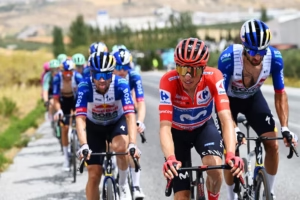
Time bonuses could play a significant role in deciding the 2026 Tour de France Femmes.
The race contains eight road stages and one individual time trial, with bonus seconds available at every road-stage finish. Three additional Bonus Points are positioned on Stages 3, 5 and 6, creating opportunities for the leading riders to reduce their overall times before reaching the finish.
The numbers appear small. A stage winner receives ten seconds, while the maximum reward at an intermediate Bonus Point is six.
Across a nine-stage race, those gains can become important.
The 2024 Tour de France Femmes was decided by only four seconds. A rider collecting a stage victory, several podium finishes and one well-timed intermediate bonus could therefore build a meaningful advantage without actually dropping a rival on the road.
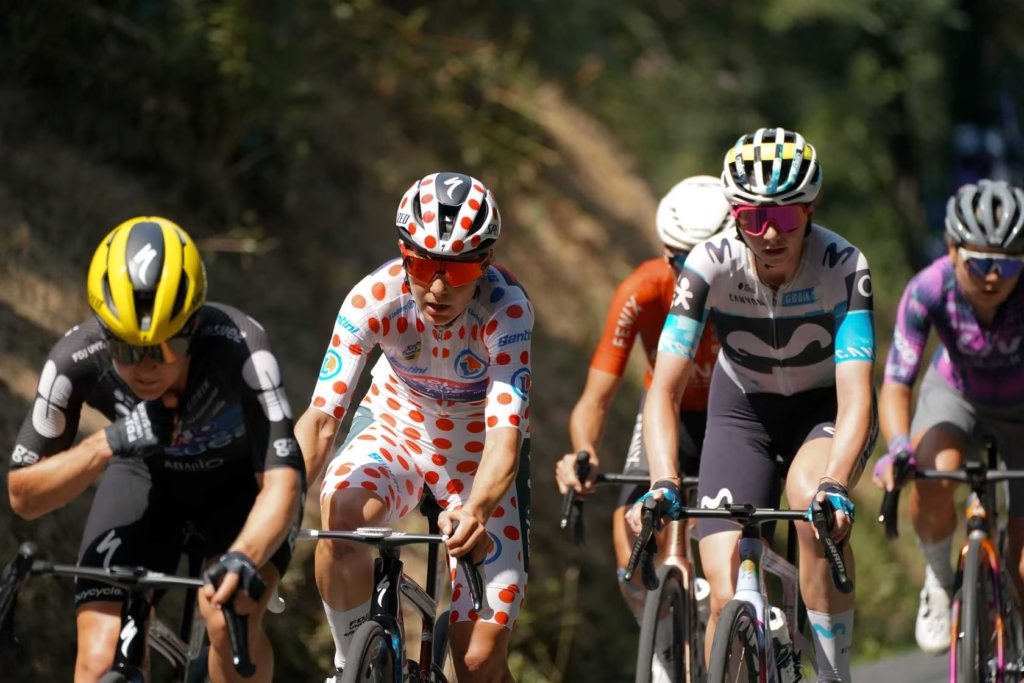 Photo Credit: A.S.O/Thomas Maheux
Tour de France Femmes 2026 time bonuses at a glance
| Position | Road-stage finish bonus | Bonus Point reward |
|---|---|---|
| 1st | 10 seconds | 6 seconds |
| 2nd | 6 seconds | 4 seconds |
| 3rd | 4 seconds | 2 seconds |
Finish bonuses are available on all eight road stages.
The Stage 4 individual time trial does not award finish bonuses. Every rider’s actual recorded time simply counts towards the general classification.
The three intermediate Bonus Points appear on:
- Stage 3
- Stage 5
- Stage 6
The official regulations describe these as key points of particular difficulty rather than ordinary intermediate sprints.
The full sequence of stages is covered in our Tour de France Femmes 2026 route guide.
What is a time bonus in cycling?
A time bonus is a deduction from a rider’s general classification time.
It does not alter the time shown on the stage results.
Suppose two riders finish together in the same group, with both receiving a recorded stage time of four hours.
If one rider wins and receives a ten-second bonus, her cumulative general classification time is reduced by ten seconds. The rider who finished fourth receives no deduction.
The stage result may therefore show both riders on the same time, while the winner gains ten seconds in the yellow jersey competition.
That distinction is central to understanding time bonuses.
They are not extra seconds added to a rival’s result. They are seconds removed from the rewarded rider’s overall time.
For a broader introduction to the standings, our guide to what GC means in the Tour de France Femmes explains how every stage time is added together.
How do finish bonuses work in the 2026 Tour de France Femmes?
The first three riders at every road-stage finish receive:
- Ten seconds for first
- Six seconds for second
- Four seconds for third
The same scale applies whether the stage ends in a bunch sprint, on a short hill or at the summit of Mont Ventoux.
A sprinter winning Stage 2 in Geneva receives the same ten-second deduction as a climber winning Stage 7 on Mont Ventoux.
The sporting importance may be different.
A pure sprinter is unlikely to remain in yellow through the mountains, while a general classification contender gaining ten seconds on Ventoux may carry that advantage to the end of the race.
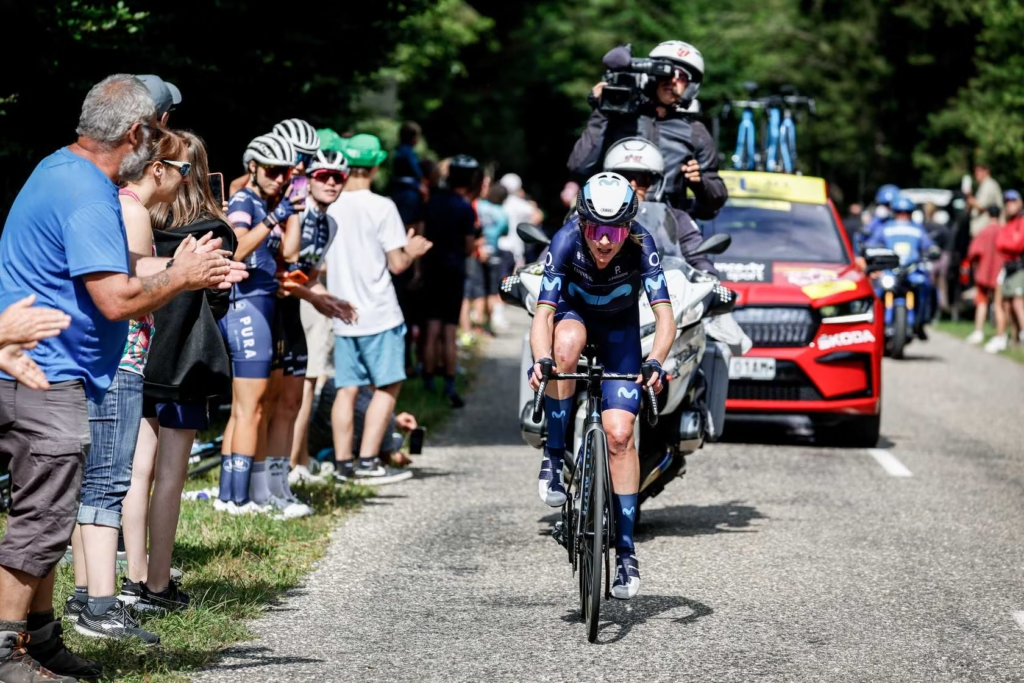 Photo Credit: A.S.O./Fabien Boukla
Are there bonuses in the Stage 4 time trial?
No finish bonuses are awarded during the Stage 4 individual time trial.
The Dijon time trial covers 21km and counts entirely through the riders’ actual finishing times. The fastest rider gains whatever margin she creates on the road, but there is no additional ten-second deduction for winning.
If one rider completes the course 20 seconds faster than another, she gains exactly 20 seconds in the general classification.
On a road stage, a rider finishing ten seconds ahead and winning could gain 20 seconds overall: ten seconds from the physical gap and another ten from the bonus.
The riders best suited to the Dijon course are assessed in our guide to the Tour de France Femmes 2026 time-trial contenders.
What are the Tour de France Femmes Bonus Points?
Bonus Points are intermediate locations where the first three riders receive time deductions of six, four and two seconds.
They are separate from the ordinary intermediate sprint used for the green jersey competition.
The Tour organisers place them at difficult or tactically important points on the route, often near the top of a climb or within a demanding finale.
The first rider receives six seconds, the second four and the third two.
In 2026, one Bonus Point appears on each of Stages 3, 5 and 6.
These points encourage attacks before the finish and can force general classification teams to race earlier than they otherwise would.
Bonus Points are not the same as intermediate sprints
An intermediate sprint primarily awards points towards the green jersey.
A Bonus Point awards seconds towards the yellow jersey classification.
The same rider can be interested in both, but the rewards serve different competitions.
A sprinter may contest an intermediate sprint because she wants points.
A GC contender may ignore that sprint but attack later for a Bonus Point because six seconds could influence her overall position.
The television graphics and race profile should identify which type of competition is being contested.
The distinction matters because crossing an ordinary intermediate sprint first does not automatically reduce a rider’s general classification time.
The wider collection of yellow, green, polka-dot and white jersey contests is explained in our beginner’s guide to the Tour de France Femmes 2026.
Why can ten seconds matter so much?
A nine-stage race offers fewer opportunities to recover lost time than a three-week Grand Tour.
In the men’s Tour de France, a rider losing ten seconds early may have almost three weeks to regain it.
The Tour de France Femmes runs from 1 to 9 August and contains only nine stages. The 2026 route totals 1,175km, with the decisive mountain stages arriving during the final weekend.
That compresses the general classification contest.
A rider who collects bonuses during the opening stages may reach the time trial and mountains with a useful cushion.
Ten seconds can determine:
- Who wears the yellow jersey
- The order of riders on the podium
- Who leads the young rider classification
- Which team must control the peloton
- Whether a rider needs to attack in the mountains
- Whether two riders are recorded on the same overall time
The psychological value can also exceed the numerical gain.
Taking yellow through bonuses forces another team to decide whether it wants to chase, control and defend the race.
How can a rider gain time without creating a road gap?
Imagine two GC contenders finish together in a group.
Rider A finishes second and receives six bonus seconds.
Rider B finishes fifth and receives nothing.
Both receive the same stage time, but Rider A gains six seconds in the general classification.
If the same thing happens again the next day, the accumulated difference becomes 12 seconds.
No visible gap has appeared between them on the road. The bonuses alone have separated them.
This is why the sprint for minor places can remain important even after a breakaway rider has already won the stage.
Second and third place still offer six and four seconds.
Can a rider gain both a road gap and a bonus?
Yes.
This is where time bonuses become most powerful.
Suppose a rider attacks near the finish and crosses the line eight seconds ahead of her main rival.
If she wins the stage, she receives another ten-second deduction.
Her total GC gain becomes 18 seconds.
The rival may also receive a bonus if she finishes second or third, which reduces the net difference.
| Result | Physical gap | Bonus | Total GC effect |
|---|---|---|---|
| Rider A wins | 8 seconds ahead | 10 seconds | Gains 18 seconds before rival’s bonus |
| Rider B finishes second | 8 seconds behind | 6 seconds | Limits net loss to 12 seconds |
| Rider B finishes fourth | 8 seconds behind | No bonus | Loses full 18 seconds |
That explains why placing can matter almost as much as the measured gap.
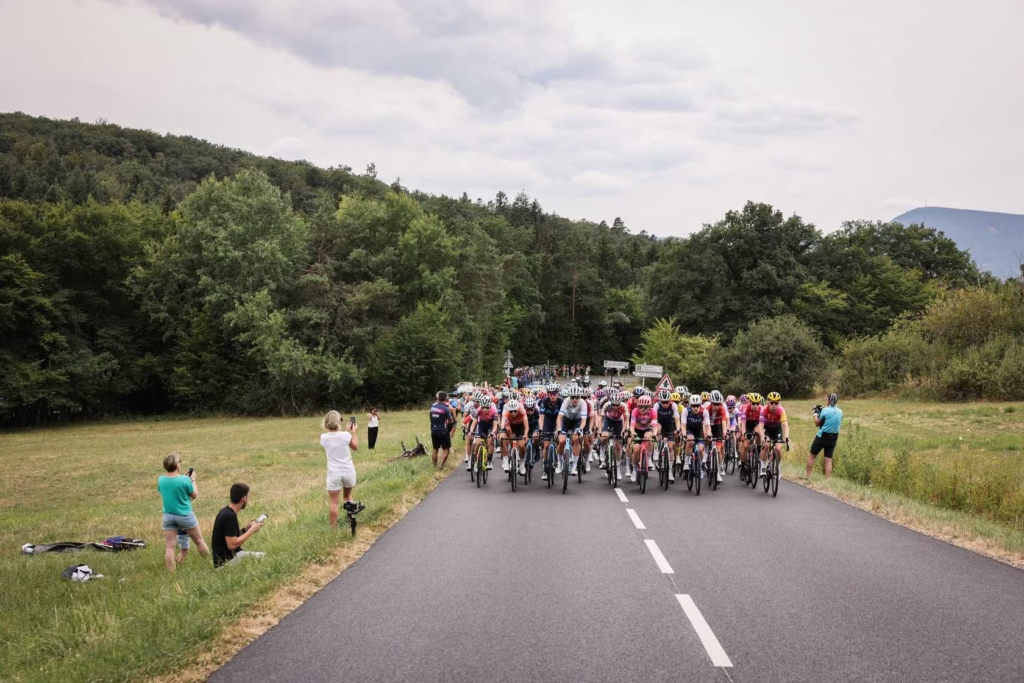
Can bonuses decide who wears yellow after Stage 1?
Yes.
Stage 1 is a road stage around Lausanne rather than a time trial. The first three riders therefore receive ten, six and four seconds.
If the leading group is awarded the same finishing time, the stage winner should take the first yellow jersey because of the ten-second deduction.
A rider finishing second would begin six seconds behind, while third would begin another two seconds back.
Those initial gaps may survive through the opening days if the peloton continues finishing together.
The yellow jersey can therefore change through stage placings before any rider has created a clear physical separation.
The uphill approach and likely opening-day scenarios are covered in our Tour de France Femmes 2026 Lausanne guide.
Why the first three stages could become a bonus battle
The 2026 Tour begins with three road stages before the Dijon time trial.
That creates three consecutive opportunities to collect finish bonuses.
Stage 1 around Lausanne is officially classified as flat, although its uphill finish means the winner may need more than pure sprint speed.
Stage 2 runs from Aigle to Geneva and is designed as a likely bunch-sprint finish.
Stage 3 from Geneva to Poligny is classed as hilly and contains the first intermediate Bonus Point of the race.
A versatile rider capable of finishing highly on all three days could build a useful advantage before Stage 4.
That makes riders with sprinting, climbing and positioning ability especially dangerous during the Swiss Grand Départ.
The opening weekend is examined in more detail in our Tour de France Femmes 2026 Swiss Grand Départ guide, while the likely sprint finish on the second day is covered in our Geneva Stage 2 guide.
How much time could one rider theoretically gain?
A rider winning all eight road stages would collect 80 seconds in finish bonuses.
Winning all three Bonus Points would add another 18 seconds.
The theoretical maximum is therefore 98 seconds.
That would require one rider to win every road stage and every intermediate bonus, which is not remotely realistic on a route containing sprint stages, hills, Mont Ventoux and the final mountain stage around Nice.
The calculation still demonstrates the scale of the system.
A more realistic mixed campaign might include:
- One stage victory: 10 seconds
- Two second places: 12 seconds
- One third place: 4 seconds
- One Bonus Point victory: 6 seconds
That produces 32 seconds.
Thirty-two seconds could easily determine the podium in a close Tour de France Femmes.
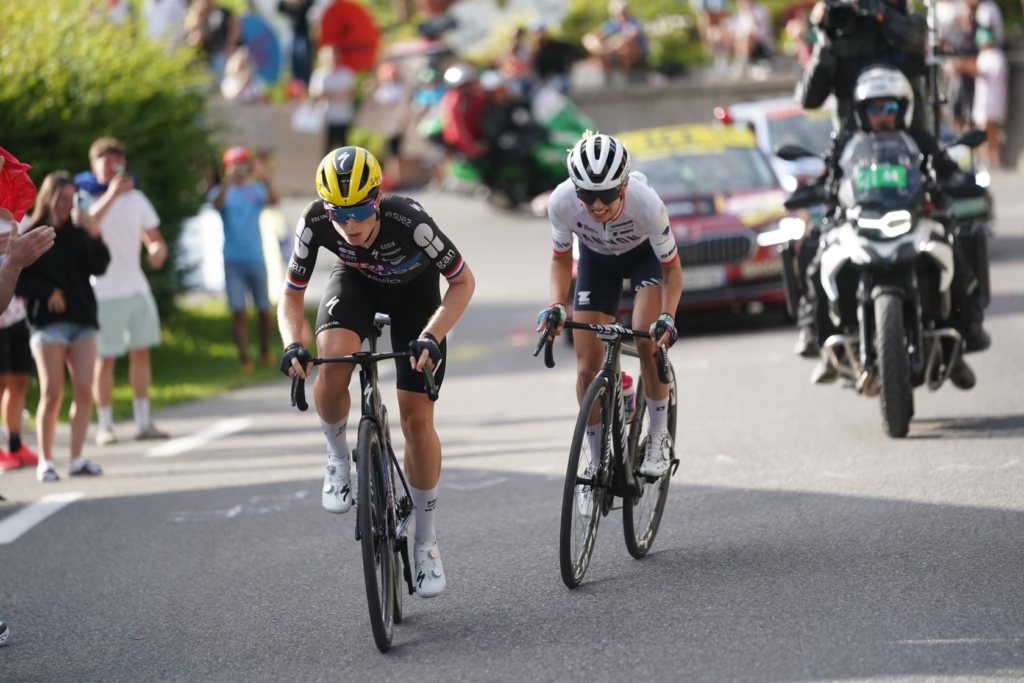
Why Bonus Points change team tactics
Without intermediate time bonuses, GC teams can sometimes wait until the final climb or finish before committing their strongest riders.
A Bonus Point creates an earlier decision.
Does the yellow jersey team control the breakaway so its leader can contest the seconds?
Does a rival send teammates to increase the pace before the bonus?
Should a rider sprint for six seconds if doing so could cost energy later?
Is it better to let the breakaway collect all the bonuses and remove them from the GC contest?
Those decisions depend on the standings and stage profile.
A team protecting a large lead may prefer the breakaway to stay away.
A rider only four seconds behind yellow may demand that her team brings the escape back.
Why teams may deliberately let a breakaway take the bonuses
A breakaway can neutralise the tactical importance of a Bonus Point for the GC favourites.
If three riders with no overall ambitions cross first, they collect the six, four and two seconds.
Nothing remains for the yellow jersey contenders.
The race leader’s team may consider that a success.
It avoids spending energy controlling the stage and prevents close rivals from reducing their deficit.
This can create an unusual situation where the leader’s team appears happy to let the break gain time, while another GC team does most of the chasing.
The time bonus may be small, but responsibility for controlling it can expose wider team politics.
Which riders benefit most from finish bonuses?
Finish bonuses favour riders who can regularly place near the front.
That includes several different rider types.
Sprinter-puncheurs
A rider able to contest bunch sprints and survive short climbs can collect bonuses repeatedly during the opening stages.
Explosive GC contenders
A climber with a strong finishing acceleration may earn seconds even when the main favourites reach the summit together.
Versatile all-rounders
Riders capable of placing on flat, hilly and mountain stages have more opportunities than specialists.
Strongly supported team leaders
A good lead-out or mountain train can place its leader in position to contest the bonus without wasting energy before the sprint.
The system is less helpful to riders who climb steadily but lack acceleration.
They may finish with the same group while repeatedly missing the first three places.
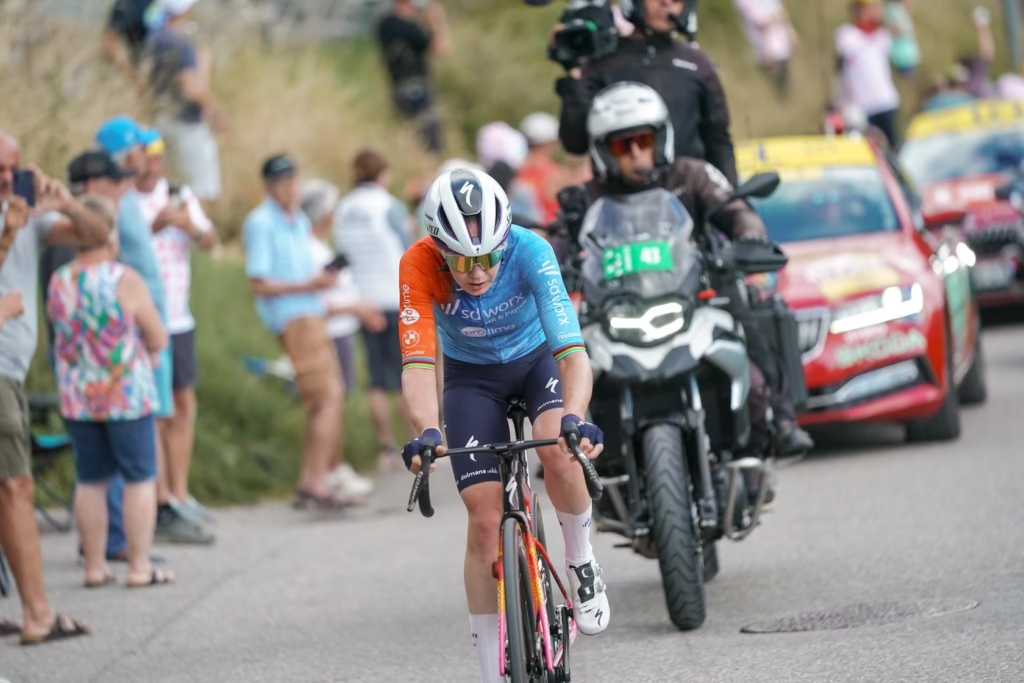 Photo Credit: A.S.O./Thomas Maheux
Why Demi Vollering should pay attention to bonuses
Demi Vollering is one of the strongest climbers and most explosive GC riders in the women’s peloton.
That combination makes finish bonuses particularly valuable.
She does not necessarily need to drop every rival to gain time. If a reduced group reaches an uphill finish, her acceleration can place her first or second and create a bonus advantage.
Repeated small gains could also compensate for seconds lost in the Dijon time trial or provide insurance before Mont Ventoux.
Her rivals may therefore need to contest finishes that would otherwise appear relatively unimportant.
Allowing Vollering to collect ten seconds uncontested can become expensive over several stages.
Why Pauline Ferrand-Prévot’s rivals cannot ignore the seconds
Defending champion Pauline Ferrand-Prévot won the 2025 Tour through a decisive mountain performance rather than a campaign built around bonuses.
The 2026 route may create a closer contest before the final weekend.
Ferrand-Prévot’s combination of positioning, climbing and finishing speed makes her capable of collecting bonuses on varied terrain.
Her rivals cannot assume that every important GC difference will be created on Mont Ventoux.
If she enters Stage 7 with a 20 or 30-second advantage built partly through bonuses, the tactical demands of the climb change.
The riders behind must attack rather than simply follow.
Her preparation and status as defending champion are covered in our Pauline Ferrand-Prévot 2026 season guide.
Could a sprinter wear yellow through bonuses?
Yes, particularly during the opening stages.
A sprinter who wins Stage 1 receives ten seconds and may take yellow.
Another victory on Stage 2 could extend that advantage even if the main GC contenders finish in the same group.
The difficult question is how long the sprinter can remain with the leaders once the route becomes hillier.
A rider such as Lorena Wiebes can collect finish bonuses and yellow during sprint stages, but the overall contenders will expect to recover that time in the time trial or mountains.
A more versatile rider such as Marianne Vos may be able to retain the jersey longer because she can survive harder terrain.
The bonuses can therefore shape the race even when the recipient is not a realistic overall winner.
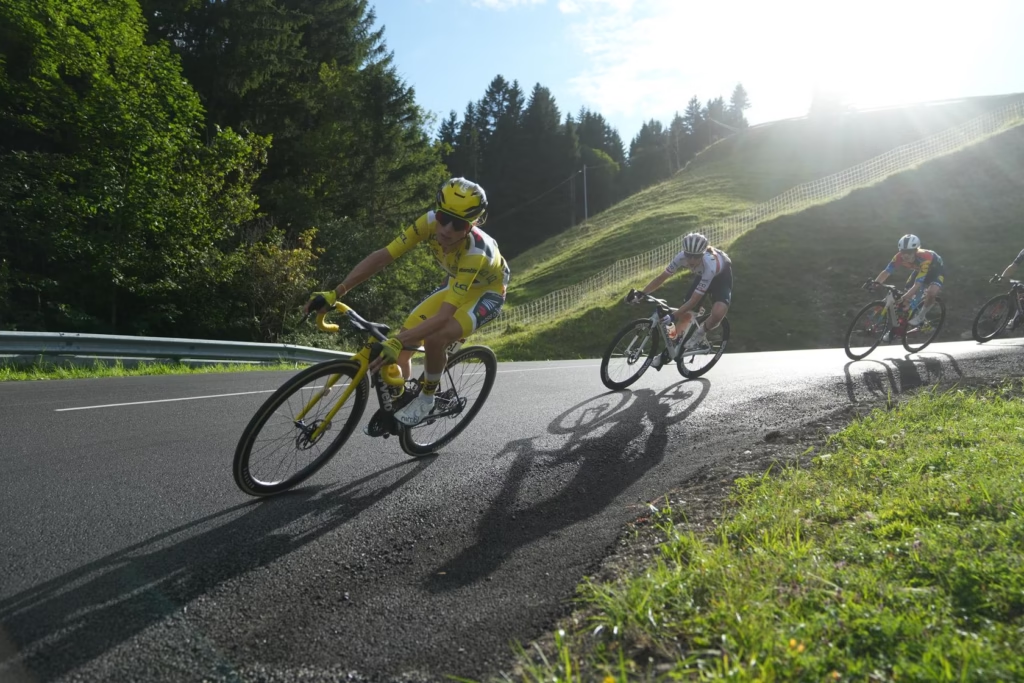 Photo Credit: A.S.O./Thomas Maheux
How bonuses affect the yellow jersey team
Wearing yellow creates responsibilities.
The leader’s team is expected to help control the race, monitor dangerous breakaways and protect its rider through the peloton.
A team may therefore decide that collecting an early bonus is not automatically desirable.
Taking yellow on Stage 1 could require several days of work before the decisive mountains.
Some teams actively avoid controlling an early jersey if the advantage is too small to defend efficiently.
Others value the visibility, prestige and confidence enough to accept that burden.
A ten-second bonus can therefore change more than the standings. It can transfer responsibility from one team to another.
What happens when riders finish on the same overall time?
The individual general classification is calculated by adding each rider’s stage times while accounting for bonuses and penalties.
The 2026 race includes an individual time trial, so fractions of a second recorded during that stage can help separate riders who remain tied on total time.
If a tie remains, stage placings are added together, with the rider recording the lower total ranked higher. The finishing position on the final stage acts as the last available tie-break.
Bonus seconds often prevent that process from becoming necessary.
A single two-second reward at a Bonus Point can separate riders who would otherwise remain level.
Do bonus seconds count towards the white jersey?
Yes.
The best young rider classification is based on the general classification by time.
Any bonus deducted from an eligible rider’s GC total also improves her position in the white jersey competition.
A young rider may therefore contest a Bonus Point for two reasons:
- To improve her overall GC position
- To gain time on another eligible rider
The same six seconds affect both classifications because they use the same cumulative time.
 Photo Credit: A.S.O./Thomas Maheux
Do bonuses affect the green jersey?
Not directly.
Time bonuses influence the general classification.
The green jersey is decided through points awarded at stage finishes and intermediate sprints.
A stage winner can receive both:
- Ten seconds towards the yellow jersey competition
- Stage points towards the green jersey competition
These are separate rewards.
The Stage 1 winner may lead both classifications after the finish. Because one rider cannot normally wear two leaders’ jerseys simultaneously, the green jersey may be worn by the next eligible rider while the official leader remains in yellow.
Do bonuses count towards the team classification?
Not in the same way as the individual GC.
The team classification is calculated from the times of each team’s three best riders on every stage.
Individual time bonuses are designed for the individual general classification and do not simply give the entire team the same deduction.
A team can therefore win a stage bonus through its leader without gaining an equivalent advantage in the team competition.
The yellow jersey and team classification can develop independently.
The 2026 race contains 21 teams and a full peloton of 147 riders, as explained in our guide to how many riders and teams are in the Tour de France Femmes 2026.
Can a rider lose time bonuses through a penalty?
A rider’s general classification includes both bonus deductions and any time penalties imposed by the commissaires.
A ten-second bonus can therefore be cancelled out by a ten-second penalty.
Penalties can be awarded for breaches of race regulations, including some forms of illegal assistance, dangerous conduct or drafting behind vehicles.
The official result will incorporate both elements.
A rider may win a stage and receive the ten-second bonus but still gain less than expected if a separate penalty is imposed.
Why the Stage 5 and Stage 6 Bonus Points could matter most
Stages 5 and 6 sit between the Dijon time trial and the Mont Ventoux summit finish.
By that point, the GC hierarchy should be clearer.
The time trial will reveal which climbers have lost ground and which all-rounders have gained it. Riders then have two hilly stages containing Bonus Points before the race reaches its first full mountain stage.
That makes the seconds more targeted.
An early Bonus Point may be contested by riders still discovering their position in the race.
On Stages 5 and 6, teams should know exactly how valuable six seconds would be.
A rider ten seconds behind yellow may attack.
A leader with a narrow advantage may order her team to control.
A contender already more than a minute down may conserve energy for Ventoux instead.
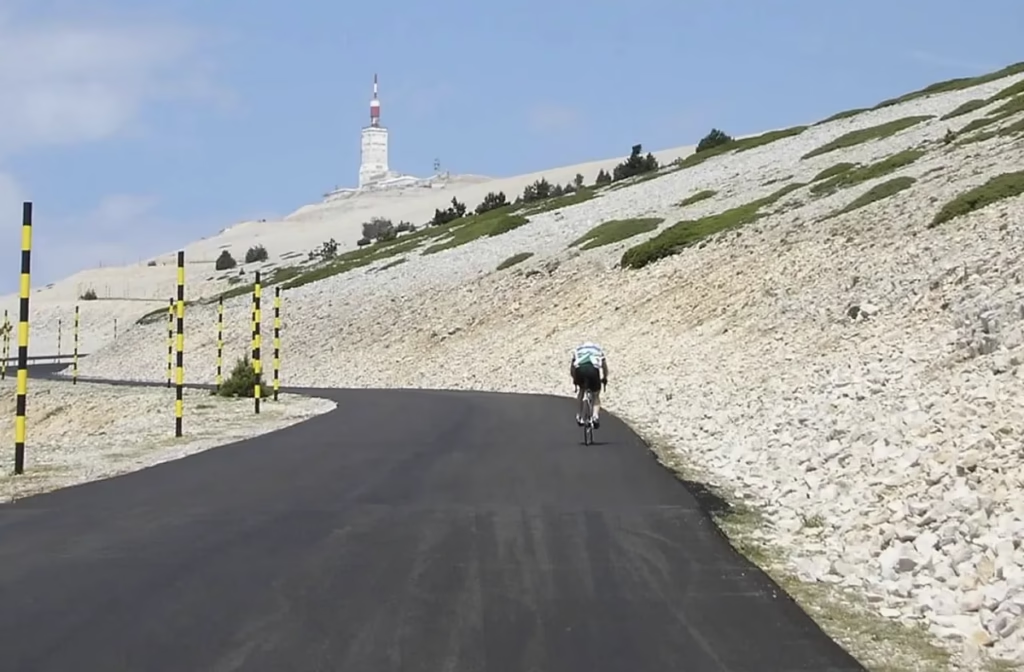
Could bonuses make Mont Ventoux more defensive?
Potentially.
A rider reaching Stage 7 with a useful lead may be able to climb defensively, following attacks rather than creating them.
Finish bonuses accumulated during the earlier stages can contribute to that cushion.
The opposite is also true.
A rider who has repeatedly lost seconds in sprints may arrive at Mont Ventoux already needing to attack.
The mountain itself is likely to create much larger gaps than the bonus system, but the starting position shapes the tactics.
A 15-second deficit demands a different approach from a 15-second lead.
Mont Ventoux is the central feature of the Tour de France Femmes 2026 route and the highest point reached during the race.
Are there finish bonuses on Mont Ventoux?
Yes.
Stage 7 is a road stage, so the first three finishers receive ten, six and four seconds.
The physical gaps on Mont Ventoux will probably matter more, but the bonuses increase them.
If the winner finishes 30 seconds ahead of the runner-up, the net GC gain becomes 34 seconds because the winner receives ten seconds and second place receives six.
If the runner-up finishes fourth rather than second, the winner gains the full 40 seconds.
The fight for podium positions on the stage can therefore continue after the winner has gone clear.
Are there bonuses on the final stage?
Yes.
Stage 9 around Nice is a mountain stage and remains part of the competitive general classification.
It is not a ceremonial procession.
The first three riders receive ten, six and four seconds, just as they do on the other road stages.
That means the overall race can still be decided at the finish.
A rider beginning the day nine seconds behind yellow could theoretically win the Tour by taking the stage bonus, even if the two GC contenders are awarded the same finishing time.
The route should create physical gaps, but the bonuses remain relevant until the final line.
The final day’s repeated climbing and tactical possibilities are covered in our Tour de France Femmes 2026 Nice finish guide.
Could the 2026 Tour be decided by bonuses?
Yes.
The race contains a 21km time trial, Mont Ventoux and a difficult final stage around Nice, so the strongest riders should have opportunities to create genuine time gaps.
That does not guarantee a large final margin.
If two contenders are closely matched, bonus seconds may become decisive.
A rider could win through a combination of:
- Better stage placings
- One intermediate Bonus Point
- A small time-trial advantage
- Limiting losses in the mountains
That would not make the result artificial.
Sprint speed, positioning and tactical awareness are part of stage-racing ability.
The bonus system rewards riders who compete throughout the race rather than waiting only for the biggest climb.
The history of tight finishes and different winning approaches is covered in our Tour de France Femmes winners list.
Tour de France Femmes 2026 time bonus strategy
The simplest way to understand the tactical choices is to consider the gap.
| GC situation | Likely approach |
|---|---|
| Rider leads comfortably | Allow breakaways to collect bonuses |
| Rider leads by a few seconds | Control rivals and contest key bonuses |
| Rider trails by under 10 seconds | Target finishes and Bonus Points aggressively |
| Rider trails by 30 to 60 seconds | Combine bonuses with attacks |
| Rider trails by several minutes | Focus on creating real road gaps |
Bonuses matter most when the race is close.
They cannot rescue a rider who loses several minutes on Mont Ventoux.
They can decide which rider starts Ventoux in yellow and who needs to attack.
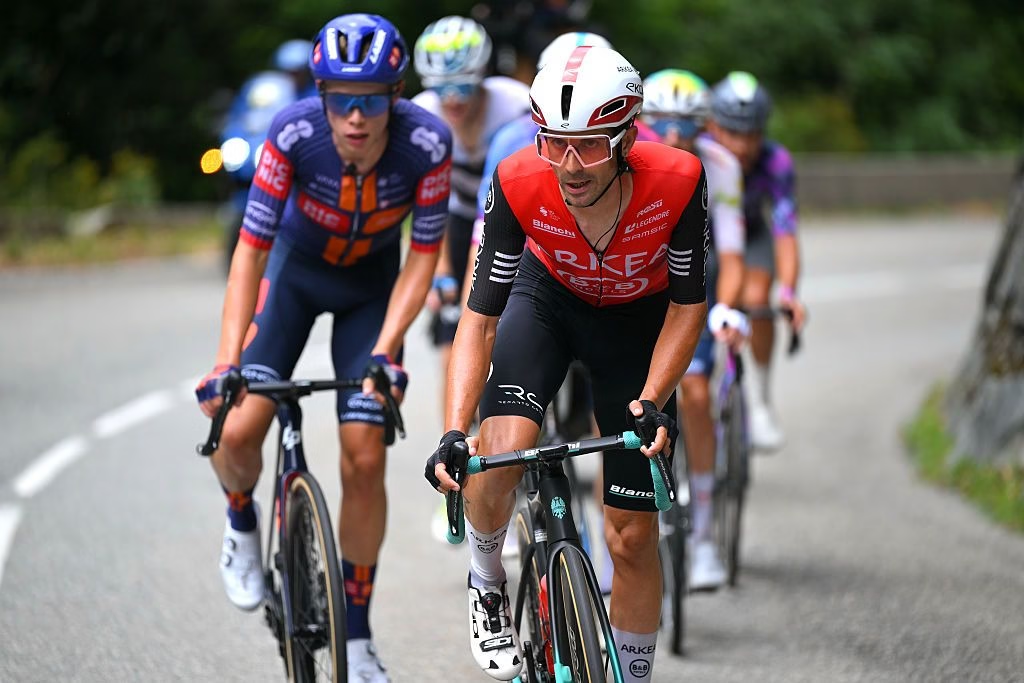
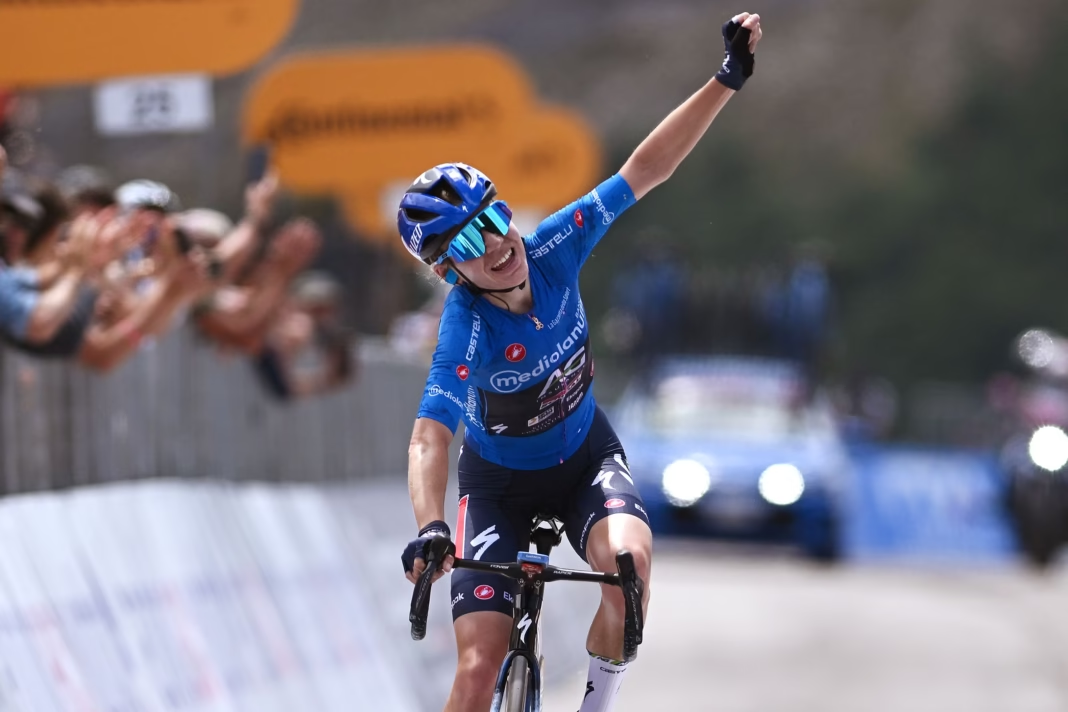
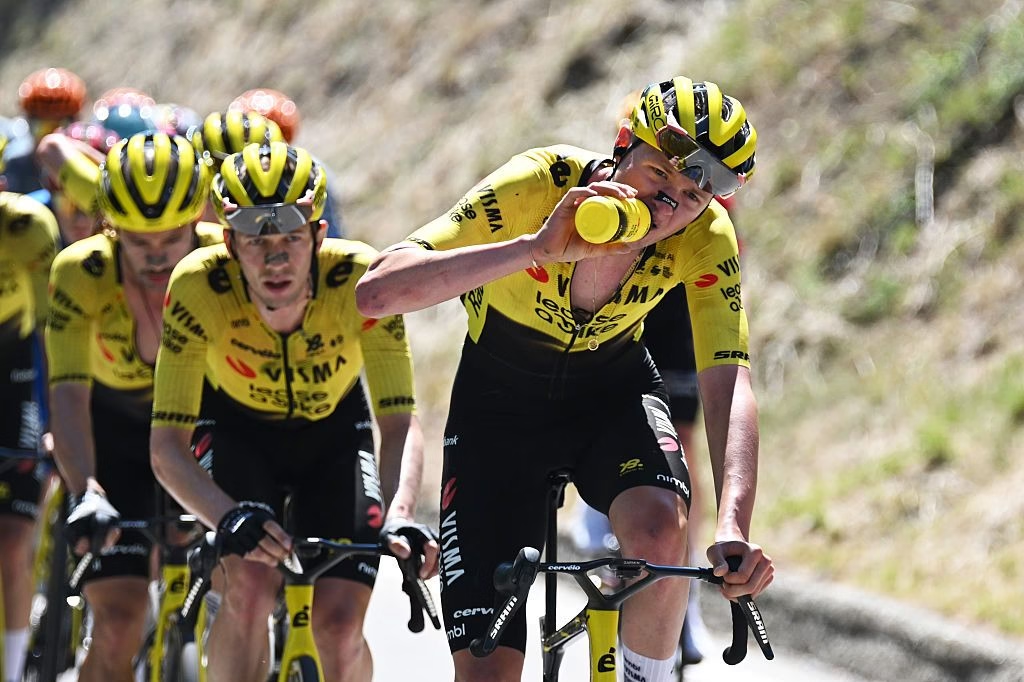
Frequently asked questions about Tour de France Femmes time bonuses
How many seconds does a stage winner receive?
The winner of each of the eight road stages receives a ten-second deduction from her general classification time.
What do second and third receive?
Second place earns six seconds and third earns four.
Are there bonuses in the individual time trial?
No. Stage 4 uses the riders’ actual recorded times without finish bonuses.
What is a Bonus Point?
It is an intermediate location where the first three riders receive six, four and two seconds.
Which stages contain Bonus Points?
Stages 3, 5 and 6.
Are Bonus Points the same as intermediate sprints?
No. Intermediate sprints mainly award green jersey points. Bonus Points award time deductions towards the general classification.
Can a rider receive both a gap and a bonus?
Yes. The physical time gap and bonus deduction are combined.
Do bonuses count towards the white jersey?
Yes, because the young rider classification is based on the general classification time.
Is there a bonus on Mont Ventoux?
Yes. The first three finishers on Stage 7 receive ten, six and four seconds.
Can the Tour be decided by a finish bonus on Stage 9?
Yes. The final stage is fully competitive and awards the normal finish bonuses.
Why every second will matter in 2026
The Tour de France Femmes has already shown that its general classification can be decided by tiny margins.
The 2026 route contains enough difficulty to create large gaps, but it also provides repeated opportunities for smaller gains.
Every road-stage winner receives ten seconds.
Every second and third place carries a reward.
Stages 3, 5 and 6 contain additional Bonus Points capable of encouraging attacks before the finish.
The time trial then removes bonuses entirely and measures every rider directly against the clock.
That combination rewards completeness.
A rider must climb, time trial, position herself well and recognise when six seconds are worth spending energy to chase.
Time bonuses will not replace the importance of Mont Ventoux or the final mountain stage around Nice.
They may decide who reaches those climbs with the advantage, who is forced to attack and who ultimately wears yellow.