
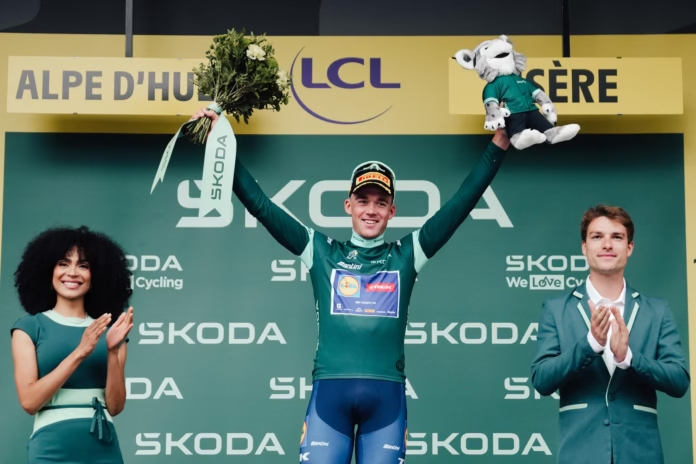
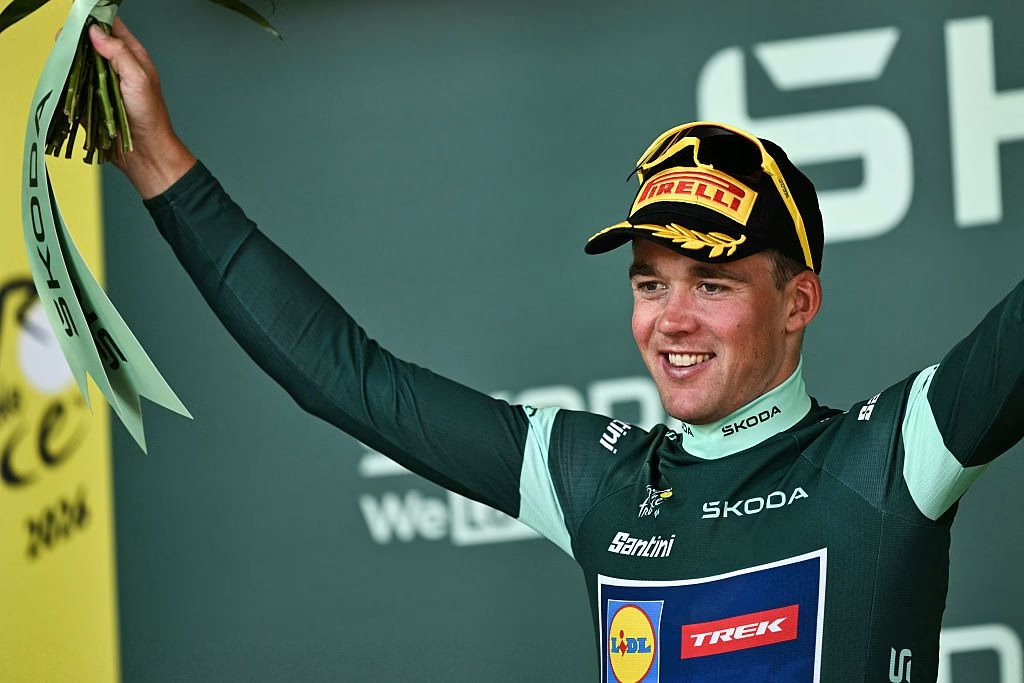
Mads Pedersen has won the green jersey at the 2026 Tour de France, and the way he finally secured it summed up his entire campaign.
The Lidl-Trek rider did not seal the points classification in a bunch sprint. He did it on Stage 20, the hardest mountain stage of the race, by going on the attack and reaching the intermediate sprint before his rivals could score heavily against him.
Pedersen ended the day on 527 points, 82 ahead of Jasper Philipsen on 445. With only 75 points available on the shortened Stage 21 in Paris, the green jersey is mathematically his provided he completes the race.
It is Pedersen’s first Tour de France points classification victory and the result of a three-week strategy built around much more than pure sprint speed. He beat Philipsen by scoring on the days when the Belgian could not, using breakaways, intermediate sprints and his ability to survive hard terrain to turn the green jersey into a race of endurance as much as acceleration.
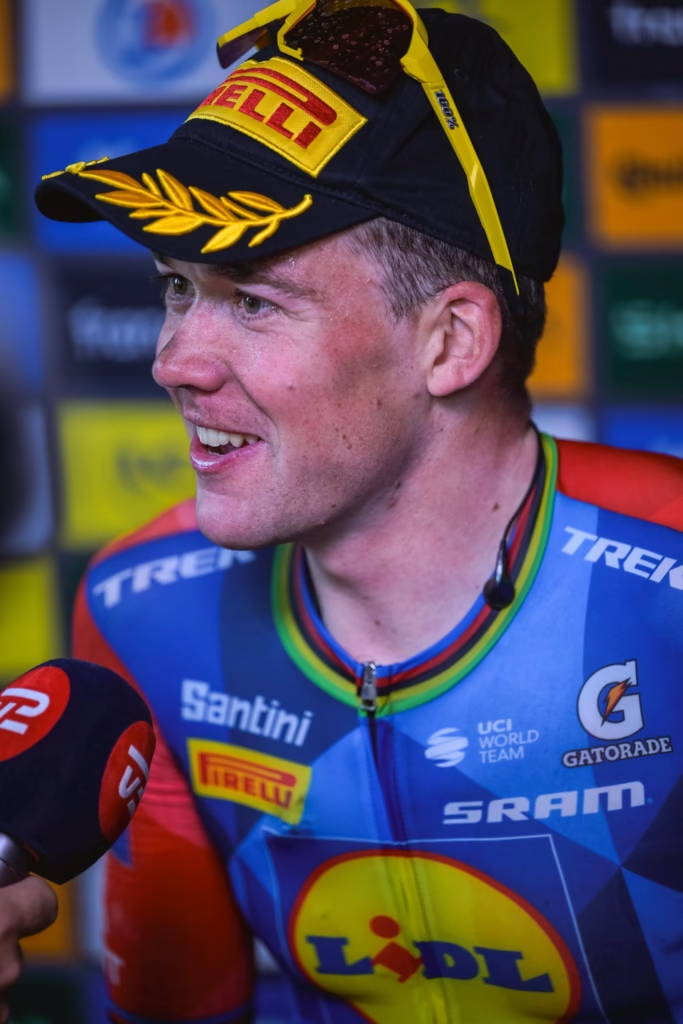 Photo Credit: A.S.O./Charly López
Pedersen mathematically secured green on Stage 20
The final move looked almost absurd at first.
Stage 20 contained the Croix de Fer, Télégraphe, Galibier and Sarenne before the final run towards Alpe d’Huez. For most sprinters, the only sensible objective on a day like that would be to find the gruppetto, stay inside the time limit and save whatever remained for Paris.
Pedersen attacked instead.
He made sure he was in position to take the intermediate sprint, collected maximum points and pushed his total beyond anything Philipsen could now overhaul on Stage 21.
The post-Stage 20 standings leave the top of the classification as follows:
| Rider | Points after Stage 20 |
|---|---|
| Mads Pedersen | 527 |
| Jasper Philipsen | 445 |
| Biniam Girmay | 361 |
| Max Kanter | 271 |
| Olav Kooij | 230 |
Only 75 points remain available in Paris.
Pedersen simply has to finish.
Stage 20 was the perfect summary of how Pedersen won green
Pedersen’s advantage over Philipsen was never based on being the fastest rider in a conventional bunch sprint.
Philipsen remained more dangerous when the road was flat, the lead-outs were intact and the final 200 metres became a straightforward acceleration contest.
Pedersen’s advantage came from everything around those sprints.
He could survive climbs Philipsen did not want to chase over. He could spend hours in a breakaway and still contest the intermediate sprint. He could race aggressively on days other points contenders were simply trying to conserve energy.
That approach was already visible early in the Tour. Our analysis of whether Pedersen could win green became much more convincing after Stage 4, when a breakaway victory helped establish him at the top of the points classification.
By Stage 20, he was applying the same principle in the Alps.
The road was harder.
The objective was unchanged.
Find points Philipsen cannot reach.
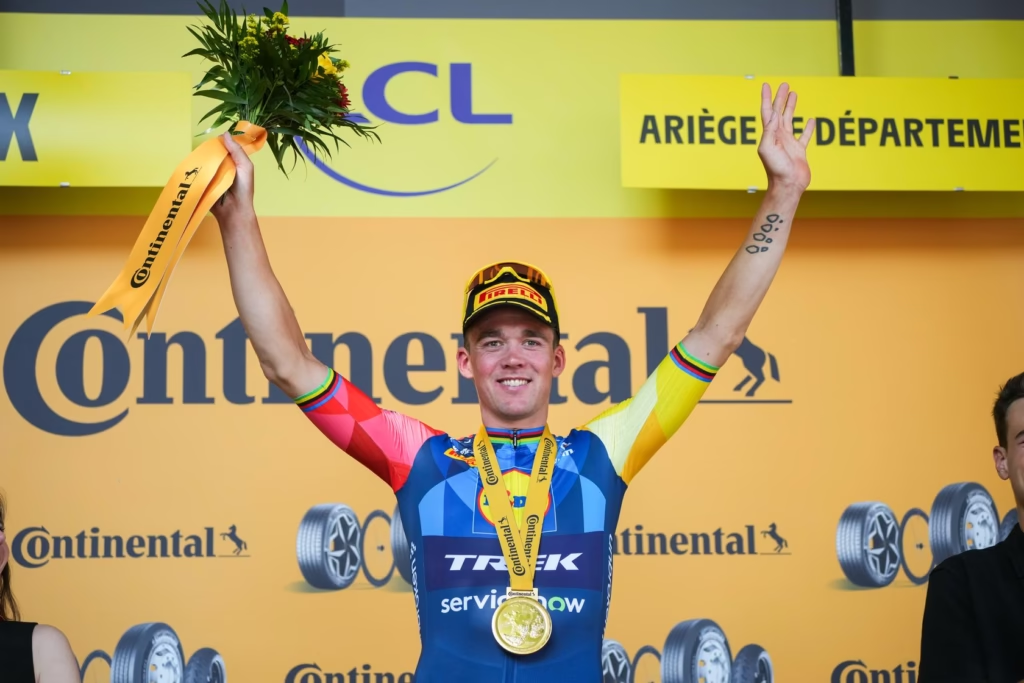 Photo Credit: A.S.O./Charly López
Stage 4 was where the green jersey campaign really changed
Pedersen’s Tour shifted significantly on Stage 4 to Foix.
Lidl-Trek put riders into the decisive breakaway and Pedersen won the stage ahead of teammate Quinn Simmons. The move changed the general classification, but it also gave Pedersen a major haul in the points competition.
He emerged from the stage in green.
At that point, the classification became much more than a theoretical secondary objective. Pedersen had the jersey, a route that suited his durability and a team willing to race aggressively around him.
Our Stage 4 classification update already showed Pedersen leading green while many of the recognised sprinters were trying to claw back points through the conventional finishes still to come.
The important part was that Pedersen did not need to wait for those finishes.
Why Pedersen could not rely on beating Philipsen in bunch sprints
Philipsen remained the main threat because his route to points was simpler.
When the Tour produced a conventional sprint, Philipsen could take 50 points with one victory.
Pedersen therefore could not afford to build his strategy around repeatedly beating him head-to-head.
Instead, Lidl-Trek widened the battlefield.
Pedersen could collect points from intermediate sprints while Philipsen remained in the peloton. He could go in breakaways over terrain too difficult for the Belgian. He could remain competitive in harder finales where the pure sprinters were already losing contact.
That possibility was one of the reasons his route looked more favourable than it first appeared before the Tour. Our pre-race look at Pedersen’s 2026 Tour opportunities identified the difficult stages as potentially useful rather than simply days to survive.
That became the defining theme of his Tour.
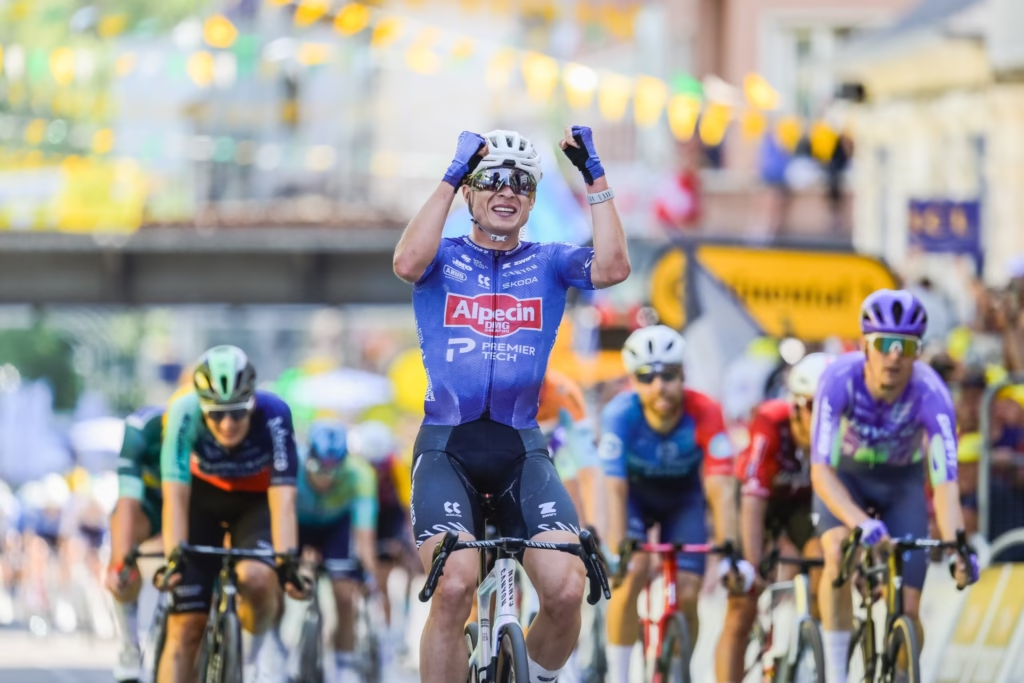
Philipsen pulled the contest back to seven points on Stage 17
Pedersen did not dominate the classification from beginning to end.
Philipsen came dangerously close to taking control as the Tour entered its final week.
Stage 17 to Voiron became the key moment.
Pedersen again went on the offensive and collected maximum points at the intermediate sprint, but Alpecin-Premier Tech controlled the later race perfectly and delivered Philipsen to his first stage victory of the Tour.
That win cut Pedersen’s advantage to just seven points, 452 to 445.
Our Stage 17 report captured the contrast between them. Pedersen was accumulating points through aggression and workload, while Philipsen was using positioning, speed and the strength of his lead-out.
At that stage, green was completely open again.
The Alps unexpectedly helped Pedersen
Seven points is almost nothing in a points classification.
One sprint could overturn it.
But the stages that followed Stage 17 were not sprint stages.
That changed the advantage back towards Pedersen.
Philipsen had far fewer realistic opportunities to score once the Tour entered the Alps. Pedersen, by contrast, could still attack intermediate sprints if the route and race situation allowed it.
That was always his biggest structural advantage in the competition.
He did not need the stage finish to suit him.
The Stage 17 preview had already highlighted how the green jersey battle depended on the balance between Philipsen’s superior pure sprint and Pedersen’s ability to absorb harder racing.
The Alps pushed that difference to its logical extreme.
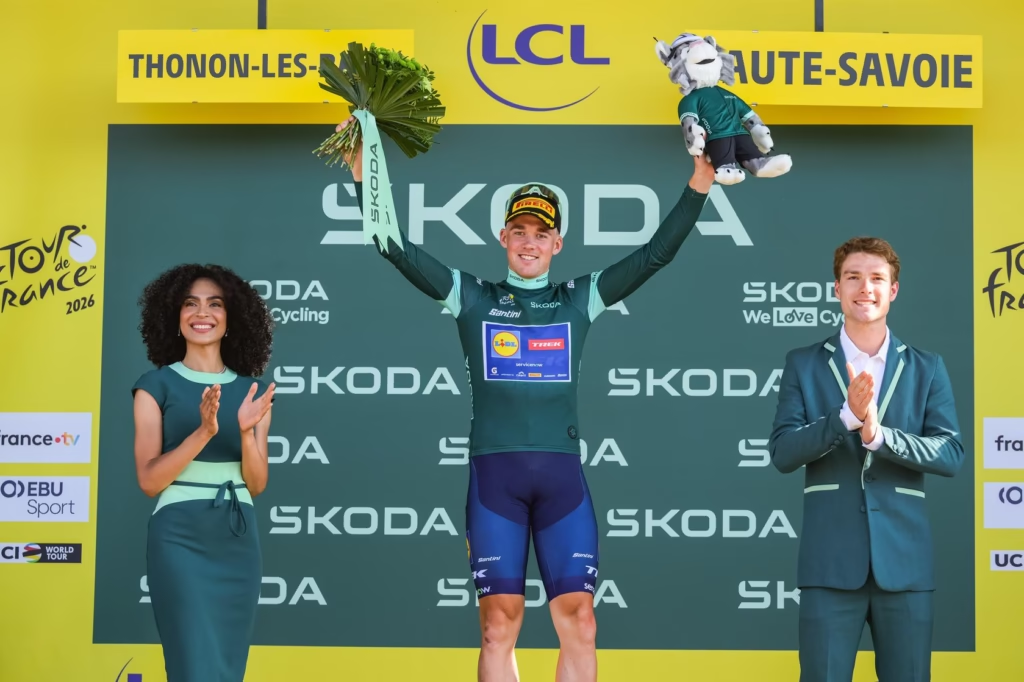 Photo Credit: A.S.O./Charly López
Why green is not simply the sprinters’ jersey
Pedersen’s victory is a useful reminder of what the green jersey actually rewards.
It is officially the points classification, not the sprint classification.
Flat-stage finishes offer the largest points totals, which is why sprinters usually dominate. But intermediate sprints and harder stages still count.
A rider can therefore lose several head-to-head bunch sprints and still win green if she or he keeps scoring elsewhere.
Pedersen exploited that better than anyone in 2026.
His campaign was not built around one spectacular run of sprint victories. It was built around consistency and finding points throughout the route.
That is why Stage 20 was not some bizarre departure from his green jersey strategy.
It was the purest expression of it.
Lidl-Trek used breakaways as a points-classification weapon
Breakaways usually have a different purpose.
Teams send riders up the road to chase a stage win, collect mountains points or gain television exposure.
Lidl-Trek repeatedly had another objective.
If Pedersen reached the intermediate sprint in a breakaway, he could collect points without having to race Philipsen directly.
The move did not need to survive to the finish to be worthwhile.
Twenty or 25 points already banked could be enough.
This strategy becomes especially effective on hilly and mountainous stages because the rival sprinter cannot necessarily follow. Alpecin-Premier Tech could chase on flat roads, but trying to police Pedersen over every climb would have required Philipsen to race outside his own strengths.
Pedersen kept forcing that problem.
Stage 17 showed why the strategy was necessary
The Voiron stage demonstrated how quickly Philipsen could undo Pedersen’s work when he got the race he wanted.
Pedersen had been aggressive all day and successfully took the intermediate sprint.
Philipsen still won the stage and reduced the deficit to seven points.
That was the danger of relying solely on accumulation.
A single 50-point finish could erase several days of smaller gains.
Pedersen therefore needed to keep finding opportunities until there were no opportunities left for Philipsen to respond.
That is why the question before Stage 17 was not whether he could mathematically win green that day, but whether he could make the remaining route too difficult for Philipsen to exploit.
Stage 20 finally completed that process.
Pedersen’s biggest weapon was his durability
Pedersen sits in an unusual place between a pure sprinter and a Classics rider.
He is fast enough to win major bunch finishes but strong enough to race Paris-Roubaix, the Tour of Flanders and other brutally selective one-day races.
That profile is ideal for a points competition where the route repeatedly moves beyond conventional sprint terrain.
Pedersen can climb better than most sprinters.
He is comfortable joining long-range moves.
He can work in a breakaway rather than sitting behind teammates all day.
And crucially, he can still sprint after doing all of that.
Those qualities mean his maximum speed is only part of the calculation.
The important question is how much speed remains after four hours of difficult racing.
Often, Pedersen still has enough.
How did Mads Pedersen win the 2026 green jersey?
There were four main parts to the campaign.
He scored consistently in sprint finishes. Pedersen did not need to win every bunch sprint. Remaining close enough to Philipsen limited the damage when the Belgian took big points.
He targeted intermediate sprints. These were strategic objectives rather than incidental bonuses.
He used breakaways to reach points Philipsen could not contest. Stage 20 was the most dramatic example, but the idea ran through his entire Tour.
He survived difficult terrain better than the pure sprinters. That gave Pedersen scoring opportunities on stages where his main rivals were focused only on reaching the finish.
The result was a points campaign shaped around Pedersen’s complete skill set rather than trying to turn him into a pure sprinter.
Pedersen can now race Paris without thinking about green
The timing of the Stage 20 move also changes the final stage.
The revised Stage 21 Paris finale covers only 89km and retains the three Montmartre passages.
That route is unusually good for Pedersen.
A traditional Champs-Élysées sprint would probably give Philipsen the cleaner opportunity. Rue Lepic adds repeated climbing and gives stronger Classics riders a chance to attack or reduce the group before the final sprint.
Pedersen can now use that terrain however he wants.
He does not need to mark Philipsen for points.
He does not need to chase every intermediate opportunity.
He can follow an attack on Montmartre, launch one himself or wait for a reduced sprint.
Green is already secure.
Paris is now about winning the stage.
Who won the Tour de France 2026 green jersey?
Mads Pedersen won the 2026 Tour de France green jersey for Lidl-Trek.
He mathematically secured the points classification on Stage 20, reaching 527 points after another aggressive intermediate-sprint raid in the Alps.
Philipsen ended the stage on 445 points, leaving an 82-point deficit with only 75 points available during Stage 21.
Provided Pedersen reaches the Champs-Élysées, he will stand on the final podium as the 2026 Tour de France points classification winner.
The way he got there is what makes this green jersey memorable.
Pedersen did not spend three weeks waiting for sprint stages.
He made stages that were not supposed to suit a sprinter count anyway.

