
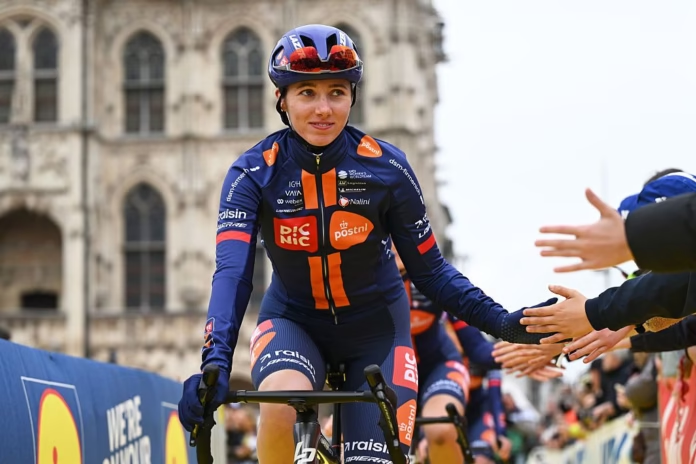
Six British riders are set to start the Tour de France Femmes 2026, with the group spread across stage hunting, time trial ambitions, breakaways and support duties.
Zoe Bäckstedt has the clearest individual winning opportunity through the Stage 4 time trial in Dijon. Pfeiffer Georgi is Britain’s strongest established road-stage option on the punchier days, while Josie Nelson has developed into a genuine threat from reduced groups.
The British contingent is completed by Alice Towers, Millie Couzens and Robyn Clay, giving the group a very different shape from a traditional national challenge built around one GC leader.
There is no British rider among the leading yellow jersey favourites, but across the Tour de France Femmes 2026 route there are several realistic chances of a British stage result.
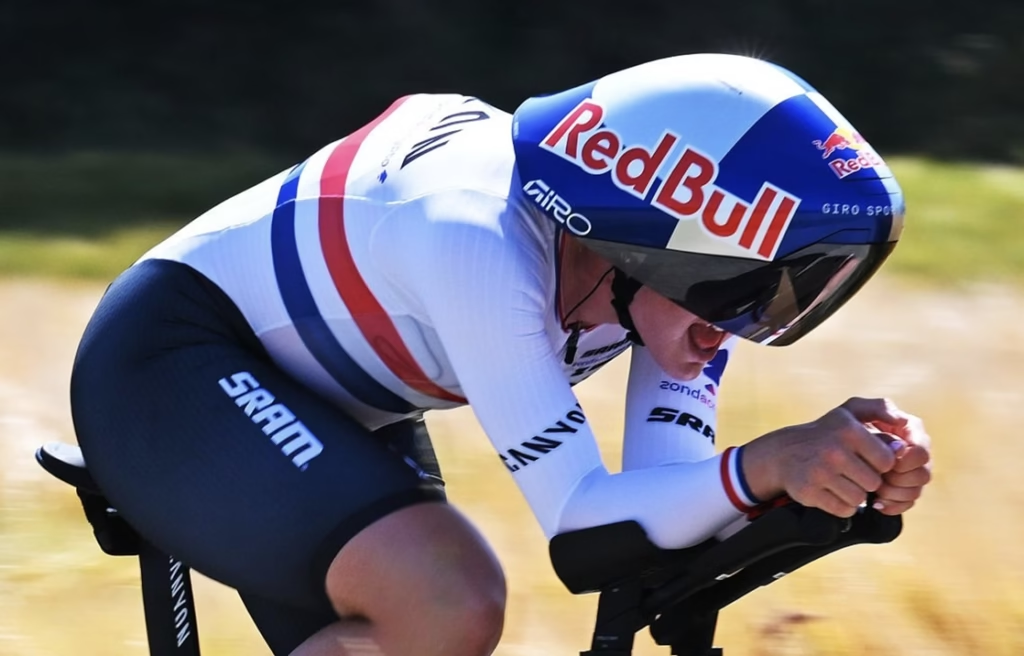
Zoe Bäckstedt has Britain’s clearest chance of a stage win
Zoe Bäckstedt starts her first Tour de France Femmes with one stage standing out immediately.
Stage 4.
The 21km individual time trial from Gevrey-Chambertin to Dijon suits one of the strongest young riders against the clock in the women’s peloton.
Bäckstedt has continued to develop from a prodigious junior into a rider capable of challenging the best at WorldTour level, with her strength against the clock becoming one of the clearest weapons in her increasingly broad road programme.
That makes Dijon more than a developmental target.
She can genuinely contend for the stage.
Marlen Reusser starts as the benchmark, but Bäckstedt is one of the riders capable of getting close enough for a victory to be realistic rather than aspirational.
Our Tour de France Femmes 2026 time trial guide looks at that contest in more detail.
For the rest of the race, Canyon SRAM’s GC ambitions through Katarzyna Niewiadoma-Phinney and Antonia Niedermaier should shape Bäckstedt’s role. Her power makes her valuable for positioning and protection on the flatter stages, but Dijon is the obvious day when the race can revolve around her.
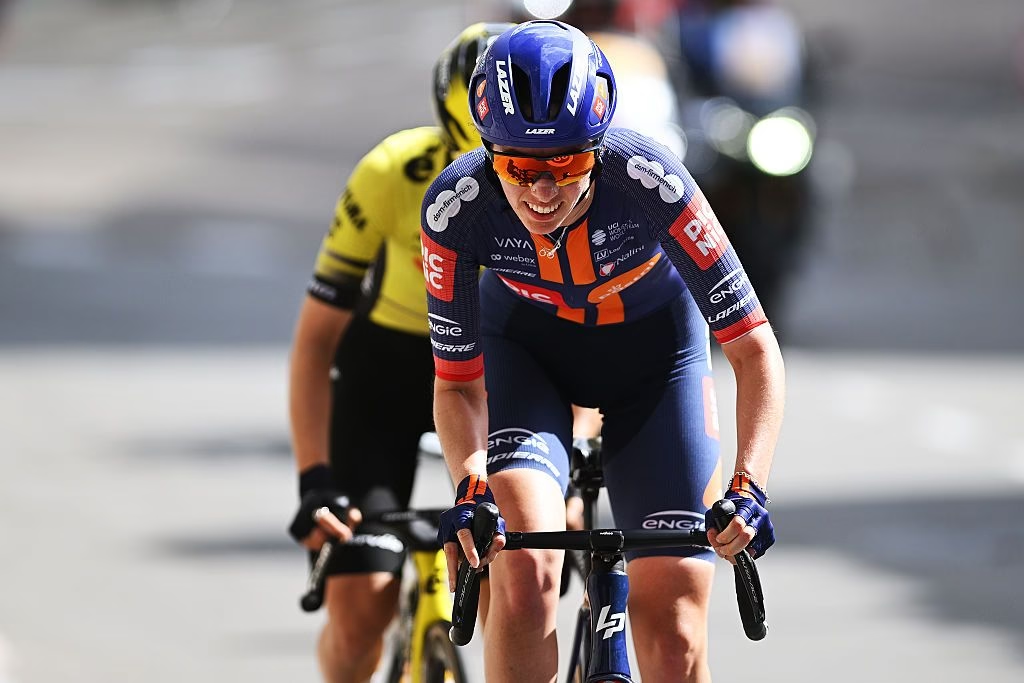
Pfeiffer Georgi is Britain’s strongest road stage hunter
Pfeiffer Georgi offers perhaps the widest range of realistic road-stage opportunities among the British starters.
She is not a pure sprinter and the long mountain finishes are unlikely to suit her.
Her strengths sit between those extremes.
Georgi is at her best when repeated climbing and aggressive racing have removed some of the fastest riders but the race has not become a contest between the pure climbers.
That immediately puts the opening stage around Lausanne into play.
Stage 3 to Poligny is another obvious opportunity, while the terrain on Stages 5 and 6 could create the sort of tactical race where Georgi’s strength, positioning and finishing speed become valuable.
Team Picnic PostNL also do not arrive with one overwhelming GC favourite requiring every rider to work exclusively around the overall classification.
That should allow Georgi to race for opportunities when the stage suits her.
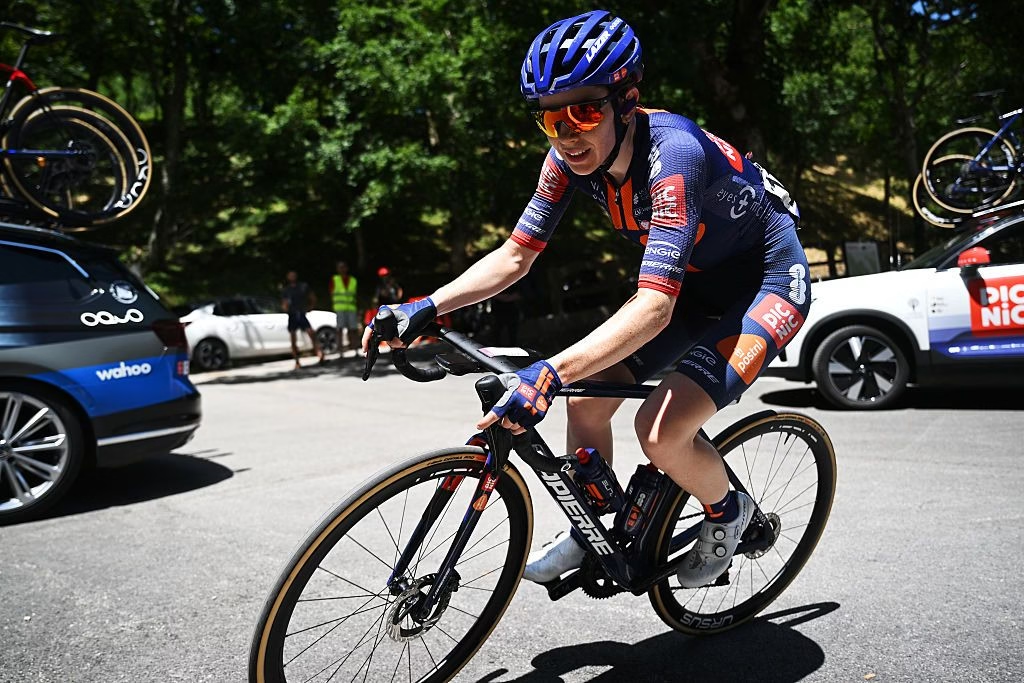
Josie Nelson can threaten from a reduced group
Josie Nelson gives Picnic PostNL another British rider capable of turning a hard stage into a result.
Nelson is at her best when the race has already removed the pure sprinters.
She has enough climbing ability to survive selective terrain and enough finishing speed to become dangerous when a smaller group reaches the line.
That makes the opening three stages particularly interesting.
A completely flat sprint into Geneva is less attractive.
A Lausanne finale after repeated climbing or a reduced race into Poligny is much closer to the contest Nelson wants.
She does not need to beat Lorena Wiebes or Charlotte Kool in a straightforward bunch sprint.
She needs the race to make sure they are no longer there.
That distinction gives Nelson a realistic route towards a high stage finish.

Alice Towers can target the harder breakaway days
Alice Towers brings useful Grand Tour experience and a climbing profile that should become increasingly valuable once the Tour moves away from its opening sprint opportunities.
Towers was British road champion in 2022 and has developed into a versatile stage racer, including third at Durango-Durango Emakumeen Saria and 13th overall at the 2026 Vuelta a Burgos.
Her role at EF Education-Oatly is unlikely to revolve around protecting an individual GC position of her own.
Cédrine Kerbaol gives the team a stronger overall option, while Noemi Rüegg and Magdeleine Vallieres offer different routes towards stage victories.
That can leave Towers with freedom.
Stages 5 and 6 are particularly attractive because they combine repeated climbing with strong chances for a breakaway to survive.
The riders best suited to those opportunities are covered in our Tour de France Femmes 2026 breakaway specialists guide.
Towers can also become useful mountain support if Kerbaol remains high overall, so much depends on how EF’s Tour develops across the opening days.
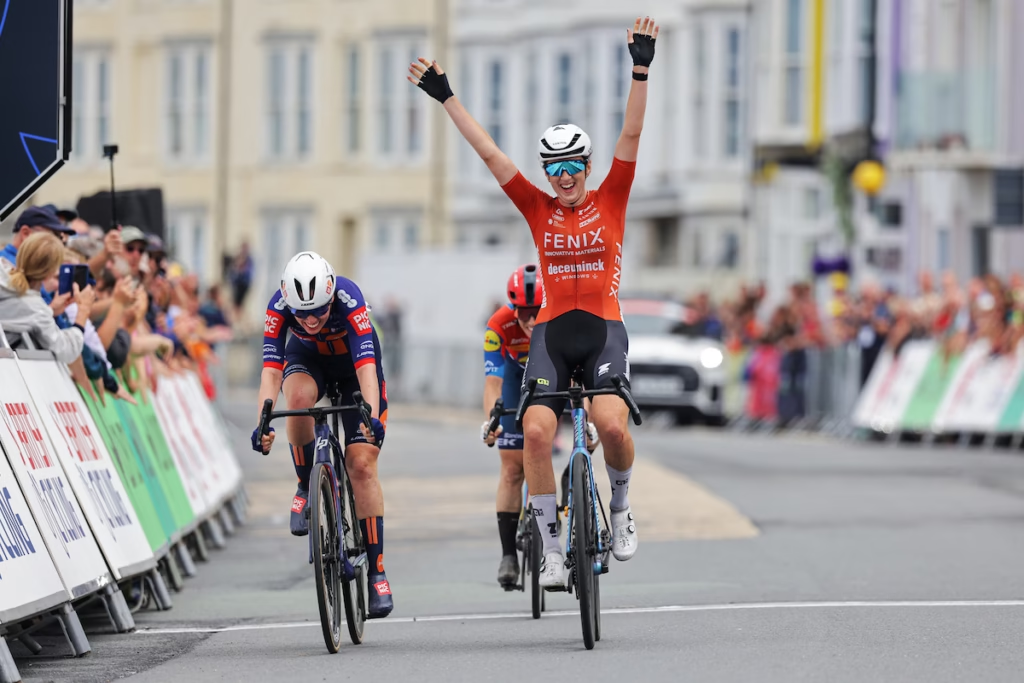 Photo Credit: Alex Whitehead/SWpix.com
Millie Couzens gives Fenix-Premier Tech flexibility
Millie Couzens enters the Tour as part of a Fenix-Premier Tech squad with several distinct ways to win stages.
Charlotte Kool covers the conventional sprint opportunities.
Puck Pieterse can target punchier terrain.
Yara Kastelijn and Sara Casasola give the team climbing and breakaway options.
That leaves Couzens with a flexible role rather than one narrow objective.
She can contribute to Kool’s positioning when the race heads towards a sprint, work through harder terrain for Pieterse or use her own opportunity to enter a move when Fenix-Premier Tech do not need to control the peloton.
That versatility is particularly useful across nine stages containing almost every type of terrain.
Couzens may not begin the Tour with one obvious stage circled, but she is the sort of rider whose opportunities can increase as the race becomes less predictable.
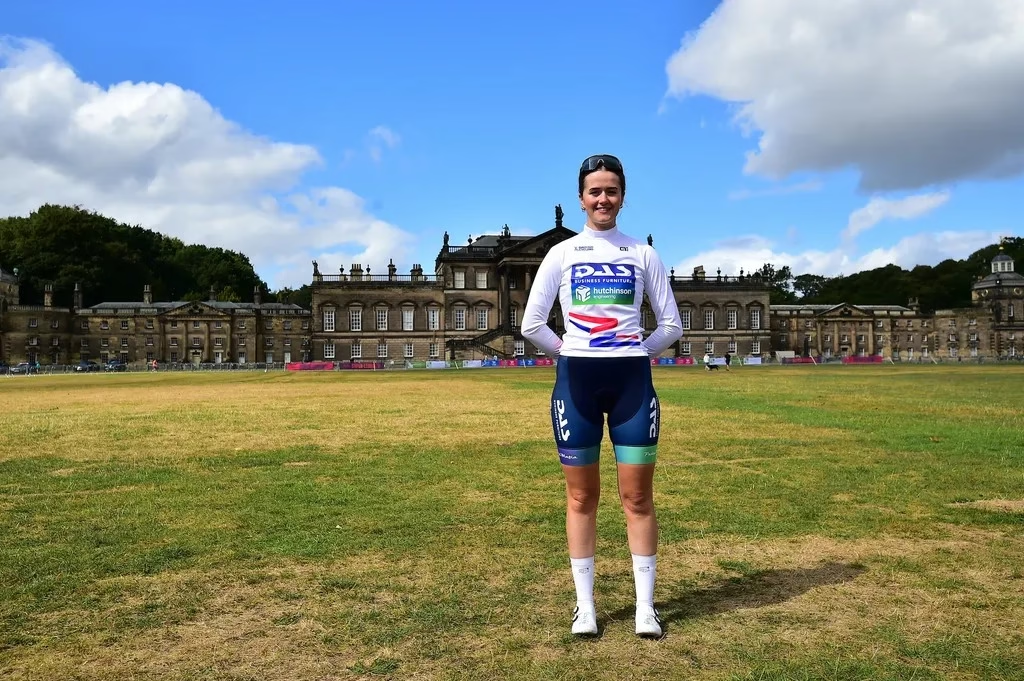 Photo Credit: Craig Zadoroznyj/SWpix.com
Robyn Clay makes a major step with Picnic PostNL
Robyn Clay is the least established of the six British starters at this level, making her selection significant in its own right.
She joins Georgi and Nelson in a Picnic PostNL squad containing three British riders at very different points in their careers.
Clay’s Tour is likely to be built primarily around support duties.
Picnic PostNL have Georgi and Nelson for selective finishes, while Eleonora Ciabocco provides another option when the terrain becomes harder.
That does not mean Clay will spend all nine stages hidden in the bunch.
Grand Tours evolve quickly, and teams rarely arrive at the final weekend with exactly the same hierarchy and objectives they had at the start.
A breakaway opportunity later in the week could give Clay the chance to race more aggressively.
For a rider making the step into the sport’s biggest stage race, even completing all nine stages would provide valuable experience.
Britain does not have a yellow jersey favourite in 2026
The British challenge looks very different from the main GC battle.
None of the six starters begins alongside Demi Vollering, Pauline Ferrand-Prévot, Marlen Reusser or the other leading overall contenders.
That does not make the British presence peripheral.
Bäckstedt has a genuine opportunity in Dijon.
Georgi can contest difficult one-day-style stages.
Nelson has the finishing speed to exploit a selective race.
Towers and Couzens fit several of the strongest breakaway days.
Clay provides another rider capable of contributing to Picnic PostNL’s stage-focused approach.
British interest is spread across the race rather than concentrated around one yellow jersey campaign.
Which stages best suit the British riders?
Stage 1, Lausanne to Lausanne: Georgi and Nelson are the most interesting British options if the repeated climbing reduces the sprint field.
Stage 2, Aigle to Geneva: A conventional bunch sprint is less favourable, with most of the British riders likely to be working for teammates.
Stage 3, Geneva to Poligny: Georgi and Nelson again come into play, while Towers could become relevant if the race becomes more aggressive than expected.
Stage 4, Gevrey-Chambertin to Dijon: Bäckstedt’s major opportunity and the strongest British chance of a stage victory.
Stage 5, Mâcon to Belleville-en-Beaujolais: Georgi can target a selective finish, while Towers and Couzens have the profiles to become useful in the breakaway.
Stage 6, Montbrison to Tournon-sur-Rhône: Perhaps the strongest opportunity for Towers or Couzens to get into an early move, particularly if the GC teams conserve resources before Ventoux.
Stage 7, Mont Ventoux: The British riders are unlikely to challenge the main yellow jersey favourites. Support duties and reaching the finish safely become more important.
Stage 8, Sisteron to Nice: A quicker finish could bring Georgi or Nelson back into play depending on how much fatigue the field carries from Ventoux.
Stage 9, Nice to Nice: Primarily a GC and climbing stage, with Towers the British rider whose profile most naturally matches the terrain if she has freedom.
-
 Photo Credit: Getty
British riders at the Tour de France Femmes 2026
The six confirmed British starters are:
- Zoe Bäckstedt, Canyon SRAM
- Alice Towers, EF Education-Oatly
- Millie Couzens, Fenix-Premier Tech
- Pfeiffer Georgi, Team Picnic PostNL
- Josie Nelson, Team Picnic PostNL
- Robyn Clay, Team Picnic PostNL
The full race contains 21 teams of seven riders, giving a maximum start field of 147. That makes six British riders a meaningful presence, particularly with three concentrated within Picnic PostNL.
Georgi is the established WorldTour stage hunter.
Nelson is increasingly capable of delivering major results herself.
Clay is taking the step into the biggest women’s stage race.
The wider shape of the peloton is covered in our guide to how many riders and teams are in the Tour de France Femmes 2026.
Bäckstedt offers the clearest British route to victory
If Britain is to take a stage win at the 2026 Tour de France Femmes, the obvious first opportunity is Zoe Bäckstedt in Dijon.
She has moved beyond being simply a promising young time triallist and is now capable of challenging the strongest specialists in the discipline.
For the road stages, Pfeiffer Georgi remains Britain’s most established threat, particularly if Lausanne, Poligny or one of the harder middle stages produces the kind of reduced finish that suits her.
Josie Nelson offers another route. Her best chance comes when a hard race strips away the fastest riders and leaves her sprinting from a much smaller group.
Britain may not have a favourite for the yellow jersey in 2026, but it has three genuine stage threats and enough depth behind them to remain relevant throughout the nine days.

