
The Tour de France Femmes moves from Aigle to Geneva on Sunday 2 August with a 147.9km second stage that should provide the pure sprinters with a clearer opportunity than the uphill opener in Lausanne.
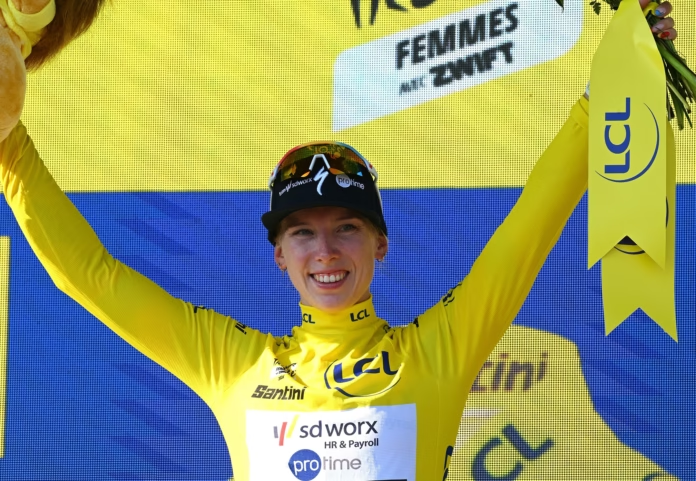
Lorena Wiebes starts in the yellow jersey after winning Stage 1 ahead of Kimberley Le Court-Pienaar and Demi Vollering. Her victory on the Côte Saint-François showed that the selective finish was not enough to remove the fastest rider in the race, and the flatter arrival beside Lake Geneva should suit her even better.
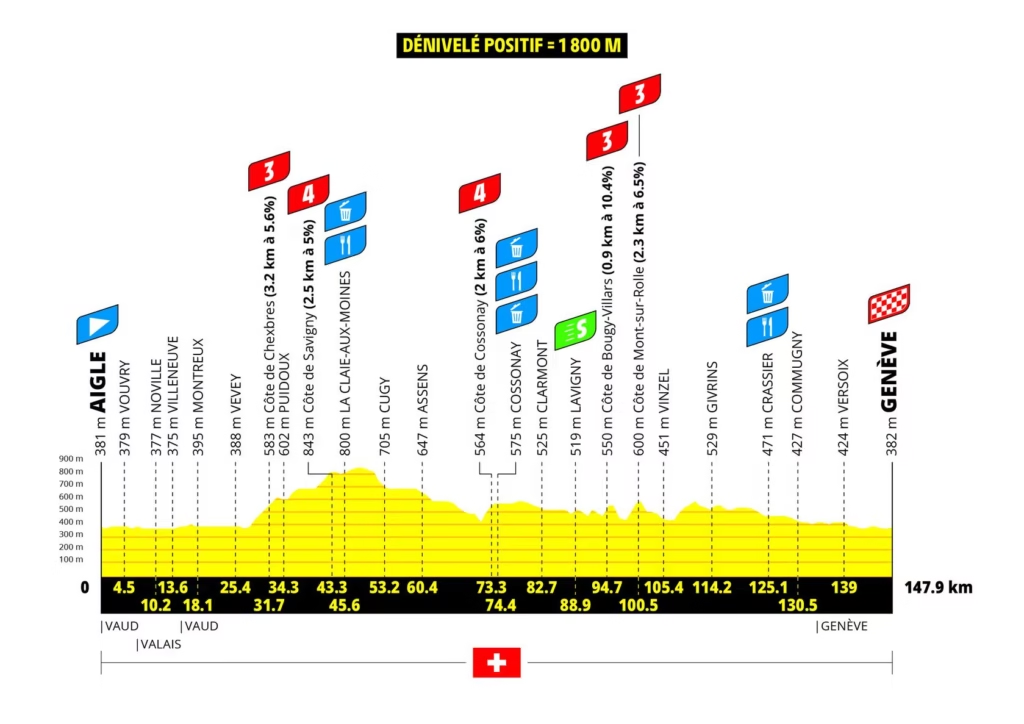
Stage 2 is not completely straightforward. Five categorised climbs are packed into the middle of the route, including the short but steep Côte de Bougy-Villars and the Côte de Monts-sur-Rolle. The final summit comes with around 47km remaining, though, giving dropped sprinters and their teams plenty of time to reorganise before Geneva.
That makes a bunch sprint the most likely outcome. The hills provide teams with an opportunity to test Wiebes and reduce her support, but creating a temporary split will not be enough. Any team trying to prevent a sprint needs to continue driving all the way towards the finish.
Tour de France Femmes 2026 Stage 2 route
Date: Sunday 2 August 2026
Start: Aigle
Finish: Geneva
Distance: 147.9km
Stage type: Flat
Categorised climbs: Five
Neutralised start: 14:20 CEST, 13:20 BST
Expected finish: around 17:47 CEST, 16:47 BST
Stage 2 begins in Aigle, home of the UCI and its World Cycling Centre, before initially heading south-east towards Monthey. The peloton then turns back towards Lake Geneva, passing through Montreux and Vevey before moving into the vineyards and rolling roads of Vaud.
The central portion contains all five categorised climbs. None is individually severe enough to guarantee the elimination of Wiebes, Elisa Balsamo, Marianne Vos or the other leading sprinters, but the accumulation of repeated efforts creates an opportunity for teams without a fast finisher to increase the pressure.
Once the last climb has been completed, the race continues west towards Geneva and a flat finish on the Quai du Mont-Blanc beside Lake Geneva and the Jet d’Eau. The dedicated Tour de France Femmes 2026 Geneva guide covers the final approach and the best places to watch the stage in person.
Five climbs stand between the sprinters and Geneva
The first major test is the Côte de Chexbres, which begins the more selective middle phase after the relatively flat opening alongside the lake. The Côte de Savigny and Côte de Cossonay continue the pattern, asking the peloton to change rhythm repeatedly rather than settle into one sustained climbing effort.
The hardest individual gradient comes on the Côte de Bougy-Villars. It is short, but its double-digit average makes it the most obvious place for an acceleration to split the field quickly. The final classified ascent, the Côte de Monts-sur-Rolle, provides one last opportunity to distance the heavier sprinters.
The position of that final climb is the defining feature of Stage 2. More than 40km remain afterwards, much of it favourable to an organised chase. Dropping Wiebes or Balsamo briefly is achievable. Preventing their teams from bringing them back is considerably harder.
The wider Tour de France Femmes 2026 route guide identifies Geneva as the clearest early opportunity for a conventional bunch sprint.
Why the climbs may not prevent a bunch sprint
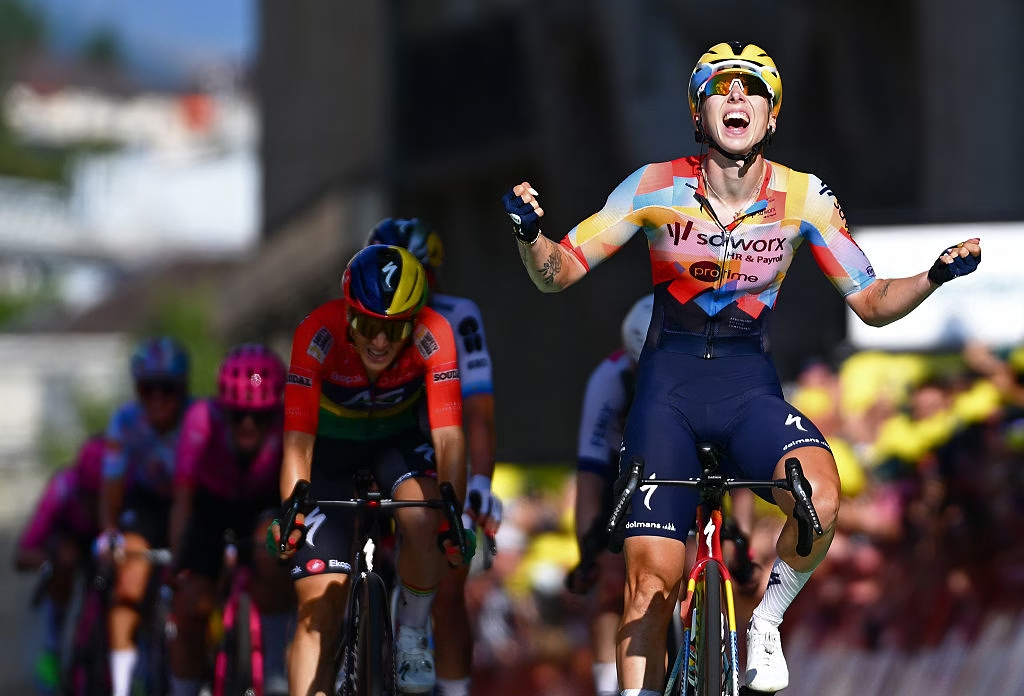
Five categorised climbs make the profile look more selective than a typical sprint stage, but their location shifts the balance back towards the fast riders.
Even if some sprinters lose contact on Bougy-Villars or Monts-sur-Rolle, the road afterwards gives their teams time to regroup. A small group of puncheurs will struggle to hold off a peloton containing several squads with an interest in producing a sprint.
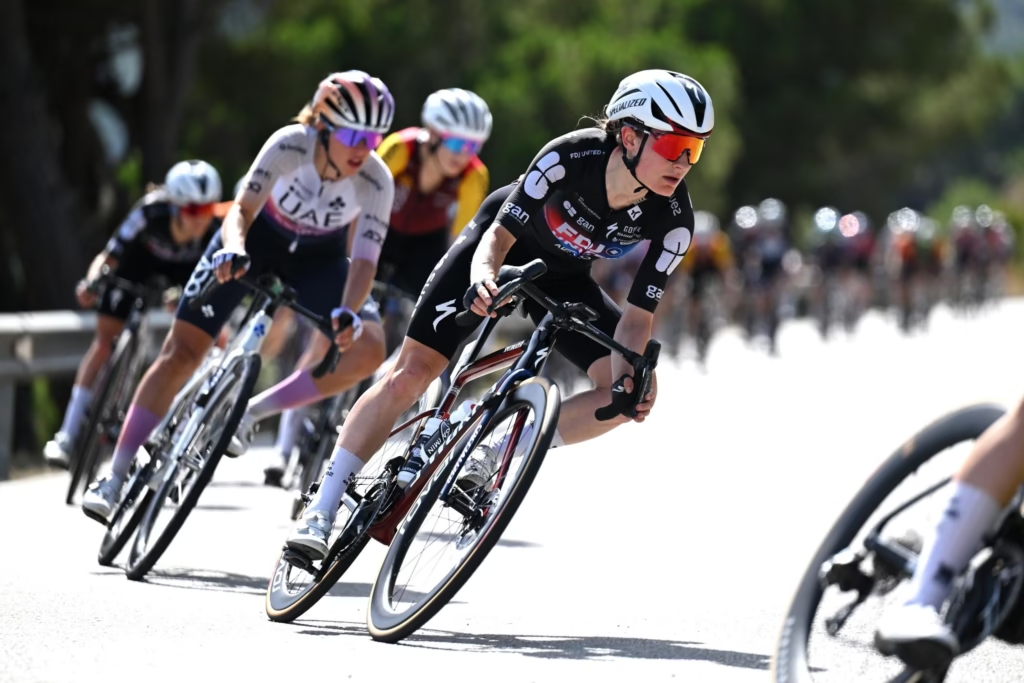
SD Worx-Protime want another opportunity for Wiebes. Lidl-Trek have Balsamo. Visma | Lease a Bike can work for Vos, while Fenix-Premier Tech and Canyon SRAM also have plausible sprint options. That creates enough shared incentive for the chase to become organised.
The teams trying to disrupt that outcome need more than one attack. They have to create a strong front group containing enough riders to cooperate and then continue riding after the final summit. If the race pauses and allows the sprint trains to reform, the chance has probably gone.
Lorena Wiebes starts Stage 2 in yellow
Wiebes leads the Tour after winning the uphill sprint in Lausanne, with Le Court-Pienaar four seconds behind and Vollering six seconds back. Most of the other leading riders sit ten seconds down after the opening-stage bonus seconds.
The yellow jersey should not fundamentally change SD Worx-Protime’s tactics. Stage 2 is another clear opportunity for Wiebes, and a second victory would strengthen both her overall lead and her position in the green jersey competition.
The team do not need to chase every early move immediately. No serious GC contender is likely to be allowed enough freedom to threaten yellow, and the long road towards Geneva gives SD Worx-Protime time to manage the gap before committing fully to the pursuit.
Their strength across the climbing section is important. Mischa Bredewold, Lotte Kopecky and Anna van der Breggen give Wiebes protection on terrain where a weaker sprint team might become isolated. Rival squads need to make the stage difficult enough to remove both Wiebes and the riders capable of returning her to the front.
Can anyone beat Wiebes in Geneva?
Stage 1 showed that making the road moderately difficult may not be enough.
Wiebes survived the repeated climbing around Lausanne and still produced the strongest sprint on an uphill finish. Geneva is flatter and gives her a more conventional route towards victory.
Her rivals may therefore need to beat her through positioning rather than outright speed. A disorganised finale can leave even the strongest sprinter boxed in, separated from her final lead-out rider or forced to begin the sprint earlier than planned.
That is where Lidl-Trek, Visma | Lease a Bike, Fenix-Premier Tech and Canyon SRAM need to apply pressure. Allowing SD Worx-Protime to dictate the final five kilometres would make the outcome considerably more predictable.
Wiebes remains the clear reference among the sprinters and stage hunters to watch at the 2026 Tour de France Femmes, but Geneva still gives her opponents tactical routes towards an upset.
Elisa Balsamo has a clearer opportunity than in Lausanne
Balsamo should be one of the riders who benefits most from the change in finish.
The uphill arrival in Lausanne did not provide the cleanest version of her preferred race, while Geneva should allow Lidl-Trek to construct a more conventional lead-out. Balsamo has the speed to challenge Wiebes if she begins from the right position and does not have to use energy moving forward in the final kilometre.
Lidl-Trek also possess enough climbing strength to protect her through the central section. The long run after Monts-sur-Rolle means they should not need to panic if Balsamo is briefly distanced, provided enough teammates remain available to help her return.
The challenge is timing. Wiebes’ acceleration makes gaps difficult to close once the sprint begins, so Balsamo cannot afford to launch from too far back or become trapped behind slower riders.
Marianne Vos remains dangerous on a flatter finish
Vos was naturally suited to the selective Lausanne opener, but the flatter finish in Geneva does not remove her from contention.
She remains one of the best riders in the peloton at reading a chaotic finale and finding the right wheel without requiring the most dominant lead-out. The five climbs should cost her less energy than they do some of the heavier sprinters, leaving her well placed if the field has been reduced before regrouping.
Visma | Lease a Bike must also protect Pauline Ferrand-Prévot’s GC position, but the route should allow the team to manage both objectives. The major contenders are unlikely to attack seriously this early, while Vos gives Visma a realistic chance of taking the stage.
She may not match Wiebes in a completely open drag race, but she can win if the lead-outs become disorganised or the sprint begins from a smaller group than expected.
Charlotte Kool needs the race to stay under control
Charlotte Kool should regard Geneva as one of her strongest opportunities of the Tour.
The climbing is the obvious concern. She is more vulnerable than Vos or Balsamo if teams race aggressively over the short ascents, particularly Bougy-Villars.
The long distance from the final climb keeps her chances alive. Fenix-Premier Tech have enough strength to help Kool return if the peloton splits, and the flatter approach gives her time to recover before the sprint.
If she reaches the final five kilometres with support around her, she has the speed to challenge Wiebes. The danger is being forced to spend too much energy chasing after the hills and arriving in Geneva without the same acceleration.
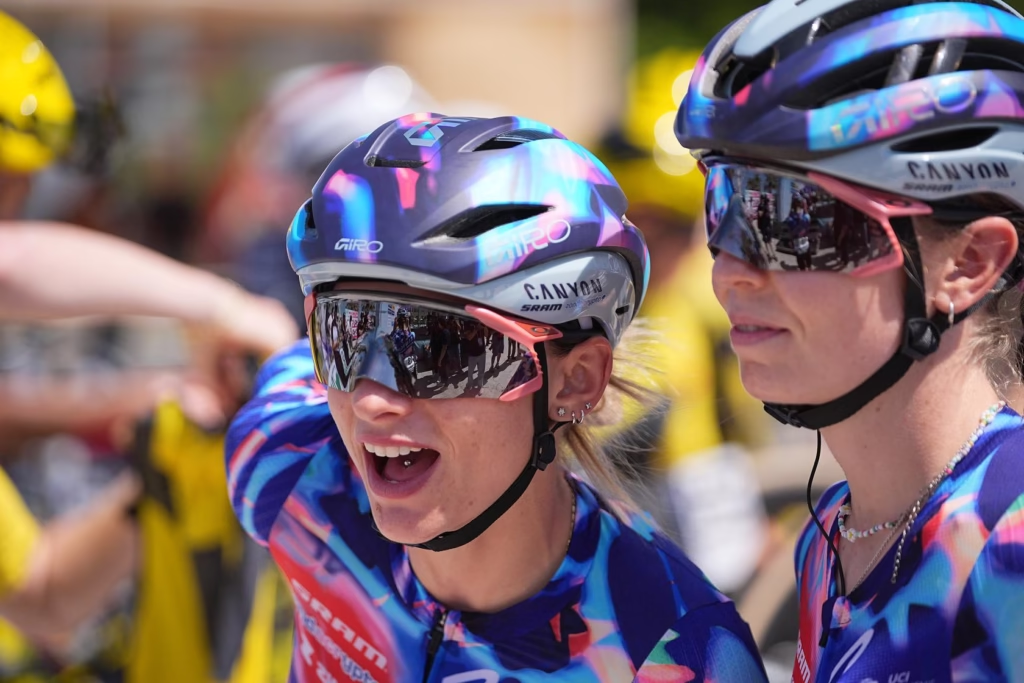 Photo Credit: RCS
Chiara Consonni gives Canyon SRAM a sprint option
Canyon SRAM can approach Stage 2 with Chiara Consonni as their clearest sprint option while continuing to protect Kasia Niewiadoma-Phinney and Antonia Niedermaier for the general classification.
Consonni is comfortable in fast, slightly chaotic finishes and does not necessarily require a perfectly controlled train. She can follow the larger lead-outs and search for space behind Wiebes or Balsamo.
The route presents Canyon SRAM with a tactical choice. They have riders capable of increasing the pressure on the climbs, but making the race too aggressive could work against Consonni. Their most logical approach is to keep the stage controlled enough for her while retaining their GC leaders near the front.
Could Noemi Rüegg or Puck Pieterse disrupt the sprint?
Rüegg and Pieterse are among the riders with the clearest incentive to prevent a full bunch finish.
Both can attack on the short climbs and still sprint from a reduced group. Neither wants to carry Wiebes all the way to the Quai du Mont-Blanc if there is a realistic opportunity to remove her earlier.
The distance to the finish is the problem. An attack on Monts-sur-Rolle has to survive around 47km of pursuit, and a small group of puncheurs may struggle once several sprint teams begin contributing behind.
A better option may be to place teammates into a move before the final climb, then attack again over the summit. That could create a larger and more cooperative front group while forcing SD Worx-Protime and Lidl-Trek to use more resources.
Even then, the route still favours the bunch.
Kimberley Le Court-Pienaar starts as Wiebes’ closest challenger
Le Court-Pienaar begins Stage 2 second overall after finishing behind Wiebes in Lausanne.
Her four-second deficit means the bonus seconds in Geneva could theoretically move her into yellow, but beating Wiebes on a flatter finish is more difficult than challenging her on the Côte Saint-François.
AG Insurance-Soudal can support Le Court-Pienaar in the sprint, use the climbs to attack or place another rider in the breakaway and force SD Worx-Protime to work. Her versatility gives the team several options, and she should survive the middle section comfortably.
The issue is outright finishing speed. Le Court-Pienaar becomes more dangerous as a stage grows harder, but Geneva may allow too many pure sprinters to reach the final kilometre.
Another podium is realistic. Taking yellow probably requires a more selective or chaotic race.
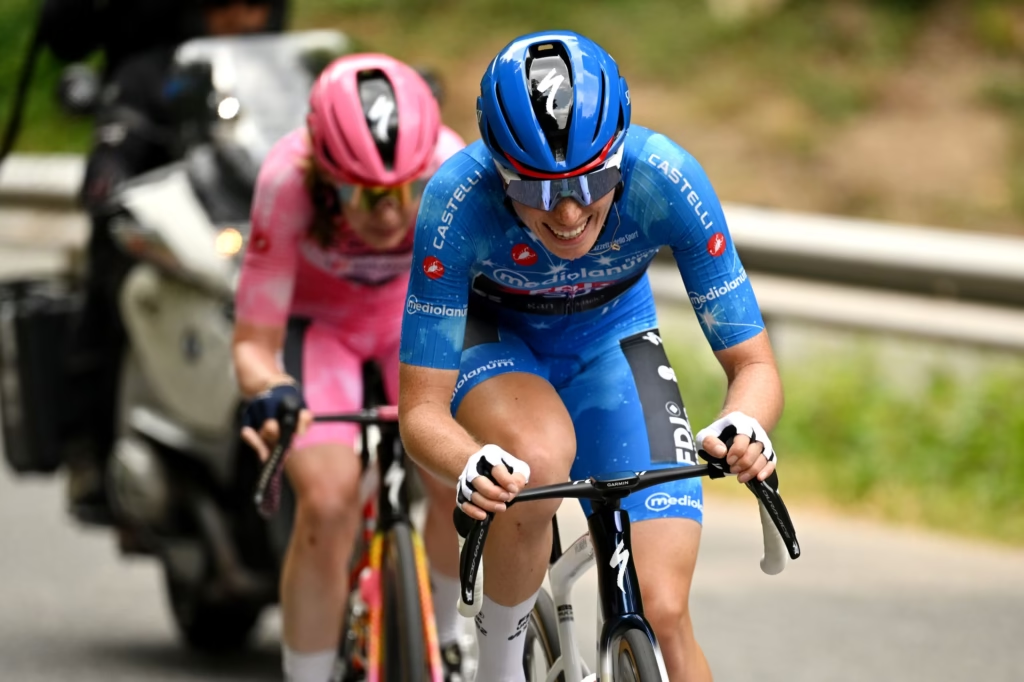 Photo Credit: Getty
Demi Vollering has already collected useful seconds
Vollering’s third place on Stage 1 gave her four bonus seconds and placed her six seconds behind Wiebes overall.
More importantly, she gained four seconds on many of her main GC rivals without needing to launch a major attack. Those margins may appear small, but bonus seconds can become significant once the Tour reaches Dijon, Mont Ventoux and Nice.
Stage 2 should be about protecting that advantage rather than extending it. The flatter finish offers little reason for Vollering to contest the sprint unless the race becomes unexpectedly selective.
FDJ United-Suez need to keep her near the front through the climbs and away from trouble during the final approach. Their stage ambitions may come through Célia Gery if the hills reduce the field or create an attacking opportunity.
For Vollering, a successful Stage 2 means finishing safely with the other favourites and avoiding the crashes that become more likely once the lead-outs take control.
The GC contenders face a nervous finale
The flat finish means the leading GC riders are unlikely to gain time deliberately, but Stage 2 can still cause significant damage.
The approach to Geneva should be fast and crowded, with sprint teams trying to move forward while GC squads attempt to keep their leaders out of danger. Both groups want the same road space.
Ferrand-Prévot, Paula Blasi, Niewiadoma-Phinney, Reusser, Niamh Fisher-Black and Elisa Longo Borghini all need to remain near the front without becoming involved in the sprint itself.
Dropping too far back increases the risk of being delayed by a crash or split. Moving too far forward places a GC contender among the lead-out trains at their most aggressive.
Stage 2 is unlikely to decide the Tour through climbing strength, but it can still reshape it through one badly timed incident.
Océane Mahé has the polka-dot jersey to defend
Mahé begins Stage 2 as leader of the mountains classification after collecting points from the opening breakaway in Lausanne.
The five categorised climbs give her an opportunity to strengthen that position, but defending the jersey may require joining the breakaway again. That becomes harder now that the peloton knows exactly what she is targeting.
Other riders interested in the mountains competition will watch Mahé closely during the opening kilometres, and the distribution of climbs makes the stage attractive to attackers. A rider who reaches the middle section in the break can contest several summits before the sprint teams begin taking the chase seriously.
The Tour de France Femmes jersey guide explains how the mountains, points, young rider and overall competitions develop through the race.
Extreme heat adds another layer of difficulty
Geneva is expected to reach around 35°C near the finish, with an extreme heat warning in place across the region.
That changes the character of a stage that might otherwise look relatively manageable. Repeated short climbs become more draining in high temperatures, particularly after Stage 1 was already raced in demanding conditions.
Hydration, ice, cold drinks and the timing of feeds will become central to team management. A rider who misjudges the heat during the middle part of the stage may not recover simply because the final 47km are flatter.
The GC teams need to take the conditions as seriously as the sprint squads. Dehydration or heat stress may not immediately produce a visible time loss, but the consequences can carry into Stage 3 and the later decisive stages.
The limited wind reduces the prospect of major echelon racing, so heat rather than crosswinds should be the main environmental threat.
How the Stage 2 finale should unfold
The most likely pattern is an early breakaway forming while SD Worx-Protime allow it a manageable advantage.
The five climbs should create an active middle section, with mountains points encouraging attacks and teams without a leading sprinter testing whether Wiebes can be isolated. Bougy-Villars and Monts-sur-Rolle provide the clearest opportunities to increase the pace.
Some sprinters may lose contact, but the final climb comes too far from Geneva for that alone to settle the stage. The chase should become more organised once the road begins flattening, with SD Worx-Protime receiving help from other teams who also want a sprint.
The breakaway should be caught before the final approach. From there, positioning becomes decisive as the different lead-outs compete for control beside the lake.
Wiebes remains the rider everyone needs to beat, but a wide, fast finishing road does not necessarily guarantee an orderly sprint. Several trains can operate alongside one another, increasing the chance of riders becoming boxed in or launching from the wrong wheel.
-
 Photo Credit: Cor Vos
c
Tour de France Femmes 2026 Stage 2 contenders
Lorena Wiebes is the clear favourite after showing in Lausanne that even a more selective finish could not remove her advantage. Geneva suits her better, and another victory would strengthen both yellow and green.
Elisa Balsamo should benefit from the flatter approach and has the speed to challenge if Lidl-Trek deliver her into the final 200 metres in the right position.
Marianne Vos has the experience and tactical awareness to win if the sprint becomes disorganised. She is also less likely than most fast finishers to be troubled by the climbing.
Charlotte Kool has the speed but must survive the hills without spending too much energy returning to the peloton.
Chiara Consonni can benefit from following the larger lead-outs and finding space late.
Kimberley Le Court-Pienaar is less favoured by a pure sprint than she was in Lausanne, but her form and versatility make another high finish possible.
Noemi Rüegg and Puck Pieterse need the climbing to create a more selective race. Their best opportunity may involve attacking before Geneva rather than trying to beat Wiebes from a full peloton.
Stage 2 verdict
Stage 2 contains enough climbing to make the sprinters work, but the route gives them a substantial chance to recover.
Five categorised ascents fill the middle of the day, yet around 47km remain after the final summit. That should allow dropped riders to return and the strongest sprint teams to rebuild their lead-outs before Geneva.
The central tactical question is whether anyone can turn the climbing into a sustained selection rather than a temporary split. If the peloton keeps regrouping, Wiebes becomes increasingly difficult to beat.
After surviving the uphill finish in Lausanne and taking the first yellow jersey, she now moves onto terrain that suits her more naturally. The rest of the field either need to remove her on the climbs or disrupt SD Worx-Protime’s control in the final kilometres.
Allowing Wiebes to reach the Quai du Mont-Blanc fresh and well positioned is likely to produce the same winner for the second day running.
UK viewers can find the television and streaming details for Sunday’s stage in the Tour de France Femmes 2026 UK viewing guide.

