
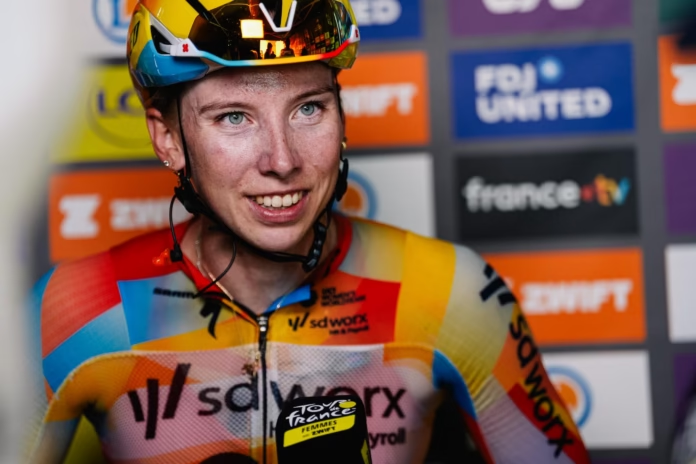
Lorena Wiebes leaves Lausanne with both the yellow and green jerseys after winning the opening stage of the 2026 Tour de France Femmes, but Demi Vollering may be the biggest beneficiary among the riders targeting the final general classification.
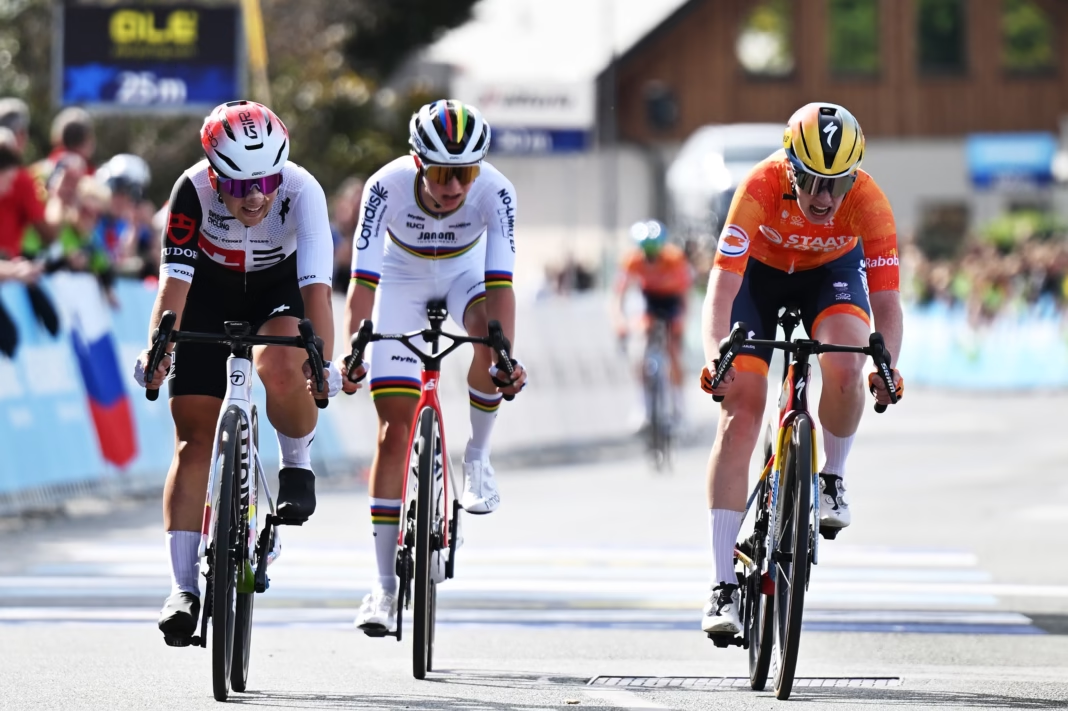
Wiebes beat Kimberley Le Court-Pienaar and Vollering on the uphill Côte Saint-François finish, taking the ten-second winner’s bonus and establishing an early four-second lead over Le Court-Pienaar. Vollering sits third at six seconds after collecting the remaining four bonus seconds.
Most of the principal GC contenders finished together in the front group, including Elisa Longo Borghini, Kasia Niewiadoma-Phinney, Pauline Ferrand-Prévot, Cédrine Kerbaol and Marlen Reusser. Niamh Fisher-Black conceded five seconds on the road, while Paula Blasi, Anna van der Breggen, Isabella Holmgren, Mavi García, Juliette Berthet and Antonia Niedermaier finished eight seconds behind the leading group before bonuses were applied.
Those are not decisive margins on a Tour de France Femmes route still containing the Dijon time trial, Mont Ventoux and the repeated climbs around Nice. Stage 1 has nevertheless given Vollering an early advantage while placing several prominent contenders slightly behind the main GC group.
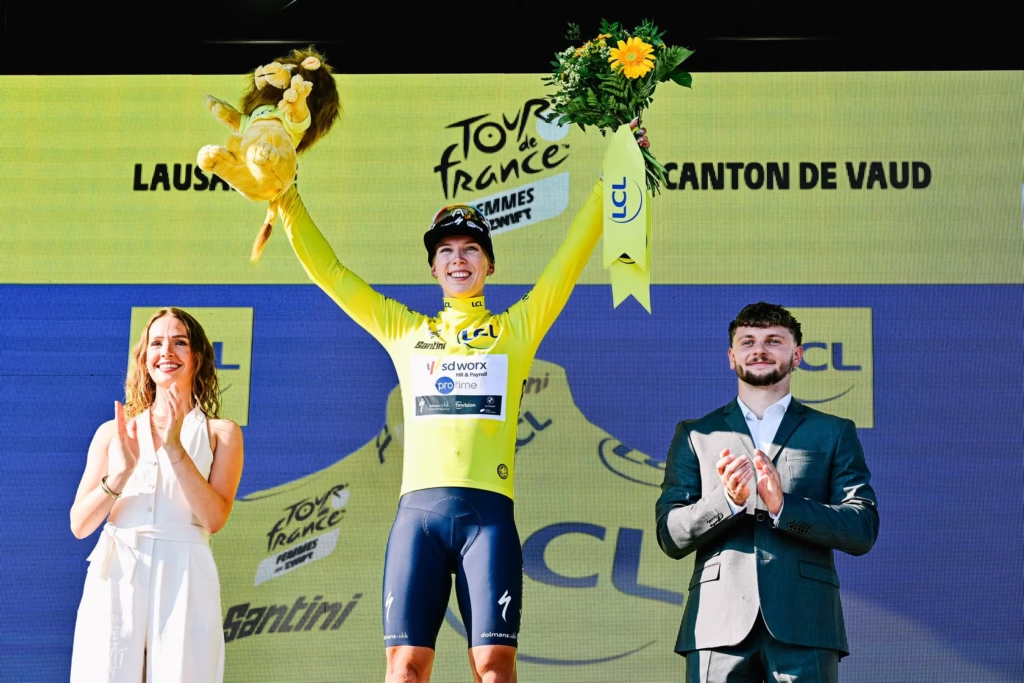 Photo Credit: A.S.O./Billy Ceusters
Tour de France Femmes 2026 general classification after Stage 1
- Lorena Wiebes, SD Worx-Protime in 3:29:01
- Kimberley Le Court-Pienaar, AG Insurance-Soudal at 4 seconds
- Demi Vollering, FDJ United-Suez at 6 seconds
- Puck Pieterse, Fenix-Premier Tech at 10 seconds
- Noemi Rüegg, EF Education-Oatly at 10 seconds
- Elisa Longo Borghini, UAE Team L’IMAD at 10 seconds
- Kasia Niewiadoma-Phinney, Canyon SRAM at 10 seconds
- Pauline Ferrand-Prévot, Visma | Lease a Bike at 10 seconds
- Cédrine Kerbaol, EF Education-Oatly at 10 seconds
- Marlen Reusser, Movistar at 10 seconds
The first ten riders on the road all received the same stage time, so the differences between them in the overall classification come entirely from the ten, six and four bonus seconds awarded to the podium.
Wiebes’ yellow jersey is unlikely to concern the leading GC riders yet. Stage 2 into Geneva gives her another strong opportunity to win and extend her stay at the top of the standings before the race moves onto harder terrain.
The more relevant early margin is Vollering’s four-second gain over Ferrand-Prévot, Niewiadoma-Phinney, Reusser and Longo Borghini. It is small enough to appear insignificant in isolation, but bonus seconds have decided this race before. Vollering lost the 2024 Tour by four seconds, so FDJ United-Suez will appreciate every advantage collected without having to expose their leader in a sustained attack.
The full Tour de France Femmes time bonuses guide explains where further seconds can be won and how they are applied to the general classification.
Vollering gains without taking unnecessary risks
Vollering accelerated on the final climb and remained involved through the sprint, eventually finishing third behind Wiebes and Le Court-Pienaar.
The result gave her four bonus seconds while confirming that her climbing strength and finishing speed can make her relevant before the Tour reaches its recognised GC stages. She did not need to launch a prolonged attack or create a major selection to begin separating herself from several rivals.
That gives Vollering a useful starting position. She is already ahead of Ferrand-Prévot and Reusser before the Dijon time trial, where she will expect to gain more time, and she has taken nine seconds from Fisher-Black and 12 from Blasi before the route reaches their preferred mountain terrain.
The margins remain small, but the tactical principle matters. Vollering can continue collecting seconds on stages that suit her while asking her rivals to wait for the mountains to recover them.
Ferrand-Prévot finishes safely with the leaders
Defending champion Pauline Ferrand-Prévot finished eighth and begins the Tour ten seconds behind Wiebes, four seconds behind Vollering.
There was little reason for Visma | Lease a Bike to take greater risks in Lausanne. The final climb was selective enough to punish poor positioning but not hard enough to provide Ferrand-Prévot with a natural opportunity to distance Vollering.
Her priority was remaining in the front group, and she achieved that. The four-second gap will not alter Visma’s broader strategy because Dijon remains the more significant concern, while Mont Ventoux offers the clearest opportunity for Ferrand-Prévot to make her climbing strength count.
Stage 1 was therefore a neutral result rather than a setback. She lost a handful of bonus seconds but avoided the crashes and splits that affected riders further down the field.
Reusser crashes but avoids losing time
Marlen Reusser suffered one of the most worrying moments among the leading contenders when she crashed on a right-hand bend with around 20km remaining.
The Movistar leader returned quickly and finished tenth, receiving the same stage time as Wiebes and the other riders in the front group. She begins the race ten seconds behind yellow and four seconds behind Vollering.
Avoiding time loss was an important outcome given how easily the crash could have changed her Tour before the Dijon time trial. Reusser is expected to use Stage 4 as her main early opportunity to move ahead of the climbers, and reaching that stage without an incident-related deficit is essential.
The remaining concern is physical rather than numerical. Even without visible time loss, soreness from a crash can affect positioning, power and recovery over the following days. Stage 2 should be less important from a GC perspective, but Reusser and Movistar will still need to monitor how she responds.
Longo Borghini begins ahead of Blasi within UAE
Elisa Longo Borghini was the first UAE Team L’IMAD rider across the line, finishing sixth and remaining ten seconds behind Wiebes.
Paula Blasi finished eight seconds behind the leading group and therefore begins the Tour 18 seconds from yellow and eight seconds behind Longo Borghini in the internal UAE standings.
That does not settle the team’s leadership question. Blasi remains one of the strongest climbers in the race and should become increasingly important once the Tour reaches Mont Ventoux. Longo Borghini has the stronger all-round profile for the early stages and the Dijon time trial.
The small Stage 1 difference simply gives UAE another tactical detail to manage. Longo Borghini does not need to sacrifice her own classification position early, while Blasi has no reason to panic over eight seconds.
Mavi García also finished in the same group as Blasi, preserving UAE’s numerical strength ahead of the harder stages.
Fisher-Black concedes five seconds on the road
Niamh Fisher-Black finished 11th, five seconds behind the first ten riders.
After the stage bonuses are applied, the Lidl-Trek leader begins the race 15 seconds behind Wiebes, nine seconds behind Vollering and five seconds behind Ferrand-Prévot, Reusser, Niewiadoma-Phinney and Longo Borghini.
That is not a damaging margin, but it is more significant for Fisher-Black than it would be for a stronger time triallist. Her route towards the podium depends on reaching the mountains close enough to use her climbing, and every small loss before Dijon adds to the amount she may later need to recover.
Lidl-Trek will not regard five seconds as a crisis. Fisher-Black remains firmly in contention, while Isabella Holmgren finished only three seconds further back and begins well placed in the young rider classification.
The main task now is preventing those small losses from accumulating.
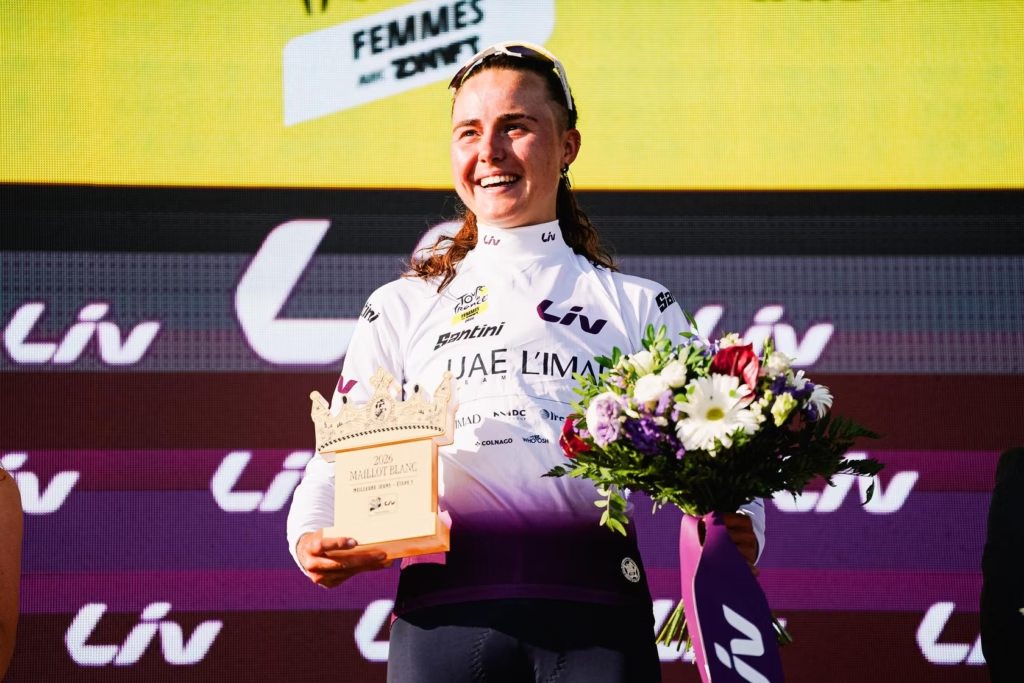 Photo Credit: A.S.O./Gaëtan Flamme
Blasi takes the first white jersey
Paula Blasi leads the young rider classification after Stage 1.
The UAE Team L’IMAD rider finished in the same time as Isabella Holmgren and Antonia Niedermaier, with the order decided by their finishing positions. Blasi was 12th on the stage, Holmgren 14th and Niedermaier 17th.
Young rider classification after Stage 1
- Paula Blasi, UAE Team L’IMAD in 3:29:19
- Isabella Holmgren, Lidl-Trek at the same time
- Antonia Niedermaier, Canyon SRAM at the same time
- Malwina Mul, Cofidis at 11 seconds
- Célia Gery, FDJ United-Suez at 14 seconds
Blasi’s wider GC ambitions mean the white jersey is unlikely to become a separate target at this stage. If she remains competitive for yellow, the young rider competition should develop naturally alongside it.
Holmgren and Niedermaier may approach white differently. Both can become serious contenders without carrying the same pre-race expectation of challenging for the overall Tour victory, although their freedom will depend on Lidl-Trek and Canyon SRAM’s wider leadership plans.
Stage 1 has not produced meaningful differences between the three leading young riders, but it has established the expected central contest. The eligibility rules and scoring behind white are covered in the Tour de France Femmes 2026 jersey guide.
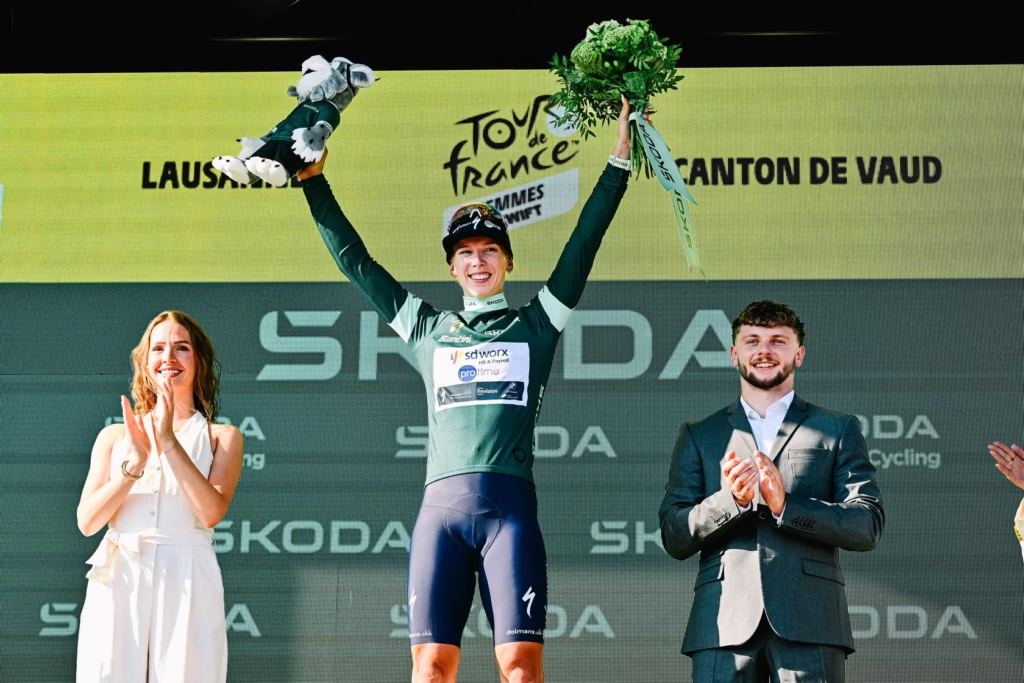 Photo Credit: A.S.O./Billy Ceusters
Wiebes leads the points classification
Wiebes also takes control of the green jersey competition after collecting the maximum 50 points at the finish.
Points classification after Stage 1
- Lorena Wiebes, SD Worx-Protime with 50 points
- Kimberley Le Court-Pienaar, AG Insurance-Soudal with 30 points
- Idoia Eraso, Laboral Kutxa-Fundación Euskadi with 25 points
- Maud Rijnbeek, VolkerWessels with 20 points
- Demi Vollering, FDJ United-Suez with 20 points
Le Court-Pienaar’s second place makes her the closest immediate challenger, while Eraso and Rijnbeek entered the early green jersey standings through the intermediate sprint.
Their positions may not last once the specialist sprinters begin collecting repeated results, but early points can remain valuable if they continue targeting breakaways and intermediate contests.
Wiebes is already in the strongest position. Stage 2 is another likely sprint, and a second victory in Geneva would allow her to build a substantial advantage before the race reaches terrain less naturally suited to her.
Because Wiebes cannot wear yellow and green simultaneously, the green jersey will be worn on her behalf during Stage 2 by the next eligible rider in the points standings. Wiebes remains the official leader of the competition.
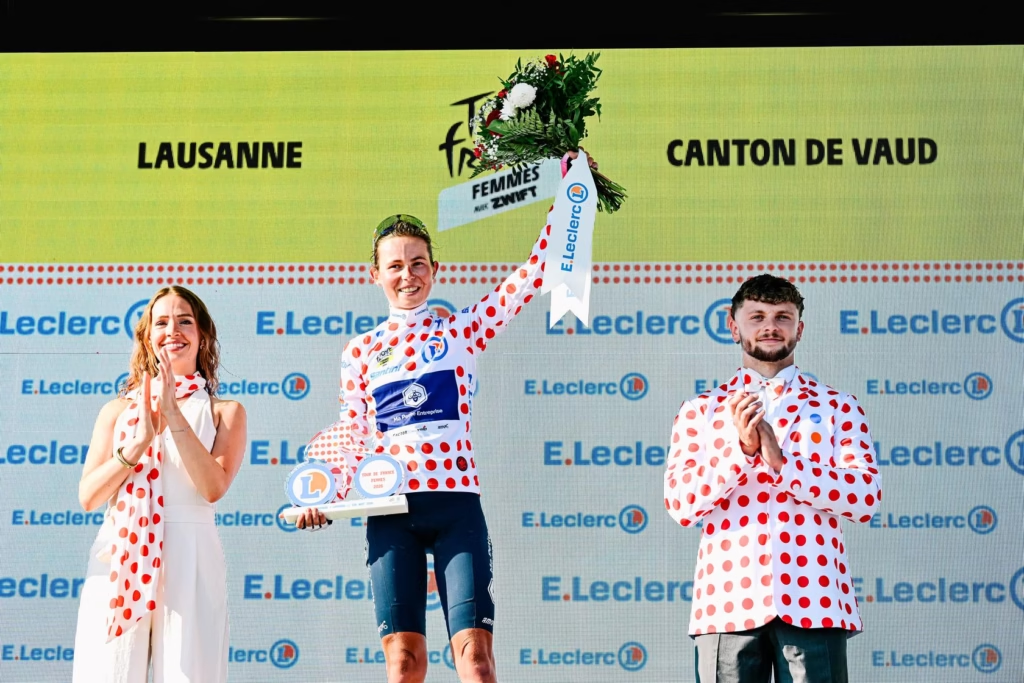 Photo Credit: A.S.O./Billy Ceusters
Océane Mahé takes the polka-dot jersey
Océane Mahé delivered one of the most valuable performances of the day for invited team Ma Petite Entreprise, collecting eight mountains points and securing the first polka-dot jersey of the Tour.
Mountains classification after Stage 1
- Océane Mahé, Ma Petite Entreprise with 8 points
- Idoia Eraso, Laboral Kutxa-Fundación Euskadi with 5 points
- Nikola Nosková, Cofidis with 4 points
- Lorena Wiebes, SD Worx-Protime with 2 points
- Kimberley Le Court-Pienaar, AG Insurance-Soudal with 1 point
Mahé built her lead by contesting the climbs from the breakaway, collecting enough points before the final ascent to guarantee the jersey regardless of what happened on the Côte Saint-François.
The achievement is particularly important for Ma Petite Entreprise. Smaller invited teams do not often have the resources to control stages or challenge the strongest WorldTour riders directly, so targeting an early classification jersey provides both sporting value and visibility.
Stage 2 contains another five categorised climbs, giving Mahé an immediate opportunity to defend the jersey. She may need to enter the breakaway again, however, and riders such as Eraso and Nosková now know exactly what she is trying to do.
Why Wiebes wears yellow rather than green
Wiebes leads both the general and points classifications, but the yellow jersey takes precedence.
She will therefore start Stage 2 in yellow, while green is temporarily passed to the next eligible rider for wearing purposes. The underlying points standings do not change, and Wiebes remains the official leader of the green jersey competition.
This is common during the opening stages of a Grand Tour, when the first winner can lead several classifications at once. Wiebes will wear green herself if she later loses yellow while retaining the points lead.
c
The GC gaps that matter after Stage 1
The overall standings are currently dominated by Wiebes and the finish bonuses, but the more useful comparison is between the riders expected to challenge for the Tour over nine stages.
Selected GC contenders after Stage 1
Demi Vollering: 6 seconds behind Wiebes
Elisa Longo Borghini: 10 seconds
Kasia Niewiadoma-Phinney: 10 seconds
Pauline Ferrand-Prévot: 10 seconds
Cédrine Kerbaol: 10 seconds
Marlen Reusser: 10 seconds
Niamh Fisher-Black: 15 seconds
Paula Blasi: 18 seconds
Anna van der Breggen: 18 seconds
Mavi García: 18 seconds
Juliette Berthet: 18 seconds
Antonia Niedermaier: 18 seconds
Vollering has made the strongest start among the central favourites, but her advantage is only four seconds over the leading group behind her. Longo Borghini, Niewiadoma-Phinney, Ferrand-Prévot, Kerbaol and Reusser remain effectively level.
Fisher-Black and Blasi have conceded slightly more, although neither has lost enough to change how her team should approach the race.
The early hierarchy broadly reflects the riders identified in our Tour de France Femmes 2026 contenders guide, but Stage 1 has already added small tactical differences that could matter once the Tour reaches Dijon.
What changes on Stage 2?
Stage 2 from Aigle to Geneva gives Wiebes another opportunity to retain yellow and extend her lead in the points competition.
The five categorised climbs provide Mahé and the other mountains contenders with several chances to add to their totals, while Blasi, Holmgren and Niedermaier should remain central to the white jersey battle.
For the GC favourites, the day should be more about safety than gaining time. The flatter finish makes another bunch sprint likely, and the biggest threat is becoming caught behind a crash or split during the fast approach to Geneva.
The Geneva Stage 2 route gives the sprinters time to regroup after the final climb, so Wiebes has a realistic opportunity to remain in yellow for another day.
Vollering has already taken a small advantage over several of her main rivals. Ferrand-Prévot, Reusser, Niewiadoma-Phinney and the other contenders do not need to recover it immediately.
Their priority is making sure Stage 2 does not create another one.

