
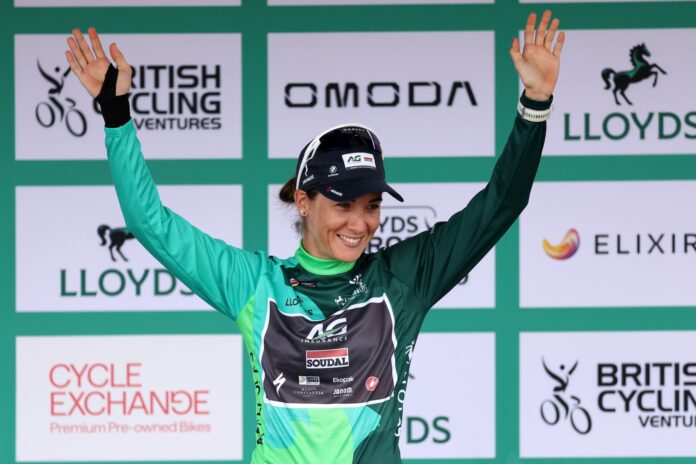
The 2026 Tour of Britain Women will be remembered for two performances above all others: Kim Le Court-Pienaar turning The Great Orme into the foundation of her first stage-race overall victory, and Lorena Wiebes winning four of the five stages.
But the significance of this year’s race goes beyond those results.
The 2026 edition covered 636.2km across five stages with 8,898 metres of climbing, making it the longest race in the event’s history. It was also the third edition organised by British Cycling following the collapse of previous organiser SweetSpot, and the first time since that transition that the race had expanded beyond four days.
That matters because the modern Tour of Britain Women is still rebuilding towards the scale and status previously associated with The Women’s Tour. The race began in 2014, joined the inaugural Women’s WorldTour in 2016 and expanded to six stages before financial problems eventually interrupted its development.
The full story is covered in our brief history of the Tour of Britain Women, but 2026 represents one of the clearest signs yet that the event has moved beyond simply surviving its 2023 crisis.
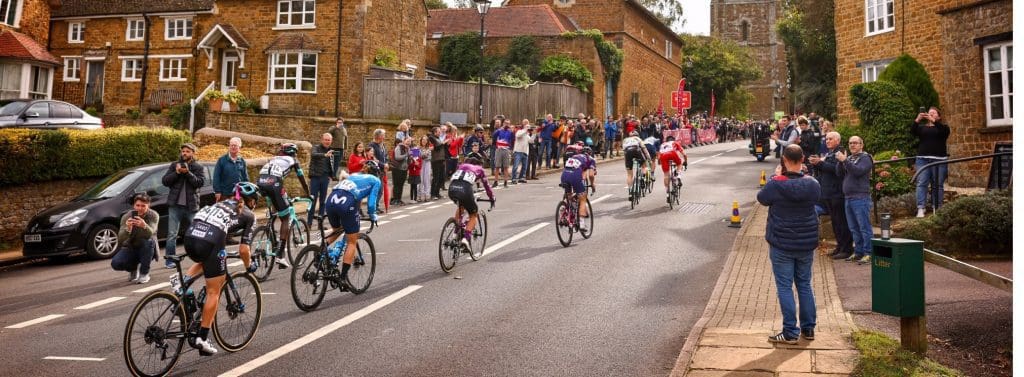
From Marianne Vos to Kim Le Court-Pienaar
The list of overall winners tells much of the story of the race’s standing.
Marianne Vos won the inaugural Women’s Tour in 2014. Lisa Brennauer followed in 2015 before Lizzie Deignan became the first British winner in 2016. Kasia Niewiadoma, Coryn Rivera, Deignan again, Demi Vollering and Elisa Longo Borghini subsequently added their names to a roll of honour dominated by riders who were already, or would become, major figures in women’s cycling.
Lotte Kopecky then won the first edition under the Tour of Britain Women name in 2024, while Ally Wollaston took the 2025 title.
Le Court-Pienaar now joins them after winning the 2026 race by 19 seconds from Wiebes, with Liane Lippert third at 24 seconds.
The route to that victory was unusually clear. Wiebes controlled the opening two days, winning in Cockermouth and Blackpool, but Stage 3 on The Great Orme changed the entire race.
Le Court-Pienaar attacked with around two kilometres remaining and immediately opened a meaningful gap. She finished 13 seconds ahead of Lippert, with Caroline Andersson at 20 seconds and Femke de Vries at 21, transforming a race that had initially belonged to Wiebes into one Le Court-Pienaar could control.
She then survived two stages that suited Wiebes considerably better before sealing the first overall stage-race victory of her career in Royal Leamington Spa.
Le Court-Pienaar’s win links two very different eras
Le Court-Pienaar’s victory becomes even more interesting when placed alongside her own history with the event.
She first raced The Women’s Tour in 2015, during an early period of her European career when she was still trying to establish herself at the top level. She later stepped away from elite road racing, focused more heavily on mountain biking and eventually rebuilt a professional road career that has developed dramatically over the last two seasons.
Eleven years after first riding Britain’s major women’s stage race, she returned and won it.
That gives her victory a different quality to those of Vos, Vollering or Kopecky, who arrived in Britain as firmly established stars.
Le Court-Pienaar’s path has been far less direct. Her rise through 2025 and 2026 has turned her from an experienced rider with an unusual career path into a genuine WorldTour winner capable of shaping difficult stage races herself.
The 2026 Tour added another significant piece of evidence. As explored in our analysis of what the Tour of Britain Women means for the rest of the season, The Great Orme showed that she can do more than survive with the best riders on selective terrain. She can attack them and create the decisive gap herself.
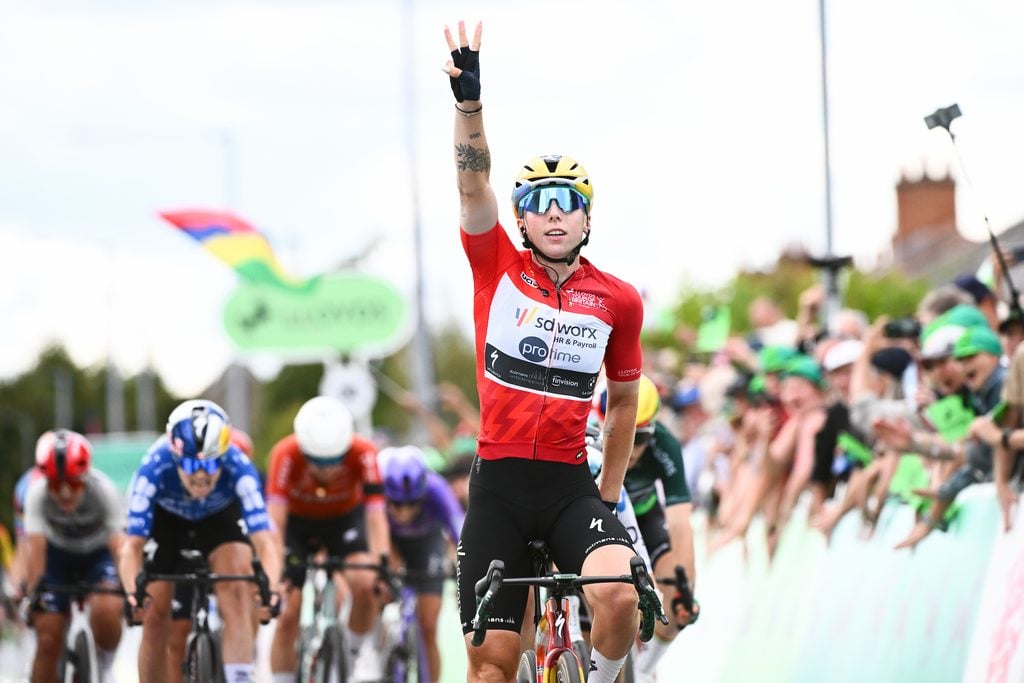 Photo Credit: Simon Wilkinson/SWpix.com
Lorena Wiebes rewrote the stage-win record
If Le Court-Pienaar owned the general classification, Wiebes owned almost everything else.
The Dutch sprinter won Stage 1 in Cockermouth, Stage 2 in Blackpool, Stage 4 in Hay-on-Wye and Stage 5 in Royal Leamington Spa.
Four victories from five stages is exceptional even by Wiebes’s standards.
She finished the race with 11 career stage victories in the event, strengthening her position as the most prolific stage winner in its history. Only Le Court-Pienaar’s solo victory on The Great Orme prevented her from winning every stage of the 2026 race.
The more interesting part of Wiebes’s week, however, was not simply the number of victories.
Her win into Hay-on-Wye came after a demanding stage through Wales where repeated climbing and attacks could easily have removed a conventional sprinter. Instead, she remained in the decisive group and still had enough speed to win at the finish.
She then survived another selective final day around Warwickshire and collected enough bonus seconds with victory to move ahead of Lippert into second overall.
That matters historically because the Tour of Britain Women has always tended to reward riders who combine finishing speed with the ability to withstand repeated climbing. Wiebes increasingly fits that description rather than existing purely as a flat-stage specialist.
The Great Orme joins the race’s defining climbs
The Women’s Tour was never originally built around Alpine-style summit finishes.
Its early editions tended to create GC differences through rolling roads, exposed terrain, short climbs, positioning and bonus seconds. That became part of the race’s identity.
Over time, however, organisers became more ambitious with terrain.
The 2026 Tour of Britain Women route pushed that development further, with The Great Orme providing the clearest GC test before another climbing-heavy stage through Wales.
The Great Orme produced exactly what the organisers needed.
Le Court-Pienaar did not win the Tour through accumulated sprint bonuses or a handful of small positioning gains. She won it by being clearly strongest when the decisive climb arrived.
That gives the 2026 edition a more recognisable stage-race hierarchy than some earlier years, when tiny time gaps could survive until the final sprint.
The irony is that the broader race still retained its traditional character. Wiebes’s bonus seconds eventually moved her into second overall, while Lippert’s inability to take more time away from her rivals on the harder terrain ultimately cost her that position.
The race therefore combined a decisive climbing performance with the small-margin tactical racing that has characterised it since 2014.
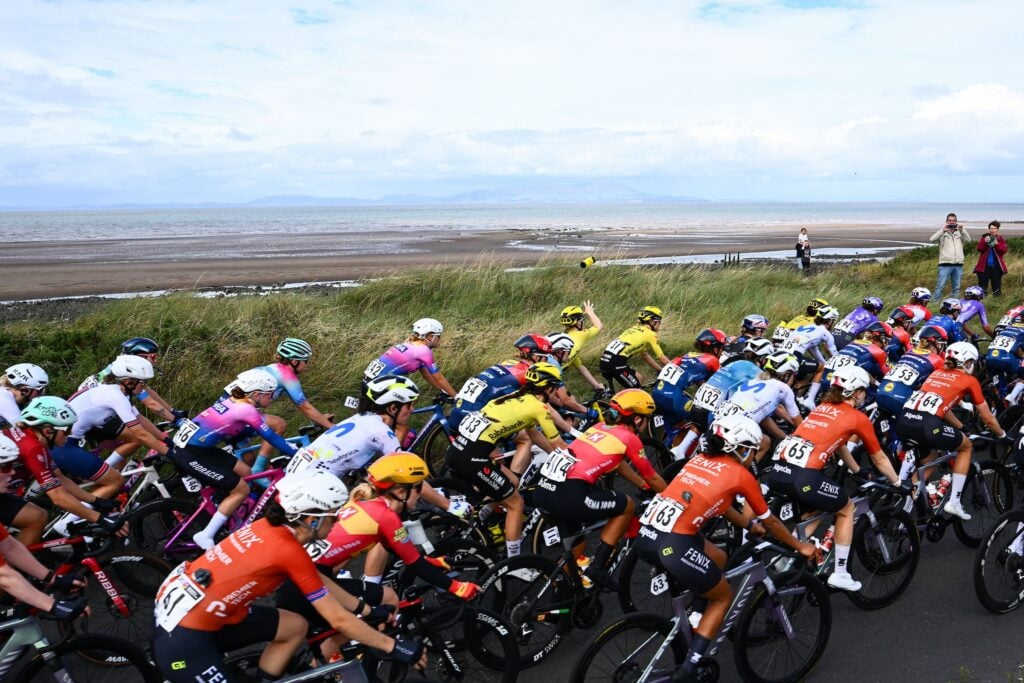
The 2026 race was historically long
The scale of the route also made 2026 significant.
At 636.2km, the race was officially the longest edition in its history, despite taking place across five stages rather than the six used during parts of The Women’s Tour era.
The individual stages were:
- Stage 1: 158.9km around Cockermouth
- Stage 2: 110.5km from Clitheroe to Blackpool
- Stage 3: 104.7km from Mold to The Great Orme
- Stage 4: 138.3km from Llanidloes to Hay-on-Wye
- Stage 5: 123.8km around Royal Leamington Spa
Combined with almost 8,900 metres of climbing, that made this more than a symbolic expansion from four stages to five.
When British Cycling took over the race for 2024, simply getting a four-day Women’s WorldTour event onto the road represented success. Two years later, the race had added another day, increased its total distance and built a route capable of separating the GC contenders properly.
That is tangible progress.
Why 2024 remains the key dividing line
The history of the race is effectively divided into two organisational eras.
The first was The Women’s Tour under SweetSpot.
Launched in 2014, it quickly established itself as one of women’s cycling’s most important stage races. It joined the Women’s WorldTour when the series was created in 2016 and became known for large roadside crowds, high-profile winners and an unusually serious commitment to women’s racing for the period.
But the financial model eventually broke down.
The 2023 edition was cancelled when SweetSpot could not secure enough commercial funding to deliver the race. Rising costs and lost sponsorship created a gap that attempts to find replacement backing could not close.
This was different from the missing 2020 race, which had been a consequence of the COVID-19 pandemic. In 2023, the existence of the event itself was in doubt.
British Cycling subsequently took over delivery of Britain’s principal men’s and women’s stage races and relaunched the women’s event as the Tour of Britain Women in 2024.
Kopecky won that four-stage comeback edition.
Wollaston followed in 2025, again over four days.
The move to five stages in 2026 was therefore the first expansion of the race since British Cycling took control, a development ProCyclingUK followed from the original announcement that the Tour of Britain Women would grow to five stages.
 Photo Credit: Alex Whitehead/SWpix.com
The name changed, but the history did not restart
It is important not to treat 2024 as year one of an entirely new sporting event.
The Women’s Tour and Tour of Britain Women form one continuous racing lineage.
The organiser changed. The branding changed. The structure surrounding the event changed.
The winners still belong to the same history.
That is why Le Court-Pienaar should be considered alongside Vos, Brennauer, Deignan, Niewiadoma, Vollering and Longo Borghini rather than merely as the third champion of a race supposedly created in 2024.
It is also why the expansion to five stages carries more weight. The benchmark is not simply the four-stage editions of 2024 and 2025. It is the standard established across more than a decade of Britain’s premier women’s stage race.
The race remains Britain’s key Women’s WorldTour stage race
Its place in British cycling remains unusual.
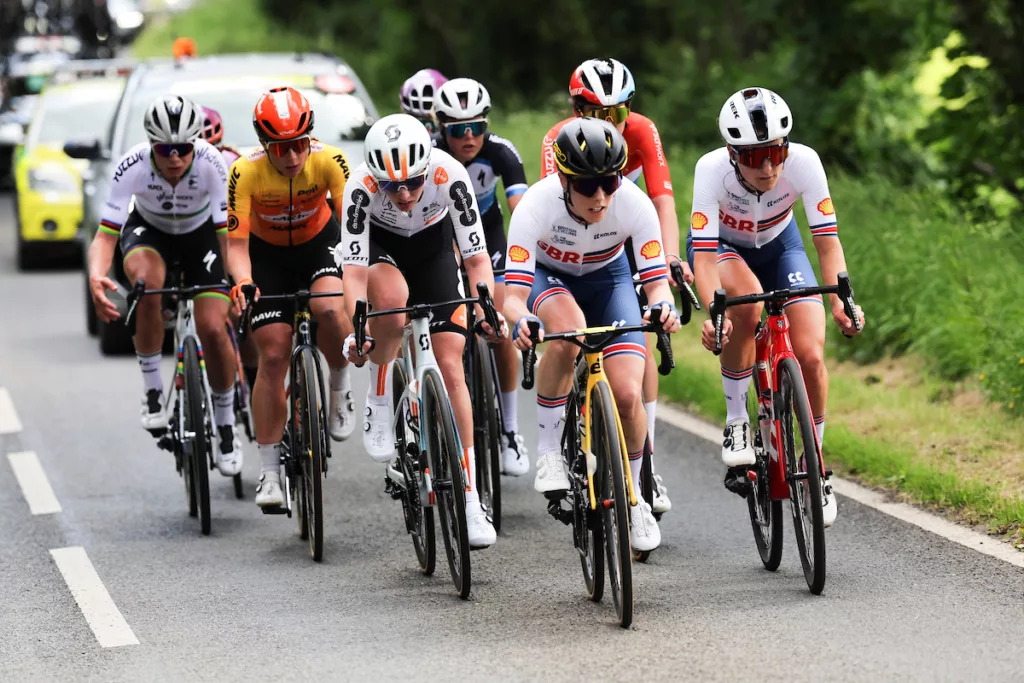
The 2026 edition featured 114 riders from 19 teams and 24 nations, bringing much of the top level of the women’s peloton onto British roads.
That matters in a country that produces a significant number of elite female riders but has relatively few opportunities to watch them race at Women’s WorldTour level at home.
The event has also long offered British domestic teams and developing riders an opportunity to compete alongside some of the strongest squads in the world.
That relationship between international status and domestic visibility has been central to the race since the Women’s Tour era. The strength of the winners attracts attention, but the race’s broader value comes from creating a genuine top-level women’s event on British roads rather than requiring British fans to travel abroad to see one.
Lizzie Deignan’s two victories still stand alone
For all the champions the race has produced, one statistic remains untouched.
Lizzie Deignan is still the only rider to have won the overall classification twice, taking the title in 2016 and again in 2019.
That says something about how difficult the Tour of Britain Women has historically been to dominate.
Its routes change considerably between editions. Some favour powerful sprinters who can survive the hills. Others reward puncheurs, Classics riders or more conventional stage racers. Weather, narrow roads and bonus seconds can all matter as much as the headline climbs.
Even riders of the calibre of Vos, Vollering, Longo Borghini and Kopecky have only won once.
Le Court-Pienaar now joins that group.
-
 Photo Credit: Getty
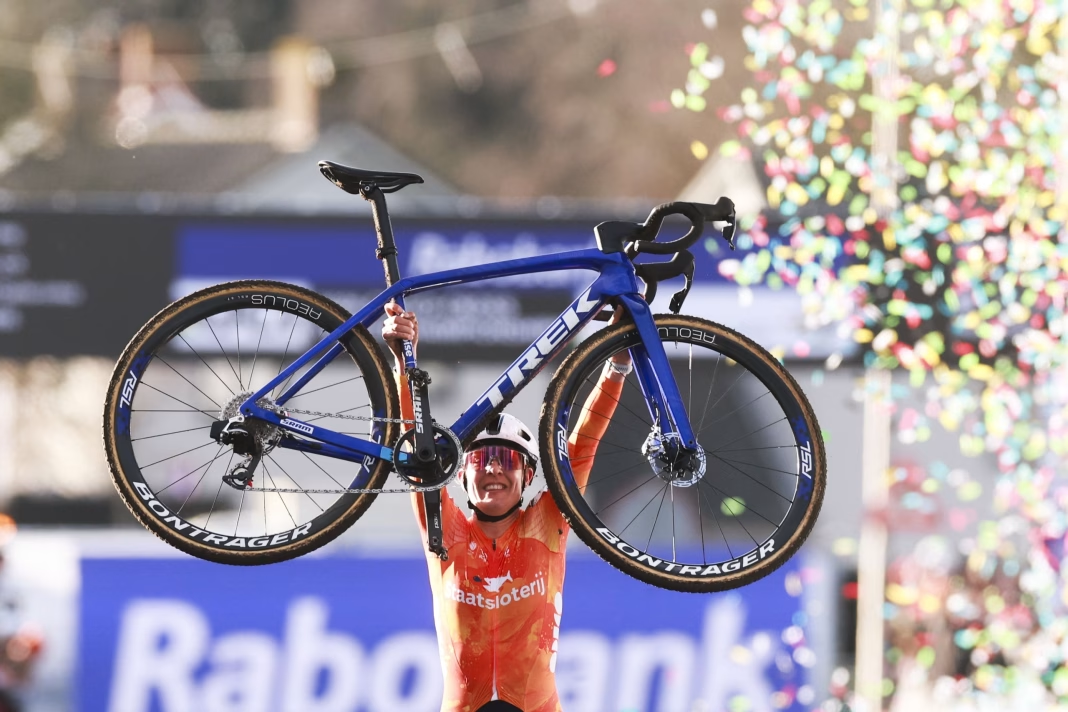

Wiebes and Le Court-Pienaar captured both sides of the race’s identity
The final standings provide an unusually neat summary of what the Tour of Britain Women has become.
Le Court-Pienaar won because she was the strongest rider on the race’s decisive climb.
Wiebes finished second because she was almost unbeatable everywhere else.
Lippert was one of the strongest climbers but could not create enough separation to protect second place from Wiebes’s finishing speed and bonus seconds.
That balance is particularly appropriate for this race.
The Tour of Britain Women has rarely been a straightforward contest between pure climbers. Its best riders need to manage positioning, repeated short efforts, technical roads and bonus seconds while still being strong enough to survive the hardest terrain.
The 2026 podium reflected that perfectly.
The rebuilt Tour of Britain Women is beginning to look established again
Perhaps the most important historical comparison is not about an individual rider at all.
The 2024 Tour of Britain Women felt, above everything else, like a rescue operation. Four stages were enough to preserve a Women’s WorldTour stage race in Britain after a year without one.
By 2026, the event looked like something more ambitious.
Five stages, a record overall distance, almost 8,900 metres of climbing, a decisive GC finish on The Great Orme and a field capable of producing four Wiebes victories alongside a major Le Court-Pienaar breakthrough represented meaningful progress.
There are still questions about how much further the race can grow and whether six stages can eventually return. British road racing has learned too recently that major events cannot simply be assumed to be financially secure.
But the direction in 2026 was unmistakably different from 2023, when there was no race at all.
The 2026 Tour of Britain Women should therefore be remembered for more than the remarkable contrast between Le Court-Pienaar’s one decisive stage win and Wiebes winning almost everything else.
In the longer history of the event, it was the edition in which the rebuilt Tour of Britain Women began to look less like a race recovering from crisis and more like one confidently developing again.

