
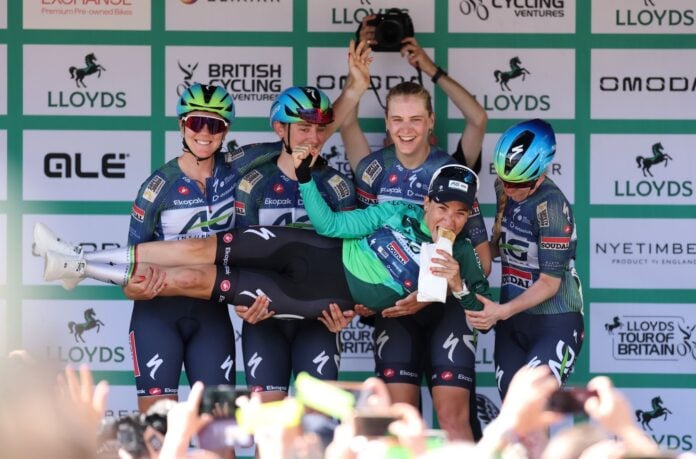
The Tour of Britain Women 2026 did more than produce a new overall winner. Across five stages from Cockermouth to Royal Leamington Spa, it sharpened several of the biggest storylines heading into the final part of the women’s cycling season.
For Kim Le Court-Pienaar, victory was confirmation that she has moved beyond being an opportunistic Classics and stage-winning threat into a genuine stage-race leader. For Lorena Wiebes, four victories from five stages showed that her evolution is no longer simply about being the world’s dominant sprinter. She is becoming increasingly difficult to remove even when the road becomes considerably harder.
Behind them, Liane Lippert, Caroline Andersson and Femke de Vries all left Britain with reasons to look forward rather than back. The race also carried wider significance because its new five-stage format gave the late-season Women’s WorldTour a substantial European stage race after the Tour de France Femmes had already settled many of the year’s biggest arguments.
The Tour of Britain did not completely rewrite the 2026 hierarchy, but it added new names to it and strengthened several trends that could matter through the World Championships, the final European WorldTour races and into 2027.
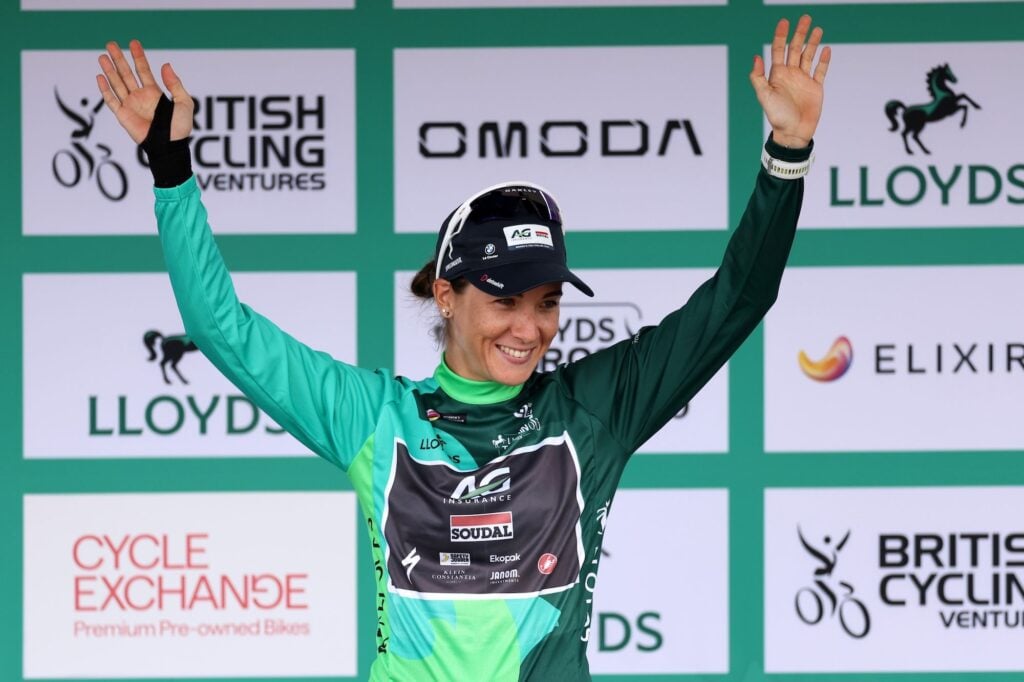
Kim Le Court-Pienaar has become a genuine stage-race winner
The most important consequence of the race is what it changes about Kim Le Court-Pienaar’s place in the women’s peloton.
Winning the Tour of Britain was the first general classification victory of her career. More importantly, it came through an authoritative performance rather than bonus seconds or one lucky tactical situation. Le Court-Pienaar attacked decisively on the Great Orme, took control of the race and then successfully defended that position through two very different final stages.
Her Stage 3 victory on the Great Orme was the performance that changed the Tour. She accelerated with around two kilometres remaining, immediately distanced the other favourites and finished 13 seconds ahead of Lippert, with Caroline Andersson at 20 seconds and Femke de Vries at 21.
That was not a reduced sprint won through superior finishing speed. It was a proper GC attack.
The result also fitted a much broader pattern in Le Court-Pienaar’s season. She had already finished ninth overall at the 2026 Tour de France Femmes and won Stage 6 in Tournon-sur-Rhône, where she beat Cédrine Kerbaol and Puck Pieterse from an eight-rider group.
Britain added the missing piece.
Le Court-Pienaar has now shown she can win a stage, attack uphill, survive sustained difficult terrain and manage a race once she has the leader’s jersey. The obvious limitation remains longer individual time trials, but in stage races without a substantial TT she increasingly has to be considered a genuine GC threat.
The Great Orme changed how Le Court-Pienaar should be viewed
Before the race, Le Court-Pienaar was already one of the strongest names in ProCyclingUK’s Tour of Britain Women 2026 contenders preview, but there was still a difference between looking well suited to the route and actually controlling a WorldTour stage race.
The Great Orme closed much of that gap.
She did not simply wait until the final 200 metres and rely on the sprint that had already delivered major victories elsewhere. She attacked early enough to create meaningful separation and then sustained it all the way to the line.
That matters when assessing what comes next.
A rider who can only win when the race ends in a reduced sprint can be tactically managed. A rider who can attack the climbers and then outsprint them on another day forces rivals to account for several different scenarios.
That is the category Le Court-Pienaar is moving towards.
Montréal looks increasingly suited to Le Court-Pienaar
That broader range should matter when attention shifts towards the World Championships in Montréal.
A difficult one-day race built around repeated climbing rewards a very different skill set from a conventional stage-race GC, but Le Court-Pienaar’s Tour of Britain still provides useful evidence. She handled repeated changes of rhythm, produced the strongest attack on the Great Orme and retained enough finishing speed to remain dangerous even after hard climbing.
Her form is also clearly established.
The Tour of Britain arrived only weeks after the Tour de France Femmes, where she won Stage 6 and finished inside the final GC top 10. Britain then gave her another five days of high-level racing and ended with the biggest stage-race victory of her career.
She will face a much deeper concentration of one-day specialists at the Worlds, but she no longer looks like a rider who needs the biggest favourites to cancel one another out before she can become relevant.
She can help create the decisive race herself.
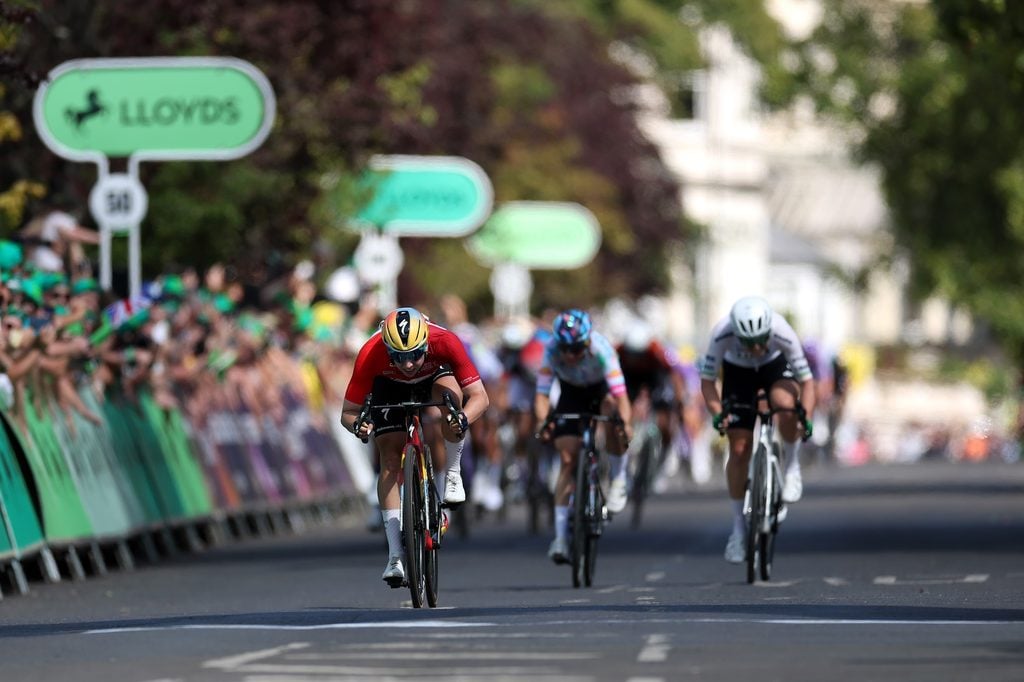 Photo Credit: Getty
Lorena Wiebes is becoming something much more difficult than a pure sprinter
Four victories from five stages would make Wiebes one of the biggest stories of the race even if every stage had been completely flat.
They were not.
The opening two days reinforced what was already known. When Wiebes arrives at a sprint in position, very few riders can match her.
The more significant performances came later.
She lost time to Le Court-Pienaar on the Great Orme, but limited the damage well enough to remain near the top of the classification. She then survived the much longer and more attritional Stage 4 through Mid Wales before winning in Hay-on-Wye.
That is where her Tour of Britain becomes more important than the raw number of victories.
Wiebes has spent several seasons gradually expanding the terrain on which she can remain competitive. Britain provided some of the strongest evidence yet that the process is continuing.
Stage 4 may have been Wiebes’ most important ride of the week
The Stage 4 route to Hay-on-Wye looked like the obvious opportunity for the climbers to make sure Wiebes disappeared from the stage battle.
There was sustained climbing, repeated attacks and enough overall elevation to make the day far more difficult than a normal sprint stage.
Wiebes still won.
That should concern rivals more than another victory from a conventional lead-out.
The question around Wiebes has never really been whether someone can outsprint her consistently. The answer is generally no. The tactical solution has always been to remove her before the finish.
Britain showed how much harder that is becoming.
A short climb is no longer necessarily enough. Rolling terrain is often insufficient. Even sustained climbing has to create a sizeable gap because Wiebes and SD Worx-Protime increasingly have the ability to return.
Wiebes is changing the tactical requirements of hilly races
That development has consequences beyond stage racing.
The more climbing Wiebes can survive without sacrificing her sprint, the larger the group of races in which rivals need to build their tactics specifically around eliminating her.
That is particularly relevant to hilly one-day racing.
In previous seasons, a sufficiently aggressive sequence of climbs could turn Wiebes from the central favourite into a rider simply trying to survive. The threshold at which that happens is moving higher.
That changes how teams have to race against her.
It is no longer enough to make a race difficult.
They need to make it difficult continuously, prevent regrouping and ensure that when Wiebes is finally distanced she stays distanced.
The Tour of Britain offered repeated examples of why.
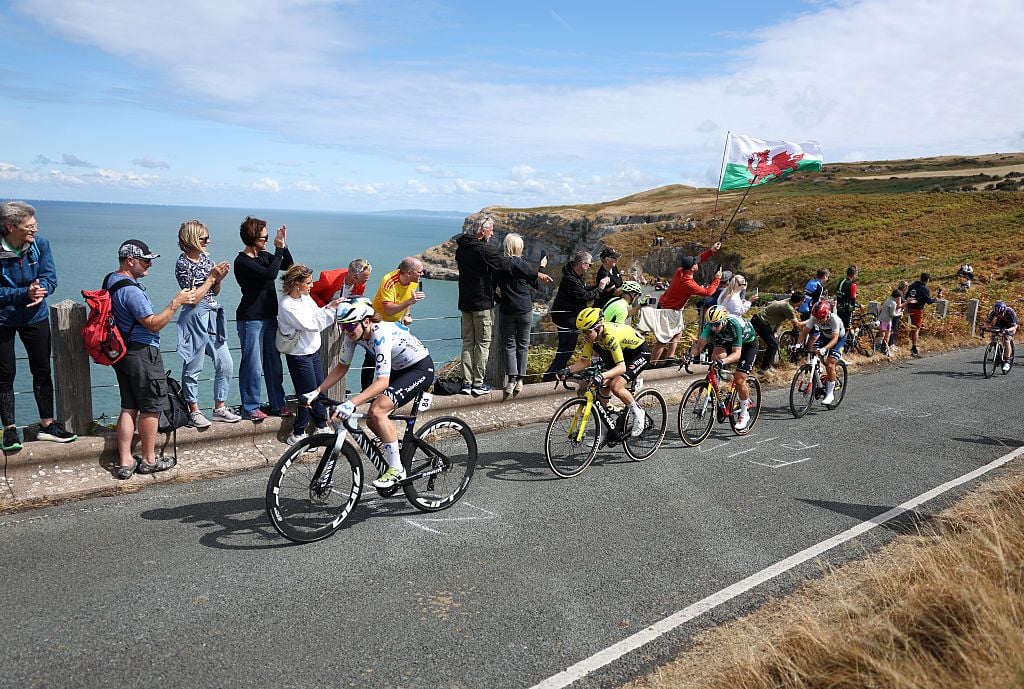 Photo Credit: Getty
Liane Lippert’s third place understates how well she raced
The final classification does not completely reflect Liane Lippert’s influence on the race.
She was the closest rider to Le Court-Pienaar on the Great Orme and spent the following stages trying to turn that deficit into an opportunity rather than simply defending second place.
That aggression mattered.
Lippert repeatedly helped make the harder stages selective, and her second place on the Great Orme established her as the clearest physical challenger to Le Court-Pienaar once Wiebes reached terrain that finally put her under pressure.
Her eventual third place, after Wiebes used the final stages and bonuses to move ahead, should therefore not be read as a disappointing result.
Lippert leaves Britain with excellent climbing form and the confidence that she can actively shape difficult WorldTour races rather than merely follow the strongest riders.
That should matter through the final one-day targets of the season.
Caroline Andersson was one of the biggest winners without winning
Caroline Andersson’s performance may be one of the results with the greatest longer-term impact.
She finished third on the Great Orme and moved into the heart of the GC battle rather than fading once the race reached its hardest terrain.
That matters because breakthrough performances are more convincing when they repeat.
One unexpected result can come from perfect positioning, unusual tactics or an especially suitable finish. Andersson remained competitive across several different stages and finished the week as one of the strongest overall riders.
For Liv AlUla Jayco, that creates another option.
Andersson can increasingly be considered for protected roles in hilly stage races rather than simply starting as support for a more established leader.
The Tour of Britain did not suddenly turn her into a Grand Tour favourite, but it provided strong evidence that her ceiling at WorldTour level is higher than a supporting role alone.
 Photo Credit: Cor Vos
Femke de Vries strengthened her case for greater responsibility
The same applies to Femke de Vries.
Her fourth place on the Great Orme was one of the strongest performances of Stage 3, and she remained close to the front through the harder terrain that followed.
For Visma | Lease a Bike, that is useful evidence.
A team with major established leaders still needs riders capable of assuming responsibility when programmes overlap, when a route suits a different profile or when the expected leader is absent.
De Vries’ Tour of Britain suggests she can increasingly become one of those riders.
She did not simply survive a favourable stage. She produced a consistent GC performance across the decisive part of a five-day WorldTour race.
That should bring more leadership opportunities.
Lotte Kopecky’s withdrawal leaves a major unanswered question
One rider whose Tour tells us much less is Lotte Kopecky.
Kopecky withdrew before Stage 3 after feeling unwell, removing one of the riders who had looked ideally suited to the Great Orme and potentially the overall classification.
That means Britain never provided the form test that had been expected.
The important point is not to read too much into the withdrawal itself. SD Worx-Protime said Kopecky was not feeling well and made the decision with the team’s medical staff. There is no reason to turn that into a wider performance narrative without further evidence.
What it does create is uncertainty.
Several of Kopecky’s likely late-season rivals now leave Britain with clear evidence of strong form.
Kopecky leaves without having been tested on the stages that mattered most.
Kopecky’s absence also showed how much Wiebes has expanded SD Worx’s options
There was another interesting consequence of the withdrawal.
Losing Kopecky before the Great Orme might once have left SD Worx-Protime without an obvious route through the hilly stages.
Instead, Wiebes almost compensated for it herself.
She could not match Le Court-Pienaar’s attack on the summit finish, but she limited the damage and then returned to winning immediately afterwards.
That illustrates how much the team’s tactical possibilities have expanded.
The simple division of roles in which Kopecky handles difficult terrain and Wiebes waits for flat sprints is increasingly outdated.
Wiebes can now remain relevant on days that would previously have been considered Kopecky territory, while riders such as Mischa Bredewold provide another layer of tactical flexibility.
That makes SD Worx harder to isolate around one leader.
Britain confirmed Le Court-Pienaar’s Tour de France was not an isolated result
There is also a useful connection between the Tour of Britain and what happened earlier in August.
Le Court-Pienaar’s Tour de France Femmes GC was compromised partly by a discipline in which she remains less competitive than the very best all-rounders, but her Stage 6 victory in Tournon-sur-Rhône demonstrated the same qualities that became decisive in Britain.
She survived difficult terrain, worked her way into a strong tactical position and then finished the job.
The Tour of Britain removed the individual time trial from the equation and asked whether she could turn those strengths into a full stage-race GC.
She could.
That distinction is important when evaluating where she fits among the major stage racers.
She is not yet as complete against the clock as the very best GC riders, but there are plenty of WorldTour races where that weakness is either reduced or absent.
In those races, she now has to be considered differently.
The Tour of Britain justified its expanded five-stage format
The race itself also emerged from 2026 with a stronger sporting identity.
The Tour of Britain Women 2026 route expanded to five stages and created enough variation for different rider types to control different parts of the week.
Wiebes dominated the faster stages.
The Great Orme produced the decisive uphill selection.
Mid Wales gave the race a long, attritional GC test.
Royal Leamington Spa then returned the advantage towards the faster riders without making the final day completely ceremonial.
That balance is important.
Britain does not need an Alpine mountain stage to create a meaningful Women’s WorldTour GC. Short steep climbs, exposed roads, repeated rolling terrain and carefully positioned uphill finishes can create enough difficulty if the route forces teams to race.
The 2026 edition demonstrated that clearly.
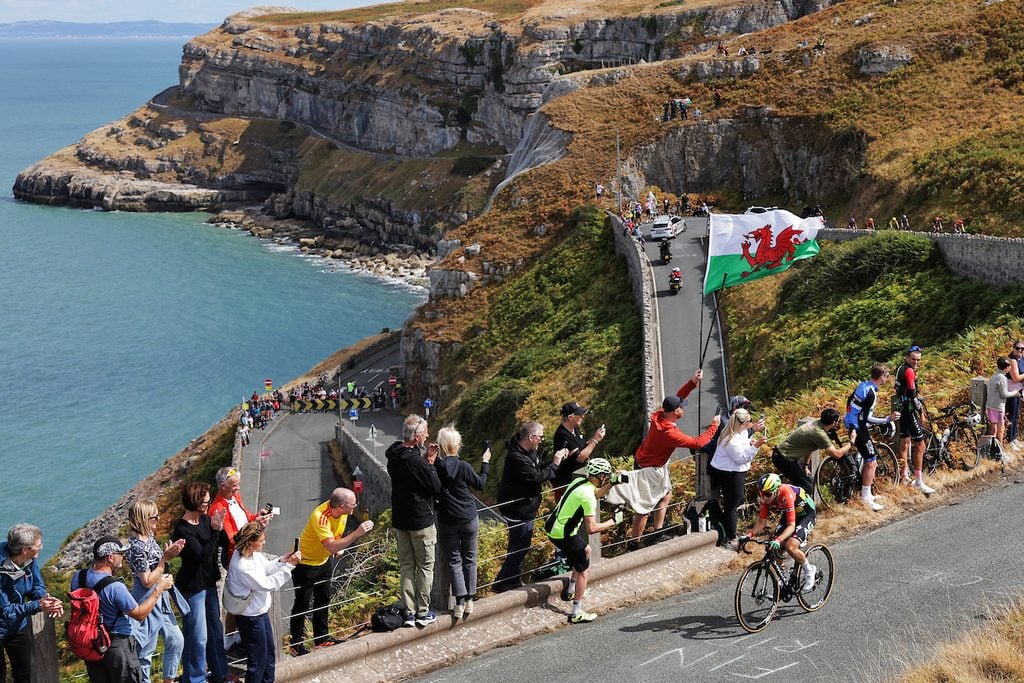
The Great Orme worked exactly as the race needed it to
From a route-design perspective, Stage 3 may have been the most important element of the entire Tour.
The first two days had established Wiebes as the dominant rider, creating the possibility that the race could simply become a battle for bonuses around her sprint wins.
The Great Orme prevented that.
Le Court-Pienaar attacked.
Lippert emerged as the nearest challenger.
Andersson and de Vries confirmed they belonged in the GC fight.
Wiebes finally reached terrain difficult enough to create a meaningful gap.
The climb was not especially long, but it did not need to be. Its placement at the finish and its gradient were enough to force the strongest riders to race rather than simply survive.
The lesson for future editions should be clear.
The Tour of Britain Women does not need enormous climbs. It needs climbs placed where they cannot be neutralised.
The late-season Women’s WorldTour picture is broader than it looked after the Tour
ProCyclingUK’s analysis of what the 2026 Tour de France Femmes meant for the rest of the season noted how unusually sparse the remaining European Women’s WorldTour calendar had become.
Britain has now added another layer to that picture.
Le Court-Pienaar is a WorldTour GC winner.
Wiebes has demonstrated another step in her climbing development.
Lippert is carrying strong form into the final part of the year.
Andersson and de Vries have produced performances that should change how their teams and rivals view them.
That does not overturn the hierarchy established by Demi Vollering, Kasia Niewiadoma-Phinney, Elisa Longo Borghini and the other major Grand Tour names. The Tour of Britain did not contain every leading GC rider and should not be treated as though it did.
What it demonstrated is that the pool immediately behind that established group is becoming deeper.
That matters for 2027 as much as it does for the remaining weeks of 2026.
The race strengthened the case for more live women’s racing in Britain
The sporting value of the race also matters domestically.
A five-stage Women’s WorldTour event crossing several different regions gives British riders and teams something difficult to reproduce elsewhere, particularly when the race is accessible to spectators and live viewers.
The expansion provides more opportunities for domestic riders to appear in breakaways, compete for secondary classifications and measure themselves directly against riders such as Wiebes, Le Court-Pienaar and Lippert.
Those opportunities matter even when they do not end with a WorldTour stage victory.
For riders developing towards professional contracts, five days in that environment can reveal much more than an isolated one-day appearance.
The race therefore has a role beyond producing its overall winner.
What does the Tour of Britain Women mean heading towards the Worlds?
The clearest winner is Kim Le Court-Pienaar.
She leaves Britain with form, confidence and a new piece of evidence that she can take responsibility for shaping a major race rather than simply responding to what others do.
Liane Lippert also leaves with encouraging climbing form, while Wiebes has again complicated the question of how selective a race must become before she can safely be removed from contention.
Andersson and de Vries have strengthened their cases for important national-team roles.
Kopecky remains the uncertainty because illness prevented her from reaching the stages that would have tested her most clearly.
None of that guarantees anything in Montréal. Championship racing brings together different teams, different tactical incentives and riders coming from very different programmes.
What Britain has done is expand the number of riders their opponents need to take seriously.
The biggest takeaway from the 2026 Tour of Britain Women
The immediate story is straightforward.
Kim Le Court-Pienaar became a WorldTour stage-race winner. Lorena Wiebes won four of five stages. Liane Lippert again showed elite climbing form, while Caroline Andersson and Femke de Vries emerged from the week with significantly greater GC credibility.
The longer-term implications are more interesting.
Le Court-Pienaar has proved she can build and defend a stage-race victory rather than simply collect major individual stages. Wiebes is becoming sufficiently strong on the climbs that teams increasingly have to design entire tactical plans around getting rid of her. Lippert looks capable of shaping the late-season one-day races, while the next tier of Women’s WorldTour stage-racing talent has become deeper.
The Tour of Britain Women did not decide the rest of 2026.
It did, however, change who should be taken seriously when the final major races of the season are decided.

