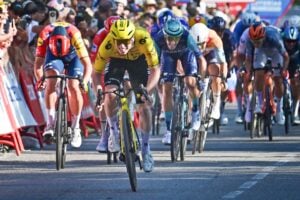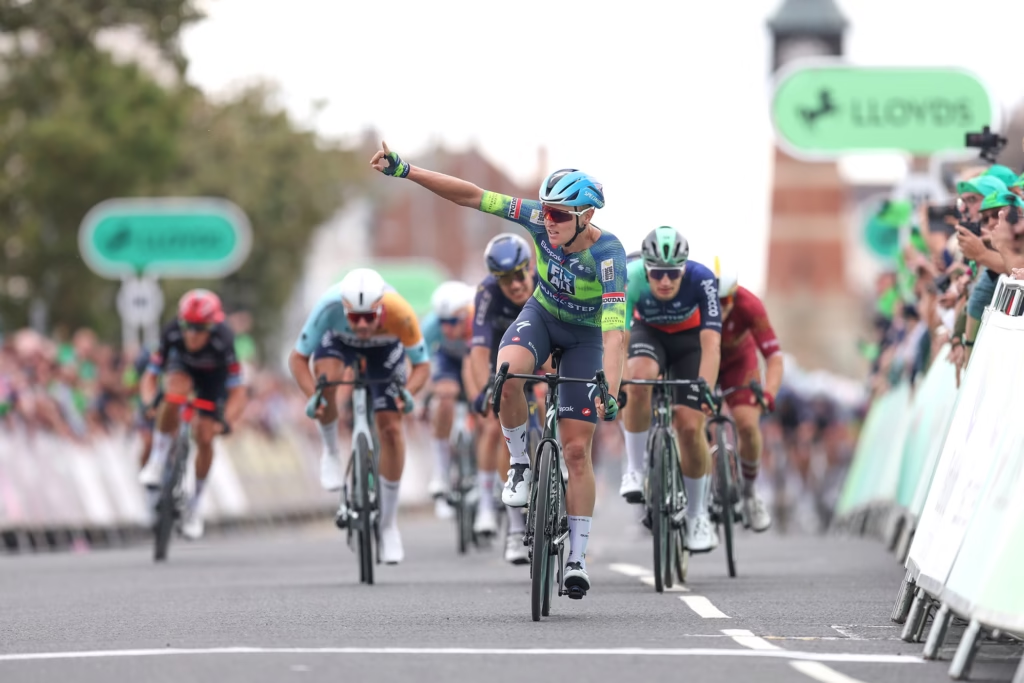
The 2026 Tour of Britain Men reaches its hardest stage on Saturday, with 165.8km from Helmsley to Leyburn and 2,699 metres of climbing giving Tim Wellens and UAE Team Emirates-XRG their best opportunity yet to remove Lewis Askey from the race lead.
Askey has carried green since his Stage 1 victory on Michaelgate and begins the penultimate stage with a 12-second advantage over Wellens. Matteo Trentin is third at 19 seconds, while Daan Hoole, Jasper Stuyven and Florian Vermeersch are all within 25 seconds.
Those gaps have survived the sprint stages in Skegness and Beverley. They are unlikely to survive Saturday unchanged.
Greenhow Bank, Kidstones, Greets Moss and Grinton Moor are packed into an increasingly difficult second half through the Yorkshire Dales. None is long enough to turn Stage 4 into a conventional mountain stage, but together they provide repeated opportunities to isolate Askey, force attacks and create the small gaps that could decide a five-day race.
That format suits Wellens particularly well. It also gives UAE several riders they can send up the road before their best-placed rider has to make a move himself.
For the wider overall picture, our Tour of Britain Men 2026 race preview identified the Helmsley to Leyburn stage as the clearest GC test of the week.
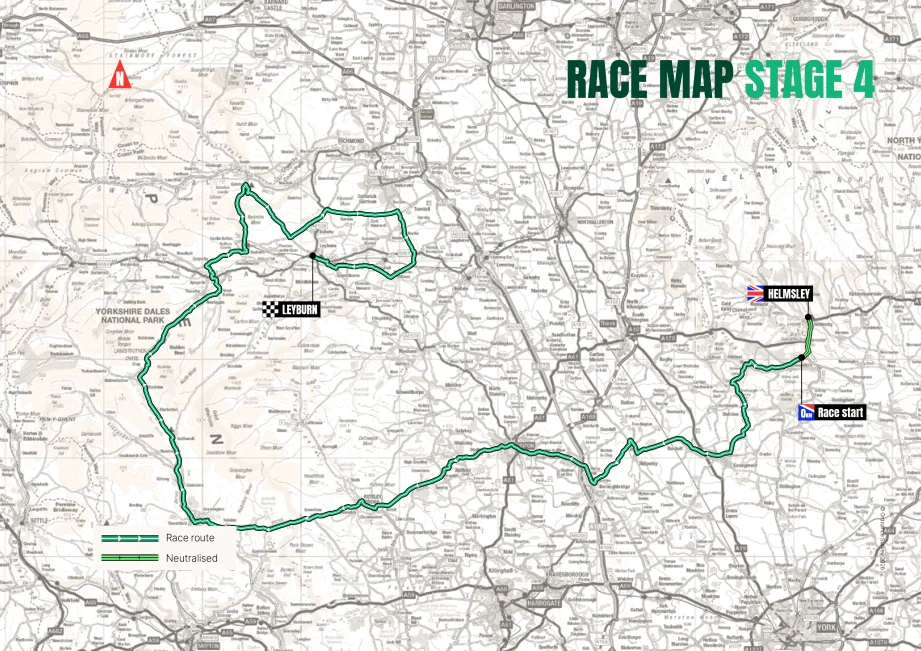
Tour of Britain Men Stage 4 at a glance
| Detail | Stage 4 |
|---|---|
| Date | Saturday 5 September 2026 |
| Start | Helmsley |
| Finish | Leyburn |
| Distance | 165.8km |
| Elevation gain | 2,699m |
| Stage type | Hilly / GC |
| Main climbs | Greenhow Bank, Kidstones, Greets Moss, Grinton Moor |
| Greenhow Bank | 4km at 7.2% |
| Kidstones | 2.9km at 6.3%, maximum 12.6% |
| Greets Moss | 4.4km at 6.9% |
| Grinton Moor | 4.4km at 5.3% |
| Official race start | 11:15 BST |
| Race leader | Lewis Askey |
| Nearest challenger | Tim Wellens at +12s |
The route leaves Helmsley in the North York Moors before passing through Easingwold, Boroughbridge and Ripon. The serious climbing begins after Pateley Bridge, with the race then crossing Grassington, Wharfedale, Buckden, Aysgarth and Grinton before the final run into Leyburn.
Olav Kooij won Stage 3 but the GC stayed intact
Friday gave the sprinters one final opportunity before the Tour heads into the hills.
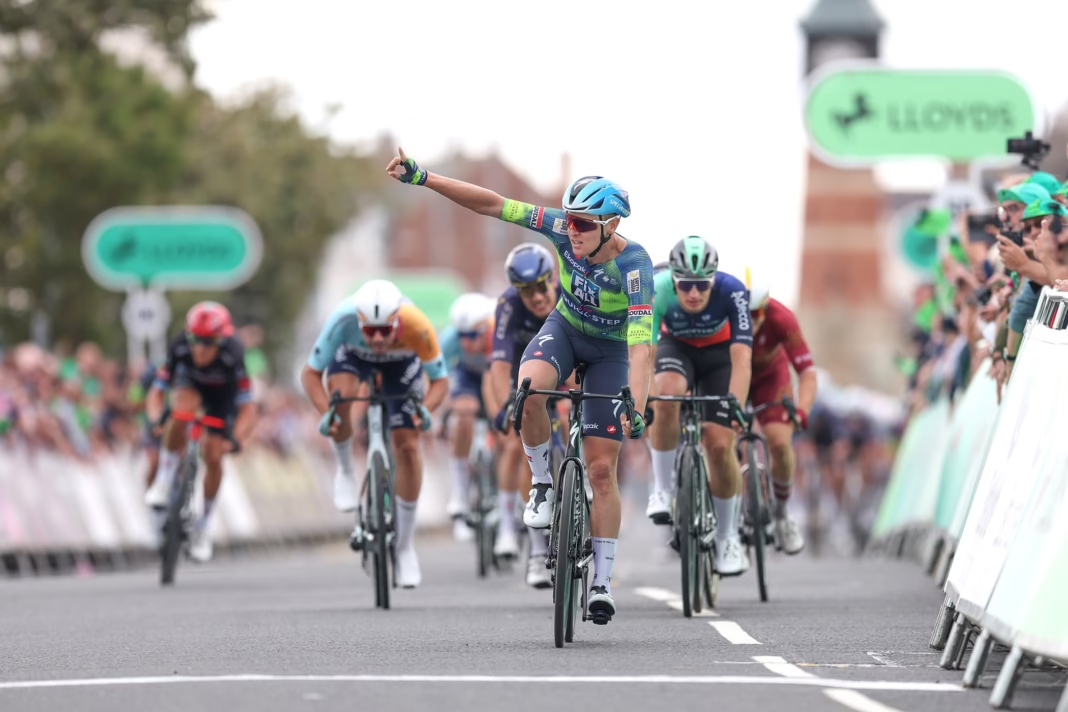
Olav Kooij won Stage 3 in Beverley, coming around Tim Merlier in the final metres after initially finding himself boxed in.
Merlier finished second after winning the previous day’s Stage 2 sprint in Skegness, while Axel Källberg produced the surprise result of the day with third.
Askey finished safely in the bunch and retained the race lead.
Tour of Britain GC before Stage 4
| Position | Rider | Team | Gap |
|---|---|---|---|
| 1 | Lewis Askey | NSN Cycling Team | Leader |
| 2 | Tim Wellens | UAE Team Emirates-XRG | +12s |
| 3 | Matteo Trentin | Tudor Pro Cycling Team | +19s |
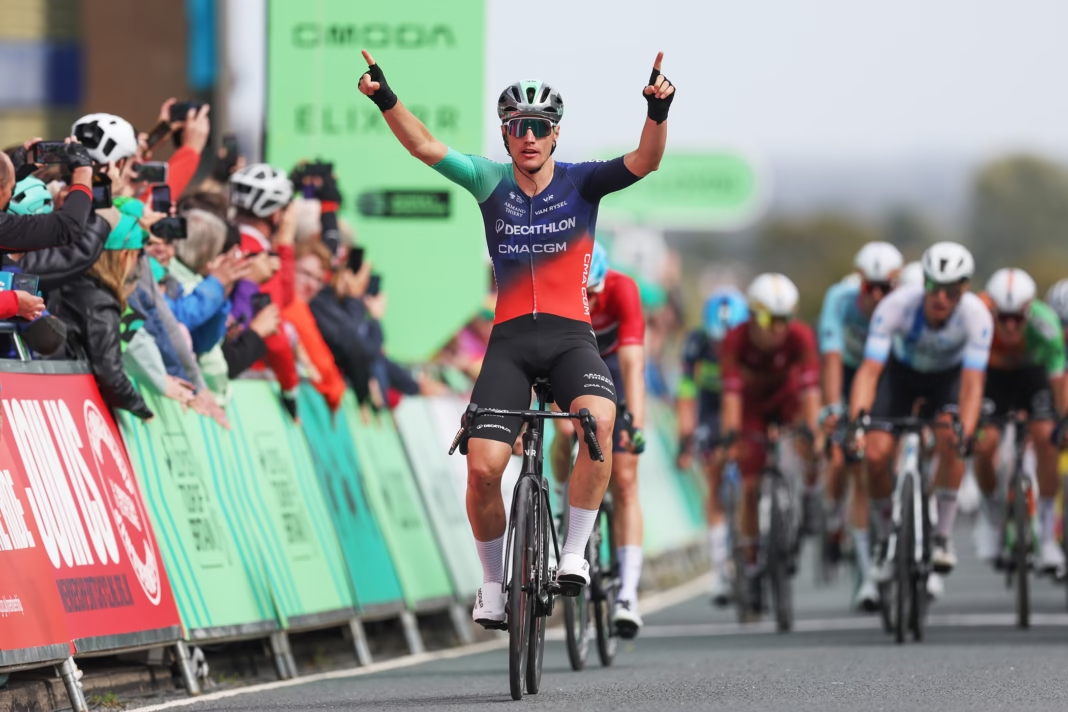
| 4 | Daan Hoole | Decathlon CMA CGM | +21s |
| 5 | Jasper Stuyven | Soudal Quick-Step | +21s |
| 6 | Florian Vermeersch | UAE Team Emirates-XRG | +25s |
| 7 | Rick Pluimers | Tudor Pro Cycling Team | +33s |
| 8 | Elliot Rowe | Great Britain | +33s |
| 9 | Paul Wright | Modern Adventure Pro Cycling | +40s |
| 10 | Filippo Ganna | Netcompany INEOS | +1:53 |
Three riders are within 21 seconds of Askey and six are within 33 seconds. Bonus seconds alone can change the order, before the climbing is considered.
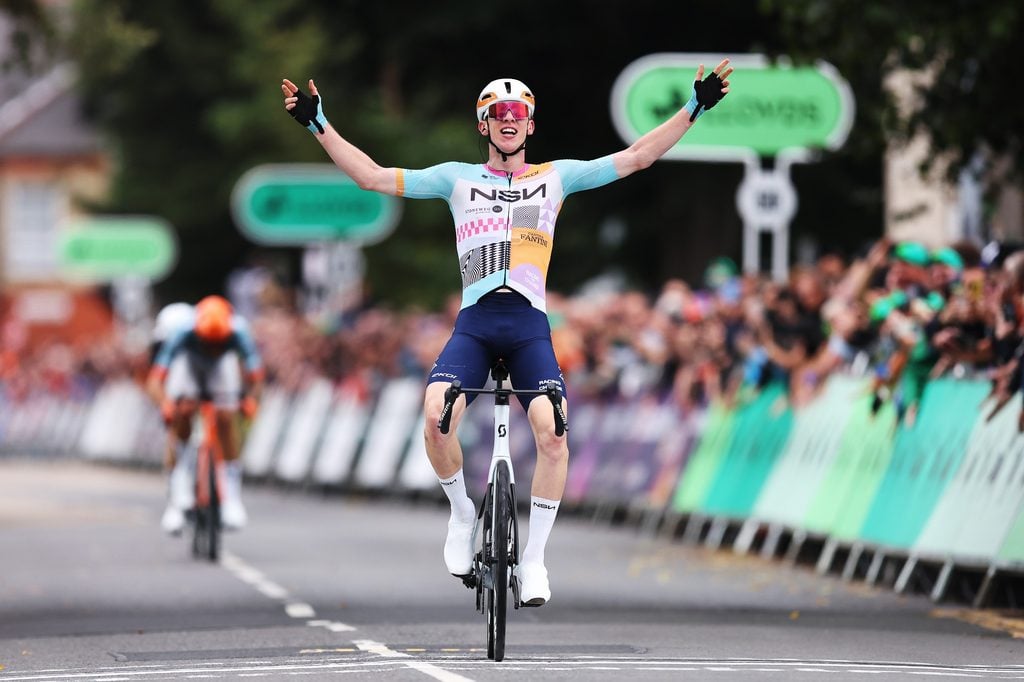 Photo Credit: Getty
Stage 4 is the biggest test of Askey’s lead
Sunday’s final stage around Earlston still contains plenty of climbing, but Saturday is the cleaner opportunity to produce meaningful GC gaps.
Askey therefore cannot treat Leyburn as a day of damage limitation.
If he reaches the finish still wearing green, his position becomes considerably stronger. If Wellens takes 20 or 30 seconds, the Tour changes hands with only one stage remaining.
The difficulty is that Askey cannot simply watch Wellens.
Vermeersch begins only 25 seconds behind. UAE can send him forward and immediately force NSN to decide whether Askey needs to react personally.
Felix Großschartner and Benoît Cosnefroy give UAE further attacking options, while Mikkel Bjerg and Nils Politt are ideal riders for driving the valleys and flatter sections between climbs.
NSN have Alessandro Pinarello, Jake Stewart, Ryan Mullen and Dion Smith around their leader. Pinarello is particularly important once the race becomes hilly, but matching UAE rider for rider will become increasingly difficult if the peloton is reduced early.
The opening kilometres should belong to the breakaway
The first part of the stage is much gentler than the second.
After leaving Helmsley, the peloton crosses North Yorkshire towards Easingwold, Boroughbridge and Ripon before the route eventually turns towards the Dales.
That should create a proper fight for the breakaway.
Teams without a GC rider have little reason to wait for the later climbs, particularly when this is one of their final opportunities to win a stage. NSN do not necessarily need to prevent an escape forming either.
Their concern is who gets into it.
A rider already several minutes down can be given room. Somebody closer to the top 10 becomes more complicated, especially if UAE or Soudal Quick-Step place a rider alongside them.
The composition matters more than the size of the break.
Greenhow Bank begins the real GC stage
The Tour changes after Pateley Bridge.
Greenhow Bank is 4km at an average of 7.2%, the first climb long and steep enough for teams to begin removing riders from the GC group.
Wellens does not need to attack here.
UAE have more to gain by making the climb consistently hard and forcing NSN’s support riders towards their limit.
Politt and Bjerg can increase the pace before the climb, with Großschartner, Cosnefroy and Vermeersch able to continue the pressure once the road rises.
The target is not necessarily Askey.
If Greenhow leaves him with only Pinarello for support while UAE still have four riders near the front, the rest of the stage becomes much harder to manage.
That is the advantage UAE need to create before Wellens commits himself.
The roads through Wharfedale make recovery difficult
Greenhow Bank is followed by the run through Grassington and Wharfedale.
There is no immediate second major climb, but the roads remain rolling enough to prevent the race from settling completely if teams keep attacking.
This is an important tactical section.
If everyone stops after Greenhow, dropped domestiques can return and NSN can rebuild around Askey.
If UAE, Tudor or Soudal continue sending riders forward, the race leader may never get that reset.
The five-day format encourages that sort of racing. Nobody needs to protect energy for another week in the mountains, and riders sitting 30 or 40 seconds down have more to gain from attacking than from defending eighth place.
Kidstones brings the race onto familiar Yorkshire roads
The next classified test is Kidstones, a 2.9km climb averaging 6.3% and reaching 12.6% at its steepest.
The road will be familiar to anyone who remembers the opening Yorkshire stage of the 2014 Tour de France.
Its average gradient is relatively moderate, but the steeper ramps are good places to accelerate.
Several bike lengths gained on a double-digit gradient can quickly become a real gap if the rider behind is already close to their limit after Greenhow Bank.
This is also where riders outside the immediate GC battle can start shaping the stage.
Ilan Van Wilder has no reason to protect a high overall position and can attack for Soudal Quick-Step.
Yannis Voisard gives Tudor another option beyond Trentin.
Pinarello may need to do something similar for NSN. Having him move ahead would allow Askey to spend time following rather than chasing.
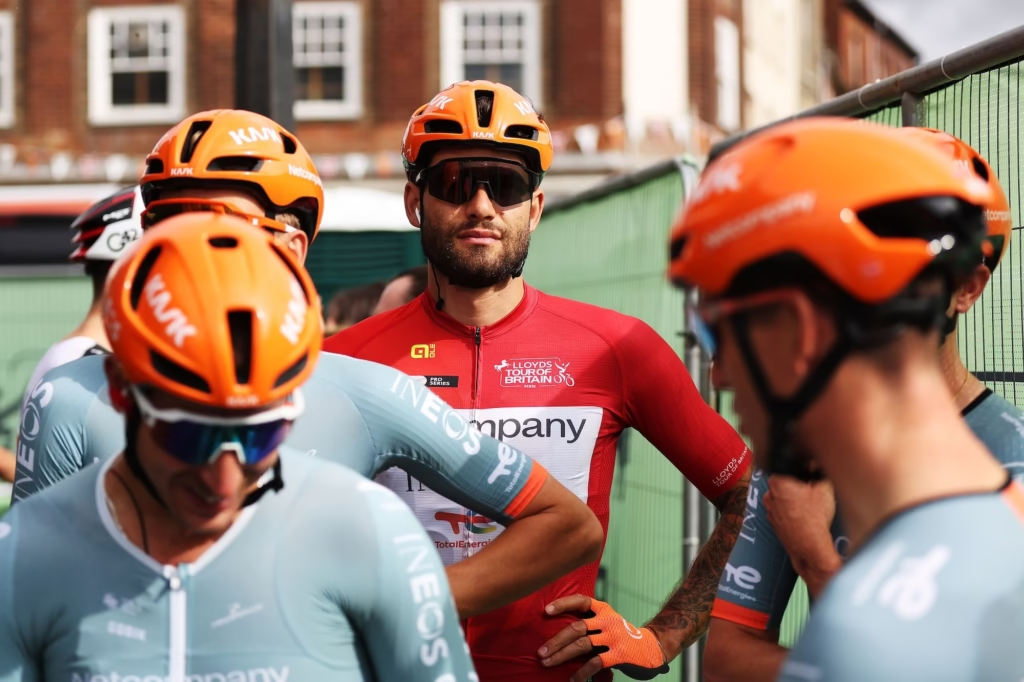 Photo Credit: Getty
Filippo Ganna needs to take risks now
Ganna’s puncture and the crosswind split on Stage 2 changed his entire Tour.
He had started that morning nine seconds behind Askey.
He now begins Stage 4 at 1:53.
That makes a conventional defensive ride almost pointless if he still wants to challenge for the overall.
Netcompany INEOS need to find a different way into the race.
A long-range Ganna attack would immediately create an awkward decision for NSN. Almost two minutes is a sizeable deficit, but it is not enough to allow a rider with Ganna’s power several minutes on the road.
The problem for him is the climbing.
Greenhow, Kidstones, Greets Moss and Grinton Moor demand far more repeated climbing than anything the race has faced so far.
Ganna’s best chance is unlikely to involve waiting until the final climb and trying to ride away from Wellens.
He needs the race to become tactical before that.
Greets Moss should expose the real contenders
Greets Moss measures 4.4km at 6.9% and arrives late enough for the earlier climbing to matter.
This is where the distinction between riders surviving the stage and riders capable of winning the Tour should become clearer.
If UAE have done their work properly, Askey will already have lost several teammates.
That allows Wellens’ team to increase the pressure without immediately asking him to attack.
It is also the climb most suited to Van Wilder, Großschartner and other riders who benefit from a sustained effort rather than one short punch.
Stuyven and Trentin face the opposite problem.
Both are close enough overall to matter and fast enough to be dangerous in Leyburn, but they need to survive the climbing first.
If Greets Moss leaves a group of 20 together, their prospects improve significantly.
If it leaves eight, the advantage shifts towards Wellens.
Grinton Moor is the final obvious place to attack
The last major climb is Grinton Moor, 4.4km at 5.3%.
The gradient is not brutal.
Its position makes it important.
By this point the riders have already dealt with Greenhow Bank, Kidstones and Greets Moss, and there is little reason for the GC favourites to continue waiting.
Wellens starts 12 seconds behind.
Vermeersch is 25 seconds back.
Stuyven and Hoole are at 21 seconds.
Trentin is at 19.
One attack can change those numbers completely.
Grinton Moor may therefore become more about repeated accelerations than one rider setting an enormous steady pace.
That plays into Wellens’ strengths. He has built much of his career around hilly races where positioning, timing and repeated attacks matter as much as sustained climbing power.
The descent towards Leyburn gives dropped riders another chance
Grinton Moor does not finish the stage.
The route still has a substantial run towards Leyburn, much of it descending or gently rolling.
That gives Stuyven, Trentin, Vermeersch and Askey a reason not to panic if they lose a handful of seconds near the summit.
Ten seconds can disappear quickly if several strong riders organise behind.
The composition of the front group is therefore critical.
A solo climber gaining eight seconds has a difficult task.
Three or four powerful riders gaining 25 seconds is a completely different problem.
For Askey, the nightmare is a move containing Wellens and riders from Tudor and Soudal.
If most of the strongest teams are represented ahead, there may be nobody left with an interest in helping NSN chase.
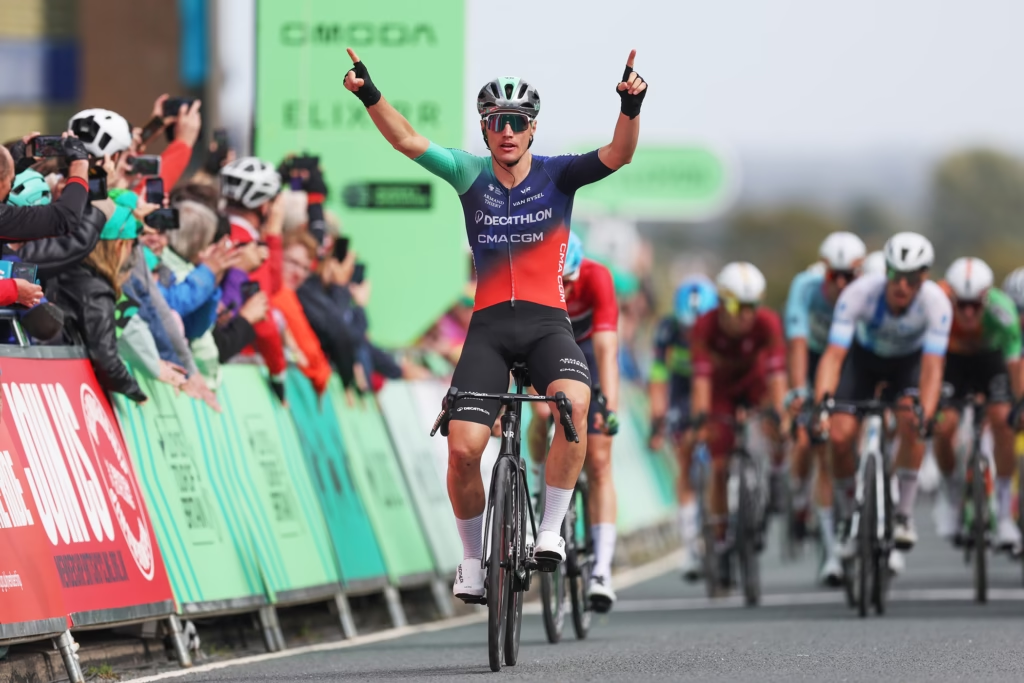 Photo Credit: Getty
The Leyburn finish still matters for the GC
Even if the main favourites arrive together, the stage is not neutralised.
The closing kilometres rise towards Leyburn, including a short steeper section before a gently uphill finish.
That keeps bonus seconds relevant.
With Wellens only 12 seconds behind, a stage podium can remove a large part of Askey’s advantage without producing a major road gap.
Trentin and Stuyven are even more dangerous in that scenario because both have the finishing speed to take bonus seconds away from the two riders currently ahead of them.
Askey himself should not be underestimated either.
He won on Michaelgate precisely because he could still accelerate after an aggressive race.
If the green jersey reaches Leyburn in a reduced group, he has every reason to contest the stage rather than simply defend his wheel.
Tim Wellens has almost the perfect Stage 4 scenario
Wellens is the obvious reference point.
The route suits him, the GC gap is small and UAE have the strongest tactical hand among the teams near the top of the standings.
He does not need to make Stage 4 a climbing contest from the first ascent.
He needs his teammates to make Askey answer enough questions that the right moment eventually appears.
Vermeersch can attack.
Großschartner can make the climbs hard.
Cosnefroy can move in transitional terrain.
Bjerg and Politt can drive the race between climbs.
Wellens can wait.
That is the luxury Askey does not have.
Lewis Askey has already shown he can race without teammates
Askey’s position should not be reduced to simply surviving until UAE attack him.
His Stage 1 win in Lincoln came from an elite group containing riders from much stronger teams.
UAE had Wellens and Vermeersch.
Netcompany INEOS had Ganna.
Askey still read the race correctly and produced the winning attack on Michaelgate.
Stage 4 is much harder, but the tactical requirement is similar.
He cannot chase everything.
He needs to identify the move that matters, accept that some riders will gain temporary gaps and trust his ability to finish quickly if the main GC contenders arrive together.
The question is whether he can still do that after almost 2,700 metres of climbing.
Florian Vermeersch may be more important than Wellens early on
Vermeersch has spent much of this Tour attacking.
He moved late in Lincoln before Askey caught him on Michaelgate, then tried again during the run towards Skegness.
Stage 4 gives those attacks much greater strategic value because he starts only 25 seconds from the race lead.
If Vermeersch gets 20 seconds up the road, NSN cannot dismiss it as a harmless teammate move.
Askey is suddenly defending green against him.
If NSN chase, Wellens saves energy.
If Askey closes it himself, Wellens gets a free ride.
That makes Vermeersch the most obvious UAE rider to attack before the final climbs.
Jasper Stuyven needs the front group to stay reasonably large
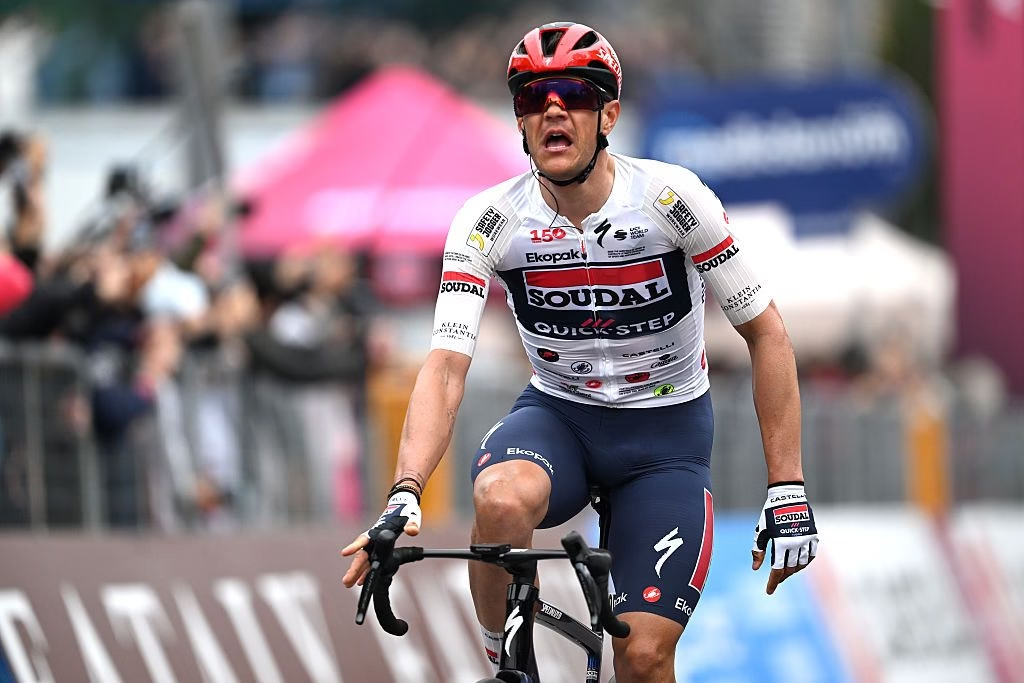
Stuyven starts only 21 seconds behind Askey.
The climbing is the obvious concern, but Stage 4 does not contain the sort of long mountain that automatically removes him from contention.
If he can survive Greets Moss and Grinton Moor within touching distance of the front, the route begins favouring him again.
The descent and rolling run into Leyburn suit his power, while the uphill finish gives him a much better chance of collecting bonus seconds than most of the climbers.
Soudal also have Van Wilder.
That pairing gives them a useful tactical split.
Van Wilder can attack on the climbs.
Stuyven can wait.
If Askey and UAE close Van Wilder, Stuyven has spent nothing.
Matteo Trentin has to survive before he can use his biggest advantage
Trentin sits third overall at 19 seconds.
He is unlikely to be the rider who breaks the race apart on Greets Moss.
His opportunity comes if somebody else fails to do it.
A reasonably large GC group reaching the final 20km makes Trentin increasingly dangerous. He descends well, can attack on rolling roads and has enough speed to challenge for the stage in Leyburn.
Tudor also have Yannis Voisard and Rick Pluimers available to race more aggressively.
That means Trentin does not need to respond personally to every attack.
His job is to stay close enough that his sprint still matters when the climbing is finished.
Daan Hoole faces a very different test
Hoole has ridden himself into fourth overall at 21 seconds.
Saturday asks a question the first three stages did not.
Can he remain with the strongest riders over repeated medium-length climbs?
His power is an obvious advantage on the valleys and final run towards Leyburn, but that only matters if he survives Greets Moss and Grinton Moor within range of the front.
Decathlon CMA CGM have already achieved a major objective through Kooij’s Beverley victory.
That gives Hoole some freedom. The team does not need to compromise an entire week to protect fourth place if an attacking opportunity develops.
Ilan Van Wilder is a serious stage-win threat
Van Wilder should be one of the most dangerous riders outside the immediate GC top 10.
The course suits him better than it suits many riders ahead of him overall.
Greenhow is manageable.
Kidstones offers a place to accelerate.
Greets Moss is long enough to reward genuine climbing strength.
Most importantly, Van Wilder can attack without carrying the same GC responsibility as Stuyven.
If he goes clear, Soudal gain a stage-winning option while Stuyven stays protected behind.
Other teams then have to decide whether chasing Van Wilder is worth helping Soudal’s GC rider.
That is precisely the sort of tactical stalemate from which a breakaway can survive.
Alessandro Pinarello is NSN’s key support rider
Pinarello could become central to Askey’s defence.
He is the most natural climber among the riders NSN have around their leader and therefore the teammate most likely to survive towards Greets Moss and Grinton Moor.
Keeping him alongside Askey would make a significant difference.
So would sending him ahead.
If Pinarello follows one of UAE’s secondary attacks, NSN no longer have to chase immediately. For a team otherwise likely to spend much of the afternoon reacting, that would change the rhythm of the stage.
Defending a short stage race does not always mean riding on the front.
Sometimes the best defence is putting somebody else in the move.
Elliot Rowe can find out how far his GC challenge goes
Great Britain’s Elliot Rowe begins Stage 4 eighth overall at 33 seconds.
That is already one of the more interesting performances of the race.
Saturday provides the real test.
Rowe does not have a full WorldTour team protecting his position, which makes staying close to the front before the climbs especially important. Losing contact because of poor positioning could end the opportunity long before his legs do.
If he survives inside the main selection, however, a high GC finish becomes a very realistic target heading into Sunday.
Paul Wright has earned the right to defend his top 10
Paul Wright is another rider who has quietly stayed close enough to matter.
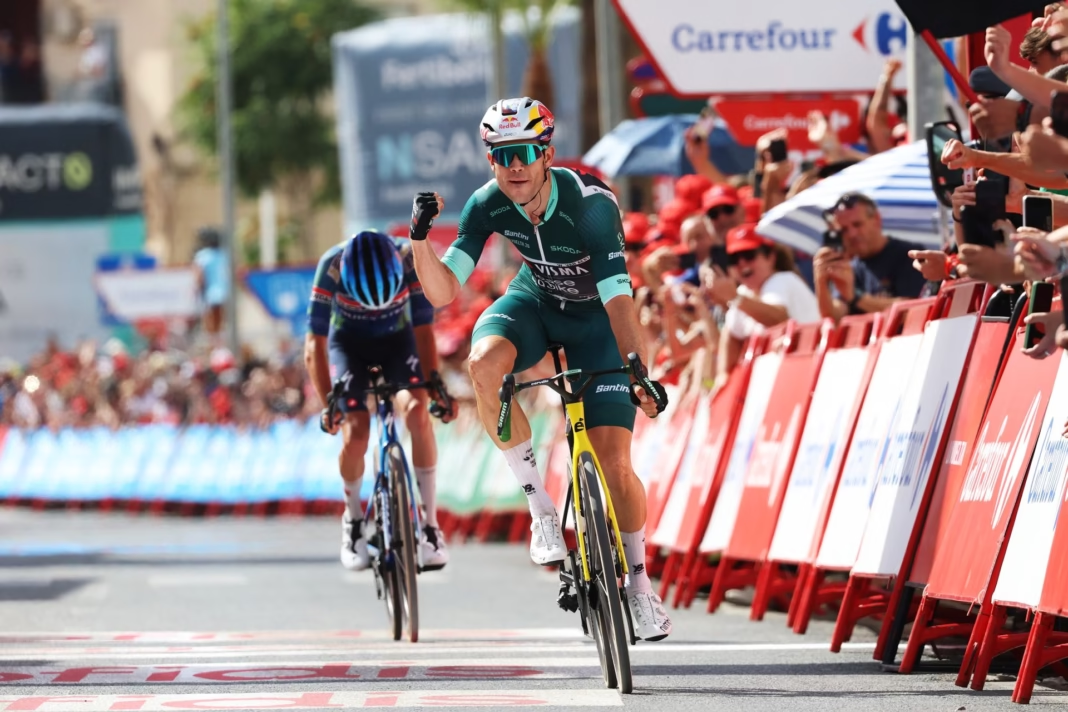
The Modern Adventure rider starts ninth at 40 seconds.
That also gives him tactical freedom.
Forty seconds is close enough that NSN cannot allow him several minutes, but far enough that Askey is unlikely to personally follow his first attack.
If Wright makes a strong break, he can turn himself from an outsider sitting ninth into another problem the leader’s team has to solve.
Simply retaining a top-10 place through the hardest stage would already be a strong result.
How Stage 4 is likely to unfold
The breakaway should have more freedom than it did on the previous two sprint stages.
NSN’s priority is the GC composition rather than chasing every move, while teams without an overall contender know that the race is rapidly running out of opportunities.
The serious battle should begin on Greenhow Bank.
UAE can use the climb to start reducing Askey’s support without asking Wellens to attack.
Kidstones provides the first obvious place for secondary moves.
Greets Moss should reveal which GC riders are genuinely capable of winning the Tour.
Grinton Moor is where waiting becomes difficult to justify.
From there, the race becomes a question of cooperation.
A small group of powerful Classics riders can be extremely difficult to bring back on the run towards Leyburn. A lone climber may discover that the hardest part was not getting away, but staying there.
Main favourites for Tour of Britain Stage 4
Tim Wellens has the best combination of route suitability, GC position and team strength.
Lewis Askey remains extremely dangerous if he survives the hardest climbing with the front group.
Jasper Stuyven benefits if Greets Moss and Grinton Moor fail to produce a tiny selection.
Florian Vermeersch is likely to attack and can use Wellens’ presence behind to force NSN into difficult decisions.
Ilan Van Wilder has the climbing ability and tactical freedom to target the stage from distance.
Matteo Trentin becomes a major threat if a larger GC group survives towards Leyburn.
Felix Großschartner gives UAE another rider capable of attacking on the hardest climbs.
Filippo Ganna is the wildcard because there is little value left in riding conservatively at 1:53.
Stage 4 should tell us whether Askey can win the Tour of Britain
Askey has spent two days protecting the advantage he earned in Lincoln.
Saturday is different.
The climbs are harder, UAE have more tactical options and a 12-second advantage is small enough that one well-timed attack can remove it.
Wellens does not have to do everything himself. That is the central problem for NSN.
Vermeersch can force a chase. Großschartner can increase the pressure on the climbs. Bjerg and Politt can make the race difficult between them. Wellens only needs to respond when the situation finally suits him.
Askey’s task is to avoid turning every UAE move into his personal responsibility.
If he can reach Greets Moss with Pinarello alongside him, stay close over Grinton Moor and carry the front group towards Leyburn, his speed becomes an asset rather than a weakness.
If UAE isolate him much earlier, those 12 seconds could disappear quickly.
The first three stages established the contenders.
Stage 4 is where they finally have the terrain to separate them.