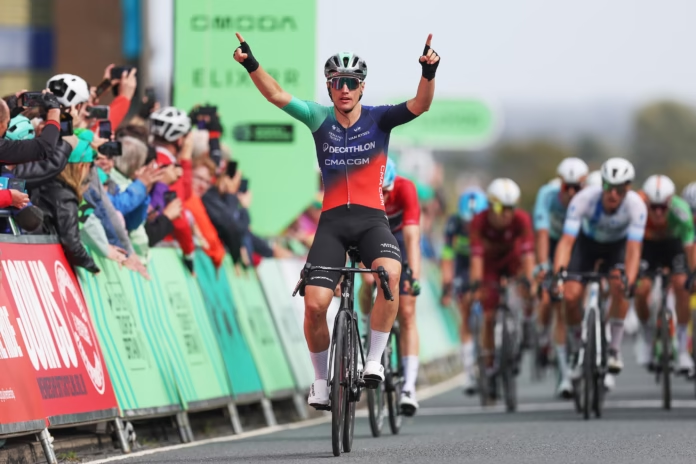
Olav Kooij won stage 3 of the 2026 Lloyds Tour of Britain Men in Beverley, coming past Tim Merlier in the final metres to give Decathlon CMA CGM its first victory of the race.
The Dutch sprinter had been beaten by Merlier in the Skegness sprint on stage 2, but reversed that result 24 hours later after a messy finish at the end of the 194.1-kilometre stage from Hull. Merlier finished second for Soudal Quick-Step, with Axel Källberg taking third for Lucky Sport Cycling Team.
Timothy Dupont was fourth for Tarteletto-Isorex, ahead of Matteo Moschetti of Pinarello-Q36.5 Pro Cycling Team and Arne Santy, also of Tarteletto-Isorex. Ethan Vernon finished seventh for NSN Cycling Team after being squeezed in the sprint, with Boas Lyssgard, Axel Bouquet and Brody McDonald completing the top 10.
Lewis Askey finished safely in the bunch in 17th and retained the race lead after his opening-stage victory in Lincoln. The day belonged to the sprinters, but it took a long chase, a dangerous solo move from Yorben Lauryssen and a late reset inside the final 7 kilometres before Kooij could take his chance.
A long road to Beverley
Stage 3 took the race from Hull to Beverley, giving the sprinters another clear opportunity after Merlier’s victory on stage 2.
The route was not as flat as the run to Skegness, with three small climbs on the way: Burton Road, Tire Ewe Hill and Keepers Hill. None were serious enough to turn the stage into a climbing test, but they gave the breakaway and late attackers places to work with before the final circuits around Beverley.
That was the balance already visible in the stage 3 preview. A bunch sprint looked the most likely outcome, but the local circuit meant the peloton had to stay organised deep into the stage. A late attacker could still make the sprint teams nervous if the chase became untidy.
That was exactly how the race developed.
Six riders go clear early
A six-rider breakaway formed early and gave the stage its first structure.
King of the Mountains leader Michael Schuran of Team United Shipping made the move, joined by Dylan Vandenstorme of Team Flanders-Baloise, Karl Hall of Hucare Factory Team, Victor Johannsen of BHS-PL Beton Bornholm and the Tarteletto-Isorex pair of Arne Santy and Gianni Marchand.
It was a useful break for the race. Schuran had clear mountains-classification motivation, while Tarteletto-Isorex placed two riders up the road and would later remain active through Lauryssen. The move built a lead of around 2 minutes, enough to force the sprinters’ teams to organise but never enough to suggest the bunch had lost control.
Behind, Decathlon CMA CGM, Soudal Quick-Step, NSN Cycling Team and Pinarello-Q36.5 all had reasons to keep the escape close. Kooij, Merlier, Vernon, Moschetti and Sam Bennett all needed the stage to come back together.
Schuran protects the mountains jersey
The early climbs gave Schuran the chance to extend his King of the Mountains lead.
The Team United Shipping rider had started the day in the mountains jersey and used the break exactly as expected. The group stayed away over the first two climbs, allowing Schuran to collect points before the peloton began closing in more decisively.
That was the main purpose of the breakaway through the middle of the stage. The sprint teams were not going to allow a 194-kilometre stage to drift too far out of reach, but the escape still mattered. It gave smaller teams visibility, allowed Schuran to protect his jersey, and forced the peloton to ride steadily before the finish.
The catch eventually came on the final climb, with the bunch sweeping up the remaining breakaway riders before the race could reset for the run towards Beverley.
That should have been the moment the sprinters took full control. Instead, the stage immediately became more complicated.
Lauryssen launches from distance
Yorben Lauryssen attacked with 48 kilometres remaining.
The Tarteletto-Isorex rider went solo after the early break had been brought back, quickly turning the stage from a controlled sprint day into a more awkward chase. Conn McDunphy of APS Pro Cycling by Team Cadence Cyclery tried to follow behind, but Lauryssen became the main danger out front.
His move was well timed. The peloton had just completed one chase, and the sprinters’ teams had to decide how quickly to commit to another. Lauryssen took advantage of that hesitation and built a lead of around 2 minutes.
For a while, it looked like more than a token attack. With the bunch still some distance from the finish and the final circuits waiting, Lauryssen gave himself a genuine chance of disrupting the expected sprint.
The solo move refuses to fade
Lauryssen’s ride became the central story of the second half of the stage.
He still held around 1:30 with 20 kilometres remaining, an impressive margin given the quality of the sprinters’ teams behind. The stage profile still favoured the bunch, but the gap was large enough to make the chase uncomfortable.
That is often where sprint stages become tricky. The peloton can see the danger, but the chase still has to be organised properly. Too much hesitation and the solo rider starts to believe. Too much panic and the lead-out trains spend themselves before the finish.
Lauryssen kept pushing through the final laps, forcing the bunch to ride harder than it would have wanted. The longer he held on, the more the stage changed from a routine sprint day into a pursuit.
Eventually, the combined weight of the peloton began to tell.
Catch comes with 6.5 kilometres to go
Lauryssen was finally caught with 6.5 kilometres remaining.
It was late enough to give the finale a different feel. The sprint teams had got the race back, but they had spent energy doing it, and the lead-out trains still needed to reorganise quickly before the finish.
UAE Team Emirates-XRG were among the first to take up the pacing after the catch, trying to split the race in the wind rather than wait for a sprint that did not suit them. That move made tactical sense. Without a pure sprinter for the finish, UAE Team Emirates-XRG needed to use the conditions and the tension after the catch to create something different.
But the split did not come. The peloton stayed together, the sprint teams regained control, and the stage moved back towards the expected bunch finish.
Lauryssen had not won, but he had made the fast men work for it.
A messy final kilometre
The final kilometre was far from clean.
Soudal Quick-Step appeared to have the clearest lead-out for Merlier, with the Belgian positioned for a repeat of his stage 2 victory. After winning in Skegness, Merlier was the obvious reference point and looked to be in the best place when the sprint began to open.
But the organisation around him was not perfect. The road into Beverley produced a crowded, tense sprint, with riders fighting for space and several teams trying to launch at the same time.
Vernon was one of the riders affected. The NSN Cycling Team sprinter had to settle for seventh after being cut off in the closing metres, a frustrating outcome on a day when the team still kept the leader’s jersey through Askey.
Kooij also had to fight from a difficult position. He was briefly boxed in, but he found a way out when it mattered.
Kooij comes around Merlier
Kooij produced the fastest finish when the road opened.
Merlier launched strongly and looked set to convert another sprint, but Kooij came from behind, accelerated around him and crossed the line first in Beverley. It was a clear answer to the previous day, when Merlier had beaten him in Skegness.
The difference was timing and space. Merlier had the lead-out and the first major launch, but Kooij had the final acceleration. Once he found room, the Decathlon CMA CGM rider had enough speed to come past before the line.
It was effectively a two-rider sprint for the win. Kooij and Merlier were well clear of the rest in the final metres, with Källberg taking third behind them.
For Kooij, it was his first stage win of this Tour of Britain and an important response after being beaten by Merlier the day before.
Källberg takes surprise third
Källberg’s third place was one of the strongest results of the day.
The Lucky Sport Cycling Team rider finished behind two of the fastest sprinters in the race, holding off several more established names to take the final podium place. On a day where the sprint was chaotic and position mattered, he found the right line and converted it into a major result.
Dupont was fourth for Tarteletto-Isorex, giving the Belgian team another reward after spending much of the day in the race through the break and Lauryssen’s solo move. Moschetti finished fifth for Pinarello-Q36.5, ahead of Santy, who had also been part of the early break.
The top 10 had a different look from a standard WorldTour bunch sprint. Kooij and Merlier were the expected names at the front, but behind them there was room for riders from smaller teams to take advantage of the messy finale.
That reflected the whole stage. The sprint happened, but it was not a simple one.
Merlier beaten after stage 2 success
Merlier had to settle for second after looking well placed to make it back-to-back wins.
The Belgian had taken the race’s first pure sprint in Skegness and came into stage 3 with another obvious chance. Soudal Quick-Step appeared to have put him in the right position, and for a moment he looked capable of repeating the result.
Kooij was faster in the final metres.
That does not undo Merlier’s strong race so far, but it does change the sprint balance. Stage 2 belonged to Merlier. Stage 3 belonged to Kooij. With Bennett, Vernon, Moschetti and others also in the mix, the fast finishes remain competitive rather than settled around one rider.
For Soudal Quick-Step, second place was still a strong return. But after controlling stages for a rider like Merlier, anything other than victory will feel like a chance missed.
Vernon frustrated as Askey stays safe
NSN Cycling Team had mixed emotions at the finish.
Askey retained the race lead, which was the team’s main objective after his stage 1 win in Lincoln. He finished safely in the bunch and avoided any late trouble, keeping the overall lead before the race moves into the next phase.
Vernon’s sprint, however, brought frustration. The British sprinter finished seventh after being squeezed in the closing metres, leaving him unable to properly contest the win. On a stage that looked like one of his better opportunities, that will sting.
Even so, NSN Cycling Team remain in a strong position overall. Askey continues in the leader’s jersey, and Vernon was again present in the final sprint.
The stage win went elsewhere, but the race lead stayed intact.
Kooij changes the sprint story
Kooij’s victory changed the Tour of Britain’s sprint narrative.
After stage 2, Merlier looked like the rider to beat. After stage 3, that picture is more balanced. Kooij had been close in Skegness, then found the answer in Beverley with a sprint that required patience, power and a late escape from a boxed-in position.
That is a good sign for Decathlon CMA CGM. The team did not just bring him to another bunch finish. They kept him close enough through a complicated final 10 kilometres, survived the disruption after Lauryssen’s attack was caught, and gave him enough of a platform to finish the job.
Kooij still had to improvise in the last few hundred metres. That was the key. This was not a perfect lead-out victory. It was a sprinter reading the mess better than the rider who had beaten him the day before.
Beverley gives the sprinters another day
Stage 3 ultimately delivered the expected sprint, but the route and the racing made the outcome less straightforward than the profile suggested.
The early breakaway gave Schuran a chance to add to his mountains tally. Lauryssen then produced the ride that made the bunch work, holding a serious advantage deep into the final 20 kilometres. UAE Team Emirates-XRG tried to use the wind after the catch. The sprint teams had to reset late. The final kilometre was messy enough to leave Vernon frustrated and Kooij briefly boxed in.
That made Kooij’s win more than a simple sprint result. He had to wait, find space, and come past one of the fastest riders in the race after the lead-out had tilted towards Soudal Quick-Step.
The Tour of Britain now has three different stage winners from three stages. Askey took the opener on Michaelgate, Merlier won the Skegness sprint, and Kooij has answered in Beverley.
Lloyds Tour of Britain Men 2026 stage 3 result
| Position | Rider | Team | Time/gap |
|---|---|---|---|
| 1 | Olav Kooij | Decathlon CMA CGM | 4:04:32 |
| 2 | Tim Merlier | Soudal Quick-Step | same time |
| 3 | Axel Källberg | Lucky Sport Cycling Team | same time |
| 4 | Timothy Dupont | Tarteletto-Isorex | same time |
| 5 | Matteo Moschetti | Pinarello-Q36.5 Pro Cycling Team | same time |
| 6 | Arne Santy | Tarteletto-Isorex | same time |
| 7 | Ethan Vernon | NSN Cycling Team | same time |
| 8 | Boas Lysgaard | BHS-PL Beton Bornholm | same time |
| 9 | Axel Bouquet | St Michel-Preference Home-Auber93 | same time |
| 10 | Brody McDonald | Modern Adventure Pro Cycling | same time |
Main photo credit: Getty