
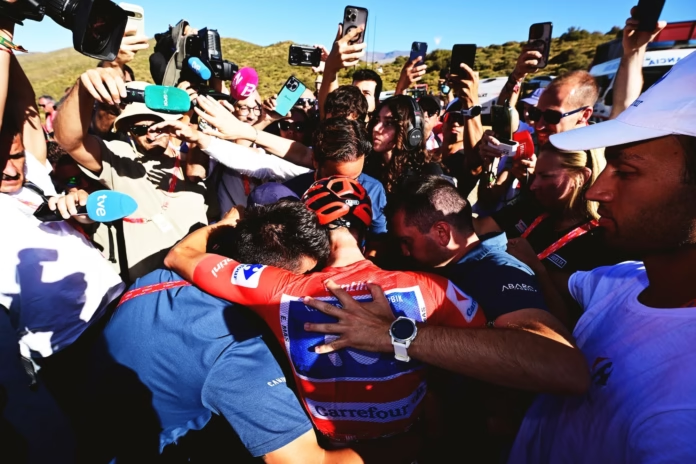
Tadej Pogačar’s crash put Enric Mas into the red jersey. The next 12 stages are what made the 2026 Vuelta a España his.
That distinction is central to understanding this race. Pogačar had been its dominant rider, winning three stages and building a 3:50 advantage over Mas before crashing out on Stage 8 to Xeraco. His abandonment transformed a Vuelta that had been moving towards another Pogačar victory and suddenly left Mas leading Primož Roglič by one minute, with Felix Gall only 11 seconds further back.
Mas did not pretend he had earned the jersey that afternoon. “Tadej crashed, I didn’t win the red jersey,” he said after taking over the race lead.
Twenty-four hours later, he started doing exactly that.
Mas won on Alto de Aitana, took more time from Roglič at Calar Alto and Sierra de La Pandera, then produced the time trial of his life when the race finally reached the terrain supposed to favour his biggest rival. Peñas Blancas cost him nothing. On Collado del Alguacil, with Roglič facing his last opportunity to overturn the Vuelta, Mas dropped him and added another 38 seconds.
Barring an extraordinary incident during Sunday’s final stage around Granada, Mas will win the Vuelta by 2:15 over Roglič, with Gall another 29 seconds behind.
Stage 8 explains how he came to wear red.
Stages 9 to 20 explain why he deserves to take it home.
 Photo Credit: Getty
Pogačar’s crash changed the race, not the eventual verdict
There is no useful version of this Vuelta story that ignores Pogačar.
He had controlled the race from its opening days. By the end of Stage 7, he led Mas by 3:50, Roglič by 4:50 and Gall by 5:01. What had initially looked like a three-week contest was already beginning to resemble a race for second place behind him.
His crash on Stage 8 changed all of that.
Mas inherited a one-minute advantage over Roglič and 1:11 over Gall. Sepp Kuss, Oscar Onley and Richard Carapaz were also back within a range that made the general classification genuinely open again.
That was an opportunity, not a victory.
Thirteen stages remained. The route still contained Alto de Aitana, Calar Alto, Sierra de La Pandera, a 32.1km individual time trial to Jerez, Peñas Blancas and Collado del Alguacil. Roglič was a four-time Vuelta winner with a major advantage against the clock. Gall had already established himself as one of the strongest climbers in the race.
Mas still had to beat all of them.
That process began immediately.
Aitana was where Mas stopped being the rider who inherited red
There could hardly have been a more useful stage immediately after Pogačar’s departure.
Stage 9 contained almost 5,000 metres of climbing and finished after 22km on Alto de Aitana. It offered every remaining GC contender an immediate opportunity to test whether Mas genuinely had the level to control the race.
Movistar accepted responsibility rather than trying to hide behind the circumstances of the previous day.
Gall began the serious attacks on Aitana. Carapaz tried to create his own opening. Mas waited until around three kilometres remained and then made the move that changed the tone of his Vuelta.
Only Onley could follow.
Mas then beat the young Briton at the summit, while Roglič conceded 12 seconds and Gall 18. His advantage over Roglič increased from 1:00 to 1:18.
Our Stage 9 race report described it as the day Mas turned an inherited lead into an asserted one. That remains the cleanest dividing line in the race.
Pogačar’s crash explained the jersey Mas wore at the start of Stage 9. It did not explain why Mas finished the stage with his arms in the air and a larger advantage over every serious remaining rival.
The Vuelta had a new strongest rider.

Calar Alto showed Aitana was a pattern, not a one-off
Aitana was an important statement, but Mas still had to repeat it.
Calar Alto provided a different sort of mountain test. The 166.6km stage contained around 4,500 metres of climbing, with Alto de Velefique followed almost immediately by the long ascent to the observatory.
Gall attacked first.
Mas responded.
Then Mas countered.
With around 13km remaining, the red jersey rode away from Roglič and Gall. He later reached Raúl García Pierna, who had been sent into the breakaway and was able to work for his leader, but the decisive difference had already been created by Mas himself.
Jakob Omrzel won the stage. The Vuelta changed further behind him.
Mas gained 27 seconds on Roglič and Gall, increasing his advantage over Roglič to 1:45. The full Stage 12 report from Calar Alto showed a race leader doing something more significant than defending what he already possessed.
He was deliberately building protection for Jerez.
That became the central strategic thread of the second week. Roglič could afford some patience because he knew 32.1 almost completely flat kilometres against the clock were waiting. Mas knew exactly the same thing.
Every second he took before Jerez was another second the time trial would later have to undo.
La Pandera made Roglič’s time-trial task much harder
By Sierra de La Pandera, the small losses had started to become a substantial problem.
Mas attacked first in the closing kilometres. Carapaz countered. Gall accelerated repeatedly. Roglič initially managed to return each time, but the effort eventually caught up with him.
Gall and Mas rode clear.
Roglič could not get back.
Marco Brenner won from the breakaway, while Mas and Gall reached the finish together 25 seconds ahead of Roglič. Gall moved into second overall and Roglič dropped to third, now 2:10 behind the race leader.
The Stage 14 race report captured how the shape of the GC had changed. Mas had not merely survived another summit finish. He had again finished ahead of Roglič.
By the second rest day, the tactical picture was unusually clear.
Roglič had Jerez.
Gall had the mountain stages.
Mas needed enough time to withstand both.
Our state of the race analysis before the final week framed the race around precisely that tension.
Mas entered the final week with 2:06 over Gall and 2:10 over Roglič.
He had built the insurance he wanted.
The remaining question was whether it was enough.
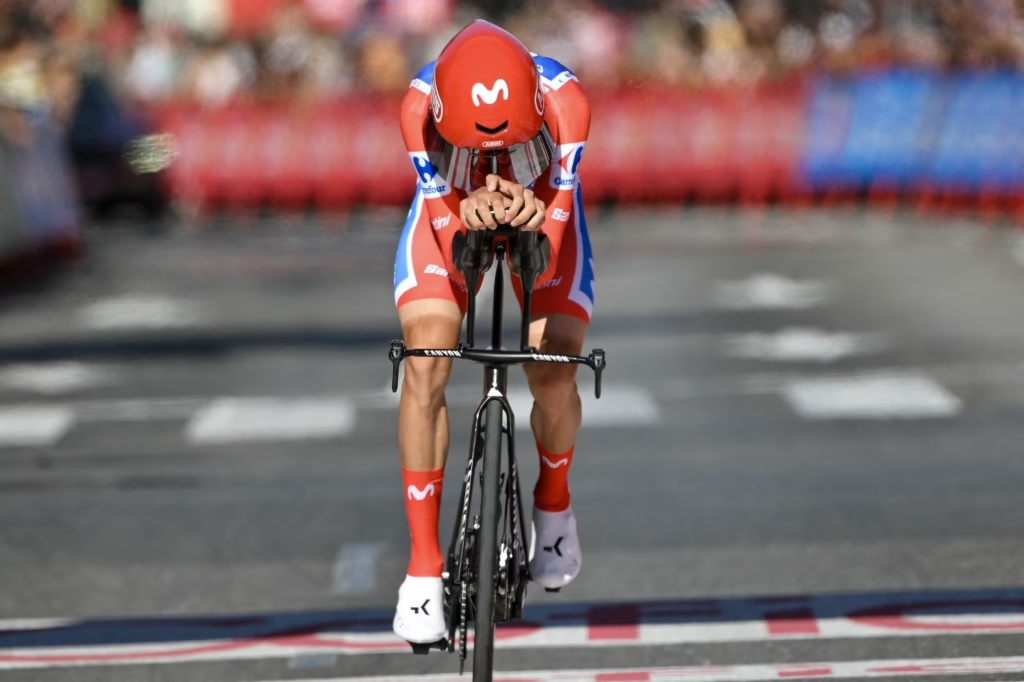 Photo Credit: Getty
Jerez was probably the performance that won Mas the Vuelta
The most important ride of Mas’s Vuelta may have come on the day he lost time.
Stage 18 was 32.1km from El Puerto de Santa María to Jerez de la Frontera. It was predominantly flat, aerodynamically demanding and far closer to Roglič’s preferred terrain than anything Mas had used to build his advantage.
Historically, the comparison was heavily in Roglič’s favour. He had consistently beaten Mas against the clock, sometimes by very large margins. A similar performance in Jerez could have wiped away much of the work Movistar had done in the mountains.
Before the stage, our analysis of how much time Roglič needed to take from Mas put the important threshold at around 90 seconds.
That would have reduced Mas’s 2:10 advantage to approximately 40 seconds.
One successful attack over the final mountain weekend could then have changed the race.
A gain of around a minute would still have left Roglič with a realistic route to red.
He took 33 seconds.
Stefan Küng won the stage. Roglič finished fourth, 19 seconds down. Mas was 12th and reached Jerez with enough of his advantage intact to remain 1:37 ahead.
The Stage 18 race report recorded the numbers. What emerged afterwards made the performance even more significant.
Red Bull-Bora-Hansgrohe’s Head of Engineering Dan Bigham said Roglič actually rode around seven seconds faster than the team’s pre-stage prediction.
Roglič had not badly missed his expected performance.
Mas had exceeded theirs.
Bigham described the Spaniard as substantially faster than the level Red Bull would have modelled for him before the race. That changes the way Jerez should be remembered.
This was not Roglič reaching his big opportunity and failing to produce.
Mas took away the opportunity by riding far better against the clock than the historical comparison between the two men suggested he should.
Mas had changed the old Roglič equation
For years, the basic Roglič-versus-Mas relationship had been easy to understand.
Mas could climb with the best riders in the world and occasionally take time uphill. Roglič could recover large amounts of it against the clock.
The 2026 Vuelta broke that pattern.
Mas did not become a better time triallist than Roglič. He did not need to.
He only needed to make the gap between them small enough that the time trial stopped cancelling out his climbing advantage.
Thirty-three seconds over 32.1km was a perfectly respectable Roglič gain in isolation.
Against a 2:10 deficit, it was devastatingly small.
Mas had spent Aitana, Calar Alto and La Pandera increasing the amount Jerez needed to solve. When the stage finally arrived, he rode well enough that it solved almost nothing.
His reaction afterwards captured the calculation.
“That’s the time we wanted to lose.”
Mas knew what 33 seconds meant.
Roglič still had two mountain stages available, but he now needed to take 1:37 from the rider who had already proved the stronger climber throughout the post-Pogačar race.
The discipline expected to bring Roglič back into the Vuelta had instead forced him to win it on Mas’s terrain.
Peñas Blancas used up another one of Roglič’s chances
The day after Jerez brought the 210.8km stage to Peñas Blancas.
For Roglič, the problem was no longer theoretical. There were only two meaningful GC opportunities left.
Our Stage 19 preview centred on the choice facing Red Bull. Attack on Peñas Blancas and risk spending energy before the much steeper Collado del Alguacil, or wait and voluntarily remove one of the last opportunities from the race.
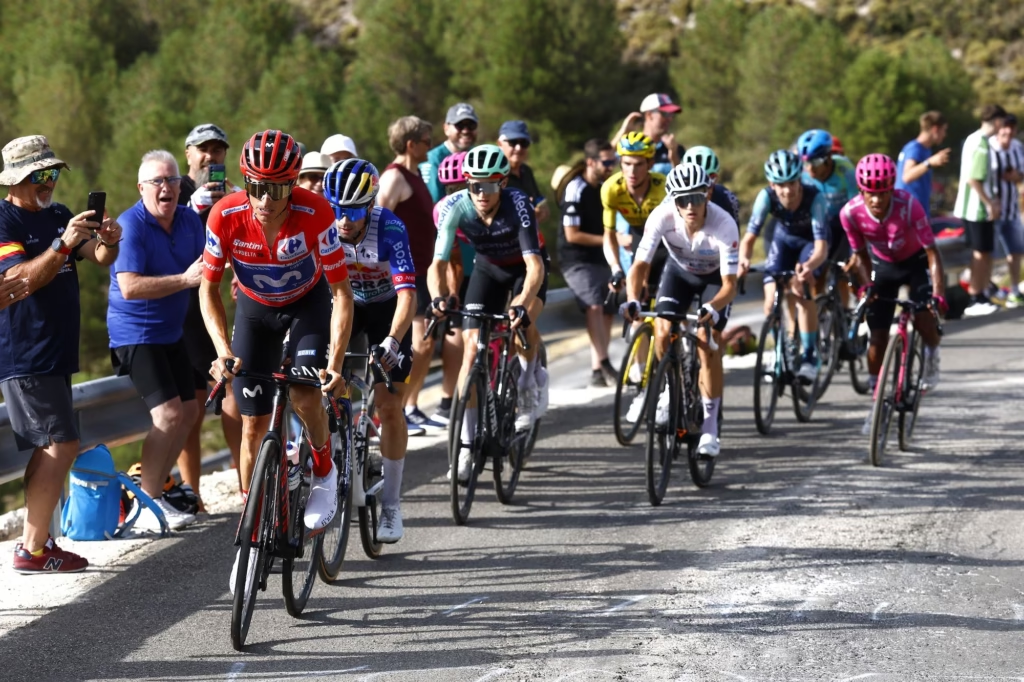
Roglič eventually tried.
Mas followed.
Gall and Carapaz also created movement, but the leading GC riders reached the finish together. Eddie Dunbar won from the breakaway while the 1:37 between Mas and Roglič remained untouched.
That result mattered almost as much as taking time would have.
Mas had started the final mountain block needing to survive two stages.
One had disappeared without costing him a second.
Collado del Alguacil was where there was nowhere left to wait
Saturday stripped away every remaining tactical argument.
No more time trials were coming.
No later summit finish offered Roglič a reason to conserve energy.
The 2026 Vuelta route had always made Collado del Alguacil the last place where the entire race could be overturned. Stage 20 contained almost 5,000 metres of climbing, two ascents of El Purche, Puerto de El Duque and an 8.3km finishing climb averaging 9.8%.
Roglič needed 1:37.
Red Bull tried to make the race hard enough to create it.
The GC group was repeatedly placed under pressure. Sepp Kuss attacked from distance. Carapaz became involved. Gall had his own reason to pursue second place. Roglič attacked when the final climb arrived.
Mas still did not crack.
More importantly, the final result went in the opposite direction.
Gall was able to take 17 seconds from the race leader. Roglič lost 38.
Mas reached the summit with his advantage over the Slovenian increased to 2:15.
That final number closes off one of the obvious counterfactuals around this Vuelta. Roglič might reasonably be criticised for relying too heavily on the time trial or for not forcing the issue sooner.
Collado del Alguacil showed the limit of that argument.
When there was nothing left to save and every reason to attack, Mas was still stronger.
 Photo Credit: Unipublic / Cxcling / Naike Ereñozaga
Mas did not simply defend the race after Stage 8
That is why the distinction between inheriting red and winning the Vuelta matters so much.
Mas did not spend 12 stages trying to preserve the one-minute advantage Pogačar’s crash handed him.
He made it larger.
Roglič was 1:00 behind when Mas inherited the jersey.
He will start Stage 21 at 2:15.
Mas won on Aitana, gained another 27 seconds on Calar Alto, another 25 on La Pandera and another 38 on Collado del Alguacil. His one major expected loss came in Jerez, where he limited the damage to 33 seconds.
The pattern is difficult to misread.
Pogačar’s crash created the opening.
Mas repeatedly made the best use of it.
Three second places made this victory matter more
Mas has been close enough to winning the Vuelta for long enough that second place became part of the way his career was discussed.
His first runner-up finish came in 2018, when the 23-year-old won on Coll de la Gallina on the penultimate day and announced himself as Spain’s next major Grand Tour contender.
He finished second again in 2021, this time behind Roglič.
Then came another second place in 2022, behind Remco Evenepoel.
Those results established his consistency. They also created an awkward gap in his palmarès.
Mas could finish on Grand Tour podiums. He could survive three difficult weeks. He could climb with the best riders in the world. Yet the overall victory kept escaping him.
That matters when assessing what has changed in 2026.
This has not been a Vuelta won because Mas finally encountered a weak field or because everyone around him failed.
Roglič was chasing a record fifth Vuelta victory.
Gall produced one of the strongest Grand Tour climbing performances of his career.
Onley and Carapaz remained threats deep into the race.
Pogačar’s crash removed the original favourite, but Mas still had to beat every rider who remained.
After three previous runner-up finishes, he finally has.
-
 Photo Credit: Getty
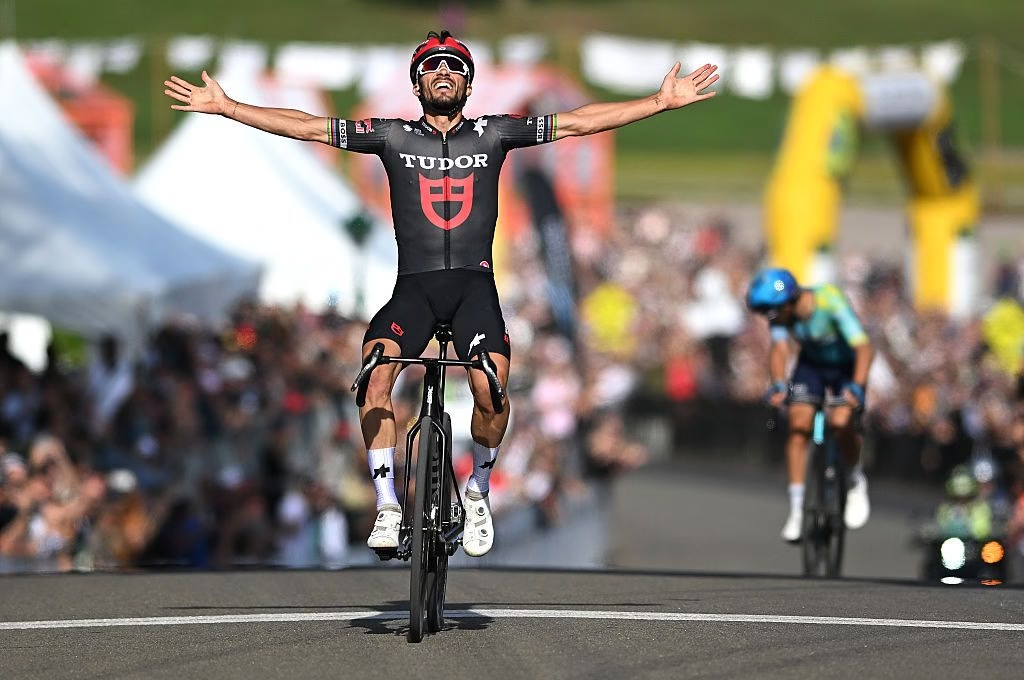
Spain’s wait stretches back to Alberto Contador
Mas is also positioned to end a striking drought for Spanish men’s cycling.
No Spanish rider has won the Vuelta since Alberto Contador in 2014.
Contador beat Chris Froome and Alejandro Valverde that year to take his third Vuelta title. Twelve editions have followed without another home winner.
Mas came closest repeatedly.
Those three second places made him one of the obvious riders capable of ending the run, but each unsuccessful attempt made the wait longer.
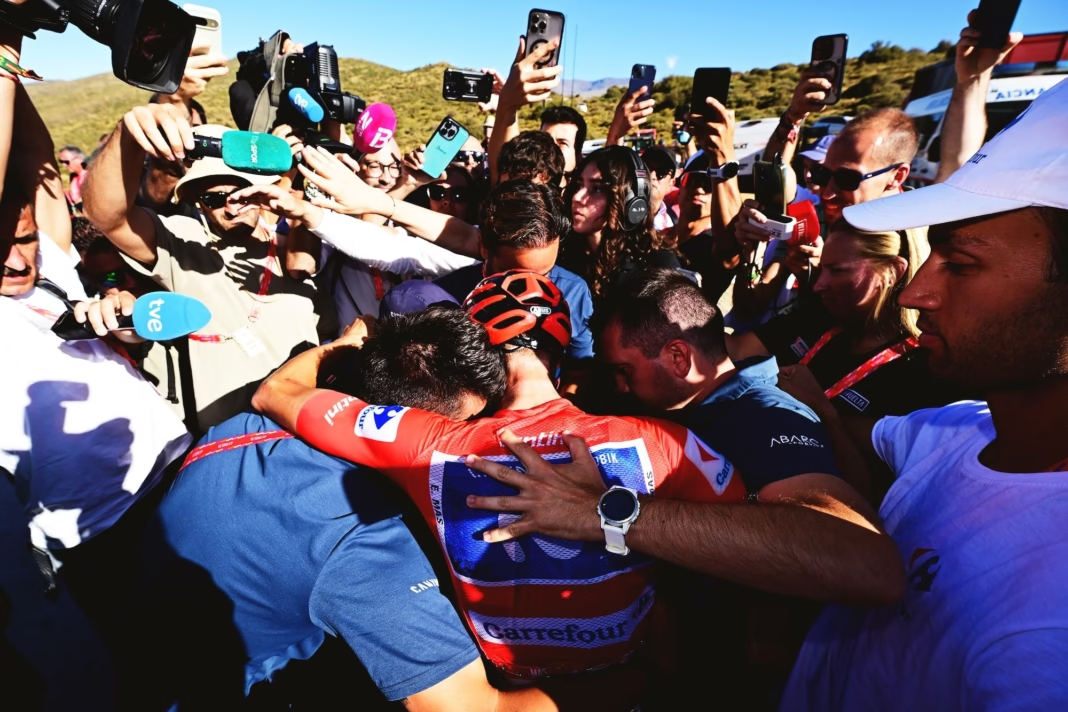
Sunday in Granada should finally close it.
There is something fitting about Mas being the rider to do so after spending so much of his career near the top of the Vuelta without reaching it.
His first second place came eight years ago.
His first victory has required considerably more patience.
The stages that made Mas the 2026 Vuelta winner
The progression through the race shows why Stage 8 should be treated as the beginning of Mas’s story rather than its conclusion.
| Stage | What changed | Mas’s advantage over Roglič |
|---|---|---|
| Stage 8 – Xeraco | Pogačar crashes out and Mas inherits red | 1:00 |
| Stage 9 – Alto de Aitana | Mas wins and distances Roglič | 1:18 |
| Stage 12 – Calar Alto | Mas attacks from distance and gains 27 seconds | 1:45 |
| Stage 14 – Sierra de La Pandera | Mas and Gall drop Roglič | 2:10 |
| Stage 18 – Jerez time trial | Roglič recovers only 33 seconds | 1:37 |
| Stage 19 – Peñas Blancas | Roglič attacks but gains nothing | 1:37 |
| Stage 20 – Collado del Alguacil | Mas gains another 38 seconds on Roglič | 2:15 |
There is no need to identify one attack as the moment Mas won the Vuelta.
The strength of his race is that several different stages demanded different things from him.
Aitana asked him to establish authority.
Calar Alto and La Pandera asked him to build time before Jerez.
Jerez asked him to limit the discipline in which Roglič had the clearest advantage.
Peñas Blancas asked him not to give anything back.
Collado del Alguacil asked him to withstand one final attack when Roglič had nothing left to preserve.
Mas answered every one of them.

