
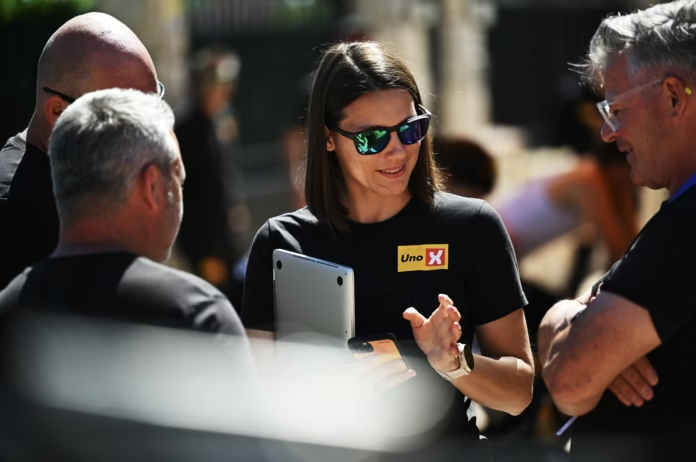
Anna Badegruber is now responsible for the sporting direction of Uno-X Mobility’s women’s programme, overseeing a Women’s WorldTour team with growing ambitions in the Classics and Grand Tours. It is a significant role for someone who is still only 29 and whose own professional racing career ended less than five years ago.
Her route to the position has been unusually quick. Badegruber raced professionally through 2021, moved almost immediately into directing, gained experience with development teams and joined Uno-X Mobility in 2024. By 2025 she had stepped into the Head of Sport role, and she now leads a sporting structure which has made improving its Grand Tour general classification performance one of its central targets.
That journey has gained more attention in September after Badegruber appeared on the Besenwagen Femmes podcast on 15 September. The episode, titled Projekt 2030, made her the first guest in that strand who was no longer an active rider and used Uno-X’s Tour de France Femmes success as a starting point for a wider discussion about her role and where the team wants to go next.
It is a very different position from the one Badegruber occupied when ProCyclingUK first spoke to her as a rider in 2020.
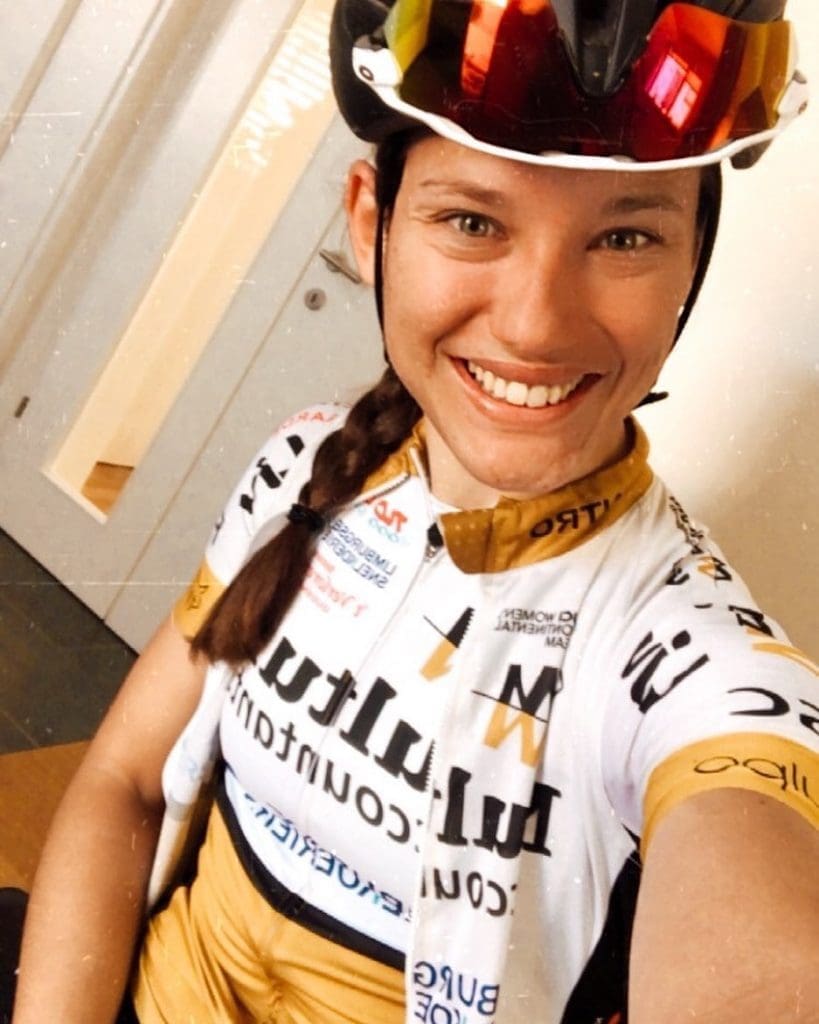
A professional career without the headline results
Badegruber’s racing career was relatively modest compared with the riders she now directs.
Born in Austria in January 1997, she raced at UCI level with Vitalogic Astrokalb before joining WNT for 2017. She remained with the British-registered structure through its development into WNT-Rotor Pro Cycling, sharing teams with riders including Kirsten Wild, Lisa Brennauer and Clara Koppenburg.
She did not develop into one of the team’s major international leaders. Her value was more often found in completing the work required around stronger finishers and gaining experience across a professional calendar which included races such as the Ladies Tour of Norway.
Her clearest individual result came at home in 2019.
Badegruber finished 10th in the elite Austrian road race championship at Mondsee but was the leading under-23 rider, earning the national U23 title after attacking in the closing metres of her group. ProCyclingUK covered the result at the time in Anna Badegruber wins the U23 Austrian Road Race title.
The result was particularly personal because the championship took place close to where she lived, with family and friends alongside the route.
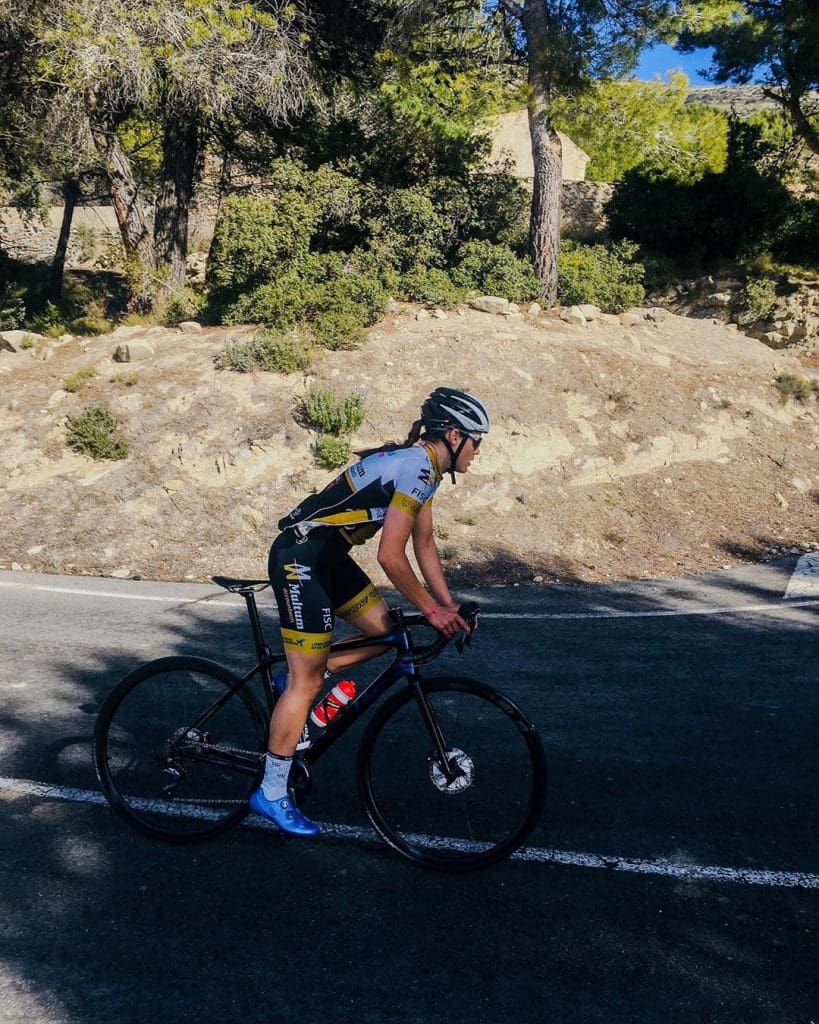
She subsequently moved to Multum Accountants for 2020 and 2021. There were no major international breakthroughs, and by the end of 2021 her time as a professional rider was over.
What followed proved far more consequential.

A 2020 interview captured a rider still looking forward
There is an interesting snapshot of Badegruber from only a year before she stopped racing.
In ProCyclingUK’s 2020 interview with Anna Badegruber, she was still talking about races she hoped to ride in the future. The Giro Rosa and Tour of Flanders were on her racing bucket list, while her advice for maintaining motivation centred on enjoying training, riding with other people and keeping small goals in view.
One detail looks particularly striking with hindsight.
Badegruber spoke about wanting to cycle around Norway again after visiting the country with her parents when she was 11. She described that trip as the place where she had found her love for cycling.
Four years after that interview she would join Norway’s only Women’s WorldTour team.
Her racing ambitions did not ultimately take her to the biggest results in the sport, but the years spent inside teams gave her something that became useful remarkably quickly: an understanding of what riders experience from the other side of the team car.
From rider to sports director in her mid-20s
There was almost no long gap between the two careers.
Badegruber’s final professional season came in 2021. By 2022, at 25, she was already working as an assistant sports director with Andy Schleck-CP NVST-Immo Losch.
That is an unusually young age to move directly into directing.
Many former riders spend several years away from professional cycling before returning to team management, while others move into coaching, rider representation or media work first. Badegruber went almost immediately from being managed to helping manage riders herself.
The first part of that transition took place at development level.
After the Andy Schleck structure in 2022, she joined the UAE Development Team for 2023. The squad provided a different challenge, combining race direction with the development of riders who were attempting to progress towards the Women’s WorldTour.
That season also put Badegruber alongside staff and riders from a much larger professional structure. It was experience she would later draw on when assembling the sporting team around her at Uno-X.
By the end of 2023, only two years had passed since her final season as a rider. She had already worked inside two different development programmes.
The next move put her directly into the WorldTour.
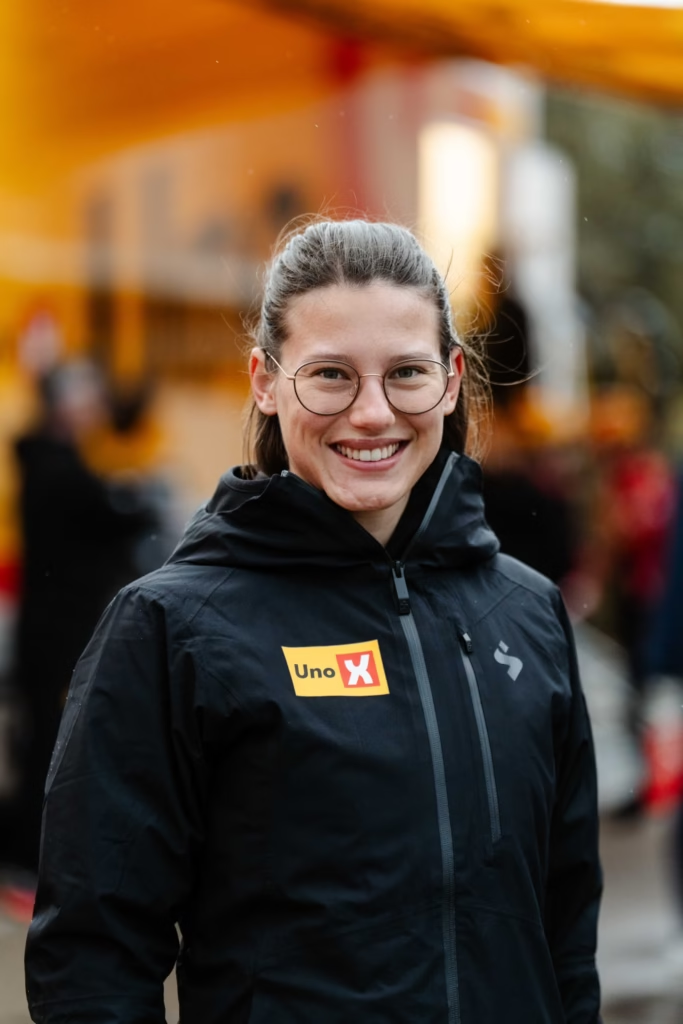 Photo Credit: Uno-X/Word Up
Uno-X brought Badegruber into the WorldTour in 2024
Badegruber joined Uno-X Mobility as an assistant sports director for 2024.
The women’s team was itself still relatively young. Uno-X had launched the programme directly into the Women’s WorldTour in 2022, building around a predominantly Scandinavian identity while gradually adding riders from elsewhere in Europe.
Badegruber initially joined rather than led that structure.
Her first seasons gave her experience across a full WorldTour calendar while working alongside the existing sporting management. She directed riders in stage races and one-day events and became increasingly involved in the wider sporting operation.
Uno-X’s model suited her background.
The team has consistently placed development alongside results rather than treating the two as separate areas. That resembles the environments Badegruber had worked in immediately after retiring, but with the added demands of competing against SD Worx-Protime, Lidl-Trek, FDJ United-Suez, Canyon SRAM and the other leading teams throughout the year.
By 2025, her responsibilities had expanded considerably.
Becoming Head of Sport before turning 30
Badegruber stepped into the Head of Sport role during 2025 and now leads the sporting side of the women’s programme.
The distinction is important.
Being a sports director at races means selecting tactics, communicating from the team car and making decisions during competition. Running the sporting programme adds another layer: planning calendars, helping shape recruitment, building the directing staff, developing leaders and creating a structure which works across an entire season.
Uno-X formalised that position heading into 2026.
General manager Thor Hushovd highlighted Badegruber’s communication and ability to bring people together as important reasons for putting her in charge. Her age made the appointment unusual, but her progression through several roles meant she had already seen professional cycling from more angles than her years might suggest.
Badegruber described the transition herself as a substantial change from directing races to overseeing more areas of the programme.
The team also expanded the staff around her.
Megan Chard, Nicolas Marche and Alejandro Gonzalez-Tablas joined as sports directors for 2026, providing a mixture of WorldTour experience, scouting, development work and performance psychology.
Badegruber had previously worked with Marche and Gonzalez-Tablas, making their arrival part of building a staff group around people whose working methods she already understood.
The 2026 target was clear: improve the Grand Tour structure
Uno-X entered this season with a more defined set of sporting objectives than simply accumulating WorldTour results.
The team wanted a stronger spring Classics campaign, particularly around the sprints and races such as De Panne and Paris-Roubaix Femmes.
The larger project was the Grand Tours.
Badegruber identified improving Uno-X’s general classification structure as a priority, with the longer-term aim of making top-10 finishes a consistent expectation rather than an occasional result.
That represented a logical progression from 2025.
Katrine Aalerud had finished 10th at the Giro d’Italia Women and 10th at the Vuelta a Burgos, while Mie Bjørndal Ottestad had developed into a reliable stage-race leader. Uno-X had enough evidence that its riders could compete around the top 10. The challenge was building the support structure required to do it repeatedly in the biggest races.
ProCyclingUK’s Uno-X Mobility 2026 Women’s WorldTour team guide identified much the same question before the season. The team already had cohesion and stage-race depth. Moving further up the WorldTour required converting that into higher-level results.
Badegruber’s job was to help make that transition happen.
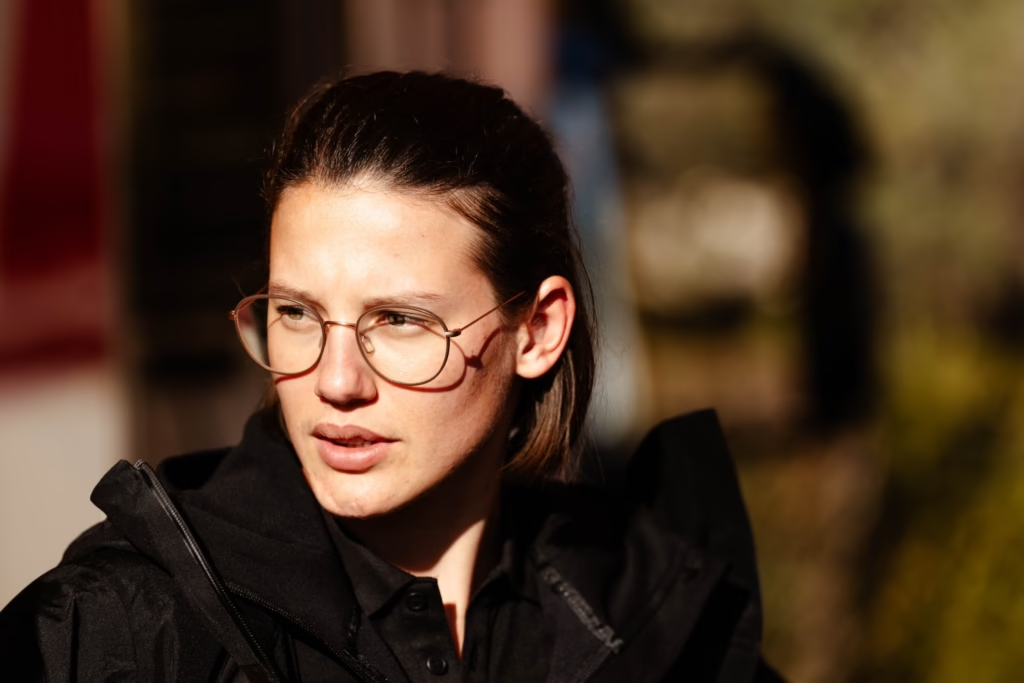 Photo Credit: Uno-X/Word Up
Grand Tour progress has not followed a straight line
The results in 2026 show why building a GC programme takes time.
Aalerud finished 14th at La Vuelta Femenina, while Sigrid Ytterhus Haugset took 14th at the Giro d’Italia Women. Both were useful results, but neither delivered the consistent Grand Tour top 10 that Uno-X ultimately want.
The Tour de France Femmes then brought both frustration and the biggest moment of Badegruber’s time leading the programme.
Uno-X arrived with Aalerud as the designated GC rider and a clear target of finishing inside the top 10. The team selection was deliberately built around that goal, with climbing support, riders for positioning on flatter terrain and enough flexibility to pursue stages when opportunities appeared.
The GC plan did not survive the full race. Aalerud eventually withdrew before stage 7.
What happened before that changed Uno-X’s Tour anyway.
Sigrid Haugset gave Uno-X its Tour breakthrough
Stage 3 from Geneva to Poligny became the defining day.
Sigrid Ytterhus Haugset attacked and eventually spent 88.5 kilometres alone, holding off a chase which included Lotte Kopecky before winning the stage and taking the yellow jersey.
It was Uno-X Mobility’s first Tour de France Femmes stage victory and made Haugset the first Norwegian to wear yellow in the modern women’s race.
ProCyclingUK’s Tour de France Femmes stage 3 report captured a day where an opportunity outside the original GC plan became much larger than expected.
It also provided a useful example of what Badegruber’s role now involves.
The team had started the Tour with a defined general classification structure around Aalerud. When the race produced a different opportunity, Uno-X were willing to let Haugset commit to it rather than making every tactical decision subordinate to the GC plan.
She did not simply take a stage.
She changed the race.
Haugset eventually lost yellow in the Dijon time trial, but the stage victory and race lead gave Uno-X its most visible result at the Tour since the women’s programme was created.
Badegruber was one of the sporting directors in the car throughout the race.
That result is also why her September appearance on Besenwagen Femmes used the yellow jersey as one of the entry points into discussing what she does behind the scenes.
The Tour showed both how far Uno-X have come and what remains
The 2026 Tour did not deliver the planned top-10 general classification result.
It arguably showed something more useful about where the programme currently sits.
Uno-X can now win a stage at the biggest women’s race in the world. Their riders can wear yellow. They can build a seven-rider squad around a defined GC leader and enter the race with objectives beyond simply gaining exposure.
What they have not yet done is turn that progression into consistent top-10 Grand Tour finishes.
The distinction matters because Badegruber has not presented the project as complete.
The objective is to develop a structure capable of reproducing those results rather than waiting for individual moments.
That requires stronger climbing depth, better support around GC leaders and riders capable of staying competitive across an entire week of WorldTour stage racing.
The team’s recruitment for 2027 suggests that the same priorities remain in place.
Usoa Ostolaza is a major statement about the next step
Few moves illustrate Uno-X’s direction more clearly than the signing of Usoa Ostolaza.
The Basque climber will join from Laboral Kutxa-Fundación Euskadi on a three-year deal through 2029 after finishing fourth overall at La Vuelta Femenina and third at the Vuelta a Burgos Feminas during 2026.
ProCyclingUK covered the move in Usoa Ostolaza joins Uno-X Mobility on three-year deal through 2029.
Ostolaza is not simply another rider capable of supporting a GC campaign.
She has already demonstrated that she can lead one.
Her arrival gives Badegruber a rider who can reasonably start a Grand Tour targeting the upper part of the classification, while still having substantial scope to improve in areas such as time trialling.
It directly addresses the gap between Uno-X’s ambitions and its current results.
The longer contract matters too. A three-year agreement creates time to develop the rider and the structure around her rather than expecting one transfer to transform the programme immediately.
From development rider to developing teams
There is an obvious symmetry in Badegruber’s career.
As a rider, she spent much of her time trying to develop within teams containing more successful leaders. Her own palmarès remained relatively short, with the 2019 Austrian U23 road title standing out as the clearest individual achievement.
She then moved almost immediately into environments built around developing other riders.
Andy Schleck-CP NVST-Immo Losch gave her the first opportunity to direct. UAE Development expanded that experience. Uno-X brought her into the WorldTour, first as part of the sporting staff and eventually as the person responsible for leading it.
The shift happened quickly enough that many of the riders she now directs are older than she is.
That makes authority less about having a famous racing career to point towards and more about communication, preparation and understanding what riders require.
It also makes the details of that old 2020 interview feel more relevant than they might have appeared at the time.
Badegruber talked about maintaining enjoyment, creating achievable goals and recognising that motivation cannot simply be demanded indefinitely.
Those are no longer just questions about her own training.
They are management questions.
Anna Badegruber and Uno-X’s longer-term project
The recent Besenwagen appearance arrived at an interesting point.
Badegruber is no longer the former rider learning how to be a sports director. She is now responsible for where a WorldTour programme goes next.
Uno-X’s ambitions have become correspondingly larger.
The team want to become stronger in the spring Classics, improve the structure around their faster riders and establish themselves much more regularly around the top 10 of Grand Tours. The Tour stage win and yellow jersey showed that they can already produce major individual moments.
Ostolaza’s signing shows they are also prepared to recruit specifically around the areas where progress has been slower.
The challenge for Badegruber is turning those pieces into something repeatable.
At 29, she has reached a position many former professionals do not take on until much later in their careers. She did it without a long list of victories as a rider and without spending years away from the sport before moving into management.
-
 Photo Credit: Getty

That is what makes the trajectory notable.
The Austrian U23 champion ProCyclingUK wrote about in 2019 did not ultimately become a major name because of what she achieved on the bike. Seven years later, she has become far more influential from the team car, helping decide how one of women’s cycling’s youngest WorldTour projects develops from here.

