Winning a Women’s WorldTour race does not necessarily produce a winner’s cheque comparable with the men’s calendar, even when the events share a name and organiser. The discrepancy is not hidden: it appears in the UCI’s published 2026 financial obligations. The governing body’s minimum prize purse for a women’s WorldTour one-day race is €7,700, while the five biggest men’s one-day races carry a €50,000 minimum. The difference between their minimum winning prizes is wider still: €1,690 against €20,000.
A regulatory minimum is not an organiser’s actual payout. Minimums are floors, not fixed cheques, and some women’s races have set their purses much higher. The two Tours offer a second comparison with published sums: the 2026 Tour de France Femmes provided approximately €260,750, compared with €2,302,800 for the men’s Tour de France. Neither figure should be confused with a rider’s annual salary or the amount that reaches their bank account after a team’s own prize-sharing arrangements.
 Photo Credit: Markus Spiske / Unsplash
What the UCI actually requires in 2026
The governing body publishes different financial tables for the men’s WorldTour and the Women’s WorldTour. On the men’s calendar, the major one-day races are split into groups. Milano-Sanremo, the Tour of Flanders, Paris-Roubaix, Liège–Bastogne–Liège and Il Lombardia are in Group 1, with a minimum €50,000 prize purse and €20,000 for the winner. Group 2 includes Omloop Het Nieuwsblad, Strade Bianche, Amstel Gold Race, the Flèche Wallonne and several other major races, with a €40,000 total minimum and €16,000 for first place.
Women’s WorldTour individual one-day events are covered by a single minimum-prize schedule in the UCI’s 2026 road financial obligations. It sets €7,700 in total, €1,690 for the winner, €1,250 for second and €840 for third. That does not mean Paris-Roubaix Femmes or the Tour of Flanders for women must pay exactly those amounts. It means organisers must meet the published minimum and can award more in the race regulations.
| 2026 UCI minimum | Men’s WorldTour Group 1 one-day | Men’s WorldTour Group 2 one-day | Women’s WorldTour one-day |
|---|---|---|---|
| Total minimum purse | €50,000 | €40,000 | €7,700 |
| Winner’s minimum | €20,000 | €16,000 | €1,690 |
| Runner-up minimum | €10,000 | €8,000 | €1,250 |
| Third-place minimum | €5,000 | €4,000 | €840 |
| Riders paid in the schedule | Top 20 | Top 20 | Top 20 |
The minimum tables reveal a difference in the entire prize ladder, not just the winning cheque. First, the women’s minimum purse is smaller than either men’s classification. Second, the share received by the winning rider is different. A Group 1 men’s winner is allocated 40 per cent of the €50,000 minimum total; the women’s winner receives about 22 per cent of the €7,700 minimum. The disparity is therefore not explained solely by how many riders receive prizes. Both schedules distribute place money through twentieth.
These are numbers from the UCI schedules applicable to the 2026 season, not independently audited statements of the money distributed by every race. When an organiser chooses a larger purse, the event’s own regulations are a better guide to what was on offer than the UCI minimum table. Anyone comparing two WorldTour events should check both documents rather than use a minimum as shorthand for an actual result.
Paris-Roubaix shows why a minimum is not the full story
The regulations for Paris-Roubaix Femmes Hauts-de-France in April 2026 are a useful example. Organiser ASO listed €49,000 to be distributed as race prizes, including €20,000 to the winner, €11,000 to second place and €6,000 to third. A further €892 appears in the published total for the relevant union and rider-retraining contribution, giving €49,892 including that amount. The event’s race prizes alone were more than six times the standard €7,700 UCI one-day Women’s WorldTour minimum.
That example matters because it prevents an easy but inaccurate claim that a women’s winner in the sport’s top one-day races can receive only €1,690. She can receive substantially more, depending on the organiser. It is equally misleading to take the €49,892 Paris-Roubaix Femmes figure and describe the extra contribution as part of the money handed directly to riders. The published rulebook separates the €49,000 race purse from the additional line.
For the corresponding men’s monument, the UCI Group 1 minimum includes €20,000 for victory and €50,000 overall. That minimum should not be mistaken for the organiser’s final men’s payout either. The clean comparison is the regulator’s minimum against the regulator’s minimum, or the two organisers’ actual prize schedules against each other. Mixing one of each can manufacture a smaller or bigger disparity than really exists.
The Grand Tours reveal the bigger commercial gulf
The 2026 Tour de France Femmes had €260,750 in published prize money. The men’s Tour de France paid €2,302,800 in direct prizes. That is a difference of almost nine to one in the total funds available across the races. The individual general-classification winners were separated by a factor of ten: €50,000 for Demi Vollering and €500,000 for the men’s winner. The size of the event, not simply an abstract UCI category, determines the cheque that attracts the headlines.
There is an important qualification to that comparison. The 2026 men’s Tour ran for 21 stages across three weeks; the women’s event comprised nine stages. A longer race necessarily creates more stage wins, jersey days and classification opportunities. Yet the total prize gap cannot be treated as a simple duration adjustment, because the difference in the amount for the final GC winner exists separately. It is a particularly visible measure of the unequal commercial development of the two races.
The full payouts also stretch well beyond the yellow jersey. Stage victories, other classification prizes, daily jersey awards and team rankings contribute to the amounts collected over the race. In 2026 Vollering’s various Tour de France Femmes awards amounted to €69,900, not simply the €50,000 for the overall classification. The ProCyclingUK 2026 women’s Tour prize-money results break down what riders and teams earned rather than conflating the winners’ cheques with the entire purse.
A 2026 Tour de France stage victory was worth €11,000 in the published men’s race schedule, compared with €4,000 for a stage win at the Tour de France Femmes. That is a difference in actual race regulations, not the same thing as the UCI’s WorldTour stage-race minimum. The separate men’s Tour de France prize guide and Tour de France Femmes prize guide set out the race-specific prizes and classifications.
Stage-race minimums are a different calculation
For ordinary WorldTour stage races, the UCI’s 2026 financial tables show €10,000 as the minimum prize total per men’s stage in the relevant Group 3 schedule, with €4,000 for first place. The women’s WorldTour stage schedule has a €3,930 total and €735 for the stage winner. These numbers are not the advertised actual prizes for each Tour de France stage. They are the regulator’s baseline for the relevant categories before organisers award anything above it.
Both sides also have general-classification prize requirements linked to the cumulative stage payouts. For a women’s nine-stage event, nine stages at the €3,930 minimum give €35,370 before the required GC award, which is calculated at 50 per cent of that stage-prize sum. That creates a minimum of €53,055 across those two elements, before any additional prize categories or higher organiser rates. It would be wrong to present that derived floor as the 2026 Tour de France Femmes’ actual €260,750 purse.
The men’s UCI WorldTour document also sets explicit minimum stage-plus-GC amounts for the three men’s Grand Tours: €1 million for the Tour de France and €850,000 for either the Giro d’Italia or Vuelta a España. A named Grand Tour can therefore have an additional category-specific rule that is not captured by multiplying an ordinary stage minimum. This is one reason that simple comparisons between ‘WorldTour prize money’ figures can go badly wrong.
Prize money is not a rider’s salary
The winner’s cheque is a visible part of a professional cyclist’s finances, but it should not be confused with an employment contract. WorldTour riders receive salaries under team agreements and any applicable minimum employment conditions. Prize payments are triggered by results and may be subject to central administration, mandatory deductions and further distribution within a team. A €20,000 prize awarded for first place is not proof that the individual has €20,000 in disposable income at the end of the week.
Professional teams commonly operate prize-sharing arrangements that recognise domestiques and support staff who contributed to the result. The split varies by team and arrangement rather than following a single universal percentage that can be imposed on every race. Contracts may also contain performance bonuses from employers or sponsors. Those bonuses are separate from the organiser’s official purse and are rarely disclosed in enough detail to calculate an individual rider’s total income.
The governing body’s 2026 road obligations identify contributions connected with the central prize-money payment system and with anti-doping and safety. Organisers may incur charges in addition to the face value of the prizes, while specified deductions can be made from the distributed money. That is another reason why a published prize schedule is a gross racing figure rather than a guaranteed amount received by one person. For the broader economics, our explanation of how professional cycling teams make money separates sponsorship, budgets and race-linked income.
Why the gap persists and what progress really means
Prize money reflects decisions by organisers and the regulations within which they operate. The men’s WorldTour developed with larger commercial structures and decades of established broadcasting, sponsorship and hospitality markets. The modern Women’s WorldTour has grown quickly, but many women’s events have shorter histories and different financial arrangements. Those realities help explain why organisers have unequal revenue opportunities. They are not, on their own, an argument that the women should receive permanently smaller awards.
Paris-Roubaix Femmes demonstrates what an organiser can do beyond the UCI minimum. Sustained improvement, though, depends on revenue and commitments that survive beyond a single edition. A larger purse matters to riders, particularly when it is spread beyond the winner. Better team finances and contractual conditions arguably matter even more across a whole season, because most professional riders do not win WorldTour races. The cost of running a WorldTour team is a separate piece of the economic question.
The UCI also changed how women’s races award ranking points in 2026, giving several major women’s events points scales more comparable with the men’s calendar. It is tempting to present that as financial parity, but UCI points and prize money serve entirely different purposes. Points affect rankings and qualification. They do not oblige an organiser to pay the same cheque as a race on another calendar. Our 2026 WorldTour points-parity explainer covers what changed and what did not.
How to compare women’s and men’s race payouts accurately
First identify exactly what a quoted amount measures. A regulatory minimum, an advertised purse, a GC winner’s award, an actual post-race distribution and a rider’s salary are five different things. Next establish the race category and year. A 2026 minimum for a Women’s WorldTour one-day race should not be compared with the total prize money paid at a specific men’s Grand Tour unless the writer makes that difference explicit.
Then compare like with like. For one-day races, consider both the total and the first-place amount, and check whether the events share an organiser. For stage races, distinguish individual stage prizes from general classification and ancillary awards, and account for how many stages were contested. Finally, look at the distribution through the field. Two events can advertise similar winning cheques while allocating very different amounts to riders who finish fifth, tenth or twentieth.
A single equal winning cheque is a useful milestone, but it is not the same as system-wide prize parity. It is whether that progress is widespread, consistent and supported by reliable revenue. The 2026 UCI tables still place the usual minimums far apart, while specific organisers can and do exceed them. Anyone reporting prize parity needs to say which standard is being compared, what was actually paid and who ultimately received it.
-
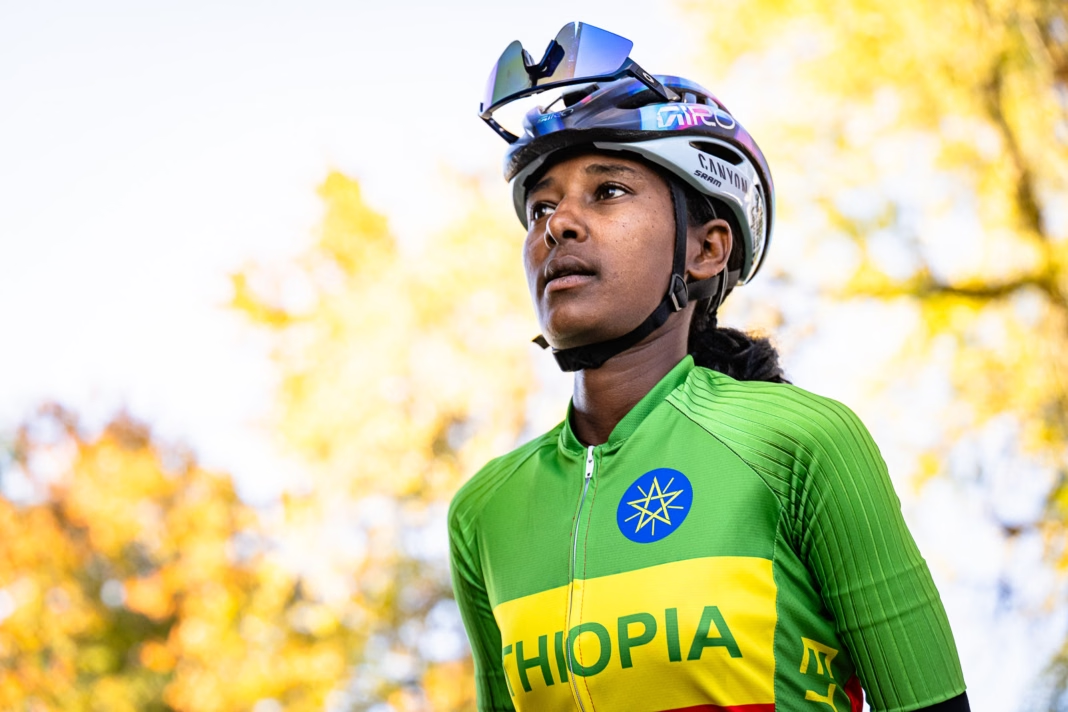
 Photo Credit: Arne Mill / CANYON//SRAM Generation