
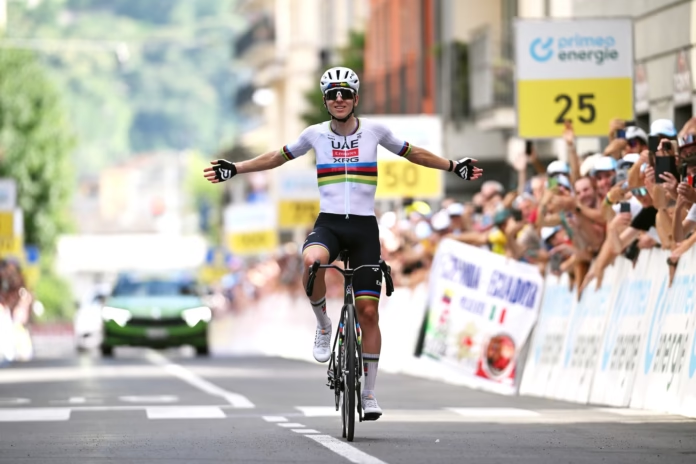
The Tour de France 2026 is not short of obvious GC battlegrounds. Five summit finishes, an early Pyrenean block, a late individual time-trial and back-to-back Alpe d’Huez stages give the race a clear structure, but the most important attacks will not all come in the same way.
Some days are built for direct yellow jersey moves. Others are trap stages, where a team can create damage before the final climb. The Barcelona team time-trial will shape the first gaps without a single individual attack. The Pyrenees arrive early enough to expose riders still finding their rhythm. The Massif Central and Vosges can create tactical openings before the Alps. Then the final weekend offers the most obvious chance to break the race completely.
For the full route picture, see our Tour de France 2026 full route guide, Tour de France 2026 route analysis, Tour de France 2026 mountain stages ranked by difficulty and Tour de France 2026 summit finishes guide.
Why the 2026 route encourages attacks
The 2026 Tour route gives GC riders two different kinds of pressure: early exposure and late punishment.
The early exposure comes from the opening week. Stage 1 is a team time-trial in Barcelona, which means the first yellow jersey gaps will appear immediately. Stage 3 then takes the race to Les Angles, and stage 6 finishes at Gavarnie-Gèdre after a major Pyrenean day. That is a difficult opening pattern for riders who usually prefer to ride themselves into Grand Tour rhythm.
The late punishment comes from the final week. Stage 16 is the individual time-trial from Évian-les-Bains to Thonon-les-Bains. Stage 18 finishes at Orcières-Merlette. Stage 19 climbs to Alpe d’Huez on the classic road. Stage 20 then returns to Alpe d’Huez by a much harder route via Croix de Fer, Télégraphe, Galibier and Sarenne.
That structure means the race can be attacked in several places. A rider with a strong team can use Barcelona to build a platform. A pure climber can target Gavarnie-Gèdre. An aggressive GC team can make Le Lioran or Le Markstein Fellering complicated. A time-trial specialist can aim for stage 16. The most complete climbers will wait for the Alps.
The best GC days are not only the hardest days. They are the days where attacking makes tactical sense. That is why the route also links closely with the wider Tour de France 2026 GC favourites ranked picture and the Tour de France 2026 dark horses for the general classification.
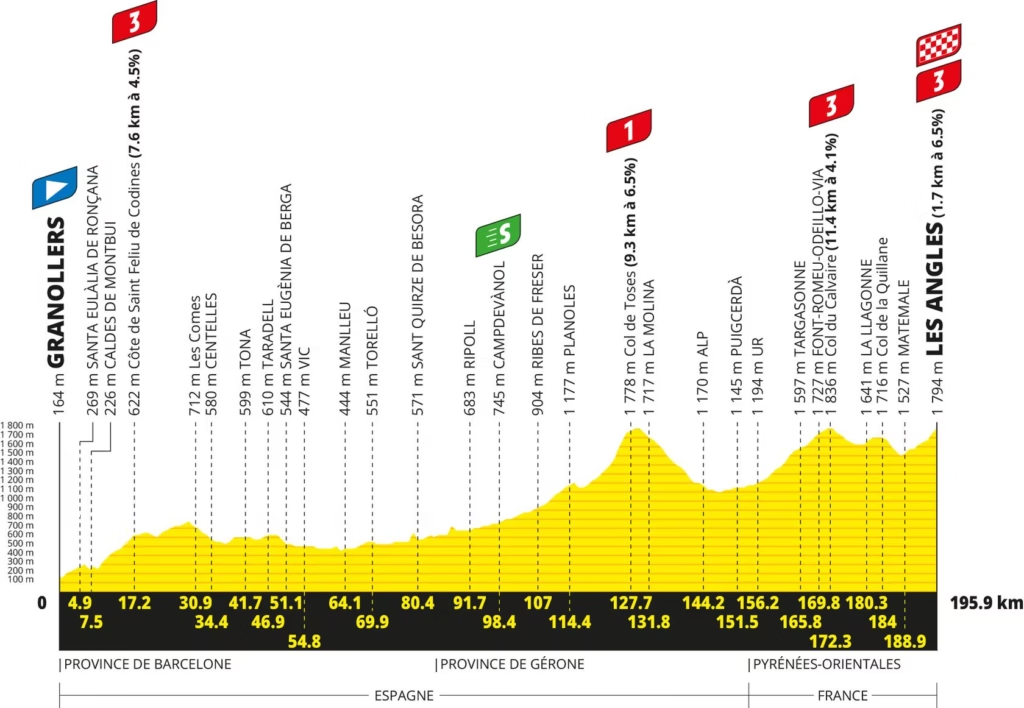
Stage 3: Granollers to Les Angles
Stage 3 is the first road stage where GC riders can properly test each other. It comes early, it is long enough to create fatigue, and it ends uphill at Les Angles.
The timing matters. In many Tours, the first few days are nervous but not decisive for pure climbers. In 2026, the mountains arrive almost immediately. Riders who are slightly undercooked, carrying illness or still settling into the race can be exposed before the first week has properly started.
Les Angles may not be the hardest summit-style finish of the Tour, but that is part of its danger. It can encourage opportunistic attacks rather than the full set-piece moves saved for the biggest climbs. A rider who feels strong may try to gain 10 or 20 seconds. A team with multiple GC options may test rivals without committing fully.
The stage is especially interesting for riders like Tadej Pogačar, who can attack earlier than others expect, and Remco Evenepoel, who may want to keep pressure on before the race becomes a pure high-mountain contest. Jonas Vingegaard, by contrast, may prefer to control rather than reveal too much.
This is unlikely to decide the Tour, but it can decide who starts chasing. The finish also belongs in the wider climbing story covered in our Tour de France 2026 climbs guide.
Attack rating: 7/10
GC danger rating: 7/10
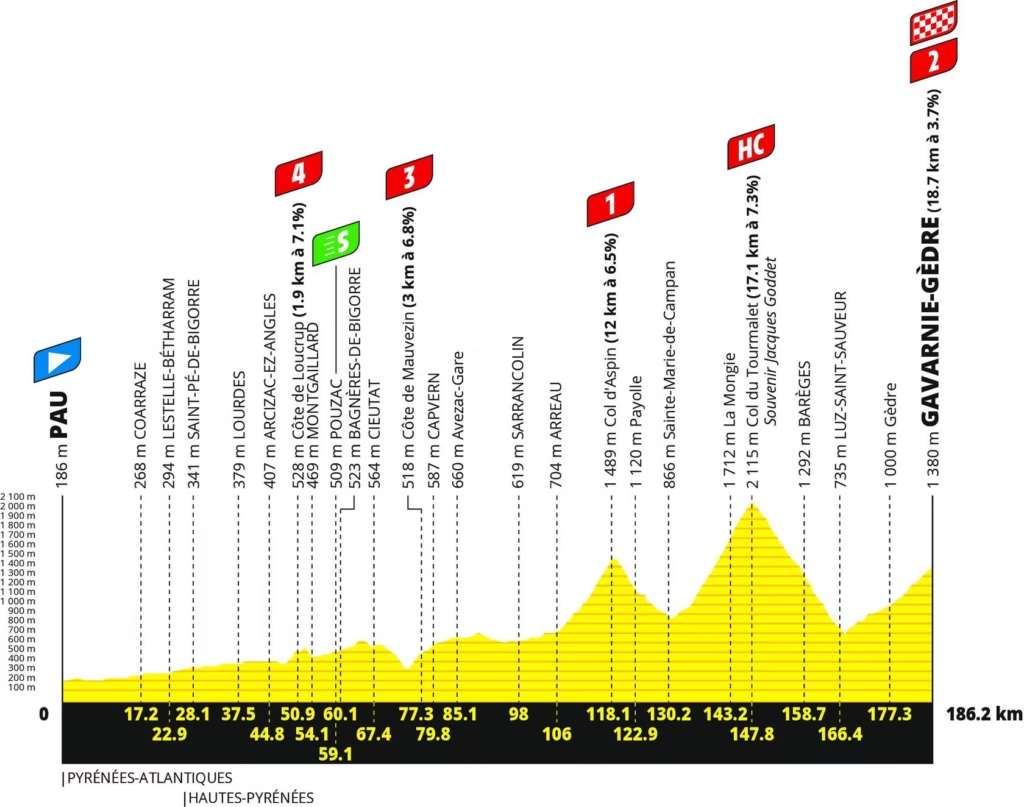
Stage 6: Pau to Gavarnie-Gèdre
Stage 6 is the first major GC attack day of the race. It is the first stage where the Tour can properly split between riders who are aiming to win and riders who are simply hoping to survive.
The route includes classic Pyrenean weight, with the Col d’Aspin, Tourmalet and the final climb to Gavarnie-Gèdre giving the day a traditional Grand Tour feel. The final climb is not just a launchpad. It comes after enough work to make the earlier climbs matter, and that gives teams a chance to start weakening rivals before the finish.
This is a stage where a serious GC rider can attack without it looking reckless. By this point, the team time-trial and Les Angles will have already created a hierarchy. Some riders will already need time. Others will want to confirm dominance before the race moves into a different rhythm.
If UAE Team Emirates-XRG or Team Visma | Lease a Bike want to make the first big statement, this is the day. If Red Bull-BORA-hansgrohe are riding behind with Evenepoel or Florian Lipowitz, they may need to decide whether to defend or attack. If young riders like Paul Seixas are still close, Gavarnie-Gèdre becomes a major early exam.
This is the best Pyrenean day for a GC attack. For the full breakdown of this early mountain block, see our Tour de France 2026 Pyrenees guide.
Attack rating: 9/10
GC danger rating: 9/10
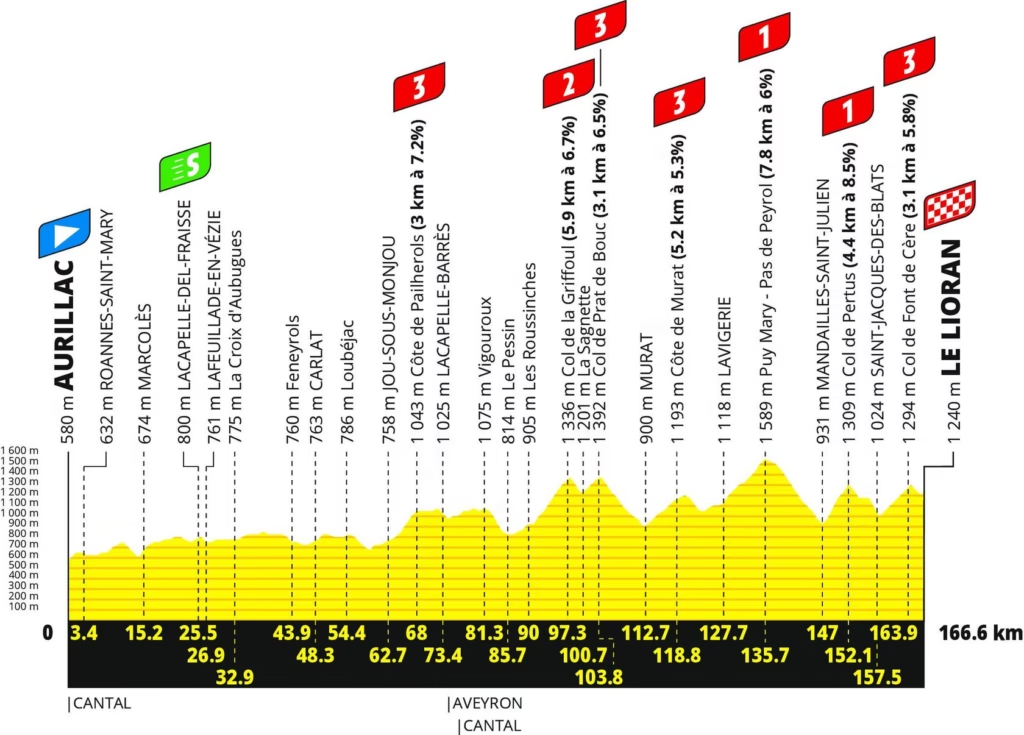
Stage 10: Aurillac to Le Lioran
Stage 10 is not the biggest mountain stage of the Tour, but it may be one of the best days for tactical damage.
Le Lioran carries recent Tour memory and sits in the Massif Central, where climbs can be awkward, irregular and difficult to control. These are not always the giant Alpine passes that create obvious spectacle, but they can make teams uncomfortable. The roads are narrower, the rhythm changes more often, and a rider under pressure can lose contact before the final climb.
This is the sort of stage where a GC team can set traps. A hard pace before the final section can isolate leaders. A rider with descending skill or punch can attack over a crest. A small split can become 20 or 30 seconds if rivals hesitate.
The stage also sits after the first rest day, which adds another layer. Some riders restart well. Others need time to get going. That makes stage 10 more dangerous than its profile might suggest.
Pogačar has the punch to exploit a stage like this. Vingegaard may be more selective about where he spends energy, but his team will need to stay alert. Evenepoel, Pidcock, Vauquelin and Jorgenson are all the kind of riders who could make or follow moves on this terrain.
Le Lioran is not the queen stage, but it is a classic ambush day, and exactly the sort of route feature explored in our Tour de France 2026 route analysis.
Attack rating: 8/10
GC danger rating: 8/10
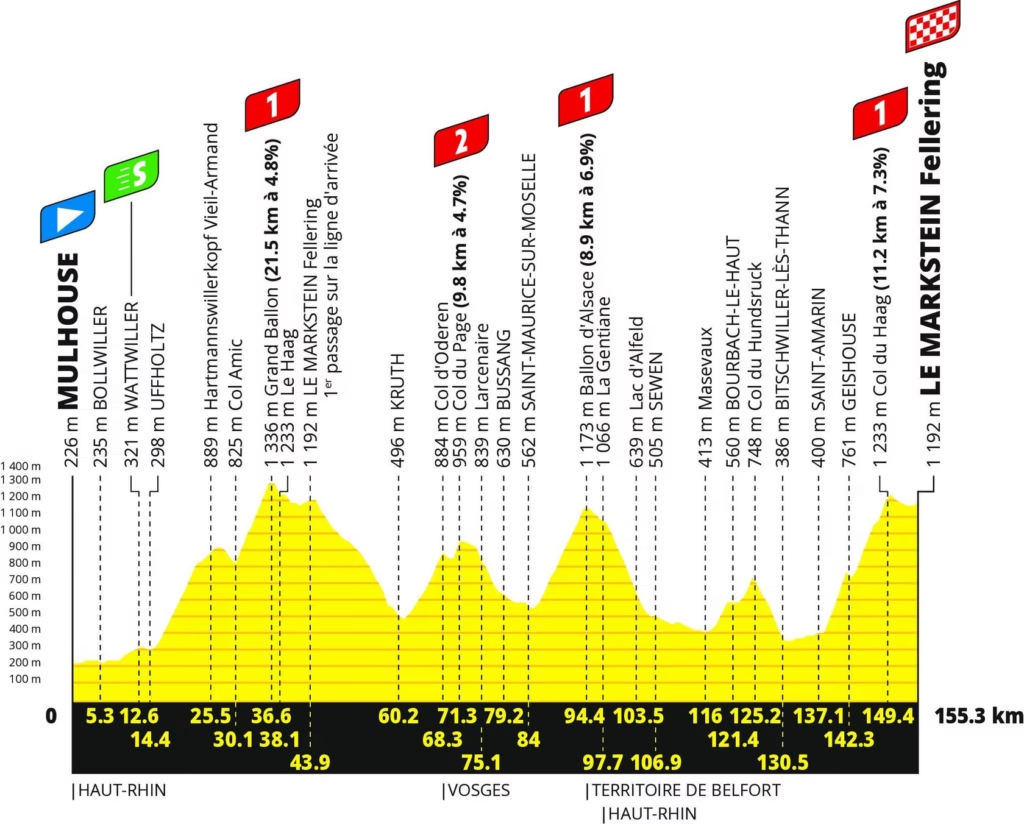
Stage 14: Mulhouse to Le Markstein Fellering
Stage 14 is the Vosges test, and it has the potential to become one of the most underrated GC stages of the Tour.
The Vosges are not as high as the Alps, but they can be brutal because the climbs come in clusters and rarely allow the race to settle. Le Markstein Fellering is difficult enough to create gaps, but the real appeal is the possibility of fatigue building across the day. Riders who are already struggling after the Pyrenees and Massif Central may find the Vosges difficult to manage.
This stage is especially useful for teams that want to attack without waiting for the final week. If a rider is close enough on GC but wants to avoid a pure time-trial or Alpine duel, stage 14 offers a place to create stress. It can also be used to test rivals before the second rest day.
The question is whether the favourites commit. If the main GC teams decide to save energy for Plateau de Solaison and the Alps, stage 14 may go to a breakaway. But if the race is tight, the Vosges can be a serious opportunity.
This is a day for pressure rather than one explosive move. The best attack may come after several earlier accelerations have already weakened the group.
Attack rating: 7/10
GC danger rating: 7/10
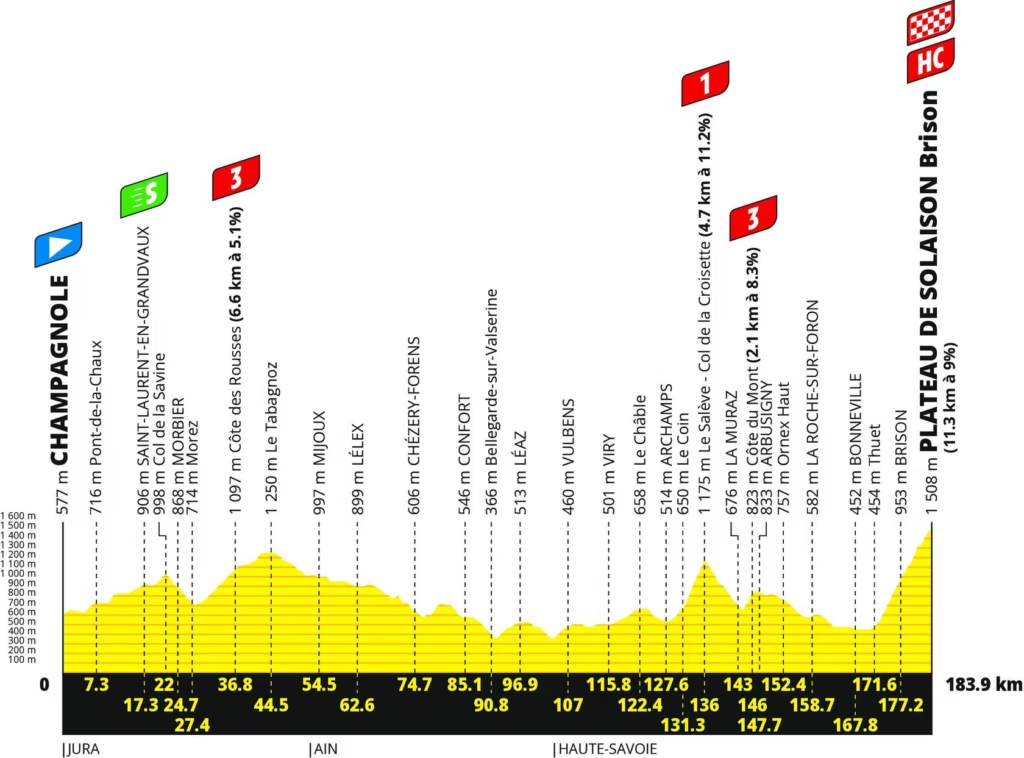
Stage 15: Champagnole to Plateau de Solaison
Stage 15 is one of the most important GC days of the entire race. It comes before the second rest day, ends on a proper summit finish and gives climbers a clear target before the time-trial.
The Plateau de Solaison is steep enough to create real gaps. It is not simply a drag to the line. It is the kind of final climb where rhythm, weight and climbing form matter. If a rider is carrying fatigue from the previous two weeks, this is where the time loss can suddenly become obvious.
The stage is especially important because stage 16 is an individual time-trial. That changes the tactical logic. Pure climbers may need to attack before the rest day, knowing that Evenepoel, Vauquelin, Jorgenson or other stronger time-trial riders could gain time the next time the race resumes. Time-trial specialists may try to limit losses and wait.
That makes Plateau de Solaison one of the cleanest attack days in the race. There is no need for subtlety if a climber wants time. The road gives them the chance.
This stage also matters for riders just outside the podium fight. A top-five rider who attacks here can change the whole shape of the final week. A rider who cracks may spend the rest of the race chasing. It is also one of the key official summit finishes in our Tour de France 2026 summit finishes guide.
Attack rating: 9/10
GC danger rating: 9/10
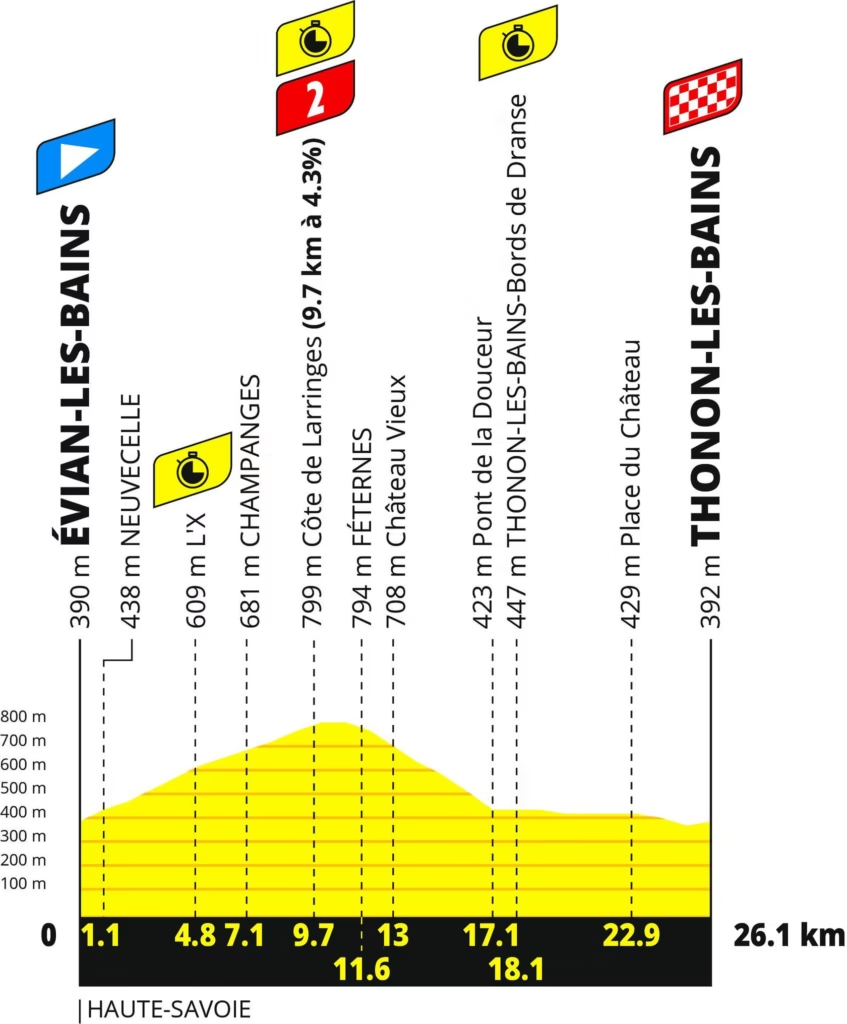
Stage 16: Évian-les-Bains to Thonon-les-Bains individual time-trial
Stage 16 is not an attack in the traditional sense, but it may be one of the most decisive GC days of the 2026 Tour.
The individual time-trial comes after the second rest day and before the final Alpine block. That makes it a pivot point. It can reward riders who have conserved energy, punish climbers who rode too defensively before the rest day and force tactical changes before Orcières-Merlette and Alpe d’Huez.
Evenepoel will almost certainly view this as one of his most important days. It is also relevant for Vauquelin, Jorgenson, Tiberi and any GC rider who can defend well against the clock. For pure climbers, it is a danger stage. They may not be able to attack, but they can lose the time that forces them to attack later.
The stage’s placement is critical. If a climber loses significant time here, stage 18, stage 19 and stage 20 become more aggressive by necessity. If a time-triallist gains enough, they may be able to ride the Alps more defensively.
The time-trial may not look as dramatic as the mountains, but it could decide who has to risk everything in the final week. For the Evenepoel angle, see our feature on Remco Evenepoel at the Tour de France 2026.
Attack rating: 5/10
GC danger rating: 9/10
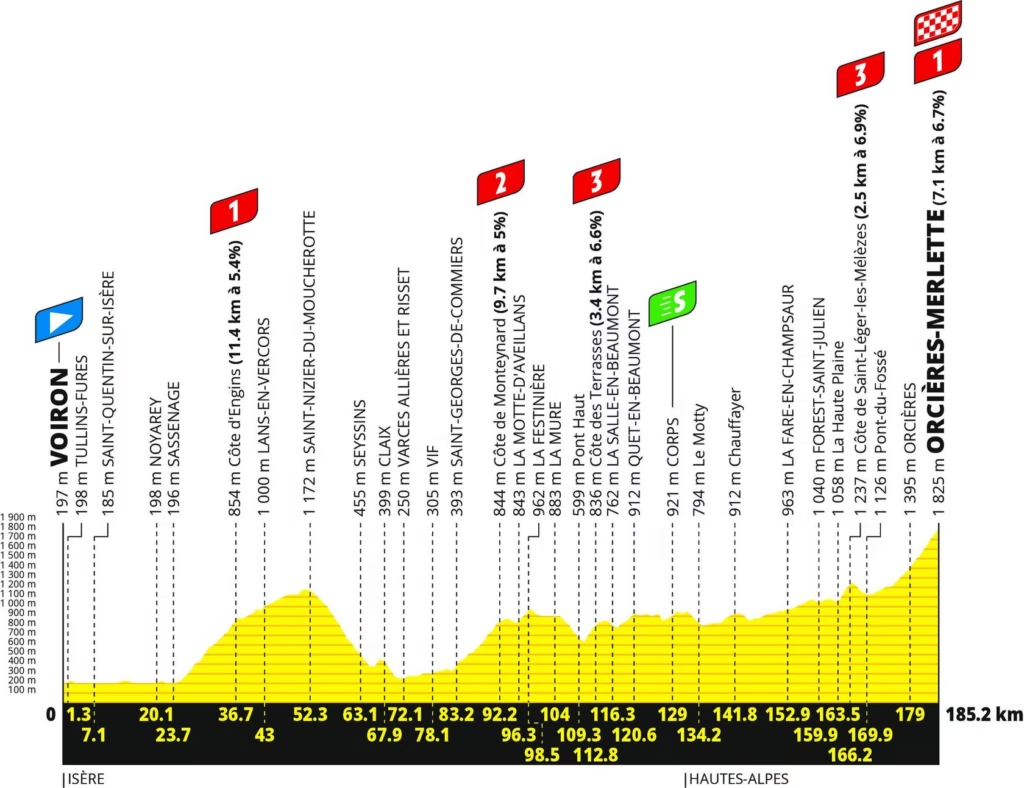
Stage 18: Voiron to Orcières-Merlette
Stage 18 opens the final Alpine sequence and gives GC riders the first chance to respond after the time-trial.
The finish at Orcières-Merlette is not as mythical as Alpe d’Huez, but that may make it tactically cleaner. Riders who lost time in the stage 16 time-trial cannot wait forever. Riders who gained time may want to defend. Teams with multiple cards can begin to stretch the race before the final weekend.
The final climb is not the hardest of the Tour, but it comes at the right moment. After the rest day, time-trial and transition into the Alps, stage 18 can expose riders who are beginning to fade. It can also let a strong climber take a first bite before the Alpe d’Huez double.
This is a good day for a measured attack rather than an all-or-nothing move. A rider can gain 20 or 30 seconds here and completely change the pressure before stages 19 and 20. That may be especially important if the podium battle is tight.
Expect the strongest teams to keep the race controlled until late. The attacks may not come from far out, but they should come. It also begins the high-stakes Alpine sequence covered in our Tour de France 2026 mountain stages ranked by difficulty.
Attack rating: 8/10
GC danger rating: 8/10
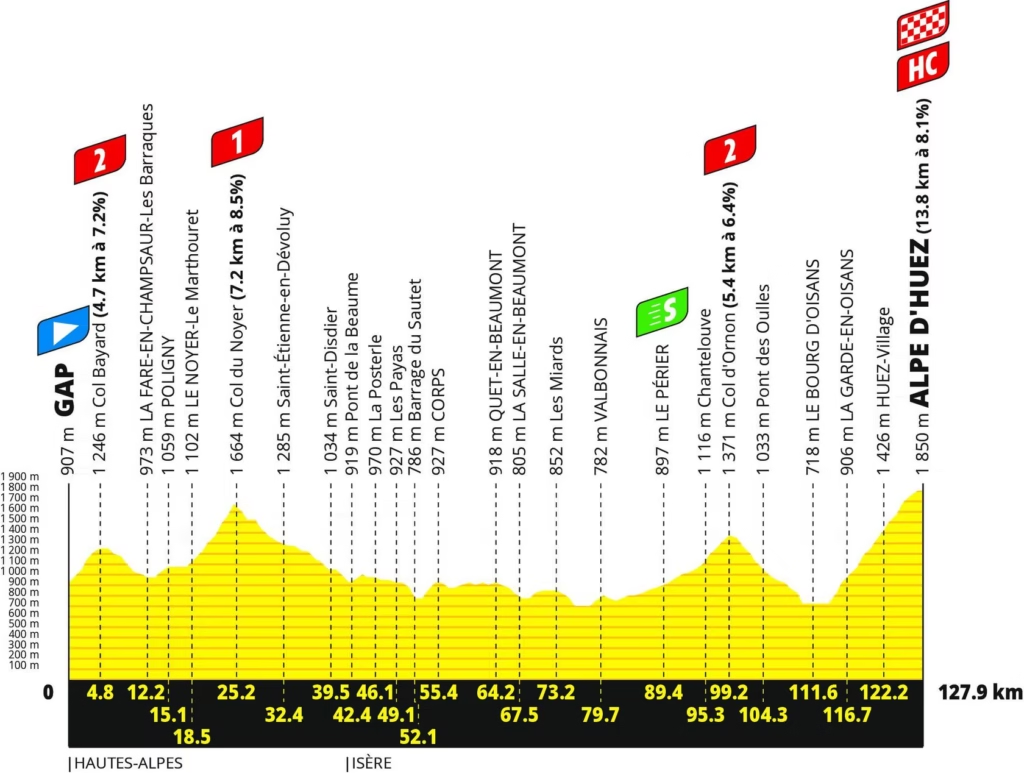
Stage 19: Gap to Alpe d’Huez
Stage 19 is the first Alpe d’Huez finish and one of the most emotionally charged GC days of the race.
The classic climb matters because it is familiar, steep enough to create gaps and symbolic enough that riders will want to win there. But its place in the route makes it complicated. Stage 20 is harder and comes the next day, so some GC contenders may hesitate to spend everything on stage 19.
That hesitation can create two different races. The riders who feel strongest may attack anyway, trying to take time before the hardest day. Others may ride defensively, hoping not to lose the Tour before the queen stage. That tension makes the stage interesting.
Alpe d’Huez rewards riders who can handle pressure. It is not just about gradients. It is about crowds, pacing, heat, noise and the knowledge that every weakness will be visible. A rider who cracks here can lose more than a few seconds. They can lose confidence before the final mountain stage.
The best attacks may come from riders who are close enough to matter but far enough behind that waiting is pointless. That could make stage 19 a podium battleground as much as a yellow jersey duel. For the wider context, see our feature on why back-to-back Alpe d’Huez finishes could define the Tour de France 2026.
Attack rating: 9/10
GC danger rating: 9/10
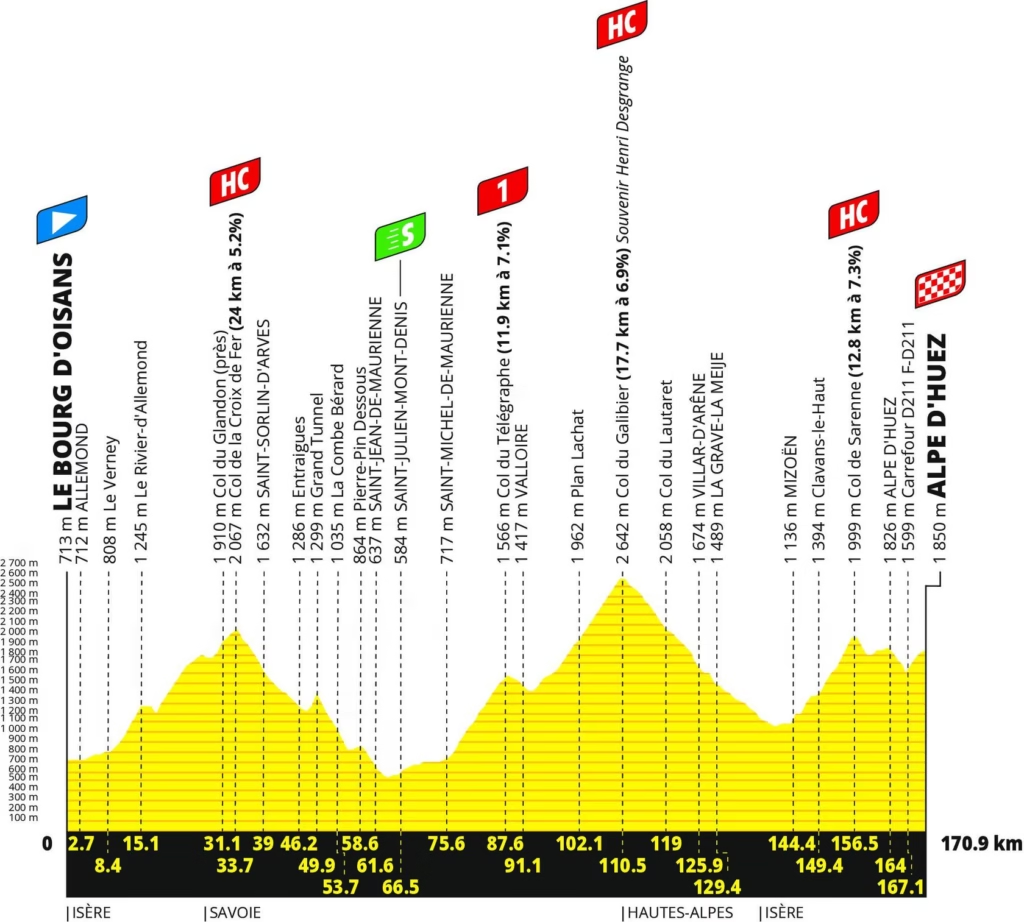
Stage 20: Le Bourg d’Oisans to Alpe d’Huez
Stage 20 is the best GC attack day of the 2026 Tour.
It is not just the hardest mountain stage. It is the last major chance to change the overall before Paris. The route includes Croix de Fer, Télégraphe, Galibier, Sarenne and the final ascent to Alpe d’Huez, creating a huge Alpine examination after three weeks of racing.
This is the day where everything can break. A rider who needs two or three minutes has to go here. A team with numbers can use the early climbs to isolate rivals. A rider with nothing to lose can attack before the Sarenne. The yellow jersey can no longer rely on saving energy for another mountain stage because there is no mountain stage left.
The Sarenne approach changes the feel of Alpe d’Huez. This is not simply the classic 21 bends again. It is a wilder route into the final climb, with the race arriving after enormous accumulated fatigue. That makes stage 20 more than a symbolic repeat. It is the final test of depth, recovery and team strength.
The Galibier is the highest point of the race, and by the time the riders reach Sarenne and Alpe d’Huez, the selection may already be severe. If the Tour is still close, this could be one of the most decisive penultimate stages in years.
For a full breakdown, see our Tour de France 2026 queen stage guide and L’Étape du Tour 2026 complete guide for UK riders, which uses the same stage 20 route.
Attack rating: 10/10
GC danger rating: 10/10
Which stages are best for long-range attacks?
The best long-range attack stages are stage 6 to Gavarnie-Gèdre, stage 10 to Le Lioran, stage 14 to Le Markstein Fellering and stage 20 to Alpe d’Huez.
Stage 6 has the Pyrenean weight and comes early enough that some teams may not yet have full control. Stage 10 has the Massif Central terrain to create ambush racing. Stage 14 has the Vosges profile to weaken teams before the final climb. Stage 20 is the final mountain day, which means riders who need time have no reason to wait.
The most likely long-range winner from those is stage 20. By then, team strength may be reduced, GC gaps will dictate aggression, and fatigue can make even strong riders vulnerable.
If the race is close, stage 20 is the stage for the move that decides the Tour. If the race is already controlled, stage 10 or stage 14 may become better breakaway days than GC days.
The long-range possibilities also overlap with the mountains classification. Riders chasing the polka-dot jersey may help light up some of the same stages, especially if the GC favourites hesitate. See our Tour de France 2026 climbers guide for more on that side of the race.
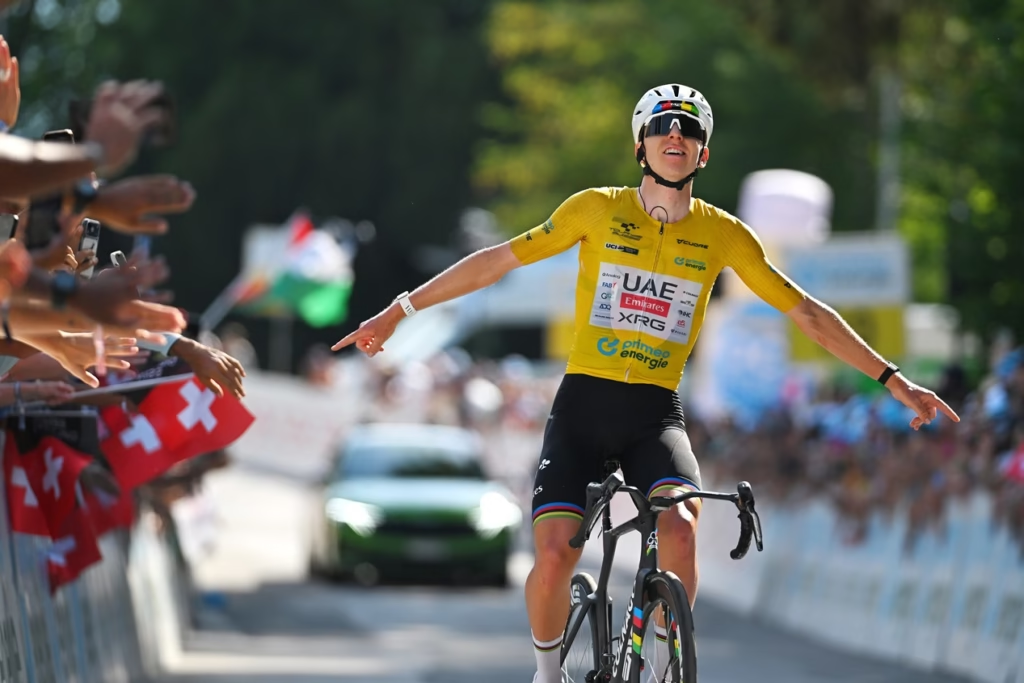 Photo Credit: Getty
Which stages suit Pogačar?
Pogačar has attacking opportunities almost everywhere. Stage 3 to Les Angles suits his ability to strike early in the race. Stage 6 to Gavarnie-Gèdre gives him a proper mountain platform. Stage 10 to Le Lioran suits his punch and tactical instinct. Stage 15 to Plateau de Solaison and both Alpe d’Huez stages give him obvious summit-finish chances.
The important thing is that Pogačar does not need the hardest day to create damage. He can attack on a climb that others think is too early or not difficult enough. That makes stages like Les Angles and Le Lioran particularly dangerous.
If he wants to build a buffer before the time-trial or final Alps, stages 6, 10 and 15 are the best places. If he wants to finish the race with authority, stage 20 is the obvious stage.
For more on his route to yellow, see our Tadej Pogačar at the Tour de France 2026 feature.
Which stages suit Vingegaard?
Vingegaard’s best attack days should be the biggest mountain stages: Gavarnie-Gèdre, Plateau de Solaison, Orcières-Merlette and the two Alpe d’Huez finishes.
He is likely to prefer sustained climbing and high fatigue rather than punchy ambush stages. Stage 20 is therefore his best day on paper. The combination of Croix de Fer, Télégraphe, Galibier, Sarenne and Alpe d’Huez gives him the kind of long, grinding Alpine test where his team can apply pressure before he moves.
Stage 6 is also important because the Tourmalet and the Gavarnie-Gèdre finish can reveal early climbing hierarchy. If Vingegaard wants to show that he is the strongest pure climber in the race, this is the first place to do it.
For more on his yellow jersey path, see our Jonas Vingegaard at the Tour de France 2026 feature.
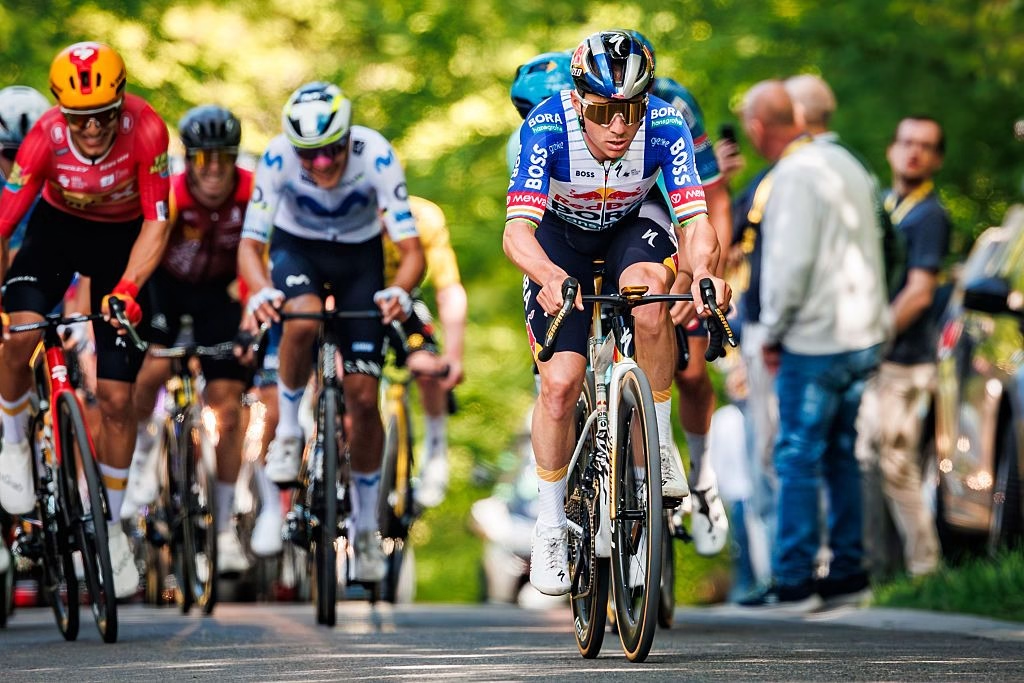
Which stages suit Evenepoel?
Evenepoel’s most important days are stage 1, stage 15, stage 16 and the final Alpine block.
The Barcelona team time-trial can give him a platform if Red Bull-BORA-hansgrohe ride well. Stage 15 to Plateau de Solaison is important because it comes before the individual time-trial. If Evenepoel limits losses there, stage 16 becomes a major weapon. If he loses too much, he may be chasing rather than controlling the race.
The individual time-trial is his clearest GC opportunity. It is not an attack in the mountains, but it can force everyone else to attack afterwards. That is the key to his route. If Evenepoel gains time on stage 16, the climbers may have to go all-in on stages 18, 19 and 20.
His hardest days are likely to be the biggest mountain stages, especially stage 20. If he reaches Alpe d’Huez still close enough, he has a real GC path. If the Galibier-Sarenne combination exposes him, the time-trial gains may not be enough.
For more on his race, see our Remco Evenepoel at the Tour de France 2026 feature.
What about the young GC riders?
The 2026 route also gives young riders several places to test themselves, especially if they are not expected to carry full yellow jersey pressure.
Paul Seixas will face his first serious exam in the Pyrenees, especially on stage 6 to Gavarnie-Gèdre. Florian Lipowitz should find out a lot about his place in the Red Bull-BORA-hansgrohe hierarchy by Plateau de Solaison. Kévin Vauquelin can use the team time-trial and individual time-trial as platforms before the Alps. Oscar Onley and Isaac del Toro, depending on roles, may be at their most dangerous on stages where the race becomes less controlled.
The route is harsh for young riders because there is no easy learning curve. Barcelona matters immediately. Les Angles and Gavarnie-Gèdre arrive early. The final week is brutal. But that is also why a breakthrough ride would be so valuable.
For more on that group, see our Tour de France 2026 young riders to watch and Tour de France 2026 dark horses for the general classification.
-
 Photo Credit: A.S.O./Billy Ceusters
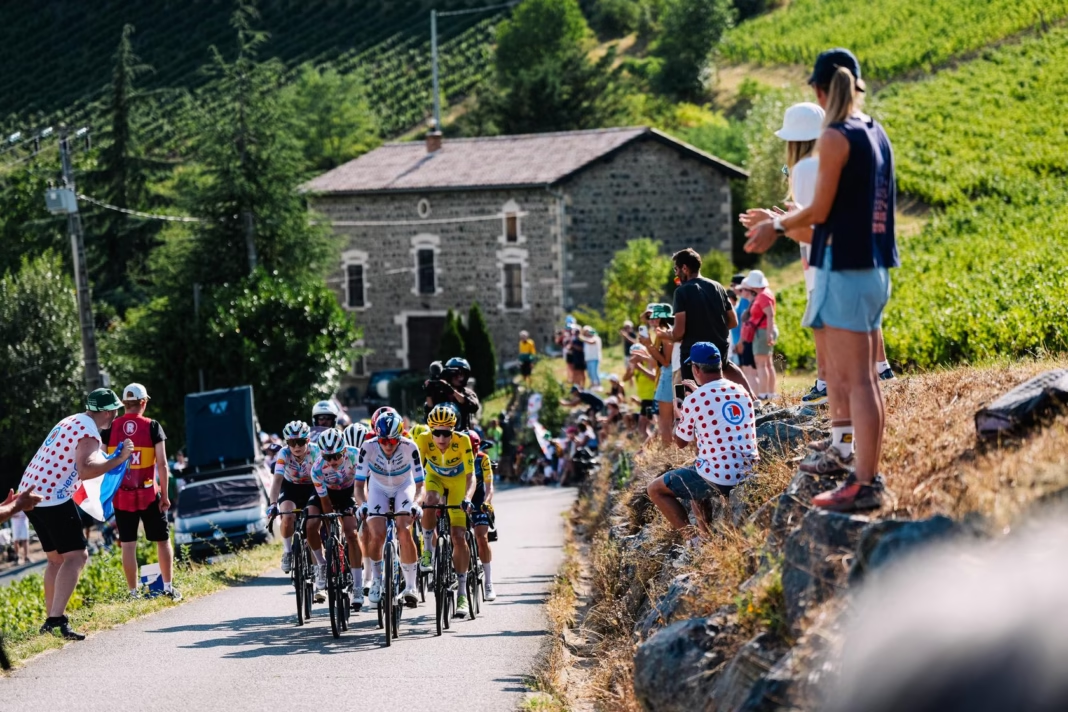
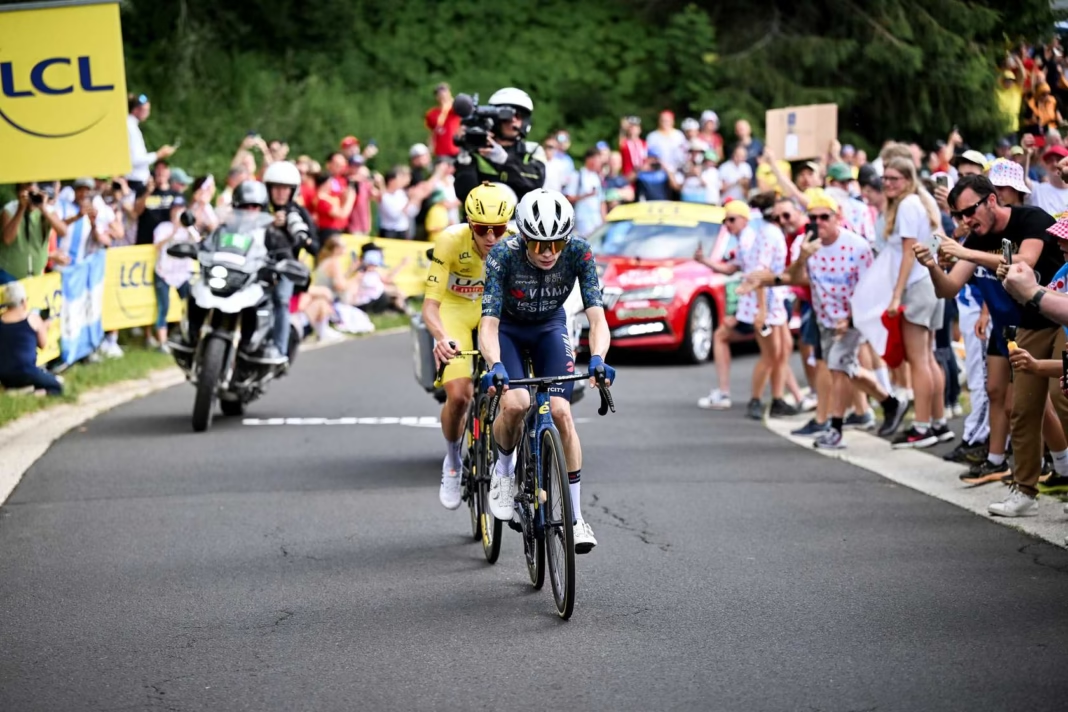
Best GC attack stages ranked
⦿ Stage 20: Le Bourg d’Oisans to Alpe d’Huez
⦿ Stage 6: Pau to Gavarnie-Gèdre
⦿ Stage 15: Champagnole to Plateau de Solaison
⦿ Stage 19: Gap to Alpe d’Huez
⦿ Stage 10: Aurillac to Le Lioran
⦿ Stage 18: Voiron to Orcières-Merlette
⦿ Stage 14: Mulhouse to Le Markstein Fellering
⦿ Stage 3: Granollers to Les Angles
⦿ Stage 16: Évian-les-Bains to Thonon-les-Bains time-trial
Prediction
The 2026 Tour de France is likely to be shaped in three phases.
The first phase comes immediately, with the Barcelona team time-trial, Les Angles and Gavarnie-Gèdre creating early gaps. The second phase comes through the Massif Central, Vosges, Plateau de Solaison and stage 16 time-trial, where the race can be reorganised before the Alps. The final phase is the Alpe d’Huez double, where the Tour should either be confirmed or completely overturned.
Stage 20 is the best GC attack day because it is the hardest and the last. Stage 6 is the best early attack day. Stage 15 is the best pre-time-trial climbing day. Stage 10 is the best ambush day. Stage 16 is the day that can force the final-week attacks without being an attack stage itself.
The most likely decisive sequence is stage 15, stage 16, stage 18, stage 19 and stage 20. By then, every weakness will be visible, every team will be tired, and every rider still chasing yellow will know there is nowhere left to wait.
For UK viewing details across the whole race, see our how to watch Tour de France 2026 in the UK guide.

