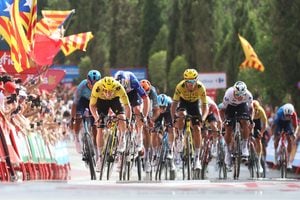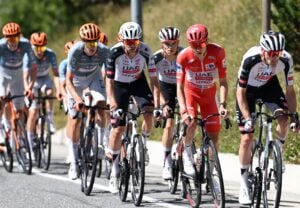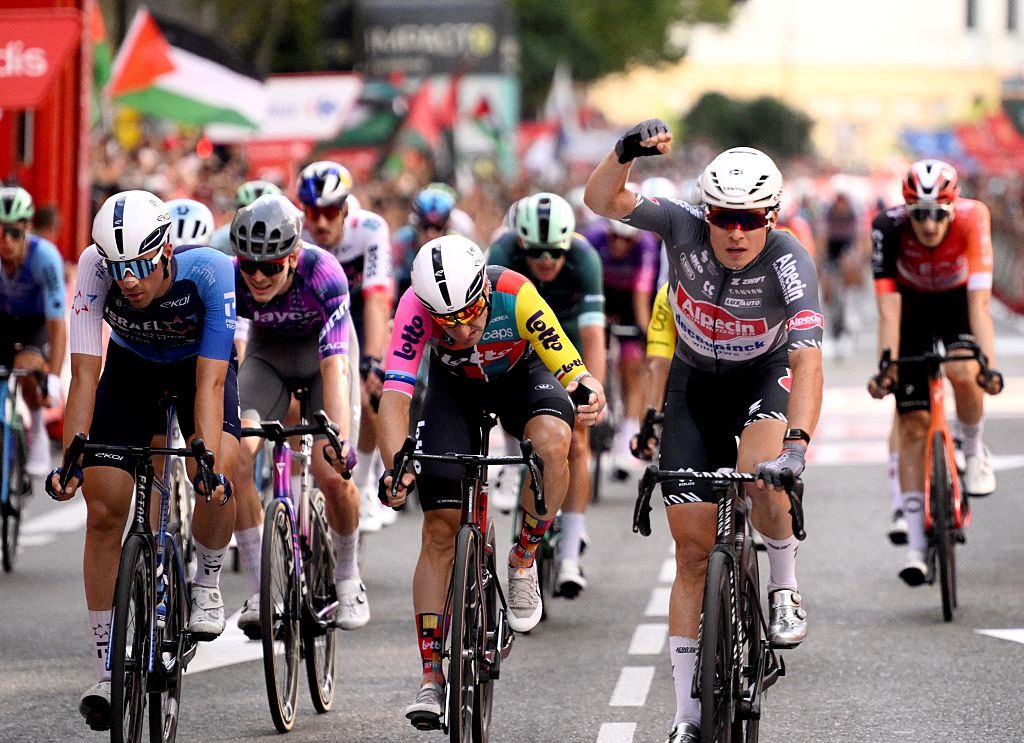
The Tour de France 2026 has enough sprint opportunities to make the fast men important, but this is not a route that gives them an easy ride. Seven flat stages sit alongside early Pyrenean climbing, a hard Massif Central section, the Vosges, the Jura and a brutal final Alpine block. That means the best sprinters will need more than top speed. They will need durability, support, positioning and enough climbing resistance to survive the race long enough to use their finish.
This ranking only uses riders currently confirmed on the working start list. That means no speculative names, no absent sprinters and no assumptions around riders who are not on the list. The focus is on the fast men who are actually down to start for now: Jasper Philipsen, Tim Merlier, Olav Kooij, Arnaud De Lie, Mads Pedersen, Biniam Girmay, Pascal Ackermann, Michael Matthews, Søren Wærenskjold and the wider group of reduced-bunch or hard-day finishers.
The route makes this a more complicated sprint race than a simple flat-stage count suggests. Stage 5 to Pau, stage 7 to Bordeaux, stage 8 to Bergerac, stage 11 to Nevers and stage 12 to Châlons-sur-Saône are the clearest sprint targets. Stage 17 to Voiron is officially flat but carries enough climbing to make it dangerous. Stage 21 in Paris is no longer a guaranteed classic Champs-Élysées bunch sprint because the Montmartre climbs create space for late attacks.
For the wider race picture, see our Tour de France 2026 full route guide, Tour de France 2026 sprint stages ranked and Tour de France 2026 route: best days for sprinters.
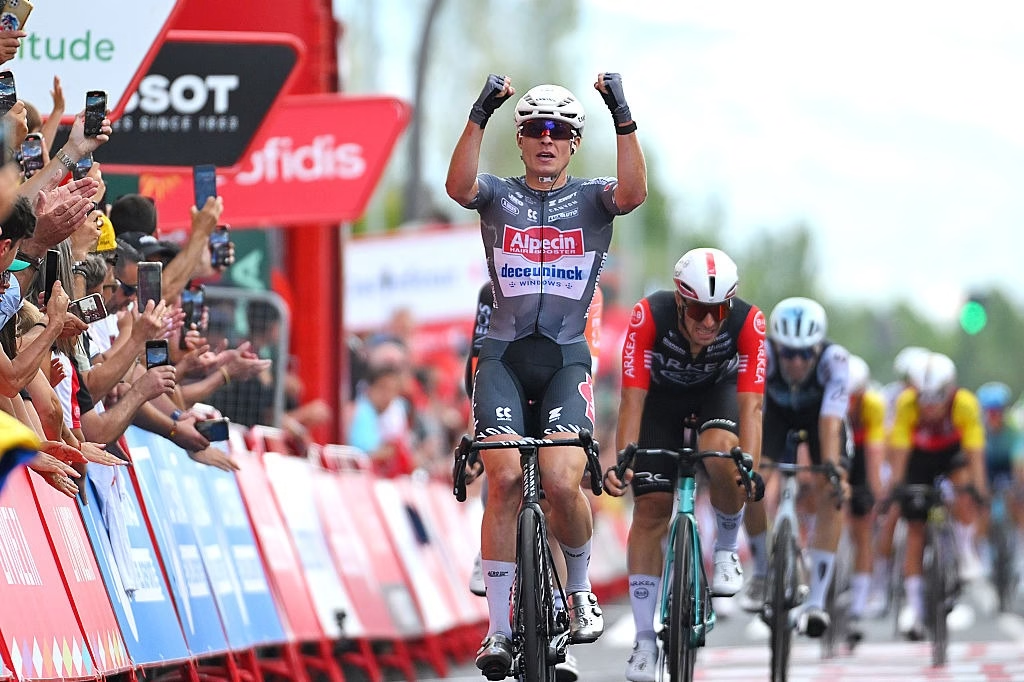
Best sprinters at the Tour de France 2026 at a glance
| Rank | Rider | Team | Sprint profile |
|---|---|---|---|
| 1 | Jasper Philipsen | Alpecin-Premier Tech | Fastest pure sprinter and best lead-out support |
| 2 | Tim Merlier | Soudal Quick-Step | Elite top-speed sprinter and major bunch-finish threat |
| 3 | Olav Kooij | Decathlon CMA CGM Team | Pure sprinter with strong acceleration and route opportunity |
| 4 | Mads Pedersen | Lidl-Trek | Power sprinter, hard-day specialist and green jersey threat |
| 5 | Arnaud De Lie | Lotto-Intermarché | Powerful finisher who can handle harder sprint stages |
| 6 | Biniam Girmay | NSN Cycling Team | Durable fast man and reduced-bunch danger |
| 7 | Pascal Ackermann | Team Jayco-AlUla | Experienced bunch sprinter with Grand Tour pedigree |
| 8 | Michael Matthews | Team Jayco-AlUla | Reduced-bunch specialist and points-stage threat |
| 9 | Søren Wærenskjold | Uno-X Mobility | Powerful fast finisher and strong lead-out/stage option |
| 10 | Jake Stewart | NSN Cycling Team | Fast, durable and useful in messy sprint finishes |
| 11 | Mathieu van der Poel | Alpecin-Premier Tech | Not a pure sprinter, but dangerous on hard sprint days |
| 12 | Alex Aranburu | Cofidis | Punchy finisher for uphill or reduced sprints |
| 13 | Dorian Godon | Netcompany INEOS | Strong reduced-bunch finisher |
| 14 | Jasper Stuyven | Soudal Quick-Step | Powerful Classics-type finisher |
| 15 | Lewis Askey | NSN Cycling Team | Fast support rider with outside sprint chances |
How this ranking works
This is not only a top-speed ranking. If it were, Jasper Philipsen and Tim Merlier would sit clearly at the top, with Olav Kooij close behind. But the Tour is not a laboratory sprint. It is three weeks of positioning, heat, crashes, mountains, lead-out pressure, fatigue and tactical compromise.
The key factors are:
| Factor | Why it matters |
|---|---|
| Top speed | Still decisive on the clearest bunch-sprint days |
| Lead-out quality | The Tour’s sprint finishes are rarely calm |
| Durability | The mountains can remove or blunt pure sprinters |
| Positioning | A fast rider boxed in is not a contender |
| Green jersey potential | Intermediate sprints and hard stages matter |
| Route fit | Some stages suit pure sprinters, others suit power sprinters |
| Team priority | A sprinter needs commitment, not just ability |
The 2026 sprint field is also shaped by absence. Several major sprint names are not in the confirmed list being used here, so this guide deliberately stays within the current start-list picture. That makes Philipsen, Merlier, Kooij, De Lie, Pedersen and Girmay even more important to the sprint narrative.
For the wider points-classification picture, see our Tour de France 2026 sprinters guide and Tour de France 2026 jerseys explained.
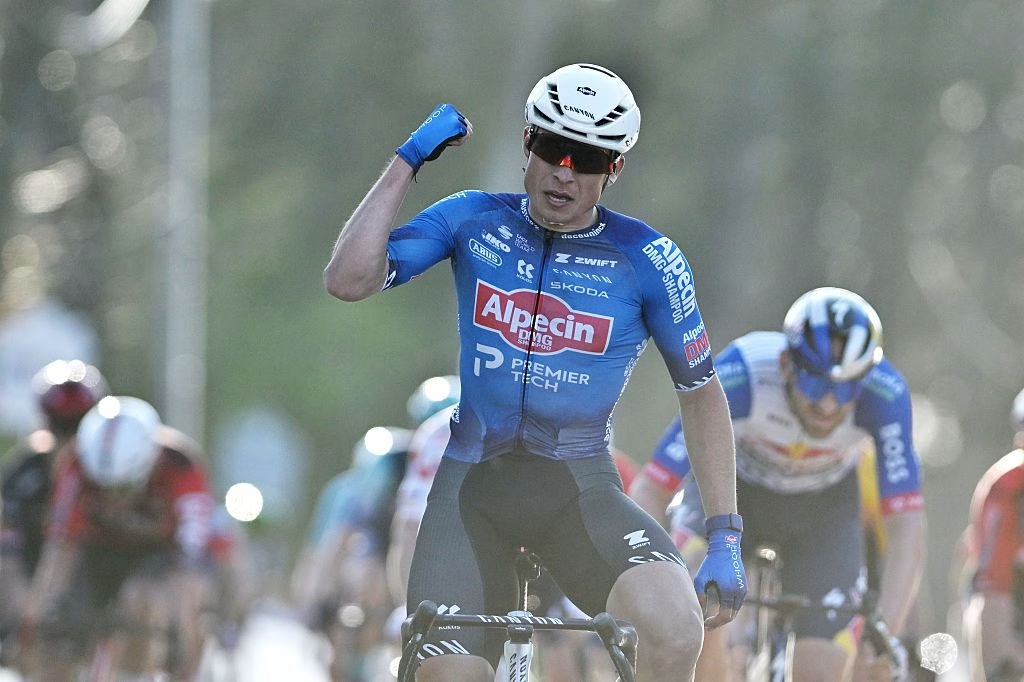
1. Jasper Philipsen
Jasper Philipsen starts as the strongest sprint reference on the confirmed list. He combines top speed, experience, confidence and the best dedicated sprint structure in the race. Alpecin-Premier Tech have built many of their biggest Tour sprint wins around the Philipsen and Mathieu van der Poel combination, and that remains one of the most dangerous lead-out pairings in cycling.
Philipsen’s biggest strength is that he can win different kinds of bunch sprint. He is not only fast in a straight line. He is aggressive in positioning, comfortable in chaos and experienced enough to use other teams’ lead-outs when needed. That matters at the Tour, where the final 5km can be more important than the final 200 metres.
The confirmed Alpecin-Premier Tech support also works in his favour. Jonas Rickaert gives him a familiar lead-out presence, while Van der Poel can change an entire sprint finish just by being in front of him. If Van der Poel is available in the final kilometre, Philipsen has a launch platform that few rivals can match.
The challenge is route difficulty. Philipsen should be one of the favourites on the flatter days, especially Bordeaux, Bergerac, Nevers and Châlons-sur-Saône. But the early mountains and later fatigue will test the pure sprinters. He needs to survive the race, manage the hard days and make sure he is still fresh enough when the clearest chances arrive.
If the Tour produces clean bunch sprints, Philipsen is the man to beat.
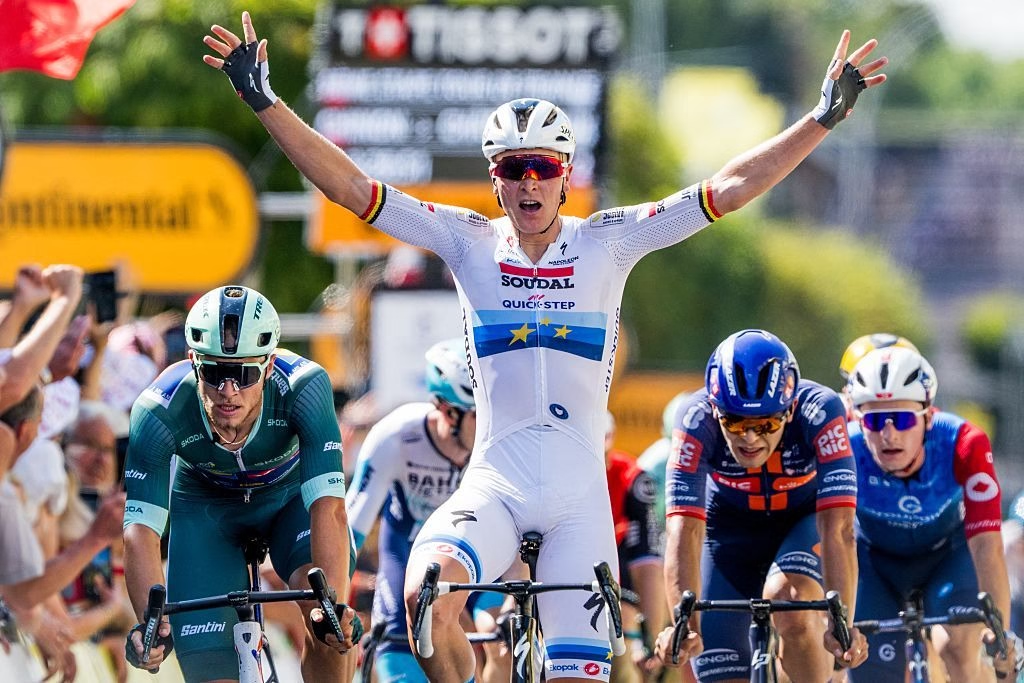 Photo Credit: Getty
2. Tim Merlier
Tim Merlier is the other obvious elite pure sprinter in the confirmed field. If the finish is flat, fast and controlled, he has the top-end speed to beat anyone. On raw finishing power alone, he belongs right beside Philipsen.
Soudal Quick-Step’s line-up gives him a good base too. Bert Van Lerberghe is a key part of the sprint support, while Jasper Stuyven gives the team extra strength on harder days and in the run-in. Merlier does not necessarily need a full long lead-out train if he is positioned well, but the Tour makes that positioning difficult. Every team wants the same piece of road.
Merlier’s route question is durability. The 2026 Tour is not designed only for pure sprinters. The race hits mountains early and includes several tiring blocks before the final week. Merlier’s best chances should come before the race becomes too attritional, especially stages 5, 7, 8, 11 and 12.
The green jersey may be more complicated. Merlier can win stages, but he may not be as naturally suited as Pedersen or Girmay to scoring on harder days. If he is chasing green, he needs to be consistent in every sprint stage and take big points when the pure bunch finishes arrive.
As a stage-win pick, he is one of the clearest names in the race. If he gets two clean opportunities, he could easily win one of them.
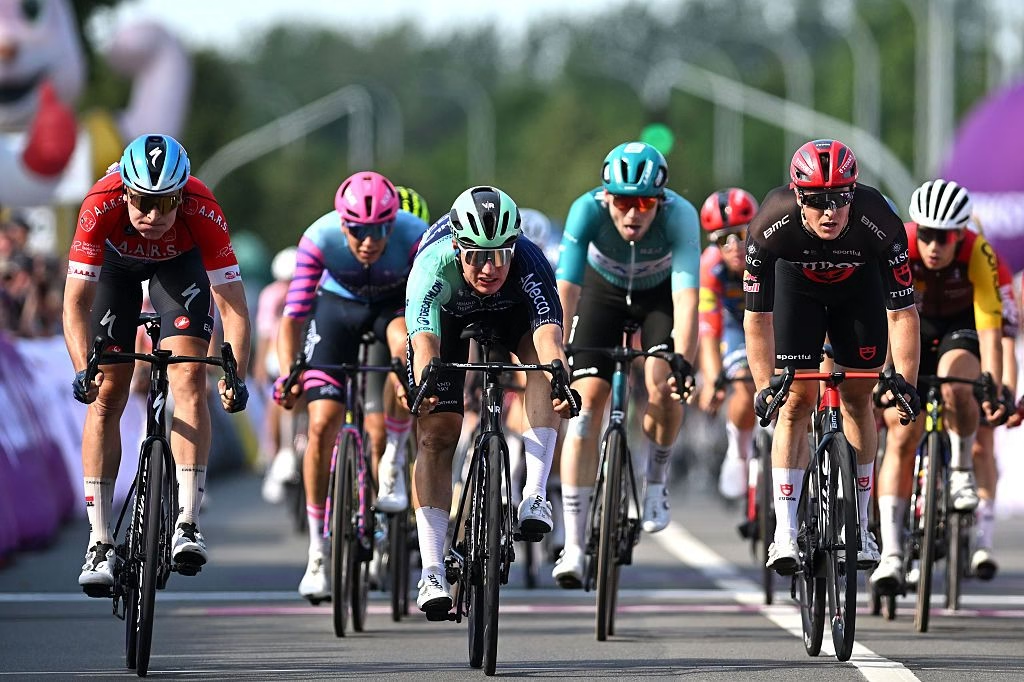
3. Olav Kooij
Olav Kooij is one of the most interesting sprinters on the confirmed list because he combines pure speed with the sense that the 2026 Tour could be a major stage in his Grand Tour development. With Decathlon CMA CGM Team, he should have a clear sprint role alongside the team’s wider GC interest in Paul Seixas.
Kooij’s acceleration is his key weapon. He is quick enough to win a straight sprint and polished enough to handle a high-pressure finish. He may not yet have the same Tour sprint authority as Philipsen or Merlier, but his ceiling is high.
The main question is support and race control. Decathlon CMA CGM have Daan Hoole and Tiesj Benoot listed, which helps in positioning and lead-out structure, but the team will also have wider ambitions. Seixas is an important GC project, and that could split priorities on some days. Kooij needs enough commitment on the flat stages to make his speed count.
The route gives him genuine chances. The flatter mid-race stages are obvious targets, and he should be one of the sprinters most capable of turning a slightly messy finish into a win. He may also be a more reliable green jersey scorer than some pure sprinters if he survives the harder stages well.
Kooij is not the biggest name in the Tour sprint field yet, but he is good enough to leave as one of its winners.
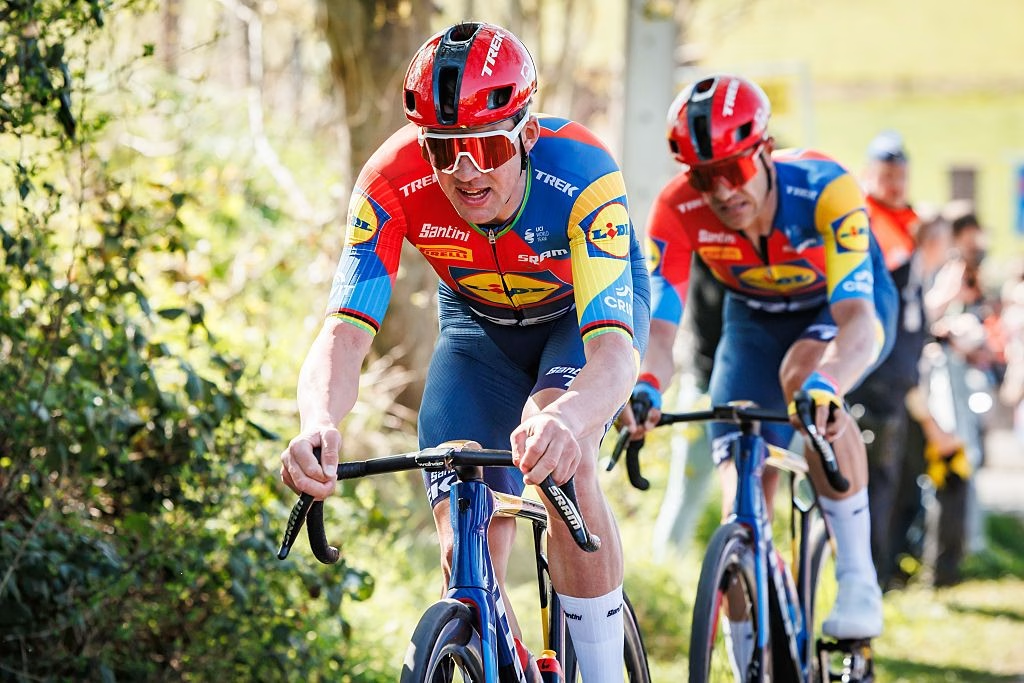 Photo Credit: Getty
4. Mads Pedersen
Mads Pedersen is not the fastest pure sprinter in the race, but he may be one of the most important riders in the points classification. The 2026 route gives him a strong platform because not every sprint stage is a pure bunch sprint, and not every points opportunity will suit the fastest men.
Pedersen’s advantage is durability. He can survive hard days, score from reduced groups, contest intermediate sprints and still finish quickly after climbs. That makes him a different kind of threat from Philipsen, Merlier and Kooij. He does not need the perfect flat sprint stage to matter.
Lidl-Trek also have a powerful line-up around him. Quinn Simmons, Mathias Vacek and Mattias Skjelmose give the team strength across different terrain, while Juan Ayuso changes the team’s GC dimension. That means Pedersen may not always have an entire squad dedicated to sprinting, but he has enough strong riders around him to survive the harder days and stay in the points game.
The best stages for Pedersen may be the ones where the pure sprinters are under pressure. Stage 17 to Voiron, the Paris stage with Montmartre, and any rolling sprint day where the pace has been hard could all move towards him. He can also win a conventional sprint if the finale is messy enough.
If the green jersey battle becomes about consistency rather than just top speed, Pedersen may be the most dangerous rider in the race.
For more on his Tour fit, see our Mads Pedersen at the Tour de France 2026.
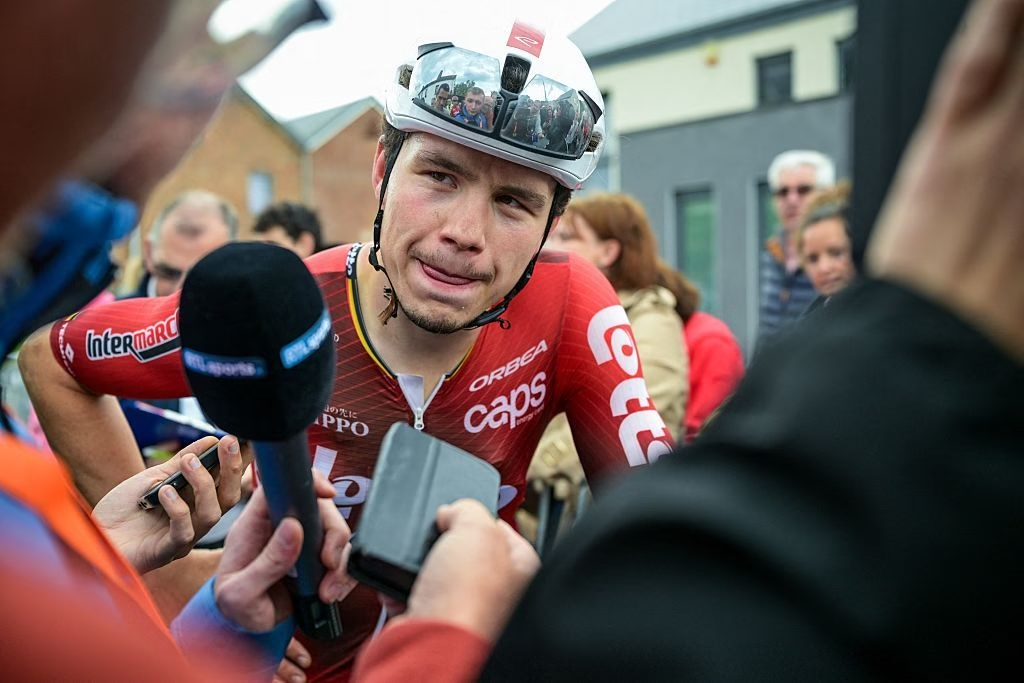 Photo Credit: Getty
5. Arnaud De Lie
Arnaud De Lie is a major sprint threat because he sits between categories. He has the power to win bunch sprints, but he is also tough enough to handle harder finales. That should make him one of the most dangerous riders on the less straightforward sprint stages.
His biggest strength is raw power. De Lie can launch hard, hold speed and survive contact in chaotic finishes. He is not always as polished as the very best Tour sprinters, but when he gets the timing right, he has the strength to beat almost anyone.
Lotto-Intermarché’s confirmed list gives him clear importance. Lennert Van Eetvelt gives the team a climbing and GC dimension, but De Lie should be their obvious sprint-stage leader. That clarity helps. A sprinter who knows the team is working for him can commit fully.
The route is not perfect, but it gives him chances. The cleanest flat stages will be hard because Philipsen, Merlier and Kooij may have sharper pure-sprint setups. But on stages where the final is rough, the run-in is physical, or the peloton is reduced by climbing, De Lie’s chances rise.
He is also a credible green jersey outsider. He may not be as consistent as Pedersen yet across every type of stage, but his mix of power and durability makes him more than just a stage-win sprinter.
For the stage types that should suit riders like De Lie, see our Tour de France 2026 sprint stages ranked.
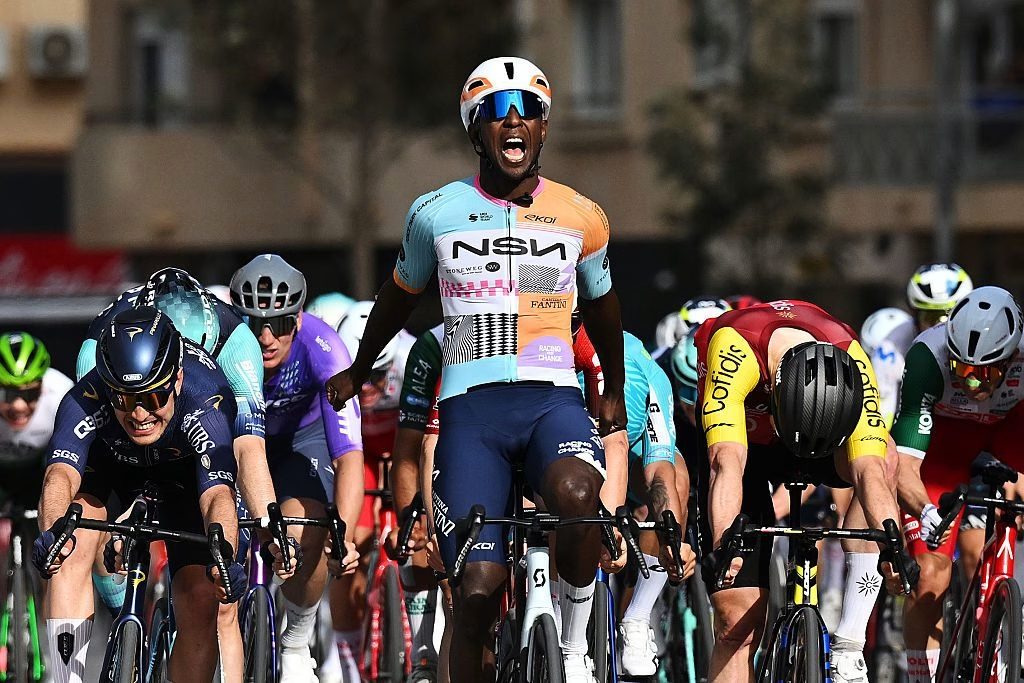 Photo Credit: Getty
6. Biniam Girmay
Biniam Girmay is one of the most important names in the sprint and points conversation because he can win when the race is too hard for some pure sprinters. On this confirmed list, he is one of the clearest reduced-bunch threats.
Girmay’s route fit is good. The Tour has several stages where durability matters: rolling flat days, hilly run-ins, fatigue-heavy third-week opportunities and the final Paris circuit. He may not be the fastest rider in a perfectly clean drag race against Philipsen or Merlier, but the Tour rarely offers perfect conditions.
NSN Cycling Team’s confirmed selection gives him useful support. Jake Stewart and Lewis Askey are both quick and durable, while Tom Van Asbroeck brings experience. That gives Girmay options in the run-in, although the team will need clarity. If Stewart and Askey are also chasing chances, the hierarchy has to be clean when the biggest sprint days arrive.
Girmay’s best route to success is consistency. He can score on stages where pure sprinters struggle and still contest flatter finishes if positioned well. That makes him a strong points-classification rider even if he does not win the most stages.
The key will be staying fresh through the mountains. If he reaches the second half of the Tour with good legs, stages 17 and 21 could suit him very well.
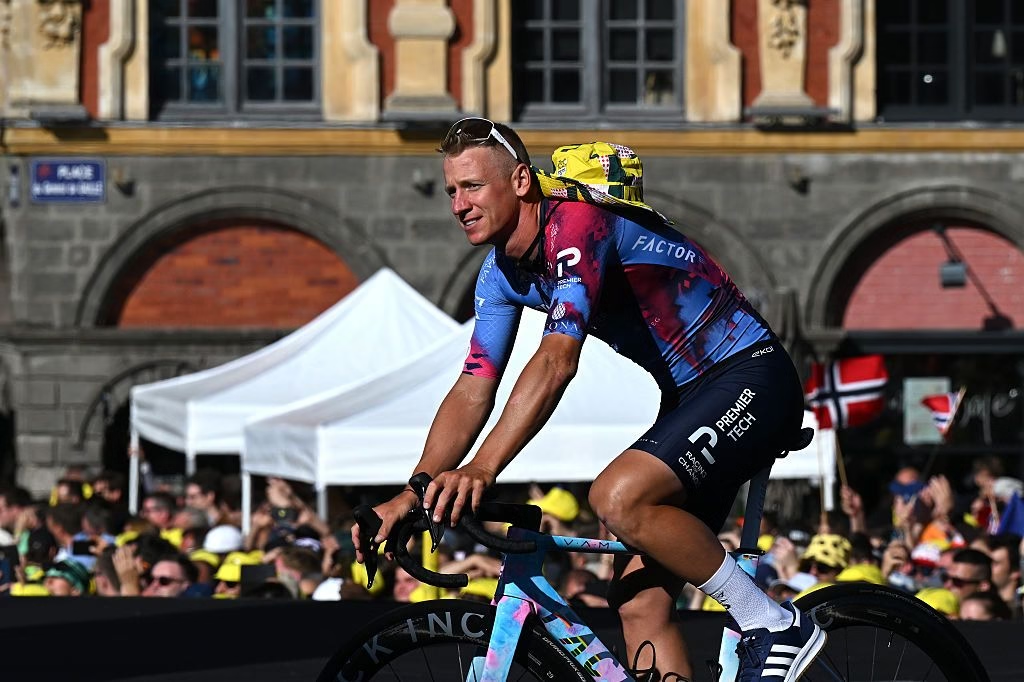 Photo Credit: Getty
7. Pascal Ackermann
Pascal Ackermann brings experience, power and Grand Tour sprint pedigree. He may not be the automatic favourite he once was in every bunch finish, but he remains a rider who can win if the timing, lead-out and positioning come together.
Team Jayco-AlUla have an interesting sprint balance. Ackermann is the more obvious pure sprinter, while Michael Matthews gives the team a harder-day finishing option. That can work well if the team clearly separates targets. Ackermann takes the flattest stages, Matthews takes the reduced or uphill finishes.
Ackermann’s biggest opportunity may come in the cleaner sprint stages where the pure fast men control the day. Stages 7, 8, 11 and 12 are the types of days where he should be involved. If the finish becomes messy, he has the experience to surf wheels and find a gap.
The challenge is whether he can consistently beat Philipsen, Merlier and Kooij. That is a high bar. Ackermann may not be the top favourite on many stages, but he is the sort of sprinter who only needs one moment of hesitation from the bigger names.
A stage win would not be a shock. Multiple stage wins would require a clear step above expectations.
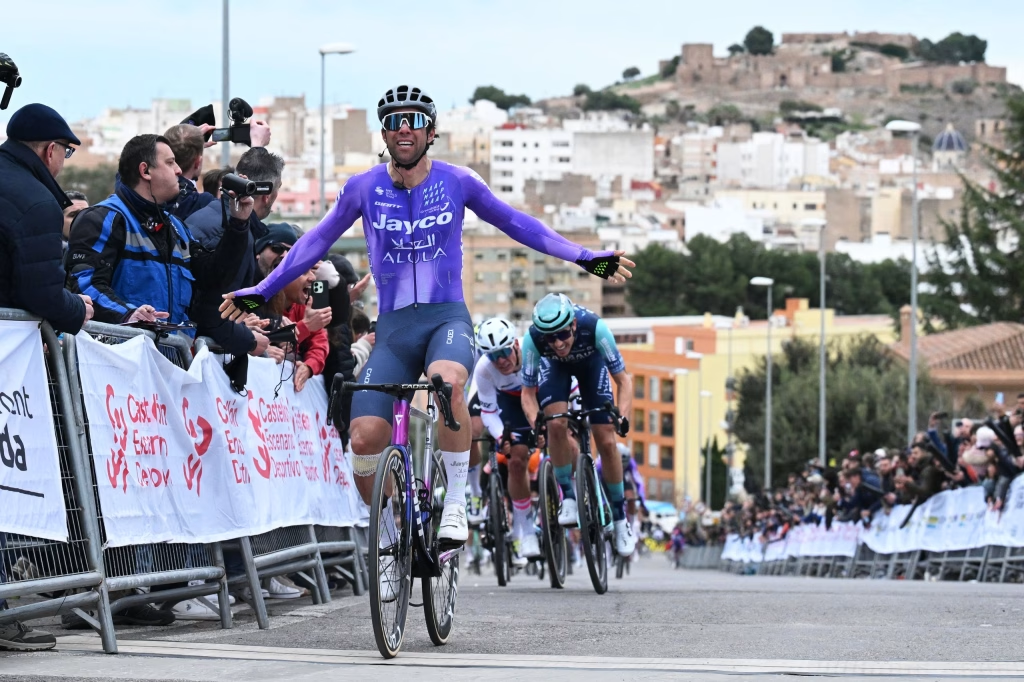 Photo Credit: Getty
8. Michael Matthews
Michael Matthews is not a pure bunch sprinter at this point, but he remains one of the most dangerous fast finishers on hard days. His value at the 2026 Tour is route-dependent, and there are several stages where that could work in his favour.
Matthews is at his best when the finish comes after climbing, stress and attrition. If the peloton is reduced, if the pure sprinters are missing, or if the final has enough difficulty to blunt the fastest riders, he becomes a serious contender.
That makes him especially interesting for stage 17 to Voiron and stage 21 in Paris. The Montmartre climbs on the final stage could turn the finish into something closer to a Classics-style sprint than a normal Champs-Élysées drag race. Matthews would be much more comfortable there than many pure sprinters.
The internal dynamic with Ackermann matters. Jayco have two different sprint options, and that can be a strength if managed well. Ackermann can chase the flat bunch finishes, Matthews can target the harder days. If the roles blur, the team risks losing clarity.
Matthews may not win a standard Tour bunch sprint, but he absolutely belongs in the wider sprint guide because several 2026 finishes could move towards his strengths.
For more on the harder opportunities across the route, see our Tour de France 2026 route: best days for breakaways and Tour de France 2026 stage hunters to watch.
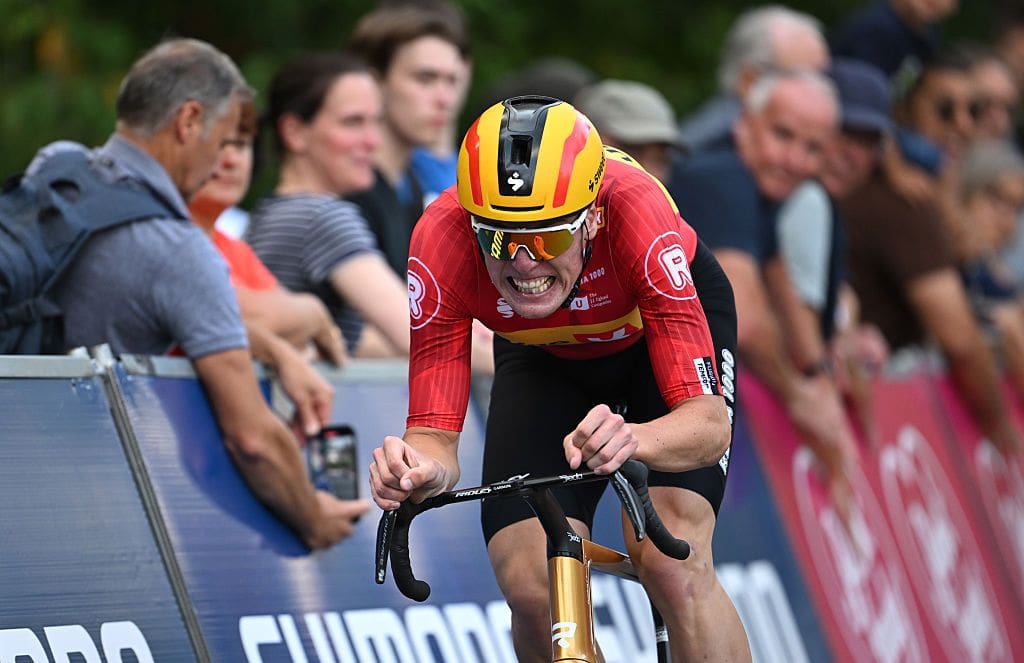 Photo Credit: Getty
9. Søren Wærenskjold
Søren Wærenskjold gives Uno-X Mobility a powerful finishing option. He is not just a lead-out rider or a rouleur. He has the speed, strength and time-trial power to become a genuine contender on the right Tour stage.
The challenge is opportunity. Uno-X arrive with Tobias Halland Johannessen leading the GC project and Magnus Cort chasing stage chances in his final season. Wærenskjold may therefore need to balance lead-out work, team duties and his own sprint opportunities.
On the right day, he is dangerous. He is powerful enough for flatter finishes, but also strong enough to survive stages where the race has been hard. That matters on a route where the sprint days are not all identical. He may be better suited to messy, power-based finishes than a perfectly organised pure bunch sprint.
His ranking here reflects upside and versatility rather than guaranteed sprint hierarchy. Against Philipsen, Merlier and Kooij, he may need a disrupted finish or a reduced group. But those situations happen at the Tour, especially late in the race.
Wærenskjold is one of the best outside picks for a surprise sprint-stage result.
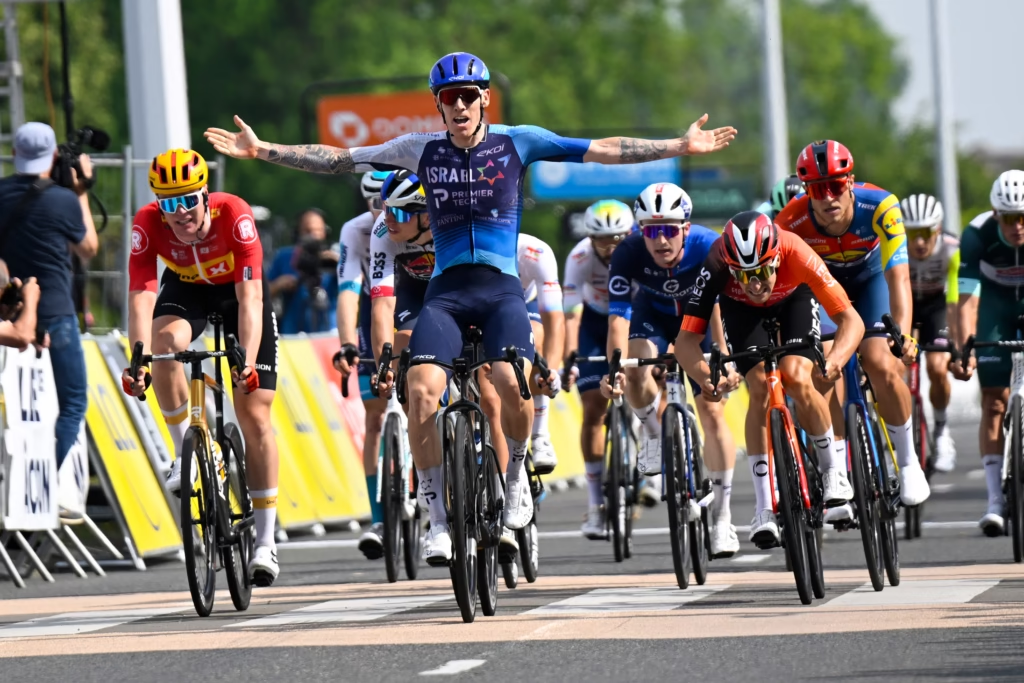 Photo Credit: Sprint Cycling Agency
10. Jake Stewart
Jake Stewart is a useful name in this sprint field because he can finish quickly after hard racing. He is not the main sprint reference for NSN Cycling Team if Girmay is protected, but he gives the team another option and valuable support in the final kilometres.
Stewart’s best chance would come on a stage where Girmay is not the obvious choice or where the race splits enough to create a reduced finish. He has the durability to survive difficult terrain and the speed to contest from smaller groups.
The challenge is hierarchy. With Girmay in the same squad, Stewart is more likely to be part of the support structure than the primary sprinter. Lewis Askey also adds another fast, durable option. That gives NSN depth, but it also means sprint roles need to be clear.
Stewart’s value may be highest in the stages that are not clean bunch sprints. If the race gets messy, if crosswinds or climbs split the field, or if Girmay is not in position, Stewart can become more than a helper.
He is not a top-tier Tour sprint favourite, but he is worth including because his route fit is better than many pure fast men who might struggle on harder days.
For more on Stewart and the wider British group, see our best British riders to watch at the Tour de France 2026.
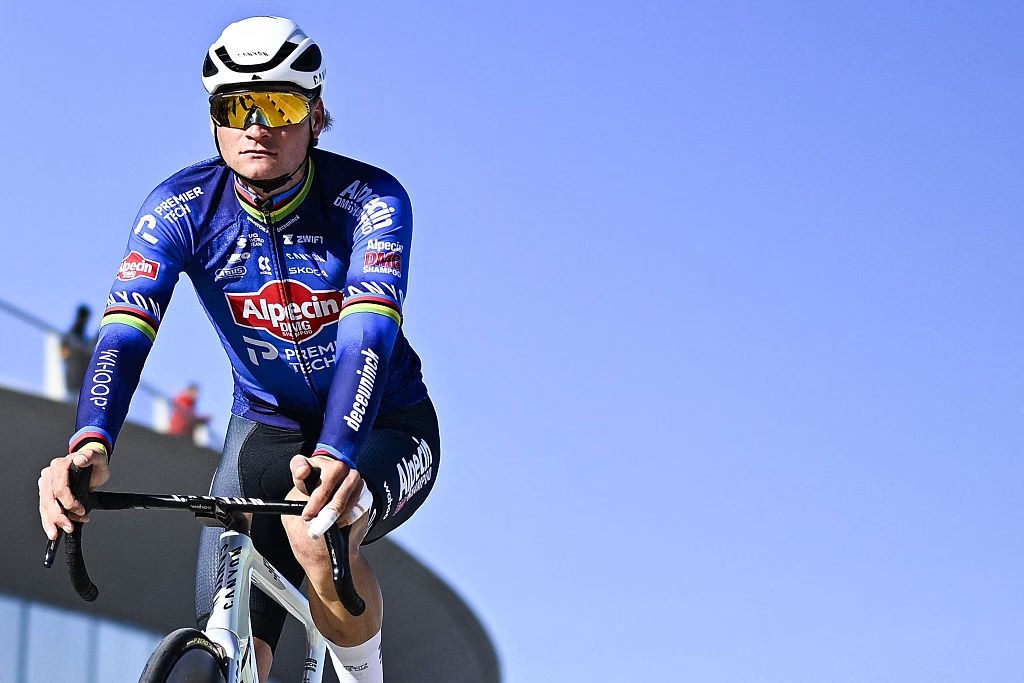 Photo Credit: Getty
11. Mathieu van der Poel
Mathieu van der Poel is not a sprinter in the conventional Tour de France sense, but he has to be included because he changes sprint stages for Alpecin-Premier Tech. He is Philipsen’s most important tactical weapon and a stage threat in his own right if the finish becomes too hard or chaotic for the pure sprinters.
Van der Poel’s main sprint value is lead-out quality. When he takes Philipsen into position, he can decide the final kilometre before the sprint properly starts. His power, timing and fearlessness make him one of the best lead-out riders in the peloton when he commits to that role.
He can also win from reduced groups. Stage 21 in Paris, with repeated Montmartre climbs, looks like the kind of day where he could be more than a lead-out rider. If the final becomes aggressive and less controlled, Van der Poel immediately becomes one of the most dangerous riders in the race.
The question is how Alpecin balance his ambitions with Philipsen’s sprint chances. On the flattest days, he is likely to be the launchpad. On the harder days, he may become the finisher.
That dual role is exactly why Alpecin have the strongest sprint structure in the race.
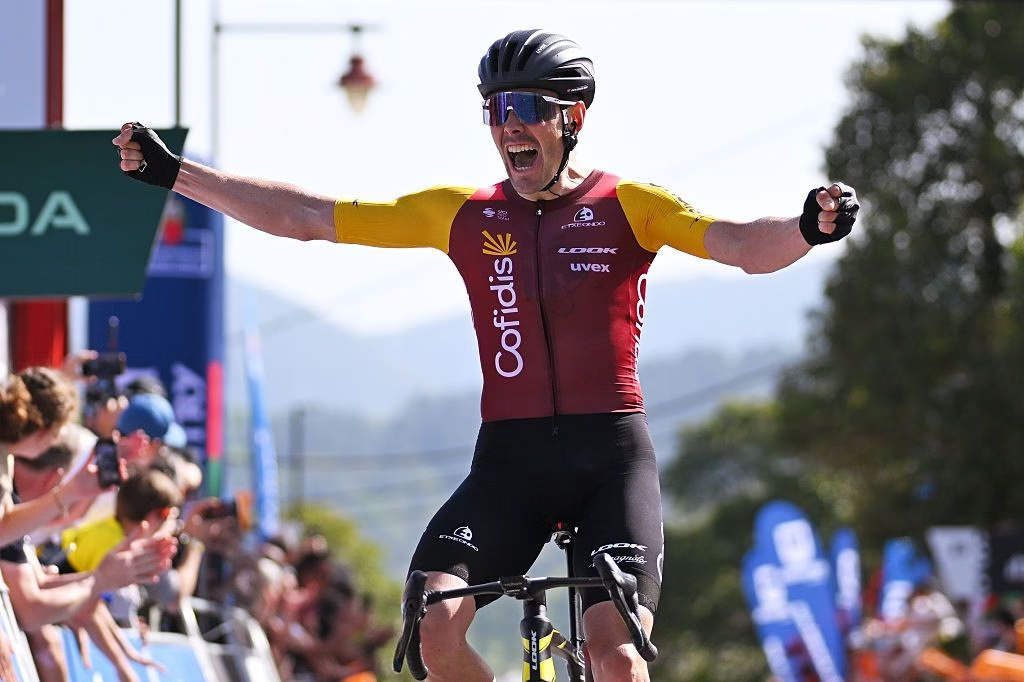 Photo Credit: Getty
12. Alex Aranburu
Alex Aranburu is a reduced-bunch finisher rather than a pure sprinter, but the 2026 Tour gives riders like him a reason to believe. Cofidis do not have a top-tier pure sprinter on the confirmed list, so Aranburu should be one of their best options on selective sprint days.
His strength is finishing after difficulty. If a stage has late climbs, a technical run-in or a reduced group, Aranburu can be dangerous. He is not likely to beat Philipsen or Merlier in a flat drag race, but that is not the only kind of sprint this Tour may produce.
The stages that suit him are the awkward ones: hilly days where the break might come back, sprint stages where the pure fast men are tired, or finales where positioning and punch matter more than a full lead-out.
Cofidis will need to be opportunistic. They are unlikely to control a full stage for Aranburu, so his chances may come from reading the race, following the right move and using his finish from a smaller group.
He is an outsider, but a credible one on the harder sprint days.
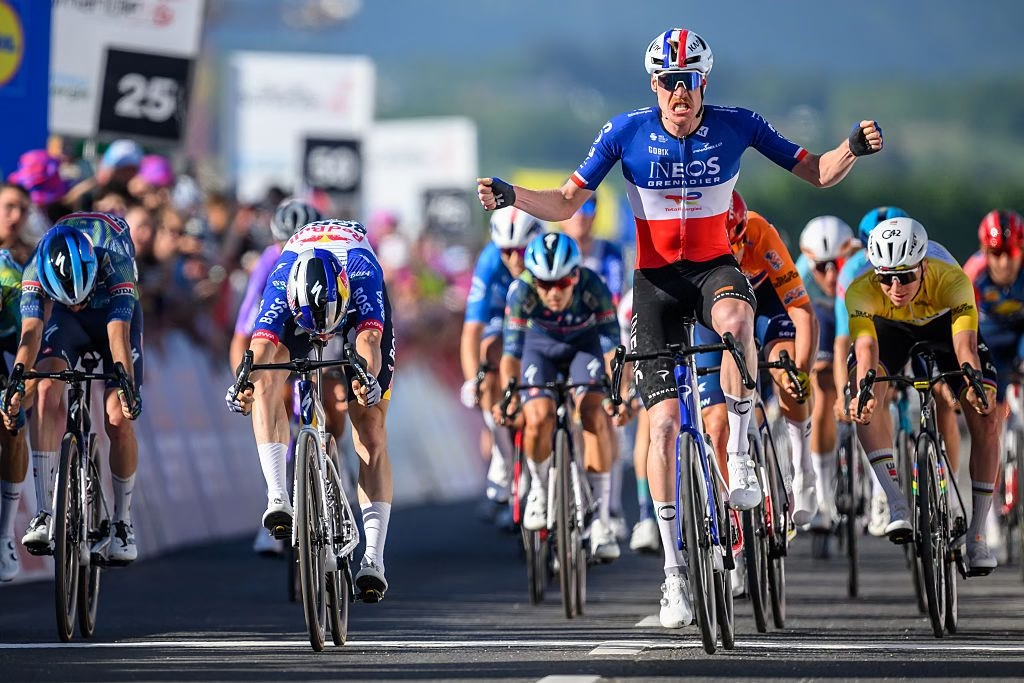 Photo Credit: Getty
13. Dorian Godon
Dorian Godon gives Netcompany INEOS a fast finish option on days where the race is too difficult for the pure sprinters. He is not a conventional Tour sprint favourite, but he is a strong reduced-bunch rider with the kind of engine that suits awkward terrain.
INEOS’ main Tour priorities are likely to sit around Carlos Rodríguez, Kévin Vauquelin and broader GC or mountain-stage ambitions. That means Godon may not have a full sprint train, but he may get chances on days where the team is not controlling for GC.
His best opportunities are selective. If a stage becomes too hard for Philipsen, Merlier or Kooij, but still ends in a sprint from a reduced bunch, Godon can be involved. He is also useful on transition days where INEOS want a rider in the move.
Godon’s issue is not ability, but route precision. He needs the right kind of stage. Too flat, and the pure sprinters are faster. Too mountainous, and the climbers take over. But in the middle ground, he has value.
He is a long-shot stage winner rather than a daily sprint contender.
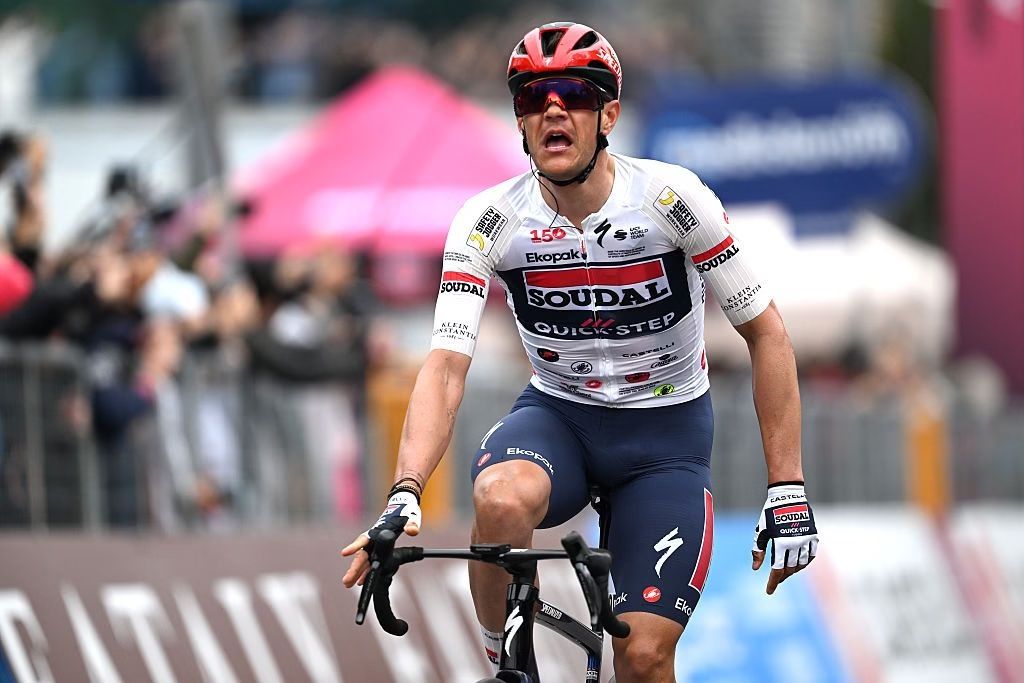 Photo Credit: Getty
14. Jasper Stuyven
Jasper Stuyven is another rider who belongs in the wider sprint conversation because he can finish fast after hard racing. At Soudal Quick-Step, his main role may be linked to Merlier support and broader team strength, but he is too good to ignore on reduced-bunch days.
Stuyven’s best sprint chances come when the race is attritional. He can handle distance, positioning and harder roads. He is not going to be the team’s first option in a pure bunch sprint with Merlier present, but on a day where Merlier is dropped or the race breaks apart, Stuyven becomes useful.
The Paris stage could be interesting for a rider like him. Montmartre changes the final stage dynamic, and a Classics-type rider with a fast finish could find an opening if the sprint teams lose control.
Stuyven’s value may also be indirect. He strengthens Merlier’s support on the flat days, gives Soudal Quick-Step another card on the harder days and makes the team less one-dimensional.
He is unlikely to dominate the sprint headlines, but he could matter in the more tactical finishes.
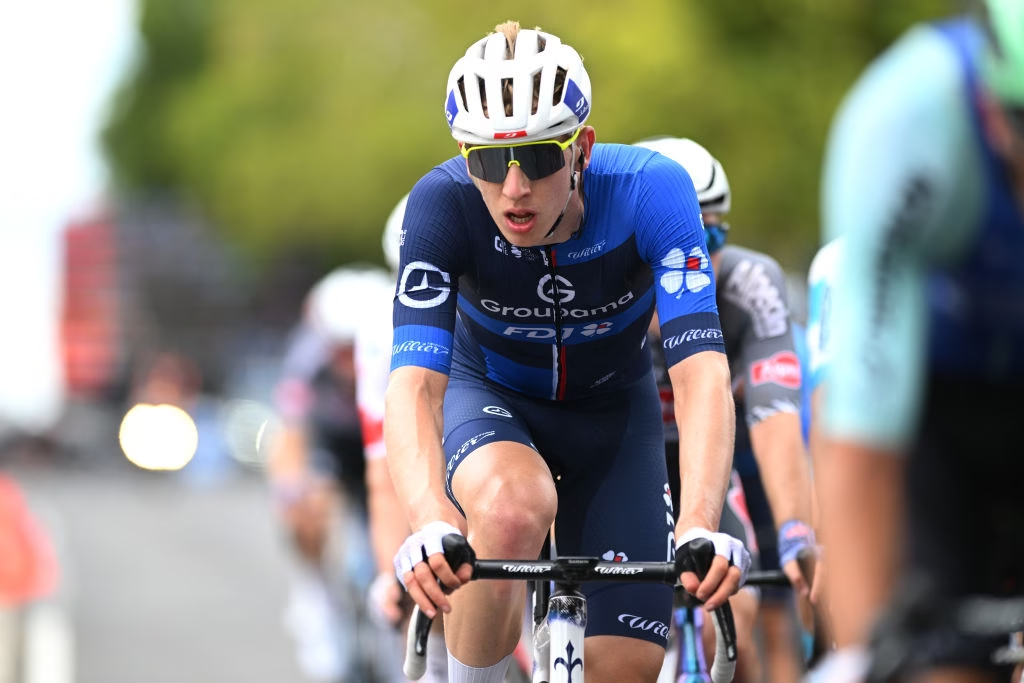 Photo Credit: Getty
15. Lewis Askey
Lewis Askey is not one of the headline sprinters of the race, but he is a fast and durable rider in a team that should be active across multiple sprint and breakaway scenarios. With Girmay, Stewart and Van Asbroeck also listed, NSN Cycling Team have a useful group of riders for fast finishes and hard transitional days.
Askey’s own chances depend on freedom. If Girmay is the clear leader, Askey may work heavily in support. But if the race splits, if a smaller group goes clear, or if the team wants options across different stage types, he can become more prominent.
His best fit is not a pure bunch sprint against the fastest names. It is the kind of Tour day where the pace is high, the peloton is reduced and the finish is less predictable. That is where a rider with his combination of speed and strength can get involved.
He is included here because the confirmed list narrows the sprint field, and because his team’s sprint depth should give him chances to influence the race even if he is not the protected finisher every day.
For more on the British contingent, see our best British riders to watch at the Tour de France 2026.
Best pure sprinter at the Tour de France 2026
The best pure sprinter in the confirmed field is Jasper Philipsen. Tim Merlier is close, and on top speed alone the gap may be very small, but Philipsen’s Tour record, positioning, lead-out strength and Van der Poel support make him the strongest overall sprint package.
Merlier may be just as dangerous if he gets a clean launch. Kooij is the rising threat who could leave the race with a major breakthrough. De Lie has the power to beat anyone on the right day. But Philipsen looks like the safest stage-win pick across the available bunch-sprint opportunities.
The main thing that could change this is fatigue. If Philipsen survives the mountains poorly or Alpecin focus more heavily on Van der Poel later in the race, the balance could shift. But before the race starts, Philipsen is the clearest number one.
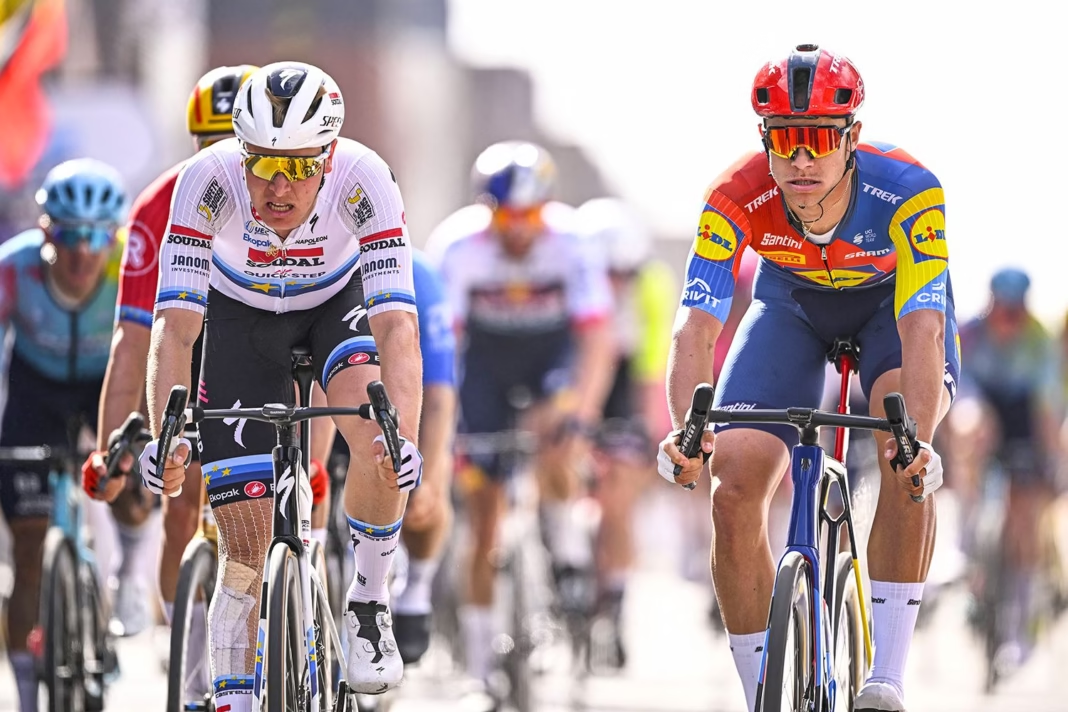
Best green jersey contenders from the confirmed list
The green jersey battle is more open than the pure sprint ranking because points do not only reward flat-stage wins. Intermediate sprints, harder days and consistency matter.
| Rank | Rider | Green jersey profile |
|---|---|---|
| 1 | Mads Pedersen | Best all-round points profile |
| 2 | Jasper Philipsen | Most likely to win multiple bunch sprints |
| 3 | Biniam Girmay | Durable, consistent and strong on harder finishes |
| 4 | Arnaud De Lie | Powerful and capable across different sprint types |
| 5 | Tim Merlier | Big points if he wins flat stages |
| 6 | Olav Kooij | Strong stage-win threat, consistency question |
| 7 | Michael Matthews | Dangerous if harder stages pay well |
| 8 | Mathieu van der Poel | Could score heavily if given freedom |
Pedersen may be the most complete green jersey candidate from this confirmed list because he can score on more types of stages. Philipsen and Merlier may win more pure sprints, but Pedersen can collect points when the race is too hard for them. Girmay sits in a similar space, especially if NSN Cycling Team fully commit to his points campaign.
For the classification context, see our Tour de France 2026 jerseys explained and Tour de France 2026 sprinters guide.
Best lead-out structures
The best sprint train is not only about the number of riders. It is about trust, timing and having the right final kilometre pieces.
| Team | Main sprinter | Key support from confirmed list | Verdict |
|---|---|---|---|
| Alpecin-Premier Tech | Jasper Philipsen | Mathieu van der Poel, Jonas Rickaert | Best lead-out structure |
| Soudal Quick-Step | Tim Merlier | Bert Van Lerberghe, Jasper Stuyven | Strong pure sprint support |
| Decathlon CMA CGM Team | Olav Kooij | Daan Hoole, Tiesj Benoot | Useful but split team priorities |
| NSN Cycling Team | Biniam Girmay | Jake Stewart, Lewis Askey, Tom Van Asbroeck | Strong depth and durability |
| Team Jayco-AlUla | Pascal Ackermann / Michael Matthews | Luke Durbridge, Kelland O’Brien, Mauro Schmid | Flexible rather than pure lead-out |
| Uno-X Mobility | Søren Wærenskjold | Magnus Cort, Anders Skaarseth, Jonas Abrahamsen | Powerful but mixed objectives |
Alpecin-Premier Tech stand out because Philipsen and Van der Poel are a proven combination. Soudal Quick-Step should also be strong around Merlier. NSN Cycling Team are particularly interesting because they have multiple fast riders who can survive hard stages.
For wider squad context, see our full start list for Tour de France 2026 and Tour de France 2026 team-by-team guide.
Best sprint stages for the confirmed riders
The key sprint stages are not all the same. Some should suit the pure speed riders, while others could open the door for tougher finishers.
| Stage | Finish | Best-suited riders |
|---|---|---|
| Stage 5 | Pau | Philipsen, Merlier, Kooij, De Lie |
| Stage 7 | Bordeaux | Philipsen, Merlier, Kooij, Ackermann |
| Stage 8 | Bergerac | Philipsen, Merlier, Kooij, De Lie |
| Stage 11 | Nevers | Philipsen, Merlier, Kooij, Ackermann |
| Stage 12 | Châlons-sur-Saône | Philipsen, Merlier, Kooij, De Lie |
| Stage 17 | Voiron | Pedersen, Girmay, Matthews, De Lie, Van der Poel |
| Stage 21 | Paris Champs-Élysées | Pedersen, Girmay, Matthews, Van der Poel, Philipsen |
The purest bunch sprints should favour Philipsen, Merlier and Kooij. The harder sprint days should favour Pedersen, Girmay, De Lie, Matthews and Van der Poel. That split is what makes the 2026 sprint field interesting.
For the full stage breakdown, see our Tour de France 2026 sprint stages ranked and Tour de France 2026 route: best days for sprinters.
Riders who are fast but not pure sprinters
Several confirmed riders are fast enough to matter, even if they are not classic bunch sprinters.
Mathieu van der Poel is the most obvious. He can lead out Philipsen, attack late or win from a reduced group. Michael Matthews has built much of his career around hard sprint finishes. Alex Aranburu, Dorian Godon, Jasper Stuyven and Matteo Trentin all sit in that same wider category of riders who need a selective day rather than a full bunch sprint.
Maxim Van Gils also belongs in the uphill or punchy finisher conversation, although he is more likely to be dangerous on hilly stages than in a flat sprint. Filippo Ganna is not a sprinter, but he can be relevant in powerful reduced groups, late attacks or fast finishes where the race has already split.
These riders are unlikely to beat the best pure sprinters in a flat drag race, but the Tour creates enough unusual finishes for them to matter. The harder the stage, the more their chances rise.
For more on the stages where the race can break open, see our Tour de France 2026 route: best days for breakaways and Tour de France 2026 breakaway stages ranked.
Final ranking: best sprinters at the Tour de France 2026
| Rank | Rider | Verdict |
|---|---|---|
| 1 | Jasper Philipsen | Best overall sprint package |
| 2 | Tim Merlier | Elite pure sprinter and stage-win favourite |
| 3 | Olav Kooij | Major sprint talent with real Tour opportunity |
| 4 | Mads Pedersen | Best hard-day sprinter and green jersey threat |
| 5 | Arnaud De Lie | Powerful finisher with route versatility |
| 6 | Biniam Girmay | Durable fast man and points contender |
| 7 | Pascal Ackermann | Experienced bunch sprinter |
| 8 | Michael Matthews | Reduced-bunch specialist |
| 9 | Søren Wærenskjold | Powerful outside sprint pick |
| 10 | Jake Stewart | Fast support rider and hard-day option |
| 11 | Mathieu van der Poel | Lead-out weapon and selective-stage finisher |
| 12 | Alex Aranburu | Punchy reduced-bunch option |
| 13 | Dorian Godon | Strong finisher on hard days |
| 14 | Jasper Stuyven | Classics-type sprint option |
| 15 | Lewis Askey | Durable fast finisher with support value |
Final verdict: who is the best sprinter at the Tour de France 2026?
Jasper Philipsen is the best sprinter at the Tour de France 2026 from the confirmed start-list names. He has the top speed, Tour experience, lead-out support and tactical sharpness to win more than one stage if the bunch sprints come together.
Tim Merlier is the clearest direct rival in pure speed. Olav Kooij is the rider with the biggest breakthrough potential. Mads Pedersen may be the strongest green jersey candidate because the route gives him more scoring routes than the flat stages alone. Arnaud De Lie and Biniam Girmay sit just behind as powerful, durable sprinters who could benefit if the race becomes harder than the pure fast men want.
The 2026 Tour will not be decided only by clean bunch sprints. That is why the sprint hierarchy is more layered than usual. Philipsen and Merlier may be the fastest, but Pedersen, Girmay, Matthews and Van der Poel could become just as important when the route starts to bite.
For more Tour de France 2026 coverage, visit our Tour de France hub, Tour de France 2026 full route guide and how to watch Tour de France 2026 in the UK.