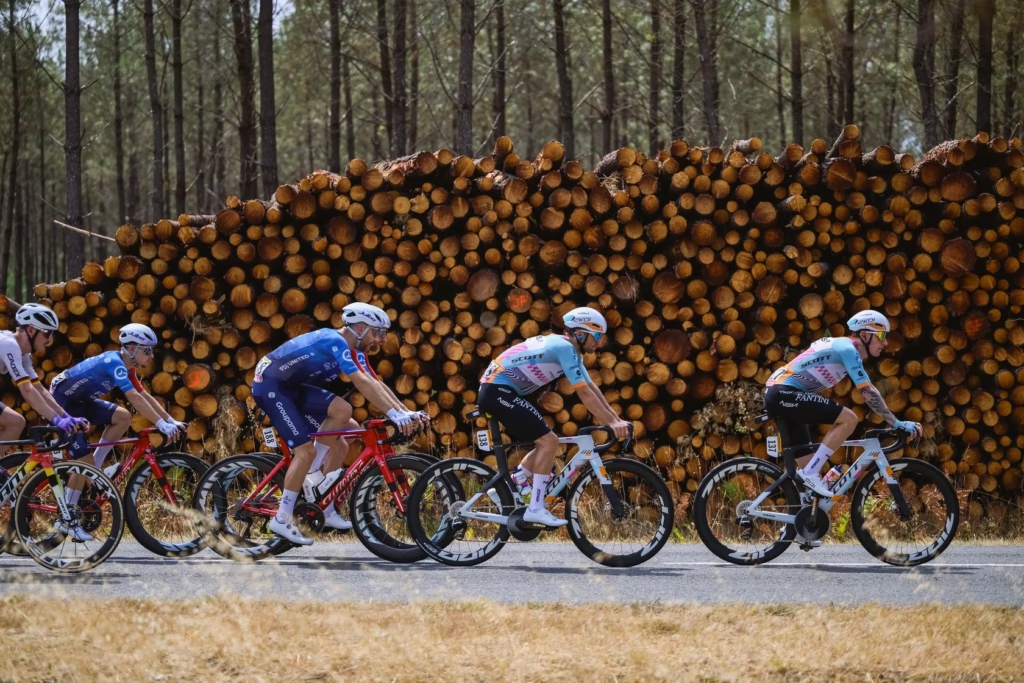
Stage 8 of the Tour de France 2026 gives the sprinters another major opportunity, but this is not quite a repeat of the road to Bordeaux.
The race heads 180.4km from Périgueux to Bergerac on Saturday 11 July, with an official flat classification and 1,150m of climbing. There are two category 4 climbs, the Côte de Domme and the Côte du Buisson-de-Cadouin, but neither should be hard enough to stop the sprint teams controlling the day if they commit properly.
This is the second of two back-to-back flat stages after the first Pyrenean mountain test. Stage 7 to Bordeaux gave the fast men a chance to respond after the Tourmalet. Stage 8 gives them another one before the race turns hilly again on stage 9 from Malemort to Ussel.
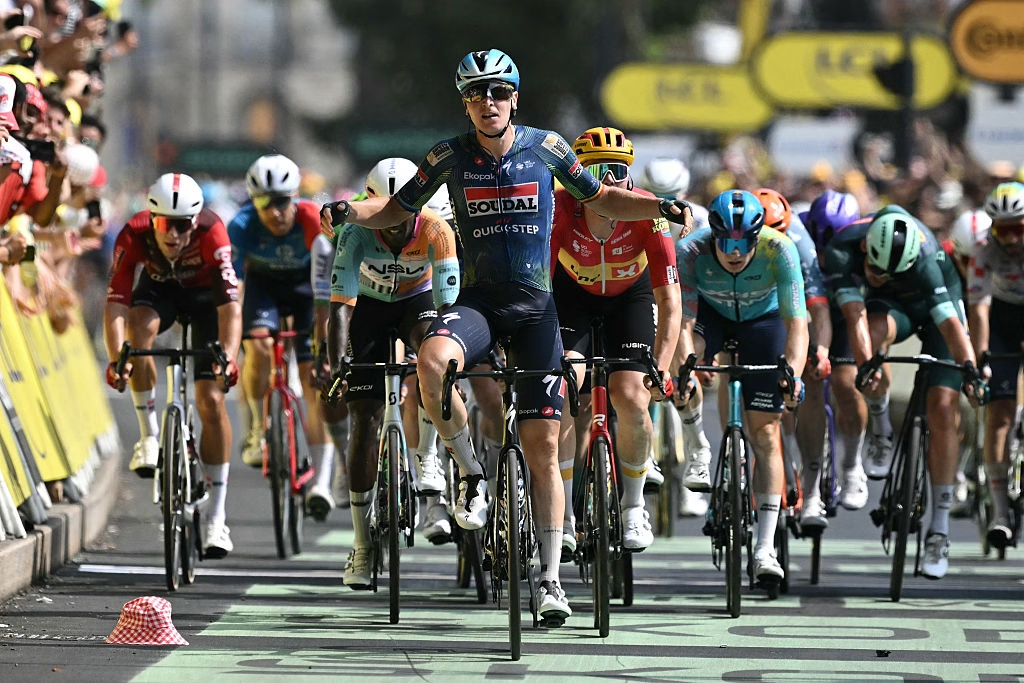
The most likely outcome is a bunch sprint in Bergerac. The question is whether it is a clean sprint, or whether fatigue, heat, two late climbs and the pressure of another green jersey day make it more complicated than the profile suggests.
The wider race structure is covered in our Tour de France 2026 full route guide, while stage 8 also fits neatly into our guide to the Tour de France 2026 route’s best days for sprinters.
Quick answer: what is Tour de France 2026 stage 8?
Tour de France 2026 stage 8 is a 180.4km flat stage from Périgueux to Bergerac on Saturday 11 July. It has 1,150m of elevation gain, two category 4 climbs and an intermediate sprint at Saint-Cyprien. The neutralised start is at 13:15 CEST / 12:15 BST, with the finish expected between 17:20 and 17:43 CEST, or 16:20 and 16:43 BST.
| Stage detail | Information |
|---|---|
| Stage | Stage 8 |
| Date | Saturday 11 July 2026 |
| Route | Périgueux to Bergerac |
| Distance | 180.4km |
| Stage type | Flat |
| Elevation gain | 1,150m |
| Categorised climbs | Côte de Domme, Côte du Buisson-de-Cadouin |
| Intermediate sprint | Saint-Cyprien |
| Neutralised start | 13:15 CEST / 12:15 BST |
| Expected finish | 17:20-17:43 CEST / 16:20-16:43 BST |
| Likely winner type | Sprinter |
Stage 8 route: Périgueux to Bergerac
The stage starts in Périgueux and heads through Dordogne, taking a long scenic line rather than a direct run to Bergerac. The route passes through Montignac-Lascaux, Les Eyzies, Sarlat-la-Canéda, Domme, La Roque-Gageac, Beynac-et-Cazenac, Saint-Cyprien, Le Buisson-de-Cadouin, Lalinde and Mouleydier before the finish in Bergerac.
That makes it a stage with more texture than a featureless flat procession. The scenery will be strong, the roads will roll in places, and the second half includes just enough climbing to keep the sprint teams honest.
Even so, this is still listed as a flat stage. The two categorised climbs are both category 4 and offer only one mountains point each. That points towards a bunch sprint rather than a serious breakaway day.
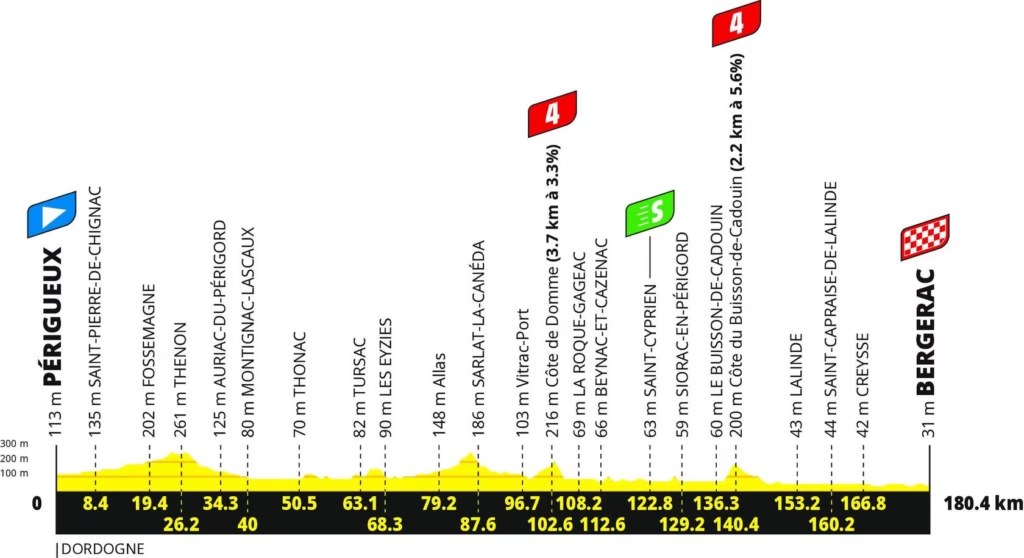
Tour de France 2026 stage 8 profile
The official numbers make the stage look manageable, but not entirely empty.
| Feature | Detail |
|---|---|
| Distance | 180.4km |
| Elevation gain | 1,150m |
| Côte de Domme | 3.7km at 3.3%, category 4 |
| Côte du Buisson-de-Cadouin | 2.2km at 5.3%, category 4 |
| Intermediate sprint | Saint-Cyprien |
| Finish | Bergerac |
| Finish points | 70 points for the stage winner |
| Time bonuses | 10, 6 and 4 seconds |
The Côte de Domme comes at kilometre 102.6, around 77.8km from the finish. The Côte du Buisson-de-Cadouin comes at kilometre 140.4, around 40km from the line. The second climb is short, but at 5.3% it could briefly stretch the bunch if the pace is high.
That does not make the stage selective enough for climbers. It does, however, make the finale less straightforward than a pan-flat motorway run-in.
Key stage 8 timings
| Point | Distance to finish | Fast schedule | Slow schedule | UK time window |
|---|---|---|---|---|
| Périgueux neutralised start | 180.4km | 13:15 CEST | 13:15 CEST | 12:15 BST |
| Périgueux route proper | 180.4km | 13:25 CEST | 13:25 CEST | 12:25 BST |
| Montignac-Lascaux | 140.4km | 14:17 CEST | 14:22 CEST | 13:17-13:22 BST |
| Les Eyzies | 112.1km | 14:54 CEST | 15:02 CEST | 13:54-14:02 BST |
| Côte de Domme | 77.8km | 15:39 CEST | 15:52 CEST | 14:39-14:52 BST |
| Saint-Cyprien sprint | 57.6km | 16:05 CEST | 16:20 CEST | 15:05-15:20 BST |
| Côte du Buisson-de-Cadouin | 40km | 16:28 CEST | 16:46 CEST | 15:28-15:46 BST |
| Bergerac entry | 4.2km | 17:15 CEST | 17:37 CEST | 16:15-16:37 BST |
| Bergerac finish | 0km | 17:20 CEST | 17:43 CEST | 16:20-16:43 BST |
The official time schedule is based on average speeds of 46km/h, 44km/h and 42km/h, which gives a 23-minute finish window in Bergerac.
For UK viewers, the essential viewing window is from around 15:00 BST. That should catch the intermediate sprint, the second category 4 climb and the final 40km into Bergerac.
For comparison with the previous day, see our Tour de France 2026 stage 7 preview and stage 7 live viewing and start time update.
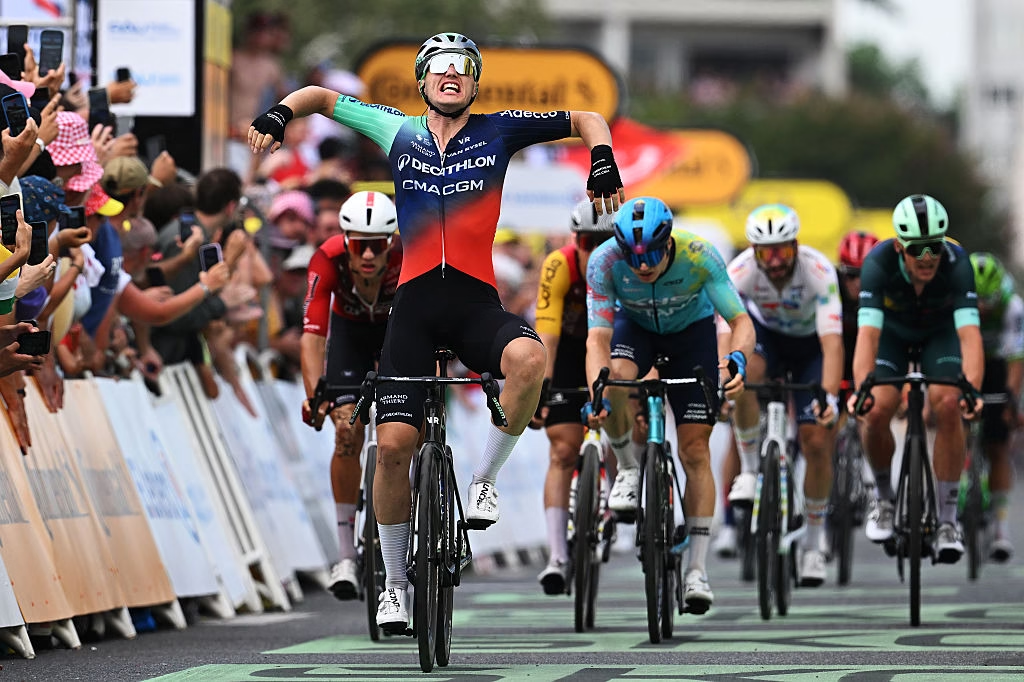 Photo Credit: Getty
Why stage 8 should be a sprint
This should be a sprint because too many teams have too much to gain.
The route is flat enough for the fast men. The finish awards 70 points to the winner, making it a major green jersey day. The intermediate sprint at Saint-Cyprien offers another 25 points to the first rider across the line.
That means teams with sprinters cannot afford to let the stage drift. If they do, they risk losing both a stage win and a major points haul.
The strongest sprint squads should therefore be expected to share the chase. A small breakaway may go early, but it will need either unusual hesitation behind or a tactical split in the bunch to survive.
The profile favours the peloton. The points structure favours the peloton. The timing before a harder stage 9 also favours the peloton. All roads point towards Bergerac being another sprint finish.
The stage also belongs in the same broad category as our Tour de France 2026 sprint stages ranked guide, even if the two late climbs make it slightly more awkward than the flattest days.
Why it may still be more awkward than Bordeaux
Stage 8 is a sprint stage, but it is not identical to stage 7.
Bordeaux was the clearer prestige sprint. Bergerac has more rolling terrain in the second half, two category 4 climbs, and a finish coming after another long day in heat and fatigue. The sprinters have already had to survive the Pyrenean stage to Gavarnie-Gèdre and then race again into Bordeaux. Stage 8 asks them to back up again.
That matters for lead-outs. The headline sprinter may still have enough speed, but the men around him need to chase, position, protect and launch after several hard days in a row. If one lead-out rider is blunt, the whole sprint can change.
This is why the route should not be dismissed as automatic. The sprinters should get their chance, but the team that wins may be the one with the freshest full sprint unit, not simply the fastest sprinter in isolation.
Our explainer on why Tour de France sprinters struggle the day after a mountain stage covers that recovery problem in more detail.
Côte de Domme: the first late marker
The Côte de Domme is the first categorised climb of the stage. It is 3.7km at 3.3% and comes at kilometre 102.6, roughly 77.8km from the finish.
It should not drop the main sprinters. It is too far from the finish and too gentle to be decisive under normal conditions. What it can do is mark the point where the race becomes more active.
The breakaway will want to use it to keep the bunch honest. The sprint teams will want to keep the gap under control without wasting too much energy. The green jersey teams will already be thinking about the intermediate sprint at Saint-Cyprien, which comes around 20km later.
Domme is not the climb that decides the stage. It is the climb that starts the second half of the race.
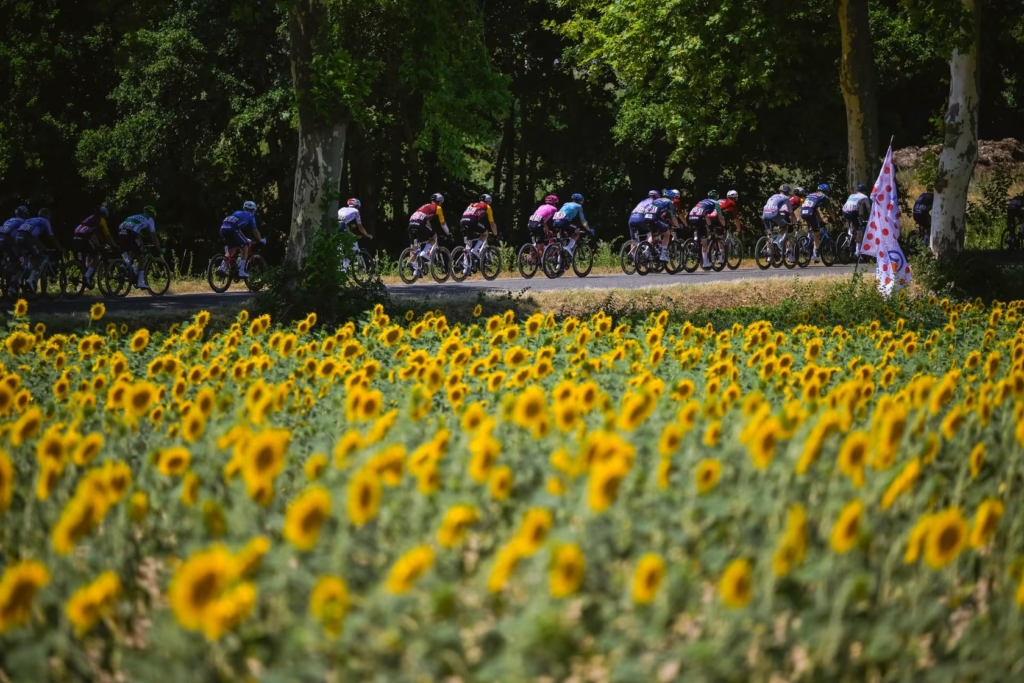
Saint-Cyprien intermediate sprint
The intermediate sprint comes at Saint-Cyprien, 57.6km from the finish. It is expected between 16:05 and 16:20 CEST, which is 15:05 to 15:20 BST.
This should be one of the key moments of the day. The first rider scores 25 points, then the points run down to 15th place. The breakaway may take the top points if it still has enough of a gap, but the sprint teams will not want to give away too much.
For Mads Pedersen, Olav Kooij, Jasper Philipsen, Tim Merlier, Biniam Girmay and the other fast men, Saint-Cyprien matters because it comes before the final 40km phase. A sprinter who scores well there and then again at the finish can take a large step in the points classification.
This is why stage 8 could be raced harder than its profile suggests. The day has two races inside it: the chase for the stage win and the fight for green.
For the wider points battle, see our analysis of whether Mads Pedersen can win green at the Tour de France 2026 and our Tour de France 2026 sprinters guide.
Côte du Buisson-de-Cadouin: the climb before the sprint set-up
The Côte du Buisson-de-Cadouin is the more interesting of the two climbs.
It is only 2.2km long, but the average gradient is 5.3% and it comes 40km from the finish. That is close enough to influence the final chase and late enough to hurt tired legs.
A strong breakaway may try to use it as a launchpad. A team like Lidl-Trek could also ride it hard if they want to thin out the pure sprint trains and make the finish slightly more controlled for a rider like Pedersen. The risk is that burning matches there may leave fewer helpers for the final 20km.
For the pure sprinters, the climb is not about being dropped. It is about staying calm, avoiding bad position and not spending too much energy getting back to the front afterwards.
The stage will not be won on the Côte du Buisson-de-Cadouin, but it may shape who gets to the final 10km with a full team.
The final run into Bergerac
The race enters Bergerac with 4.2km to go, with the finish expected between 17:20 and 17:43 CEST, or 16:20 and 16:43 BST.
That last phase should be fast and tense. The chase will likely have been completed by then, but the fight for position will still be on. Sprint teams will be trying to take control, GC teams will want their leaders safe, and riders who missed out in Bordeaux will be desperate not to lose another opportunity.
Bergerac has previous Tour sprint history, including Marcel Kittel’s 2017 win. That gives the town a bit of Tour weight. It is not just a transfer-day sprint. It is a proper stage finish where the fast men should be expected to deliver.
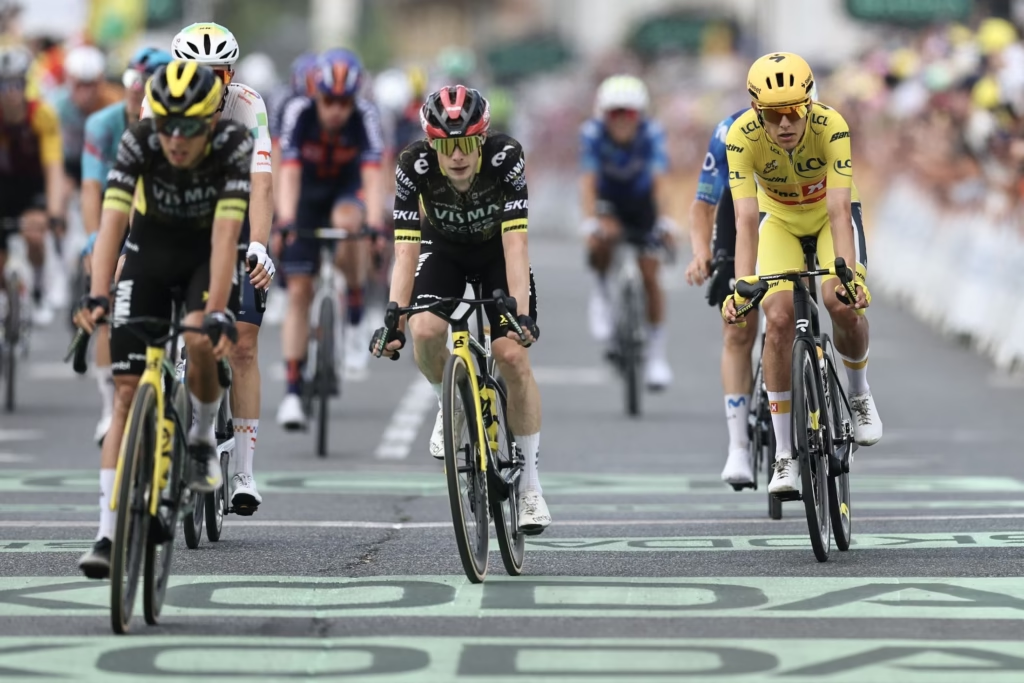 Photo Credit: Getty
GC context: stay safe, do not waste energy
Stage 8 should not change the yellow jersey unless something goes wrong.
After stage 6, Tadej Pogačar had taken control of the race with his attack over the Tourmalet and victory at Gavarnie-Gèdre. The GC contenders then had the flat road to Bordeaux on stage 7 before this second flat day into Bergerac.
For UAE Team Emirates-XRG, Visma-Lease a Bike, Red Bull-Bora-Hansgrohe, Lidl-Trek and the other GC teams, stage 8 is about control and safety. There is no reason to take risks for time bonuses in a bunch sprint finish. The priority is to avoid crashes, splits and mechanical trouble before the race gets harder again.
The race was reshaped in the Pyrenees, and our GC and jerseys after Tour de France 2026 stage 6 update explains the new overall picture.
Green jersey stakes
The points classification could be the most important part of stage 8.
The finish in Bergerac offers 70 points to the winner, with 50 for second and 40 for third. The intermediate sprint at Saint-Cyprien adds another 25 points for first place. That creates a huge swing if one rider scores well in both.
This is exactly the kind of day where the green jersey can begin to harden into a real hierarchy. A rider who takes the intermediate sprint and wins the stage can make a major move. A rider who misses the split, gets boxed in or fails to contest the finish can lose ground quickly.
Pedersen’s strength across varied terrain makes him dangerous on a stage like this. Kooij, Philipsen, Merlier and Girmay need the flatter finishes to count. If they miss too many of them, the points race becomes harder to pull back later.
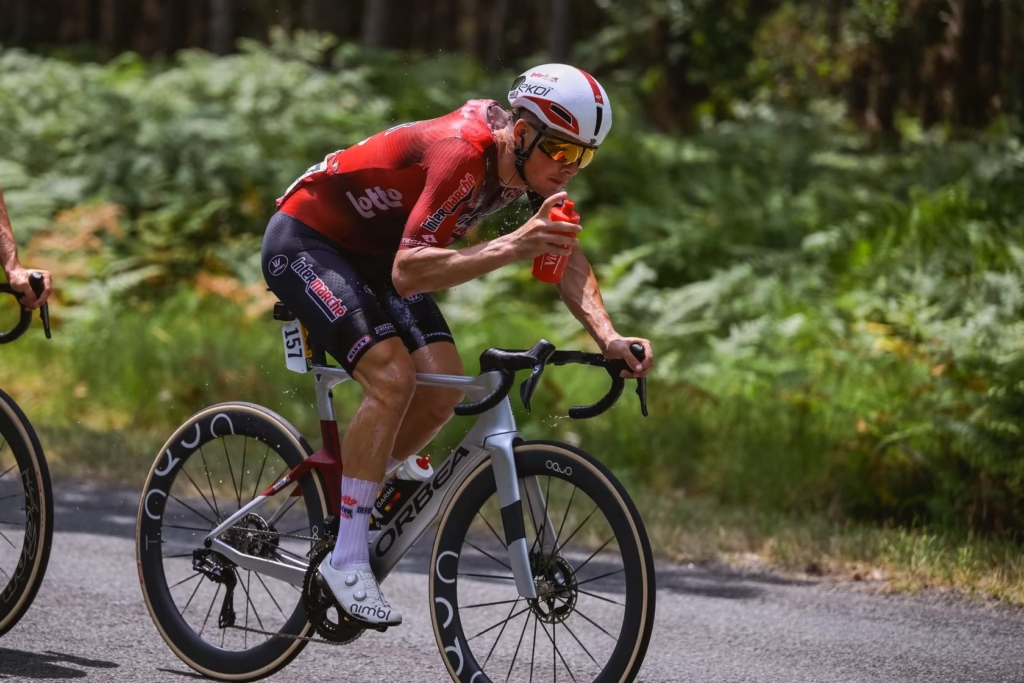
Can the breakaway win?
It would be unlikely.
The route is attractive enough for a breakaway to try, but not hard enough to make the peloton give up control. The two climbs are small, the roads after the second climb still leave 40km to organise, and the points on offer should keep the sprint teams committed.
A breakaway win would probably require one of three things: poor chase cooperation, extreme heat weakening the peloton, or a tactical stand-off between sprint teams. Without that, the bunch should bring the move back before Bergerac.
The breakaway’s better chance is visibility, mountains points and TV time. The stage win should belong to the sprinters.
For the wider breakaway picture across the race, see our Tour de France 2026 route guide to the best days for breakaways.
Riders to watch
The exact pressure depends on what happened in Bordeaux, but the same group of sprinters should be central again.
| Rider | Why stage 8 suits him |
|---|---|
| Olav Kooij | Has already proved his Tour sprint speed with victory in Pau |
| Tim Merlier | Needs a clean, full bunch sprint to use his top-end speed |
| Jasper Philipsen | Previous Bergerac-style Tour sprint profile suits his lead-out strength |
| Mads Pedersen | Strong enough to score at the intermediate sprint and still contest the finish |
| Biniam Girmay | Durable, fast and dangerous if the finale becomes messy |
| Max Kanter | Showed in Pau that he can place highly in this sprint field |
| Søren Wærenskjold | Powerful if the sprint becomes slightly reduced or disorganised |
| Milan Fretin | Outsider with enough speed to threaten the top five |
This is not a stage where the GC favourites should be involved in the finish. It is a day for the fast men, especially those who can handle a rolling middle section and still produce a clean sprint after repeated days of accumulated fatigue.
How each main sprinter wins
Kooij wins if Decathlon CMA CGM keep him close enough to the front without making him the centre of every rival’s attention too early. His Pau win proved he can finish, but stage 8 would ask him to repeat it in a more controlled sprint environment.
Merlier wins if Soudal Quick-Step deliver him into clean air. He does not need the hardest sprint. He needs the cleanest one. If he starts the final 200 metres from the right place, he may have the fastest pure acceleration in the field.
Philipsen wins if Alpecin-Premier Tech reassert their lead-out authority. He is at his best when the final kilometre is shaped around his train rather than when he has to improvise from too far back.
Pedersen wins if Lidl-Trek make the stage harder than the profile suggests. The second category 4 climb and the run-in could help if his team wants to blunt some of the pure sprint trains before the final.
Girmay wins if the finale becomes chaotic. He is dangerous when positioning, toughness and timing matter as much as a textbook lead-out.
For more on Philipsen’s role in the sprint field, see our guide to Jasper Philipsen at the Tour de France 2026.
Tactical prediction
The likely pattern is familiar: early break, sprint-team control, tension around the intermediate sprint, a brief acceleration over the Côte du Buisson-de-Cadouin, then a full bunch sprint in Bergerac.
The breakaway should be allowed a manageable gap, but not a dangerous one. The first climb at Domme may help the break keep interest alive. The intermediate sprint at Saint-Cyprien should wake up the peloton. The second climb should begin the final chase phase. After that, the sprint teams should have enough road to organise.
The main danger for the sprinters is not the terrain itself. It is fatigue and timing. Two flat stages after a major mountain day can expose tired lead-outs. The team that still has structure inside the final 5km will have a major advantage.
-
 Photo Credit: Getty
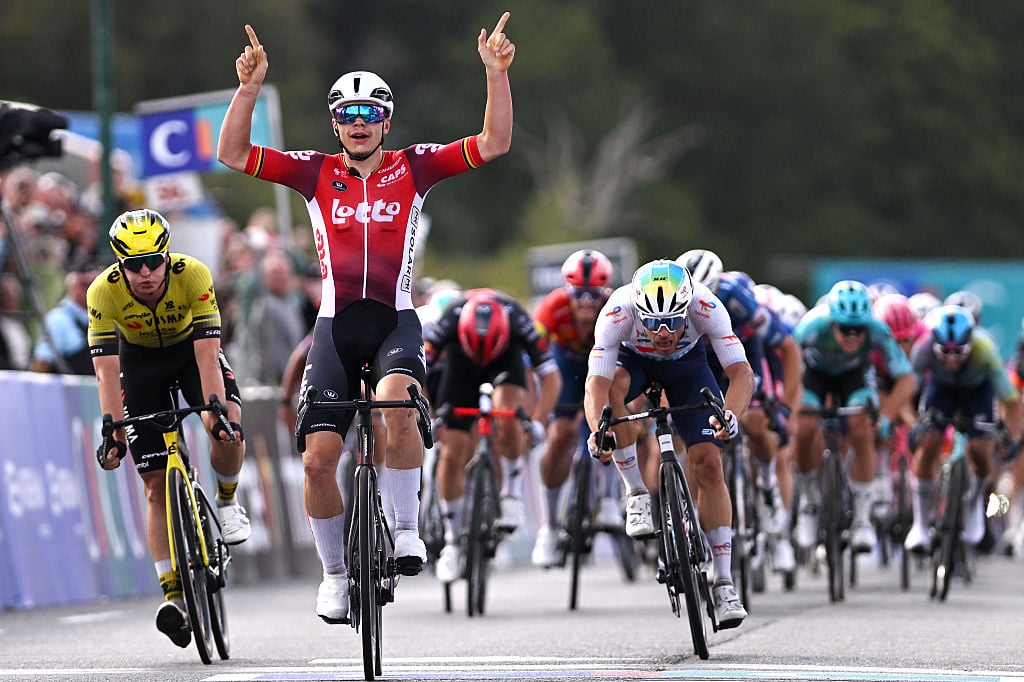

Prediction
Tim Merlier is the pick if the race ends in the clean sprint that the profile suggests.
Kooij, Philipsen, Pedersen and Girmay all have obvious routes to victory, but Merlier’s raw speed makes him the strongest choice if Soudal Quick-Step can give him the launch he needs. The stage is flat enough for the pure sprinters and long enough after the final climb for teams to reorganise.
Prediction: Tim Merlier to win stage 8 in Bergerac, ahead of Olav Kooij and Jasper Philipsen.
Stage 8 in one sentence
Stage 8 from Périgueux to Bergerac is a flat 180.4km sprint opportunity with two late category 4 climbs, a major intermediate sprint at Saint-Cyprien and enough green jersey points to make the final hour far more important than the profile first suggests.
FAQs
What is the route for Tour de France 2026 stage 8?
Stage 8 runs 180.4km from Périgueux to Bergerac on Saturday 11 July 2026. It is officially classed as a flat stage with 1,150m of elevation gain.
What time does stage 8 start?
The neutralised start is at 13:15 CEST, which is 12:15 BST. The riders are scheduled to pass through Périgueux on the route proper at 13:25 CEST / 12:25 BST.
What time will stage 8 finish?
The stage is expected to finish in Bergerac between 17:20 and 17:43 CEST, which is 16:20 to 16:43 BST.
Is stage 8 a sprint stage?
Yes. Stage 8 is officially flat and should favour the sprinters, despite two category 4 climbs in the second half of the stage.
What climbs are on stage 8?
There are two category 4 climbs: the Côte de Domme, 3.7km at 3.3%, and the Côte du Buisson-de-Cadouin, 2.2km at 5.3%.
Where is the intermediate sprint on stage 8?
The intermediate sprint is at Saint-Cyprien, 57.6km from the finish. It is expected between 16:05 and 16:20 CEST, or 15:05 to 15:20 BST.
Who are the favourites for stage 8?
Tim Merlier, Olav Kooij, Jasper Philipsen, Mads Pedersen and Biniam Girmay should be among the main favourites if the race ends in a bunch sprint.