Tour de France stage 13 takes the race from Dole to Belfort on Friday 17 July, with the longest stage of the 2026 edition offering one of the clearest opportunities for the breakaway.
The 205.8km route contains approximately 2,400 metres of climbing, but most of the difficulty is concentrated inside the final 50km.
The category-three Col des Croix begins the selection before the category-one Ballon d’Alsace provides the decisive test. Its summit arrives with 29.9km remaining, leaving a long descent and fast run towards Belfort.
That structure makes stage 13 difficult to control but not automatically decisive for the general classification.
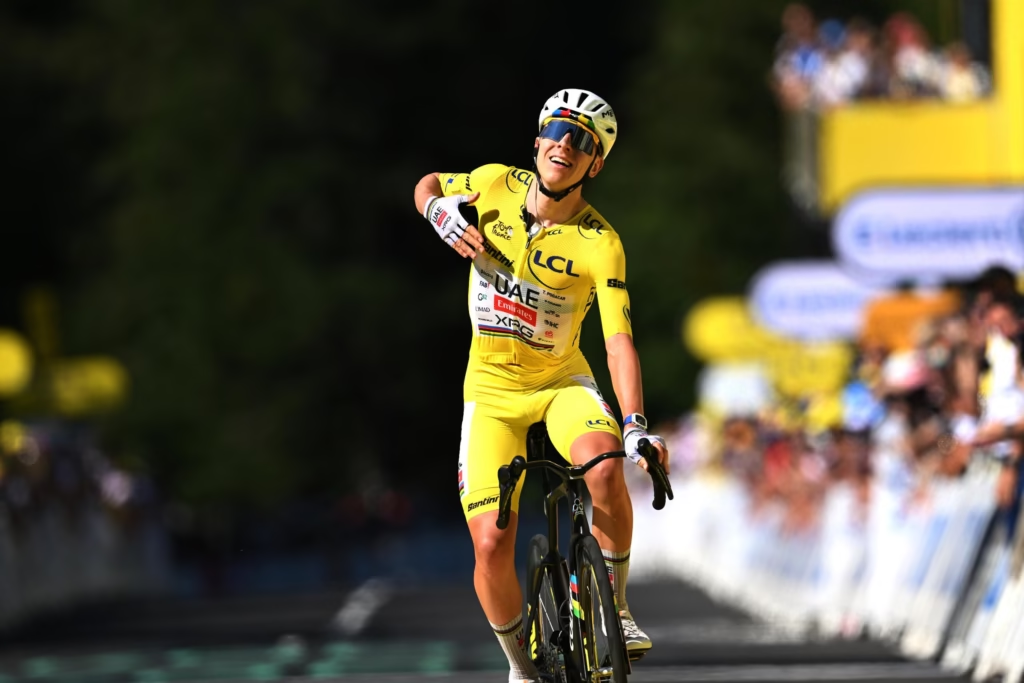
Tadej Pogačar and UAE Team Emirates-XRG may prefer to conserve energy before the harder Vosges stage to Le Markstein on Saturday. Teams still searching for a victory will see Belfort as one of their best remaining opportunities.
Mathieu van der Poel, Ben Healy, Michael Matthews, Quinn Simmons and Matej Mohorič are among the riders suited to a long breakaway followed by a descending finish.
The wider terrain is covered in our Tour de France 2026 Vosges and Jura guide.
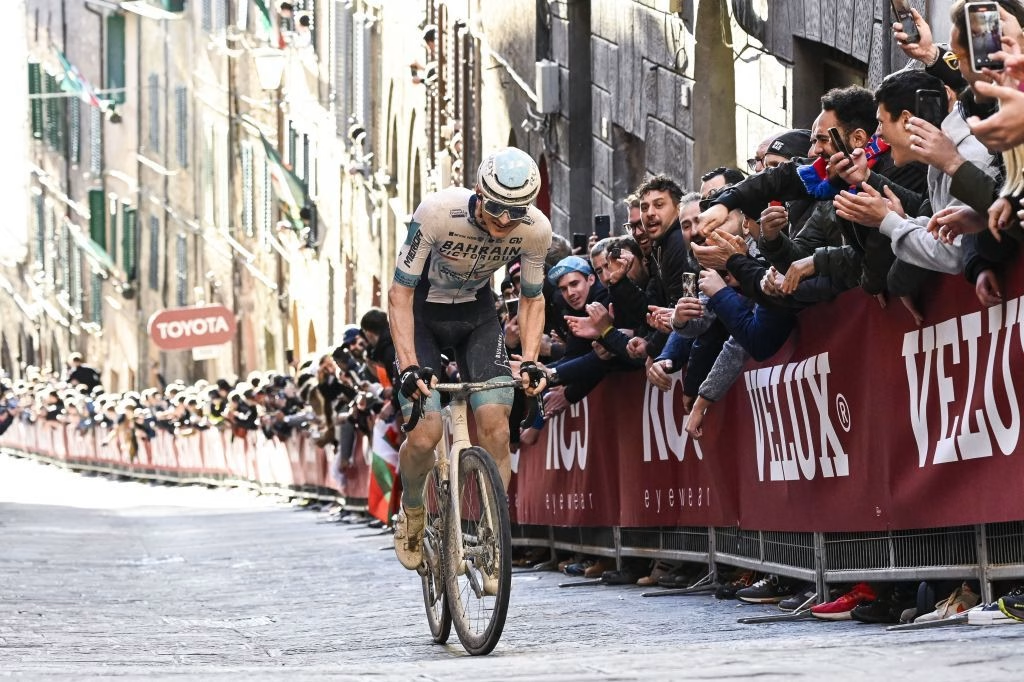 Photo Credit: Getty
Tour de France 2026 stage 13 at a glance
| Detail | Information |
|---|---|
| Date | Friday 17 July 2026 |
| Start | Dole |
| Finish | Belfort |
| Distance | 205.8km |
| Stage type | Hilly |
| Total climbing | Approximately 2,400 metres |
| Intermediate sprint | Mélisey, after 137.8km |
| Main climbs | Col des Croix and Ballon d’Alsace |
| Final climb summit | 29.9km from the finish |
| Expected winner | Strong breakaway rider |
| GC impact | Possible, but not the most likely outcome |
Stage 13 is the only stage of the 2026 Tour to exceed 200km. It is officially classified as hilly rather than mountainous, despite the late ascent of the Ballon d’Alsace.
The combination of distance, two late climbs and a descending finish places it high among the best Tour de France 2026 stages for breakaways.
Tour de France 2026 stage 13 route
The race begins in Dole and heads north-east through the Jura, Doubs and Haute-Saône.
The opening 130km are rolling rather than truly difficult.
That gives the breakaway plenty of time to establish an advantage, but it may also make forming the move more complicated. A flat or rolling opening allows more riders to attack, including powerful rouleurs who might struggle to join once the road begins climbing.
The intermediate sprint comes in Mélisey after 137.8km.
From there, the route changes character.
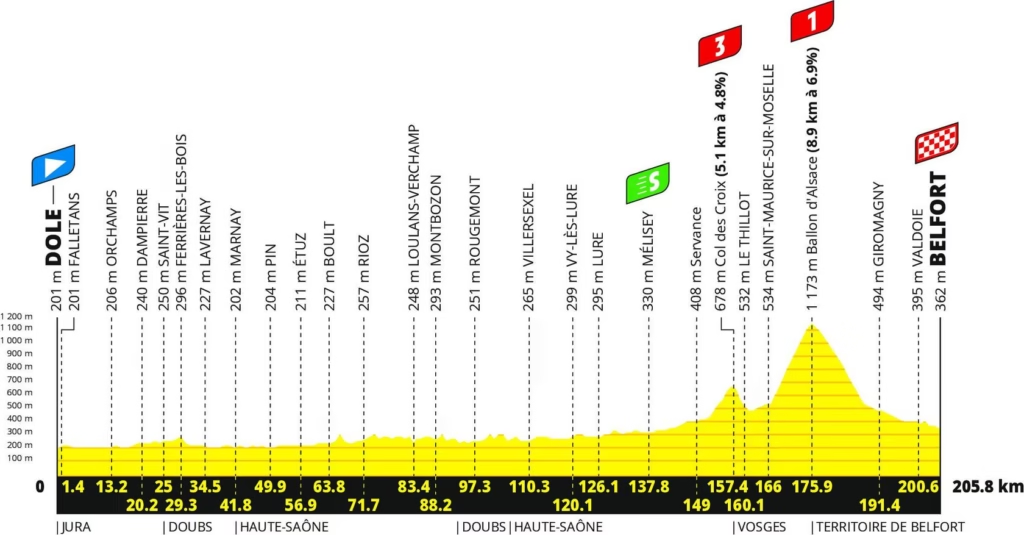
The Col des Croix arrives after 157.4km and is followed by a short descent towards Saint-Maurice-sur-Moselle. The riders then begin the Ballon d’Alsace, the main climb of the day.
The summit comes after 175.9km, leaving 29.9km to Belfort.
Most of that distance is downhill or gently descending, although the route includes a short rise through Valdoie before the final approach.
The stage therefore favours a rider who can climb strongly without needing a summit finish and then use descending skill, aerodynamics or a fast sprint to complete the job.
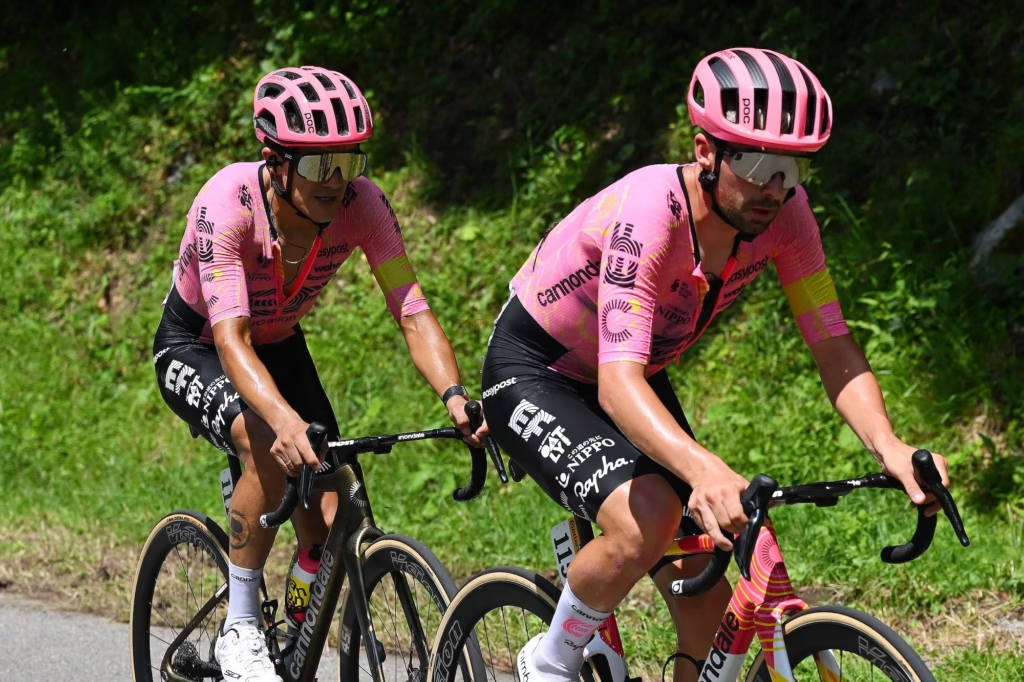 Photo Credit: Getty
The longest stage of the Tour changes the tactical picture
The 205.8km distance is not simply a statistic.
Long stages change how teams use their riders and how much energy the favourites are willing to spend controlling the race.
A team can chase a breakaway over 150km, but doing so requires several domestiques to work for hours before the decisive climbs begin.
That becomes particularly unattractive one day before a mountain stage containing the Grand Ballon, Col du Page, Ballon d’Alsace and Col du Haag.
UAE Team Emirates-XRG has little reason to chase riders who sit well behind Pogačar in the general classification.
Visma-Lease a Bike and Red Bull-Bora-Hansgrohe are also more likely to preserve their climbing support for stages 14 and 15 than use them to control a stage that finishes almost 30km after its final summit.
That lack of obvious responsibility gives the breakaway its opportunity.
The move must still contain enough strength to survive the Ballon d’Alsace and the descending finale.
The breakaway fight could last for an hour
Stage 13 may be decided as much by who reaches the breakaway as by what happens on the final climb.
Many teams will identify the stage as a realistic chance to win.
That creates the possibility of repeated attacks during the opening kilometres.
The strongest teams without a sprint or GC objective may attempt to place two riders in the move. Others will close dangerous combinations before sending a different rider into the next attack.
A breakaway containing Van der Poel, Healy and Simmons would be too strong for many teams to accept immediately.
A smaller group containing riders with less obvious reputations may receive freedom more quickly.
The peloton also needs to assess the general classification.
Any rider within ten or 15 minutes of Pogačar could make UAE uncomfortable if the advantage grows too large. A group formed entirely from riders well behind on GC is far more likely to receive several minutes.
The eventual winner may therefore need to spend significant energy simply earning a place in the day’s escape.
Our explainer on what a breakaway is in the Tour de France looks at how moves form, why the peloton sometimes allows them to escape and what determines whether they survive.
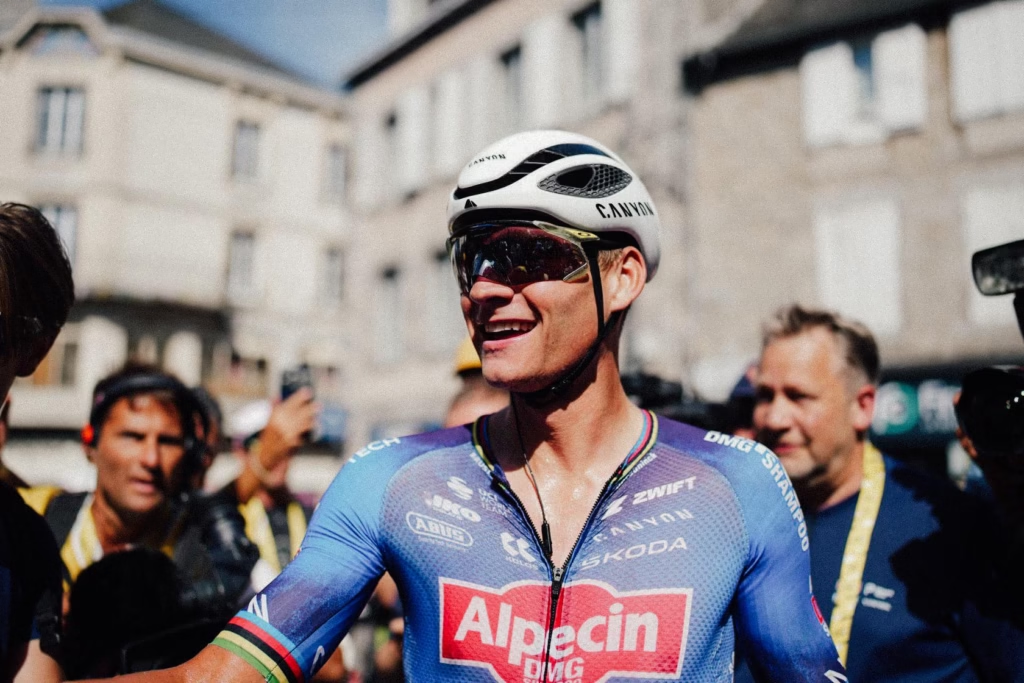
Col des Croix begins the real selection
The Col des Croix is the first categorised climb of the stage.
It is listed as 5.2km at an average gradient of 4.8%, with its summit 48.4km from Belfort.
Those figures are not severe enough to trouble the leading GC riders.
They are difficult enough to expose weaknesses within the breakaway.
After more than 150km, the pace should rise as riders attempt to enter the descent towards the Ballon d’Alsace near the front.
Pure rouleurs may begin to struggle, while climbers will try to reduce the size of the group before the main ascent.
The Col des Croix could also encourage attacks from riders who do not want to wait for the Ballon d’Alsace.
A strong move over the summit might force the better-known favourites to chase during the descent rather than allowing them to reach the final climb together.
Ballon d’Alsace is hard enough to decide the stage
The Ballon d’Alsace is 8.8km long at an average gradient of 6.9%.
It is classified as a category-one climb and offers ten mountains points to the first rider across the summit.
The climb is steady rather than brutally steep.
That suits riders who can maintain a strong tempo for 20 to 25 minutes.
The largest attacks are likely to come from breakaway riders rather than the GC favourites.
A climber may try to create a gap before the summit and then defend it through the descent. A heavier Classics rider may instead ride at a controlled pace, remain close enough and use the final 30km to return.
The gradient gives both types of rider a chance.
It is difficult enough for a strong climber to make a difference, but not so steep that Van der Poel, Matthews or Mohorič must automatically be dropped.
The composition of the breakaway will decide how the climb is raced.
A group containing several fast finishers should attack repeatedly. Nobody will want to bring Van der Poel or Matthews to Belfort.
A group dominated by climbers may wait longer and trust the ascent to produce a natural selection.
The Ballon d’Alsace also returns on stage 14, making it part of a demanding Vosges sequence rather than an isolated climb. The Tour’s wider climbing structure is covered in our guide to the major climbs of the 2026 route.
Why the descent could matter more than the climb
The Ballon d’Alsace summit is almost 30km from the finish.
That is too far for every attacker to treat the summit as the line.
The first section is a long descent through Lepuix and Giromagny. The route then continues through Chaux, Sermamagny, Valdoie and Offemont before entering Belfort.
A solo rider needs both climbing strength and descending confidence.
A small chasing group can regain significant time if it works together.
That produces several possible scenarios.
A climber may cross the summit alone but be caught on the descent by stronger rouleurs. A rider such as Mohorič could attack near the top, use the technical descent to increase the gap and then time trial towards Belfort.
A small group may also reach the finish together.
In that situation, sprint speed becomes important, but the riders will already have completed more than 200km and a category-one climb. The freshest rider may beat the fastest rider on paper.
Will the GC favourites attack?
A major GC attack is possible but not the most likely outcome.
Pogačar leads Jonas Vingegaard by 3:36, with Remco Evenepoel another 30 seconds behind.
The Ballon d’Alsace could produce gaps, but its summit is too far from Belfort to guarantee a reward.
An attack would require a long effort across the descent and valley roads. The chasing groups could organise, while the attacker would risk using energy before the much more important stage 14.
Pogačar has already shown that he is willing to attack whenever the opportunity appears.
The race situation gives him less need to do so here.
UAE can ride defensively, protect the yellow jersey and allow teams interested in the stage win to control the final climbs.
Vingegaard faces a similar calculation.
He needs time, but an attack on the Ballon d’Alsace may expose him to a long chase without producing a meaningful gain. Le Markstein and Plateau de Solaison offer clearer mountain opportunities during the following two days.
The most plausible GC action is a late acceleration near the summit designed to test rivals rather than a full commitment to the finish.
Our guide to the best stages for GC attacks at the 2026 Tour explains why Le Markstein carries greater overall significance than the road to Belfort.
The podium battle makes the finale less predictable
The GC group may remain together, but the fight behind Pogačar is much closer.
Vingegaard has only 30 seconds over Evenepoel.
Juan Ayuso, Paul Seixas, Florian Lipowitz, Isaac del Toro and Mattias Skjelmose are also separated by relatively small gaps.
A rider who struggles on the Ballon d’Alsace cannot assume the group will wait.
Red Bull-Bora-Hansgrohe has both Evenepoel and Lipowitz near the podium. Lidl-Trek has Ayuso and Skjelmose. UAE has Del Toro alongside Pogačar.
Those multiple options can create tactical complications.
One team may send a rider ahead near the summit, forcing rivals to chase while protecting its higher-placed leader.
The descent also increases the risks.
A small positioning error or mechanical problem could create a gap that becomes difficult to close at high speed.
Stage 13 is unlikely to decide the Tour, but it may alter the order behind the yellow jersey.
The latest full classification picture is available in our GC and jerseys report after stage 11.
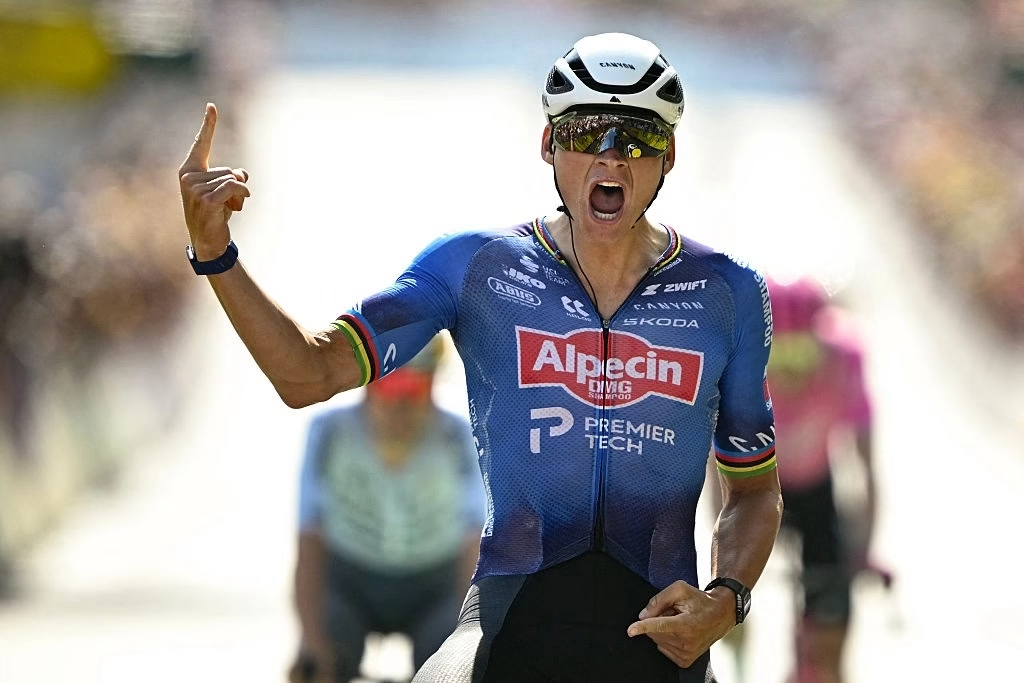 Photo Credit: Getty
Mathieu van der Poel
Van der Poel is one of the clearest stage favourites.
He has already won stage 9 from a breakaway and remains ideally suited to a long, selective day that finishes after a descent.
The Ballon d’Alsace is the main concern.
At 8.8km and 6.9%, the climb is longer than his ideal terrain. He can survive if the breakaway rides at a controlled tempo, but a group containing several strong climbers will try to isolate and drop him.
Van der Poel’s best route to victory may involve attacking before the steepest selection develops.
He could move on the Col des Croix, force others to chase or use the descent between the climbs to create a tactical advantage.
If he reaches Belfort in a small group, he should be extremely difficult to beat.
Ben Healy
Healy is one of the strongest attacking options.
The EF Education-EasyPost rider excels on long days when the race becomes difficult to organise.
He can attack from the original breakaway, accelerate on the Ballon d’Alsace or attempt a solo move before the summit.
His main weakness is the descending run to Belfort.
Healy may struggle to beat Van der Poel or Matthews from a group. That increases the pressure to create separation on the climbs.
EF can also use Richard Carapaz or Kasper Asgreen in the breakaway.
Carapaz would provide a stronger climbing option, while Asgreen could support a move or attack on the flatter opening section.
Healy remains the team’s most obvious stage-winning rider for this exact terrain.
He is also one of the central names in our guide to the Tour de France 2026 breakaway specialists.
Matej Mohorič
Mohorič may be the rider most suited to the final 30km.
He is a strong breakaway rider, an exceptional descender and capable of sustaining a solo effort on flatter roads.
The Ballon d’Alsace is difficult but manageable if he enters it with the leading group and avoids following every acceleration.
Mohorič’s ideal move would come near the summit or at the start of the descent.
Climbers may hesitate to take risks downhill, while faster finishers may wait for teammates or expect the group to return.
That moment of uncertainty is where Mohorič is most dangerous.
Bahrain Victorious also has Lenny Martinez high in the GC and Antonio Tiberi as another option, which may allow Mohorič complete freedom to target the stage.
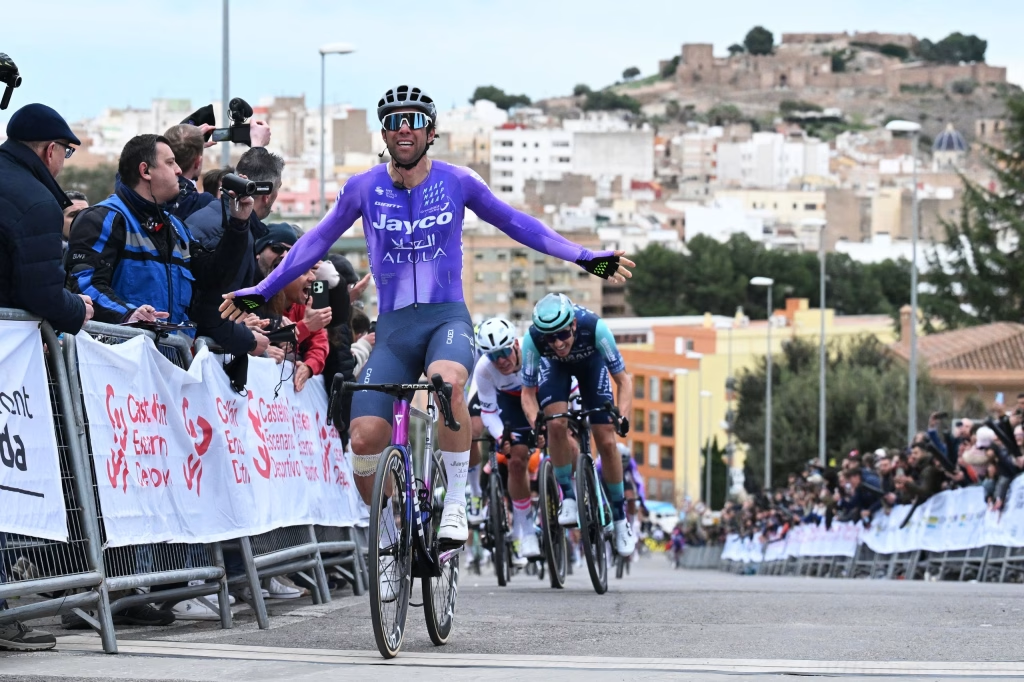 Photo Credit: Getty
Michael Matthews
Matthews could win if the race comes back together behind the strongest climbers.
He has enough climbing ability to survive the Ballon d’Alsace from a well-judged breakaway and one of the fastest finishes among the likely contenders.
His problem is predictability.
Every rival knows that taking Matthews to Belfort is dangerous.
He may therefore face repeated attacks on the final climb and throughout the descent.
Jayco AlUla can use Mauro Schmid as a second option. Schmid is capable of attacking earlier while Matthews waits behind, forcing other teams to take responsibility.
If Matthews reaches the final kilometre in a small group, he should begin as the favourite.
Matthews is one of several versatile fast finishers included in our ranking of the best sprinters at the Tour de France 2026.
Quinn Simmons
Simmons is well suited to the long opening section and the race’s overall distance.
He can force the breakaway, contribute to keeping it clear and attack before the pure climbers take control.
The Ballon d’Alsace may be close to his limit.
Simmons needs to arrive at the foot with enough energy to ride at his own tempo rather than respond to every acceleration.
Lidl-Trek may also have wider priorities.
Ayuso and Skjelmose are high in the GC, while Mads Pedersen leads the green jersey competition.
Pedersen could target the intermediate sprint in Mélisey before easing back, but sending Simmons into the breakaway would give the team another route towards victory without compromising its GC riders.
Romain Grégoire
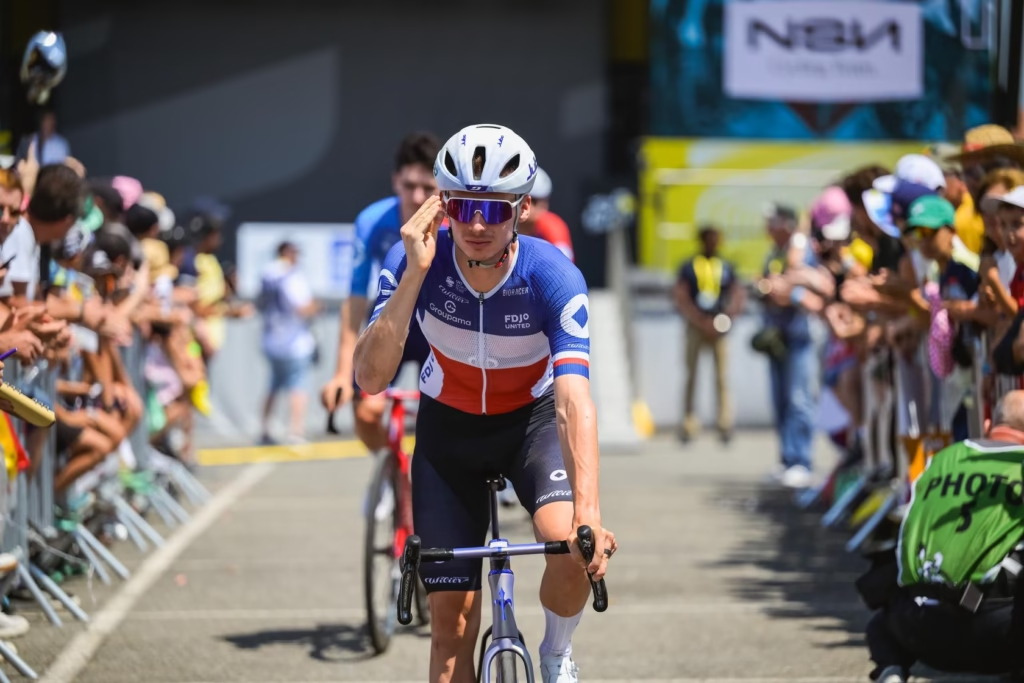
Grégoire gives Groupama-FDJ United a strong home-stage option.
He has the punch to follow attacks on the Col des Croix and enough climbing ability to remain competitive on the Ballon d’Alsace.
A reduced sprint would also suit him.
The concern is the length of the final climb. Grégoire is more naturally suited to shorter, sharper ascents than a sustained effort lasting more than 20 minutes.
He may need to ride conservatively and rely on the descent to return to stronger climbers.
French teams will be highly motivated on a stage passing through Mélisey, the home town of Thibaut Pinot.
Grégoire is among the leading home hopes in our guide to the best French riders at the Tour de France 2026.
Julian Alaphilippe
Alaphilippe was already active during stage 11 and may try again.
The stage 13 profile suits him far better than the flat run to Nevers.
He can attack on the Col des Croix, accelerate on the Ballon d’Alsace and descend aggressively towards Belfort.
The question is whether he has recovered from the energy spent in his stage 11 breakaway.
At his best, this is classic Alaphilippe terrain.
He no longer has the same certainty of finishing speed or climbing strength, making an early attack more likely than waiting for the final kilometre.
Other riders to watch
Magnus Cort gives Uno-X Mobility another strong option after Wærenskjold’s stage 11 victory.
Cort can survive rolling climbs and sprint from a small group, although the Ballon d’Alsace may be slightly too long if the pace becomes severe.
Tobias Halland Johannessen is the team’s stronger climbing alternative.
Mauro Schmid, Kévin Vauquelin, Valentin Paret-Peintre, Tiesj Benoot, Matteo Jorgenson, Javier Romo, Warren Barguil, Simone Velasco and Maxim Van Gils are also suited to parts of the route.
The strongest breakaway may contain several riders capable of winning rather than one obvious favourite.
The wider list of riders suited to unpredictable terrain is available in our Tour de France 2026 stage hunters guide.
Could Mads Pedersen survive?
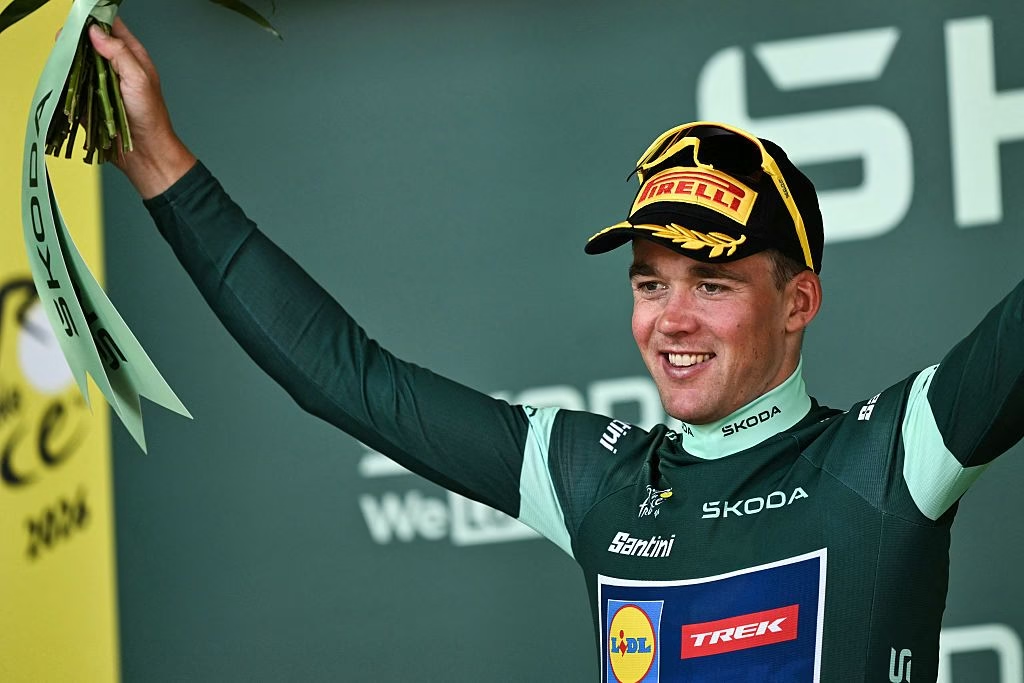
Pedersen’s green jersey ambitions make him relevant during the first half of the stage.
The intermediate sprint at Mélisey offers 25 points to the first rider.
That may encourage Lidl-Trek to place Pedersen in the breakaway or control the gap long enough for him to score from the peloton.
The final climbs make a stage win far less likely.
Pedersen can survive substantial climbing, but the Ballon d’Alsace comes after almost 170km and should be raced hard by riders trying to eliminate fast finishers.
If the breakaway lacks strong climbers and the ascent becomes tactical, Pedersen could remain involved.
More realistically, he will target the intermediate sprint and then conserve energy for later points opportunities.
His route towards winning the competition is examined in our analysis of whether Mads Pedersen can win the Tour de France green jersey.
The mountains classification could influence the breakaway
The Ballon d’Alsace offers ten points to the first rider across the summit.
Pogačar currently leads the mountains classification, with Vingegaard wearing the polka-dot jersey because Pogačar is in yellow.
Richard Carapaz, Valentin Paret-Peintre, Paul Seixas and Nicolas Prodhomme are among the riders close enough to improve their positions.
A rider targeting the polka-dot jersey may enter the breakaway even without believing they can win in Belfort.
That can change the tactics.
Someone focused on mountain points may set a hard pace on the Ballon d’Alsace, collect the summit and stop contributing during the descent.
Stage hunters need to recognise whether their companions are racing for the finish or for a classification.
The riders best suited to that competition are covered in our Tour de France 2026 climbers and polka-dot jersey guide.
The green jersey contest reaches Mélisey
The intermediate sprint comes before the major climbing begins.
Pedersen should see it as an opportunity to extend or protect his points lead.
Biniam Girmay, Philipsen and Merlier may also contest the sprint if the breakaway remains within reach.
The difficulty is what comes afterwards.
A sprinter using significant energy to score in Mélisey then faces the Col des Croix and Ballon d’Alsace.
Teams must decide whether the points are worth the effort on a stage where most pure sprinters will eventually form the gruppetto.
The presence of 50 points at the finish is unlikely to help them.
Those points should go to a breakaway rider rather than one of the conventional green jersey challengers.
Will the breakaway win stage 13?
The breakaway is the clear favourite.
The stage is long, difficult to control and positioned immediately before two major mountain days.
Most sprint teams will have no realistic belief that their fastest rider can survive the Ballon d’Alsace.
The yellow jersey team has little reason to chase riders already far behind overall.
That leaves teams without a stage victory with a strong incentive to place riders in the move.
The breakaway still needs a meaningful advantage before the Col des Croix.
If the group receives only three or four minutes, Pogačar’s team could keep it close enough for the GC riders to become involved late.
An advantage above six minutes should make a breakaway victory extremely likely.
What stage 13 means for stage 14
The road to Belfort begins a difficult three-day block before the second rest day.
Stage 14 is much more threatening for the general classification, with 3,800 metres of climbing packed into 155.3km before the finish at Le Markstein Fellering.
The route includes the Grand Ballon, Col du Page, Ballon d’Alsace and Col du Haag.
That gives the GC teams a clear reason not to spend more energy than necessary on stage 13.
Our history of Le Markstein at the Tour de France explains why the finish has repeatedly produced tactical mountain racing rather than a conventional summit battle.
Tour de France 2026 stage 13 prediction
Stage 13 should produce a large and powerful breakaway after an aggressive opening hour.
The move is likely to contain a mixture of Classics riders, climbers and strong rouleurs.
The Col des Croix will reduce the group before the Ballon d’Alsace produces the decisive attacks.
A pure climber may reach the summit first, but the long descent gives technically strong riders a chance to return.
The most likely winning move comes near the summit or during the opening kilometres of the descent.
Van der Poel has the strongest sprint among the main contenders, but the Ballon d’Alsace gives his rivals enough terrain to remove him.
Mohorič has the clearest descending advantage, while Healy is the rider most likely to attack repeatedly until the group finally breaks.
-
 Photo Credit: Getty

Tour de France 2026 stage 13 favourites
Five-star favourite
Ben Healy
Matej Mohorič
Four-star favourites
Mathieu van der Poel
Marc Hirschi
Michael Storer
Three-star favourites
Quinn Simmons
Romain Grégoire
Mauro Schmid
Toms Skujiņš
Two-star favourites
Michael Matthews
Julian Alaphilippe
Emiel Verstrynge
Alex Baudin
Magnus Cort Nielsen
Kévin Vauquelin
Frank van den Broek
Tobias Halland Johannessen
One-star outsiders
Valentin Paret Peintre
Javier Romo
Warren Barguil
Tiesj Benoot
Maxim Van Gils
Simone Velasco
Anthony Turgis
Georg Zimmermann
Stage 13 predicted top three
- Ben Healy
- Matej Mohorič
- Marc Hirschi
Healy is the best option for forcing the decisive selection on the Ballon d’Alsace. Mohorič has the strongest route from the summit to Belfort, while Hirschi offers the best balance of climbing, descending and finishing speed.
The yellow jersey group should arrive later with the leading GC positions largely intact.
The stage win belongs to the attackers.