Uno-X Mobility has confirmed its seven-rider squad for the 2026 Tour de France Femmes, with Katrine Aalerud leading a selection built around climbing strength, breakaway opportunities and experience across difficult terrain.
Aalerud is joined by Sigrid Ytterhus Haugset, Marte Berg Edseth, Anouska Koster, Alessia Vigilia, Laura Tomasi and Teuntje Beekhuis for the nine-stage race, which begins in Lausanne on 1 August and finishes in Nice eight days later.
The team does not bring a specialist sprinter for the flatter opening stages, pointing towards an aggressive approach centred on breakaways and the harder days. Aalerud provides its clearest general classification option, while Koster and Beekhuis add experience to a balanced group that should be most visible once the race moves away from the faster Swiss opening weekend.
The complete shape of the race, including the Dijon time trial, Mont Ventoux summit finish and final weekend around Nice, is covered in our Tour de France Femmes 2026 route guide.
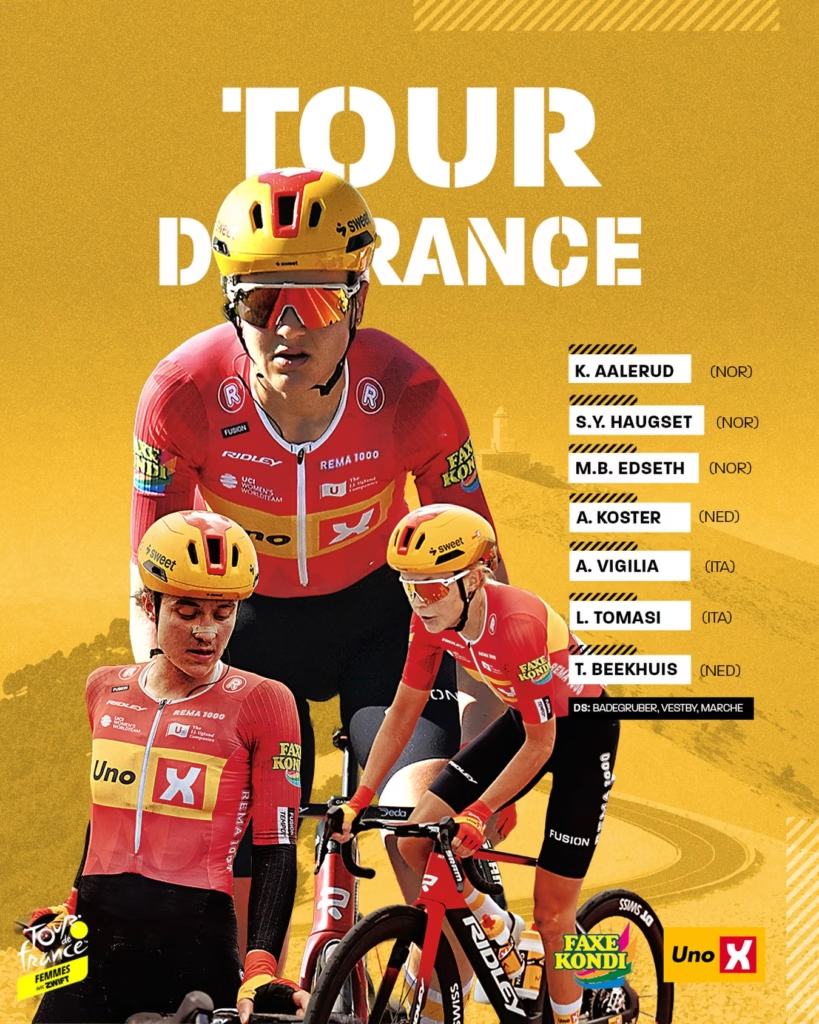
Uno-X Mobility squad for the 2026 Tour de France Femmes
- Katrine Aalerud
- Sigrid Ytterhus Haugset
- Marte Berg Edseth
- Anouska Koster
- Alessia Vigilia
- Laura Tomasi
- Teuntje Beekhuis
Aalerud leads the general classification challenge
Aalerud is the obvious focal point for Uno-X Mobility in the general classification.
The Norwegian has consistently produced her strongest performances in mountainous stage races and should benefit from a route that becomes progressively harder during the second half. She is an experienced climber capable of pacing longer ascents, although the depth of this year’s field means a top-10 finish would still require a strong and consistent nine days.
Her most important test will come on Stage 7, when the race finishes at the summit of Mont Ventoux after more than 3,500 metres of climbing. Aalerud must also limit her losses during the 21km individual time trial in Dijon before reaching the stages that suit her best.
The final weekend leaves little room for one isolated good performance. Stage 8 takes the riders from Sisteron to Nice before the short but difficult final circuit around Nice, where repeated climbing offers another opportunity to change the standings.
Aalerud’s position among the wider group of overall contenders is considered in our guide to the Tour de France Femmes 2026 riders to watch.

A team designed to support Aalerud in the hills
The selection gives Aalerud several riders capable of helping before the decisive climbs.
Haugset and Edseth strengthen the Norwegian climbing group, while Vigilia has the profile to remain useful when the road begins rising. None is likely to control Mont Ventoux deep into the final ascent, but their work earlier in the stage could determine whether Aalerud reaches Bédoin well positioned and with energy intact.
Edseth is particularly useful on rolling terrain, where she can protect Aalerud from splits and contribute to the chase behind dangerous breakaways. Haugset provides another climbing option and may also receive freedom to enter an escape if Aalerud’s general classification position makes direct stage hunting difficult.
The wider strengths and weaknesses of the squad were assessed in our Uno-X Mobility 2026 Women’s WorldTour team guide.
Koster and Beekhuis provide experience
Koster and Beekhuis bring the most experience to the selection and should have important roles away from the final climbs.
Koster can contribute on rolling terrain, work in support of Aalerud and take opportunities from reduced groups. Her tactical awareness should be especially useful on stages where the race becomes difficult without developing into a pure climbing contest.
She is also one of the team’s more realistic breakaway options. Uno-X Mobility will not be expected to control the peloton, so placing a rider such as Koster in a strong move can remove responsibility from the team behind and create an alternative route towards a stage result.
Beekhuis offers similar tactical value. She can work through the exposed and technical sections of a stage, help position Aalerud and join attacks when the race becomes difficult to control.
Both riders will also be important in guiding the less experienced members of the squad through the pressure surrounding the Tour. Positioning before climbs, managing energy over consecutive days and recognising which breakaways are worth following can matter as much as raw physical strength.
Opportunities for Vigilia and Tomasi
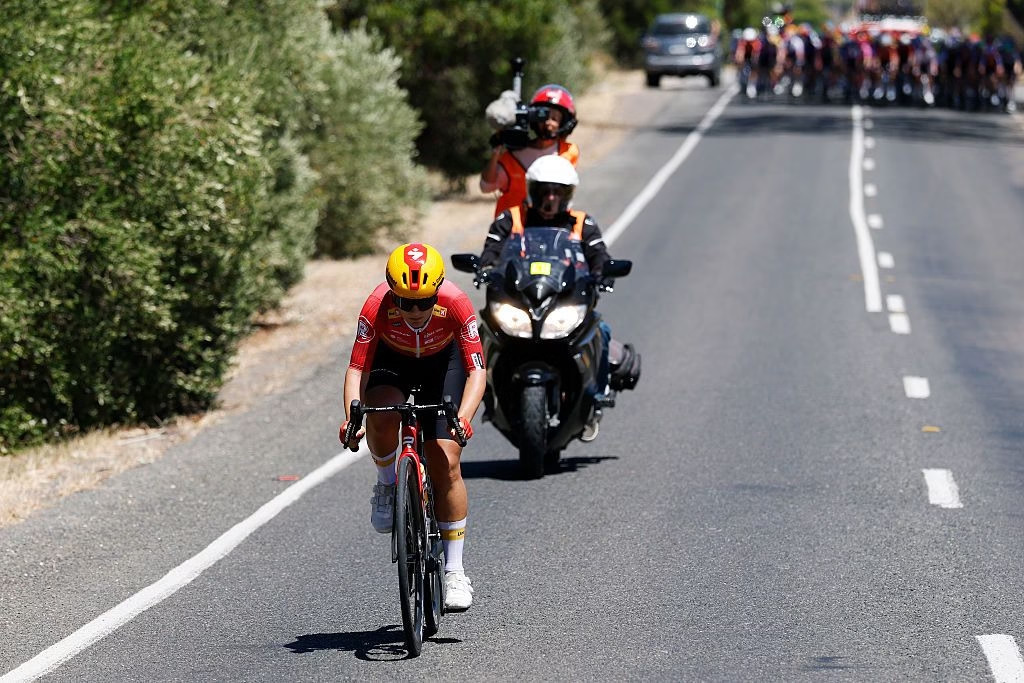
Vigilia and Tomasi give Uno-X Mobility two Italian options for breakaways and selective finishes.
Vigilia is likely to be most effective on the hilly transitional stages, where repeated climbing may allow a strong escape to stay clear. She can also contribute as a support rider on the approach to Mont Ventoux, particularly if the race becomes selective before the final ascent.
Tomasi offers more finishing speed and could target reduced sprints if the flatter stages become too difficult for the pure sprinters. Her selection gives Uno-X Mobility an option for quicker finishes without using a place on a conventional bunch-sprint leader.
That distinction matters because the opening stages are not completely straightforward. The Lausanne and Geneva routes include enough climbing and technical terrain to create opportunities for riders who can survive a harder final hour.
Our Tour de France Femmes 2026 Lausanne guide examines the uphill finish that will decide the first yellow jersey, while the Geneva Stage 2 guide covers the second day of the Swiss Grand Départ.
Breakaways may offer the best stage-winning route
Uno-X Mobility is unlikely to control many stages, making rider placement in the breakaways especially important.
The team’s best route towards a victory may come through sending Koster, Vigilia, Tomasi or Beekhuis into a strong move while keeping Aalerud protected for the general classification. The middle of the race contains several days where teams without a leading sprinter or outright yellow jersey favourite should receive more freedom.
Stage 5 from Mâcon to Belleville-en-Beaujolais and Stage 6 from Montbrison to Tournon-sur-Rhône both contain enough climbing to weaken the peloton without guaranteeing a full GC battle. Those are the stages where Uno-X Mobility can afford to race proactively rather than waiting for the final kilometres.
The riders and stages most suited to that approach are covered in our guide to the Tour de France Femmes 2026 breakaway specialists.
The tactical balance will depend heavily on Aalerud’s position after the Dijon time trial. If she remains close to the leading riders, more of the squad may be required to protect a top-10 campaign. If the time gaps become too large, Uno-X Mobility can switch more decisively towards stage hunting and the mountains classification.
Mont Ventoux will define the team’s GC ambitions
The Stage 7 summit finish on Mont Ventoux should provide the clearest measure of Aalerud’s place in the race.
The final climb from Bédoin measures 15.7km at an average gradient of 8.8%, but the difficulty begins well before the official ascent. Riders must cross three earlier categorised climbs and negotiate a demanding approach before reaching the foot of Ventoux.
Uno-X Mobility’s supporting riders will need to keep Aalerud supplied and well positioned through the first 120km. Once the favourites begin attacking in the forest above Saint-Estève, she may be left to ride largely at her own pace.
The climb and its place in the race are explored in our Tour de France Femmes 2026 Mont Ventoux guide.
Aalerud does not need to match every acceleration to produce a strong overall result. A controlled effort that limits losses to the leading favourites could still move her ahead of riders who start too aggressively and fade on the exposed upper slopes.
The final Nice stage keeps other objectives open
Stage 9 around Nice gives Uno-X Mobility one final opportunity even if the general classification has become settled.
The 99.2km route includes four ascents of the Col d’Èze and should encourage attacks from the beginning. Its short distance means there is little time for the peloton to organise a conventional chase, giving strong breakaway riders a genuine opportunity.
Aalerud may still be defending or attacking her overall position, but riders such as Koster, Vigilia and Edseth could also be used proactively if the team has nothing to lose.
The roads and likely viewing points are covered in our Tour de France Femmes 2026 Nice finish guide.
The stage will also be dangerous for riders who have already been weakened by Mont Ventoux. The lack of a conventional sprint leader should reduce Uno-X Mobility’s need to protect one specific rider through the climbs, allowing the team to race more freely.
A balanced squad rather than a team built around one result
Uno-X Mobility begins the Tour with a more balanced team than one designed around a single stage or classification.
Aalerud provides the general classification ambition, but the rest of the squad is not simply present to support her. Koster, Beekhuis, Vigilia and Tomasi all offer credible routes towards breakaways or selective finishes, while Haugset and Edseth increase the team’s depth on climbing and rolling terrain.
The absence of a pure sprinter means Uno-X Mobility may be less visible during the conventional bunch finishes. It should, however, have more riders available for the stages where the race becomes fragmented and difficult to control.
The team will need to judge its priorities as the race develops. Aalerud’s position after Dijon and Mont Ventoux will determine how much support remains committed to the general classification, but an aggressive approach should remain central throughout the nine stages.
The complete Uno-X Mobility squad for the 2026 Tour de France Femmes is:
- Katrine Aalerud
- Sigrid Ytterhus Haugset
- Marte Berg Edseth
- Anouska Koster
- Alessia Vigilia
- Laura Tomasi
- Teuntje Beekhuis