The Tour de France has been running since 1903, and its winners list tells the story of professional cycling’s biggest race. From Maurice Garin’s victory in the first edition to Tadej Pogačar’s latest yellow jersey in 2025, the roll of honour covers more than a century of changing tactics, technology, teams, scandals and sporting eras.
The list is not as simple as one winner every year. The Tour was not held during the First World War or the Second World War. Several editions were later changed because of disqualifications. The most famous example is Lance Armstrong, whose seven Tour de France titles from 1999 to 2005 were stripped and not reallocated. Floyd Landis lost the 2006 title, which passed to Oscar Pereiro, while Alberto Contador was stripped of the 2010 title, which passed to Andy Schleck.
That means the Tour de France winners list is both a sporting record and a historical document. It shows the race’s French origins, Belgian strength before the Second World War, the post-war Italian and Swiss successes, the five-win legends, the Indurain era, the complicated doping years, the Team Sky period and the modern dominance of Pogačar and Jonas Vingegaard.
The official Tour de France history archive remains the primary reference point for the race’s past editions, while our own brief history of the Men’s Tour de France explains how the race grew from a newspaper stunt into the biggest event in cycling.
Tour de France winners by year
| Year | Winner | Country | Notes |
|---|---|---|---|
| 1903 | Maurice Garin | France | First Tour de France winner |
| 1904 | Henri Cornet | France | Awarded victory after disqualifications |
| 1905 | Louis Trousselier | France | |
| 1906 | René Pottier | France | |
| 1907 | Lucien Petit-Breton | France | |
| 1908 | Lucien Petit-Breton | France | Second consecutive win |
| 1909 | François Faber | Luxembourg | First non-French winner |
| 1910 | Octave Lapize | France | First Tour to include major Pyrenean climbs |
| 1911 | Gustave Garrigou | France | |
| 1912 | Odile Defraye | Belgium | First Belgian winner |
| 1913 | Philippe Thys | Belgium | |
| 1914 | Philippe Thys | Belgium | Second consecutive win |
| 1915 | Not held | First World War | |
| 1916 | Not held | First World War | |
| 1917 | Not held | First World War | |
| 1918 | Not held | First World War | |
| 1919 | Firmin Lambot | Belgium | First post-war Tour |
| 1920 | Philippe Thys | Belgium | Third Tour victory |
| 1921 | Léon Scieur | Belgium | |
| 1922 | Firmin Lambot | Belgium | Second Tour victory |
| 1923 | Henri Pélissier | France | |
| 1924 | Ottavio Bottecchia | Italy | First Italian winner |
| 1925 | Ottavio Bottecchia | Italy | Second consecutive win |
| 1926 | Lucien Buysse | Belgium | |
| 1927 | Nicolas Frantz | Luxembourg | |
| 1928 | Nicolas Frantz | Luxembourg | Second consecutive win |
| 1929 | Maurice De Waele | Belgium | |
| 1930 | André Leducq | France | |
| 1931 | Antonin Magne | France | |
| 1932 | André Leducq | France | Second Tour victory |
| 1933 | Georges Speicher | France | |
| 1934 | Antonin Magne | France | Second Tour victory |
| 1935 | Romain Maes | Belgium | |
| 1936 | Sylvère Maes | Belgium | |
| 1937 | Roger Lapébie | France | |
| 1938 | Gino Bartali | Italy | First Tour victory |
| 1939 | Sylvère Maes | Belgium | Second Tour victory |
| 1940 | Not held | Second World War | |
| 1941 | Not held | Second World War | |
| 1942 | Not held | Second World War | |
| 1943 | Not held | Second World War | |
| 1944 | Not held | Second World War | |
| 1945 | Not held | Second World War | |
| 1946 | Not held | Post-war restart delayed | |
| 1947 | Jean Robic | France | First Tour after the war |
| 1948 | Gino Bartali | Italy | Second Tour victory, 10 years after his first |
| 1949 | Fausto Coppi | Italy | First Tour victory |
| 1950 | Ferdi Kübler | Switzerland | First Swiss winner |
| 1951 | Hugo Koblet | Switzerland | |
| 1952 | Fausto Coppi | Italy | Second Tour victory |
| 1953 | Louison Bobet | France | First Tour victory |
| 1954 | Louison Bobet | France | Second consecutive win |
| 1955 | Louison Bobet | France | Third consecutive win |
| 1956 | Roger Walkowiak | France | |
| 1957 | Jacques Anquetil | France | First Tour victory |
| 1958 | Charly Gaul | Luxembourg | |
| 1959 | Federico Bahamontes | Spain | First Spanish winner |
| 1960 | Gastone Nencini | Italy | |
| 1961 | Jacques Anquetil | France | Second Tour victory |
| 1962 | Jacques Anquetil | France | Third Tour victory |
| 1963 | Jacques Anquetil | France | Fourth Tour victory |
| 1964 | Jacques Anquetil | France | Fifth Tour victory |
| 1965 | Felice Gimondi | Italy | |
| 1966 | Lucien Aimar | France | |
| 1967 | Roger Pingeon | France | |
| 1968 | Jan Janssen | Netherlands | First Dutch winner |
| 1969 | Eddy Merckx | Belgium | First Tour victory |
| 1970 | Eddy Merckx | Belgium | Second consecutive win |
| 1971 | Eddy Merckx | Belgium | Third consecutive win |
| 1972 | Eddy Merckx | Belgium | Fourth Tour victory |
| 1973 | Luis Ocaña | Spain | |
| 1974 | Eddy Merckx | Belgium | Fifth Tour victory |
| 1975 | Bernard Thévenet | France | First Tour victory |
| 1976 | Lucien Van Impe | Belgium | |
| 1977 | Bernard Thévenet | France | Second Tour victory |
| 1978 | Bernard Hinault | France | First Tour victory |
| 1979 | Bernard Hinault | France | Second consecutive win |
| 1980 | Joop Zoetemelk | Netherlands | |
| 1981 | Bernard Hinault | France | Third Tour victory |
| 1982 | Bernard Hinault | France | Fourth Tour victory |
| 1983 | Laurent Fignon | France | First Tour victory |
| 1984 | Laurent Fignon | France | Second consecutive win |
| 1985 | Bernard Hinault | France | Fifth Tour victory |
| 1986 | Greg LeMond | United States | First American winner |
| 1987 | Stephen Roche | Ireland | |
| 1988 | Pedro Delgado | Spain | |
| 1989 | Greg LeMond | United States | Won by eight seconds |
| 1990 | Greg LeMond | United States | Third Tour victory |
| 1991 | Miguel Indurain | Spain | First Tour victory |
| 1992 | Miguel Indurain | Spain | Second consecutive win |
| 1993 | Miguel Indurain | Spain | Third consecutive win |
| 1994 | Miguel Indurain | Spain | Fourth consecutive win |
| 1995 | Miguel Indurain | Spain | Fifth consecutive win |
| 1996 | Bjarne Riis | Denmark | |
| 1997 | Jan Ullrich | Germany | First German winner |
| 1998 | Marco Pantani | Italy | Last Italian winner to date |
| 1999 | No winner | Lance Armstrong stripped, title not reallocated | |
| 2000 | No winner | Lance Armstrong stripped, title not reallocated | |
| 2001 | No winner | Lance Armstrong stripped, title not reallocated | |
| 2002 | No winner | Lance Armstrong stripped, title not reallocated | |
| 2003 | No winner | Lance Armstrong stripped, title not reallocated | |
| 2004 | No winner | Lance Armstrong stripped, title not reallocated | |
| 2005 | No winner | Lance Armstrong stripped, title not reallocated | |
| 2006 | Oscar Pereiro | Spain | Floyd Landis stripped |
| 2007 | Alberto Contador | Spain | First Tour victory |
| 2008 | Carlos Sastre | Spain | |
| 2009 | Alberto Contador | Spain | Second Tour victory |
| 2010 | Andy Schleck | Luxembourg | Alberto Contador stripped |
| 2011 | Cadel Evans | Australia | First Australian winner |
| 2012 | Bradley Wiggins | Great Britain | First British winner |
| 2013 | Chris Froome | Great Britain | First Tour victory |
| 2014 | Vincenzo Nibali | Italy | |
| 2015 | Chris Froome | Great Britain | Second Tour victory |
| 2016 | Chris Froome | Great Britain | Third Tour victory |
| 2017 | Chris Froome | Great Britain | Fourth Tour victory |
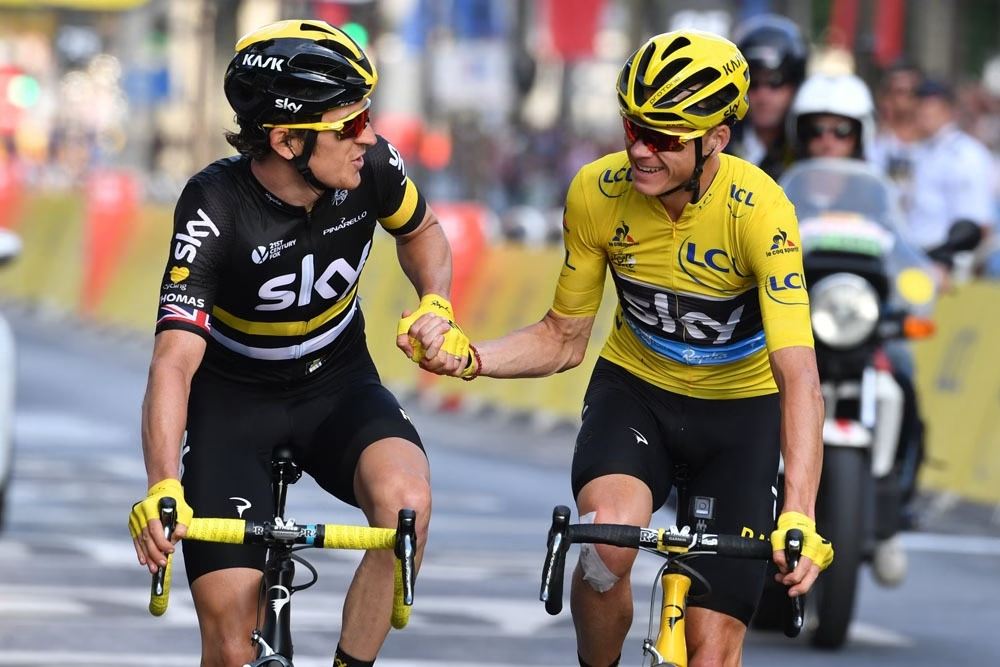
| 2018 | Geraint Thomas | Great Britain | |
| 2019 | Egan Bernal | Colombia | First Colombian winner |
| 2020 | Tadej Pogačar | Slovenia | First Tour victory |
| 2021 | Tadej Pogačar | Slovenia | Second consecutive win |
| 2022 | Jonas Vingegaard | Denmark | First Tour victory |
| 2023 | Jonas Vingegaard | Denmark | Second consecutive win |
| 2024 | Tadej Pogačar | Slovenia | Third Tour victory |
| 2025 | Tadej Pogačar | Slovenia | Fourth Tour victory |
Who has won the Tour de France the most times?
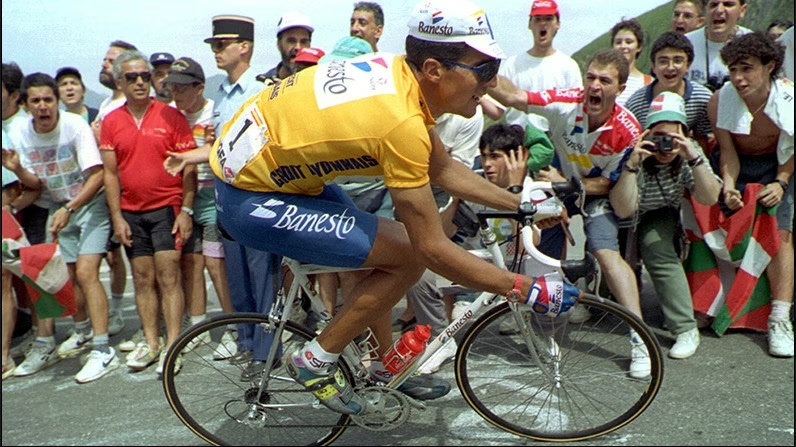
Four riders have officially won the Tour de France five times:
| Rider | Country | Tour wins |
|---|---|---|
| Jacques Anquetil | France | 5 |
| Eddy Merckx | Belgium | 5 |
| Bernard Hinault | France | 5 |
| Miguel Indurain | Spain | 5 |
Lance Armstrong crossed the line first seven times between 1999 and 2005, but those victories were stripped and the titles were not reallocated. That means he is not counted among the official Tour de France winners. Reuters’ Tour de France champions list sets out that modern winners sequence and the stripped years clearly.
Tadej Pogačar moved to four Tour victories by winning in 2020, 2021, 2024 and 2025. That leaves him one short of the official record shared by Anquetil, Merckx, Hinault and Indurain. His next chance comes on a 2026 route analysed in our Tour de France 2026 route guide and Tour de France 2026 GC favourites ranked.
First Tour de France winner
Maurice Garin won the first Tour de France in 1903. The race was created by the newspaper L’Auto and was very different from the modern Tour. Riders raced huge stages, often on rough roads and with far less support than today.
Garin also crossed the line first in 1904, but that edition was heavily disrupted and he was later disqualified. Henri Cornet became the official winner, making him the youngest Tour de France winner in history.
The early Tour was chaotic, brutal and experimental. The race was still learning what it wanted to become. But the winner’s basic achievement was already clear: the Tour de France was the hardest and most prestigious stage race in cycling.
For a broader explanation of how the race became the sport’s defining event, see our brief history of the Men’s Tour de France.
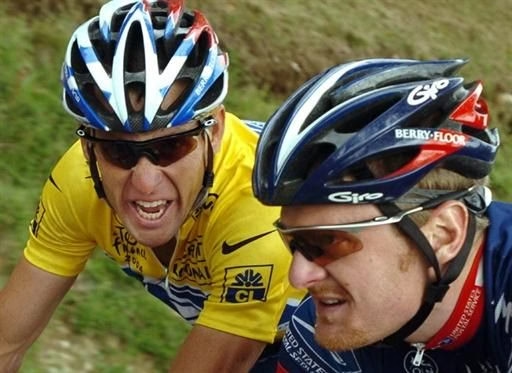 Photo Credit: Getty
Why were there no Tour de France winners in some years?
The Tour de France was not held during the First World War and Second World War.
There were no races from 1915 to 1918 because of the First World War. The Tour returned in 1919, when Firmin Lambot won the first post-war edition.
There were also no races from 1940 to 1946 because of the Second World War and its aftermath. The Tour returned in 1947, when Jean Robic won.
These gaps matter when looking at the race’s history. Some riders lost peak career years to war, while the race itself had to rebuild after both conflicts. The Tour’s winners list is therefore shaped not only by cycling form, but also by wider European history.
The modern Tour is far more structured, with a fixed general classification, defined jerseys and highly organised teams. For newer readers, our Tour de France 2026 jerseys explained guide breaks down how the yellow jersey sits alongside the green, polka-dot and white jerseys today.
Why are there no winners from 1999 to 2005?
The 1999 to 2005 Tour de France titles were originally won by Lance Armstrong, but all seven were later stripped. The Union Cycliste Internationale accepted the US Anti-Doping Agency’s case against Armstrong in 2012, and the titles were not reallocated.
That is why the official winners list shows no winner for those seven editions. It is one of the most important distinctions in Tour history. The results were not simply passed to the second-placed riders because the period was judged to be too compromised.
Those blank years still sit inside the race’s history, but not inside the official winners list. They mark the most damaged era of the modern Tour.
The race has since entered another era of dominance and rivalry, with Pogačar and Vingegaard defining the current yellow jersey contest. Their likely 2026 roles are covered in our features on Tadej Pogačar at the Tour de France 2026 and Jonas Vingegaard at the Tour de France 2026.
Which countries have produced the most Tour de France winners?
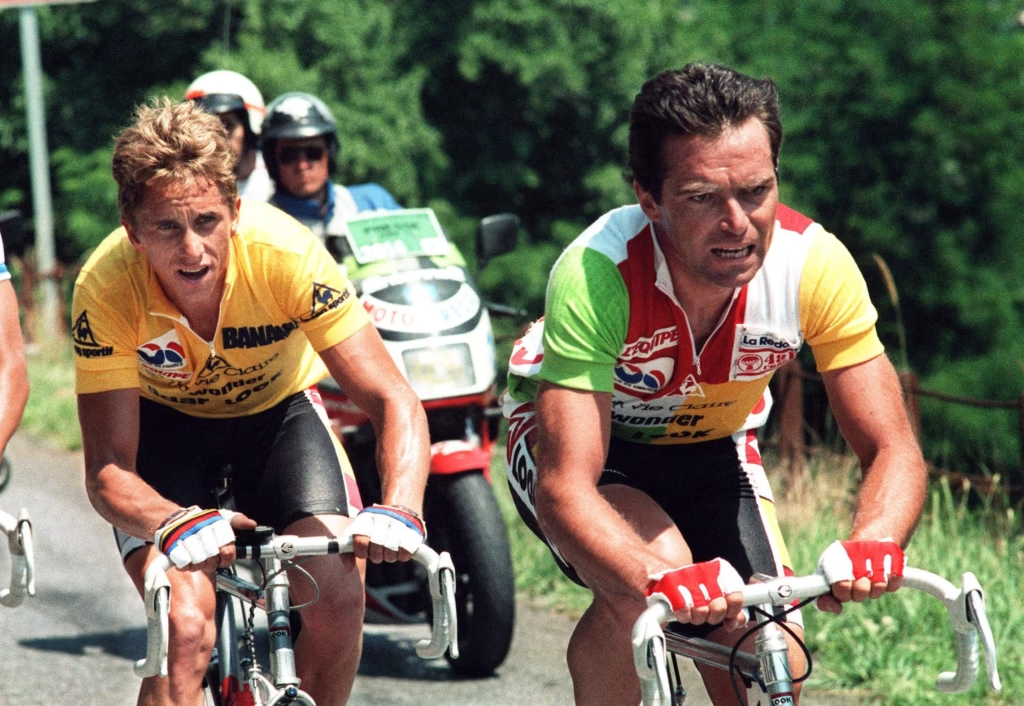
France has produced the most Tour de France winners, which is no surprise given the race’s origins and early history. French riders dominated many of the early editions, then returned strongly through riders such as Louison Bobet, Jacques Anquetil, Bernard Thévenet, Bernard Hinault, Laurent Fignon and others.
Belgium has the next great historical record, shaped by the pre-war era and by Eddy Merckx. Spain became especially influential from the 1950s onwards, then through Pedro Delgado, Miguel Indurain, Alberto Contador, Carlos Sastre and Oscar Pereiro.
Italy’s winners include Ottavio Bottecchia, Gino Bartali, Fausto Coppi, Felice Gimondi, Gastone Nencini, Marco Pantani and Vincenzo Nibali. Luxembourg has a deep historical record for a small country, with François Faber, Nicolas Frantz, Charly Gaul and Andy Schleck among its winners.
More recently, the Tour has become more international. Winners have come from the United States, Ireland, Denmark, Great Britain, Australia, Colombia and Slovenia. Egan Bernal became the first Colombian winner in 2019, while Tadej Pogačar became the first Slovenian winner in 2020.
The next Tour will again carry a broad international field, from established GC contenders to emerging riders. For that wider race picture, see our Tour de France 2026 team-by-team guide and full start list for Tour de France 2026.
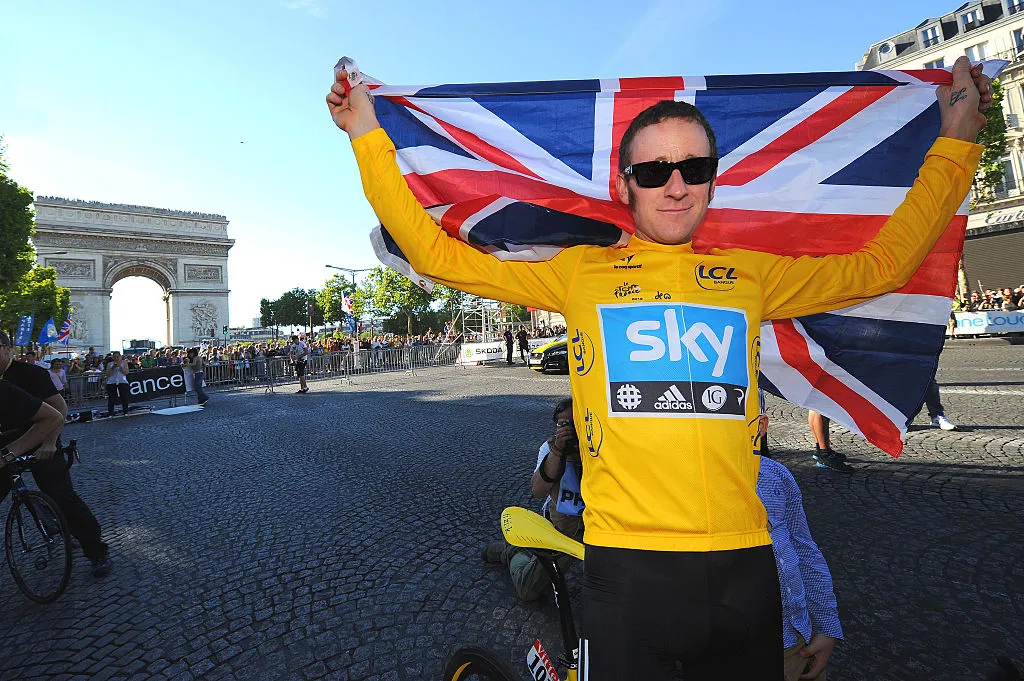
British Tour de France winners
There have been three British Tour de France winners:
| Year | Rider | Notes |
|---|---|---|
| 2012 | Bradley Wiggins | First British Tour de France winner |
| 2013 | Chris Froome | First of four Tour victories |
| 2015 | Chris Froome | Second Tour victory |
| 2016 | Chris Froome | Third Tour victory |
| 2017 | Chris Froome | Fourth Tour victory |
| 2018 | Geraint Thomas | Third British winner |
The British era was built around Team Sky, later Team Ineos, and changed the race’s modern tactical identity. Wiggins won with time-trial strength and controlled climbing in 2012. Froome then dominated much of the next period, winning four Tours between 2013 and 2017. Thomas added another British victory in 2018.
For the current British angle, see our best British riders to watch at the Tour de France 2026, including riders whose goals may be stage wins, domestique work, breakaways or GC support rather than overall victory.
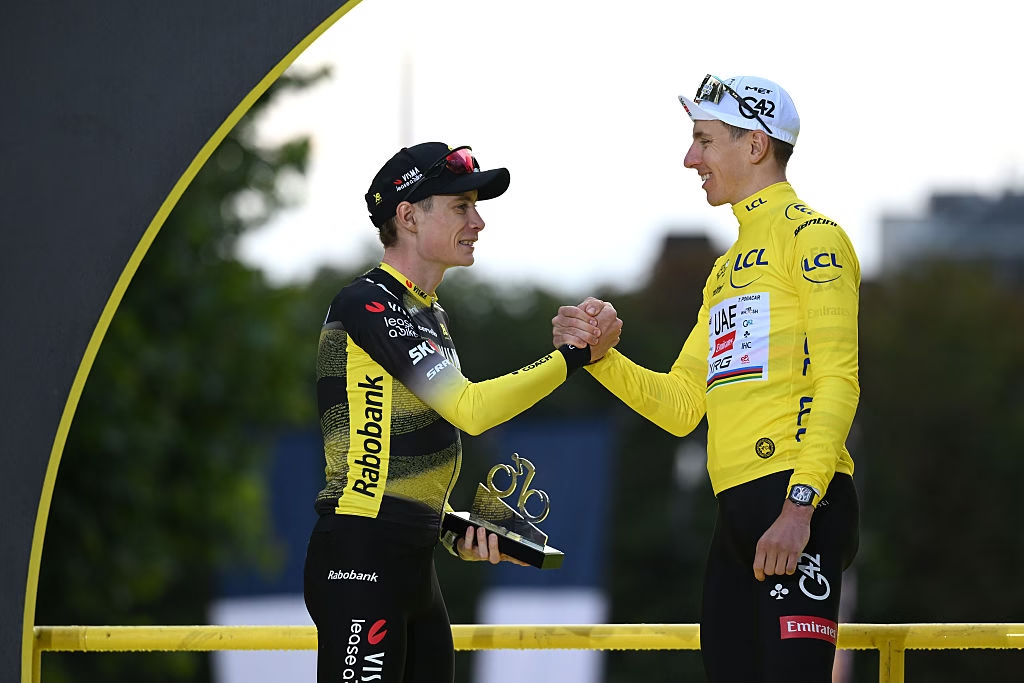 Photo Credit: Getty
Recent Tour de France winners
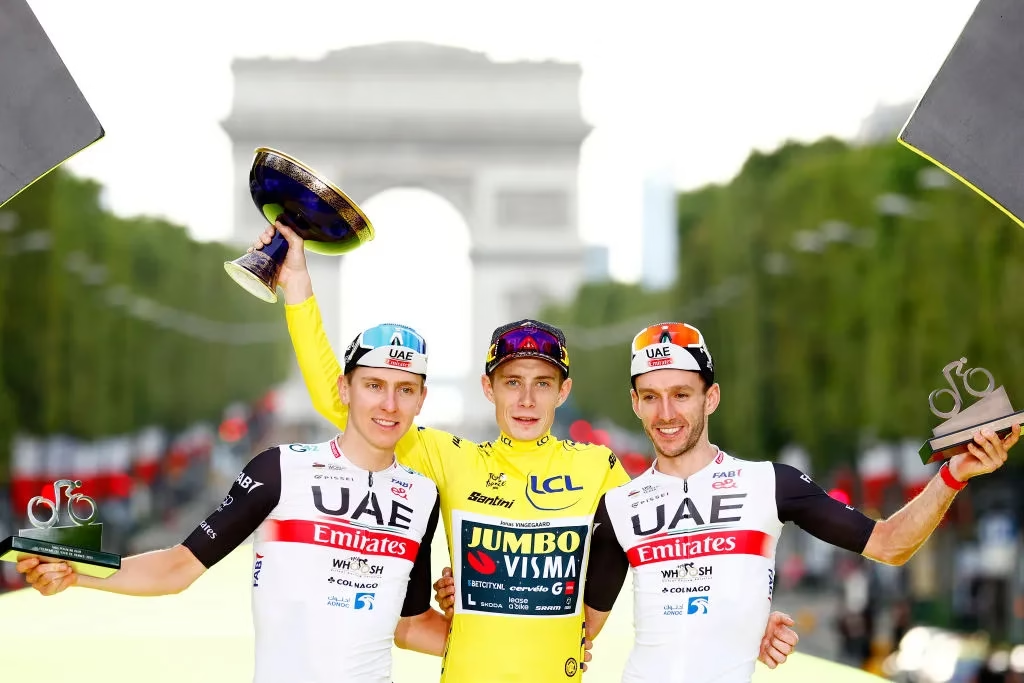
The modern Tour has been shaped by two riders: Tadej Pogačar and Jonas Vingegaard.
| Year | Winner | Country |
|---|---|---|
| 2020 | Tadej Pogačar | Slovenia |
| 2021 | Tadej Pogačar | Slovenia |
| 2022 | Jonas Vingegaard | Denmark |
| 2023 | Jonas Vingegaard | Denmark |
| 2024 | Tadej Pogačar | Slovenia |
| 2025 | Tadej Pogačar | Slovenia |
Pogačar won in 2020 and 2021, then Vingegaard beat him in 2022 and 2023. Pogačar returned to the top in 2024 and 2025, taking his total to four Tour victories.
That rivalry now defines the current era. The Tour has moved from the controlled Team Sky years into a more aggressive phase, with Pogačar and Vingegaard regularly shaping the race in the mountains rather than waiting only for the final climb.
The 2026 route gives both riders another major test, with the Pyrenees, Massif Central, Vosges, Jura and back-to-back Alpe d’Huez finishes all likely to shape the yellow jersey battle. For more detail, see our Tour de France 2026 route analysis, Tour de France 2026 mountain stages ranked by difficulty and Tour de France 2026 summit finishes guide.
Tour de France winners and the yellow jersey
The Tour de France winner is the rider who finishes the race with the lowest total time across all stages. This is called the general classification. The leader wears the yellow jersey, and the final yellow jersey wearer in Paris is the Tour de France winner.
That means the winner does not need to win the most stages. They need to be the fastest overall rider across the full race. Climbing, time-trialling, positioning, team support, recovery and avoiding crashes all matter.
The modern general classification is shaped by more than summit finishes. Time trials, team tactics, crosswinds, bonus seconds, domestiques and recovery all play a part. Our guides to how the Tour de France general classification works, how Tour de France teams work and what is a domestique at the Tour de France? explain the structure behind the final winners list.
Tour de France winners explained simply
Every Tour de France winner is the rider who completes the full race in the lowest total time. Stage wins are important, but they are not the same as winning the Tour. A rider can win the Tour without winning many stages if they are consistent, climb well, time-trial strongly and avoid major time losses.
That is why the winners list is so selective. Garin did it first in 1903. Anquetil, Merckx, Hinault and Indurain each did it five times. Pogačar has now done it four times. The Armstrong years remain blank in the official record.
The Tour de France winner is not just the best rider on one day. They are the rider who solves three weeks of racing better than anyone else.
For more Tour de France explainers, visit our Tour de France hub, beginner’s guide to Men’s Tour de France 2026 and Tour de France 2026 route: best days for GC attacks.