
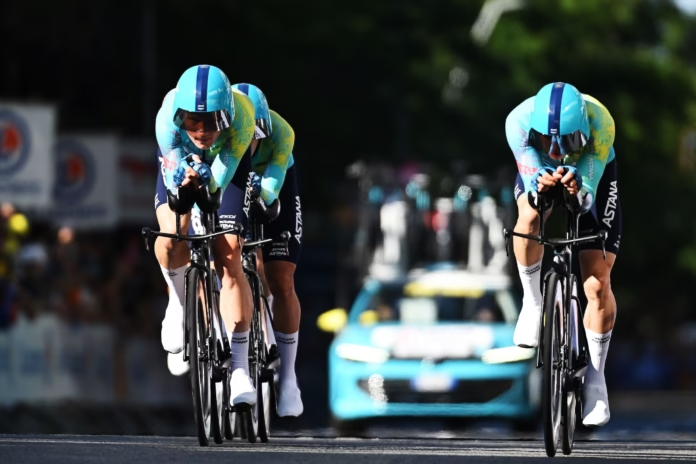
Fourteen teams are still searching for their first stage victory of the 2026 Tour de France with only four opportunities remaining.
Nine of the 23 starting teams have won across the opening 17 stages, leaving more than half of the field without a victory before the race reaches Orcières-Merlette, two consecutive finishes at Alpe d’Huez and the final stage into Paris.
Tadej Pogačar and UAE Team Emirates-XRG have taken the largest share, while Soudal Quick-Step, Red Bull-Bora-Hansgrohe and Alpecin-Premier Tech have also collected multiple victories. Team Visma | Lease a Bike, Lidl-Trek, Decathlon CMA CGM, Uno-X Mobility and Team Jayco AlUla complete the list of successful teams.
That leaves several major WorldTour squads, ambitious wildcard teams and some of the strongest breakaway riders in the race facing a final-week problem.
Stage 18 may be their best remaining opportunity.
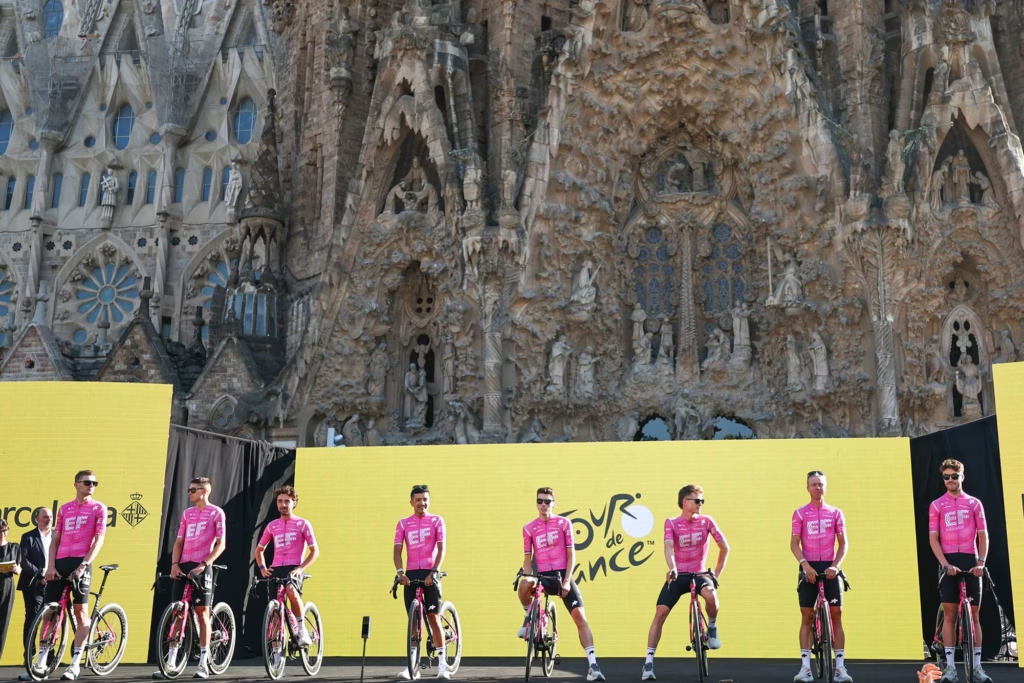
Tour de France teams without a stage win after stage 17
| Team | Leading stage 18 options |
|---|---|
| EF Education-EasyPost | Richard Carapaz, Ben Healy, Georg Steinhauser |
| XDS Astana Team | Harold Tejada, Sergio Higuita, Simone Velasco |
| Bahrain Victorious | Antonio Tiberi, Damiano Caruso, Matej Mohorič |
| Netcompany INEOS Cycling Team | Egan Bernal, Thymen Arensman, Kévin Vauquelin |
| NSN Cycling Team | Marco Frigo, George Bennett, Krists Neilands |
| Movistar Team | Einer Rubio, Jefferson Cepeda, Javier Romo |
| Lotto Intermarché | Lennert Van Eetvelt, Georg Zimmermann, Huub Artz |
| Cofidis | Ion Izagirre, Benjamin Thomas, Alex Aranburu |
| Pinarello-Q36.5 Pro Cycling Team | Quinten Hermans, Xandro Meurisse, Damien Howson |
| Groupama-FDJ United | Clément Berthet, Guillaume Martin Guyonnet, Quentin Pacher |
| Tudor Pro Cycling Team | Michael Storer, Marc Hirschi, Julian Alaphilippe |
| TotalEnergies | Jordan Jegat, Matteo Vercher, Nicolas Breuillard |
| Team Picnic PostNL | Warren Barguil, Frank van den Broek |
| Caja Rural-Seguros RGA | José Félix Parra, Sebastian Berwick, Abel Balderstone |
Several have already come close.
Harold Tejada finished second to Mauro Schmid on stage 13, with Tom Pidcock third from the same breakaway. Lewis Askey then placed fourth behind Jasper Philipsen in Voiron, while Richard Carapaz has been prominent in the mountains competition.
The stage 17 result in Voiron showed how difficult it can be to convert an aggressive day into a win. Mads Pedersen appeared to have created the decisive move, only for Alpecin-Premier Tech to reorganise the race around Philipsen.
Close results no longer matter very much. With the Tour almost over, teams must decide whether to protect secondary objectives or commit fully to winning a stage.
Which teams have already won a Tour de France stage?
The opening 17 stages have been shared between nine teams.
| Team | Stage winner or winners |
|---|---|
| UAE Team Emirates-XRG | Isaac del Toro and Tadej Pogačar |
| Soudal Quick-Step | Tim Merlier |
| Red Bull-Bora-Hansgrohe | Remco Evenepoel |
| Alpecin-Premier Tech | Mathieu van der Poel and Jasper Philipsen |
| Team Visma | Lease a Bike | Stage 1 team time trial |
| Lidl-Trek | Mads Pedersen |
| Decathlon CMA CGM | Olav Kooij |
| Uno-X Mobility | Søren Wærenskjold |
| Team Jayco AlUla | Mauro Schmid |
Repeated victories for a small group of riders have reduced the number of opportunities available to everyone else.
Several stages that might ordinarily have gone to breakaways have instead been won by GC contenders or surviving sprinters. Even stage 13 into Belfort, one of the clearest breakaway days of the race, went to a team already strong enough to place several riders into dangerous moves.
Stage 18 offers another chance, but its summit finish means Pogačar and the podium contenders can still take the stage away from the escape.
Why stage 18 is so important for the winless teams
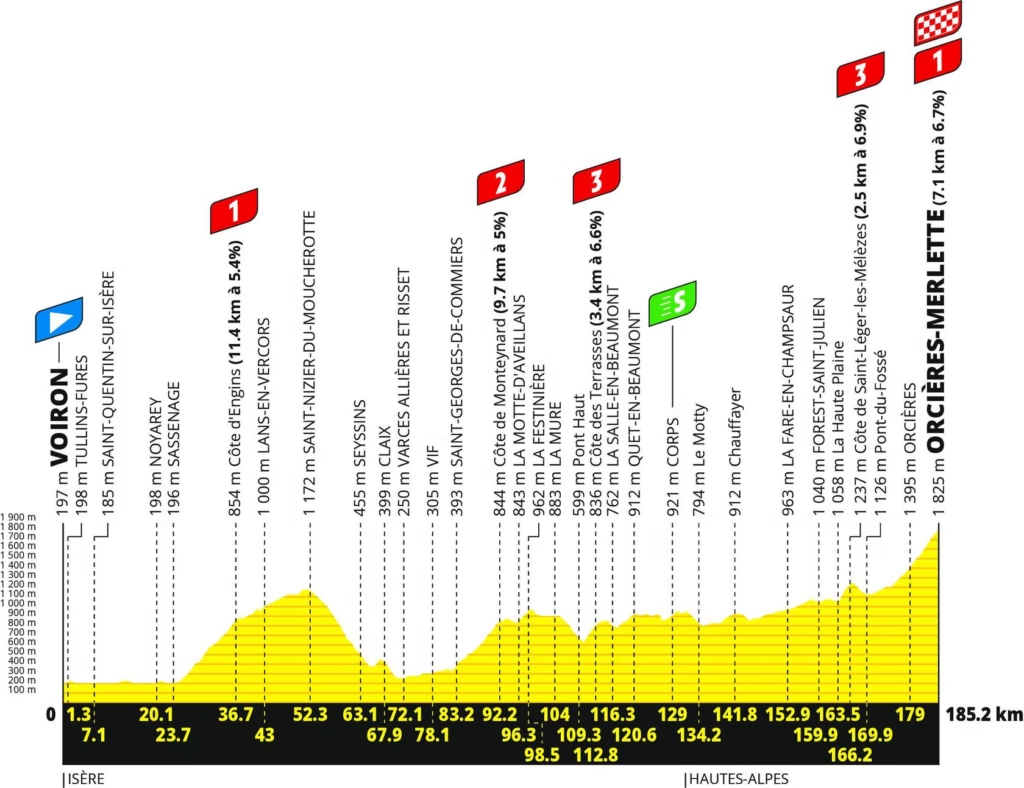
The route from Voiron to Orcières-Merlette offers a better balance than the two stages that follow.
It contains 185.2km and approximately 3,900 metres of climbing, but the final ascent is less severe than Alpe d’Huez. Orcières-Merlette measures 7.1km at 6.7%, making it difficult enough to favour a climber without guaranteeing that the yellow jersey group catches everyone ahead.
The opening Category 1 Côte d’Engins is also crucial. Its 11.5km at 5.4% begins after roughly 25km and should allow a strong climbing breakaway to form.
That gives teams two ways to approach the stage.
They can attack immediately and place their strongest climber in the decisive move. Alternatively, they can send several riders ahead, force rivals to chase and preserve one leader for Orcières-Merlette.
The route, likely breakaway fight and GC implications are covered in the Tour de France 2026 stage 18 preview.
Waiting for stages 19 and 20 is more dangerous. Both finish at Alpe d’Huez, with stage 20 crossing the Croix de Fer, Télégraphe, Galibier and Sarenne. Those stages offer greater rewards for the strongest climbers but also make a victory by Pogačar, Evenepoel or another GC contender more likely.
For many teams, Thursday is the final stage on which a breakaway climber has a realistic chance of staying ahead.
EF Education-EasyPost have the strongest hand
EF Education-EasyPost may be the best-equipped team still without a win.
Carapaz is third in the mountains classification and has an obvious reason to join the stage 18 breakaway. The early Côte d’Engins offers 10 points, while 29 are available across the full stage.
His polka-dot ambitions and stage-winning objective work together. Carapaz can collect points on the early climbs without sacrificing his chance at Orcières-Merlette, provided he does not waste too much energy sprinting for every summit.
The difficulty is that he begins 31 points behind Pogačar and six behind Valentin Paret-Peintre. Carapaz may need to respond whenever Paret-Peintre accelerates, even when that is not ideal for his stage-winning prospects.
The full classification arithmetic is examined in who can catch Pogačar in the Tour de France polka-dot jersey battle.
Ben Healy gives EF a different threat. He can attack between climbs, use the rolling roads to create separation and avoid waiting for a direct uphill contest against lighter riders.
Georg Steinhauser is another credible option if EF want to place several riders in the move.
Carapaz is their clearest candidate, but Healy may be tactically harder for the breakaway to control.
 Photo Credit: Getty
Michael Storer gives Tudor a major opportunity
Tudor Pro Cycling Team have several riders capable of winning from an escape, but Michael Storer is their strongest fit for stage 18.
The Australian can climb well enough to survive Orcières-Merlette and has the endurance required after almost 4,000 metres of ascent. He also carries no GC position that should alarm UAE Team Emirates-XRG.
Marc Hirschi and Julian Alaphilippe are more dangerous on shorter climbs and rolling finishes. They can still contribute by attacking before the final ascent, but the summit finish makes Storer the natural leader.
Yannis Voisard sits tenth overall and is unlikely to receive the same freedom. Tudor must avoid allowing his GC position to limit the rest of the team.
Sending Storer ahead gives them a realistic stage-winning route without placing Voisard’s top 10 under unnecessary pressure.
Harold Tejada can finish what he started on stage 13
XDS Astana came within one sprint of victory when Tejada finished second to Schmid in Belfort.
Stage 18 provides another opportunity on terrain that may suit him better.
Tejada is a strong climber with enough speed to win from a small group. He does not need to attack alone from a long distance if he reaches the final ascent with three or four other riders.
Sergio Higuita offers a faster finish, while Simone Velasco can become useful if the escape contains a wider range of attackers.
Astana’s best plan would be to place more than one rider in the breakaway. That gives Tejada support and prevents him carrying the responsibility for chasing every attack.
After coming so close on stage 13, Astana should be one of the teams most committed to Thursday’s opening battle.
INEOS can no longer wait for the perfect stage
Netcompany INEOS Cycling Team remain without a win despite arriving with several credible stage hunters.
Egan Bernal and Thymen Arensman are the obvious choices for Orcières-Merlette. Both can survive a difficult mountain stage, and neither is close enough overall to present an immediate threat to Pogačar.
Kévin Vauquelin provides another option, while Michał Kwiatkowski can help shape the breakaway or attack during the transitions.
INEOS must decide whether to concentrate around one leader or use their numbers.
A large group containing Bernal and Arensman would allow one rider to cover attacks while the other saves energy. Sending only one risks leaving him isolated against teams with several representatives.
Bernal carries the greater profile, but Arensman may be the stronger fit for a steady climb such as Orcières-Merlette.
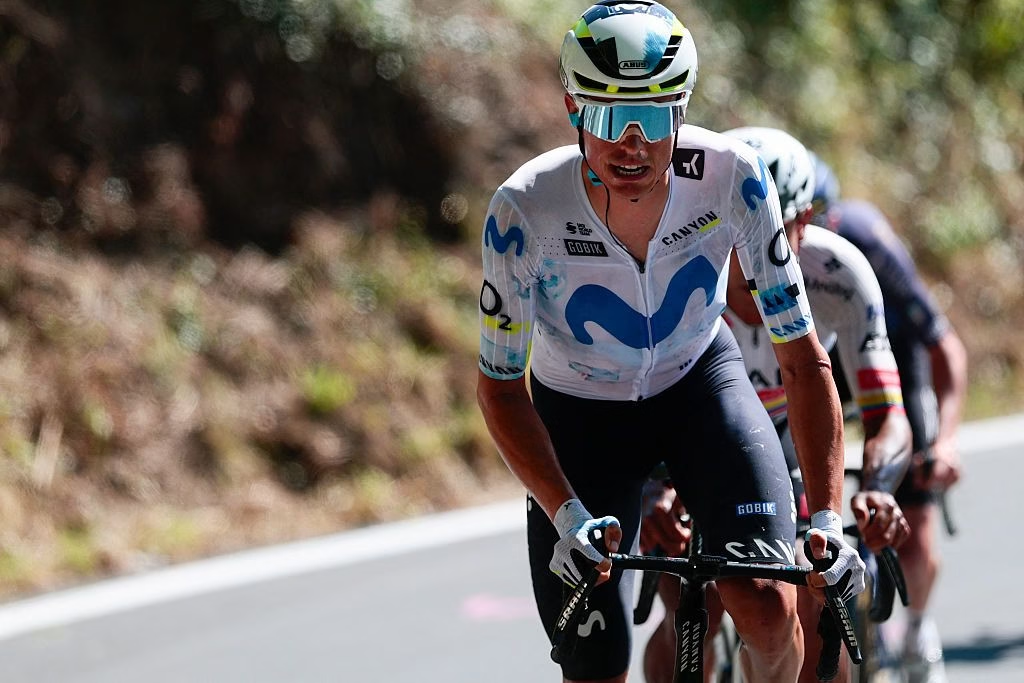 Photo Credit: Getty
Movistar need to turn climbing depth into a result
Movistar have Einer Rubio, Jefferson Cepeda and Javier Romo available for a mountain breakaway.
Rubio is their clearest stage-winning candidate. He can handle long climbing stages and is well suited to a finish where maintaining a strong tempo may matter more than one explosive acceleration.
Cepeda can contest the early mountain points or act as support, while Romo is useful across the less severe middle section.
Movistar’s difficulty is that many rival teams will want the same race.
They cannot rely on Rubio simply following the strongest move. Placing two riders in the escape would give them a better chance of responding when the group begins attacking before the final climb.
The Spanish team have enough climbing quality to win. The remaining question is whether they can create the right tactical position.
Bahrain Victorious have conflicting objectives
Bahrain Victorious must balance the search for a stage with Lenny Martinez’s seventh place overall.
Martinez is only eight seconds ahead of Tom Pidcock and cannot be sent into a speculative move without provoking a response. He must remain with the GC group and defend his position.
That leaves Antonio Tiberi, Damiano Caruso and Matej Mohorič as the more realistic breakaway riders.
Tiberi and Caruso are suited to Orcières-Merlette, while Mohorič can try to anticipate the climbers by attacking during a descent or rolling transition.
The ideal scenario places Mohorič and one climber ahead. Mohorič can force others to chase, allowing Tiberi or Caruso to conserve energy for the finish.
Phil Bauhaus may provide another chance in Paris, but relying on stage 21 against Philipsen, Pedersen and Kooij would be a much less attractive plan.
Lotto Intermarché should build around Van Eetvelt
Lennert Van Eetvelt is one of the most dangerous riders among the winless teams.
He has the climbing ability to win at Orcières-Merlette and should receive freedom after Lotto Intermarché lost Lars Craps before stage 16.
Georg Zimmermann is another reliable breakaway option, while Huub Artz can help place the team in the move.
Van Eetvelt’s best chance may come from remaining quiet during the early mountain sprints. Carapaz and Paret-Peintre are likely to expend energy contesting points, creating an opportunity for a rider focused entirely on the stage.
Lotto retain possible routes through Arnaud De Lie or Jenno Berckmoes in Paris, but stage 18 is a better opportunity to control their own outcome.
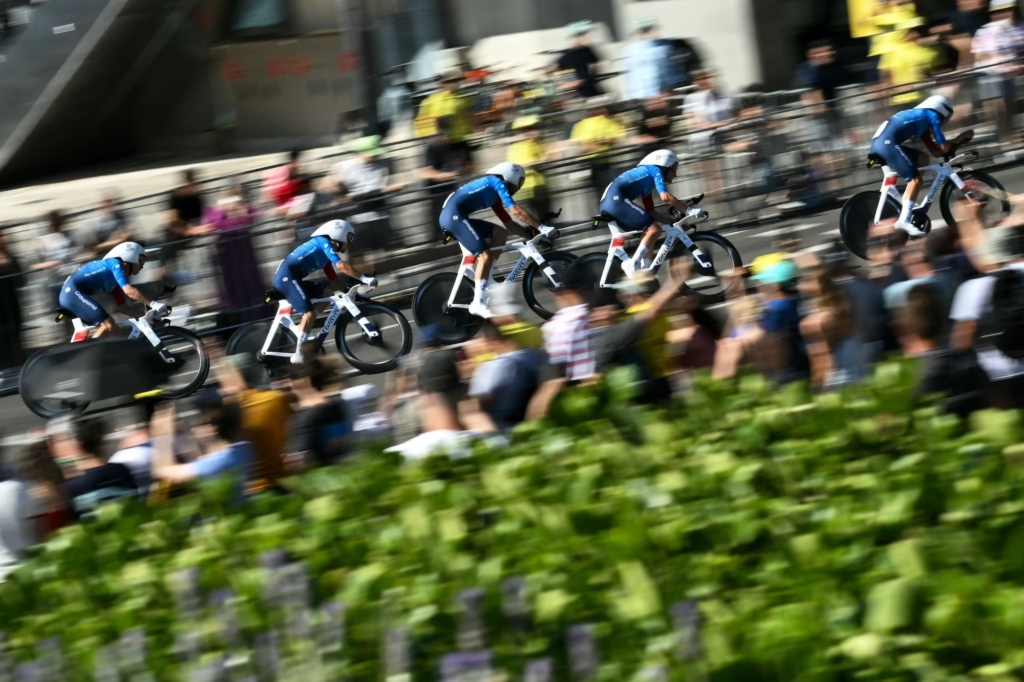
Groupama-FDJ need numbers in the breakaway
Groupama-FDJ United have reached the final Alpine block without the French stage win they would have wanted.
Guillaume Martin Guyonnet is their best option for Orcières-Merlette. He can climb with a strong breakaway and should be free to ride for the stage.
Quentin Pacher and Ewen Costiou can help build the move, while Romain Grégoire is better suited to a less demanding finish.
The team should prioritise numbers. One rider in a large breakaway is unlikely to be enough when EF, INEOS, Movistar and Tudor can all place several climbers ahead.
NSN Cycling Team have two different final chances
NSN’s most visible opportunities have come through Biniam Girmay and Lewis Askey, but stage 18 requires different riders.
George Bennett, Marco Frigo and Krists Neilands are the natural breakaway options.
Bennett has the pure climbing background, Frigo can survive a difficult rolling stage and Neilands offers the ability to attack before the final ascent.
The team should protect Girmay for Paris rather than ask him to survive an Alpine breakaway. Askey’s fourth place on stage 17 showed that NSN can compete in a reduced sprint, but Orcières-Merlette is too difficult to build around him.
NSN therefore have two remaining plans: chase Thursday through Bennett, Frigo or Neilands, then preserve Girmay and Askey for stage 21 if that fails.
 Photo Credit: Getty
Pidcock’s GC position complicates Q36.5’s chase
Pinarello-Q36.5 Pro Cycling Team are eighth overall through Pidcock, but that position reduces his breakaway freedom.
Pidcock is only eight seconds behind Martinez and 1:06 ahead of Jordan Jegat. Any move involving him would immediately affect the top 10 and force Bahrain Victorious or TotalEnergies to consider chasing.
The same tactical problem was central to Pidcock’s rise during stage 13. Once he became a genuine GC threat, other teams could no longer allow him unrestricted breakaway freedom.
Q36.5 should instead look towards Quinten Hermans, Xandro Meurisse or Damien Howson.
Hermans has the fastest finish but may find Orcières-Merlette too long if the strongest climbers attack early. Howson is better suited to a sustained ascent, while Meurisse can contribute across the rolling middle section.
Pidcock remains capable of attacking within the GC finale. That is a different route from the breakaway and one made harder by Pogačar’s presence.
TotalEnergies must separate Jegat’s GC race from the stage hunt
Jegat moved within 1:06 of Pidcock by gaining time from the stage 17 breakaway.
That result has made another escape much harder.
Bahrain and Q36.5 will now recognise Jegat as a direct threat to seventh and eighth overall. He may still attack, but he is unlikely to receive the freedom he enjoyed on the road to Voiron.
TotalEnergies should therefore use Matteo Vercher, Nicolas Breuillard or Joris Delbove for the stage hunt.
Jegat can remain around the GC group and look for a late opportunity. Asking him to chase another large break risks forcing several teams to control the race against him.
The stage 17 gain strengthened his top 10 but weakened his chances of winning from another escape.
Picnic PostNL and Caja Rural must attack early
Warren Barguil is Team Picnic PostNL’s obvious option.
The Frenchman has the experience to judge a mountain breakaway and should be allowed substantial freedom. Frank van den Broek provides a second rider capable of surviving the early climbing.
Picnic also have Pavel Bittner for Paris, but a sprint victory there would require him to beat a field containing Philipsen, Pedersen, Kooij and Girmay.
Caja Rural-Seguros RGA face an even narrower route.
José Félix Parra and Sebastian Berwick are their strongest stage 18 candidates, with Abel Balderstone another possible presence in the break. They are unlikely to win through a controlled GC finish, so their riders must be prepared to attack before the Côte d’Engins.
Fernando Gaviria gives Caja Rural a theoretical Paris option, but the mountain breakaway may offer the team a better chance of reaching the podium.
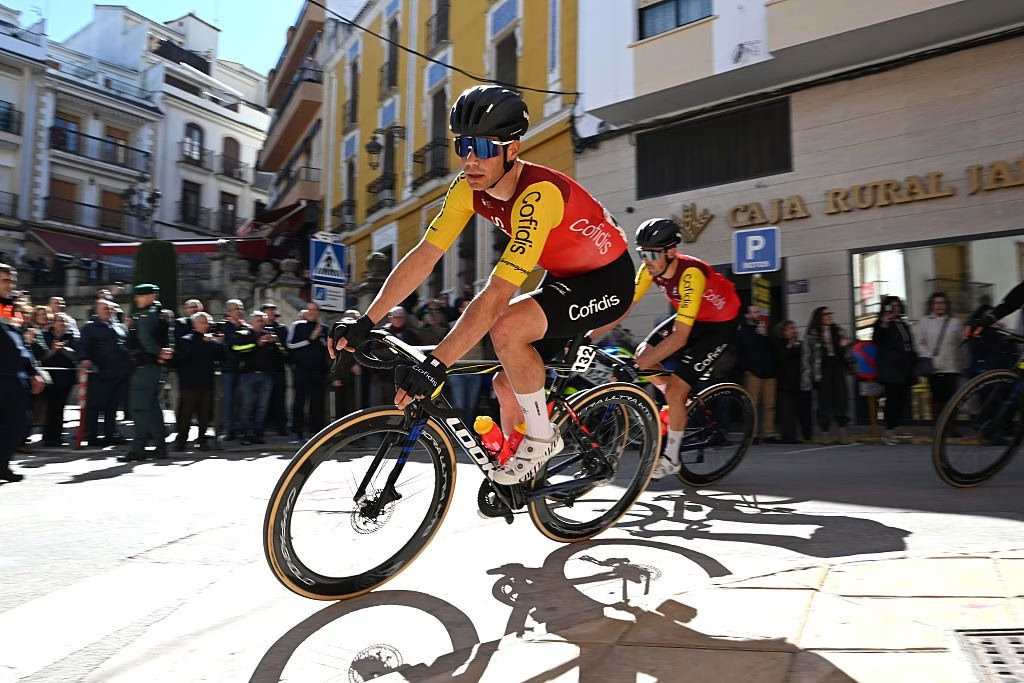
Cofidis may need to look beyond stage 18
Ion Izagirre is the most credible Cofidis candidate for Orcières-Merlette.
He has the experience to win from a mountain breakaway and can use descents and transitional roads rather than relying only on the final climb.
Benjamin Thomas provides tactical range, while Alex Aranburu is more likely to struggle if the strongest climbers control the move.
Cofidis also have Milan Fretin for Paris. That may influence how much support they commit to stage 18, but waiting carries considerable risk.
The Paris circuit is not guaranteed to end in a conventional bunch sprint, and Fretin would face the Tour’s strongest remaining fast finishers if it does.
Which winless team is most likely to win stage 18?
EF Education-EasyPost have the strongest overall hand.
Carapaz can target mountains points and the stage simultaneously. Healy can attack between climbs, while Steinhauser provides another credible breakaway rider.
Tudor may have the strongest single stage-focused candidate in Storer. XDS Astana have Tejada’s demonstrated form, while INEOS can use Bernal and Arensman together.
The leading candidates from teams still without a victory are:
- Michael Storer, Tudor Pro Cycling Team
- Richard Carapaz, EF Education-EasyPost
- Harold Tejada, XDS Astana Team
- Thymen Arensman, Netcompany INEOS Cycling Team
- Lennert Van Eetvelt, Lotto Intermarché
- Einer Rubio, Movistar Team
- Egan Bernal, Netcompany INEOS Cycling Team
- Warren Barguil, Team Picnic PostNL
Carapaz may expend more energy contesting the polka-dot jersey, while Storer can focus entirely on reaching Orcières-Merlette in the best possible condition.
That gives Storer a slight advantage if the breakaway stays clear.
The expected race schedule, including when the Côte d’Engins and final climb should be reached, is available in the Tour de France stage 18 live viewing and start time update.
-
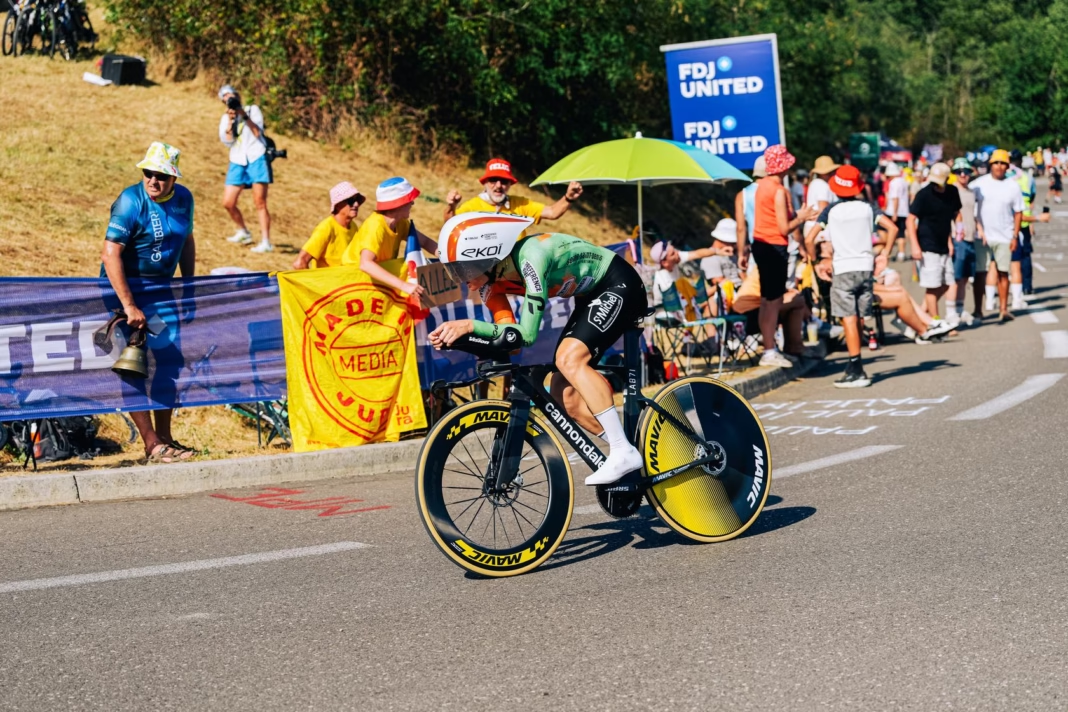
 Photo Credit: A.S.O./Gaëtan Flamme
Who can still win on stages 19, 20 and 21?
Failure on stage 18 does not end every team’s Tour, but the opportunities become increasingly specialised.
Stages 19 and 20 favour the strongest climbers. Carapaz, Storer, Bernal, Arensman, Rubio and Van Eetvelt remain plausible winners, but Pogačar and the GC riders become more likely to take the victories as the difficulty rises.
The scale of the final mountain block is covered in the Tour de France 2026 Alps guide and our ranking of the Tour de France 2026 mountain stages by difficulty.
Stage 20 is particularly difficult for conventional stage hunters. The queen stage over the Galibier, Sarenne and Alpe d’Huez may reward a breakaway, but only if it contains riders capable of surviving more than 5,000 metres of climbing.
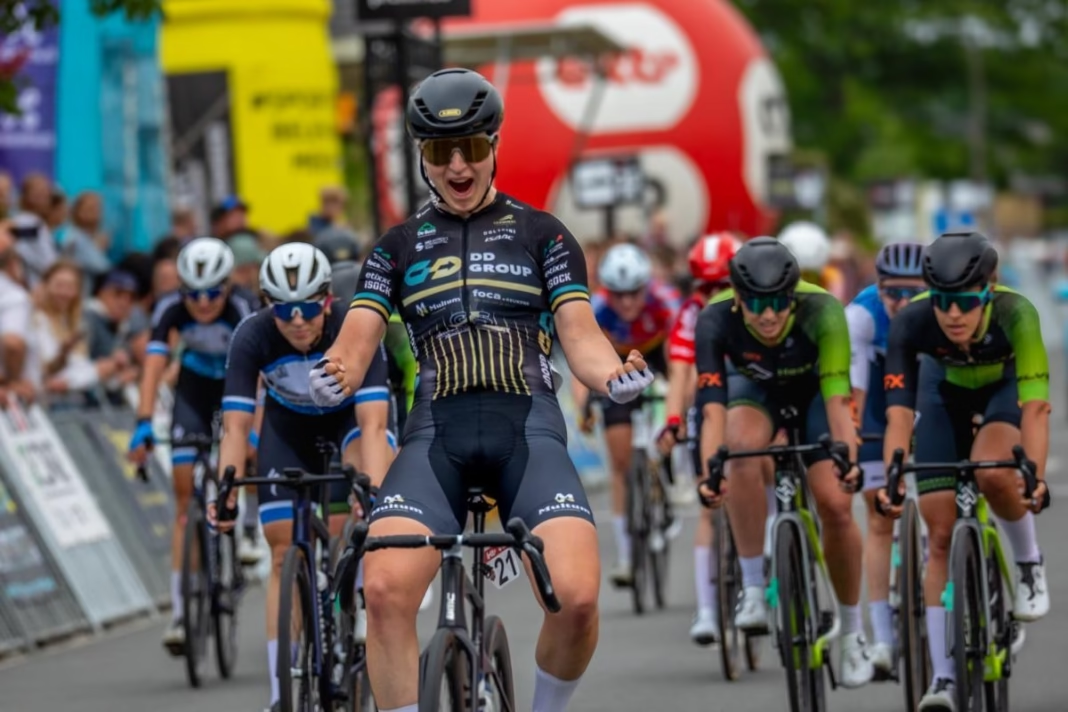
Stage 21 gives the sprinters and Classics riders another chance.
Girmay, Askey, Bauhaus, De Lie, Fretin, Bittner and Gaviria could all target Paris. Riders such as Mohorič, Aranburu, Hirschi, Alaphilippe and Grégoire may prefer an attacking race if the Montmartre circuit disrupts the sprint.
The final stage may therefore rescue one of the teams poorly suited to Orcières-Merlette.
It cannot rescue all 14.
Which teams are most likely to end their wait?
The breakaway should have a genuine chance on stage 18 because UAE do not need to chase riders far behind overall.
That makes Tudor, EF, XDS Astana, INEOS and Lotto Intermarché the teams most likely to end their wait at Orcières-Merlette.
Stage 18 prediction: Michael Storer wins from the breakaway for Tudor Pro Cycling Team.
EF are the most likely team to win somewhere across the full Alpine block, particularly if Carapaz combines his mountains classification campaign with a stage hunt.
NSN, Bahrain Victorious, Cofidis, Team Picnic PostNL and Caja Rural may have a better final chance in Paris, although they will be competing against teams that have already won and still want more.
Four stages remain, but they do not represent four equal opportunities.
Orcières-Merlette is the last broadly accessible mountain stage. After that, the race becomes harder, more controlled and increasingly shaped by Pogačar and the podium battle.
For the 14 teams still without a victory, stage 18 is not simply another breakaway day. It may be their best remaining chance to change the story of their Tour.

