
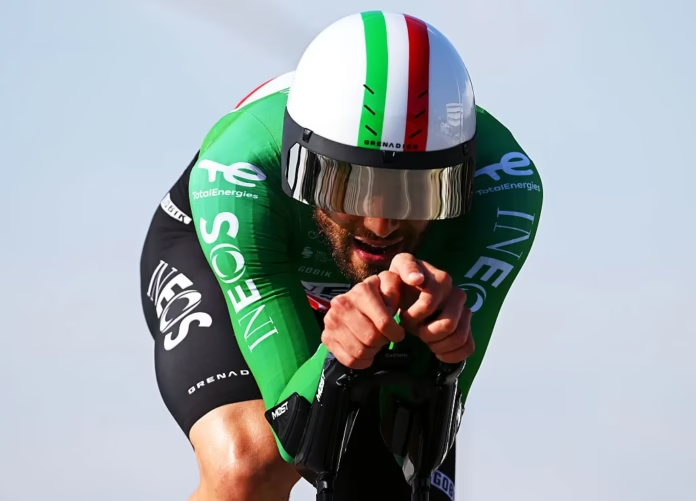
The Tour de France 2026 gives time-triallists two very different chances to shape the race. Stage 1 in Barcelona is a 19.6km team time-trial with individual general classification consequences. Stage 16 is the only individual time-trial of the race, a 26.1km route from Évian-les-Bains to Thonon-les-Bains that arrives after the second rest day and just before the final Alpine block.
That combination changes the way the strongest time-trial riders should be judged. This is not only about who can win stage 16. It is about who can influence the Tour on two fronts: first as part of a collective effort in Barcelona, then as an individual against the clock in the final week.
The pure specialists have a clear target. Filippo Ganna, Stefan Bissegger, Daan Hoole and Mathias Vacek should all look at the route and see a major opportunity. The GC riders have a different calculation. Remco Evenepoel can use the time-trials as his clearest route into the yellow jersey fight. Tadej Pogačar can turn them into another form of pressure. Jonas Vingegaard needs to limit losses, especially on stage 16, while Kévin Vauquelin, Matteo Jorgenson and Brandon McNulty all have chances to gain valuable time in their wider GC or stage-hunting roles.
For the wider route picture, see our Tour de France 2026 full route guide, Tour de France 2026 route analysis, Tour de France 2026 team time-trial explainer and Tour de France 2026 GC favourites ranked.
Why time-trialling matters so much in the 2026 Tour
The 2026 Tour does not have a huge amount of individual time-trial distance, but the placement of the time-trial kilometres is important.
Stage 1 immediately sets the tone. The Barcelona team time-trial will not only decide the first yellow jersey, it can create early gaps before the race reaches Les Angles and Gavarnie-Gèdre. A strong collective ride can give a GC leader a platform. A weak one can force a rider into attack mode before the first week is even settled.
Stage 16 is the more traditional time-trial test. At 26.1km, with enough climbing to stop it being a pure flat-power exercise, it arrives at a brutal point in the race. The riders will have already been through the Pyrenees, the Massif Central, the Vosges and Plateau de Solaison. Then they get a second rest day, restart against the clock, and head towards Orcières-Merlette and the back-to-back Alpe d’Huez stages.
That makes stage 16 a pressure point. Pure climbers can lose the time that forces them to attack in the Alps. Time-trial specialists can take a stage win. GC riders with strong engines can reshape the podium. Teams with several time-trial assets can use the Barcelona opener to build momentum before the race properly opens up.
For more on how the route creates those GC pressure points, see our Tour de France 2026 route: best days for GC attacks, Tour de France 2026 mountain stages ranked by difficulty and Tour de France 2026 summit finishes guide.
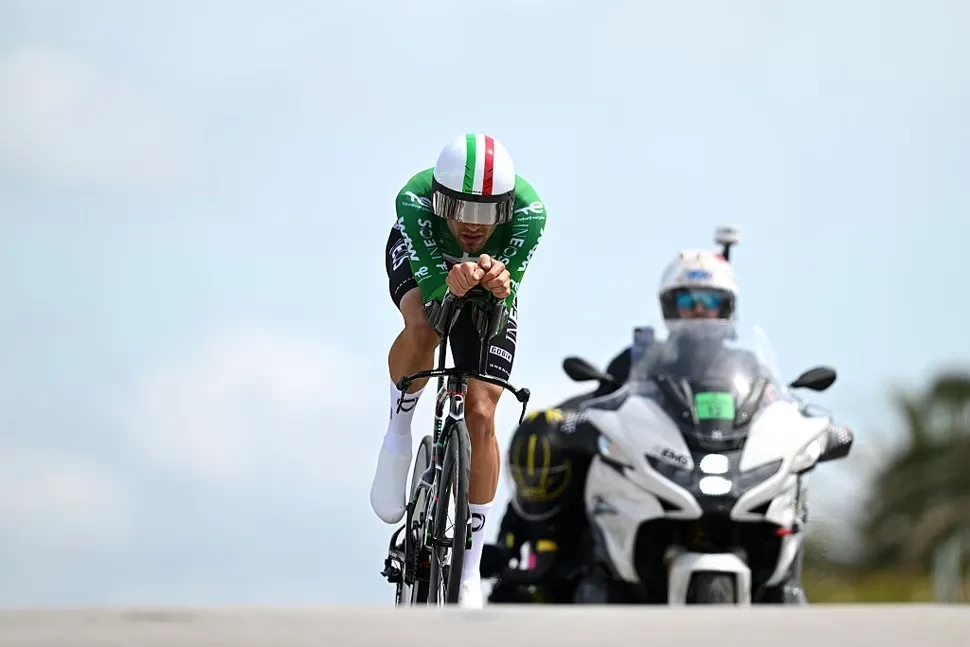
Filippo Ganna
Filippo Ganna is the obvious pure time-trial name at the 2026 Tour if he lines up as expected with Netcompany Ineos. No rider in the field carries the same specialist weight against the clock. He has built his career around enormous sustained power, a technically refined position and the ability to turn flat or rolling time-trials into a private exercise in controlled violence.
The Barcelona team time-trial should suit him perfectly in the opening phase. Ganna can drive a team through the faster sections, stabilise the rotation and make the early kilometres feel almost too fast for everyone else. The challenge comes near the end. Montjuïc is not the sort of climb that ruins him, but the final 0.8km at 7 per cent changes the balance between pure power and punch.
Stage 16 is the bigger personal target. The 26.1km course from Évian-les-Bains to Thonon-les-Bains includes enough elevation to make pacing important, but it is still a route where Ganna’s engine should be one of the most dangerous weapons in the race.
His wider role is also interesting. Netcompany Ineos may arrive with Kévin Vauquelin, Carlos Rodríguez, Oscar Onley and Thymen Arensman as GC-relevant riders. That gives Ganna extra importance on stage 1, where his job may be to protect several leaders before the team decides who gets priority late. It is also why Ineos are one of the key teams in our piece on how the stage 1 team time-trial could change the Tour de France 2026.
Best chance: Stage 16 individual time-trial
Barcelona value: Huge engine for Netcompany Ineos
Overall TT ranking: 1st
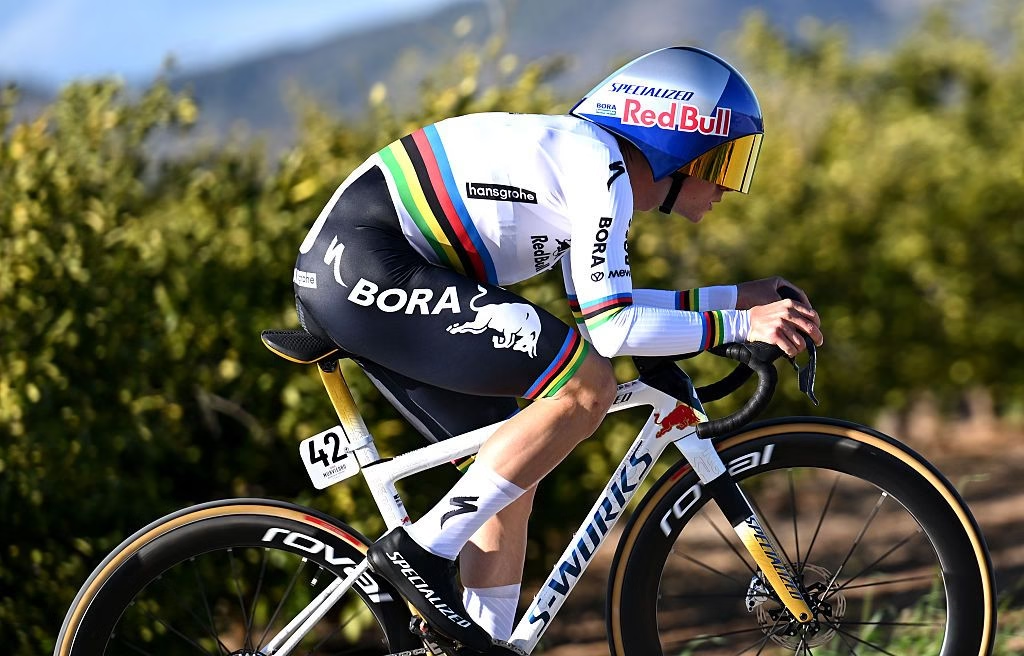 Photo Credit: Getty
Remco Evenepoel
Remco Evenepoel is the most important GC time-triallist at the 2026 Tour.
Stage 16 is central to his entire race. Evenepoel may not be able to match Pogačar and Vingegaard on every high-mountain stage, but against the clock he has a genuine route to take time. The 26.1km course is long enough to matter and arrives just before the final Alpine sequence. If he gains time there, the climbers behind him may have to attack harder on Orcières-Merlette and Alpe d’Huez.
Barcelona also matters. Red Bull-BORA-hansgrohe can use stage 1 as a platform for him if they have the right line-up around him. Mattia Cattaneo gives the team another major engine, and Florian Lipowitz needs protecting if he is riding as a second GC option. The difficulty is balancing Evenepoel’s stage-winning potential with the team’s wider classification structure.
Evenepoel’s strength is not just raw speed. It is his ability to hold a position, control effort and keep momentum over terrain that is not perfectly flat. Stage 16’s elevation gain makes that valuable. The course is not a flat airstrip. It should reward riders who can manage changes in rhythm without losing aerodynamic discipline.
If the Tour turns into a Pogačar-Vingegaard climbing duel, Evenepoel needs the time-trial to keep his yellow jersey route alive.
For more on his wider race, see our Remco Evenepoel at the Tour de France 2026 feature, as well as our broader Tour de France 2026 GC favourites ranked guide.
Best chance: Stage 16 individual time-trial
Barcelona value: Final rider and GC weapon for Red Bull-BORA-hansgrohe
Overall TT ranking: 2nd
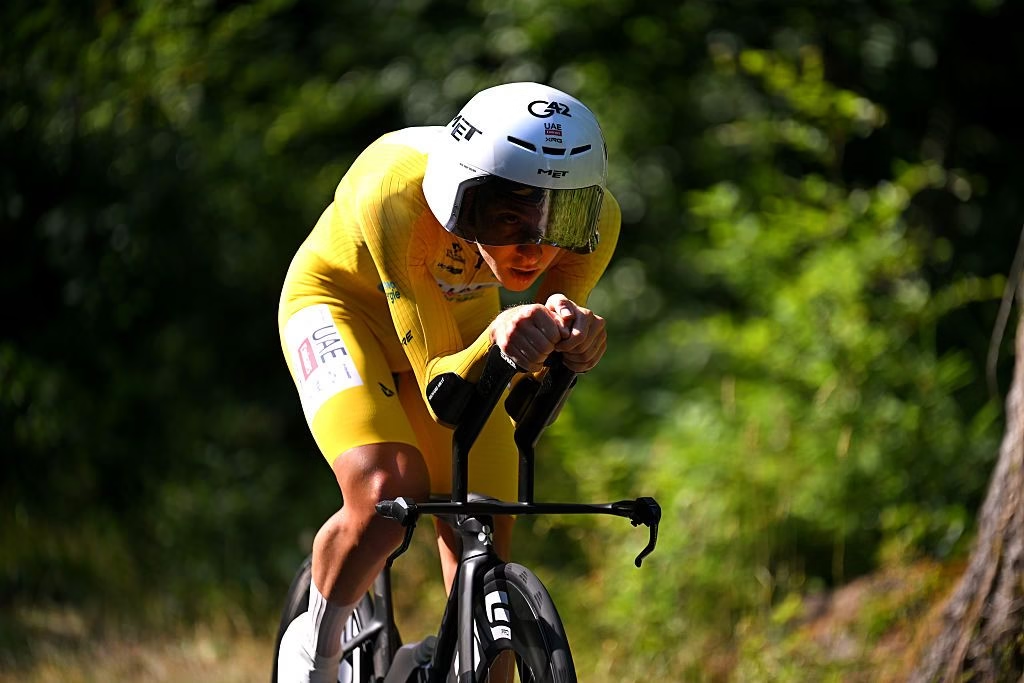
Tadej Pogačar
Tadej Pogačar is not always described first as a time-triallist, but that is partly because he is excellent at almost everything else too. In the context of the 2026 Tour, his time-trialling could be decisive because he does not need to be the absolute best specialist to hurt everyone else.
Stage 1 suits him more than it may first appear. The Barcelona team time-trial finishes with Montjuïc, and that final rise gives UAE Team Emirates-XRG the option of turning the last section into a leader-focused effort. Pogačar can sit protected through the fast roads, then use the uphill finish to gain seconds if the team times the transition properly.
Stage 16 is not as straightforward. Against a peak Evenepoel or Ganna, Pogačar may not be the fastest pure time-triallist. But against the GC group, he is still a threat. He can climb, descend, accelerate and hold power across rolling terrain. On a route with 500m of elevation gain, that all-round profile matters.
The key point is that Pogačar can use time-trials defensively and offensively. If he already leads before stage 16, he can limit losses and protect yellow. If he needs time, he has enough ability to take it from most climbers. That makes him one of the most dangerous riders in both timed stages.
For more on his route fit, see our Tadej Pogačar at the Tour de France 2026 feature, and our breakdown of how the stage 1 team time-trial could change the Tour de France 2026.
Best chance: Stage 1 team time-trial finish and stage 16 GC gains
Barcelona value: Potential first yellow jersey threat
Overall TT ranking: 3rd

Stefan Bissegger
Stefan Bissegger is one of the most interesting names for stage 1 and stage 16 because he brings real time-trial pedigree without the same GC burden as the big favourites.
If he starts for Decathlon CMA CGM, his Barcelona role could be vital for Paul Seixas. Decathlon will need to protect a young GC hope in a technical, high-pressure team time-trial, and Bissegger gives them the kind of engine that can prevent the opening day from becoming a problem. He can stabilise the team, hold speed on the faster roads and keep the formation from drifting into damage limitation too early.
Stage 16 gives him his own chance. The 26.1km route is not a pure specialist’s dream because of the elevation, but Bissegger has enough power and technical ability to be a stage threat if he carries form into the third week.
The question is whether team duties limit him. If Decathlon are fully focused on Seixas and the GC, Bissegger’s stage 16 may be judged partly by how it helps the team rather than just whether he wins. But on paper, he is one of the strongest specialists likely to be in the race.
His value also connects with the French storyline, because a strong stage 1 from Decathlon could help keep Seixas close before the early mountain tests covered in our best French riders to watch at the Tour de France 2026 feature.
Best chance: Stage 16 individual time-trial
Barcelona value: Essential protection for Paul Seixas
Overall TT ranking: 4th
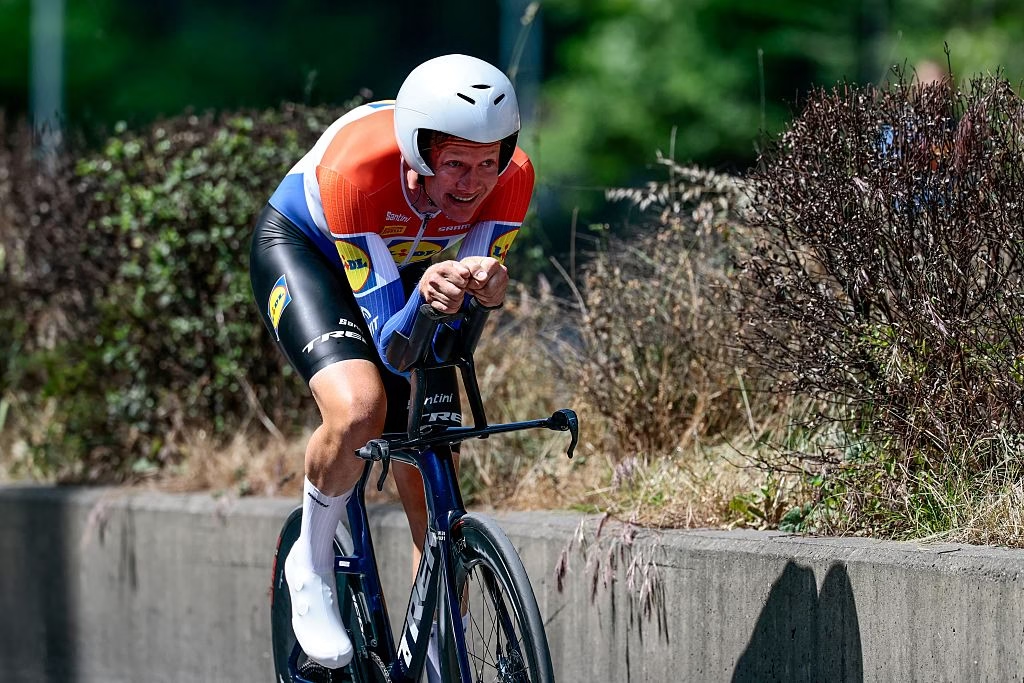
Daan Hoole
Daan Hoole could be one of the most valuable domestiques in the race on stage 1, and a genuine outsider for stage 16.
His strength is the kind of big, repeatable power that matters in a team time-trial. If he starts with Decathlon CMA CGM, his work alongside Bissegger can make a huge difference to Seixas. The team does not need to win the Barcelona stage for it to be a success. It needs to keep Seixas close to the main GC favourites, avoid a damaging opening loss and manage the final Montjuïc section cleanly.
Hoole can help achieve that. He is the type of rider who can take long pulls, protect formation and stop a team from becoming ragged on the fastest parts of the course.
Stage 16 gives him a separate opportunity, although the 500m of climbing makes it harder than a flat specialist course. If the road demands repeated changes in effort, that may bring others closer. Still, in a field where some riders will be exhausted by the final week, Hoole’s engine gives him an outside shot at a top result.
He is also the sort of rider who underlines why the opening stage is about team depth as much as leader strength, a theme explored in our Tour de France 2026 team time-trial explainer.
Best chance: Stage 1 team time-trial impact
Barcelona value: Major pacing engine
Overall TT ranking: 5th
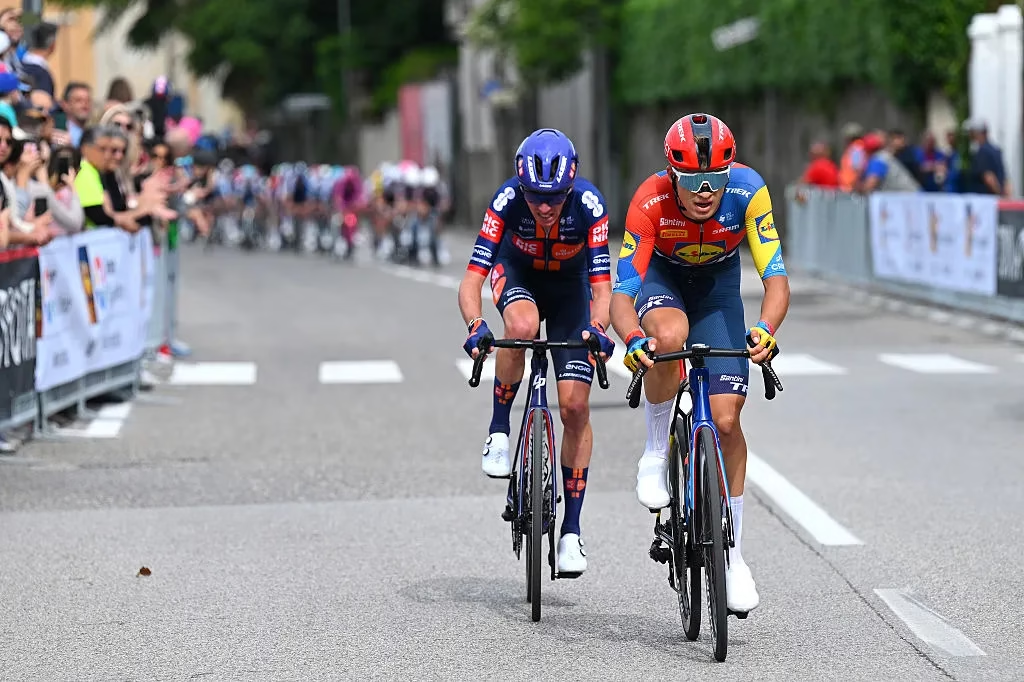
Mathias Vacek
Mathias Vacek is one of the best all-round time-trial options expected at the Tour. He may not have Ganna’s pure specialist aura or Evenepoel’s GC importance, but he has the kind of versatility that can make both timed stages work for him.
The Barcelona team time-trial should suit Lidl-Trek. Vacek can contribute to the power phase of the stage and should be strong enough to handle Montjuïc better than some heavier specialists. That matters if Lidl-Trek are trying to protect Juan Ayuso, Mattias Skjelmose, Giulio Ciccone or another GC-relevant rider while still keeping the team competitive on the day.
Stage 16 may be even more interesting. A rolling 26.1km time-trial with climbing is not only for the biggest engines. It can suit riders who can keep power high on the flats and avoid overcommitting on the rises. Vacek fits that profile.
He also has the advantage of not necessarily being tied to one yellow jersey favourite. If Lidl-Trek’s GC priorities allow, he can target the stage directly.
Vacek’s stage 16 profile also makes sense in the wider context of a route that does not give riders much recovery before the Alps, something covered in our Tour de France 2026 mountain stages ranked by difficulty guide.
Best chance: Stage 16 individual time-trial top result
Barcelona value: Strong all-rounder for Lidl-Trek
Overall TT ranking: 6th
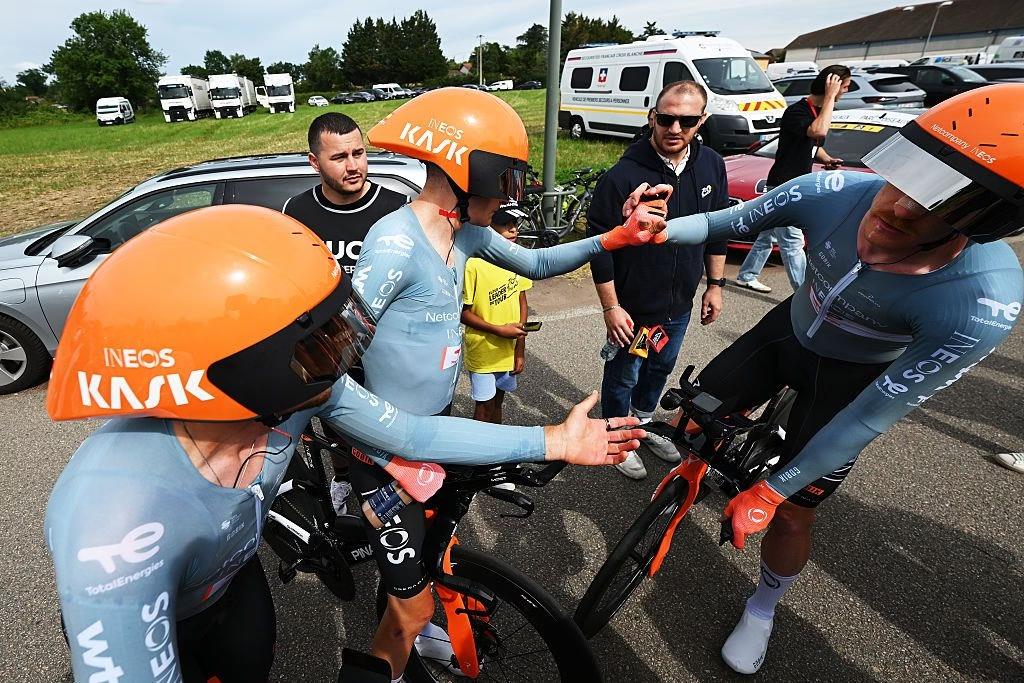
Kévin Vauquelin
Kévin Vauquelin is not only a GC outsider at the 2026 Tour. He is also one of the riders for whom the time-trial route could matter enormously.
His move into a stronger team structure gives him a better platform than he might have had in previous years. With Netcompany Ineos, he should benefit from Ganna’s power on stage 1 and a squad that can ride a highly competitive team time-trial. That could put Vauquelin ahead of other climber-GC contenders before the mountains begin.
Stage 16 is where his own ability matters more. Vauquelin has enough time-trial strength to take time from many climbers, and the 26.1km route should suit him if he is still fresh enough. He is not likely to beat Ganna or Evenepoel in a straight specialist contest, but he could be one of the most important GC movers on the day.
That is the key distinction. Vauquelin does not have to win the time-trial for it to be successful. If he takes 30 or 40 seconds from other podium outsiders, stage 16 could transform his race.
For more on the French angle, see our best French riders to watch at the Tour de France 2026 feature, and our Tour de France 2026 dark horses for the general classification guide.
Best chance: Stage 16 GC gains
Barcelona value: Protected rider in a strong TTT unit
Overall TT ranking: 7th
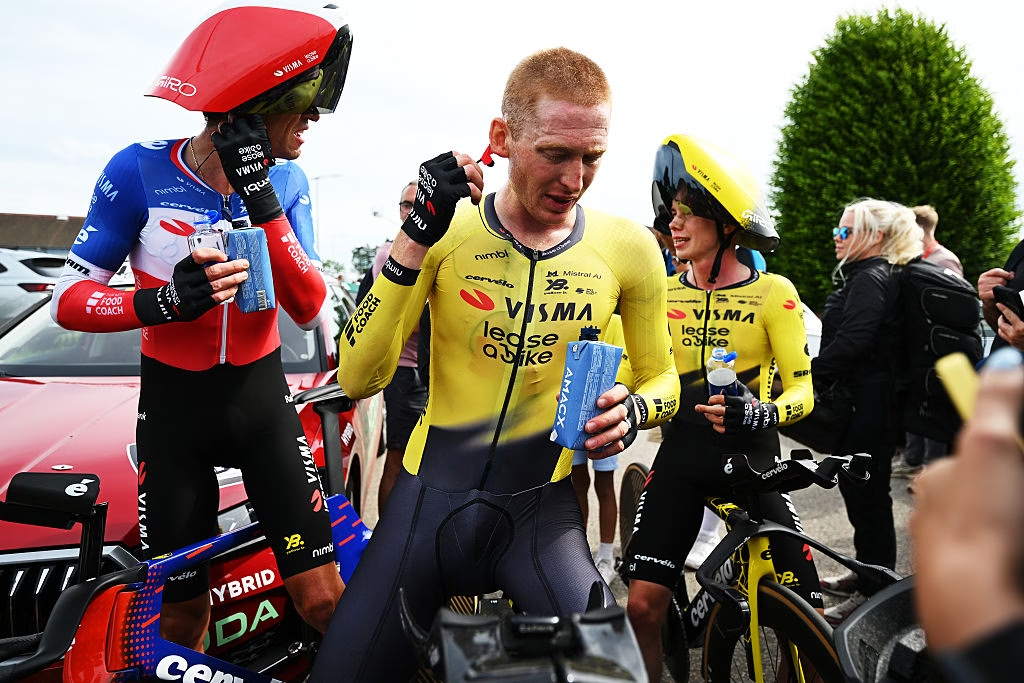 Photo Credit: Getty
Matteo Jorgenson
Matteo Jorgenson is not a pure time-trial specialist, but he is exactly the kind of rider who can make the stage 16 course work.
The route from Évian-les-Bains to Thonon-les-Bains is not perfectly flat. Its 500m of elevation gain makes pacing and all-round strength important, and that brings Jorgenson into the picture. He has the engine, the climbing resistance and the ability to ride a disciplined effort after two hard weeks.
His stage 1 role may be even more important. Team Visma | Lease a Bike need to protect Vingegaard, and Jorgenson can be one of the riders who keeps the team powerful while also handling the late uphill drag. He is not just there to pull and disappear. He may also need to finish close enough to preserve his own GC or tactical value.
Stage 16 could be decisive for him if he is riding high on GC. He may not beat Evenepoel or Ganna, but he can gain on weaker time-trial riders and defend against climbers who have less aero speed.
For more on the GC context around riders like Jorgenson, see our Tour de France 2026 dark horses for the general classification guide and our Tour de France 2026 domestiques who could decide the race feature.
Best chance: Stage 16 GC movement
Barcelona value: Key Visma engine around Vingegaard
Overall TT ranking: 8th
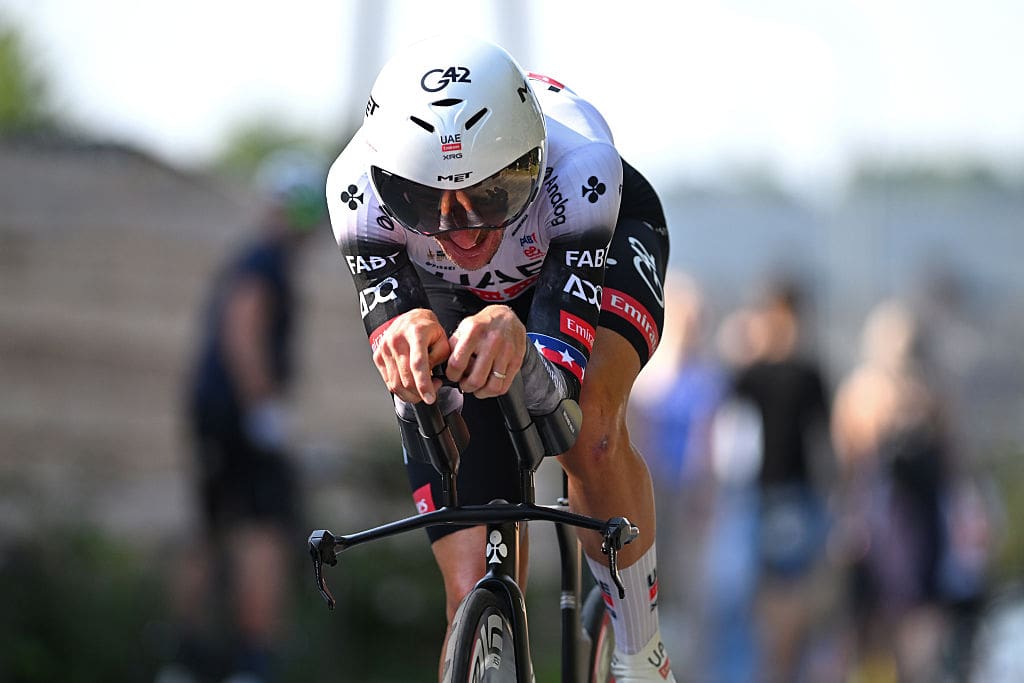
Brandon McNulty
Brandon McNulty’s value depends partly on UAE Team Emirates-XRG’s final line-up and his role within it, but if he starts, he is one of the strongest time-trial assets in the race.
McNulty can ride a high, controlled effort on rolling terrain and is valuable in any team time-trial structure. In Barcelona, that matters because UAE may want to keep the pace high before Pogačar takes over late. McNulty is exactly the sort of rider who can bridge the flat power phase and the more selective final climb.
Stage 16 also suits him if he has freedom. The route is not so long that only the biggest diesel engines can win, and the elevation gain should keep him in the conversation. The question is whether he is allowed to ride entirely for himself or whether he is still tied to Pogačar’s GC support.
If UAE are controlling yellow by then, McNulty may have more important jobs before and after the time-trial. But in pure ability, he belongs high on this list.
His presence also reinforces why UAE’s Barcelona strength could matter immediately, especially with the early mountain stages arriving before the race has time to settle. That sequence is covered in our Tour de France 2026 Pyrenees guide.
Best chance: Stage 16 if given freedom
Barcelona value: Major UAE pacing and support rider
Overall TT ranking: 9th
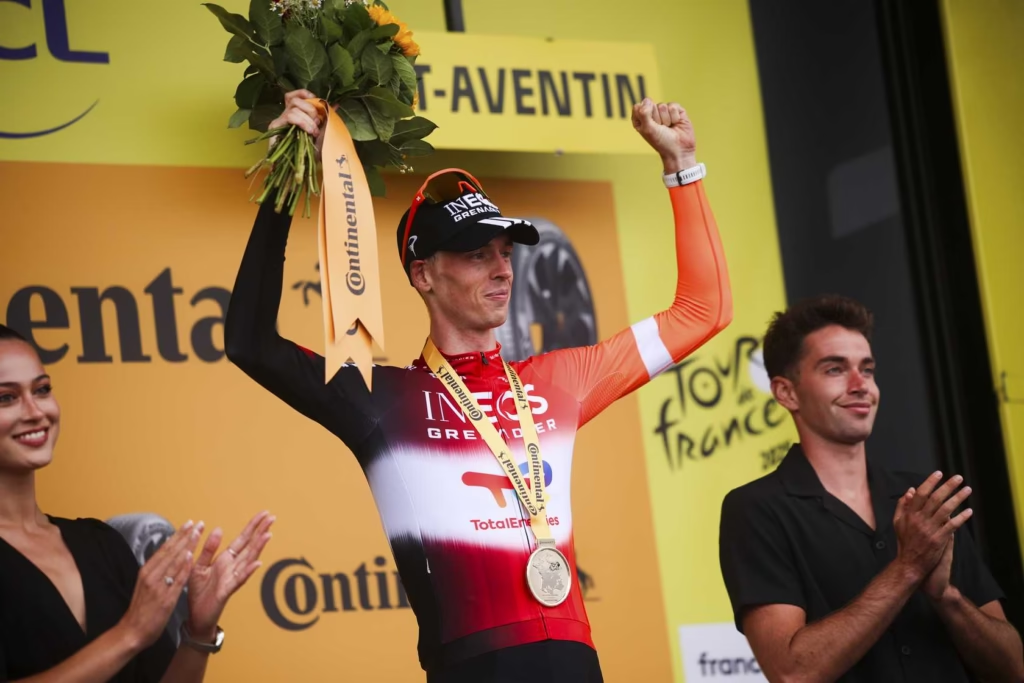 Photo Credit: A.S.O./Maxime Delobel
Thymen Arensman
Thymen Arensman is the kind of rider who could quietly make stage 16 matter.
He is not the first name anyone thinks of for a Tour de France time-trial win, but he has the size, power and climbing resistance to produce a strong ride on a rolling course. The 26.1km route should suit riders who can sustain effort without collapsing on the rises, and Arensman fits that category well.
His Netcompany Ineos role is also important. If the team arrives with multiple GC riders, Arensman may need to protect his own classification while also contributing to the broader team strategy. In Barcelona, he can help keep the group coherent and may be one of the riders whose finishing time matters for the team’s deeper GC picture.
Stage 16 could be a place where he moves up without anyone making a dramatic headline of it. That is often how Arensman’s best stage-race performances work: steady, controlled, and valuable over time.
His route fit sits somewhere between the pure specialists and the climber-GC riders, which is why he is relevant to both the Tour de France 2026 GC favourites ranked picture and the Tour de France 2026 route analysis.
Best chance: Stage 16 GC gains
Barcelona value: Protected rider and team time-trial contributor
Overall TT ranking: 10th
 Photo Credit: A.S.O./Billy Ceusters
Mattia Cattaneo
Mattia Cattaneo may not be a Tour de France time-trial favourite in his own right, but he could be vital to Red Bull-BORA-hansgrohe’s race.
His value is clearest in Barcelona. If Red Bull want Evenepoel to start the Tour strongly, Cattaneo is exactly the sort of rider who can help make that happen. He can ride long, disciplined turns and keep a team together when the speed is high. In a format where the leader may need to be launched late, that kind of work is essential.
Stage 16 is more complicated. Cattaneo has the ability to produce a strong individual time-trial, but by then his race may be shaped by support duties. If Evenepoel is in the yellow jersey fight, Red Bull may need Cattaneo before and after the time-trial as much as during it.
Even so, he deserves a place among the best time-trial riders likely to be at the race because his value is structural. He may not win the timed stages, but he can help decide how much Evenepoel gains from them.
That kind of support role is easy to miss, but in a Tour that starts with a team time-trial, riders like Cattaneo can shape the race before the climbers have even had their first full chance.
Best chance: Stage 1 team time-trial influence
Barcelona value: Key Red Bull-BORA-hansgrohe engine
Overall TT ranking: 11th
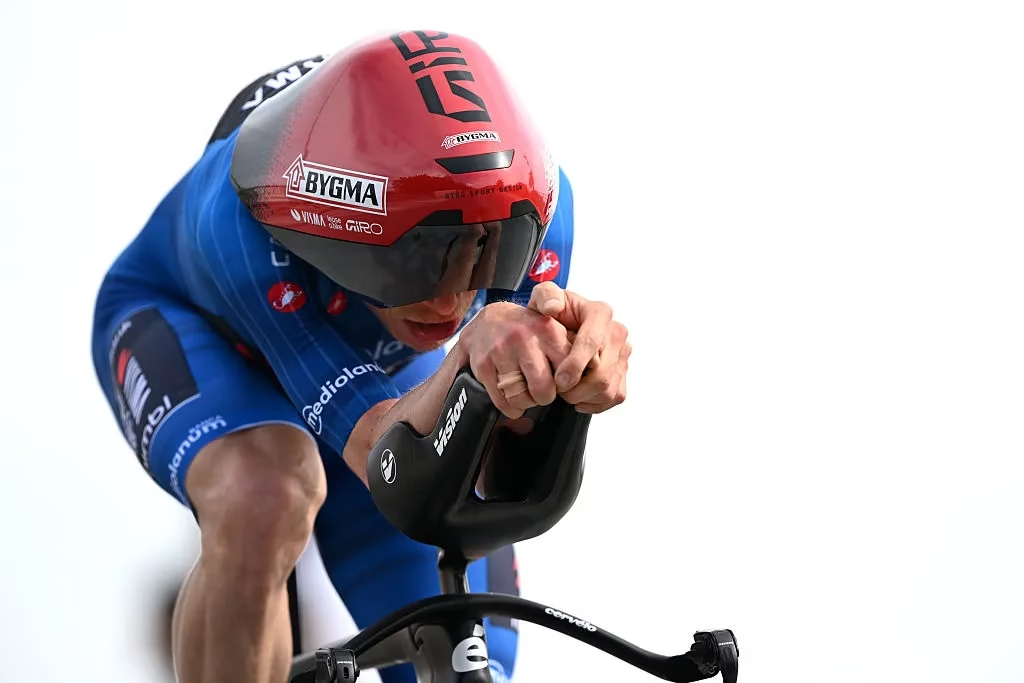
Jonas Vingegaard
Jonas Vingegaard’s time-trialling is sometimes underrated because the conversation around him usually starts with climbing. That misses part of what has made him so effective in Grand Tours. When he is in top form, he can time-trial very well, especially when the route is not a simple flat specialists’ course.
Stage 16 will be crucial for him. Against Evenepoel, he may expect to lose time. Against Pogačar, the equation depends on form and fatigue. Against most other GC riders, he should be strong enough to defend or gain. That makes the time-trial less about winning the stage and more about keeping his Tour-winning path intact before the Alps.
Barcelona also matters. Team Visma | Lease a Bike are one of the squads best suited to a disciplined team time-trial, and Vingegaard could benefit from that collective strength. If they can deliver him through Montjuïc without losses, he will start the race in a good place.
For Vingegaard, the timed stages are about avoiding damage before using the mountains. If he does that, the final Alpine block remains his best terrain.
For more on his route, see our Jonas Vingegaard at the Tour de France 2026 feature, our Tour de France 2026 queen stage guide and our analysis of why back-to-back Alpe d’Huez finishes could define the Tour de France 2026.
Best chance: Stage 16 GC defence
Barcelona value: Protected leader in a strong Visma unit
Overall TT ranking: 12th
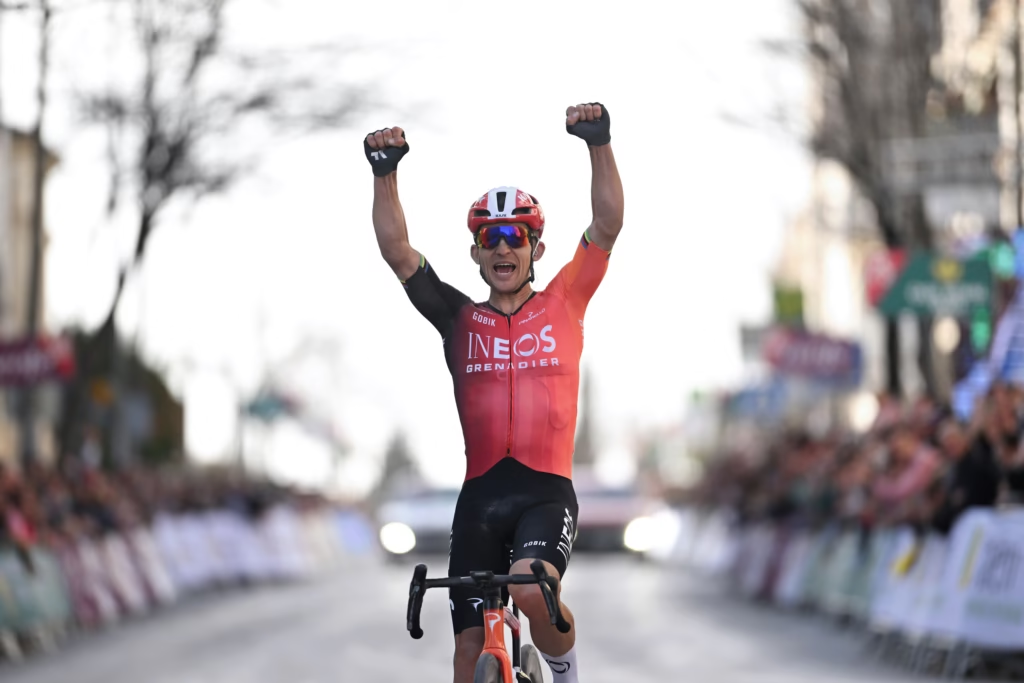
Michał Kwiatkowski
Michał Kwiatkowski remains a useful time-trial rider in the right context, and that context is likely to be stage 1.
He may not be one of the favourites for the stage 16 individual time-trial, but in a team setting he still has the experience, positioning and pacing sense to help Netcompany Ineos. His job in Barcelona could be to keep the formation smooth, support Ganna’s power phase and help protect the team’s GC options.
That sort of contribution can be easy to miss because it does not always show up in individual standings. But team time-trials are built by riders like Kwiatkowski: experienced, technically secure and able to keep things calm under pressure.
Stage 16 may be more about survival or support than personal ambition, but his stage 1 value puts him in the broader time-trial conversation.
Best chance: Stage 1 team time-trial contribution
Barcelona value: Experienced stabiliser for Netcompany Ineos
Overall TT ranking: 13th
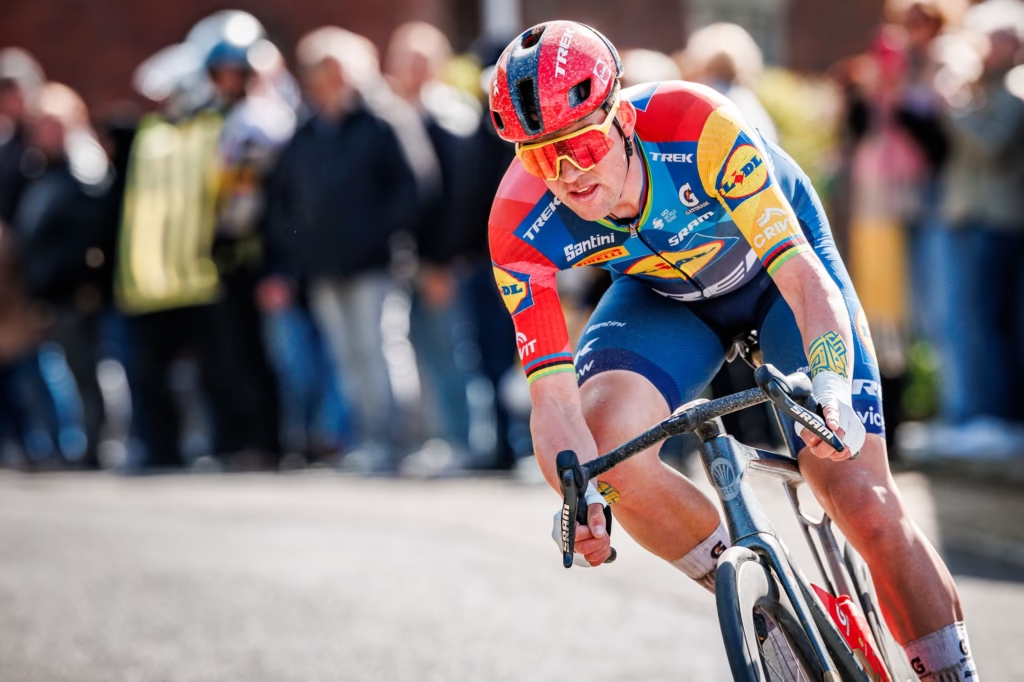 Photo Credit: Getty
Other riders to watch
There are several riders just outside the main list who could still matter in the timed stages.
Mads Pedersen can contribute heavily to Lidl-Trek’s team time-trial in Barcelona and may be useful if the team tries to protect several riders at once. Søren Kragh Andersen is another strong engine if selected. Quinn Simmons can also be valuable in a collective effort, though stage 16 may not be his best personal target.
Bruno Armirail is important for Team Visma | Lease a Bike if he starts, especially on stage 1. His diesel power could be a major part of Vingegaard’s opening-day protection, and he is also covered in our Tour de France 2026 domestiques who could decide the race feature.
Stefan Küng would normally be a major time-trial name if selected, but his likely Tour status needs treating carefully until the final start list is confirmed. The same goes for several other specialists who could reshape the stage 16 favourite list if they appear on final team sheets.
Juan Ayuso and João Almeida are also worth mentioning because they can both time-trial well, although their final Tour roles and starting positions need confirmation. If either starts, their time-trialling would be important not just for stage 16 but for how their teams manage the GC hierarchy.
Best time-triallists at the Tour de France 2026 ranked
⦿ Filippo Ganna
⦿ Remco Evenepoel
⦿ Tadej Pogačar
⦿ Stefan Bissegger
⦿ Daan Hoole
⦿ Mathias Vacek
⦿ Kévin Vauquelin
⦿ Matteo Jorgenson
⦿ Brandon McNulty
⦿ Thymen Arensman
⦿ Mattia Cattaneo
⦿ Jonas Vingegaard
⦿ Michał Kwiatkowski
Best stage 1 team time-trial riders
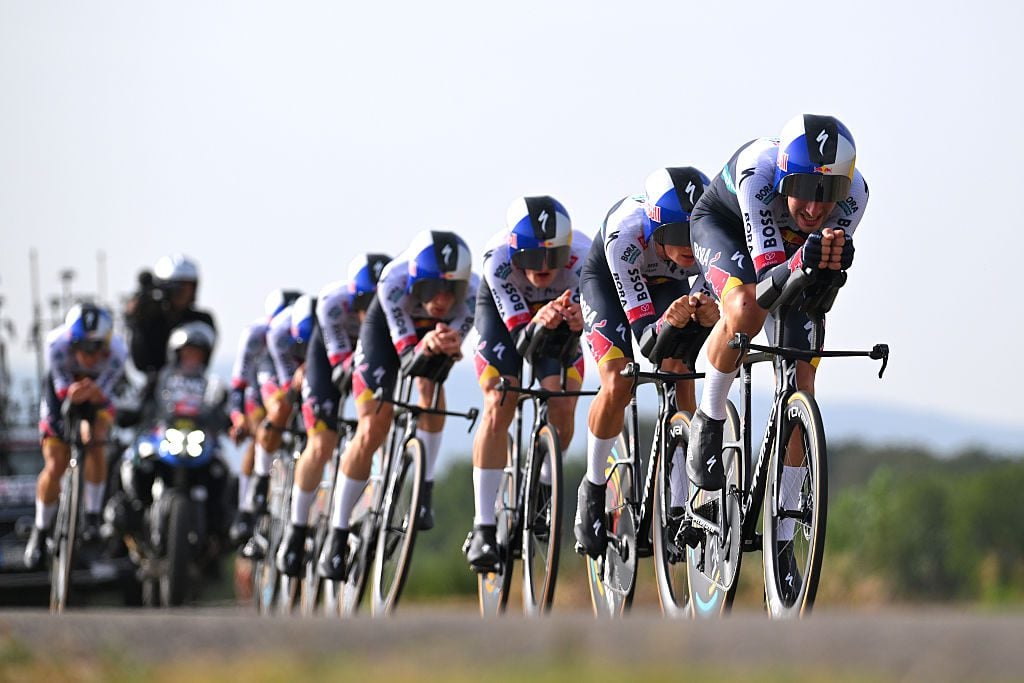
The best riders for the Barcelona team time-trial are not necessarily the same as the best riders for stage 16. Stage 1 needs big pulls, good handling, team rhythm and the ability to survive the final Montjuïc climb.
The most valuable riders here should be Ganna, Evenepoel, Pogačar, Jorgenson, McNulty, Bissegger, Hoole, Cattaneo, Vacek, Kwiatkowski and Armirail if selected. Their job is not only to go fast. It is to make their leaders’ Tour start cleaner.
That stage could also decide the first yellow jersey, which is why it matters beyond the time-trial specialist battle. For the full tactical breakdown, see our feature on how the stage 1 team time-trial could change the Tour de France 2026.
Best stage 16 individual time-trial riders
Stage 16 should be the purest individual test of the race. The route is 26.1km from Évian-les-Bains to Thonon-les-Bains and includes enough climbing to reward riders who can pace well rather than simply sit on one speed.
The strongest favourites should be Ganna and Evenepoel. Behind them, Pogačar, Bissegger, Vacek, Vauquelin, McNulty, Jorgenson, Arensman and Vingegaard all have arguments depending on form, fatigue and GC position.
The biggest unknown is freshness. Stage 16 comes after two hard weeks. Some specialists may no longer have the legs they had at the start. GC riders who have managed energy well may be more dangerous than pure time-triallists who have spent the race working. That is why this stage is likely to reshape the general classification as well as decide a stage winner.
For more on where it fits into the race, see our Tour de France 2026 route analysis and Tour de France 2026 summit finishes guide, which explains why the post-time-trial mountain block matters so much.
-
 Photo Credit: A.S.O./Billy Ceusters
How the time-trials affect the GC
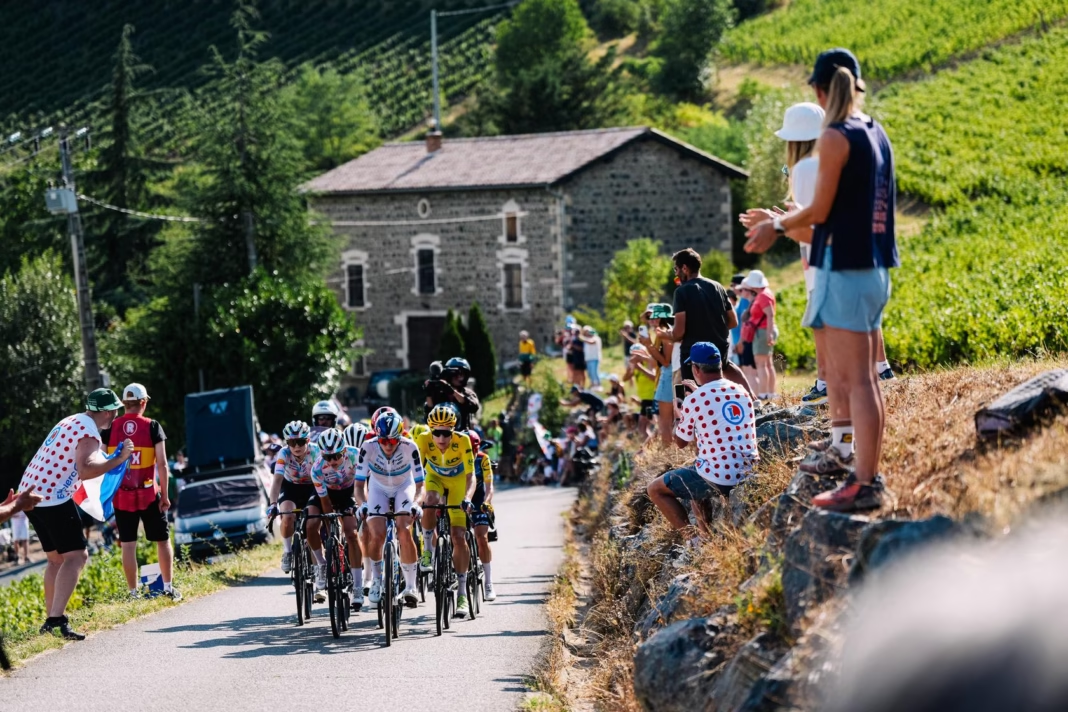
The 2026 Tour has enough climbing to make the mountains decisive, but the time-trials can change who gets to attack and who has to defend.
Stage 1 can create early gaps before the Pyrenees. Stage 16 can reset the race before the Alps. That means a rider such as Evenepoel may use the time-trials as his strongest route into contention, while Pogačar can use them to increase pressure and Vingegaard must make sure they do not force him into a desperate final-week position.
For climbers, the danger is cumulative. Lose time in Barcelona, lose more on stage 16, and suddenly Alpe d’Huez becomes a rescue mission rather than a tactical opportunity. For strong time-trial riders, the opposite applies. Gain time early, gain again after the second rest day, and the final mountain stages can be ridden with more control.
That is why the best time-triallists at the 2026 Tour are not only stage contenders. They are riders who can alter the strategic shape of the race.
For the broader GC context, see our Tour de France 2026 GC favourites ranked, Tour de France 2026 route: best days for GC attacks and Tour de France 2026 mountain stages ranked by difficulty.
Prediction
Filippo Ganna is the best pure time-triallist expected at the Tour de France 2026. If stage 16 becomes a specialist battle, he is the most obvious rider to beat. Remco Evenepoel is the most important GC time-triallist and may be the rider for whom the 26.1km route matters most. Pogačar is the most dangerous all-rounder, especially because Barcelona’s Montjuïc finish gives him a way to turn a team effort into personal pressure.
The best stage 1 teams should be UAE Team Emirates-XRG, Team Visma | Lease a Bike, Red Bull-BORA-hansgrohe and Netcompany Ineos. The best individual time-trial stage battle should come between Ganna, Evenepoel and Pogačar, with Bissegger, Vacek, Vauquelin and McNulty close enough to threaten if the circumstances fall right.
The most likely stage 16 winner is Ganna. The rider most likely to change the GC with the time-trial is Evenepoel. The rider most likely to make both time-trials feel like part of a broader yellow jersey strategy is Pogačar.
For UK viewing details once the race begins, see our how to watch Tour de France 2026 in the UK guide. For the wider race hub, see our Tour de France section.

