
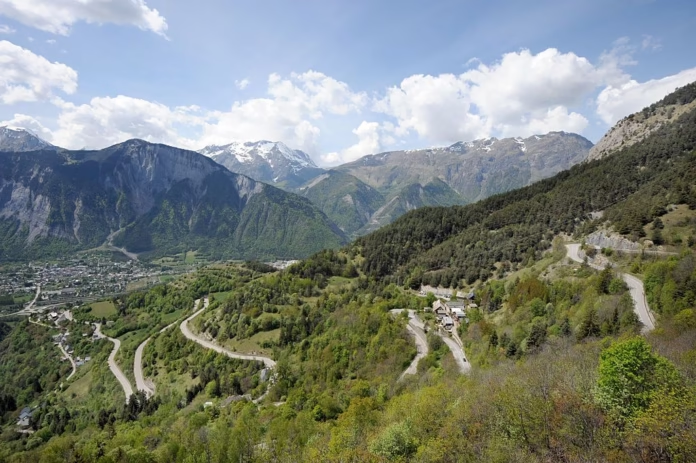
Tour de France stage 19 takes the peloton from Gap to Alpe d’Huez on Friday 24 July 2026, beginning the race’s unprecedented pair of consecutive summit finishes on cycling’s most famous climb.
At only 127.9km, this is the shortest conventional road stage of the Tour. It still contains approximately 3,500 metres of climbing, with the Col Bayard and Col du Noyer arriving inside the opening 25km before the Col d’Ornon leads directly towards the classic ascent of Alpe d’Huez.
Tadej Pogačar begins the day with his 4:32 advantage over Remco Evenepoel intact after the principal general classification riders finished together at Orcières-Merlette.
Red Bull-Bora-Hansgrohe controlled much of the final climb on stage 18 but could not create an opening for Evenepoel. Richard Carapaz instead took the stage from the breakaway, attacking inside the final four kilometres to finish ahead of Mauro Schmid and Matteo Jorgenson.
Stage 19 offers a more severe test.
The opening slopes of Alpe d’Huez are steep enough to expose weakness immediately, while the short distance encourages teams to race aggressively from Gap. Pogačar does not need to attack, but he remains the strongest stage favourite if the general classification group contests the victory.
Evenepoel’s more urgent problem may be behind him. Isaac del Toro and Paul Seixas remain close enough to threaten second place, while their own fight for third overall and the white jersey could become the day’s decisive contest.
Tour de France stage 19 key details
| Detail | Information |
|---|---|
| Date | Friday 24 July 2026 |
| Start | Gap |
| Finish | Alpe d’Huez |
| Distance | 127.9km |
| Stage type | Mountain |
| Total climbing | Approximately 3,500 metres |
| Categorised climbs | Four |
| Final climb | Alpe d’Huez, 13.7km at 8.1% |
| Neutralised start | 13:00 BST |
| Expected finish | Approximately 16:24–16:44 BST |
| Stage winner prediction | Tadej Pogačar |
| Yellow jersey | Tadej Pogačar |
The neutralised start is scheduled for 14:00 local time, with the peloton expected to reach Alpe d’Huez between 17:24 and 17:44 local time.
British viewers should expect the decisive action from around 16:00 BST, although the early battle over the Col Bayard and Col du Noyer will begin almost immediately after the start.
The broader shape of the Alpine finale is covered in our Tour de France 2026 Alps guide.
General classification before stage 19
| Position | Rider | Team | Gap |
|---|---|---|---|
| 1 | Tadej Pogačar | UAE Team Emirates-XRG | Leader |
| 2 | Remco Evenepoel | Red Bull-Bora-Hansgrohe | +4:32 |
| 3 | Isaac del Toro | UAE Team Emirates-XRG | +6:51 |
| 4 | Paul Seixas | Decathlon CMA CGM | +7:11 |
| 5 | Juan Ayuso | Lidl-Trek | +9:22 |
| 6 | Mattias Skjelmose | Lidl-Trek | +10:14 |
| 7 | Lenny Martinez | Bahrain Victorious | +12:50 |
| 8 | Tom Pidcock | Pinarello-Q36.5 Pro Cycling Team | +12:58 |
The lack of change at Orcières-Merlette increased the importance of stage 19.
Evenepoel did not reduce the deficit to Pogačar, but he also avoided giving Del Toro or Seixas any encouragement in the fight for second. The Belgian remains 2:19 ahead of Del Toro and 2:39 ahead of Seixas.
The third-place battle is far tighter.
Only 20 seconds separate Del Toro and Seixas. Ayuso remains another 2:11 behind the Frenchman, while Skjelmose is still close enough to benefit if one of the younger riders collapses on Alpe d’Huez.
Pogačar can afford to follow. Everyone beneath him needs something from the stage.
The white jersey contest is examined in more detail in Del Toro vs Seixas: who will win the Tour de France 2026 white jersey?.
Tour de France stage 19 route
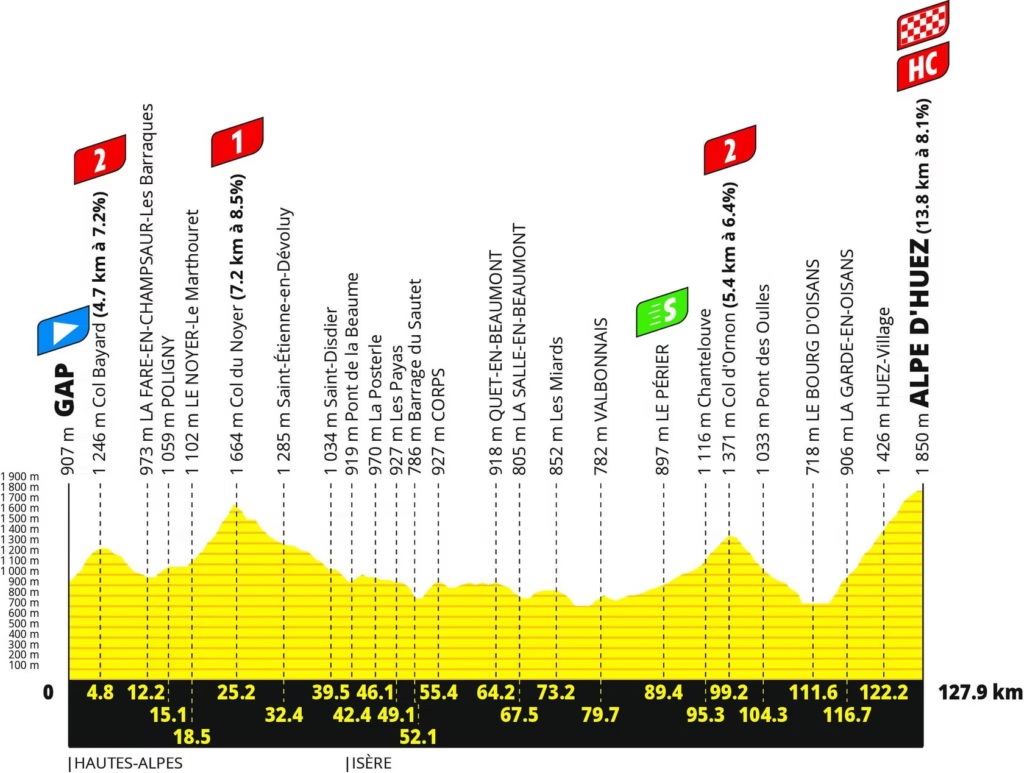
The stage starts climbing almost as soon as the riders leave Gap.
There is no long flat opening in which a breakaway can establish itself through a conventional sequence of attacks. The Col Bayard begins immediately, followed by the much steeper Col du Noyer after only a brief transition.
That should produce a violent opening hour.
Teams targeting the stage need to place climbers in the break before the Col du Noyer. General classification teams may also send domestiques ahead, creating support riders who can be collected later.
After the Col du Noyer, the race enters a long central section across the Dévoluy and Beaumont regions. The road is not completely flat, but the extended transition gives an organised peloton the opportunity to control the advantage.
The Col d’Ornon begins with just over 34km remaining. Its summit comes 28.7km from the finish, followed by a descent towards Bourg-d’Oisans and the foot of Alpe d’Huez.
The final climb then decides the stage.
The complete position of stage 19 within the route is available in the Tour de France 2026 full route guide.
Tour de France stage 19 climbs
| Climb | Summit point | Length | Average gradient | Category |
|---|---|---|---|---|
| Col Bayard | 4.8km | 4.8km | 7.2% | Category 2 |
| Col du Noyer | 25.2km | 7.2km | 8.5% | Category 1 |
| Col d’Ornon | 99.2km | 5.4km | 6.4% | Category 2 |
| Alpe d’Huez | 127.9km | 13.7km | 8.1% | Hors catégorie |
The stage contains 40 mountains classification points, with half of them available at the finish on Alpe d’Huez.
That makes stage 19 central to the polka-dot jersey competition as well as the general classification.
The wider mountain picture is covered in the Tour de France 2026 climbs guide.
Col Bayard begins the race before the break has formed
The Col Bayard is 4.8km at 7.2%, reaching its summit only 4.8km into the stage.
That is an unusually difficult opening.
Riders will reach the foot without any time to settle into the race. Teams seeking the breakaway must move forward during the neutralised section and be prepared to attack as soon as racing officially begins.
The climb is hard enough to remove most sprinters and rouleurs immediately. It should also prevent a large group from receiving easy permission from the peloton.
The strongest climbers may attempt to force a selective move on the ascent, but the race could remain unsettled over the summit. Riders dropped on the steepest sections can return during the descent, while fresh attacks may begin on the approach to the Col du Noyer.
For the general classification teams, the main objective is avoiding unnecessary damage.
A rider who begins the stage badly positioned could already be isolated before the first 5km have been completed.
The Col du Noyer provides the first major tactical opportunity
The Col du Noyer measures 7.2km at 8.5%.
It is the most demanding climb before Alpe d’Huez and arrives with more than 100km still to race.
The gradient is steep enough to create genuine selection, particularly after the fast opening over the Col Bayard. A strong group reaching the summit together can build a useful advantage on the descent.
This is also the climb where teams may begin placing riders ahead for later.
Red Bull-Bora-Hansgrohe could send a climber into the breakaway, giving Evenepoel support between the Col d’Ornon and Alpe d’Huez. Lidl-Trek have two riders inside the top six and can use one to create tactical pressure while protecting the other.
Decathlon CMA CGM may be more cautious.
Seixas is only 20 seconds behind Del Toro and has the white jersey and Tour podium within reach. His team cannot afford to waste riders on speculative attacks if they are needed to control UAE on the final climb.
The Col du Noyer may not decide the stage directly. It should decide which teams possess options when the race reaches Alpe d’Huez.
The long valley changes the value of early attacks
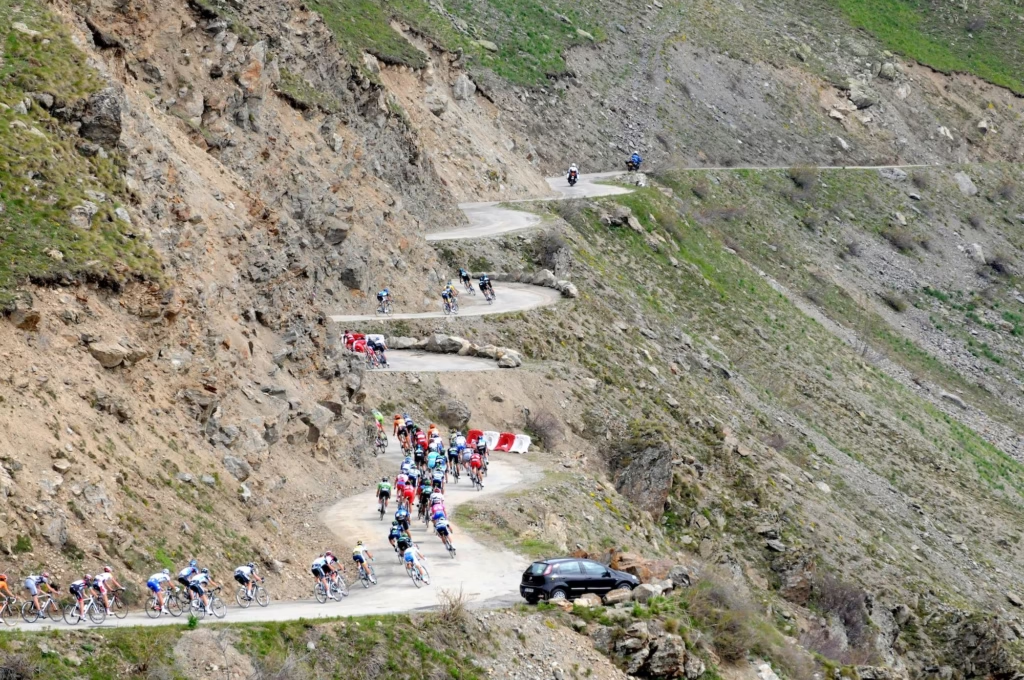
After the Col du Noyer, the stage enters a central section of more than 60km before the Col d’Ornon.
That distance limits the value of attacking with a general classification leader during the opening quarter of the race.
Evenepoel could theoretically move on the Col du Noyer, but he would then face a long section where UAE’s numerical strength and Pogačar’s ability to draft would work against him.
A move involving domestiques or stage hunters is more plausible.
The breakaway needs enough strength to continue working through the valley. A small collection of pure climbers may struggle to maintain its advantage, while a group containing powerful riders such as Matteo Jorgenson, Ben Healy or Mauro Schmid could be harder to retrieve.
The peloton will also understand that allowing the gap to grow too large may hand away one of the Tour’s most prestigious stages.
Alpe d’Huez attracts riders who would normally accept a defensive day. Teams without a stage victory may commit resources to the chase simply because winning here can define an entire season.
The stage’s breakaway prospects are examined in our ranking of the best Tour de France 2026 breakaway stages.
Col d’Ornon leads directly into the Alpe d’Huez finale
The Col d’Ornon is officially 5.4km at 6.4%, although the road rises more gradually for several kilometres before the categorised section.
It is not steep enough to produce major general classification gaps under normal circumstances.
Its importance comes from its position.
The summit is only 28.7km from the finish. The descent takes the riders towards Bourg-d’Oisans, leaving little recovery before the road begins climbing again.
Teams can use the Col d’Ornon to reduce the group and remove domestiques who would otherwise help on Alpe d’Huez.
A hard pace from Red Bull-Bora-Hansgrohe, Decathlon CMA CGM or Lidl-Trek could leave Pogačar with fewer teammates at the foot. UAE’s depth has already been reduced by Brandon McNulty’s stage 18 abandonment, while Adam Yates has also been managing illness during the final week.
That provides an opportunity, although not necessarily a decisive weakness.
Pogačar has repeatedly shown that he does not need a full mountain train to follow attacks. Isolating him only matters if another rider then has the strength to drop him.
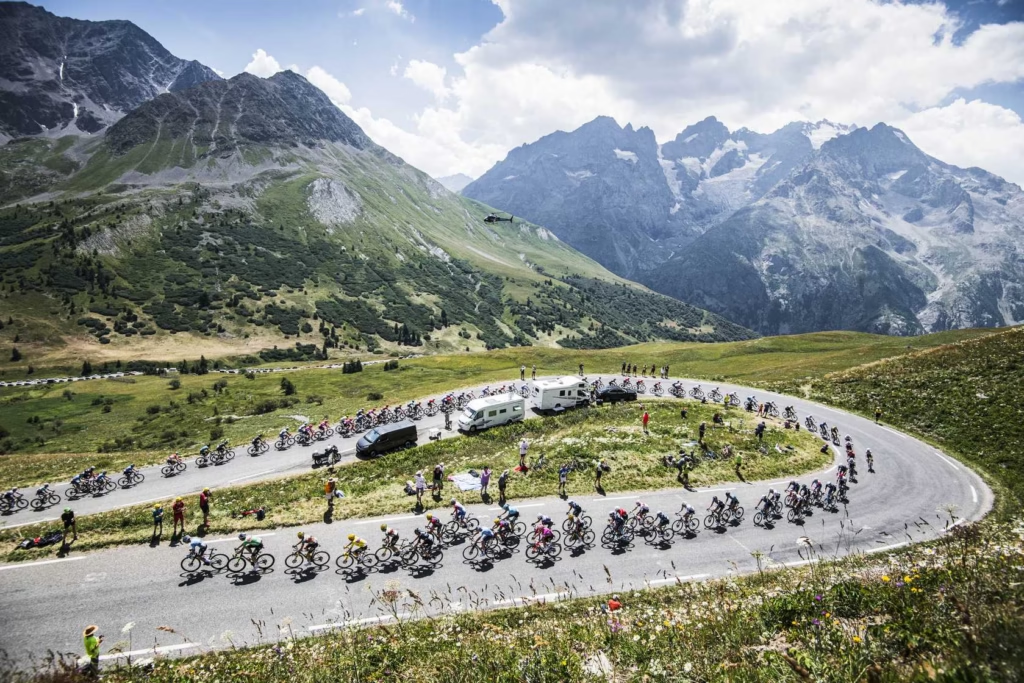
Alpe d’Huez returns through the classic 21 hairpins
The stage concludes with the traditional climb from Bourg-d’Oisans to Alpe d’Huez.
It measures 13.7km at 8.1% and reaches an altitude of approximately 1,850 metres.
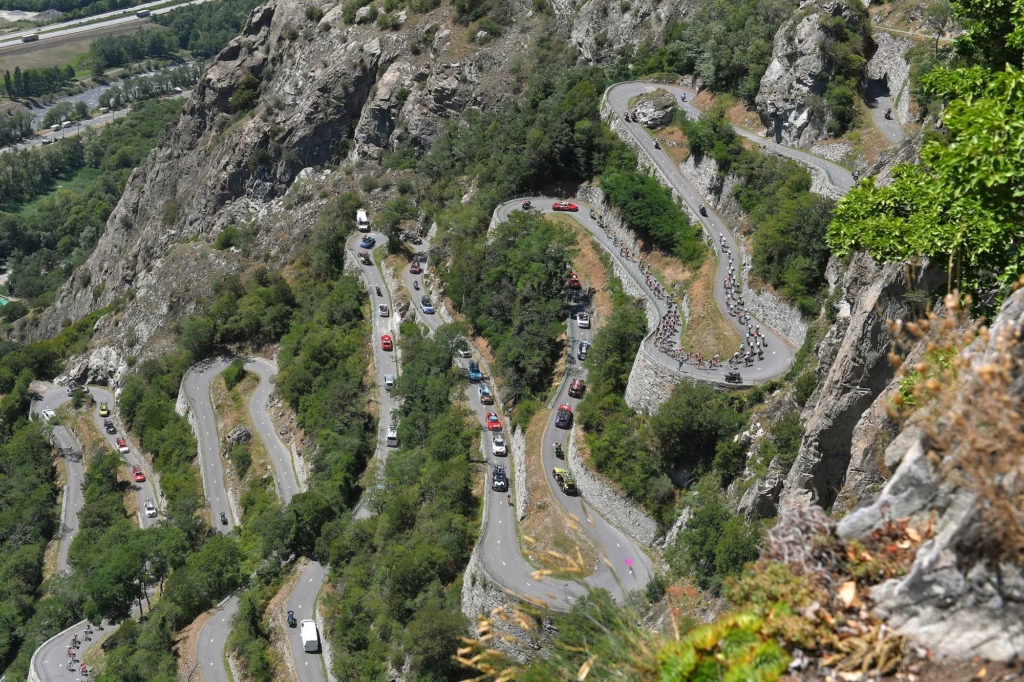
The famous 21 numbered hairpins make it one of the most recognisable ascents in cycling, but the climb’s sporting difficulty comes from its opening kilometres rather than its reputation.
The first section is brutal.
The road rises sharply almost immediately after leaving Bourg-d’Oisans, with extended gradients around 10% before the riders reach La Garde. Anyone struggling at the foot can lose substantial time before the climb begins to moderate.
The middle section contains more variation. The bends provide brief changes in gradient, while the straights between them allow teams to establish a steadier rhythm.
The final kilometres through Huez and towards the ski resort are less consistently steep, but fatigue and altitude can continue separating riders.
A contender who waits until the final kilometre is unlikely to gain significant time.
The best place to attack is often within the first five kilometres, where the steepest gradients make drafting less valuable and riders are still adjusting after the descent from the Col d’Ornon.
The climb’s importance across the final weekend is explored in why back-to-back Alpe d’Huez finishes could define the Tour de France 2026.
Why stage 19 may be more decisive than Orcières-Merlette
Stage 18 contained more distance and slightly more climbing, but its final ascent was relatively moderate.
Orcières-Merlette allowed riders to follow wheels at a high speed. Red Bull-Bora-Hansgrohe could set the pace without producing meaningful separation, while Pogačar remained comfortable behind them.
Alpe d’Huez is different.
The climb is almost twice as long and considerably steeper. The opening ramps will reveal whether a rider is genuinely strong rather than simply able to survive through drafting and pacing.
The shorter stage also changes the approach.
There is less accumulated fatigue from distance, but the intensity should be higher from the beginning. Riders may reach the final climb after barely three hours of racing, having completed several hard efforts without a prolonged steady period.
That combination can produce explosive gaps.
The stage should not be judged only by whether Pogačar and Evenepoel finish together. Del Toro, Seixas, Ayuso and Skjelmose can all reshape the podium battle beneath them.
Stage 19 ranks among the hardest days of the race in our Tour de France 2026 mountain stages ranked by difficulty.

Will Tadej Pogačar attack on Alpe d’Huez?
Pogačar has no tactical need to attack.
He leads Evenepoel by 4:32 and can afford to follow every direct move from the Belgian. He also knows that stage 20 is considerably harder, with more than 5,000 metres of climbing before another finish at Alpe d’Huez.
Conserving energy would be the sensible approach.
Pogačar does not always race conservatively.
Winning on Alpe d’Huez carries historic value. The stage also offers an opportunity to remove any remaining doubt from the yellow jersey contest before the queen stage.
If the breakaway is caught and Pogačar feels comfortable on the opening ramps, he may attack simply because the opportunity exists.
The strongest scenario for UAE is to control the early stage without spending too many riders, allow another team to set the pace on Alpe d’Huez and then use Pogačar’s acceleration near the finish.
The illness and abandonments inside the team may instead encourage a more defensive approach.
Pogačar does not need to prove that he is strongest. He only needs to remain with Evenepoel.
His relationship with the route and the yellow jersey battle is covered in Tadej Pogačar at the Tour de France 2026.
What can Remco Evenepoel realistically achieve?
Evenepoel’s overall victory chances remain extremely limited.
Stage 18 did not provide the time gain required to reopen the Tour. He now has two mountain stages left to recover 4:32 from a rider who has generally climbed better than him.
The more immediate objective is securing second place.
Evenepoel holds a useful advantage over Del Toro and Seixas, but it is not large enough to survive a complete mountain collapse. He must judge Pogačar’s attacks without riding far beyond his own sustainable pace.
The opening kilometres of Alpe d’Huez will be critical.
Evenepoel has sometimes struggled when elite climbers produce repeated accelerations on steep gradients. His strength comes through sustaining high power for a long period rather than matching every sharp change of speed.
If Pogačar attacks, Evenepoel may be better served riding his own tempo.
Losing 20 or 30 seconds to yellow would have little effect on his realistic Tour outcome. Attempting to follow and then losing two minutes could place second overall in danger.
His opportunity comes if Pogačar shows restraint.
Evenepoel can then attack the podium rivals, strengthen his position and possibly pursue a third stage victory. A sustained move during the middle of the climb may suit him better than waiting for a sprint near the resort.
The remaining path to yellow is analysed in can Remco Evenepoel win the Tour de France 2026?.
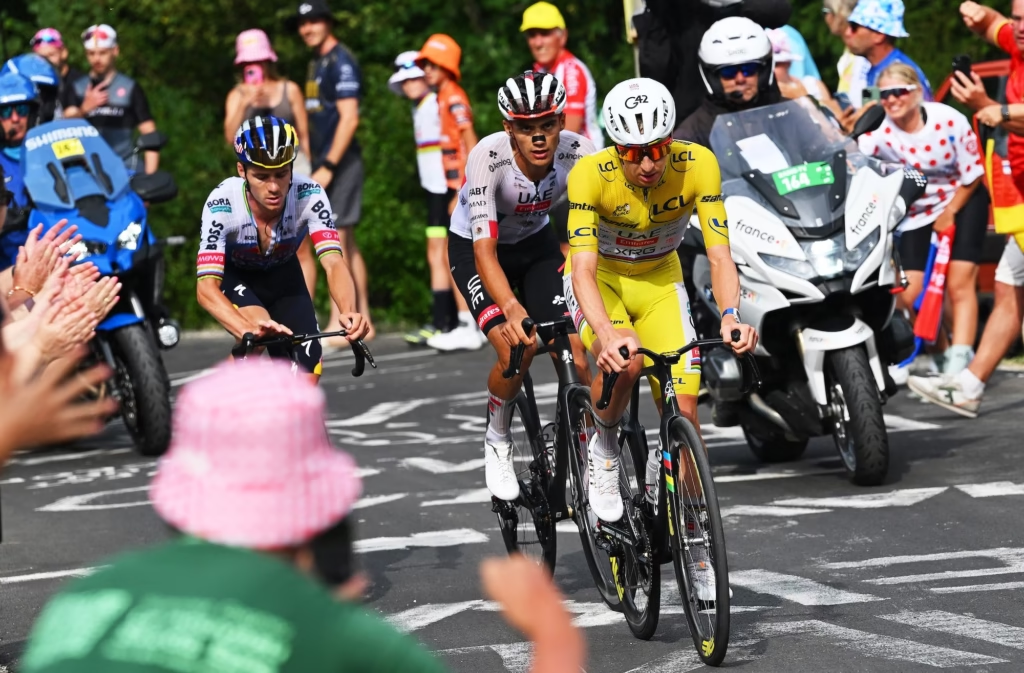 Photo Credit: Getty
Isaac del Toro faces his first direct Alpe d’Huez test
Del Toro begins stage 19 in third overall and leads the white jersey classification by only 20 seconds.
That position creates conflicting responsibilities.
He is Pogačar’s teammate and may be expected to help protect yellow. He is also defending a Tour podium and classification jersey of his own.
UAE cannot simply sacrifice him during the early part of Alpe d’Huez.
The ideal scenario is for Del Toro to follow Seixas while another teammate remains with Pogačar. The team’s reduced numbers may make that division harder.
If Evenepoel attacks, Del Toro has little reason to chase immediately unless Seixas follows. Pogačar can control the yellow jersey while Del Toro focuses on his direct opponent.
The problem arrives if Decathlon create a situation where Seixas attacks and Evenepoel follows.
Del Toro would then need to respond for his own classification while potentially giving Pogačar a useful bridge. One move could connect the battles for yellow, second place, the podium and the white jersey.
Paul Seixas has only 20 seconds to find
Seixas produced another composed ride at Orcières-Merlette and remains within 20 seconds of the Tour podium.
That makes stage 19 less complicated for him than for most of his rivals.
He needs to gain time on Del Toro.
Waiting until the stage 20 queen stage would be risky. Del Toro could prove stronger at altitude, while one mechanical problem or difficult descent could decide the classification before the final ascent.
Seixas should test him on Alpe d’Huez.
The Frenchman does not need a spectacular long-range attack. A controlled acceleration in the steep opening section could reveal whether Del Toro is vulnerable, while the bonus seconds at the finish may also become important if the breakaway is caught.
The crowd will provide another factor.
Alpe d’Huez traditionally attracts a huge French presence, and Seixas is the home nation’s leading general classification rider. Every move he makes will receive an immediate response from the roadside.
That support can encourage aggressive racing, but it also increases the danger of attacking too early through emotion rather than calculation.
 Photo Credit: Getty
Lidl-Trek need to use Ayuso and Skjelmose together
Juan Ayuso and Mattias Skjelmose sit fifth and sixth overall.
They are separated by only 52 seconds but remain more than two minutes behind Seixas. Simply following the general classification group is unlikely to move either rider onto the podium.
Lidl-Trek possess the strongest two-rider tactical option among the teams challenging UAE.
Ayuso can attack while Skjelmose waits, or the roles can be reversed. Del Toro and Seixas cannot respond to every movement without risking their own reserves.
The Col d’Ornon provides the first useful platform.
Sending one rider ahead there could force Decathlon or UAE to chase before Alpe d’Huez. The second Lidl-Trek leader can then attack on the final climb after their rivals have spent energy.
The risk is that the strategy benefits Evenepoel more than Lidl-Trek.
If Ayuso or Skjelmose creates a fast, selective race, the Belgian may use it to strengthen second place. Pogačar can also follow whichever rider becomes the greater general classification threat.
Lidl-Trek need to be aggressive enough to change the classification without becoming unpaid domestiques for the riders ahead.
Can Tom Pidcock move back towards the top five?
Pidcock remains eighth overall after surviving his stage 17 crash and finishing safely with the favourites at Orcières-Merlette.
He is only eight seconds behind Lenny Martinez but more than two and a half minutes behind Skjelmose.
Alpe d’Huez suits parts of his profile.
Pidcock can accelerate sharply on steep gradients and is comfortable descending at high speed. He also has less to lose than the riders protecting podium positions.
The difficulty is sustaining the effort across 13.7km.
A short attack may create separation, but the climb is long enough for stronger diesel climbers to retrieve him. Pidcock’s best route could involve attacking near the summit of the Col d’Ornon and using the descent to begin Alpe d’Huez with an advantage.
That would force the general classification group to decide whether eighth place is dangerous enough to chase.
Martinez must also remain attentive. Pidcock needs only a small gain to move into seventh, even if the higher positions remain out of reach.
His wider podium prospects are examined in can Tom Pidcock make the Tour de France podium?.
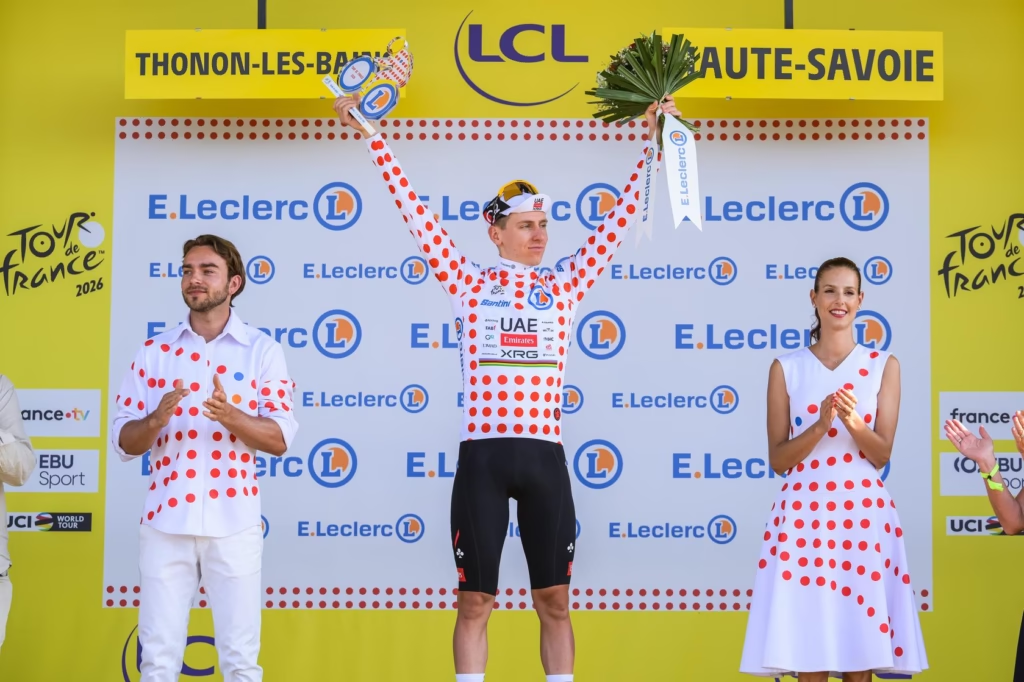 Photo Credit: A.S.O./Charly López
The polka-dot jersey could change hands
Valentin Paret-Peintre closed to within one point of Pogačar after collecting mountains points throughout stage 18.
Stage 19 offers 40 points across four climbs:
| Climb | Maximum points |
|---|---|
| Col Bayard | 5 |
| Col du Noyer | 10 |
| Col d’Ornon | 5 |
| Alpe d’Huez | 20 |
Paret-Peintre has an obvious reason to join the breakaway again.
Taking maximum points on the Col Bayard would move him into the virtual lead before the stage has properly settled. He could then increase the advantage on the Col du Noyer.
Pogačar is unlikely to chase mountain points deliberately during the opening half of the stage. His main opportunity comes at Alpe d’Huez, where winning would provide 20 points.
That creates an unusual contest.
Paret-Peintre can build a lead through the early climbs, but he may still need to reach the final ascent in the breakaway. If Pogačar wins the stage from the general classification group, the Frenchman requires enough earlier points to retain the jersey.
Carapaz also remains involved after his stage 18 victory, although the effort required to win at Orcières-Merlette may reduce his ability to enter another aggressive break one day later.
The classification is covered in who can catch Tadej Pogačar in the Tour de France 2026 polka-dot jersey battle?.
Will the breakaway win stage 19?
The route gives the breakaway an opportunity, but not an obvious one.
The immediate climbing should allow a strong group to form. The Col Bayard and Col du Noyer will select riders capable of reaching Alpe d’Huez with enough energy to compete.
The long central section works in the peloton’s favour.
An organised chase can reduce the gap before the Col d’Ornon, particularly if multiple teams want to contest the stage. The prestige of Alpe d’Huez makes that more likely than on an ordinary mountain day.
UAE may not want to control, but they do not need to do all the work.
Red Bull-Bora-Hansgrohe could chase for Evenepoel. Decathlon may want bonus seconds for Seixas. Lidl-Trek need a difficult race for Ayuso and Skjelmose. Teams without a stage victory may decide that the Alpe is worth pursuing.
The breakaway probably requires close to five minutes at the foot of the final climb.
A strong climber can still lose substantial time to the general classification favourites on Alpe d’Huez, particularly if the opening ramps are raced at full intensity.
 Photo Credit: Getty
Stage 19 breakaway contenders
Valentin Paret-Peintre
Paret-Peintre’s priority is the mountains classification.
He should attack immediately and may become the central figure in the battle to form the break. His ability to win the stage depends on how much energy he spends collecting points before Alpe d’Huez.
Matteo Jorgenson
Jorgenson finished third at Orcières-Merlette and possesses the climbing strength and power required for the valley section.
The stage 18 effort is the concern. Returning to the break on consecutive mountain days requires exceptional recovery.
Mauro Schmid
Schmid finished second on stage 18 after already winning in Belfort.
He is strong across rolling terrain and can maintain a breakaway through the long transition. Alpe d’Huez is likely to expose him against purer climbers unless he begins with a substantial advantage.
Ben Healy
Healy is suited to aggressive, unpredictable racing.
The opening climbs allow him to force the move, while the valley section rewards his ability to sustain power. He needs to avoid spending too much energy through repeated attacks before the final ascent.
Thymen Arensman
Arensman has the pure climbing ability to survive Alpe d’Huez from a breakaway.
He is less explosive than some rivals but can ride a consistent pace on a long climb. A large advantage at Bourg-d’Oisans would make him one of the hardest riders to catch.
Egan Bernal
Bernal has been active in the mountains and remains far enough behind overall to receive freedom.
Alpe d’Huez provides terrain closer to his traditional strengths. His challenge is producing the sustained power required after nearly three weeks of racing.
Tobias Halland Johannessen
Johannessen has repeatedly shown that he can enter difficult mountain breaks and remain competitive late into stages.
The short route suits an attacking approach, although he must avoid becoming isolated in the central valley.
Felix Gall
Gall is among the riders most naturally suited to the final climb.
His limited flat-road speed makes the composition of the break important. He needs stronger riders around him through the middle section before using his climbing ability on Alpe d’Huez.
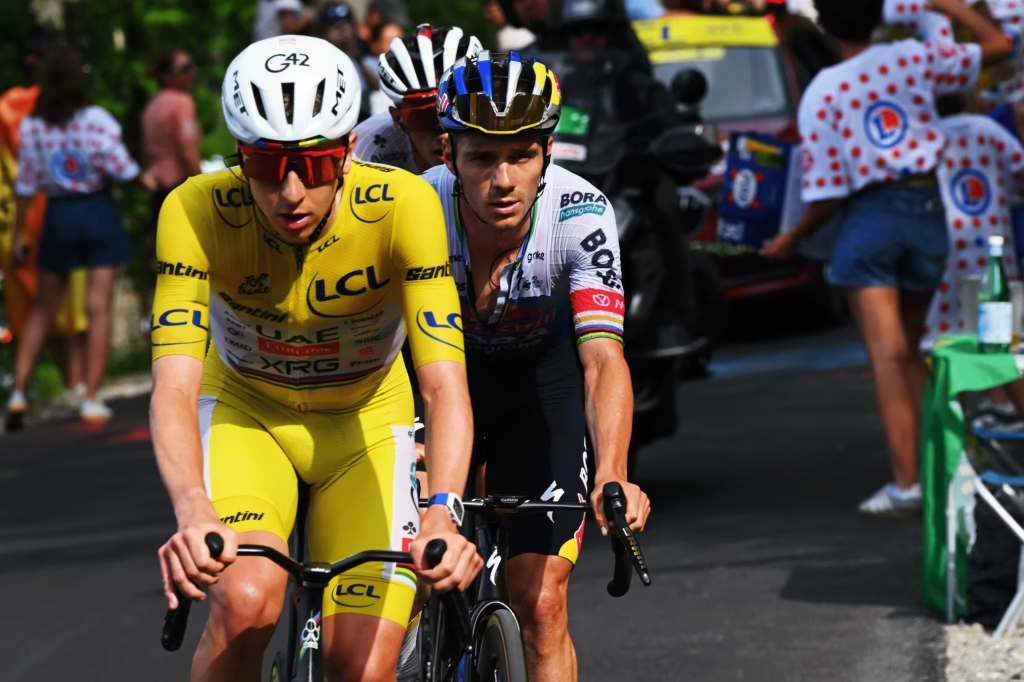
Tour de France stage 19 favourites
Tadej Pogačar
Pogačar is the strongest favourite if the breakaway is caught.
He has no need to attack but remains the rider most capable of winning through either a sharp acceleration or a sustained climbing effort. The stage’s prestige may persuade him to race more aggressively than the general classification situation requires.
Remco Evenepoel
Evenepoel has shown excellent form during the third week, winning at Plateau de Solaison and in the stage 16 time trial.
Alpe d’Huez is a harder climbing test. He can win if Pogačar rides defensively and the Belgian attacks the other podium contenders, but matching the yellow jersey on the steepest slopes remains difficult.
Paul Seixas
Seixas has a clear tactical objective and only 20 seconds to recover from Del Toro.
He is unlikely to receive freedom, but the white jersey battle may push him into an attack that also creates a route towards the stage victory.
Isaac del Toro
Del Toro has climbed consistently and benefits from having Pogačar as a tactical shield.
He can follow Seixas rather than taking responsibility for the race. A stage victory becomes possible if the pair reach the final kilometres together and Pogačar allows his teammate to contest the finish.
Juan Ayuso
Ayuso needs an aggressive stage to move towards the podium.
He can attack on the Col d’Ornon or early slopes of Alpe d’Huez, forcing the riders ahead to make difficult decisions. His prospects improve if Lidl-Trek successfully use Skjelmose as an alternative threat.
Mattias Skjelmose
Skjelmose has ridden an excellent Tour and performed strongly during the time trial.
He can climb at a sustained pace but may lack the acceleration required to distance Pogačar or Evenepoel. His best opportunity comes through a tactical move rather than a direct final-kilometre contest.
Richard Carapaz
Carapaz’s stage 18 victory confirmed his climbing form.
Winning again immediately would require another exceptional recovery and probably another breakaway. The route suits his aggressive instincts, but the peloton will give him less freedom after Orcières-Merlette.
How stage 19 could unfold
The first attacks should begin on the Col Bayard.
Paret-Peintre will target the mountains points, while teams seeking the stage attempt to place their strongest climbers around him. The group may not settle until the Col du Noyer, where the gradients remove weaker riders.
A break of approximately 10 to 15 riders is the most likely outcome.
The peloton should then reduce the advantage through the long central section. UAE may allow another team to assume responsibility, particularly after losing McNulty and seeing Yates struggle with illness.
The Col d’Ornon should bring the race back to life.
Lidl-Trek and Decathlon have reasons to increase the pace, while Red Bull-Bora-Hansgrohe may try to prepare an Evenepoel attack. The breakaway’s advantage at the summit will determine whether the stage or only the general classification contest remains ahead.
On Alpe d’Huez, the steep opening kilometres should rapidly reduce the favourites group.
Seixas is the most likely rider to attack first because he needs only 20 seconds from Del Toro. Ayuso may follow or counter, forcing UAE to decide how much support Del Toro receives.
Evenepoel should initially ride more conservatively.
Pogačar can wait behind the Belgian and respond only when the stage victory or yellow jersey requires it. If the leading group is caught, the final five kilometres may become a direct contest between Pogačar’s desire to win and his willingness to conserve energy for stage 20.
The next day’s route is covered in the Tour de France 2026 queen stage guide.
Tour de France stage 19 prediction
The breakaway has a better chance than the prestige of Alpe d’Huez initially suggests.
UAE Team Emirates-XRG do not need to control from the start, while Red Bull-Bora-Hansgrohe may prioritise protecting Evenepoel’s second place rather than chasing a stage victory.
The podium and white jersey battles should still produce an intense final climb.
Seixas is likely to test Del Toro, while Ayuso and Skjelmose need to attack if they want to move closer to third. Those moves should reduce the general classification group and eventually force Pogačar to respond.
The yellow jersey has little reason to expose himself before the final kilometres. Once the opportunity to win on Alpe d’Huez appears, restraint may become more difficult.
Stage winner prediction: Tadej Pogačar
Tour de France stage 19 top three prediction
- Tadej Pogačar
- Remco Evenepoel
- Paul Seixas
Pogačar should be strongest on the final climb, even if he waits until late to attack. Evenepoel can defend second overall by riding a controlled ascent, while Seixas has the motivation and climbing form to gain time on Del Toro in the battle for third and the white jersey.

