
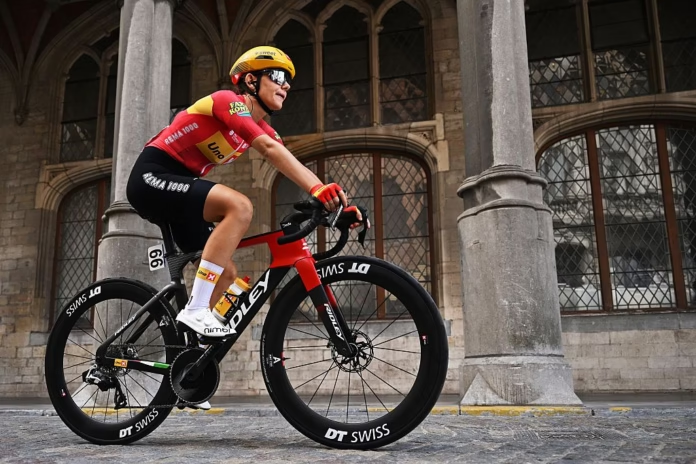
Laura Tomasi became the first rider to abandon the 2026 Tour de France Femmes after a crash-affected opening stage in Lausanne, while Zoe Bäckstedt, Puck Pieterse and Christina Schweinberger were also among those caught in incidents.
Tomasi was transferred to hospital after persistent symptoms raised concerns over a possible concussion. Bäckstedt and Pieterse both remounted after an earlier crash and completed the stage, with Pieterse recovering strongly enough to finish fourth. Schweinberger reached the finish after injuring her left wrist but required an X-ray, leaving her Stage 2 status subject to further medical assessment.
Lotte Claes, Henrietta Christie and Mackenzie Coupland were also treated after crashes, while Marlen Reusser returned to the peloton following a late fall without losing time.
Laura Tomasi abandons with suspected concussion
Tomasi suffered the most serious confirmed consequences of the opening-stage crashes.
The Uno-X Mobility rider sustained trauma to her right elbow and was assessed under the race concussion protocol. Although the initial examination did not produce an abnormal result, the official medical communiqué said that some signs persisted after the first assessment.
She was transferred to hospital for further checks and recorded as abandoning the race. Tomasi will not start Stage 2 from Aigle to Geneva.
No more detailed diagnosis had been announced by Uno-X on Sunday morning, but withdrawing her from the race was the appropriate outcome once concussion remained a possibility. Symptoms can develop or become more apparent after an initial roadside check, making continued observation necessary even when the first protocol appears normal.
Tomasi had returned to Women’s WorldTour level with Uno-X for 2026 after rebuilding her career with Laboral Kutxa. She entered the Tour as a versatile support rider capable of contributing on rolling stages and joining breakaways. Our earlier report on Laura Tomasi’s return to the WorldTour looked at how that move had given her another opportunity at the sport’s highest level.
Her departure reduces Uno-X to six riders after only one stage. The wider medical and disciplinary picture from Lausanne is covered in the Tour de France Femmes Stage 1 medical report.
Zoe Bäckstedt remounts and finishes Stage 1
Zoe Bäckstedt was involved in an earlier crash alongside Puck Pieterse but was able to remount and continue.
The Canyon SRAM rider completed the stage in 38th place, 37 seconds behind Lorena Wiebes. She was not listed among the riders requiring treatment in the official post-stage medical communiqué, and Canyon SRAM had not announced an injury or withdrawal by Sunday morning.
That makes Bäckstedt expected to start Stage 2 unless the team identifies a delayed issue during its final pre-race checks.
The time loss does not significantly alter her likely role at the Tour. Bäckstedt is not Canyon SRAM’s principal general classification contender, with the team’s overall ambitions centred on Kasia Niewiadoma-Phinney and Antonia Niedermaier.
Her clearest individual opportunity comes in the 21km Dijon time trial on Stage 4. She has developed into one of the strongest young riders against the clock and entered the Tour with a realistic chance of challenging Marlen Reusser and the leading GC time triallists.
That makes avoiding a significant injury more important than the seconds conceded in Lausanne. The British riders at the Tour de France Femmes 2026 guide explains why Bäckstedt’s Tour is likely to be measured primarily through her Dijon performance and support work for Canyon SRAM.
Puck Pieterse recovers to finish fourth
Pieterse was involved in the same early crash but recovered quickly enough to return to the front of the race and contest the uphill finish.
She crossed the line fourth, receiving the same time as Wiebes and beginning Stage 2 ten seconds behind the yellow jersey after the finishing bonuses were applied.
Pieterse was not named in the post-stage medical report, suggesting that she did not require significant treatment from the race doctors. Her fourth-place finish also provided immediate evidence that the crash had not caused an obvious performance-limiting injury.
That was an important recovery for both rider and team. Pieterse remains one of Fenix-Premier Tech’s most versatile options, capable of winning from a reduced sprint, attacking on short climbs or joining a decisive move on a hilly stage.
Stage 2 offers another plausible opportunity. Five categorised climbs provide terrain on which Pieterse can test the sprinters before the flatter run towards Geneva, although the distance from the final climb makes a bunch finish the most likely outcome.
The Puck Pieterse Tour de France Femmes profile looks at why her range gives Fenix-Premier Tech options on several different stage types.

Christina Schweinberger requires further wrist checks
Christina Schweinberger’s status remained less certain on Sunday morning.
The Austrian suffered trauma to her left wrist and required attention during the stage. The official medical communiqué confirmed that she needed an X-ray and that the Fenix-Premier Tech team doctor had been informed.
Schweinberger completed the stage, but reaching the finish does not automatically mean she will be cleared to continue. A wrist injury can affect braking, steering and the rider’s ability to absorb impacts through the handlebars, particularly during a fast and crowded sprint stage.
Fenix-Premier Tech had not confirmed a fracture or withdrawal at the time of writing. Her Stage 2 participation therefore depends on the X-ray result and the team’s subsequent assessment.
Schweinberger’s importance extends beyond her own stage ambitions. She is an experienced one-day rider and road captain who can help position Charlotte Kool before sprints and guide Pieterse through technical sections.
Losing her would leave Fenix-Premier Tech with fewer riders capable of organising the team during the decisive final kilometres. The Fenix-Premier Tech Tour de France Femmes squad guide explains the supporting role Schweinberger was expected to play alongside the team’s main stage winners.
Lotte Claes suffers abrasions
Lotte Claes was treated for abrasions after being involved in the same incident as Tomasi.
The Belgian completed the stage and was not listed as abandoning or requiring hospital treatment. She is therefore expected to continue, subject to Fenix-Premier Tech’s overnight checks.
Claes is not one of the team’s headline riders, but her availability matters after an opening day on which three members of the same squad were involved in crashes. She provides support across rolling terrain and can be used to control breakaways, collect supplies or contribute to the chase before a sprint.
Road rash may appear relatively minor compared with a fracture or concussion, but it can still affect sleep and comfort on the bike. The consequences are often more noticeable on the following morning than immediately after the crash.
Fenix-Premier Tech begin Stage 2 with Pieterse apparently unharmed, Claes carrying abrasions and Schweinberger’s participation still awaiting confirmation.

Henrietta Christie treated for bruising and abrasions
Henrietta Christie was also treated after a Stage 1 crash, with the medical report listing bruising and abrasions.
The EF Education-Oatly rider completed the stage and was not sent for further hospital assessment. She should therefore remain in the race unless the team reports a change before the start in Aigle.
Christie provides EF with climbing strength and endurance rather than being selected around one specific stage. She can support Noemi Rüegg, Cédrine Kerbaol and Kristen Faulkner while also offering the team a potential breakaway rider on harder days.
Her condition matters because EF entered the Tour with several different tactical options rather than one dominant leader. Losing a reliable support rider would reduce that flexibility, particularly once the race moves towards the mountain stages.
For now, Christie is expected to continue, although abrasions may limit how much work she can contribute during the early part of Stage 2.
Mackenzie Coupland suffers thigh abrasion
Mackenzie Coupland was involved in a separate crash and sustained an abrasion to her left thigh.
The Liv AlUla Jayco rider completed the stage, and the medical communiqué did not list any need for further tests or hospital treatment. She is expected to start Stage 2.
Coupland is one of the younger riders in the field and entered the Tour primarily in a supporting and developmental role. Her responsibilities include assisting the team’s more established leaders and gaining experience across nine days of WorldTour racing.
A thigh abrasion should not necessarily prevent her continuing, but discomfort can affect pedalling movement and make repeated accelerations more difficult. The team will monitor how the injury responds once she returns to the bike.
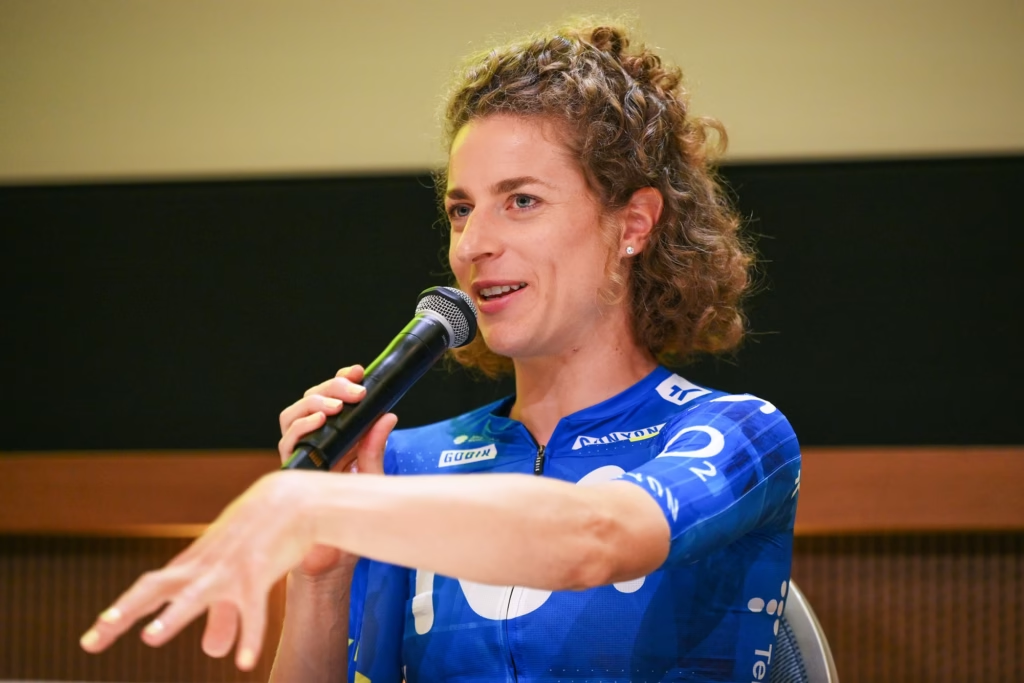
Marlen Reusser avoids GC damage after late crash
Marlen Reusser also hit the ground during the final part of the stage but quickly returned to the peloton.
The Movistar leader finished tenth and received the same time as Wiebes and the other riders in the leading group. She begins the Tour ten seconds behind yellow and only four seconds behind Demi Vollering.
Reusser was not listed in the official medical communiqué, suggesting that she did not require significant treatment from the race doctors. She is expected to continue.
Avoiding time loss was especially important because the Stage 4 time trial represents Reusser’s clearest opportunity to reshape the general classification. A crash-related deficit before Dijon would have reduced the advantage she hopes to create against the stronger climbers.
The remaining question is whether she experiences soreness overnight. A rider can finish normally after a fall and still feel the effects the following day, particularly around the hip, shoulder or ribs.
Numerically, however, Reusser escaped without damage.
Status of the riders involved in Stage 1 crashes
Laura Tomasi: Abandoned after right elbow trauma and suspected concussion. Transferred to hospital and will not start Stage 2.
Zoe Bäckstedt: Remounted and completed the stage. No injury listed in the medical report and expected to continue.
Puck Pieterse: Remounted and finished fourth. No injury listed and expected to start Stage 2.
Christina Schweinberger: Completed the stage after suffering trauma to her left wrist. Required an X-ray and awaiting final confirmation for Stage 2.
Lotte Claes: Finished after suffering abrasions. Expected to continue.
Henrietta Christie: Finished after bruising and abrasions. Expected to continue.
Mackenzie Coupland: Finished after an abrasion to her left thigh. Expected to continue.
Marlen Reusser: Returned after a late crash and finished with the leaders. Expected to continue.
-
 Photo Credit: Getty
c
Fenix-Premier Tech left with the most uncertainty
No team was affected as repeatedly as Fenix-Premier Tech during the opening stage.
Pieterse recovered to finish fourth, but Claes suffered abrasions and Schweinberger required an X-ray. That leaves the team monitoring two support riders before a stage on which both Pieterse and Kool could have realistic ambitions.
Kool needs teammates capable of guiding her through the five climbs and building a lead-out in Geneva. Pieterse may prefer a more aggressive race in which the sprinters are put under pressure before the finish.
Those plans require numbers.
Schweinberger’s condition is therefore important even though she was never expected to be the team’s designated winner. Her experience, positioning and ability to organise the squad help make the opportunities for Kool and Pieterse possible.
The full tactical picture for Sunday is covered in the Tour de France Femmes 2026 Stage 2 preview.
Most riders continue, but Tomasi’s Tour is over
Tomasi remains the only confirmed crash-related withdrawal from Stage 1.
Bäckstedt and Pieterse both recovered from their incident, with Pieterse still able to challenge for the stage victory. Claes, Christie, Coupland and Reusser all reached Lausanne without a withdrawal being announced.
Schweinberger remains the main uncertainty after requiring an X-ray on her wrist.
The final picture will only be confirmed when teams submit their Stage 2 starters and provide any overnight medical updates. For now, most of the riders caught in the opening-day crashes are expected to continue.
Tomasi will not. Her Tour ended after one stage, with the persistence of possible concussion symptoms making further racing unsafe.

