
Lorena Wiebes takes the yellow jersey into Stage 3 after completing back-to-back victories in Switzerland, but the 156.5km road from Geneva to Poligny presents a very different challenge from the two finishes she controlled in Lausanne and Geneva.
Wiebes now leads Kim Le Court-Pienaar by 14 seconds and Demi Vollering by 16, with Noemi Rüegg, Elisa Longo Borghini, Cédrine Kerbaol, Kasia Niewiadoma-Phinney, Puck Pieterse and Pauline Ferrand-Prévot all 20 seconds behind. Those gaps have been created largely through finish bonuses rather than meaningful separation on the road, but Stage 3 provides the first terrain capable of changing the structure of the race.
The Col de la Faucille begins almost immediately after the Tour crosses from Switzerland into France. At 11.4km and 6.3%, it is the first sustained mountain of the 2026 race and arrives before the peloton has been given any real opportunity to settle. Three more categorised climbs follow through the Jura before a rolling finish into Poligny.
This is the first stage where Wiebes may lose yellow even without suffering a bad day. SD Worx-Protime must decide how much energy the jersey is worth defending one day before the Dijon time trial, while breakaway riders, puncheurs and GC contenders finally have terrain on which to move the race away from the sprinters.
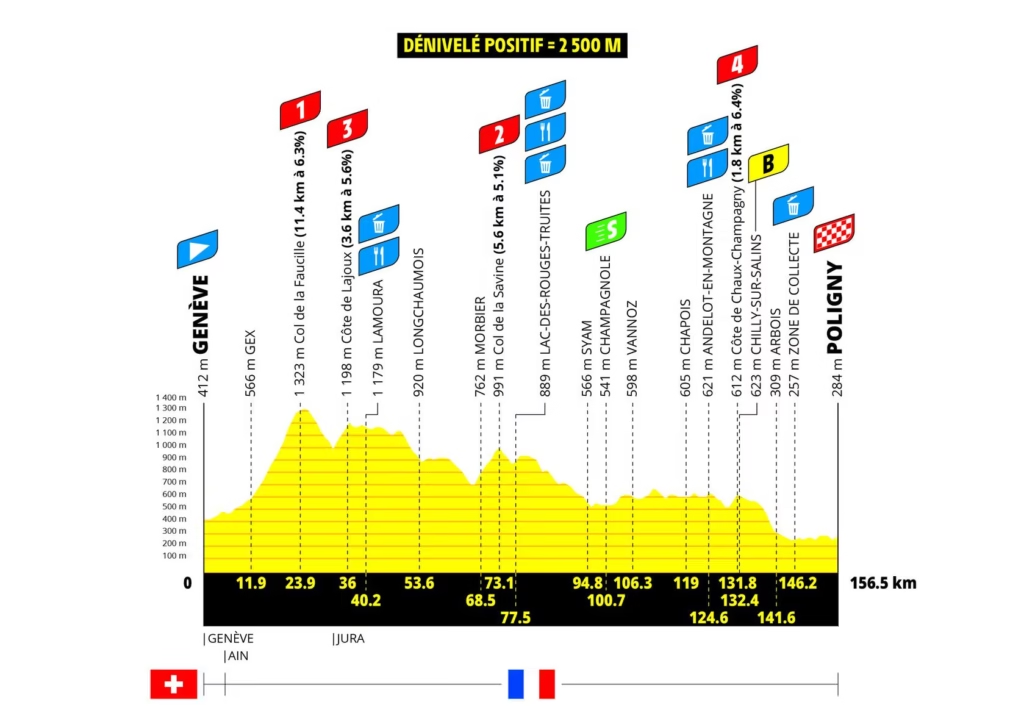
Tour de France Femmes 2026 Stage 3 route
Date: Monday 3 August 2026
Start: Geneva
Finish: Poligny
Distance: 156.5km
Stage type: Hilly
Categorised climbs: Four
Neutralised start: 13:25 CEST, 12:25 BST
Expected finish: approximately 17:40 CEST, 16:40 BST
Stage 3 takes the Tour out of Switzerland and into France, with the riders leaving Geneva before heading almost immediately towards the Col de la Faucille.
The summit arrives after only 23.9km, placing the hardest climb near the beginning rather than the end. That should create an aggressive opening hour as riders compete simultaneously for the breakaway, mountains points and position before the long ascent.
The route remains in the Jura after the summit, taking in the Côte de Lajoux and Col de la Savine before descending towards Champagnole. The final classified climb, the Côte de Chaux-Champagny, comes with 24.7km remaining and is followed by a bonus point where six, four and two seconds are available.
The complete shape of the race, including the Dijon time trial, Mont Ventoux and the final mountain stage around Nice, is covered in the Tour de France Femmes 2026 route guide.
Stage 3 climbs
Col de la Faucille: 11.4km at 6.3%, category one, summit after 23.9km
Côte de Lajoux: 3.6km at 5.6%, category three, summit after 36km
Col de la Savine: 5.6km at 5.1%, category two, summit after 73.1km
Côte de Chaux-Champagny: 1.8km at 6.4%, category four, summit after 131.8km
The Col de la Faucille is the first genuine mountain of the Tour and carries enough points to reshape the polka-dot classification immediately. It is also long enough to expose riders who have survived the shorter climbs of the opening weekend through positioning and repeated short efforts.
The other three ascents are less severe, but they prevent the race becoming a simple chase back to Poligny. Any sprinter dropped on the first climb must recover without being placed under renewed pressure on Lajoux and the Col de la Savine.
The Col de la Faucille changes the race immediately
An 11.4km climb averaging 6.3% would be significant wherever it appeared. Placing it inside the opening 24km makes it especially difficult to control.
The peloton could reach the lower slopes before a stable breakaway has formed, encouraging stronger climbers to use the ascent itself to create the decisive move. Riders who normally rely on following attacks across flatter roads may find themselves unable to stay with the group once the gradient begins.
The climb is not steep enough to force the GC favourites into an all-out battle, but it is long enough for them to make the stage extremely uncomfortable for Wiebes. A sustained pace from UAE Team L’IMAD, Canyon SRAM, FDJ United-Suez or Visma | Lease a Bike could leave the yellow jersey several minutes behind before the route reaches its halfway point.
That does not automatically end Wiebes’ defence. The distance remaining gives SD Worx-Protime time to organise a chase, but the team must first decide whether expending that energy is worthwhile.
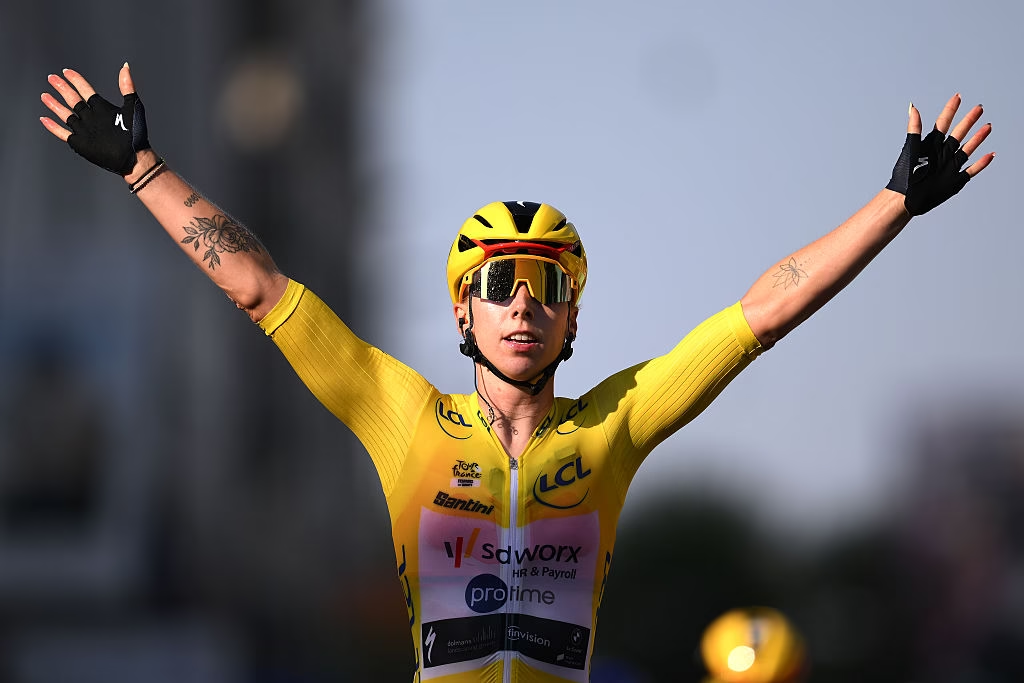 Photo Credit: Getty
Can Lorena Wiebes keep the yellow jersey?
Wiebes has controlled the opening weekend more completely than many expected.
She won the selective uphill sprint in Lausanne before confirming her superiority in the more conventional Geneva finish. The two victories have given her a 14-second advantage over Le Court-Pienaar and a 16-second lead over Vollering.
Stage 3 is less about whether Wiebes can climb with the GC favourites and more about how much time she can afford to lose on the Col de la Faucille. She does not need to remain in the first group. She needs to stay close enough for SD Worx-Protime to bring her back during the long middle section.
That becomes harder if several strong teams commit to the pace. A controlled ascent would leave Wiebes with a realistic route back. A sustained attack from the strongest climbers could force SD Worx-Protime to chase for much of the stage.
The team also possess alternative options. Lotte Kopecky and Anna van der Breggen can remain in the front group if Wiebes is dropped, removing the need to sacrifice every rider in defence of yellow.
The broader question is whether SD Worx-Protime value keeping the jersey for one more day. Stage 4 offers a 21km individual time trial where the GC should become more structured, and defending Wiebes through the Jura could cost energy without changing the team’s long-term Tour prospects.
A breakaway has its first major opportunity
Stage 3 is the clearest breakaway day of the Tour so far.
The difficult opening should produce a move containing riders strong enough to survive the remaining climbs, while the GC teams may be reluctant to chase hard immediately before the Dijon time trial.
That combination can create the space required for a breakaway to reach Poligny. The opening two stages gave attackers mountains points and exposure, but the sprint teams always had the terrain and incentive to bring them back. Stage 3 is less predictable.
The composition of the move will determine how much freedom it receives. A group containing riders already several minutes behind in the general classification could build a substantial advantage. A break containing Le Court-Pienaar, Pieterse, Rüegg or another rider close to yellow would force SD Worx-Protime and the GC teams to react.
Several of the likely candidates are covered in the Tour de France Femmes 2026 breakaway specialists guide.
The bonus point can shape the GC before Dijon
The Côte de Chaux-Champagny is only 1.8km at 6.4%, but its position gives it greater tactical value than its category-four status suggests.
The climb tops out with 24.7km remaining and is followed almost immediately by a bonus point offering six, four and two seconds. Another ten, six and four seconds are available at the finish.
A rider who leads over the bonus point and wins in Poligny can therefore gain 16 seconds before the Tour reaches its first major GC test.
Vollering has already shown that she is willing to contest early bonuses, taking four seconds in Lausanne. Le Court-Pienaar has the sprint to collect time from a reduced group, while Niewiadoma-Phinney and Longo Borghini have greater incentive to use hilly stages before the time trial favours their stronger rivals.
The bonus point also complicates cooperation. A small group may work together across the final climb, only for the presence of six seconds to trigger attacks and hesitation immediately afterwards.
Kim Le Court-Pienaar has another route towards yellow
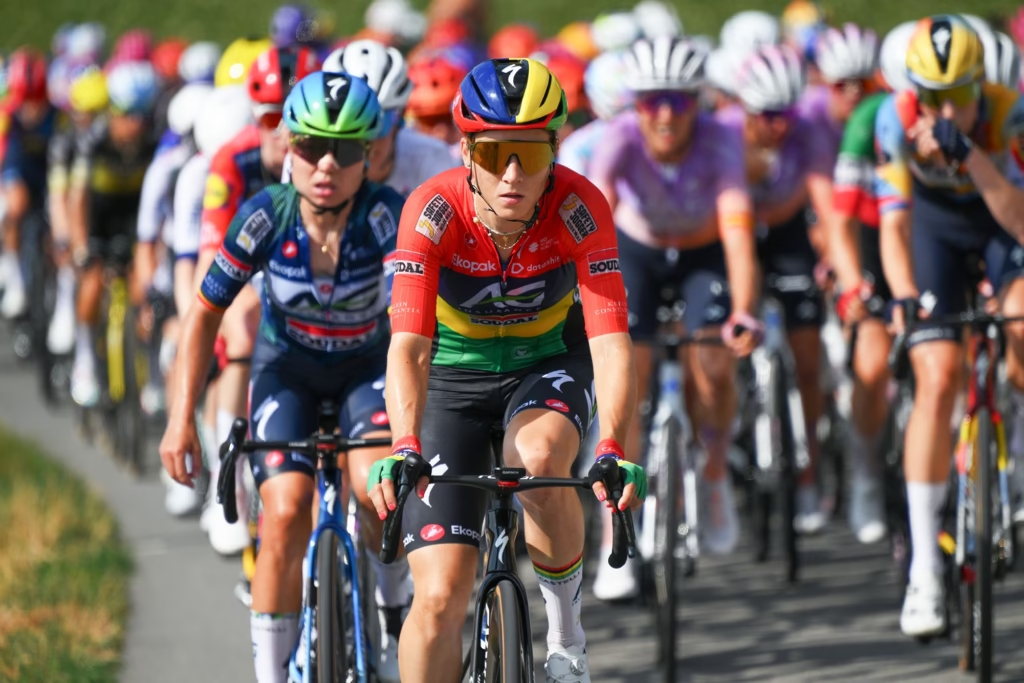
Le Court-Pienaar begins Stage 3 second overall, 14 seconds behind Wiebes and two seconds ahead of Vollering.
The terrain suits her far more naturally than the flat sprint into Geneva. She climbs better than the pure fast finishers and has enough speed to beat most of the GC contenders from a reduced group.
AG Insurance-Soudal can also make the race harder without asking their leader to attack from the foot of the Col de la Faucille. Justine Ghekiere, Urška Žigart and Lore De Schepper provide options for the climbs and breakaway, allowing Le Court-Pienaar to preserve energy for the final 25km.
The yellow jersey is available if Wiebes loses contact and the front group remains away. Le Court-Pienaar does not necessarily need to win the stage. She needs to finish far enough ahead of Wiebes while keeping Vollering and the other GC contenders under control.
Taking yellow would bring responsibility, but AG Insurance-Soudal have already shown they are prepared to race around their Mauritian leader. The background to her rapid rise is covered in our profile of Kim Le Court-Pienaar and her Tour de France Femmes GC challenge.
Puck Pieterse has almost every tool required
Pieterse is one of the most obvious Stage 3 contenders.
She can survive the longer climbs, attack on the shorter ascents and sprint quickly enough to beat many of the riders expected to remain in the front group. Her handling should also be valuable on the Jura descents and during a potentially technical pursuit towards Poligny.
Fenix-Premier Tech have lost Christina Schweinberger to a broken wrist, reducing the support available around their leaders. The route nevertheless simplifies their priorities because Charlotte Kool is unlikely to survive if the Col de la Faucille is raced hard.
Pieterse does not need to attack immediately. Following the main selection on the opening climb and using the Côte de Chaux-Champagny may offer a better chance than spending more than 100km in the breakaway.
A reduced finish would make her one of the hardest riders to beat.
Noemi Rüegg has another stage suited to her strengths
Rüegg begins Stage 3 fourth overall, 20 seconds behind Wiebes, after finishing near the front on both opening days.
The Swiss rider has enough climbing ability to survive the Col de la Faucille and enough speed to contest a reduced finish. She is particularly dangerous if the race becomes selective without turning into a full GC battle.
EF Education-Oatly can use several tactical options around her. Cédrine Kerbaol can attack on the rolling roads and descents, Kristen Faulkner has the power for a long breakaway, and Henrietta Christie provides climbing support despite carrying bruising and abrasions from Stage 1.
That depth means Rüegg does not need to respond personally to every move. EF can place a rider ahead and force rival teams to chase while keeping Rüegg protected for the finish.
The route is exactly the type of terrain identified in our Tour de France Femmes 2026 riders-to-watch guide as central to her stage-winning chances.
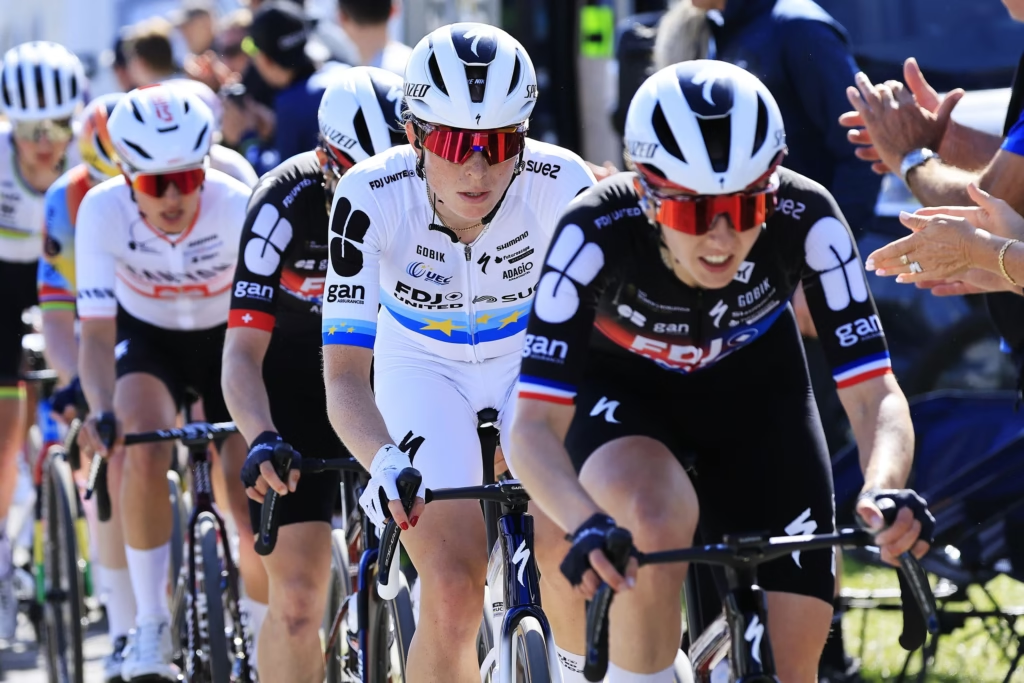
Demi Vollering can gain without controlling the stage
Vollering begins Stage 3 third overall and remains the best-placed of the central pre-race GC favourites.
She does not need to attack on the Col de la Faucille, but the stage provides several routes towards another useful gain. She can follow a GC selection, contest the bonus point or use her fast finish in Poligny.
Another four, six or ten seconds would strengthen her position before Dijon. The time trial already favours her against Ferrand-Prévot, Niewiadoma-Phinney, Blasi and several other climbers, so every bonus collected beforehand increases the pressure on those riders.
FDJ United-Suez also have alternatives through Célia Gery and Juliette Berthet. Gery is well suited to a reduced sprint, while Berthet can join a more climbing-focused move.
That gives the team no reason to control the stage exclusively around Vollering. They can place riders in attacks while keeping their leader near the other GC favourites.
Pauline Ferrand-Prévot should resist unnecessary work
Ferrand-Prévot’s priority remains winning the Tour rather than taking yellow in Poligny.
The Col de la Faucille should not trouble the defending champion physically, but there is little reason for her to spend heavily one day before a time trial expected to favour Vollering and Reusser.
Her ideal result is remaining with the other major favourites while allowing Visma | Lease a Bike to pursue the stage through a different rider. Marianne Vos remains a possibility if the race regroups after the opening climb, while Sarah van Dam, Femke de Vries and Marion Bunel can enter breakaways.
Vos is especially difficult to dismiss because the hardest climb comes so early. If she returns afterwards and survives the Col de la Savine, the finish in Poligny becomes highly attractive.
Ferrand-Prévot can therefore remain focused on the overall contest without forcing the team to race defensively.
Kasia Niewiadoma-Phinney needs to use the hilly stages
Niewiadoma-Phinney begins Stage 3 20 seconds behind Wiebes and level with most of the principal GC contenders.
She is likely to concede time to Reusser and possibly Vollering in Dijon, placing greater importance on stages where aggressive racing can create opportunities before the clock begins.
Stage 3 is one of those days.
The Col de la Faucille gives Canyon SRAM the terrain to place Wiebes and less complete riders under pressure. The late climb and bonus point offer another chance to gain seconds without waiting for Mont Ventoux.
Niewiadoma-Phinney may not possess the fastest finish from a reduced group, so she benefits from a more aggressive final 25km. Allowing Pieterse, Vos or Le Court-Pienaar to wait for a sprint would reduce her own chances.
Canyon SRAM also have Antonia Niedermaier for the climbing and Zoe Bäckstedt to provide power across the flatter sections. The team can make the race difficult without relying on one attack from their leader.
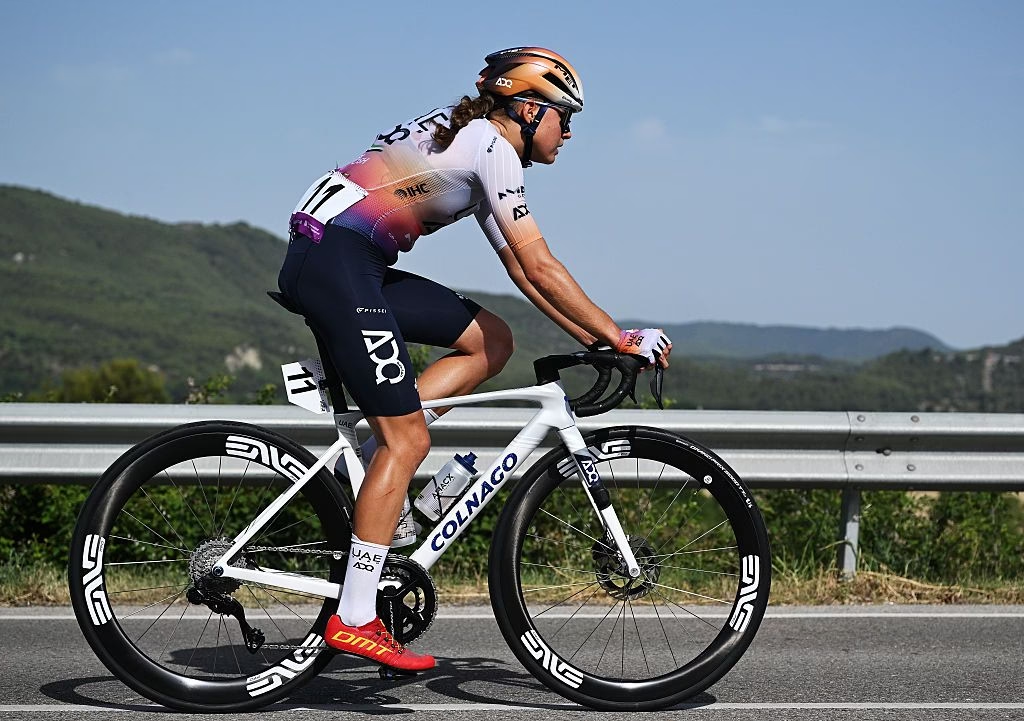
Elisa Longo Borghini and Paula Blasi give UAE options
UAE Team L’IMAD begin Stage 3 without Brodie Chapman but retain one of the deepest climbing groups in the race.
Longo Borghini offers strength across rolling terrain, tactical experience and a fast enough finish to win from a small group. Blasi is more likely to benefit if the Col de la Faucille becomes the beginning of a genuine GC battle.
Silvia Persico, Maëva Squiban, Mavi García and Dominika Włodarczyk provide further attacking and supporting options, allowing UAE to place a rider in the breakaway while keeping their two primary leaders near the favourites.
Longo Borghini appears the more natural stage contender because the finish is not mountainous. Blasi’s priority should be avoiding another small loss before Dijon and preserving herself for the harder climbs later in the race.
The team do not need to settle their internal hierarchy on Stage 3. Their strength comes from retaining multiple threats.
Lotte Kopecky gives SD Worx-Protime an alternative
Kopecky provides SD Worx-Protime with a strong fallback if Wiebes loses contact.
The Col de la Faucille is a serious test, but Kopecky has repeatedly shown that she can survive sustained climbing when targeting a stage. The rolling roads and reduced finish suit her power and sprint.
Her presence changes how the team can defend yellow. SD Worx-Protime do not need to chase blindly if Kopecky or Van der Breggen remains in the front selection.
The key decision concerns timing. Waiting too long for Wiebes could leave Kopecky unable to respond when the race-winning move develops. Switching early towards Kopecky would improve the team’s stage chances but make it more likely that Wiebes loses yellow.
Either outcome can still be successful. The opening weekend has already delivered two victories, and the team now have the freedom to approach Stage 3 more tactically.
Marlen Reusser should protect the time trial
Stage 3 suits Reusser’s sustained power, but Movistar’s priority should be reaching Dijon without another incident.
The Swiss rider crashed during Stage 1, chased back and finished with the leading group before completing Stage 2 without any obvious setback. The 21km time trial remains her clearest opportunity to take control of the race.
Reusser should be able to survive the Col de la Faucille when riding at a controlled pace. She does not need to follow every stage hunter or spend energy closing moves that pose no GC threat.
The danger comes if Vollering, Ferrand-Prévot or Niewiadoma-Phinney use the climb to force a meaningful selection. Movistar must distinguish between breakaways they can safely ignore and GC attacks that require an immediate response.
Reusser remains the benchmark against the clock in the Tour de France Femmes 2026 time trial contenders guide. Stage 3 is about ensuring she reaches that opportunity in the same strong position.
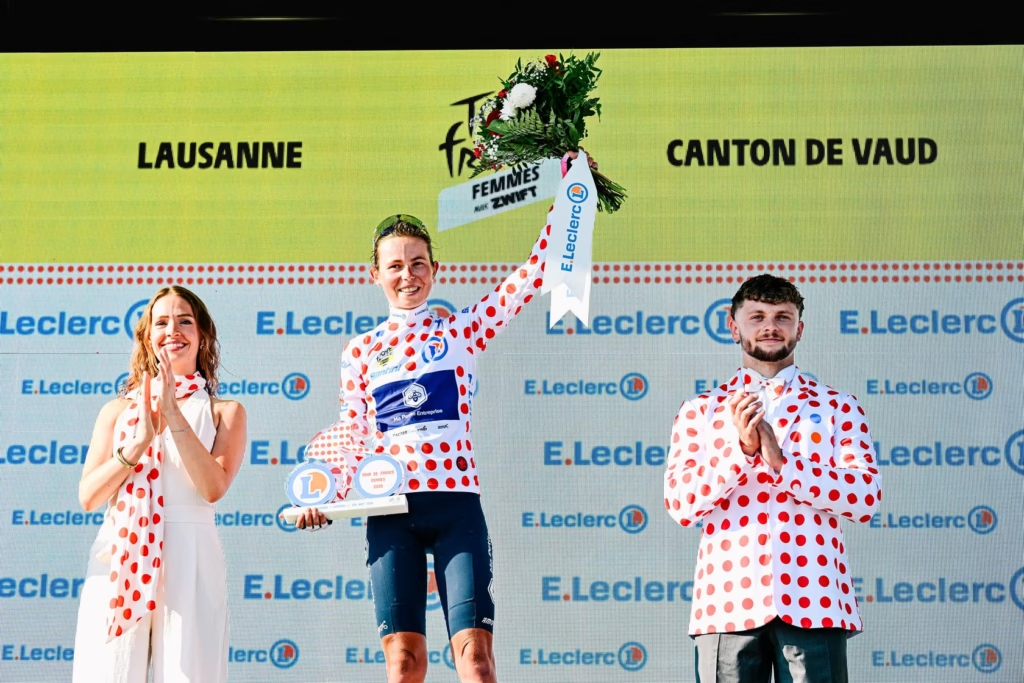 Photo Credit: A.S.O./Billy Ceusters
The polka-dot jersey faces its first major reshuffle
The Col de la Faucille should transform the mountains classification.
Ten points are available at the category-one summit, while the Col de la Savine adds another five later in the stage. One successful breakaway can therefore overhaul the totals accumulated during the shorter climbs of the opening weekend.
The current mountains leader must either enter the move again or hope the points are divided among several different riders. The difficulty is that the strongest climbers can wait until the Col de la Faucille itself before attacking.
Riders with no immediate GC ambitions may now see a longer-term route towards the polka-dot jersey. Stage 3 is the first day where targeting the classification requires genuine sustained climbing rather than repeated short efforts from an early breakaway.
How Stage 3 is likely to unfold
The opening 25km should be among the most aggressive of the first half of the Tour.
Some riders will attack before the French border, hoping to begin the Col de la Faucille with an advantage. Others will wait for the ascent and use the gradient to bridge across or form a stronger move.
The peloton should split on the climb, with Wiebes and several sprinters losing contact. Whether they return depends on the size and commitment of the front group.
A partial regrouping is possible after the Côte de Lajoux, but the Col de la Savine provides another chance to distance tired riders. By that point, the race should have settled into a clearer contest between the breakaway, the main GC group and any chasing group containing the yellow jersey.
The longer section towards Champagnole can reduce the climbers’ advantage if cooperation fails. Teams with fast finishers may still attempt to bring the race together, particularly if Wiebes, Vos or Kopecky remain within a manageable distance.
The Côte de Chaux-Champagny should create the final selection. Its gradient is not extreme, but after more than 130km and three earlier climbs it will be difficult enough for attacks.
The bonus point immediately afterwards ensures that the leaders cannot simply wait for the finish. From there, 24km remain to Poligny, leaving time for counter-attacks, tactical hesitation and a possible chase from a reduced peloton.
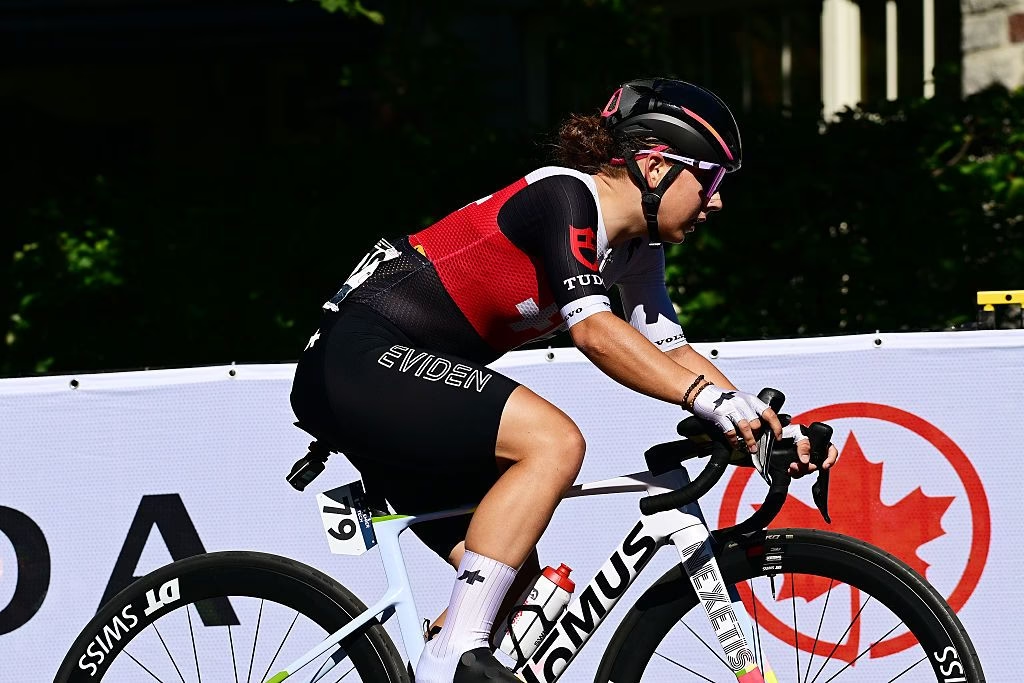
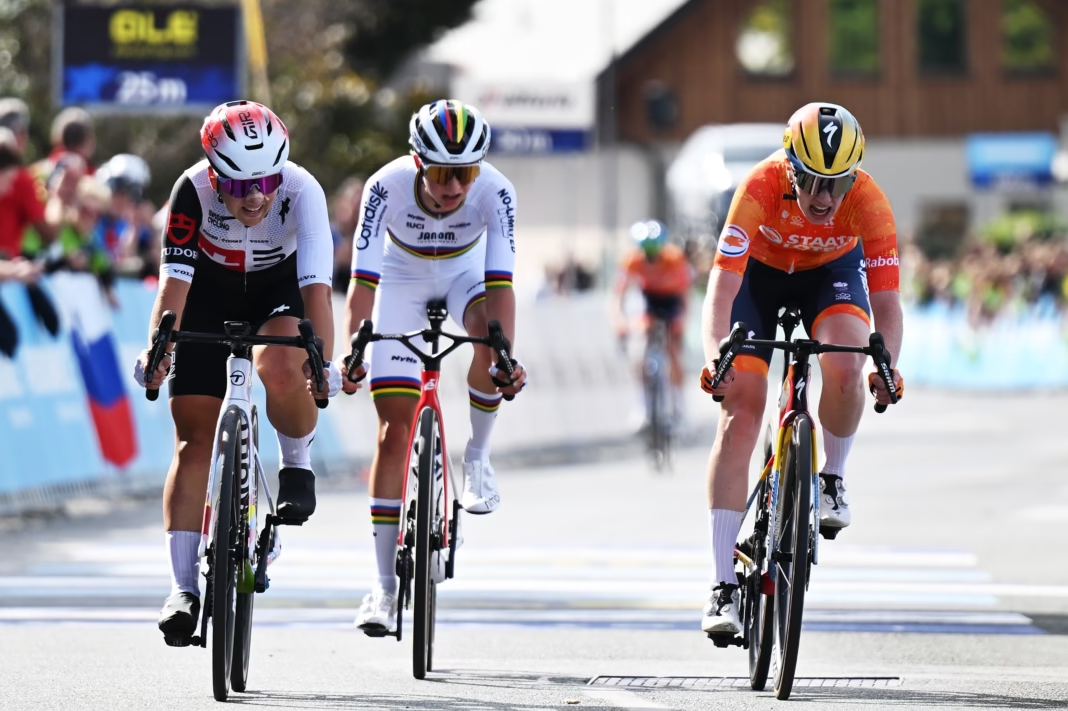
Tour de France Femmes 2026 Stage 3 contenders
Puck Pieterse has the climbing ability, technical skill and sprint required for almost every plausible race scenario.
Kim Le Court-Pienaar can survive the Jura climbs and becomes particularly dangerous if a reduced group contests the finish.
Noemi Rüegg has another route suited to her combination of climbing and speed.
Demi Vollering may not target the stage exclusively, but the available bonus seconds and reduced finish make her impossible to ignore.
Kasia Niewiadoma-Phinney has more incentive than the strongest time triallists to make the race aggressive before Dijon.
Elisa Longo Borghini is strong across rolling terrain and quick enough to complete the work from a small group.
Lotte Kopecky gives SD Worx-Protime a high-quality alternative if Wiebes is dropped.
Marianne Vos remains dangerous if the race regroups after the early climbing.
Célia Gery has the speed for a reduced finish and the climbing ability to survive a controlled ascent.
Maëva Squiban, Juliette Berthet, Kristen Faulkner, Justine Ghekiere and Sarah van Dam are among the riders capable of winning from a strong breakaway.
Stage 3 verdict
Stage 3 is where the 2026 Tour de France Femmes should begin to move beyond Wiebes’ control.
The Col de la Faucille arrives too early to decide the stage directly, but it can determine the entire structure of the race. A hard ascent could remove the yellow jersey, create a powerful breakaway and force the GC teams to reveal how aggressively they are prepared to race before Dijon.
The long distance from the first mountain to Poligny prevents this from becoming a conventional climbing stage. Dropped riders have time to return, while attackers need enough cooperation and strength to sustain an advantage for more than 100km.
That uncertainty is the stage’s greatest strength.
Wiebes has earned the right to defend yellow after winning twice in two days. Stage 3 asks whether SD Worx-Protime value keeping it enough to chase across the Jura, or whether the team use Kopecky or Van der Breggen to pursue a different outcome.
For the breakaway riders, puncheurs and GC contenders who watched Wiebes dominate the opening weekend, the road to Poligny is their first major opportunity to take control.

