
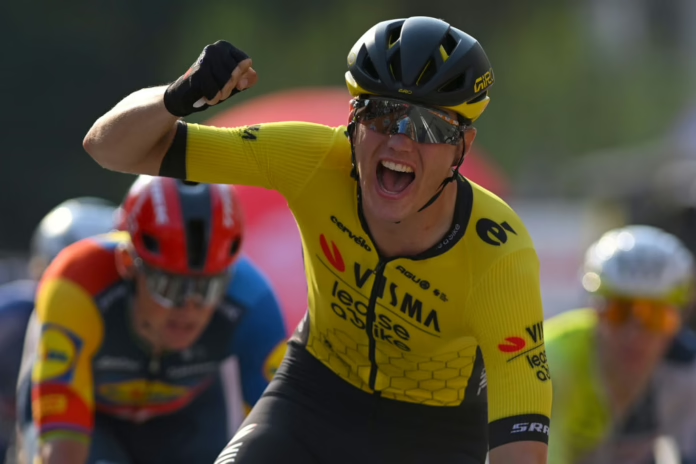
The 2026 ADAC Cyclassics takes place on Sunday 16 August, with the WorldTour peloton racing from Buxtehude into central Hamburg. The 206km route again revolves around the Waseberg, with five late passages of the short, steep climb before the finish on Mönckebergstraße. ProCyclingUK’s ADAC Cyclassics 2026 route guide breaks down exactly where those climbs fall and why they can disrupt an otherwise sprint-friendly race.
The field contains some of the strongest fast finishers in the men’s peloton, but there is enough Classics quality spread across the 22 teams to make a straightforward bunch sprint far from guaranteed. Jonathan Milan, Olav Kooij, Arnaud De Lie, Biniam Girmay and Paul Magnier provide the obvious sprinting threat, while riders such as Isaac del Toro, Michael Matthews and Matej Mohorič give teams reasons to make the final hour much harder.
That uncertainty is part of the race’s identity. ProCyclingUK’s brief history of the ADAC Cyclassics covers a winners list that stretches from pure sprinters to Classics specialists and breakaway winners, including Rory Townsend’s extraordinary victory from the early escape in 2025.
The selections below are based on the provisional start list ahead of race weekend and can still change before Sunday.
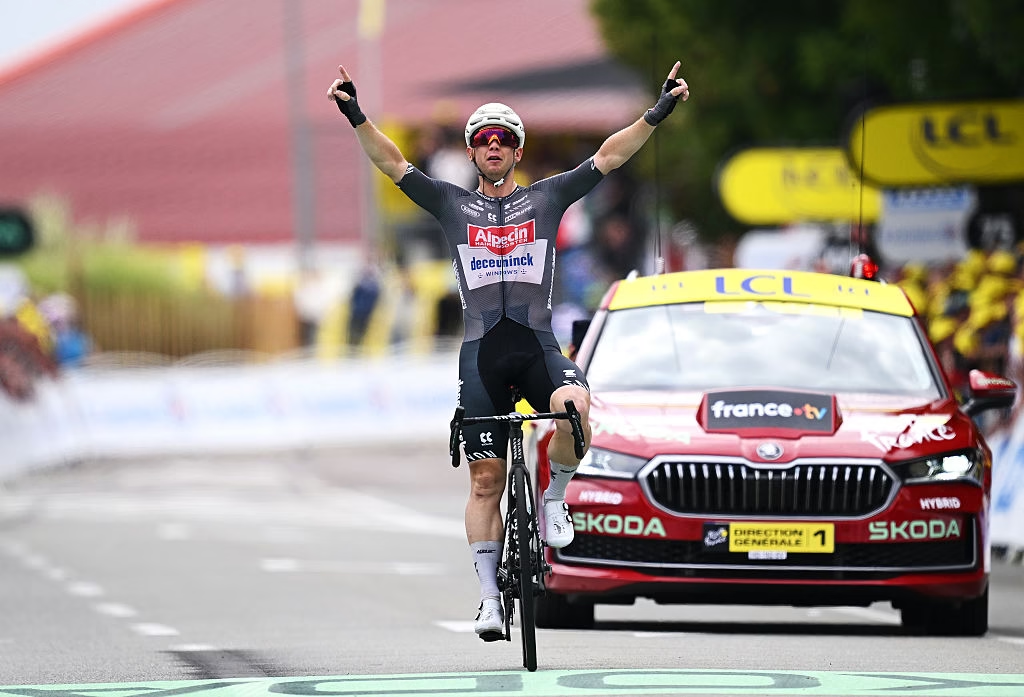 Photo Credit: Getty
Alpecin-Premier Tech
Key riders: Kaden Groves, Tibor Del Grosso, Jensen Plowright
Kaden Groves gives Alpecin-Premier Tech an obvious finishing option, but he is useful precisely because the team does not need the race to remain completely controlled. Groves can survive a more selective finale than many pure sprinters and has repeatedly shown that his skill set extends well beyond straightforward bunch finishes.
His remarkable solo win from the breakaway on Stage 20 of the 2025 Tour de France demonstrated that versatility particularly clearly.
Tibor Del Grosso gives Alpecin another rider who can become relevant if the Waseberg begins splitting the race, while Jensen Plowright adds further finishing speed. Their best scenario is probably a selective race that removes some of Groves’ faster rivals without reducing the front group to only a handful of riders.
Bahrain Victorious
Key riders: Phil Bauhaus, Matej Mohorič
Bahrain Victorious have two very different plans available.
Phil Bauhaus gives them a genuine German sprint contender if the race remains together, while Matej Mohorič has every reason to attack rather than help deliver the fastest riders to Hamburg. Nikias Arndt adds another experienced option for the final phase.
That tactical split should work in Bahrain’s favour. They do not need to commit the entire team to protecting Bauhaus through all five Waseberg passages. Mohorič can follow dangerous moves, forcing rival sprint teams to chase while Bauhaus conserves energy behind.
If the peloton reorganises, Bauhaus becomes the focus. If it does not, Bahrain should already have somebody in the race.
Decathlon CMA CGM Team
Key riders: Olav Kooij, Oliver Naesen
Few riders have a more obvious claim to favourite status than Olav Kooij, who already knows how to win in Hamburg.
The Dutchman won the 2024 edition and has taken another step forward since joining Decathlon CMA CGM for 2026. His move to the French team was part of a major sprinting investment that also brought Cees Bol and Robbe Ghys into the structure, covered when ProCyclingUK reported on Kooij signing for Decathlon CMA CGM.
Kooij has also shown his speed at the very highest level this season, including victory on Stage 5 of the Tour de France in Pau. His support in Hamburg includes enough Classics strength to keep him positioned through the harder sections, with Oliver Naesen particularly valuable once more conventional lead-out riders begin disappearing.
If 40 or 50 riders reach the final kilometres together, Kooij should be one of the hardest men to beat.
 Photo Credit: Getty
EF Education-EasyPost
Key riders: Marijn van den Berg, Madis Mihkels, Luke Lamperti
EF Education-EasyPost have several fast riders but no reason to spend the afternoon helping Lidl-Trek or Decathlon produce a completely controlled sprint.
Marijn van den Berg probably gives them the safest option from a larger group, while Madis Mihkels is especially interesting if repeated Waseberg passages reduce the peloton. Luke Lamperti adds another useful finishing card.
Their numerical depth should encourage an active approach. If all three remain in contention late, EF can place riders into attacks without sacrificing their sprint entirely.
A full bunch sprint against Milan and Kooij is not their ideal outcome. A messy finish with 25 or 30 riders is much more attractive.
Groupama-FDJ United
Key riders: Paul Penhoët, Thibaud Gruel
Paul Penhoët gives Groupama-FDJ United their clearest route to victory, but the Frenchman would benefit from a slightly selective race rather than simply taking on every elite sprinter at full strength.
Thibaud Gruel provides another fast and increasingly versatile option, while Kevin Geniets and Johan Jacobs should be valuable during the fight for position before the Waseberg.
Groupama’s challenge is finding the right level of difficulty. They want enough attrition to remove some of the biggest sprint engines without turning the race into a succession of attacks that eliminates their own finishers.
Lidl-Trek
Key riders: Jonathan Milan, Simone Consonni, Søren Kragh Andersen
Lidl-Trek have arguably the strongest conventional sprint structure in the field.
Jonathan Milan brings enormous finishing power, with Simone Consonni central to the lead-out and Edward Theuns and Max Walscheid adding further strength. Søren Kragh Andersen gives the team a rider capable of covering attacks rather than forcing the sprint train to chase everything itself.
Milan entered 2026 as one of the sport’s benchmark fast men, with ProCyclingUK assessing his broader sprinting strengths in our Jonathan Milan Tour de France 2026 profile. He later ended the Giro with victory in Rome, another reminder of what happens when he receives a clean launch.
The Waseberg is the complication. Rival teams need to isolate Milan before Hamburg, because allowing Consonni to deliver him into the final few hundred metres is probably the least attractive scenario for almost everyone else.
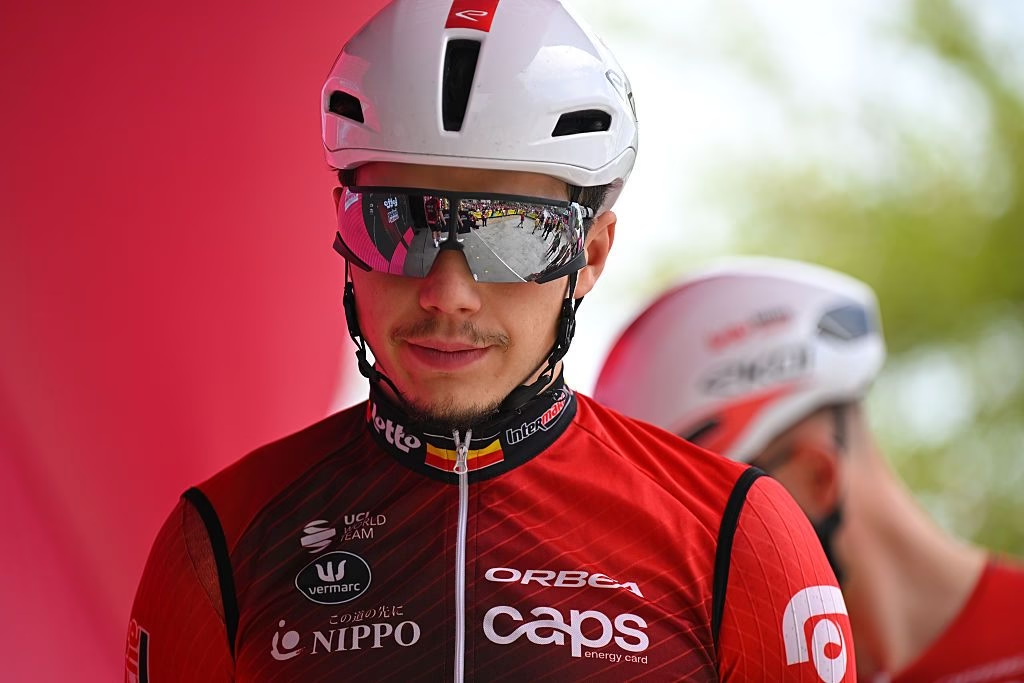
Lotto Intermarché
Key riders: Arnaud De Lie, Jasper De Buyst
Arnaud De Lie came exceptionally close to winning here in 2025, taking second as the peloton arrived just too late to deny Rory Townsend.
His profile remains almost ideal for Hamburg. De Lie has genuine sprint speed but is considerably less dependent on a perfectly smooth final hour than some pure fast men. Contact, short climbs and a reduced group do not necessarily work against him.
Jasper De Buyst remains important if the race reaches a sprint, while riders such as Jonas Rutsch give Lotto strength earlier in the finale.
De Lie’s 2026 season has included disruption, including the stomach problems that ultimately contributed to his early exit from the Tour de France, covered in ProCyclingUK’s report on his Tour ending after the Stage 3 time-cut battle. If he arrives in Hamburg back at full strength, last year’s runner-up has a very obvious opportunity to go one place better.
Movistar Team
Key riders: Orluis Aular, Iván García Cortina
Orluis Aular is Movistar’s fastest likely option, but the team should have little interest in helping the biggest sprint squads organise the final hour.
Iván García Cortina and Jon Barrenetxea provide more aggressive alternatives, particularly over the Waseberg, while Filip Maciejuk adds the sort of power required to remain useful during a fast, attritional race.
Aular can finish from a reduced group, which makes controlled attrition the obvious plan. Movistar need the race to become difficult enough to damage Milan, Kooij and the other pure sprinters without allowing a small group of Classics specialists to disappear altogether.
NSN Cycling Team
Key riders: Biniam Girmay, Jake Stewart, Lewis Askey
NSN Cycling Team have one of the most naturally suitable squads for Hamburg.
Biniam Girmay combines sprinting speed with the resilience needed to survive repeated climbing and aggressive one-day racing. His move to NSN was one of the headline transfers ahead of this season, with ProCyclingUK covering Girmay’s three-year deal with the team through 2028.
Jake Stewart gives them another quick finisher, while Lewis Askey and Matis Louvel can follow moves before the sprint becomes relevant.
The team do not need to make the race easy for Girmay. A harder final hour probably increases his chances by removing riders with greater outright top speed.
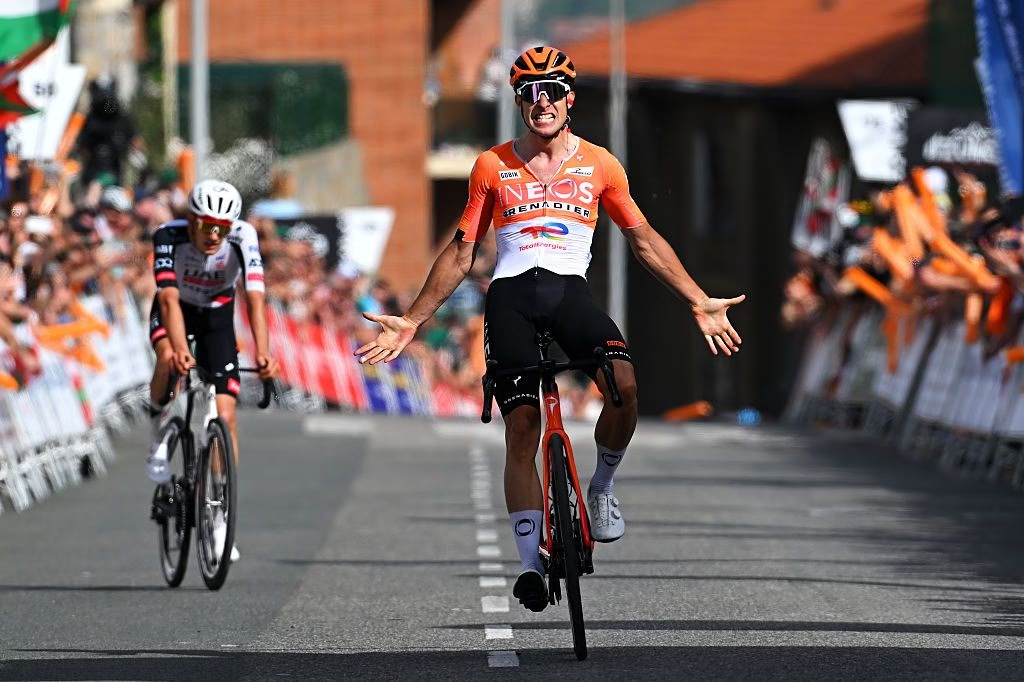 Photo Credit: Getty
Netcompany Ineos Cycling Team
Key riders: Axel Laurance, Samuel Watson, Connor Swift
Netcompany Ineos arrive without an obvious pure sprinter capable of simply waiting for Mönckebergstraße.
That should encourage them to attack.
Axel Laurance gives them their best combination of durability and finishing speed, while Samuel Watson and Connor Swift are well suited to a finale dominated by positioning, repeated accelerations and small-group racing.
The objective should be to make the final Waseberg passages decisive rather than allowing the race to settle. If a group containing 60 riders reaches Hamburg, several other teams have faster finishers. If only 15 or 20 remain, Ineos’ chances improve dramatically.
Red Bull-Bora-hansgrohe
Key riders: Danny van Poppel, Laurence Pithie
Red Bull-Bora-hansgrohe look more like an attacking Classics squad than a conventional sprint team.
Danny van Poppel can sprint in his own right, but Laurence Pithie may be the more interesting option if the race becomes selective. Gianni Moscon adds further one-day experience and strength.
Their lack of one dominant pure sprinter creates tactical freedom. Rather than spending the closing kilometres defending a single plan, Red Bull can become one of the teams making the Waseberg difficult.
A smaller finish suits them far more than a fully organised bunch sprint.
Soudal Quick-Step
Key riders: Paul Magnier, Jasper Stuyven, Yves Lampaert
Soudal Quick-Step bring one of the strongest combinations of outright sprinting and Classics support.
Paul Magnier finished third here in 2025 and has developed further during 2026, winning three stages at the Giro d’Italia. His third victory came on a difficult Stage 18 where he survived the late Muro di Ca’ del Poggio before still having the speed to win, a performance covered in ProCyclingUK’s Giro Stage 18 report.
Jasper Stuyven and Yves Lampaert mean Quick-Step do not need to chase every attack immediately. Either can follow dangerous moves while Magnier remains protected.
That is exactly the tactical flexibility required in Hamburg. Magnier provides the finishing speed, but the riders around him should make sure he does not have to win the entire race himself.
 Photo Credit: Getty
Team Jayco AlUla
Key riders: Michael Matthews, Luka Mezgec
Michael Matthews remains one of the most interesting riders in a race like this because his ideal scenario sits between a pure sprint and a fully selective Classic.
Matthews wants the Waseberg to hurt. If repeated climbs reduce the group and remove some of the fastest sprinters, his finishing speed becomes increasingly valuable. Jayco have committed to him beyond this season, with ProCyclingUK reporting on Matthews extending his contract through 2027.
Luka Mezgec provides experienced finishing support, while Dries De Bondt and Luke Durbridge can contribute before the sprint.
Jayco should not want 80 riders arriving together. Their job is to encourage enough attrition to make Matthews’ versatility count.
Team Picnic PostNL
Key riders: Pavel Bittner, Nils Eekhoff, John Degenkolb
Picnic PostNL have several possible routes through the race, although Pavel Bittner is arguably the rider whose profile fits Hamburg best.
Bittner combines sprint speed with enough strength to survive harder finishes, and he arrives with his future already decided after agreeing a move to Pinarello-Q36.5 from 2027. ProCyclingUK covered the transfer in Pavel Bittner to join Pinarello-Q36.5 on a two-year deal.
Nils Eekhoff offers another useful reduced-sprint option, while John Degenkolb brings enormous one-day experience.
The current preliminary start list also includes Tim Naberman rather than the earlier suggestion of Fabio Jakobsen, another reminder that late changes are possible ahead of Sunday.
Team Visma | Lease a Bike
Key riders: Filippo Fiorelli, Niklas Behrens
Visma arrive without the sort of headline sprinter that shaped their 2024 victory with Kooij.
That changes the race completely for them.
Filippo Fiorelli gives the team some finishing speed, while Niklas Behrens is much more useful if the Waseberg begins producing attacks. Without a rider they need to protect for a conventional sprint, Visma should be one of the teams looking to destabilise the final hour.
Waiting passively would leave them trying to beat riders who are simply faster. Creating a smaller, less organised finish gives them a much more realistic route to victory.
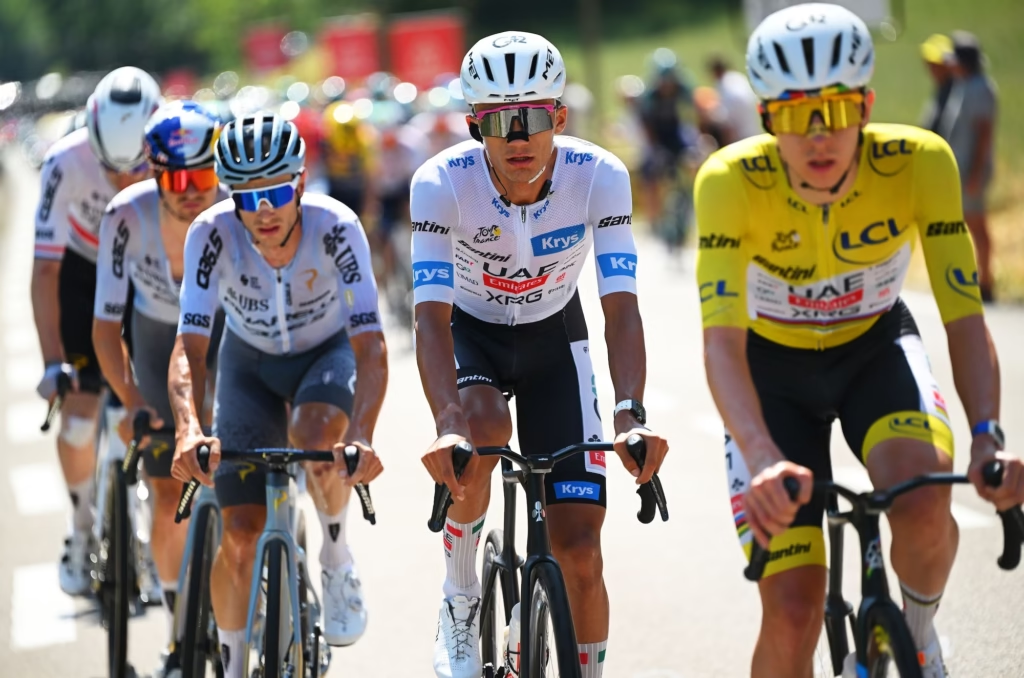
UAE Team Emirates-XRG
Key riders: Isaac del Toro, Jhonatan Narváez, António Morgado
UAE Team Emirates-XRG may have the most dangerous attacking squad in the entire race.
Isaac del Toro headlines a group that also contains Jhonatan Narváez, António Morgado, Florian Vermeersch and other riders capable of attacking rather than waiting for the sprint. Del Toro arrives after an outstanding Tour de France and recently committed his long-term future to UAE through 2031, a deal covered by ProCyclingUK in Isaac del Toro extends UAE Team Emirates-XRG contract until 2031.
He also won Stage 2 of this year’s Tour in Barcelona after an explosive Montjuïc finale, showing exactly why the short, repeated Waseberg efforts should interest him.
Juan Sebastián Molano gives UAE sprint insurance, but using the entire team to deliver him would waste their greatest advantage. Del Toro, Narváez, Morgado and Vermeersch can take turns forcing rival teams to chase.
Expect UAE to make the race uncomfortable long before Hamburg.
Uno-X Mobility
Key riders: Søren Wærenskjold, Jonas Abrahamsen
Uno-X bring another team almost designed for this type of race.
Søren Wærenskjold combines enormous power with genuine finishing speed and became a Tour de France stage winner this summer when he beat Kooij and Jasper Philipsen in the Stage 11 sprint at Nevers. ProCyclingUK’s Stage 11 report covers the biggest victory of his season.
Jonas Abrahamsen and Markus Hoelgaard give Uno-X riders capable of being aggressive earlier, which means the team do not have to make every decision around Wærenskjold.
A hard but not completely shattered race would suit them perfectly. Wærenskjold is dangerous precisely because he can still sprint after a day that has already removed more fragile fast men.
XDS Astana Team
Key riders: Davide Ballerini, Mike Teunissen, Gleb Syritsa
Davide Ballerini probably gives XDS Astana their best combination of Classics durability and finishing speed, with Gleb Syritsa providing more outright sprint power.
Mike Teunissen adds valuable experience and should remain useful deep into the race if the Waseberg begins thinning out the support riders.
Astana do not want to deliver the strongest sprint teams intact to Hamburg. Their better scenario is a selective finale where Ballerini’s versatility becomes more important than pure top speed.
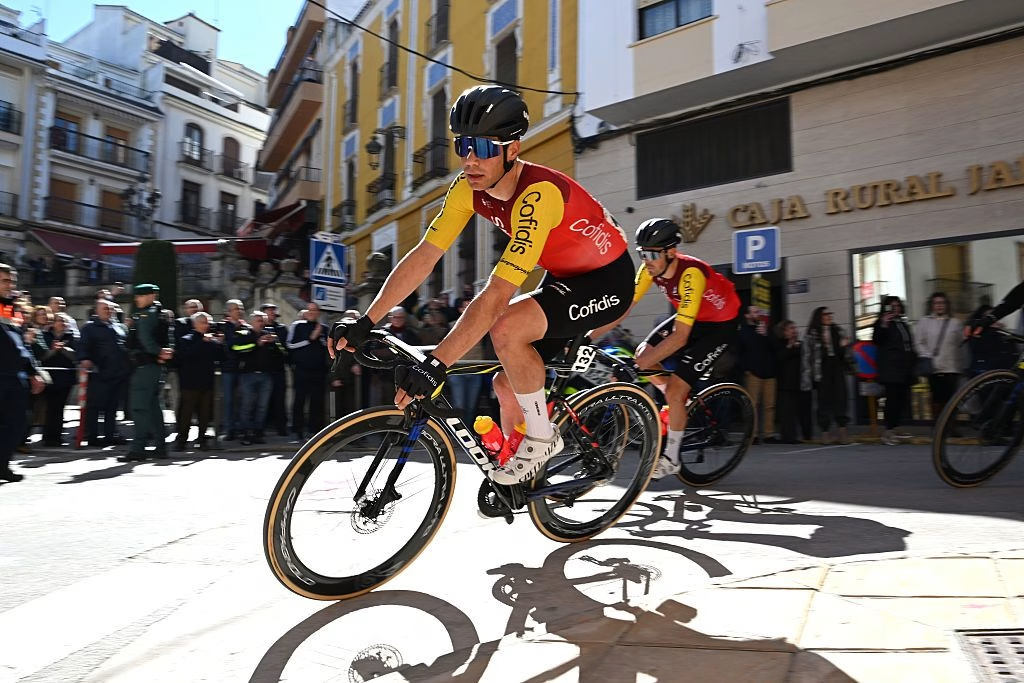
Cofidis
Key riders: Milan Fretin, Jenthe Biermans, Dylan Teuns
Cofidis have one of the strongest invited squads.
Milan Fretin provides the clear sprint option, while Jenthe Biermans is particularly useful if the race becomes more selective. Dylan Teuns gives the team another entirely different weapon and can become part of attacks over the Waseberg rather than simply working for the sprint.
That tactical balance matters. Cofidis can put pressure on the favourites and still retain Fretin for the finish if everything comes back together.
Among the ProTeams, few arrive with more ways to remain relevant in the final 30km.
Pinarello-Q36.5 Pro Cycling Team
Key riders: Sam Bennett, Matteo Moschetti, Fred Wright
Pinarello-Q36.5 bring significant finishing speed through Sam Bennett and Matteo Moschetti, while Fred Wright, Frederik Frison and Brent Van Moer give them riders capable of contributing well before a sprint.
Bennett remains the obvious choice if a large peloton reaches Mönckebergstraße, but Moschetti provides useful insurance if the race becomes harder than expected.
The team also have a special relationship with this race after Rory Townsend produced one of the biggest upsets in recent WorldTour one-day racing here last season. The story of his breakaway victory is covered in ProCyclingUK’s history of the ADAC Cyclassics.
The lesson from 2025 should remain relevant. A team with sprint options does not necessarily need to spend the entire day waiting for a sprint.
Tudor Pro Cycling Team
Key riders: Matteo Trentin, Luca Mozzato, Marco Haller
Tudor have an experienced squad built for difficult one-day racing.
Luca Mozzato probably provides their best finishing speed, while Matteo Trentin and Marco Haller are exactly the sort of riders who can remain effective as the race becomes more attritional.
The team should welcome repeated attacks because a completely intact bunch favours faster rivals. Their opportunity comes if the Waseberg produces a smaller front group where experience, positioning and a decent sprint all matter.
Tudor have enough depth to make sure they are represented when those moves begin.

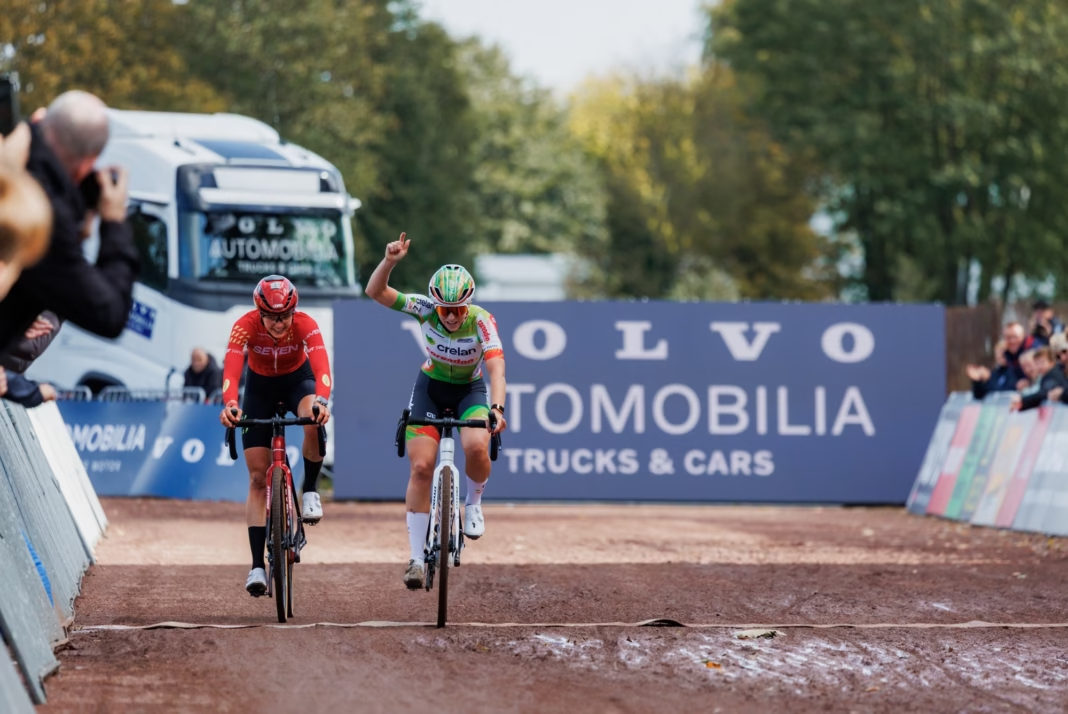
Unibet Rose Rockets
Key riders: Dylan Groenewegen, Lukáš Kubiš, Rory Townsend
Unibet Rose Rockets have three very different ways of approaching Hamburg.
Dylan Groenewegen provides elite pure sprint speed and has already won in difficult conditions this season, coming past Jasper Philipsen to take the 2026 Ronde Van Brugge.
Lukáš Kubiš offers a more robust option if repeated climbing reduces the peloton, while defending champion Rory Townsend gives the team a rider nobody will be willing to ignore in an early break again.
Townsend’s 2025 victory fundamentally changes how rivals will treat him. He cannot simply repeat the same tactic and expect the bunch to shrug, but his presence still creates uncertainty.
Groenewegen for the sprint, Kubiš for a selective race and Townsend for disruption gives Unibet one of the more interesting tactical combinations among the ProTeams.
Who has the strongest team for ADAC Cyclassics 2026?
Lidl-Trek have the clearest conventional sprint structure around Jonathan Milan, while Decathlon CMA CGM combine a former winner in Olav Kooij with experienced support ideally suited to surviving the Waseberg. Soudal Quick-Step may have the best balance of sprint speed and Classics options around Paul Magnier.
If the race becomes considerably more aggressive, UAE Team Emirates-XRG look increasingly difficult to control. Del Toro, Narváez, Morgado and Vermeersch can repeatedly attack without sacrificing the entire team’s chances, while Molano provides an option if everything comes back together.
Individually, De Lie, Girmay, Groves, Matthews and Wærenskjold all have the characteristics to benefit from a finale that is too difficult for the pure sprinters but not selective enough for a small breakaway to survive.
That is why the Waseberg matters so much. ProCyclingUK’s Beginner’s guide to ADAC Cyclassics 2026 explains how the race can realistically produce a full sprint, a reduced-group finish or a surviving attack.
The 2025 race proved the final outcome cannot simply be assumed. Twenty-two teams line up in 2026, but relatively few have any incentive to carry Milan and Kooij comfortably to Mönckebergstraße.
UK viewers can find the latest television and streaming details in ProCyclingUK’s How to watch ADAC Cyclassics 2026 in the UK guide.

