
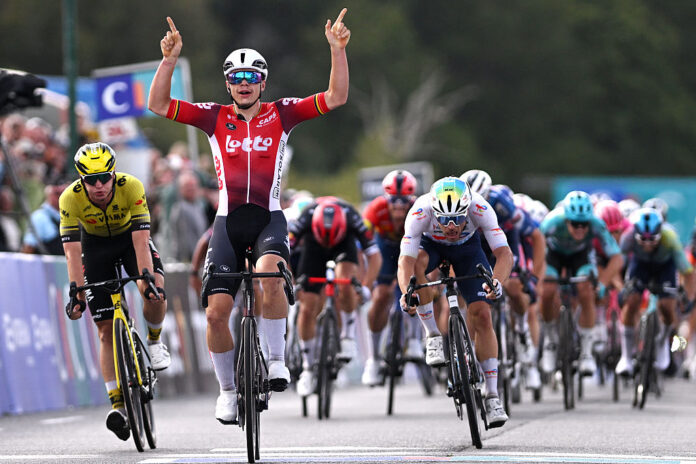
The 2026 Bretagne Classic presents a fascinating contest between two of the fastest riders in the race and a large group of Classics specialists with every reason to make sure they never reach the finish together.
Jasper Philipsen and Paul Magnier are the obvious reference points for Sunday’s 228.3km race around Plouay. Both have the speed to dominate a reduced sprint and both are strong enough to survive considerably more climbing than conventional sprinters. Philipsen also arrives directly from overall victory at the Renewi Tour, while Magnier added the ADAC Cyclassics to an already outstanding 2026 season.
The challenge comes from the route. The return of the Côte de Ty-Marrec to the finishing circuit gives riders such as Romain Grégoire, Louis Barré, Laurence Pithie, Jan Christen, Benoît Cosnefroy and Marc Hirschi repeated opportunities to make the race too difficult for a controlled sprint.
That tension should define the afternoon. Alpecin-Premier Tech and Soudal Quick-Step want enough control to preserve Philipsen and Magnier. Almost everyone else benefits from turning the closing 50km into something far less predictable.
The full Bretagne Classic 2026 start list shows the depth behind those headline names, while ProCyclingUK’s beginner’s guide to Bretagne Classic 2026 explains why Plouay so often produces a race that refuses to fit neatly into either a sprinters’ Classic or a puncheurs’ Classic.
Why the 2026 Bretagne Classic route matters
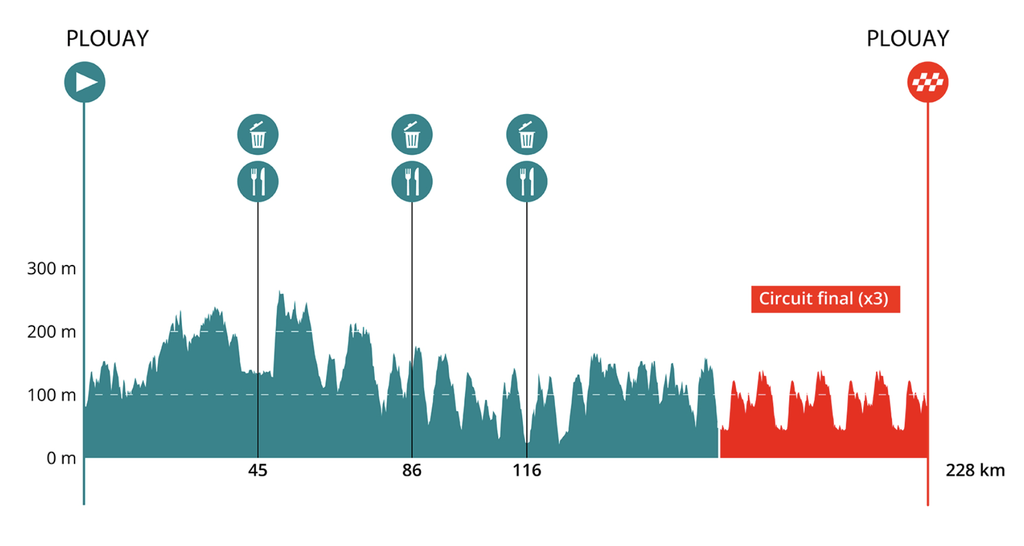
Bretagne Classic has been shortened substantially from the 261.7km raced in 2025, but that does not necessarily make the 2026 edition straightforward.
The race still contains approximately 3,663 metres of climbing across relentlessly rolling Breton roads, with the difficulty concentrated once the riders return to Plouay.
The biggest change is the introduction of three laps of a 16.6km finishing circuit, bringing the Côte de Ty-Marrec back into the decisive phase of the race.
ProCyclingUK’s Bretagne Classic 2026 route guide breaks down how those repeated laps should change the tactical balance compared with the longer 2025 route.
Ty-Marrec is not difficult enough in isolation to guarantee that Philipsen or Magnier will be dropped.
The danger comes from repetition.
The first passage can begin removing domestiques. The second can create a serious tactical move. By the final lap, riders will have accumulated more than 200km of racing and the strongest attackers will know they have very little road left in which to create separation.
The sprinters therefore need to survive more than the climb itself. They need enough team-mates left to control what happens around it.
Jasper Philipsen brings exceptional form into Plouay
Philipsen starts as one of the riders everyone else must build their tactics around.
He arrives after an outstanding Renewi Tour in which he won the overall classification and repeatedly demonstrated that his current form extends far beyond a straightforward 200-metre sprint.
His Stage 4 victory in Bilzen-Hoeselt came after a difficult Limburg stage packed with short climbs, before he won again in Leuven to seal the overall title.
That is highly relevant to Bretagne Classic.
Philipsen does not need Plouay to become easy. He simply needs the race to remain sufficiently controlled that every acceleration is eventually brought back.
His durability has also been evident in Grand Tour racing this season. He won Stage 17 of the Tour de France in Voiron after Alpecin-Premier Tech helped turn a chaotic day into a reduced sprint.
The shorter 2026 Bretagne Classic should theoretically help him.
Alpecin-Premier Tech also have Tibor Del Grosso, which gives them another excellent option if Philipsen begins struggling.
If Philipsen reaches the final kilometre in the leading group, however, the rest have a serious problem.
 Photo Credit: Getty
Paul Magnier may be even harder to remove
Magnier is perhaps the most interesting rider in the entire race.
He possesses genuine top-level sprint speed but has repeatedly shown in 2026 that climbing does not affect him like it does most sprinters.
His victory at the ADAC Cyclassics reinforced that resilience, while three Giro d’Italia stage wins earlier in the season confirmed how dramatically his range has expanded.
That makes the Bretagne Classic profile unusually favourable.
Teams may spend much of the final circuit trying to eliminate Philipsen only to discover that Magnier is still comfortably present.
Soudal Quick-Step can also use Jasper Stuyven and Yves Lampaert before the finish, allowing Magnier to conserve energy while more experienced Classics riders respond to attacks.
If Sunday becomes a selective race that still leaves 15 or 20 riders together, Magnier could be extremely difficult to beat.
Romain Grégoire has the finish to punish the sprinters
Grégoire is one of the riders who can occupy the space between the pure attackers and the fast finishers.
He is explosive enough to create separation on the climbs but does not necessarily have to arrive alone.
That matters.
Some riders in this field need to remove Philipsen and Magnier and then escape the remaining group as well. Grégoire can potentially win from a much broader range of scenarios.
His 2026 season has again shown his ability to perform when races become selective rather than purely mountainous. He won Stage 2 of the Tour de Suisse in Locarno from a reduced breakaway after surviving a frantic late chase.
The biggest tactical question for Groupama-FDJ United is when to commit.
An attack too early risks bringing Philipsen’s team into the chase. Waiting until the final Ty-Marrec passage may leave too little distance to create meaningful separation.
Grégoire looks particularly dangerous if a small group forms before the final lap and forces the sprint teams to chase under pressure.
 Photo Credit: Getty
Louis Barré has the freedom to attack
Barré has no reason to wait for a sprint against Philipsen or Magnier.
That simplifies his approach.
Team Visma | Lease a Bike do not arrive with one obvious elite finisher around whom the entire race needs to be controlled, which should give Barré and the rest of the squad freedom to attack before the favourites become fully committed.
That could be particularly valuable on the penultimate circuit.
A move there forces Alpecin-Premier Tech and Soudal Quick-Step to decide how many riders they are prepared to spend before the final lap.
Barré’s best route to victory is not beating the fastest riders at their own game. It is making sure they never receive that game.
Laurence Pithie has an ideal Classics profile
Pithie should also be firmly involved.
The New Zealander has enough speed to remain dangerous from a reduced group but is much more comfortable over repeated short climbs than many conventional sprinters.
That places him in an attractive tactical position.
Pithie does not necessarily need to initiate the hardest racing himself. He can allow Grégoire, Christen or Cosnefroy to attack, follow the resulting selection and then use his sprint if the group survives.
Red Bull-BORA-hansgrohe also bring significant Classics strength around him.
A race containing constant accelerations without one decisive attack may suit Pithie particularly well.
 Photo Credit: Getty
Jan Christen needs an aggressive race
Christen’s route to victory is very different.
The Swiss rider should want the hardest possible final circuit.
He has the climbing ability and acceleration to put many of the faster contenders under serious pressure, and UAE Team Emirates-XRG have built a line-up with enough strength to avoid leaving him isolated.
Benoît Cosnefroy and António Morgado are both legitimate contenders themselves.
That allows UAE to attack repeatedly rather than waiting for one designated moment.
Christen is especially dangerous because an acceleration from him cannot simply be dismissed as tactical pressure. If he creates separation on Ty-Marrec, he has the strength to turn a small gap into a race-winning one.
The problem is the final kilometre.
If Philipsen, Magnier, Pithie or Grégoire remain alongside him, Christen needs to attack again rather than trust his sprint.
Benoît Cosnefroy knows how to win in Plouay
Cosnefroy gives UAE an important combination of course knowledge and finishing ability.
He won Bretagne Classic in 2021, one of a recent sequence of very different winners that illustrates why this race is so difficult to categorise.
The history of Bretagne Classic shows that recent winners have ranged from Michael Matthews and Cosnefroy to Wout van Aert, Valentin Madouas, Marc Hirschi and Arnaud De Lie.
Cosnefroy remains exactly the sort of rider Plouay rewards when the race becomes selective without turning into a pure climbing contest.
His presence also makes Christen much harder to mark.
If Christen attacks, Cosnefroy can remain behind.
If rivals chase the Swiss rider, Cosnefroy can then use the final climb or the run towards Plouay himself.
UAE’s numerical strength may ultimately be more important than identifying one leader before the start.

António Morgado gives UAE a third serious attacking option
Morgado adds yet another layer.
He has the power required for a long one-day race and is particularly dangerous when the race becomes stretched rather than settling into a predictable pattern.
Like Christen, he should avoid waiting for the fastest riders.
The ideal UAE scenario may involve alternating attacks from Morgado, Christen and Cosnefroy over the final circuits.
That forces Alpecin-Premier Tech and Soudal Quick-Step to decide which moves are dangerous enough to chase.
Eventually, one may be allowed too much freedom.
Marc Hirschi returns as a former winner
Hirschi cannot be overlooked on a course where he has already succeeded.
The Swiss rider won the 2024 Bretagne Classic, attacking his way to victory rather than allowing the race to come back together.
His win is covered in ProCyclingUK’s history of Bretagne Classic, and it remains one of the clearest examples of how a small gap can become decisive in Plouay when the chasing group begins looking at one another.
Tudor can support Hirschi with Rick Pluimers, who gives them a faster alternative if the race remains more intact than expected.
That dual option is useful.
Hirschi can follow the strongest attacks without worrying that he is sacrificing the team’s only path to victory.
If a small group reaches Ty-Marrec together on the final lap, his previous success in Plouay should count for plenty.
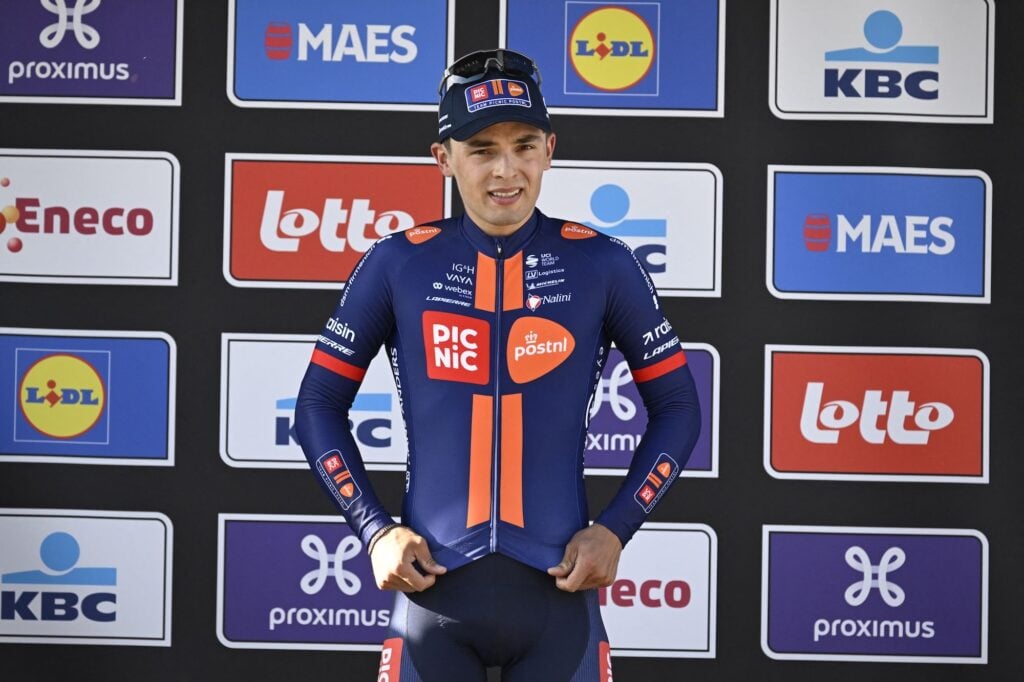
Pavel Bittner can survive more than most sprinters
Bittner sits in another interesting category.
He is unlikely to want a brutally selective race, but he is much more capable over short climbs than many riders with comparable sprint speed.
That gives Team Picnic PostNL a realistic route to victory even if the peloton has been substantially reduced.
Bittner has already shown at Grand Tour level that he can win after demanding racing, and his next career move has already been confirmed, with Pinarello Q36.5 signing him on a two-year deal from 2027.
For now, he remains an important finishing option for Picnic PostNL.
If the final group still contains 30 or 40 riders, Bittner becomes significantly more dangerous.
Jenno Berckmoes is built for this type of finish
Berckmoes is another rider whose versatility should matter.
He can survive the repeated climbs, has enough punch to respond to attacks and retains a dangerous sprint from a reduced group.
That means Lotto-Intermarché do not necessarily need the same race as Alpecin.
A harder finale can actually improve Berckmoes’ chances by removing several riders faster than him.
The problem comes if both Philipsen and Magnier survive. At that point, Berckmoes probably needs to race proactively rather than simply rely on his finishing speed.
 Photo Credit: Getty
Rick Pluimers gives Tudor another route
Pluimers offers Tudor a completely different card from Hirschi.
He is more likely to benefit if a larger group survives, while Hirschi should prefer a much more selective race.
That allows Tudor to avoid committing too early.
If Ty-Marrec begins removing the faster riders, Hirschi becomes the obvious focus.
If the race remains controlled, Pluimers can remain protected for the finish.
Teams with that sort of internal flexibility are particularly difficult to race against in Plouay because the character of the race can change very quickly.
Milan Fretin could emerge if the race stays together
Fretin needs more control than most of the puncheurs, but he should not be dismissed if the racing becomes less selective than anticipated.
He has developed into a strong finisher capable of surviving harder racing than a pure sprinter.
For Cofidis, that creates a useful contrast with Alex Aranburu and Dylan Teuns, both of whom have more reason to attack before the finish.
If Fretin survives the final Ty-Marrec passage with enough support, the team suddenly have a very different race to play.
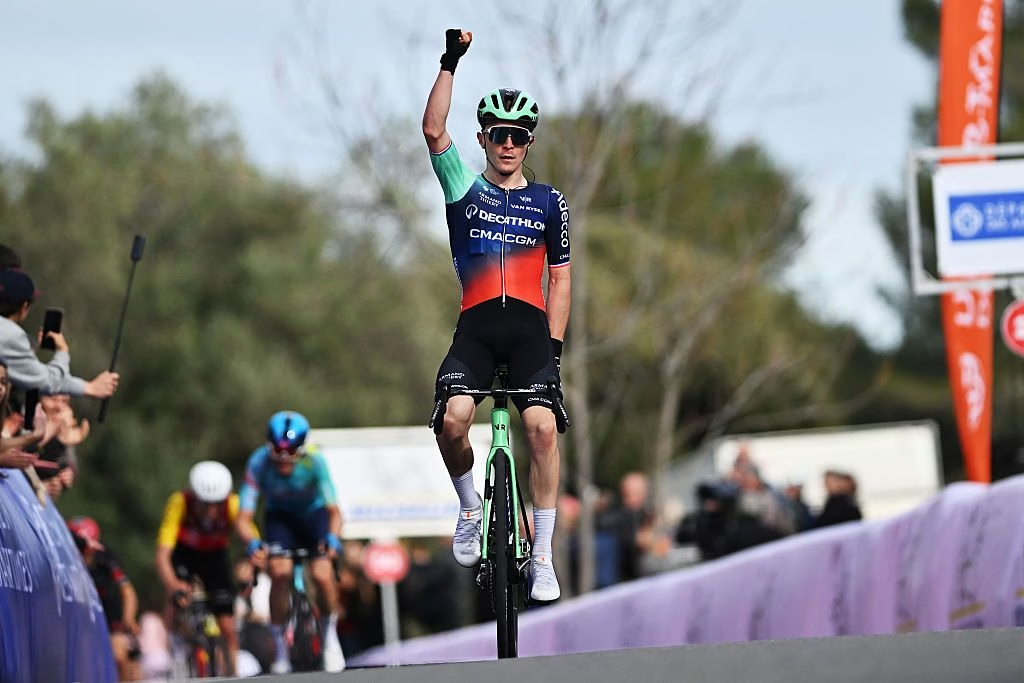 Photo Credit: Getty
Paul Lapeira has the right combination of punch and speed
Lapeira looks particularly well suited to the final circuit.
The Frenchman can attack over the short climbs but also possesses enough finishing speed that he does not necessarily need to get away alone.
That gives Decathlon CMA CGM tactical flexibility.
They can use stronger rouleurs to increase the pressure before allowing Lapeira to follow the key moves closer to the finish.
The decisive question is whether he can beat riders such as Grégoire, Pithie and Cosnefroy if a small selection forms.
He should certainly be capable of reaching that selection.
Tibor Del Grosso gives Alpecin an excellent Plan B
Del Grosso may be one of the most important riders for understanding how Alpecin-Premier Tech approach the race.
Their obvious objective is protecting Philipsen.
But they do not have to protect him at all costs.
If the final circuits become too difficult, Del Grosso is much better equipped to follow attacks from Christen, Grégoire or Cosnefroy.
That reduces the pressure on Alpecin to chase every move.
If Del Grosso is already present, other teams may suddenly find themselves doing the work required to bring Philipsen back into contention.
It is an ideal tactical arrangement.
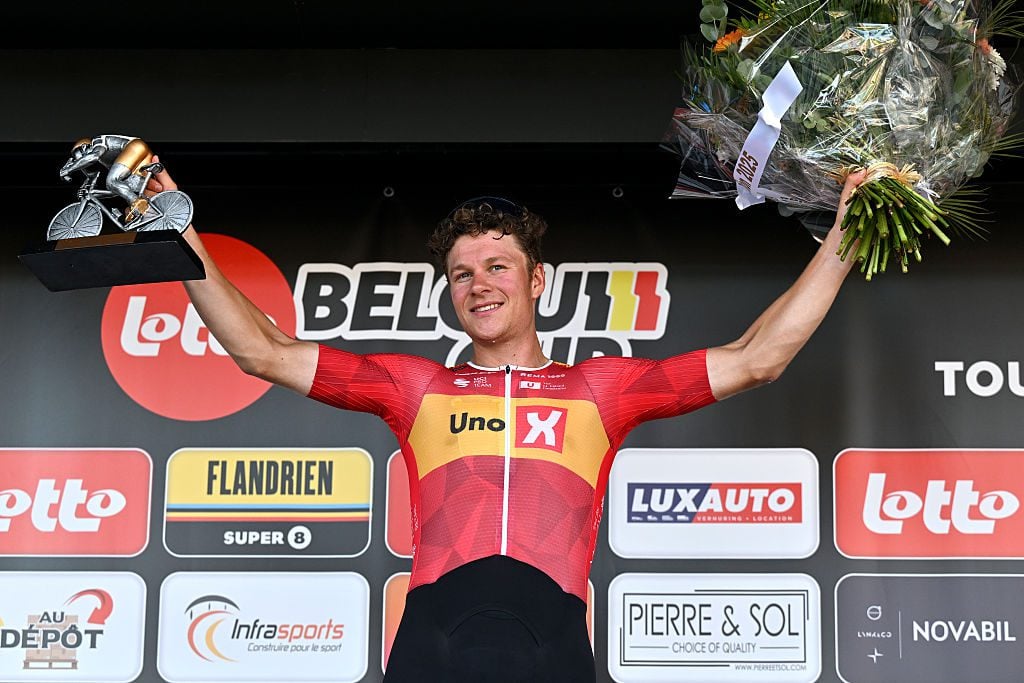 Photo Credit: Getty
Jonas Abrahamsen should embrace a chaotic race
Abrahamsen’s chances increase as the race becomes less organised.
Uno-X Mobility have little reason to help the major sprint teams and plenty of incentive to put riders into moves before the final lap.
Abrahamsen has the strength required to make an attack stick on terrain that never allows the peloton to settle completely.
He is unlikely to want the race decided by a sprint, even from a relatively small group.
His best opportunity therefore comes through anticipation.
A move before the obvious favourites begin attacking may prove more effective than trying to match them directly on Ty-Marrec.
Mathias Vacek has exactly the right physical profile
Vacek should not be underestimated simply because several other riders arrive with stronger recent results.
The Lidl-Trek rider has exactly the physical profile required for Bretagne Classic.
He can sustain repeated high-intensity efforts, handle the climbing and still retain enough speed to be relevant if a small group reaches the finish.
His problem is tactical rather than physical.
With no obvious reason to wait for a conventional sprint, Lidl-Trek need to put him into the race before Philipsen and Magnier become difficult to dislodge.
Vacek could be especially dangerous on the penultimate circuit, when a committed attack has enough distance to establish a meaningful advantage.
 Photo Credit: Getty
Alec Segaert can attack before the obvious favourites
Segaert gives Bahrain Victorious a powerful long-range option.
He is unlikely to want to follow the same tactical script as Grégoire or Christen, who can wait for the steeper moments.
His strength lies in using power on the transitions and flatter sections where other teams hesitate.
That could be particularly useful if the race becomes heavily marked.
Matej Mohorič adds another unpredictable element to the Bahrain line-up, meaning rivals cannot concentrate exclusively on Segaert.
Michael Matthews knows exactly what Plouay requires
Matthews is an obvious experienced outsider.
He won Bretagne Classic in 2020 and has spent much of his career excelling in precisely this type of race.
He can climb better than most sprinters, sprint better than most climbers and remain competitive after more than 200km.
His victory is another part of the race’s unusually varied recent roll of honour, detailed in ProCyclingUK’s brief history of Bretagne Classic.
The difficulty this year is that Philipsen and Magnier offer comparable or greater finishing speed while arriving with exceptional current form.
Matthews may therefore need the race to be hard enough to remove at least one of them.

Emilien Jeannière and Noah Hobbs need more control
Jeannière sits towards the sprinting end of the contenders spectrum.
A relatively controlled Bretagne Classic gives him a realistic route into the top positions.
A race exploding across several circuits of Ty-Marrec probably does not.
The same broad logic applies to Noah Hobbs, another fast rider who becomes much more relevant if the attackers fail to create decisive separation.
Both need the harder riders to neutralise one another rather than turn the final hour into a sequence of attacks.
Who has the strongest team for Bretagne Classic?
UAE Team Emirates-XRG may have the strongest attacking hand.
Christen, Cosnefroy and Morgado can all legitimately win, which allows the team to launch moves without sacrificing its entire strategy if one fails.
Soudal Quick-Step have perhaps the strongest combination for a controlled race through Magnier, Stuyven and Lampaert.
Alpecin-Premier Tech’s Philipsen-Del Grosso pairing gives them an ideal split between sprinting and attacking options.
Tudor can work between Hirschi and Pluimers, while Bahrain Victorious have Mohorič and Segaert available for more unpredictable racing.
The teams with several different routes to victory should become increasingly influential once the peloton reaches the finishing circuits.
-
 Photo Credit: SWPix.com
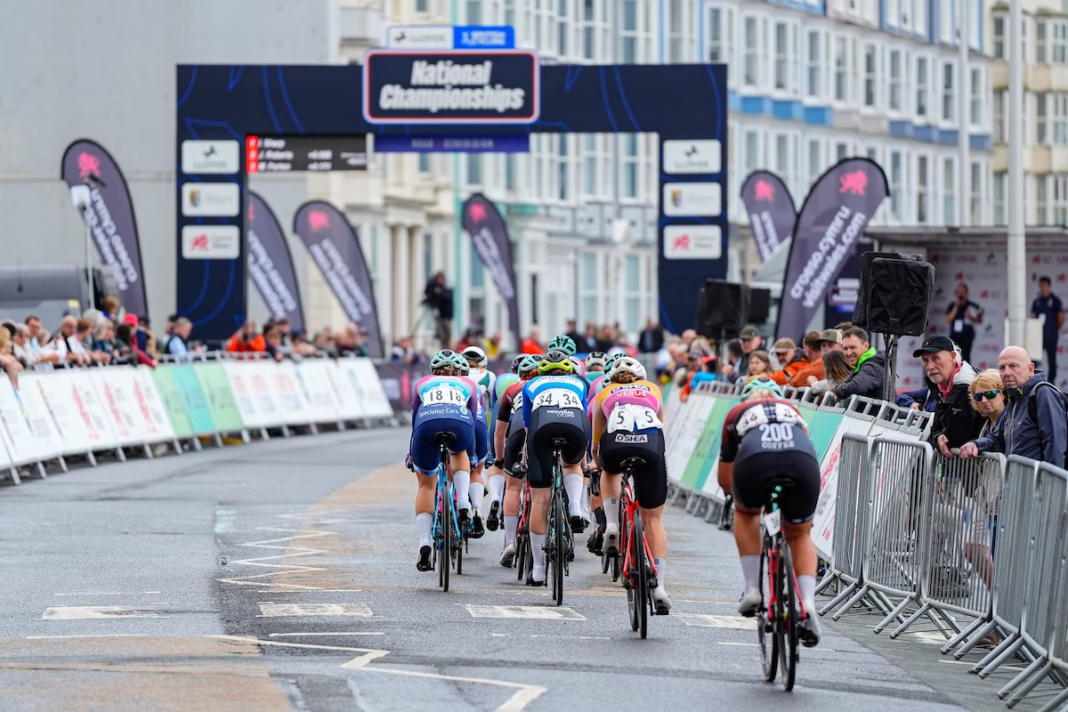

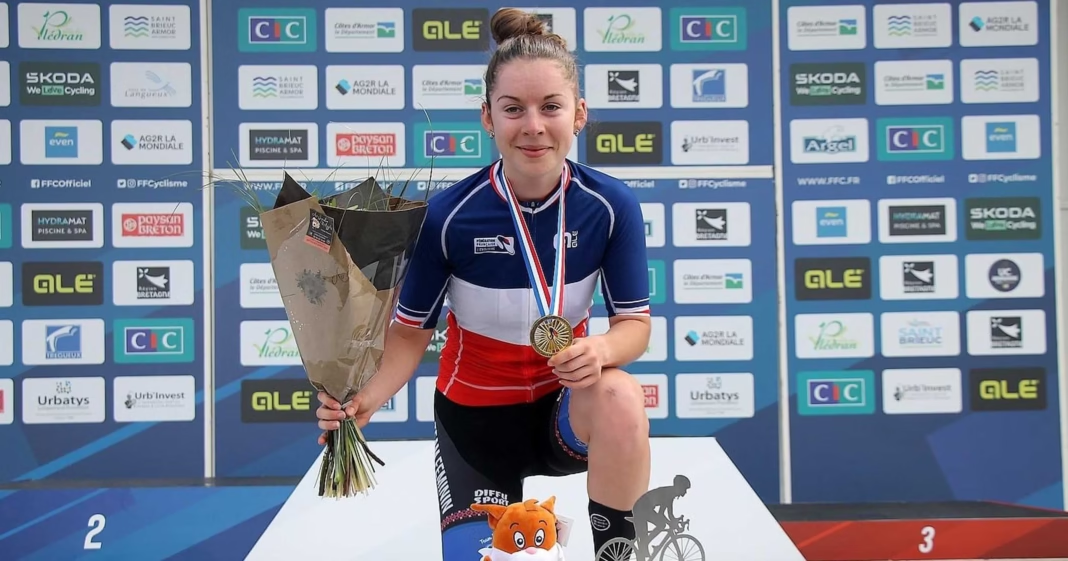
Who benefits most from Ty-Marrec?
Christen, Grégoire, Cosnefroy, Hirschi, Lapeira and Vacek should all welcome the repeated passages.
Their problem is that one passage of the climb may not be enough.
Philipsen and Magnier can both survive short climbs when fresh, so the attackers need to make every circuit count.
That means increasing the pace before Ty-Marrec, forcing positioning battles into the foot of the climb and attacking again afterwards.
The goal is accumulated fatigue.
If the race simply rolls around until one huge acceleration on the final lap, the sprinters have a much better chance of surviving.
Bretagne Classic 2026 prediction
Philipsen and Magnier are the two riders the rest have to remove.
Philipsen carries extraordinary form into Plouay and has repeatedly shown that difficult one-day racing does not necessarily blunt his sprint.
Magnier may be even more difficult to dislodge because his climbing resilience has become such an important part of his profile.
Behind them, Grégoire looks like one of the strongest options for a race that becomes genuinely selective without completely fragmenting. He can attack but still possesses enough speed to finish the job from a small group.
Pithie occupies a similar position, while Christen may be the rider most capable of making a decisive difference uphill.
Cosnefroy’s previous victory and UAE’s numerical strength make him another major threat, while Barré has every reason to race aggressively with Visma.
The defining question is whether the final circuits are raced hard enough to turn a route that looks manageable on paper into something much more selective.
If Alpecin-Premier Tech and Soudal Quick-Step retain control, Philipsen and Magnier will be exceptionally difficult to beat.
If control disappears, Bretagne Classic has enough riders capable of attacking to produce a completely different race.

