
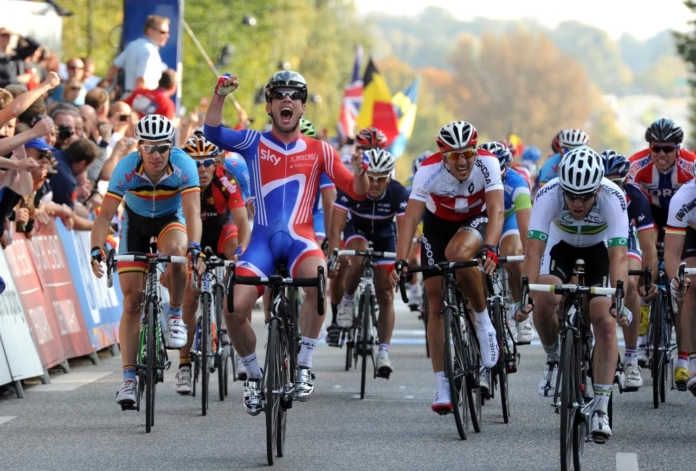
When the UCI Road World Championships return to Montréal in September 2026, Great Britain will arrive with another generation trying to add its name to a surprisingly short list.
Only six British riders have won the elite road race rainbow jersey. Beryl Burton did it twice. Tom Simpson became Britain’s first men’s professional world champion in 1965. Mandy Jones won at Goodwood in 1982, Nicole Cooke completed an Olympic and World Championship double in 2008, Mark Cavendish ended a 46-year men’s wait in 2011 and Lizzie Deignan became the most recent British winner at Richmond in 2015.
That means Britain have now gone 11 years without an elite road race world champion.
The return to Montréal provides an appropriate setting to revisit that history. The Canadian city staged the World Championships in 1974, when Eddy Merckx completed his extraordinary Giro d’Italia, Tour de France and Worlds treble on Mount Royal. Two years later, the mountain was used again for the Montréal Olympic road race.
Fifty years on from those Olympics, the rainbow jerseys are coming back.
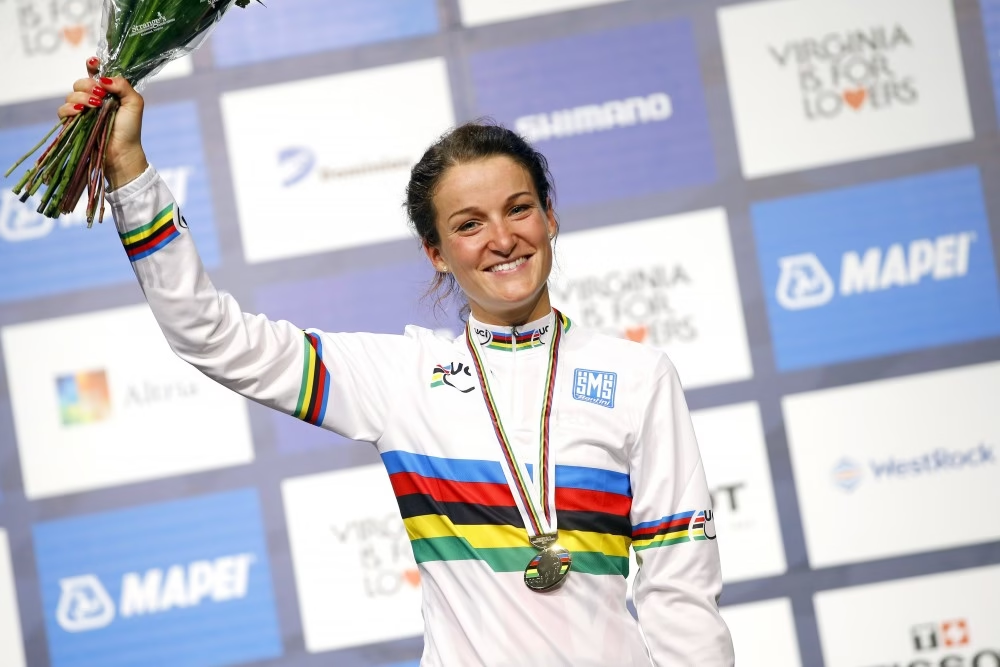
Britain’s elite road race world champions
| Year | Rider | Event | Host |
|---|---|---|---|
| 1960 | Beryl Burton | Elite women’s road race | Sachsenring, East Germany |
| 1965 | Tom Simpson | Elite men’s road race | Lasarte, Spain |
| 1967 | Beryl Burton | Elite women’s road race | Heerlen, Netherlands |
| 1982 | Mandy Jones | Elite women’s road race | Goodwood, Great Britain |
| 2008 | Nicole Cooke | Elite women’s road race | Varese, Italy |
| 2011 | Mark Cavendish | Elite men’s road race | Copenhagen, Denmark |
| 2015 | Lizzie Deignan | Elite women’s road race | Richmond, United States |
The wider list of cycling world champions shows how rarely Britain have controlled this particular championship despite enjoying periods of extraordinary success elsewhere in the sport.
Burton remains the only British rider to have won the elite road race world title more than once.
Beryl Burton became Britain’s first road world champion
Any British World Championships history starts with Beryl Burton.
By 1960, Burton was already a world champion on the track. She had won the individual pursuit title a year earlier, but her victory in the women’s road race at the Sachsenring made her Britain’s first elite road world champion.
It came at a time when the structure surrounding British women’s cycling bore almost no resemblance to the professional sport that exists now.
There was little money, limited international support and nothing resembling today’s Women’s WorldTour. Burton nevertheless became one of the dominant endurance athletes of her generation.
Road racing was only one part of it.
She won world titles on the track, dominated British championships and built a reputation in time trialling that produced one of cycling’s most remarkable records. In 1967, Burton covered 277.25 miles in a 12-hour time trial, a distance that exceeded the men’s British record at the time.
That same year brought her second road world title.
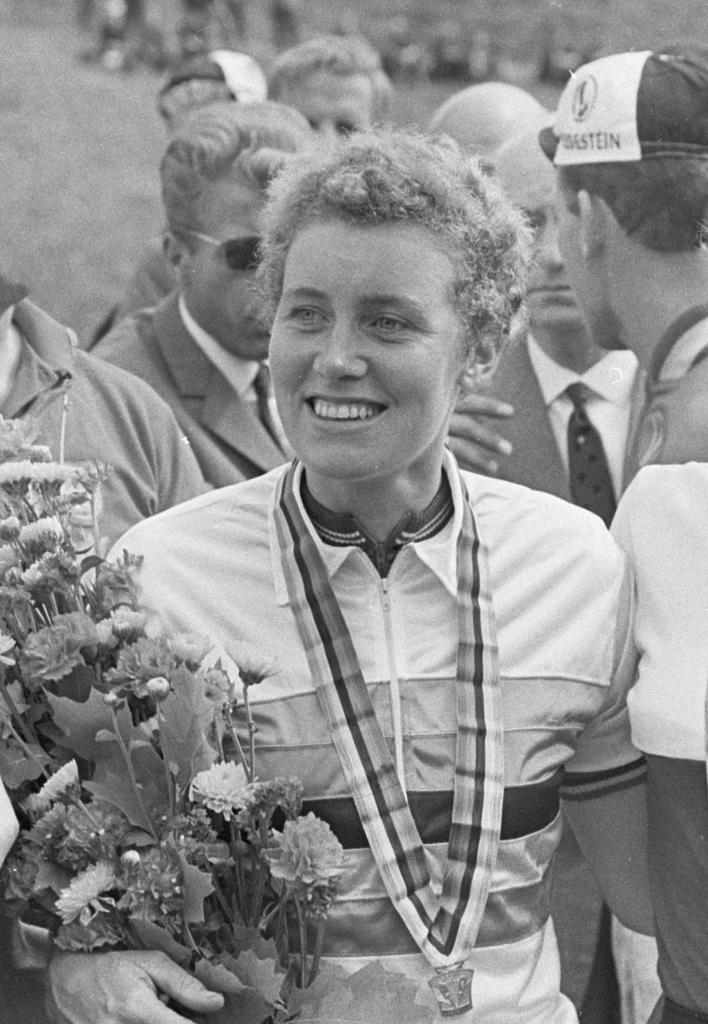
Burton won again seven years later
The gap between Burton’s two road victories says something about the longevity of her career.
She first won in 1960 and reclaimed the rainbow jersey in Heerlen in 1967.
The second victory came during another remarkable World Championships for Britain. Graham Webb won the men’s amateur road race, giving the country two road champions during the same championships.
At the time, the men’s World Championships were still divided between professional and amateur competition. Webb therefore did not become Tom Simpson’s successor as Britain’s professional world champion, but the result remains one of the strongest weekends Britain enjoyed at the Road Worlds before the modern era.
For Burton, the 1967 road victory was the final world title of an extraordinary career.
More than half a century later, no other British rider has matched her two elite road race rainbow jerseys.
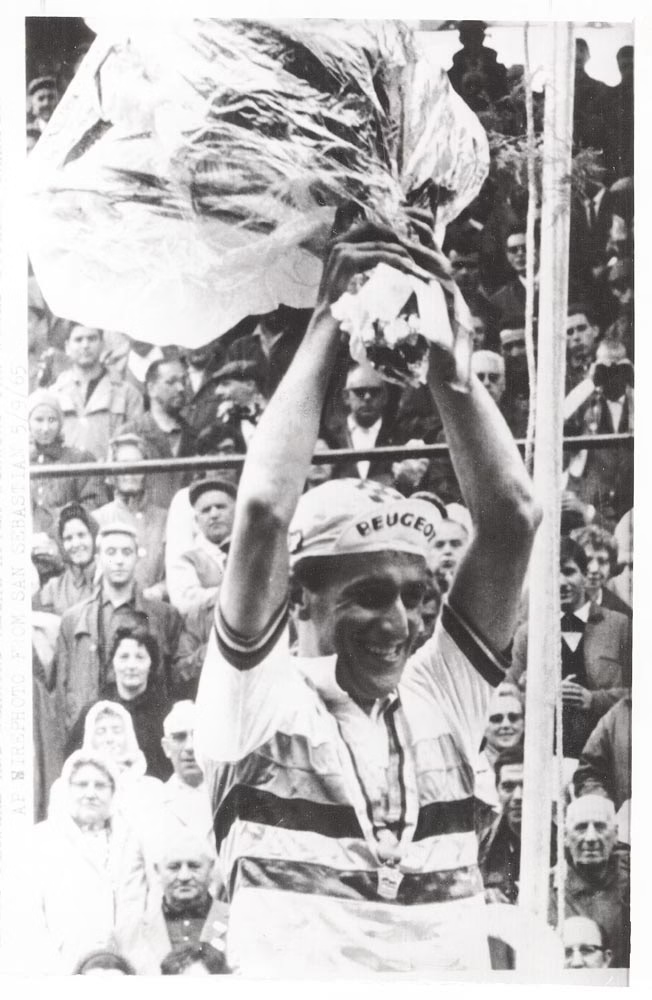
Tom Simpson broke through in 1965
Between Burton’s two titles came the breakthrough result for British men’s professional cycling.
Tom Simpson won the 1965 World Championships in Lasarte, near San Sebastián, becoming the first British rider to take the professional men’s road title.
It was not an isolated success from a rider suddenly having the race of his life.
Simpson had already won the Tour of Flanders in 1961 and Milan-San Remo in 1964, establishing himself as one of the strongest one-day riders in the European professional peloton at a time when successful British professionals remained unusual.
The World Championships elevated that career further.
Simpson survived a race of more than 260km before beating West Germany’s Rudi Altig in the sprint for the rainbow jersey.
His subsequent death on Mont Ventoux during the 1967 Tour de France inevitably became inseparable from his story. The scale of what he achieved before then can sometimes be lost as a result.
His world title was a genuine landmark.
Britain would not win the elite men’s road race again for another 46 years.
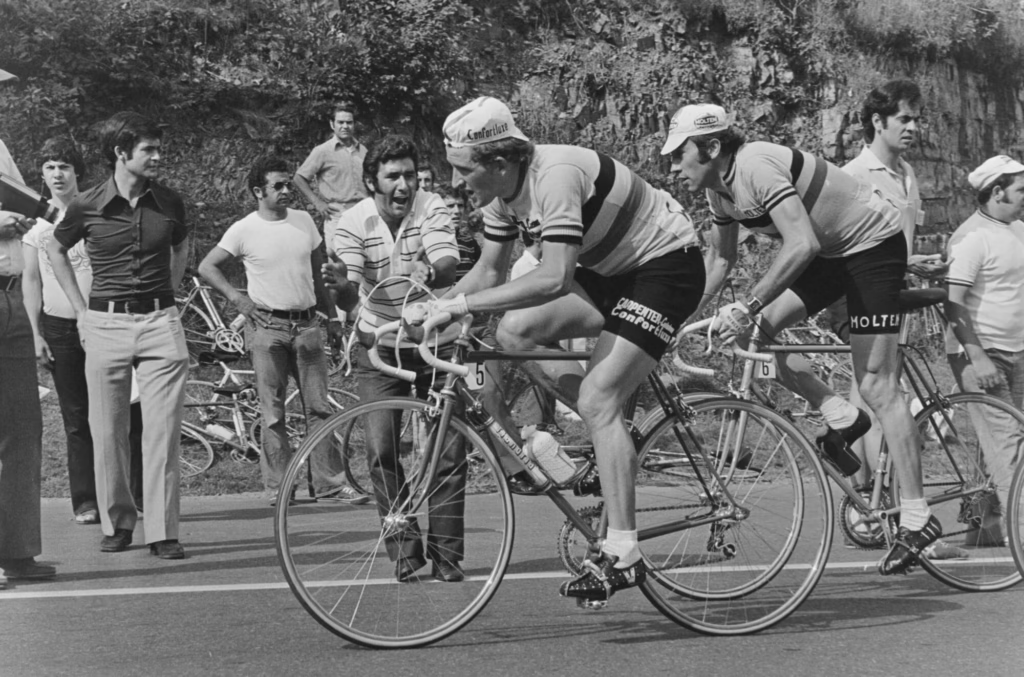 Photo Credit: Maurice Terryn
Montréal took the World Championships outside Europe in 1974
Nine years after Simpson’s victory, the World Championships made a significant break with their own history.
Montréal became the first host outside Europe.
The championships centred on Mount Royal, with repeated climbing around the city creating a course difficult enough to produce one of the defining races of Eddy Merckx’s career.
Merckx had already won the Giro d’Italia and Tour de France in 1974.
He arrived in Canada attempting to complete the Giro-Tour-World Championships treble in the same season.
He succeeded.
Merckx won the elite men’s race ahead of Raymond Poulidor and Mariano Martínez, completing a feat which remains one of the reference points for assessing the greatest seasons in men’s cycling.
France’s Geneviève Gambillon had taken the women’s title the previous day.
The history of the Grand Prix Cycliste de Montréal traces how those 1974 championships established Mount Royal as international cycling terrain long before the creation of the modern Canadian WorldTour race.
The 1976 Olympics strengthened Montréal’s cycling history
Top-level road racing returned to Mount Royal only two years later.
The 1976 Montréal Olympics again used a circuit around the mountain, this time for an Olympic road race still restricted to amateur riders.
Sweden’s Bernt Johansson took gold after escaping alone, with Giuseppe Martinelli of Italy second and Poland’s Mieczysław Nowicki third.
The professional stars of the period were absent, but the Olympics strengthened the association between Mount Royal and major championship racing.
That connection makes 2026 particularly neat.
The Road World Championships return exactly 50 years after the Montréal Olympics and 52 years after Merckx and Gambillon claimed their rainbow jerseys.
The modern circuit is different, but the basic principle is familiar. Riders repeatedly climb Mount Royal until the cumulative effort creates the decisive selection.
Mandy Jones wins on home roads in 1982
Britain waited 15 years after Burton’s second title for another elite road champion.
Mandy Jones ended that sequence at Goodwood in 1982.
Jones attacked on the final lap of the women’s race and held her advantage to the finish, becoming Britain’s second female road world champion.
The setting made it even more significant.
This was a British rider winning a rainbow jersey at a home World Championships, decades before the success of British Cycling’s modern Olympic programme transformed expectations around the national team.
Jones’s victory has sometimes been overshadowed by the riders who came before and after her.
It deserves more prominence.
Burton had established that a British woman could become the best road rider in the world. Jones proved that those victories did not have to belong to one exceptional individual.
Britain had a lineage.
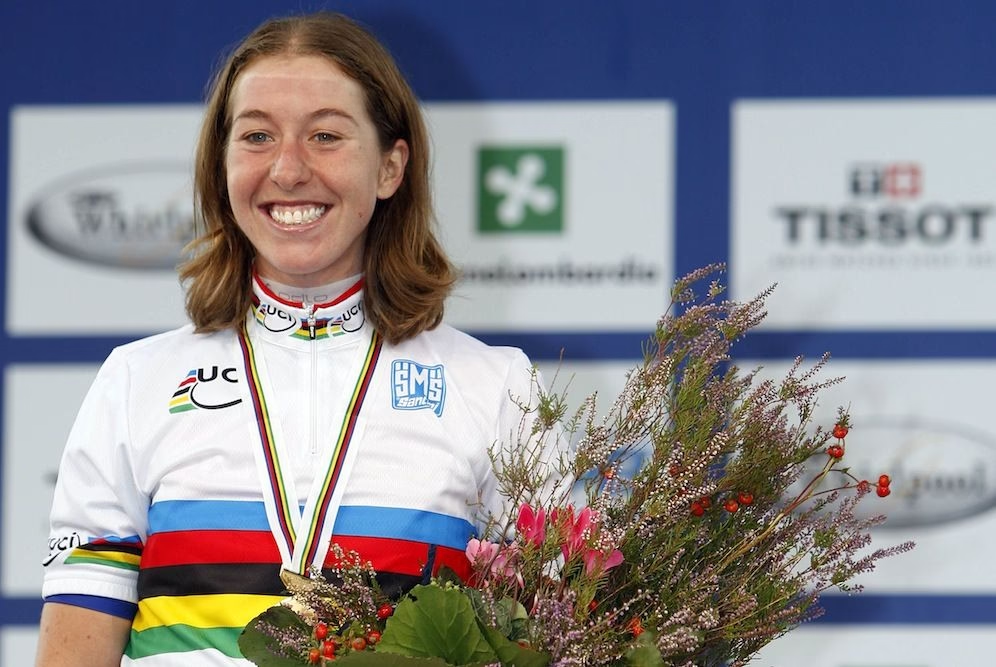 Photo Credit: Yuzuru Sunada
Nicole Cooke completes an extraordinary 2008 double
Nicole Cooke restored the rainbow jersey to Britain 26 years later.
Her 2008 season remains one of the strongest produced by a British road rider.
Cooke went to the Beijing Olympics in August and won the women’s road race, delivering Britain’s first cycling gold medal of those Games.
Five weeks later, she arrived at the World Championships in Varese.
She won again.
Cooke became the first rider to win the women’s Olympic road race and World Championships road race during the same season.
The result also came at an interesting point in the development of British cycling.
The national track programme was beginning the period of Olympic dominance that would make Britain one of the world’s major cycling nations. The men’s road boom that eventually produced Tour de France winners was approaching.
Cooke had already spent years winning the biggest races in women’s cycling without the same infrastructure or attention.
Her World Championship victory ensured that her defining season ended in the rainbow jersey.
Mark Cavendish finally follows Simpson in 2011
By Copenhagen in 2011, the situation around British men’s cycling had changed completely.
Britain possessed one of the fastest sprinters in cycling history and enough strength around him to build an entire World Championship strategy around delivering him to the finish.
Mark Cavendish was the obvious leader.
The course was unusually favourable to sprinters, but that did not make victory straightforward. World Championships are notoriously difficult to control because trade-team alliances disappear and national squads rarely have the resources available to teams during a Grand Tour.
Britain committed to controlling it anyway.
The team spent much of the race keeping attacks within reach and protecting Cavendish’s chance of arriving at the final sprint.
He finished the job.
Cavendish won ahead of Matthew Goss and André Greipel, becoming Britain’s first men’s elite road race world champion since Simpson in 1965.
The contrast between the two victories was striking.
Simpson’s success belonged to an era when British professional riders were still unusual within the continental peloton.
Cavendish’s title was delivered by a national team strong enough to dictate how a World Championship was raced.
Deignan delivers under pressure at Richmond in 2015
Britain only had to wait four years for its next elite road champion.
Lizzie Deignan, then Lizzie Armitstead, arrived at Richmond in 2015 with considerably more expectation than most previous British winners had carried.
She was already one of the best one-day riders in women’s cycling and had won the season-long UCI Women’s Road World Cup. The World Championships had been one of her major targets.
The race did not initially unfold cleanly.
A dangerous break gained more than a minute in the closing stages and Deignan found herself without teammates in the main group. Britain could no longer simply control the race around its leader.
Eventually, the move came back.
Deignan attacked on the steep closing climbs but could not create the gap required to win alone. That left a reduced group together for the rising finish.
She backed herself in the sprint.
Anna van der Breggen tried to come past, but Deignan held her off and became world champion.
It was the result that completed her transformation from Olympic medallist and Classics contender into the defining British women’s road rider of her generation.
The full story of Deignan’s career puts Richmond alongside the extraordinary Classics run that followed in 2016 and her later victories at Liège-Bastogne-Liège and Paris-Roubaix Femmes.
Richmond remains Britain’s last elite road world title
No British rider has won either elite road race since 2015.
That drought is notable precisely because British cycling has hardly been unsuccessful during the same period.
British riders have won Grand Tours, Monuments, Olympic medals and World Championships in time trialling, track cycling, cyclocross and mountain biking.
The road race remains different.
World Championships courses change dramatically from one year to another. Copenhagen suited Cavendish. Richmond suited Deignan. Other editions have demanded sustained climbing, cobbled strength, exceptional endurance or the ability to attack alone from distance.
There is no repeatable formula.
National-team racing creates another complication. Riders spend almost the entire season learning how to race for their trade teams and then arrive at the World Championships with completely different teammates, equipment relationships and tactical priorities.
That unpredictability is part of why an elite road rainbow jersey carries so much weight.
Deignan returns to the British team from the other side of the car
There is an additional connection between Richmond 2015 and Montréal 2026.
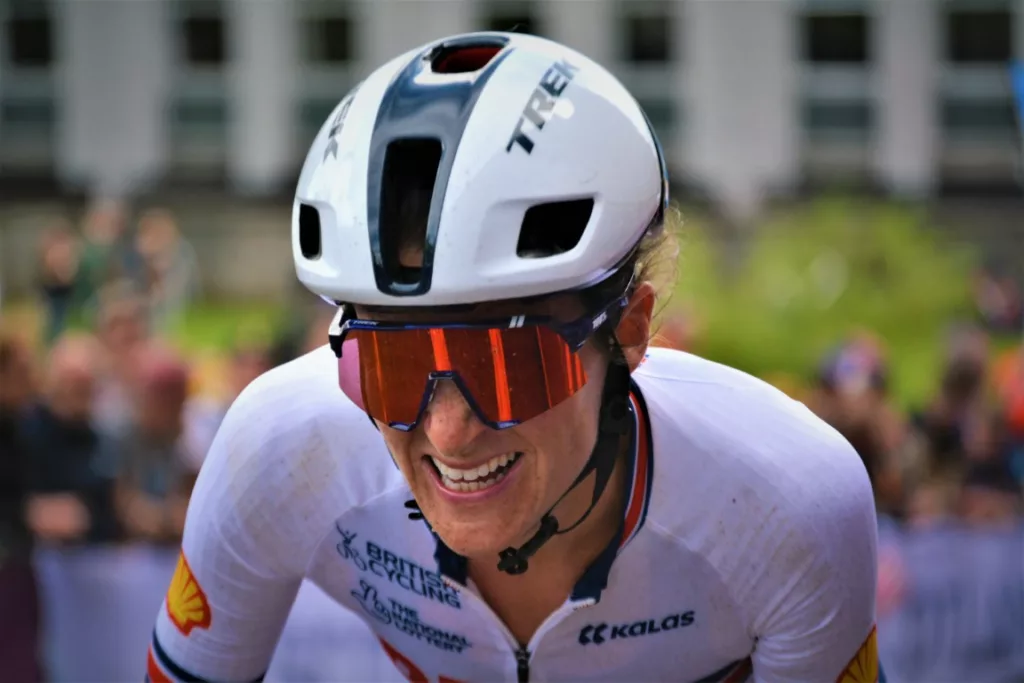
Deignan has returned to the Great Britain Cycling Team as a directeur sportif following the end of her racing career.
Her return to the British national set-up places Britain’s most recent elite road champion in a position to help the next generation attempt to succeed her.
She initially intended to finish her racing career at the end of 2025, before retiring with immediate effect after announcing her third pregnancy.
Her influence on a World Championships therefore continues without her being on the start line.
Few people involved with the British team understand better what it takes to enter a championship as one of the favourites and still convert that expectation into a rainbow jersey.
Women’s success has been the stronger British tradition
The British honours list contains an interesting imbalance.
The elite women have produced five victories through four riders: Burton twice, Jones, Cooke and Deignan.
The elite men have only Simpson and Cavendish.
That is not simply a product of the modern strength of British women’s cycling. Burton’s first title came in 1960, long before Britain possessed anything resembling a major international cycling system.
Cooke and Deignan then won at very different points in the professional development of the women’s sport.
Their victories have also been different in character.
Burton represented endurance and overwhelming physical superiority. Jones escaped alone. Cooke handled an attritional Varese course after already winning Olympic gold. Deignan absorbed a chaotic Richmond finale and trusted her sprint.
There has never been one British route to the rainbow jersey.
-
 Photo Credit: Canyon SRAM (supplied media release)
 -
 Photo Credit: Park Tool

Montréal brings the history back to Mount Royal
The 2026 women’s World Championships route brings the rainbow jersey back to roads already embedded in championship history.
The elite women face 180.4km and 2,570 metres of climbing, including eight laps of the 13.4km Mount Royal circuit.
The elite men complete 273.7km and 12 laps.
Camillien-Houde provides the main sustained climbing effort. The Côte de la Polytechnique supplies steeper gradients. Avenue du Parc rises towards the line.
The repeated climbing is what links 2026 most clearly with 1974.
The roads are not identical and professional cycling has changed almost beyond recognition, but Montréal is again relying on accumulation rather than one huge mountain to decide its champions.
The same principle remains visible in the modern Grand Prix Cycliste de Montréal, where successive climbs gradually turn a manageable circuit into one of the hardest one-day races on the calendar.
Britain’s road world champions belong to very different eras
Burton, Simpson, Jones, Cooke, Cavendish and Deignan do not form an obvious sequence.
Their careers span more than half a century and radically different versions of professional cycling.
Burton competed before a meaningful women’s professional structure existed. Simpson built his career on the continent when Britain was peripheral to top-level men’s road racing. Jones won before the country’s modern high-performance system. Cooke reached the top as that system was beginning to transform British cycling. Cavendish benefited from a national team powerful enough to control an entire World Championship. Deignan became champion as women’s professional cycling itself began accelerating towards the modern WorldTour era.
The rainbow jersey connects them.
It is also what makes the 11 years since Richmond noticeable.
Britain have continued producing some of the best road riders in the world. None has managed to win this particular race.
Montréal gives them another chance on roads carrying their own World Championship history.
In 1974, Mount Royal crowned Merckx and Gambillon.
In 2026, Britain return trying to add another name to a story that began with Beryl Burton 66 years ago.
Main photo credit: Graham Watson

