
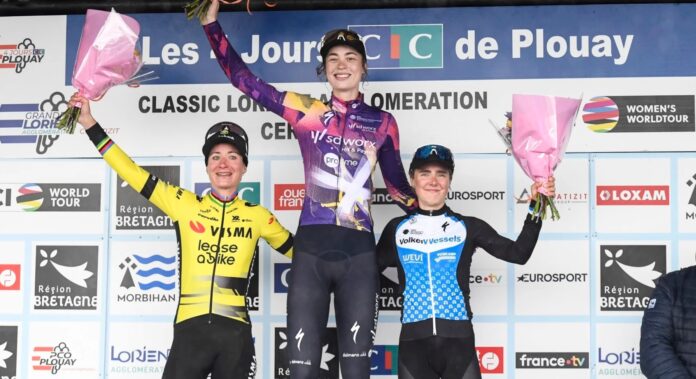
The 2026 Classic Lorient Agglomération has one of the most open contenders lists of the late-season Women’s WorldTour calendar, with Kim Le Court and three-time defending champion Mischa Bredewold heading a deep field in Plouay.
Behind them, Célia Gery and Noemi Rüegg look particularly well suited to the redesigned finale, while Elisa Balsamo, Cédrine Kerbaol, Karlijn Swinkels and Eleonora Gasparrini give the race several very different possible winners.
The key change for 2026 is the return of the Côte de Ty Marrec, whose summit comes only around five kilometres from the finish. That gives the strongest attackers a much clearer opportunity to prevent Bredewold, Balsamo and the other fast finishers from reaching the Boulevard des Championnats du Monde together.
The full Classic Lorient Agglomération 2026 start list contains 19 teams and 114 riders, with enough depth across several squads to make this much more than a straightforward contest between the obvious favourites.
Why the 2026 route changes the contenders picture
Bredewold’s three consecutive victories have established the recent formula for winning in Plouay: survive the accumulated climbing, remain tactically sharp through the final circuit and still possess enough speed for the finish.
The 2026 route makes that formula harder to execute.
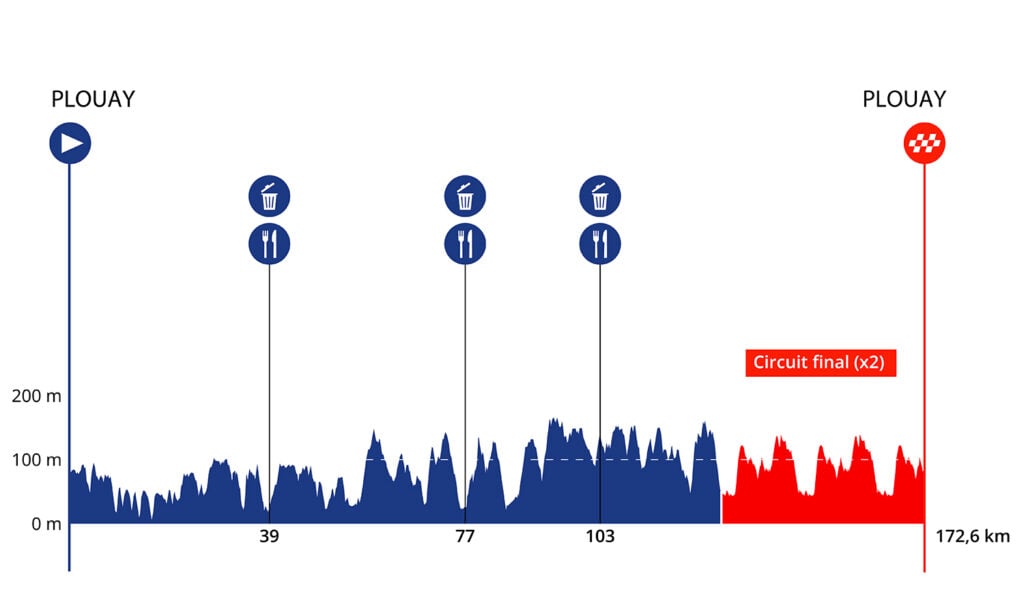
The race covers 172.6km with 2,809 metres of climbing, with Le Lézot and Kerscoulic preceding the return of Ty Marrec. The climb itself is around 1.5km at 5%, with sections approaching 10%, before its summit only around five kilometres from the line.
The full sequence is broken down in ProCyclingUK’s Classic Lorient Agglomération 2026 route guide.
Ty Marrec is not difficult enough to guarantee that Bredewold or Balsamo will be dropped. Its importance is tactical. Riders such as Rüegg, Kerbaol and Le Court now have an obvious late point from which to attack rather than accepting a sprint.
There is also the smaller rise at Kerdalvé around 1.5km from the finish, giving any surviving attacker one final opportunity to maintain separation.
Kim Le Court has almost every route to victory covered
Le Court arrives as one of the most complete contenders in the race.
Her recent overall victory at the Tour of Britain Women was built around the same combination that makes her so dangerous in Plouay: climbing strength, tactical confidence and enough finishing speed to win when the selection remains relatively large.
She took control of the British race by winning on the Great Orme before completing the overall victory in Royal Leamington Spa, where she sealed the first stage-race GC win of her career.
Plouay may suit her even better.
Le Court is strong enough to attack or follow the decisive acceleration on Ty Marrec, but she does not necessarily need to create separation. If five or six riders reach the finish together, she still has a realistic sprint.
That gives rivals a difficult tactical problem. Attacking Le Court risks taking her away from the faster riders without actually removing her.
Her form also appears to be arriving at exactly the right point of the season, something highlighted in ProCyclingUK’s post-Tour of Britain women’s form guide.
Mischa Bredewold remains the Plouay reference point
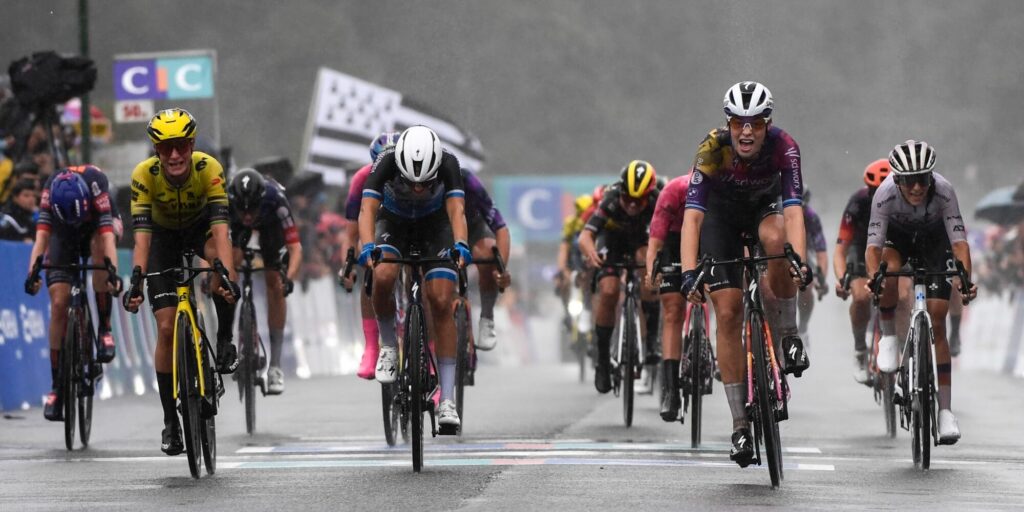
No rider understands how to win this race better than Bredewold.
The Dutchwoman has won the last three editions, doing so from different race situations rather than relying on one repeatable sprint formula.
Her recent dominance is now a major part of the history of Classic Lorient Agglomération, and a fourth consecutive victory would extend one of the most remarkable winning runs in the modern Women’s WorldTour.
The problem is that the 2026 route gives her rivals a better place to attack.
Bredewold remains difficult to drop on short climbs, but every rider reaching Ty Marrec alongside her knows what happens if they simply allow her to reach the final straight comfortably.
That could force SD Worx-Protime to spend more energy controlling the race than in recent editions.
The decisive question is not necessarily whether Ty Marrec drops Bredewold. It may be whether repeated attacks force her to make enough efforts that her sprint is weakened.
If the leading group remains together after Kerdalvé, however, she becomes extremely difficult to oppose.
Célia Gery is now a genuine WorldTour-winning threat
Gery’s rise during 2026 has been one of the clearest breakthroughs of the season.
The 19-year-old took the biggest one-day victory of her career at Brabantse Pijl, where she beat Bredewold and Silvia Persico with a perfectly timed uphill sprint.
That result is particularly relevant to Plouay.
Gery is comfortable when repeated short climbs make a race difficult without completely eliminating riders with finishing speed. She can follow attacks, contribute to making a selection and still produce a dangerous sprint afterwards.
FDJ United-Suez also bring enough depth that she should not have to respond personally to every move.
Franziska Koch, Marie Le Net and Sofia Bertizzolo give the team alternatives, allowing Gery to remain protected while rivals expend energy.
She is no longer an outsider who needs the favourites to make a mistake. On current form, she is one of the riders the rest of the field need to actively race against.
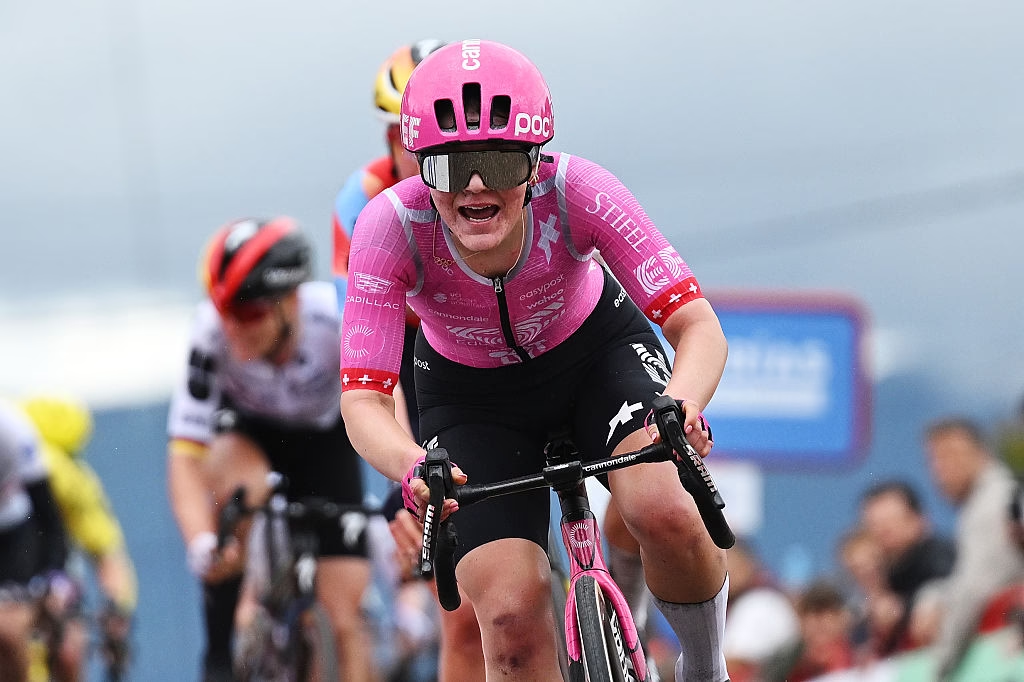 Photo Credit: Getty
Noemi Rüegg may have the ideal profile for Ty Marrec
Few riders combine the qualities required for this finale as neatly as Rüegg.
The Swiss rider can climb, accelerate over short steep sections and finish quickly from a reduced group. Her Stage 1 victory at La Vuelta Femenina came from exactly that combination, while second at Milan-San Remo Women showed she can retain her sprint after a long selective one-day race.
Rüegg therefore has several ways to approach the final circuit.
She can follow Le Court if the race splits.
She can attack with Kerbaol.
Or she can allow other riders to make the race difficult and trust herself in a small-group finish.
EF Education-Oatly’s strength makes that final option particularly attractive.
Cédrine Kerbaol gives EF the perfect attacking card
Kerbaol may be one of the most important riders in the race even if she is not the team’s fastest finisher.
Her role should be obvious.
She has little reason to wait for a sprint against Bredewold, Le Court, Rüegg or Balsamo, so an aggressive race plays directly towards her strengths.
Ty Marrec is the most obvious launchpad, but EF can begin applying pressure before then through Le Lézot and Kerscoulic.
That has the added benefit of protecting Rüegg.
If Kerbaol gets a gap, rival teams have to chase while Rüegg remains behind. If they hesitate, Kerbaol is strong enough to convert that hesitation into something much more serious.
Magdeleine Vallieres Mill gives EF another option, making them arguably the most tactically flexible team in the race.
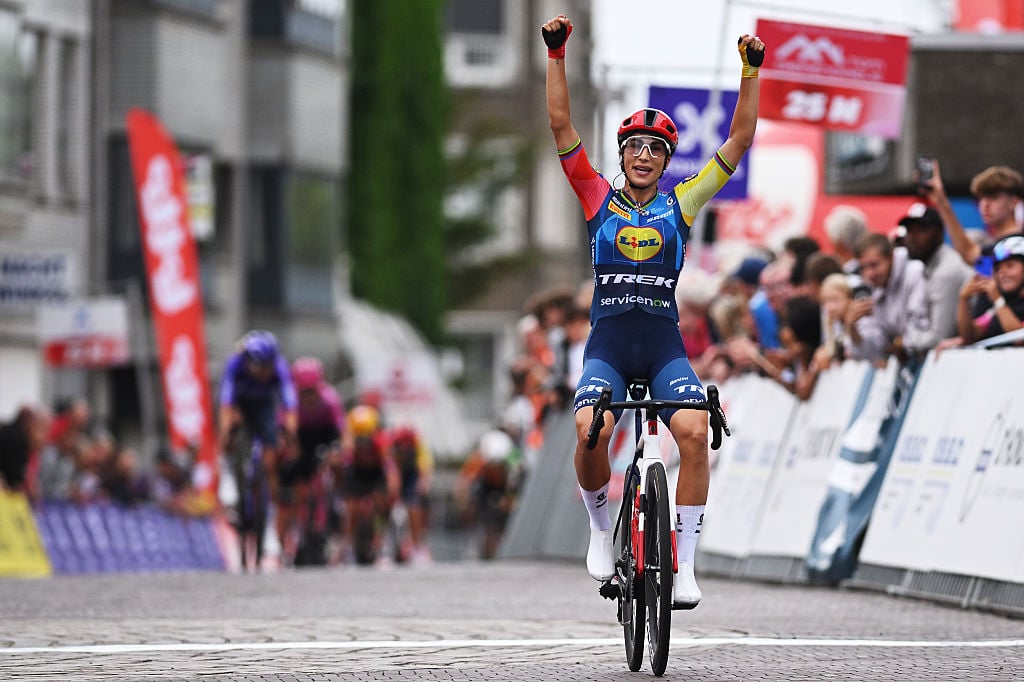
Elisa Balsamo has the fastest route to victory if she survives
Balsamo’s calculation is completely different.
If a relatively substantial group reaches Plouay together, few riders will want to sprint against her.
Lidl-Trek therefore need to get her through Ty Marrec without allowing the race to fragment beyond repair.
That may be difficult after almost 2,800 metres of climbing.
The advantage for Lidl-Trek is that they are not dependent on Balsamo alone.
Niamh Fisher-Black, Loes Adegeest, Anna Henderson and Fleur Moors all give them other routes into the final kilometres. If Balsamo begins struggling, they can switch from controlling attacks to launching them.
That makes the team much harder to race against than a squad built entirely around one sprinter.
Balsamo’s chances increase dramatically if she remains in contact over the final Ty Marrec ascent.
Karlijn Swinkels has already proved she can win exactly this sort of race
Swinkels is another rider with the combination of climbing durability and finishing speed required around Plouay.
Her biggest result of 2026 came at Trofeo Alfredo Binda, where she took her first Women’s WorldTour victory after surviving a selective finale and then winning the sprint from a three-rider move.
That is highly relevant here.
The 2026 Classic Lorient Agglomération is another long, attritional race where pure climbing ability is not enough and pure sprint speed may never reach the finish.
Swinkels can occupy the middle ground.
UAE Team L’IMAD can also use Mavi García and Maëva Squiban aggressively, allowing Swinkels to stay protected if the race remains together.
 Photo Credit: Getty
Eleonora Gasparrini gives UAE a second fast option
Gasparrini creates another layer of complexity for UAE.
Like Swinkels, she can survive a reasonably difficult one-day race and still finish quickly.
That allows UAE to delay any firm leadership decision.
If Gasparrini is climbing better on the day, the team can shift towards her. If Swinkels looks stronger, Gasparrini can become another tactical card.
The presence of García and Squiban means neither rider should need to chase every attack personally.
That depth makes UAE Team L’IMAD one of the teams most capable of shaping the finale rather than simply reacting to it.
Franziska Koch can make FDJ’s numerical strength count
Koch is another rider whose value extends beyond her individual winning chances.
FDJ United-Suez have Gery as the most obvious protected rider, which gives Koch freedom to attack.
That is particularly useful on a route where hesitation may decide the race.
If Koch moves before Ty Marrec, Bredewold, Le Court and Rüegg face an awkward decision over who should chase.
If the move is caught, Gery has spent nothing.
If it is not, Koch is strong enough to remain dangerous.
That tactical freedom could make FDJ one of the most aggressive teams in the final 30km.
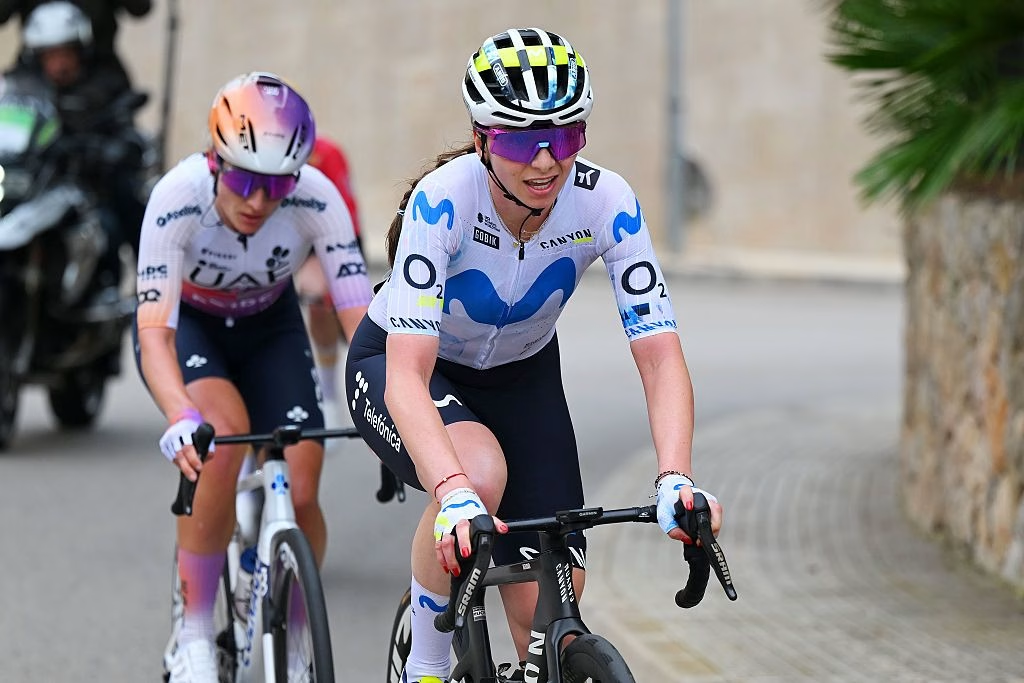 Photo Credit: Getty
Liane Lippert should welcome every additional climb
Lippert is one of the riders most obviously suited to a harder version of Plouay.
She comes directly from a strong Tour of Britain Women in which her climbing form improved as the race progressed, finishing third overall behind Le Court and Lorena Wiebes.
The updated post-Tour of Britain form guide identified Lippert as one of the riders emerging from Britain with particularly encouraging form ahead of the final major races of the European season.
Her problem is finishing speed.
Lippert does not want to reach Plouay alongside Bredewold, Balsamo, Le Court and Rüegg.
That makes Ty Marrec critical.
If the race is hard enough for Lippert to create or join a very small selection, her chances rise considerably.
Caroline Andersson carries excellent late-season form
Andersson is one of the most interesting form-based outsiders.
She finished fourth overall at the Tour of Britain Women, including third on the decisive Great Orme stage, showing that her climbing form is exceptionally strong.
Classic Lorient Agglomération is a different challenge, but her current condition makes the repeated Breton climbs much less intimidating.
Liv AlUla Jayco also have Letizia Paternoster as a faster option, which should allow Andersson more freedom to attack rather than waiting for a sprint.
If the strongest teams begin marking one another too heavily, she has the form to take advantage.
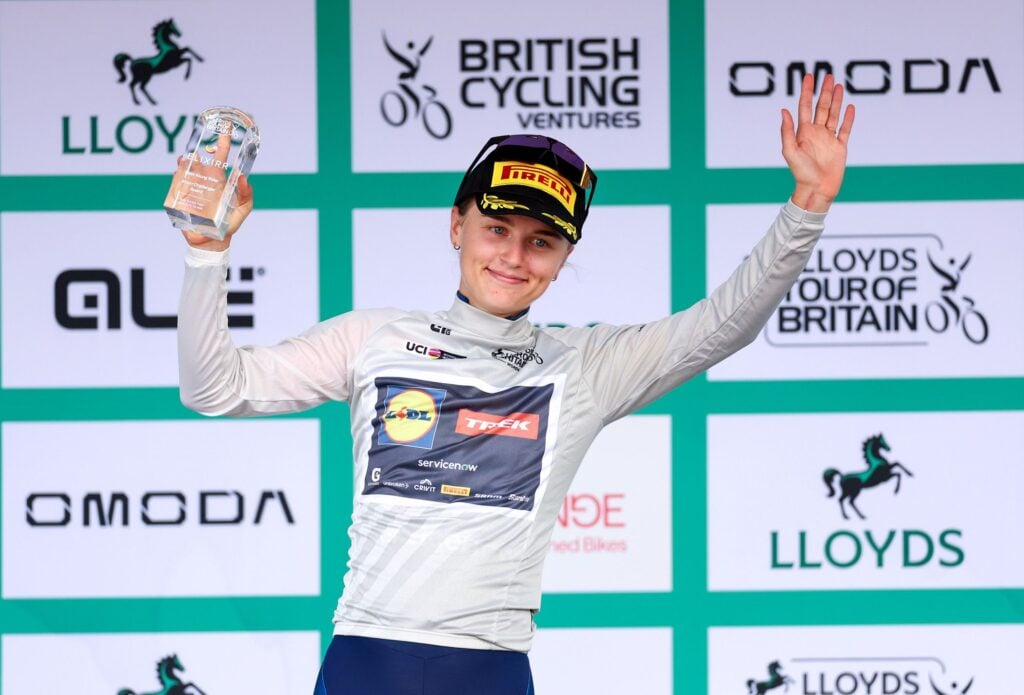
Fleur Moors continues to move towards the front of major races
Moors also arrives with momentum from Britain.
She won the youth classification and again showed that she is increasingly comfortable deep into high-level stage races.
Lidl-Trek’s strength works in her favour.
Balsamo, Fisher-Black and Adegeest are likely to attract more immediate attention, leaving Moors free to follow moves without automatically becoming the rider everyone expects another team to chase.
Winning a major Women’s WorldTour Classic at this stage of her development would still represent a substantial step, but her recent results make involvement in the decisive group entirely realistic.
Maëva Squiban has little reason to wait
Squiban should be one of UAE Team L’IMAD’s principal attacking options.
Her chances decrease significantly if she simply reaches the final kilometre alongside the fastest riders in the field.
The logical approach is therefore to use her strength before then.
Ty Marrec offers one opportunity, but she may be even more valuable attacking earlier and forcing other teams to begin spending riders.
That can create the selection UAE need for Swinkels or Gasparrini while still leaving Squiban with a chance if the move succeeds.
She is one of the contenders whose actions could shape the race even without producing the eventual winner.
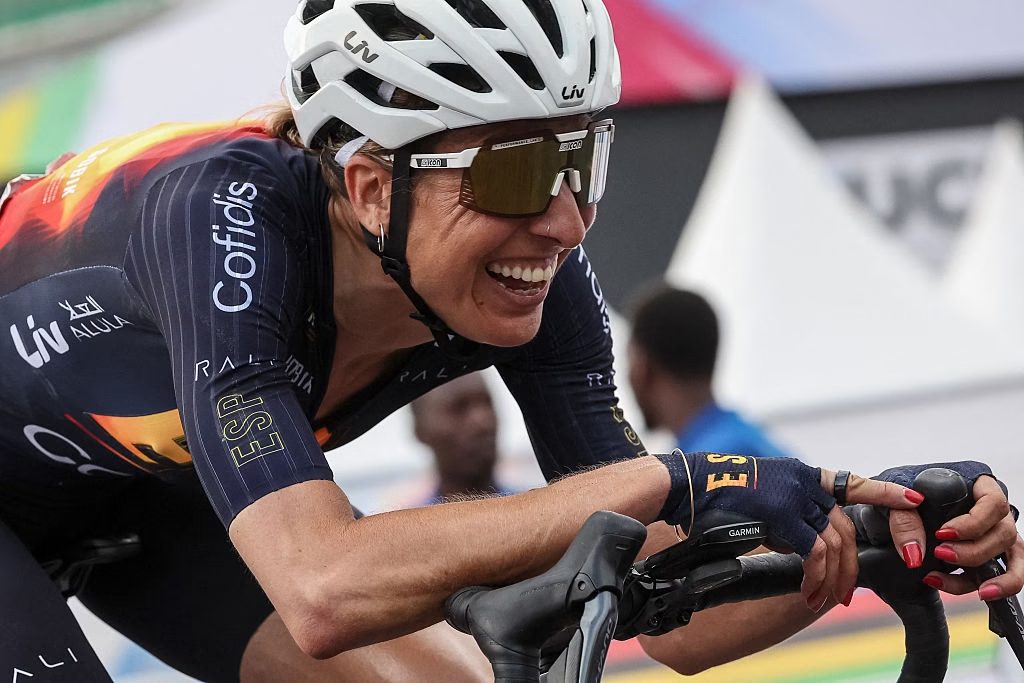
Mavi García knows how to win in Plouay
García brings something most of the contenders do not: previous victory on these roads.
She won the race in 2022, reinforcing how well the relentless climbing around Plouay can suit a rider willing to make the race selective.
The 2026 finale again gives her terrain to attack.
Like Squiban, García is unlikely to benefit from waiting for a reduced sprint against faster team-mates and rivals.
That makes her another ideal UAE tactical card.
If she attacks and forces EF, SD Worx-Protime or Lidl-Trek to chase, Swinkels and Gasparrini benefit regardless of whether García stays away.
Antonia Niedermaier needs the hardest version of the race
Niedermaier’s chances improve with every rider removed from the leading group.
Canyon SRAM have enough climbing strength through Niedermaier, Cecilie Uttrup Ludwig and Neve Bradbury to make the final circuit consistently difficult rather than relying on one explosive attack.
Their objective should be obvious.
They need to remove the riders with superior finishing speed before Plouay.
If 20 riders remain together after Ty Marrec, Niedermaier’s chances are limited.
If only four or five remain, the race looks very different.

Niamh Fisher-Black can become Lidl-Trek’s alternative
Fisher-Black is another rider who benefits if the race becomes harder than Balsamo wants.
She is unlikely to beat the quickest riders from a conventional sprint, but she has the climbing strength to become dangerous if Ty Marrec creates a much smaller selection.
That creates an important tactical relationship within Lidl-Trek.
If Balsamo survives comfortably, Fisher-Black can work for her.
If Balsamo struggles, Fisher-Black can immediately switch to racing for herself.
That means Lidl-Trek do not have to decide on one scenario before the race starts.
Eline Jansen has the right form and profile for a major result
Jansen is another credible outsider on this terrain.
Her 2026 season has included fifth at Dwars door Vlaanderen and Omloop van het Hageland, seventh at La Flèche Brabançonne and several other strong results in selective one-day races.
She also enters the weekend immediately after confirmation that she will join Team SD Worx-Protime from 2027.
VolkerWessels do not have the same responsibility to control the race as the biggest Women’s WorldTour teams.
That gives Jansen freedom.
If the favourites hesitate over an attack from a rider outside their immediate tactical circle, she is strong enough to exploit it.
Letizia Paternoster becomes dangerous if the attackers fail
Paternoster’s chances are almost entirely tied to how selective Ty Marrec becomes.
She does not want Kerbaol, Lippert or Rüegg making the climb brutally hard.
She wants the opposite.
If a relatively large group survives and Liv AlUla Jayco can deliver her into the final kilometre, Paternoster becomes one of the fastest riders left in the race.
Her presence also gives Andersson freedom to race more aggressively earlier.
That combination gives Liv AlUla Jayco two clearly different ways to approach the finale.
-
 Photo Credit: Getty

Which team has the strongest hand?
There is no obvious answer.
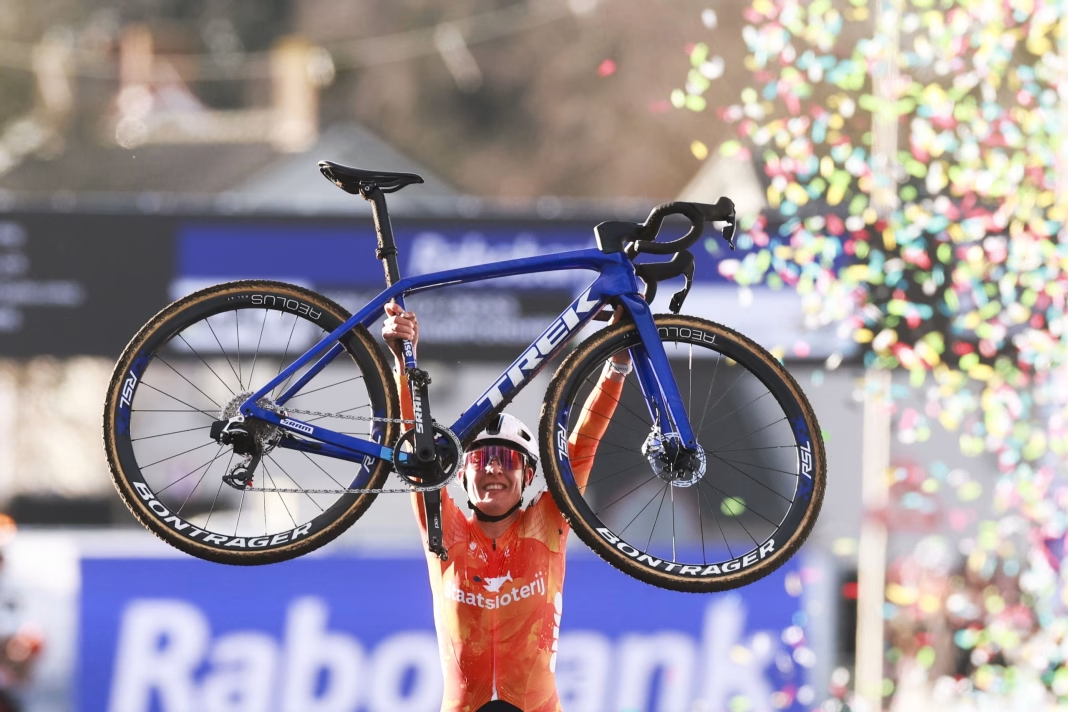
EF Education-Oatly may have the most complementary trio through Rüegg, Kerbaol and Vallieres Mill.
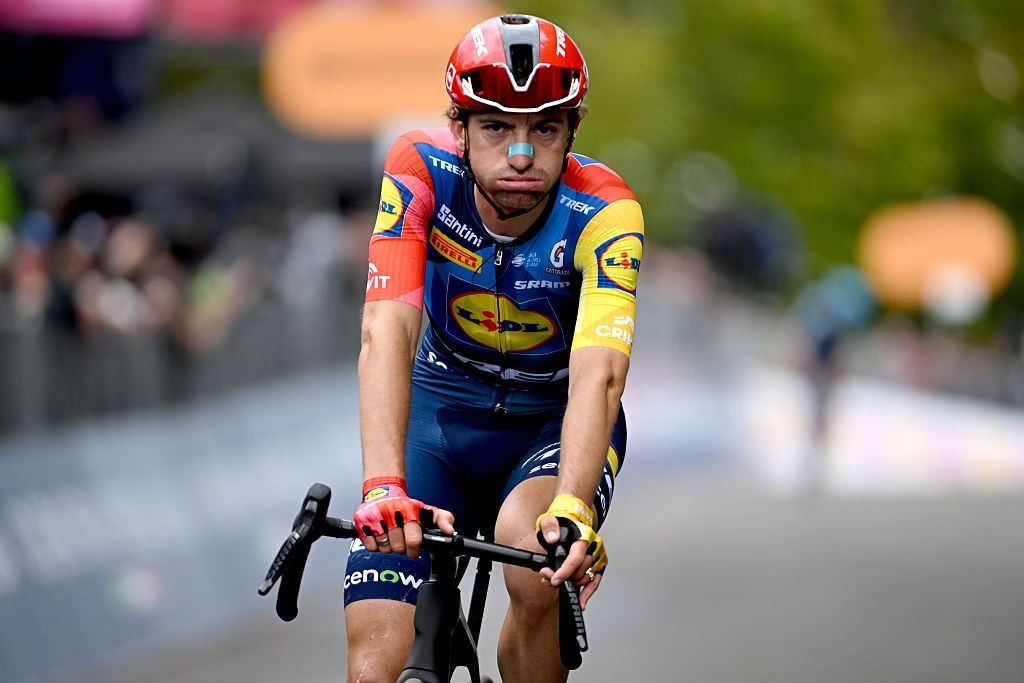
Lidl-Trek can protect Balsamo while using Fisher-Black, Adegeest, Henderson and Moors to respond to or create attacks.
UAE Team L’IMAD have perhaps the widest range, combining Swinkels and Gasparrini’s speed with García and Squiban’s climbing aggression.
FDJ United-Suez have Gery as a genuine winning option and enough strength around her to avoid becoming predictable.
SD Worx-Protime do not have quite the same volume of obvious contenders, but they have Bredewold, who has solved this race three years in succession.
That counts for plenty.
Who benefits most from the return of Ty Marrec?
Rüegg, Kerbaol, Le Court, Lippert, Squiban, Fisher-Black and Niedermaier should all welcome it.
Each has more reason to want a late climb than a straightforward run towards a sprint.
Bredewold occupies the interesting middle ground.
The climb creates additional risk for her, but she is also one of the quickest riders capable of surviving it.
That means simply making Ty Marrec hard may not be enough.
Her rivals may need to attack over the top, force her to chase and then go again on the approach to Kerdalvé.
The 2026 race should therefore be more about repeated pressure than one decisive acceleration.
Classic Lorient Agglomération 2026 prediction
Le Court looks like the rider with the greatest number of winning scenarios.
She can attack, follow the climbers or sprint from a reduced group, and her Tour of Britain performance suggests the form is already there.
Bredewold remains the rider nobody should willingly take to the finish. Three consecutive victories provide stronger evidence than any theoretical route analysis.
Rüegg may be the most dangerous alternative because EF Education-Oatly can use Kerbaol to make the race aggressive without forcing Rüegg to spend energy chasing moves herself.
Gery belongs firmly in that same leading group after the season she has produced, while Swinkels is particularly dangerous if UAE can use their numerical strength to simplify the finale for her.
The harder route should create more attacks than in recent editions, but that does not automatically mean the fastest riders disappear.
The decisive question is whether anyone can create enough separation on Ty Marrec and keep it through Kerdalvé.
If they can, Le Court and Rüegg look particularly difficult to beat.
If they cannot, Bredewold will reach the Boulevard des Championnats du Monde attempting to win Classic Lorient Agglomération for a fourth consecutive year.

