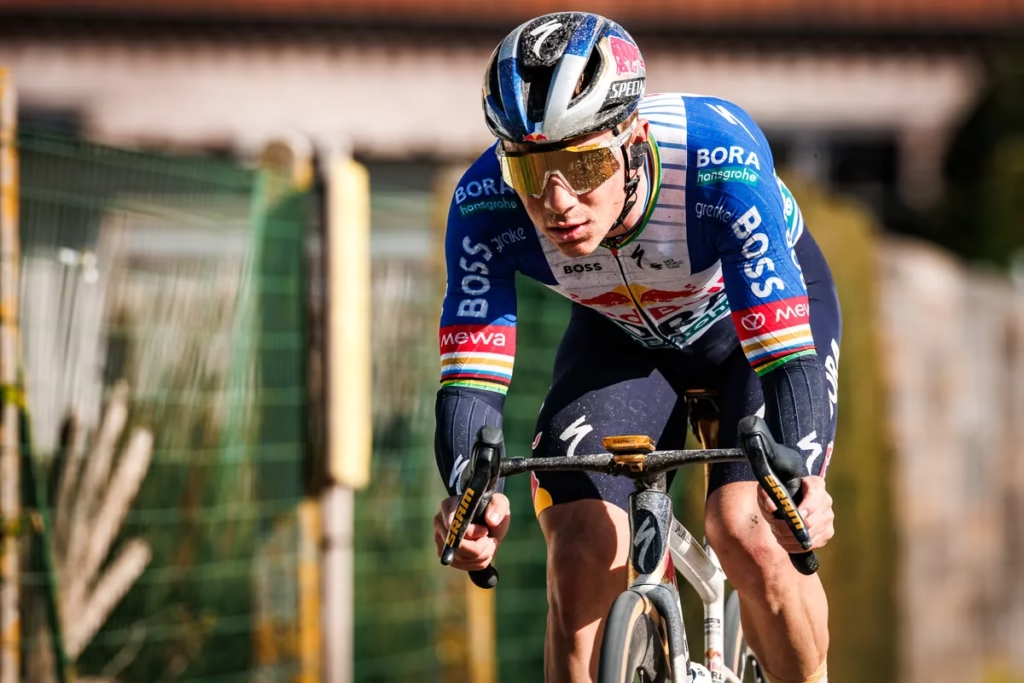
Remco Evenepoel arrives at the Tour de France 2026 with one of the most finely balanced cases among the main contenders. There is no doubt about his raw quality, his time-trial pedigree or his capacity to win huge races. The harder question is whether the 2026 Tour route gives him enough road to turn those strengths into a genuine yellow jersey challenge.
This is not a route built around long time-trials. There is an opening team time-trial in Barcelona and an individual time-trial on stage 16 from Évian-les-Bains to Thonon-les-Bains, but the main story of the race is still mountainous. The Pyrenees arrive early, the middle of the race is awkward, and the final Alpine block is brutally loaded with Orcières-Merlette, Alpe d’Huez and another Alpe d’Huez finish via the Col de Sarenne.
That puts Evenepoel in a familiar position. He has the weapon that every Tour contender fears: the ability to take meaningful time against the clock. But he still has to answer the same GC questions that have followed him at the Tour: can he stay close to Tadej Pogačar and Jonas Vingegaard in repeated high-mountain stages, can Red Bull-BORA-hansgrohe support him deeply enough, and can his carefully controlled build-up leave him fresh rather than under-raced?
For the wider race picture, see our Tour de France 2026 full route guide, Tour de France 2026 route analysis and Tour de France 2026 GC favourites ranked.
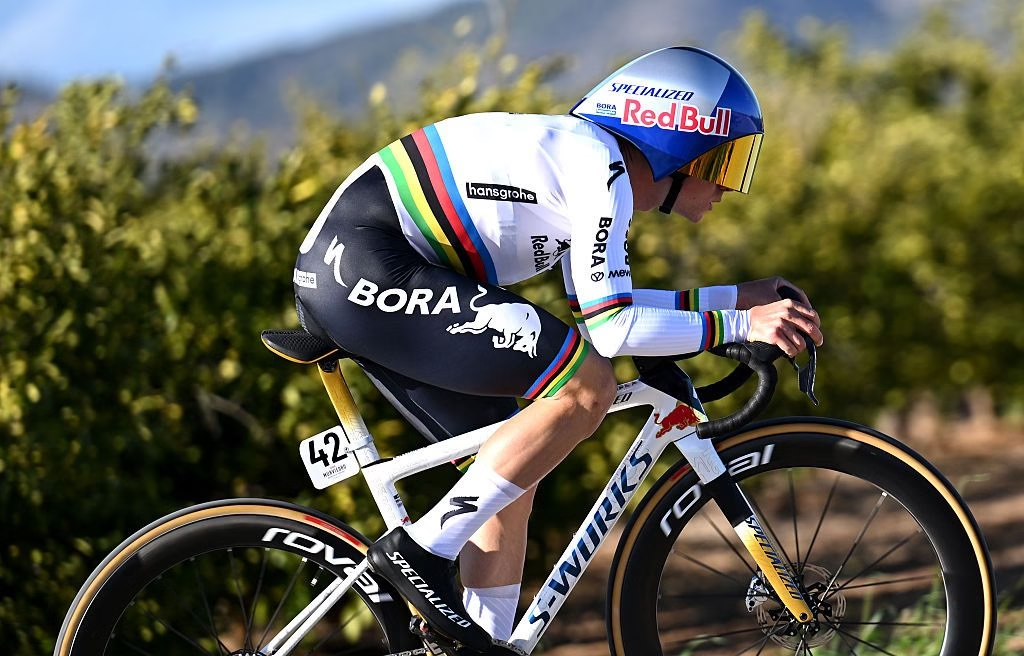 Photo Credit: Getty
What is Remco Evenepoel’s Tour de France 2026 form like?
Evenepoel’s form is harder to read than most of the other major favourites because his build-up is deliberately unusual. Instead of racing through the usual June pathway, Red Bull-BORA-hansgrohe have chosen a long controlled preparation block, with altitude training, route reconnaissance and recovery replacing a traditional pre-Tour race programme.
His final race before the Tour was Liège-Bastogne-Liège, where he finished 3rd. He had already shown strong spring form, including victory at Amstel Gold Race, so the issue is not whether the level exists. The issue is whether that level can be held, sharpened and transferred into July without racing.
That is a calculated gamble. Racing gives riders rhythm, positioning, stress exposure and a direct measure against rivals. Training gives control, lower crash risk and more precision. Evenepoel’s team have chosen control, with the 68-day no-race build-up explained in detail by Cyclingnews.
The logic is clear enough. The Tour de France 2026 is not a race where Evenepoel can afford to arrive tired. He needs to be lighter, fresher and more durable in the mountains than in previous Tours, while still keeping his time-trial edge. If the long break works, he could arrive in Barcelona with one of the best-prepared engines in the race. If it misfires, the first week may expose the lack of racing sharpness quickly.
Why the route gives Evenepoel hope
Evenepoel’s best argument starts with the time-trials. The 2026 Tour has two moments where his speciality can directly affect the GC: the opening team time-trial in Barcelona and the stage 16 individual time-trial after the second rest day.
That matters because Evenepoel does not need to outclimb Pogačar and Vingegaard every day to stay in the race. He needs to keep the losses manageable in the mountains, then use the time-trial kilometres to claw back time or apply pressure.
The opening stage could immediately give him a platform. Red Bull-BORA-hansgrohe should be able to build a strong unit around him, and Evenepoel is the kind of rider who can make a team time-trial faster simply by being in the line. The Barcelona course is short, but it still gives the strongest teams a chance to take time before the first road stage.
Stage 16 is more important. The official Tour route lists it as a 26.1km individual time-trial from Évian-les-Bains to Thonon-les-Bains, giving Evenepoel a proper chance to make a difference. It comes after two weeks of racing, when fatigue can make technical pacing and raw efficiency even more valuable. If he reaches that stage within striking distance, it could be his clearest route back into the yellow jersey fight.
For the opening test, see our Tour de France 2026 team time-trial explained and Barcelona Grand Départ guide. The official stage details can also be checked through the Tour de France 2026 route.
 Photo Credit: Getty
Why the route still asks big GC questions
The problem for Evenepoel is that the 2026 route is not built around time-trialling alone. It has just enough time-trial distance to help him, but not enough to let him win the Tour there if the mountains go badly.
The early Pyrenees are the first problem. Stage 3 to Les Angles and stage 6 to Gavarnie-Gèdre arrive before the race has settled. Gavarnie-Gèdre is especially important because it includes the Col d’Aspin and the Col du Tourmalet before the final climb. That is not a place where Evenepoel can simply ride defensively and hope the race stays calm.
Then comes the middle phase. Le Lioran, Le Markstein Fellering and Plateau de Solaison all arrive before the final Alpine block. These are the kinds of stages where Evenepoel’s GC challenge can be strengthened or slowly eroded. None of them has to destroy him on its own, but repeated pressure from Pogačar, Vingegaard and their teams could force him into a long series of defensive rides.
The final week is even more severe. Orcières-Merlette, Alpe d’Huez and the final Alpe d’Huez stage via Sarenne mean the Tour ends with the kind of repeated climbing that has historically favoured Pogačar and Vingegaard more than Evenepoel. If he is still close after stage 16, he has a chance. If he is already chasing by several minutes, the route becomes a stage-hunting or podium-defence exercise rather than a yellow jersey campaign.
For the mountain picture, see our Tour de France 2026 summit finishes guide and Tour de France 2026 mountain stages ranked by difficulty.
The opening team time-trial is a major opportunity
The Barcelona team time-trial is short, but it is still a big moment for Evenepoel. It gives him a chance to begin the Tour on the front foot rather than simply waiting for stage 16.
Red Bull-BORA-hansgrohe will need to ride this cleanly. The opening stage is not just about power. It is about holding the line, managing corners, keeping the right riders together and avoiding the kind of small mistakes that become immediate GC losses. The individual GC timing rules make the stage more nuanced than a standard team classification exercise.
Evenepoel should be an asset here. He is one of the best time-triallists in the world and can contribute heavily on the flatter, faster sections. The question is whether the team can support that strength without becoming too reliant on him.
The comparison with UAE Team Emirates-XRG and Team Visma | Lease a Bike will be important. If Red Bull-BORA-hansgrohe can match or beat them, Evenepoel starts with confidence. If they lose time immediately, his Tour becomes harder before the road stages even begin.
A strong Barcelona ride would not win him the Tour, but it could shape the first week. Evenepoel does not want to start the mountains already chasing.
 Photo Credit: Getty
Stage 16 is Evenepoel’s biggest weapon
The stage 16 individual time-trial is the day every rival will have circled for Evenepoel.
At 26.1km, it is long enough to create meaningful gaps. It is not a token late-race time-trial and it is not a prologue-style effort. It gives Evenepoel enough road to use his aerodynamic position, pacing control and sustained power.
The timing is almost as important as the course. Coming after two weeks of racing, the stage should reward riders who can still produce a high, controlled effort under fatigue. That should suit Evenepoel if his preparation has worked. His time-trialling is not just about speed when fresh. At his best, he can hold an effort with a level of precision that most GC rivals cannot match.
The difficulty is that stage 16 comes before the hardest Alpine sequence. Evenepoel cannot empty himself completely if he still wants to survive Orcières-Merlette and Alpe d’Huez. He has to gain time, but not at the cost of collapsing in the final mountain block.
The tactical picture depends on his GC position. If he is within a minute of yellow, stage 16 becomes a chance to take control or force Pogačar and Vingegaard onto the defensive. If he is two or three minutes down, it becomes a rescue mission. If he has already lost more, it may become a stage-win target.
Can Evenepoel climb well enough to win the Tour?
This remains the central question.
Evenepoel can climb. That should not be in doubt. He has won a Grand Tour, worn leaders’ jerseys, won major stage races and repeatedly shown that he can handle hard mountain days. The issue is not whether he is a climber. The issue is whether he can climb with Pogačar and Vingegaard across the hardest Tour terrain, on repeated days, deep into the third week.
The 2026 route is a harsh test of that exact weakness. Gavarnie-Gèdre comes early. Plateau de Solaison comes before the second rest day. Then the Alps ask for endurance, recovery and repeated climbing under pressure.
Evenepoel’s best mountain days often come when he can ride at a sustained pace, manage his effort and avoid being forced into repeated explosive responses. Pogačar can attack violently. Vingegaard can grind the race down on long climbs. Evenepoel has to find a way to ride his own mountain race without being isolated or pulled into efforts that do not suit him.
That is why the team matters so much. If Red Bull-BORA-hansgrohe can keep him supported deep into the mountain stages, he can limit damage and use the time-trial to strike back. If he is alone too early, the Tour becomes much harder.
 Photo Credit: Getty
The Pyrenees could define his ceiling
The Pyrenees may tell us quickly whether Evenepoel is fighting for yellow, the podium or stage wins.
Stage 3 to Les Angles comes early enough to catch riders before they are fully settled. It is not officially one of the five summit finishes, but it is still a mountain finish and a meaningful early GC test. Evenepoel does not need to win there, but he cannot afford a bad day.
Stage 6 to Gavarnie-Gèdre is more serious. With the Aspin, Tourmalet and final climb, it gives Pogačar, Vingegaard and their teams a chance to test the entire GC field. Evenepoel’s task will be to stay calm, avoid isolation and manage any accelerations without crossing his limit.
If he survives the Pyrenees close to the front, the race opens up for him. He then has time to reach stage 16, where his time-trial can become a serious GC weapon. If he loses significant time in the Pyrenees, the Tour becomes reactive. He may still be dangerous, but the yellow jersey path becomes much narrower.
For the early mountain block, see our Tour de France 2026 Pyrenees guide.
The middle of the Tour is awkward for him
Evenepoel would probably prefer a cleaner route: early time-trial, controlled transition stages, then one or two major mountain showdowns. The 2026 Tour is not like that.
The middle of the race is full of awkward stages where teams can be drained without the race necessarily being decided. Le Lioran, Le Markstein Fellering and Plateau de Solaison all sit in that category. They are hard enough to create time gaps, but also hard enough to weaken teams, force chases and expose riders who need steady rhythm.
This is where Evenepoel’s Tour could quietly become difficult. He may not lose the race in one dramatic moment. He could lose it in repeated efforts, poor positioning, late isolation or chasing after attacks that do not directly involve him.
At the same time, this block gives him opportunity. If other favourites hesitate, Evenepoel can use his engine to make the race uncomfortable. He is not only a time-triallist waiting for stage 16. On the right rolling or uphill terrain, he can attack from distance and force rivals to chase.
The key is timing. A long Evenepoel move can win races, but at the Tour against Pogačar and Vingegaard, it has to be used carefully. Go too early, and he risks giving them a target. Wait too long, and he may spend too much of the race defending.
Our guide to where the Tour de France 2026 can be won before the Alps explains why these mid-race stages could shape the final GC before the Alpine finale.
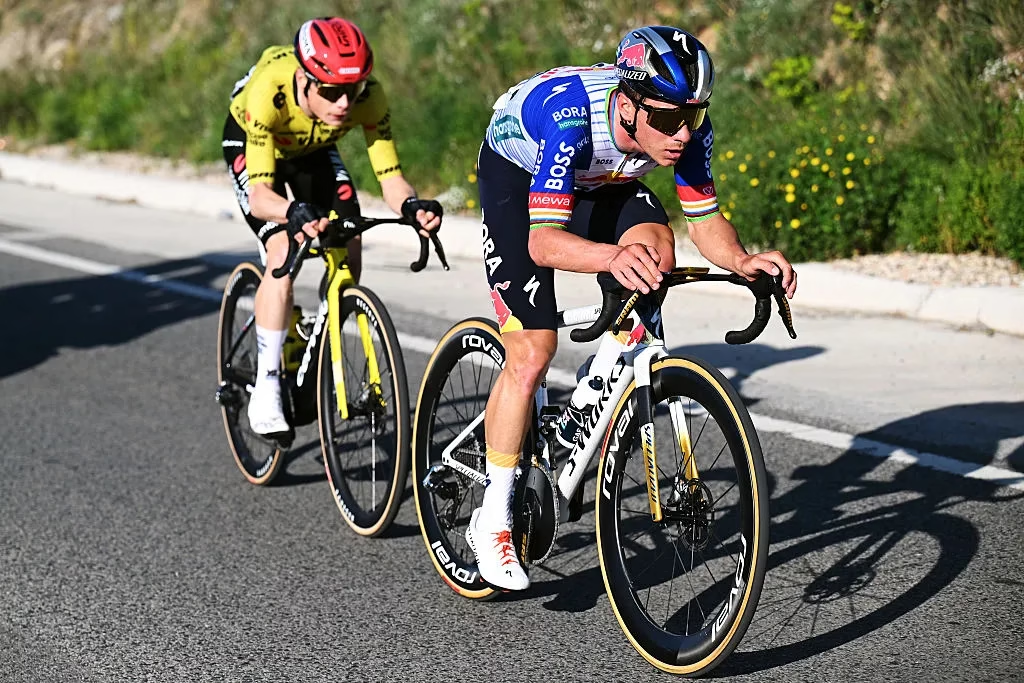 Photo Credit: Getty
The Alps are the hardest part of his yellow jersey case
The final Alpine block is the biggest question mark for Evenepoel.
Stage 18 finishes at Orcières-Merlette. Stage 19 finishes on Alpe d’Huez. Stage 20 returns to Alpe d’Huez via the Col de Sarenne after the Croix de Fer, Télégraphe and Galibier. That is a brutal sequence for any rider, but especially for someone whose Tour-winning case depends on limiting mountain losses against two of the best climbers of this generation.
Evenepoel can handle one major mountain stage. The question is whether he can handle three in a row while protecting a GC position. If he has taken time in the stage 16 time-trial, he may be defending against Pogačar and Vingegaard. If he has not, he may need to attack them. Neither scenario is easy.
Stage 20 is the most important. The Sarenne route to Alpe d’Huez could be the kind of day where pure climbing endurance matters more than time-trial strength. If Evenepoel is still close, it will be the ultimate test of whether his Tour project has moved forward. If he cracks there, the entire GC challenge could unravel late.
For the final block, see our guide to why back-to-back Alpe d’Huez finishes could define the Tour de France 2026 and our Tour de France 2026 queen stage guide.
Red Bull-BORA-hansgrohe’s support will be decisive
Evenepoel’s move to Red Bull-BORA-hansgrohe was always about more than a new jersey. It was about building a Tour-winning project around him.
The question is whether that project is ready to win the Tour in 2026. The team has power, structure and ambition, but the Tour asks for a very specific kind of support. Evenepoel needs riders who can keep him safe in the opening week, drive the Barcelona team time-trial, protect him through the flat and rolling stages, and stay with him deep into the mountains.
Mikel Landa is an important climbing reference point if selected. Ilan Van Wilder and Louis Vervaeke bring familiarity and support quality. Florian Lipowitz could be both an asset and a complication. If he is riding as a protected option, Red Bull-BORA-hansgrohe may have two GC cards. If he becomes a mountain support rider, he can be one of Evenepoel’s most valuable allies.
That balance matters. A dual-leader setup can be useful if the race opens up, but it can also blur tactical decisions. Evenepoel needs clarity. If he is to challenge Pogačar and Vingegaard, he cannot spend the hardest days wondering whether the team is defending two separate GC positions.
The Tour will show how fully Red Bull-BORA-hansgrohe has become an Evenepoel team.
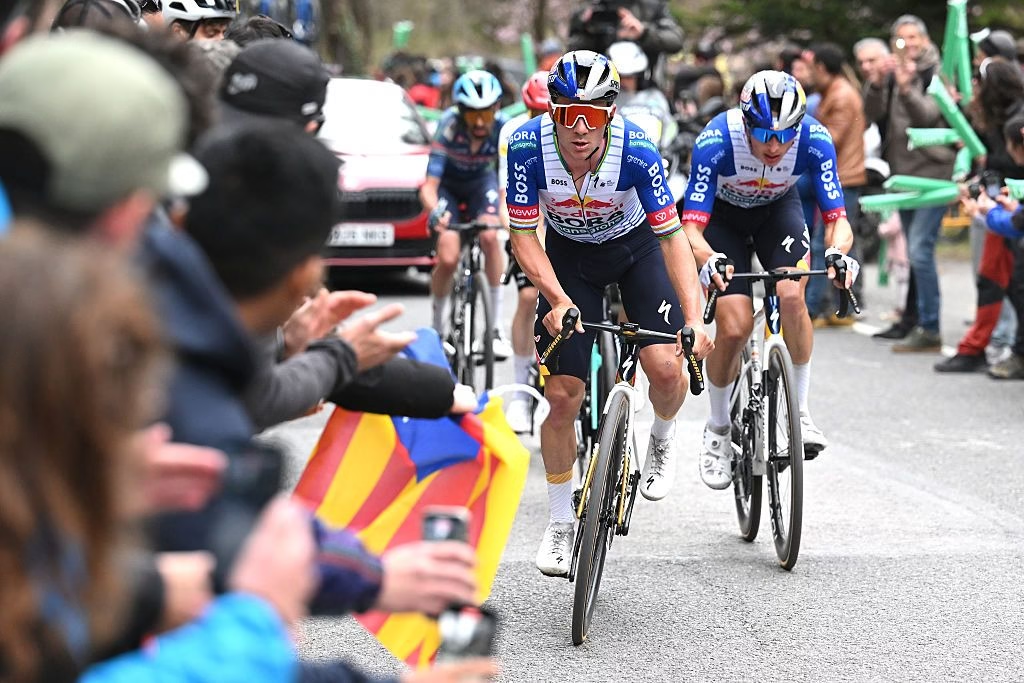 Photo Credit: Getty
Florian Lipowitz could change the race inside the team
Lipowitz is one of the more interesting elements of Evenepoel’s 2026 Tour picture. On paper, he gives Red Bull-BORA-hansgrohe another high-level climbing option and a rider who can complicate rival tactics. In practice, his role needs careful handling.
If Lipowitz is strong enough to stay high on GC, he becomes tactically valuable. UAE and Team Visma | Lease a Bike cannot ignore him, and Evenepoel may benefit from having a teammate who can follow moves or sit ahead in the race.
But if both riders are treated as co-leaders for too long, the team could become less efficient. Evenepoel needs deep support on the hardest climbs. If Lipowitz is saving himself for his own GC, the team may have fewer riders available to protect their main yellow jersey hope.
The ideal scenario is that Lipowitz gives Red Bull-BORA-hansgrohe flexibility without creating confusion. That is easier to write than to execute. The race will decide the hierarchy.
How Evenepoel compares with Pogačar and Vingegaard
Evenepoel’s advantage over Pogačar and Vingegaard is clear against the clock. On the right day, he can take time from both. That makes him dangerous in any Tour route with meaningful time-trial kilometres.
The problem is that the Tour is not a time-trial championship. Pogačar is more explosive, more versatile and more likely to take time across multiple stage types. Vingegaard is more proven in the specific long-climb, third-week Tour terrain that defines the final Alpine block.
Evenepoel sits between them in a fascinating way. He can beat both in the stage 16 time-trial. He can also produce long-range efforts that change races. But he has to survive the mountains well enough for those strengths to matter.
That is the difference between being a threat and being the favourite. Pogačar and Vingegaard can win the Tour primarily through climbing. Evenepoel probably needs a more balanced route to yellow: no major mountain collapse, time gained against the clock, and one or two tactical moments where his engine can be used away from the obvious summit battles.
For the two main comparison points, see our features on Tadej Pogačar at the Tour de France 2026 and Jonas Vingegaard at the Tour de France 2026.
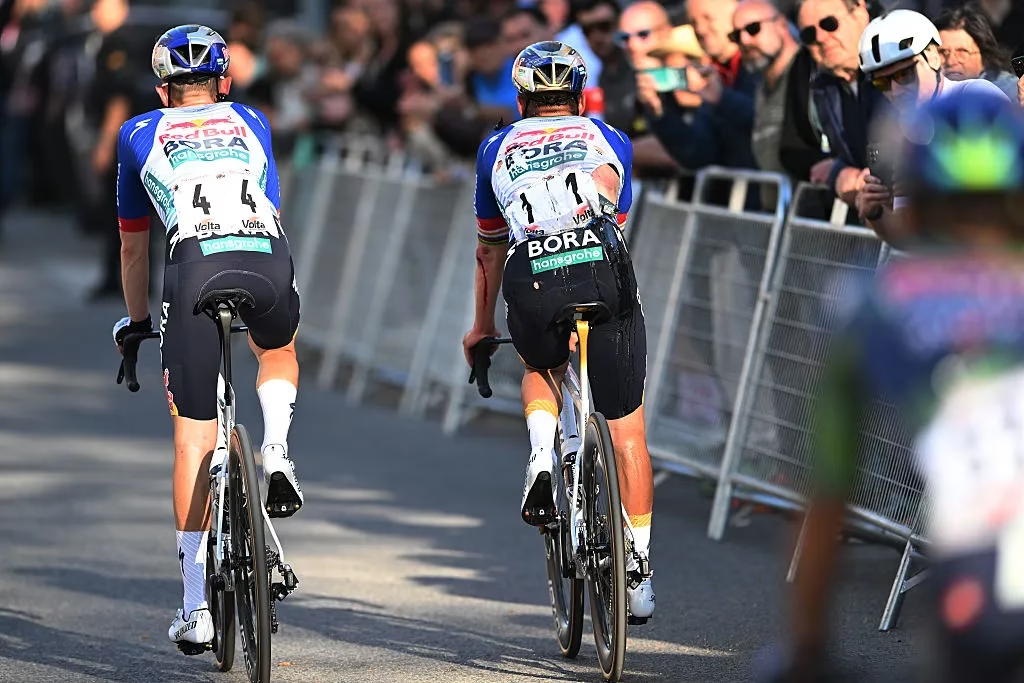 Photo Credit: Getty
Who else affects Evenepoel’s chances?
Evenepoel’s race will not only be defined by Pogačar and Vingegaard. The wider GC field could shape how much freedom he gets and how much pressure Red Bull-BORA-hansgrohe have to absorb.
Florian Lipowitz is the most obvious internal factor. If he is strong, Red Bull-BORA-hansgrohe have more tactical range. If his role is unclear, the team may become harder to organise around Evenepoel.
Isaac del Toro could be important if selected by UAE Team Emirates-XRG. He gives Pogačar another potential climbing support rider and another name rivals cannot ignore if he sits high on GC. Paul Seixas also brings a different kind of pressure, especially if the route’s early mountains reward aggressive young climbers.
Richard Carapaz, Enric Mas, Antonio Tiberi, Max Poole and other climbing contenders could also change the rhythm. Even if they are not direct yellow jersey favourites, their attacks can force Red Bull-BORA-hansgrohe to chase, expose weaker teammates and make Evenepoel burn energy before the decisive moments.
For the wider contender picture, see our Tour de France 2026 young riders to watch and Tour de France 2026 domestiques guide.
What could go wrong for Evenepoel?
The first risk is the long race gap. The training block may leave him fresh, but it also removes racing rhythm. The Tour starts fast, with a team time-trial, a hilly Barcelona finish, early mountains and nervous positioning. That is not an easy place to rediscover race sharpness.
The second risk is isolation in the mountains. Evenepoel can climb well, but if he is alone when Pogačar or Vingegaard start attacking, he may be forced into repeated efforts that do not suit him. Team depth will be just as important as individual form.
The third risk is losing time before stage 16. His individual time-trial is only a weapon if he reaches it close enough. If he is already several minutes behind, even a brilliant ride may only move him back towards the podium rather than into yellow.
The fourth risk is the final Alpine block. A rider can look excellent for two weeks and still suffer on the third mountain day. Stage 20 via the Col de Sarenne is exactly the kind of day where Tour ambitions can collapse late.
The fifth risk is tactical clarity. Red Bull-BORA-hansgrohe have ambition, but they need a clean plan. If the team tries to keep multiple GC cards alive too long, Evenepoel may not get the support he needs when the race becomes most selective.
What has to happen for Evenepoel to win the Tour?
Evenepoel needs a narrow but realistic chain of events.
First, Red Bull-BORA-hansgrohe must ride a strong Barcelona team time-trial. He cannot afford to start the Tour by giving away time to Pogačar and Vingegaard.
Second, he needs to survive the early Pyrenees within touching distance. Les Angles and Gavarnie-Gèdre are not where he has to win the race, but they are where he must prove that his mountain preparation has worked.
Third, he needs to avoid slow losses through the middle week. Le Lioran, Le Markstein Fellering and Plateau de Solaison could chip away at him if he is always defending. He needs to turn at least some of that terrain into an opportunity.
Fourth, he has to maximise stage 16. If he is close on GC, the individual time-trial must become a decisive weapon. A merely solid ride may not be enough.
Fifth, he must survive the final Alpine block without one bad day. He does not need to outclimb Pogačar and Vingegaard every day, but he cannot crack on Orcières-Merlette, Alpe d’Huez or the Sarenne stage.
If all of that happens, Evenepoel can be a genuine yellow jersey contender. If one piece fails, the podium may become the more realistic target.
-
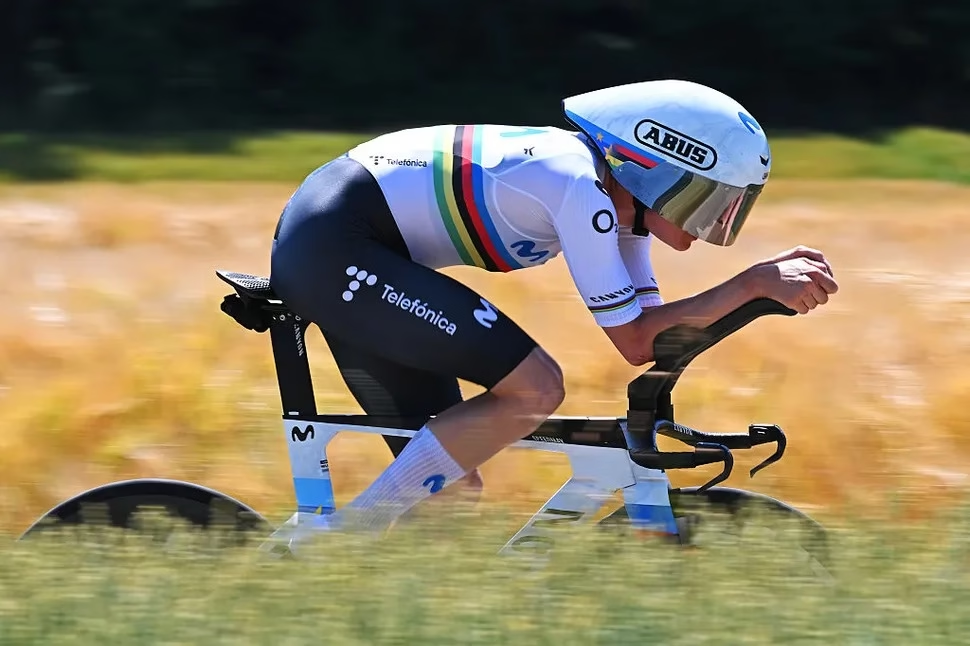 Photo Credit: Getty
Can Remco Evenepoel win yellow in 2026?
Yes, but he needs the race to stay balanced. The more the Tour becomes a pure climbing contest, the harder it is for him. The more the race is shaped by time-trials, positioning, pacing, tactical hesitation and controlled endurance, the better his chances become.
His biggest asset is still the stage 16 time-trial. If he reaches that day close to Pogačar and Vingegaard, he can change the race. Few GC riders can put the same pressure on rivals against the clock. Evenepoel can.
His biggest concern is the final week. The Alps are hard enough to expose any weakness, especially after a route that already includes the Pyrenees, Massif Central, Vosges and Jura. Evenepoel has to be more than a time-trial threat. He has to be a durable mountain contender for three weeks.
The most likely outcome is that he remains a podium candidate with a real chance to win the stage 16 time-trial. A yellow jersey challenge is possible, but it depends on him reaching the final week closer than he has often been expected to be in the high mountains.
Verdict
Remco Evenepoel’s Tour de France 2026 is built around a simple tension: the time-trials give him a route into the race, but the mountains decide whether that route leads to yellow.
The Barcelona team time-trial and stage 16 individual time-trial both suit him. His controlled preparation could leave him fresher than rivals who raced more in June. His move to Red Bull-BORA-hansgrohe gives him a team built with Tour ambition in mind.
But the GC questions remain. The Pyrenees come early, the middle mountain block is awkward, and the final Alpine weekend is punishing. Pogačar and Vingegaard still look better suited to the hardest climbing terrain.
Evenepoel can win the time-trial battle. To win the Tour, he has to stay close enough in the climbing battle for that to matter.