
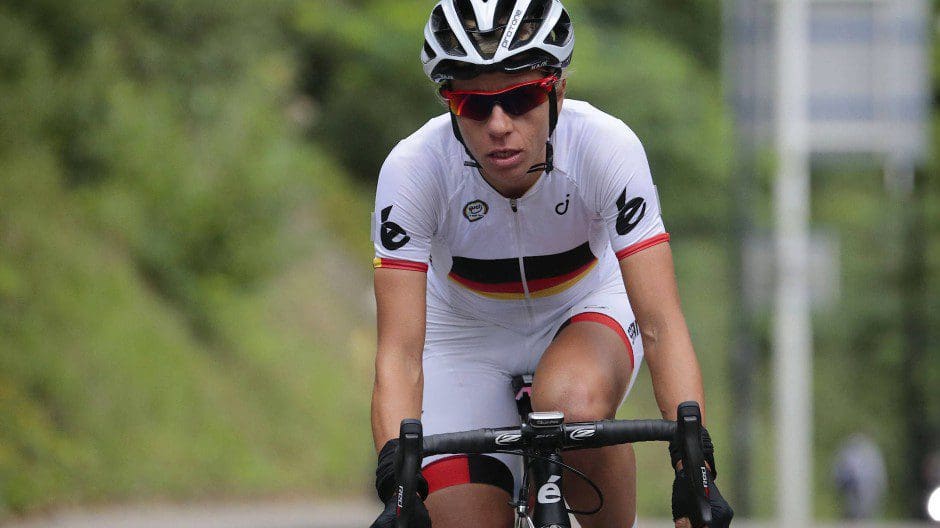
The roads that suited Trixi Worrack were rarely dramatic on paper. They were the roads that demanded patience, positioning and the ability to keep producing power through crosswinds, rolling terrain and nervous final kilometres.
That was always part of her appeal. Worrack was not a rider built around spectacle alone, but around accumulation. Repeated efforts, hard races, awkward conditions and the quiet authority of someone who understood where to be when the bunch began to fray.
Across more than two decades in the elite peloton, the German became one of the most versatile and dependable riders of her generation. She won the Tour de l’Aude, the Tour of California, the Ladies Tour of Qatar and Primavera Rosa, finished second in the World Championship road race and collected five team time trial world titles.
Her career was also defined by recovery. In 2016, Worrack lost a kidney after crashing at Trofeo Alfredo Binda. Eleven weeks later she returned to racing, then won the German time trial championship and competed at the Rio Olympics.
That combination of range, durability and tactical intelligence made Worrack more than an accomplished winner. She became one of the riders who carried women’s cycling from a less stable professional era into the structures of the modern peloton.
Trixi Worrack rider profile
Full name: Beatrix Worrack
Known as: Trixi Worrack
Born: 28 September 1981
Place of birth: Cottbus, East Germany
Nationality: German
Professional career: 2000 to 2021
Rider type: All-rounder and rouleur
Major stage-race victories: Tour de l’Aude, Tour of California and Ladies Tour of Qatar
World Championship road result: Silver medal in 2006
Team time trial world titles: Five
Olympic appearances: Five
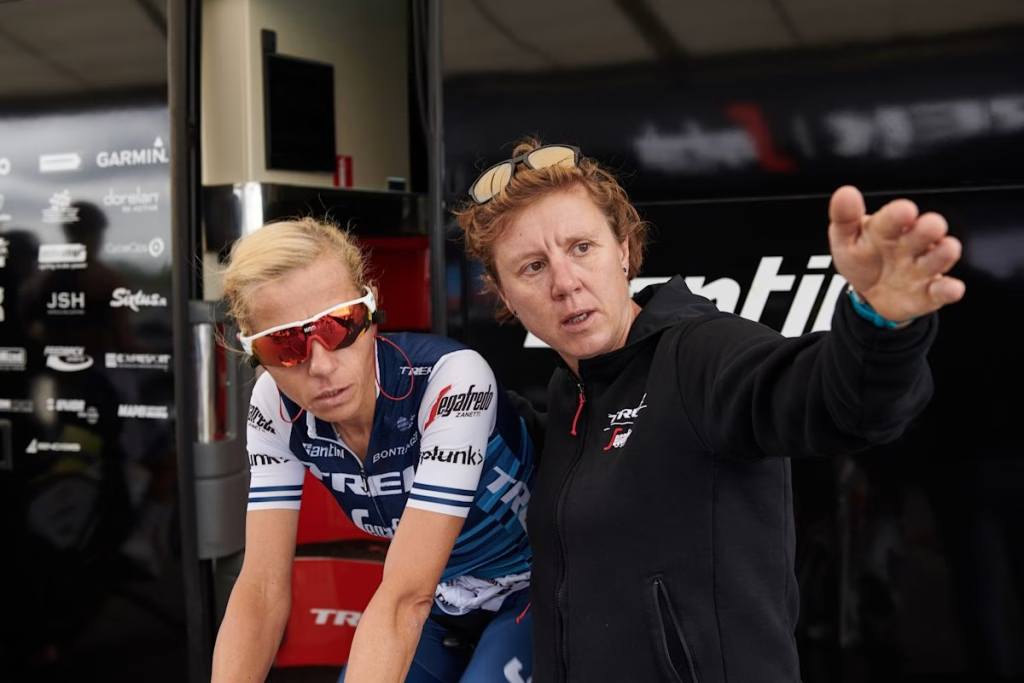
Current role: Assistant sports director with REMBE | rad-net Women
The rider who could do almost everything
Worrack’s value was rooted in versatility.
She had the sustained power of a rouleur, enough climbing ability to remain competitive across selective stage races and sufficient speed to finish from a reduced group. She could lead a team, support another rider or become the tactical option sent into a dangerous move.
In the language of the road, she was built for crosswinds, exposed plateaux and the long, unsettled approach to a finish where races are often decided through attrition rather than one dramatic attack.
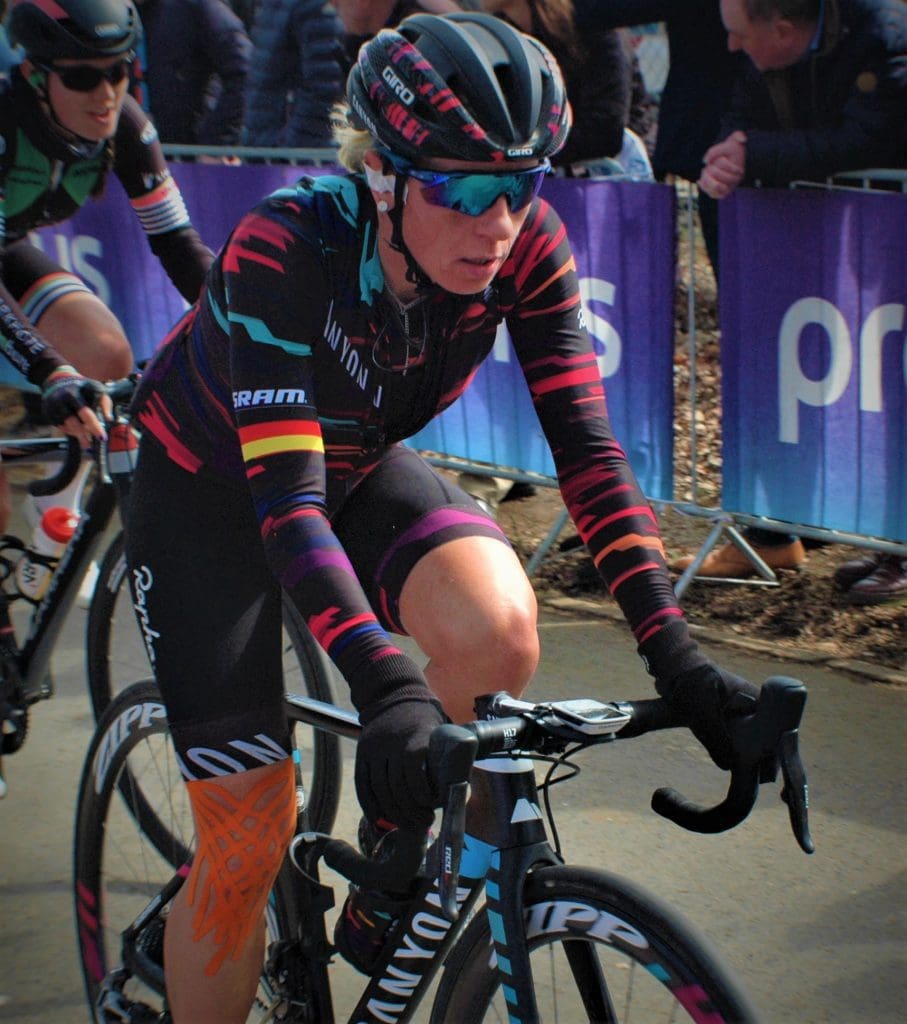
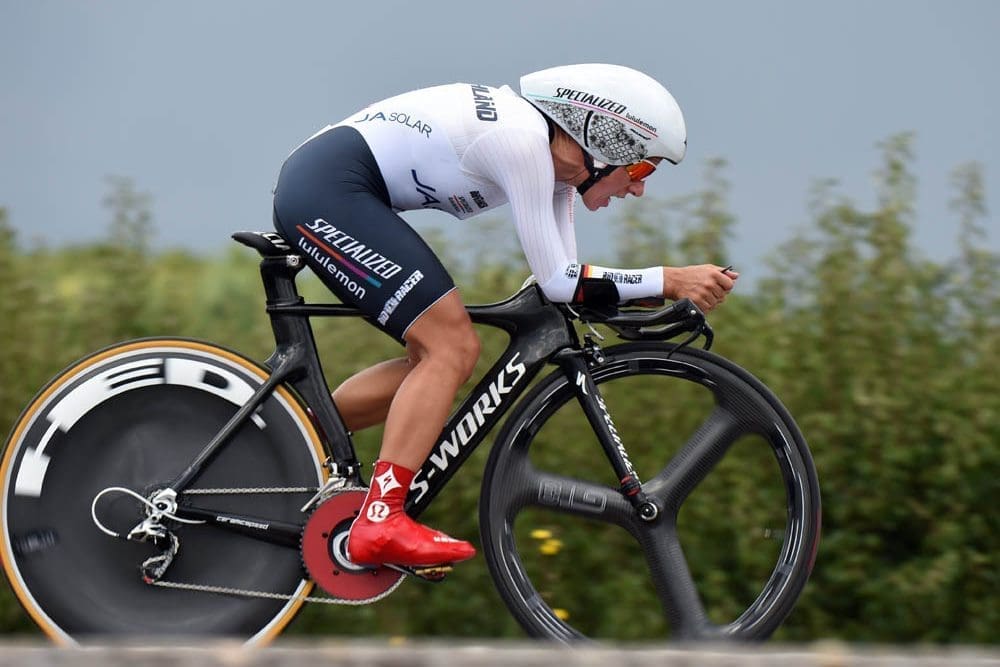
That breadth made her valuable to some of the strongest structures in women’s cycling. She rode for Equipe Nürnberger Versicherung, AA Drink-Leontien.nl, Specialized-lululemon, Velocio-SRAM, Canyon SRAM and Trek-Segafredo across a career spanning radically different phases of the sport.
Early in her career, Worrack was frequently the protected leader. Later, she increasingly became a road captain and support rider whose knowledge allowed teammates to win.
The transition did not diminish her importance. It demonstrated another form of it.
A junior world title hinted at what would follow
Worrack’s international career began before the women’s professional peloton had anything resembling its current structure.
She won the junior individual time trial at the 1998 World Championships in Valkenburg. The result immediately identified two qualities that would remain central throughout her career: sustained power and the ability to regulate an effort precisely.
Time trialling became only one part of her range, but it remained a foundation. Worrack could maintain speed over exposed roads, contribute heavily to team pursuits and remain composed during the long sections where tactical racing becomes a test of physical concentration.
Those qualities also explain why she became so successful in the team time trial. Worrack was not simply powerful enough to contribute. She understood pacing, formation and the discipline required to keep six riders functioning as one unit.
Winning the Tour de l’Aude established her as a major stage racer
One of Worrack’s defining victories came at the 2004 Tour de l’Aude Cycliste Féminin.
The Tour de l’Aude was one of the most important women’s stage races of its era, offering a varied and demanding programme across southern France. Winning it required far more than one strong climbing or time-trial performance.
Worrack had to manage repeated stages, defend her position and remain effective across changing terrain. The victory established her as one of the leading all-rounders in the international peloton rather than simply a young German time-trial prospect.
It also came during a period when women’s stage racing was often strong competitively but fragile organisationally. Major events could disappear with little warning, teams frequently depended on uncertain sponsorship and television coverage remained limited.
Worrack’s career helps connect that environment with the more visible WorldTour era that followed. The wider development of the sport can be explored through the Women’s Cycling History Hub.
Primavera Rosa and a near miss at the Tour of Flanders
Worrack was also an accomplished one-day racer.
She finished second behind Zulfiya Zabirova at the inaugural women’s Tour of Flanders in 2004, immediately demonstrating that she could survive difficult Flemish racing and remain competitive at the finish.
A year later, she won Primavera Rosa, the former women’s version of Milan-San Remo.
The race used the Ligurian roads associated with the men’s Monument and rewarded riders capable of managing distance, positioning and the late coastal climbs. Winning it required the kind of complete skill set that defined Worrack’s best racing.
She was not the fastest pure sprinter and was rarely the most explosive climber. Her advantage came from remaining competitive across every phase of a difficult race until her tactical intelligence became decisive.
The result remains especially valuable because Primavera Rosa disappeared after 2005. Worrack became the final winner of a race that should have occupied a more permanent place in women’s cycling.
A world championship silver medal in Salzburg
Worrack came close to winning the elite road race world title in 2006.
She finished second in Salzburg behind Marianne Vos, who was only 19 and competing in her first elite World Championship road race.
Worrack had entered the finish as one of the strongest riders in a small leading group, but Vos produced the acceleration that would announce the beginning of one of cycling’s greatest careers.
Silver remained one of Worrack’s finest individual results. It confirmed her ability to race under maximum pressure and compete against a field containing the best one-day riders in the sport.
It also illustrated the difficult historical position she occupied. Worrack was strong enough to win major races across several formats, but much of her career overlapped with riders such as Vos, Judith Arndt, Nicole Cooke and later Anna van der Breggen.
Her palmarès was built in direct competition with some of the defining figures of modern women’s cycling.
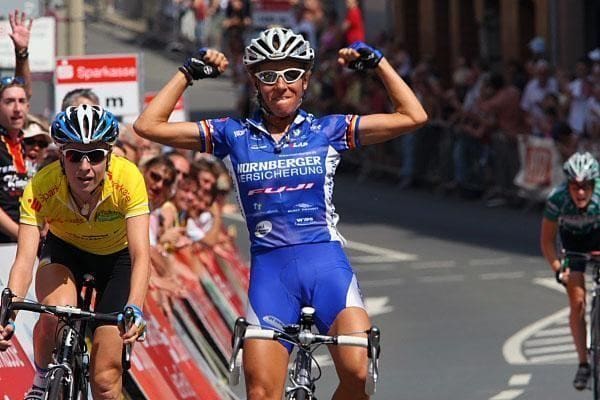
Tour of California victory through consistency
Worrack won the inaugural women’s Tour of California stage race in 2015.
The three-day event did not contain one climb or time trial capable of deciding the general classification by itself. Instead, it rewarded consistent positioning, tactical awareness and the ability to collect seconds across several different race situations.
That suited Worrack.
She finished the race ahead of Leah Kirchmann and Lauren Komanski, adding an important American stage-race victory to a career already containing success across Europe.
The result came during her final season with Velocio-SRAM, when Worrack was increasingly recognised as one of the most experienced road captains in the peloton. She could still win a general classification while simultaneously contributing to one of the most sophisticated team structures in women’s cycling.
The victory was another reminder that reliability could itself become an attacking quality. Worrack did not need one overwhelming performance when she could repeatedly avoid mistakes that cost other riders time.
Crosswinds deliver the 2016 Tour of Qatar
Worrack began the 2016 season by winning the Ladies Tour of Qatar.
The race was built around exposed desert roads, crosswinds and aggressive positional racing. There were no major mountains, but the physical and tactical demands could be severe whenever the peloton split into echelons.
It was almost an ideal Worrack race.
She had the power to remain near the front when the wind strengthened and the experience to recognise the decisive moment before a split became impossible to cross. Canyon SRAM used its collective strength effectively, helping Worrack secure the final overall classification.
The victory showed how much of her racing intelligence was rooted in anticipation. A crosswind race is rarely saved after the decisive echelon has formed. The rider must already be positioned correctly when the road changes direction and the strongest team accelerates.
Worrack made those decisions earlier and more consistently than most.
Her record in these races is explored further in the existing ProCyclingUK profile of Trixi Worrack as one of the great Spring Classics riders.
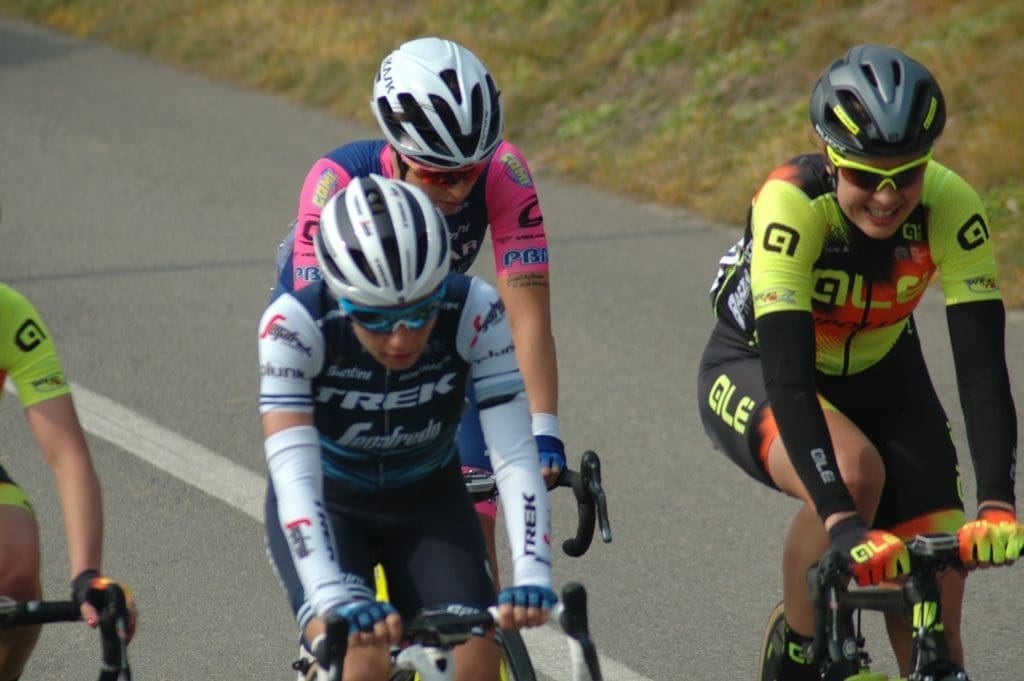
Five team time trial world titles
Worrack became the most successful rider of the trade-team time trial era at the World Championships.
She was part of the winning Specialized-lululemon and Velocio-SRAM squads in 2012, 2013, 2014 and 2015, then added a fifth title with Canyon SRAM in 2018.
The format demanded precision. Six riders began together, with the team’s finishing time normally taken from its fourth rider. Every member had to understand the strengths of those around her, regulate the length of each turn and avoid creating a pace that fragmented the formation.
Worrack was central to that system.
She combined the physical capacity to take long turns with the judgement needed to keep the team moving smoothly. Her presence connected several versions of the same project as Specialized-lululemon became Velocio-SRAM and later Canyon SRAM.
The 2018 victory in Innsbruck was particularly significant. Canyon SRAM defeated the favoured Boels Dolmans and Team Sunweb squads, giving Worrack a record fifth title in the final edition of the trade-team event at the World Championships. (Cyclingnews)
The achievement captures the collective side of her career. Worrack won major races individually, but some of her most important work involved making a team faster and more reliable as a unit.
A crash that cost her a kidney
Worrack’s career changed dramatically at the 2016 Trofeo Alfredo Binda.
She crashed on a descent and sustained severe damage to her left kidney. Initial surgery could not preserve the organ, and it was subsequently removed. The injury was life-threatening and created immediate uncertainty over whether she would race again. (Cycling Weekly)
This was not simply a broken bone with a predictable recovery timetable. Worrack had to adjust physically and psychologically to living and competing with one kidney while rebuilding the fitness required for elite cycling.
She returned to racing after only 11 weeks.
Later that month, she won the German individual time trial championship. The result was extraordinary not because it completed a sentimental comeback narrative, but because it demonstrated that she had returned at a genuinely competitive level.
Worrack then represented Germany at the Rio Olympics and continued racing professionally for another five seasons. Her recovery became one of the clearest examples of the resilience that had always underpinned her career.
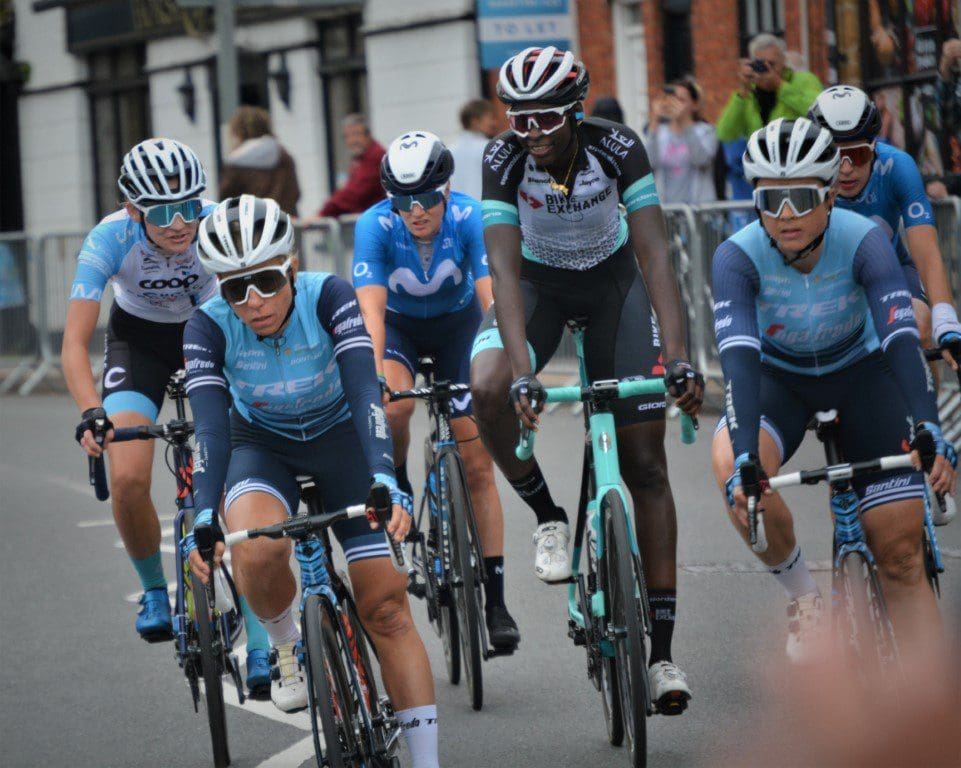
Five Olympic Games across 17 years
Worrack represented Germany at five editions of the Olympic Games.
She competed in Athens in 2004, Beijing in 2008, London in 2012, Rio in 2016 and Tokyo in 2021. The first and final appearances were separated by 17 years, an unusually long span at the highest level of an endurance sport.
Each Olympic cycle arrived in a different phase of her career.
In the earlier editions, Worrack was a leading individual contender and established stage racer. By Tokyo, she was one of the peloton’s most experienced road captains, valued for her tactical contribution as well as her own result.
Five selections reflect more than longevity. National teams are small, and Olympic places are contested by riders from every generation. Worrack repeatedly remained useful enough to justify selection as German cycling changed around her.
Her Olympic record is included within ProCyclingUK’s wider guide to women’s Olympic road race history.
National titles across different phases of her career
Worrack’s German championship record also demonstrated her adaptability.
She won national titles on the road and against the clock across a period spanning more than a decade. Her road race victories reflected tactical strength and the ability to finish from selective groups, while her time trial titles confirmed the sustained power that remained central throughout her career.
The 2016 time trial victory carried the greatest emotional weight because it came so soon after the removal of her kidney.
She successfully defended the title in 2017, showing that the comeback was not one exceptional afternoon created by adrenaline and circumstance. Worrack had returned as a durable elite athlete rather than merely a rider able to complete races.
From leader to road captain
One of the strongest features of Worrack’s career was her ability to change roles without losing relevance.
She spent the earlier years as a rider expected to win stage races and Classics. As new leaders emerged, she increasingly became the experienced presence responsible for positioning, controlling moves and translating the team plan into decisions made inside the peloton.
That is a difficult transition.
A former leader must accept that the best use of her strength may now be protecting someone else. At the same time, a successful road captain cannot become passive. She must still recognise opportunities, react quickly and sometimes abandon the original plan when the race changes.
Worrack managed that shift because her value had never depended entirely on personal results.
She understood how races developed. That remained useful regardless of whose name appeared at the top of the result sheet.
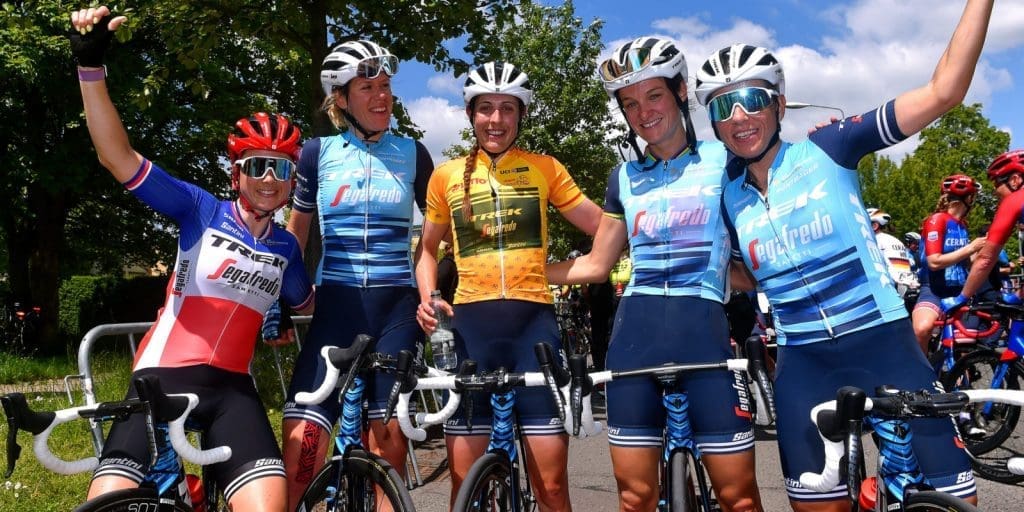
Specialized-lululemon, Velocio-SRAM and Canyon SRAM
Worrack spent seven seasons within the team lineage that ran from Specialized-lululemon through Velocio-SRAM to Canyon SRAM.
It was one of the defining women’s programmes of the period, particularly in the development of equipment, aerodynamic preparation and team time trial performance.
Worrack provided continuity as sponsors and team identities changed. She understood the systems that made the squad successful and could help integrate new riders into them.
The team demanded precision. Lead riders needed protection, breakaways had to be controlled and time-trial formations required every rider to execute a carefully defined role.
Worrack was ideally suited to that environment because reliability was one of her competitive strengths. She could improvise when necessary without abandoning the wider structure of the race plan.
Her five team time trial world titles were the clearest result of that relationship, but her broader contribution was visible across hundreds of less celebrated kilometres.
The history of projects such as these can be explored through ProCyclingUK’s Women’s Cycling Team History hub.
Trek-Segafredo and the final chapter
Worrack joined Trek-Segafredo for the team’s inaugural women’s season in 2019.
By then, she was one of the oldest and most experienced riders in the WorldTour peloton. Trek did not recruit her simply to add another potential winner. The new programme needed riders who understood how successful teams functioned.
Worrack brought two decades of experience across stage racing, Classics, national teams and championship preparation. She could support the team’s leaders while helping establish standards for a squad still building its identity.
Her final professional race came at the 2021 Women’s Tour in Britain. She had originally intended Paris-Roubaix Femmes to be her farewell, but remained available when injuries reduced Trek’s squad for the following race.
That was an appropriate final act. Even after deciding to retire, Worrack postponed the ending because her team needed her.
She left professional racing with 47 career victories after competing through two decades of enormous change in women’s cycling. Trek described her as a team-first rider whose influence extended far beyond her personal results. (Trek Race Shop)
What Trixi Worrack is doing now
Worrack remained involved in cycling after retiring.
She initially moved into coaching and development work in Thüringen, applying her experience to women and junior riders in the region. She later joined the revived LKT Team Brandenburg project as part of its sporting staff.
In 2026, Worrack is listed by the UCI as an assistant sports director with REMBE | rad-net Women, the German Continental team that developed from the rad-net structure. (UCI)
The role is a natural continuation of her racing career.
Worrack understands the demands placed on leaders and domestiques because she performed both jobs. She knows how quickly tactics can change inside a crosswind, how much responsibility a road captain carries and how a rider may need to be managed after a crash or difficult return.
Her presence also gives younger German riders a direct connection to an earlier generation of professional women’s cycling. Worrack competed before the Women’s WorldTour existed and remained active long enough to race within it for several seasons.
ProCyclingUK previously covered her move into team leadership when LKT Team Brandenburg returned with a women’s Continental squad.
-
 Photo Credit: Getty
A rider who connected different eras
Worrack’s career began when many leading women’s races received little broadcast coverage and professional teams could disappear between seasons.
It ended with WorldTour status established, major manufacturers investing directly in women’s squads and events such as Paris-Roubaix Femmes entering the calendar.
She did not merely witness that transition. She contributed to it from inside some of the teams pushing the sport towards greater professionalism.
Riders such as Worrack gave those structures credibility. They arrived prepared, executed complex tactical roles and demonstrated that women’s racing already contained the performance standards required of a fully professional sport, even when its commercial treatment lagged behind.
That is why her importance cannot be reduced to a tally of victories.
The wins matter, particularly the Tour de l’Aude, Primavera Rosa, Tour of California and Tour of Qatar. The world silver medal and five team time trial titles matter too.
Her deeper significance lies in the standards she represented across more than 20 seasons.
Why Trixi Worrack remains worth remembering
Worrack represents a type of rider that cycling history can undervalue.
She was a major winner, but also someone whose practical qualities helped make other victories possible. She could lead a stage-race team, survive a difficult Classic, ride a disciplined team time trial or spend the decisive kilometres protecting another rider.
She raced efficiently, intelligently and with little need for fuss.
Her recovery from losing a kidney became the most dramatic example of her resilience, but that resilience existed throughout her career. It was present in the repeated Olympic cycles, the changing team structures and the willingness to evolve from leader into road captain.
The Women’s Cycling Rider History hub brings together the wider group of champions, specialists and team riders who shaped the sport across different generations. Worrack belongs prominently within it.
She won major races, survived the incident that threatened to end her career and remained valuable until her final start.
Trixi Worrack was not only one of the peloton’s most resilient winners. She was one of the riders who made elite women’s cycling more complete.

