
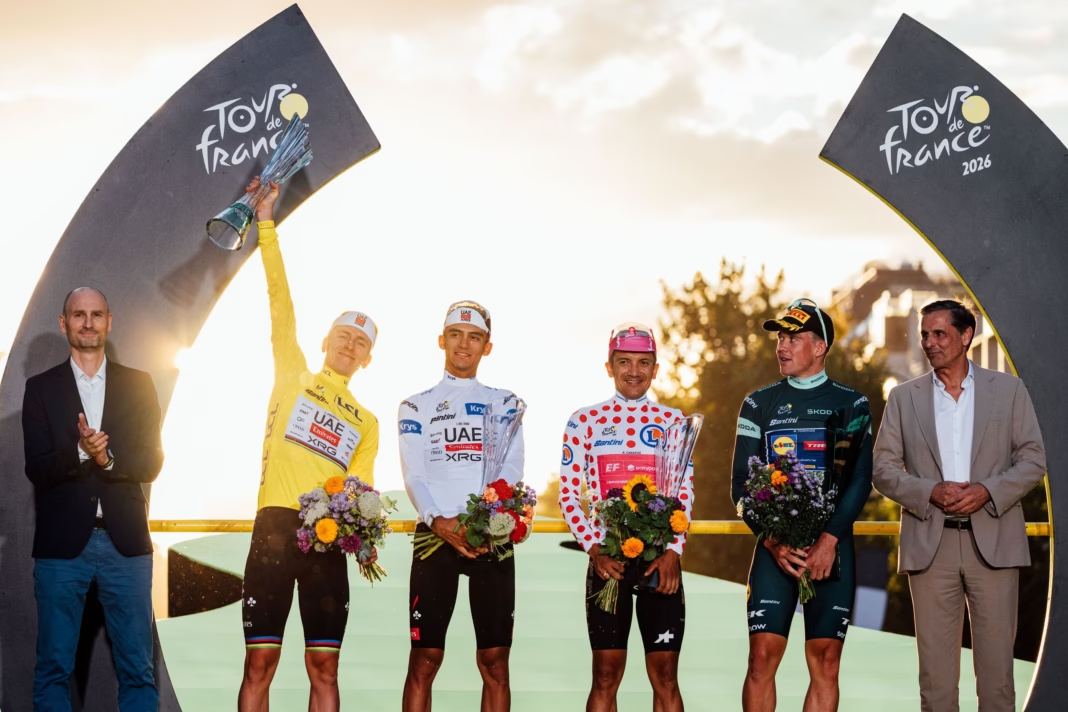
The Tour de France is over, but the 2026 cycling season has not been settled by it.
Tadej Pogačar leaves Paris with his fifth yellow jersey, five stage victories and a stronger claim than ever to being the defining rider of his generation. Remco Evenepoel converted a complicated Tour into second overall and two stage wins. Isaac del Toro and Paul Seixas emerged as genuine Grand Tour figures rather than riders for some distant future, while Mads Pedersen and Richard Carapaz leave France with classification victories that reshape how their seasons will be judged.
Then there is Jonas Vingegaard. The rider who began the Tour as Pogačar’s principal rival left it after a Stage 15 crash and fractured collarbone, turning the second half of his year into a recovery story rather than a continuation of the yellow jersey battle.
The Tour is the biggest race of the season, but July does not exist in isolation. What happened over three weeks from Barcelona to Paris will influence the Vuelta a España, the World Championships, autumn Classics, transfer decisions and the way teams begin planning for 2027.
The final Tour de France 2026 results tell us who won. The more interesting question now is what those results change.
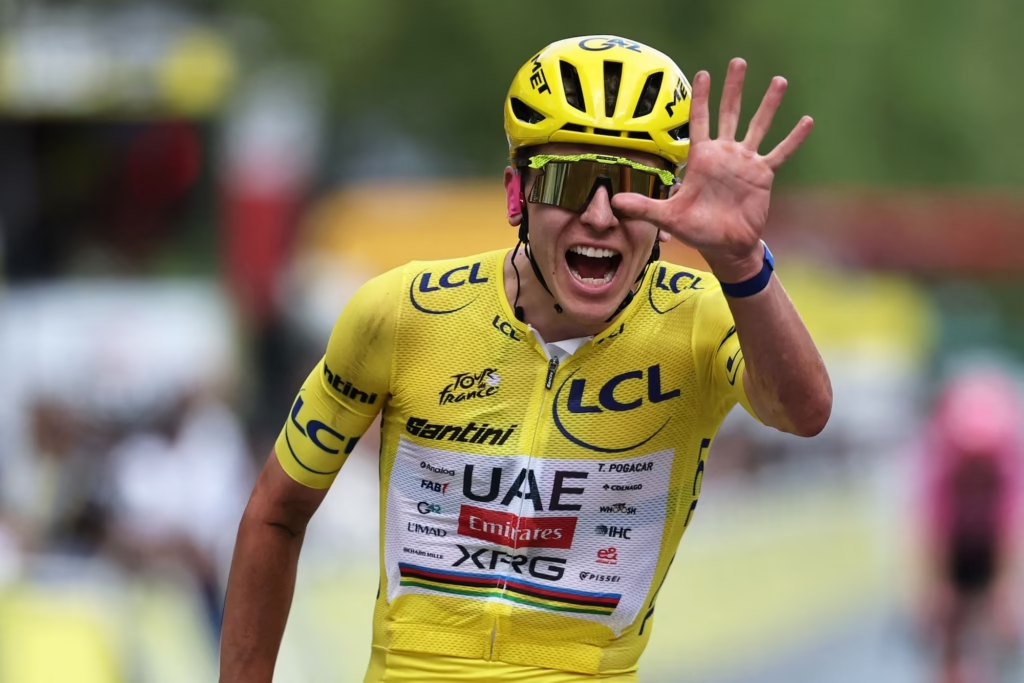 Photo Credit: Getty
Pogačar leaves July with almost nothing left to prove
Pogačar’s fifth Tour victory moves him alongside Jacques Anquetil, Eddy Merckx, Bernard Hinault and Miguel Induráin at the official record of five wins. He has reached that number at 27, younger than any of them, while five more stage victories in 2026 have taken him to 26 for his Tour career.
The immediate temptation is to start talking about 2027 and the possibility of a record-breaking sixth yellow jersey. That will inevitably become one of the central narratives of next season, but the more immediate question is what Pogačar wants from the rest of 2026.
He has already won the biggest race of the year. Anything he does from here adds breadth rather than rescuing or validating a season.
That gives him unusual freedom.
The Vuelta remains the obvious missing Grand Tour from his palmarès, while the World Championships provide another route towards strengthening the all-round historical case that increasingly frames comparisons with Merckx. The question is no longer whether Pogačar can win enough to make 2026 successful. It is how much more he wants to add.
The complete story of Pogačar’s five Tour de France victories puts that achievement into its historical context. The rest of this season begins from a position few riders ever reach.
A Pogačar Vuelta start would reshape the final Grand Tour
If Pogačar decides to race the Vuelta, the entire general classification picture changes before the race begins.
He has already won the Giro and Tour during his career, leaving Spain as the missing piece of the Grand Tour collection. At 27 there is no urgency in the sense that this is his final opportunity, but there may never be a point when the storyline fits more naturally.
Pogačar leaves the Tour as the strongest stage racer in the world. He does not need August to rebuild confidence or rediscover form. The argument against Spain is workload rather than ability.
Another three-week Grand Tour would add substantially to a season that has already demanded a huge amount from him, while it could complicate preparation for the World Championships. That makes his decision relevant far beyond UAE Team Emirates-XRG.
If Pogačar starts the Vuelta, there is an obvious benchmark everyone else has to beat. If he does not, the red jersey becomes much more open.
Few post-Tour programme decisions can change a race so dramatically.
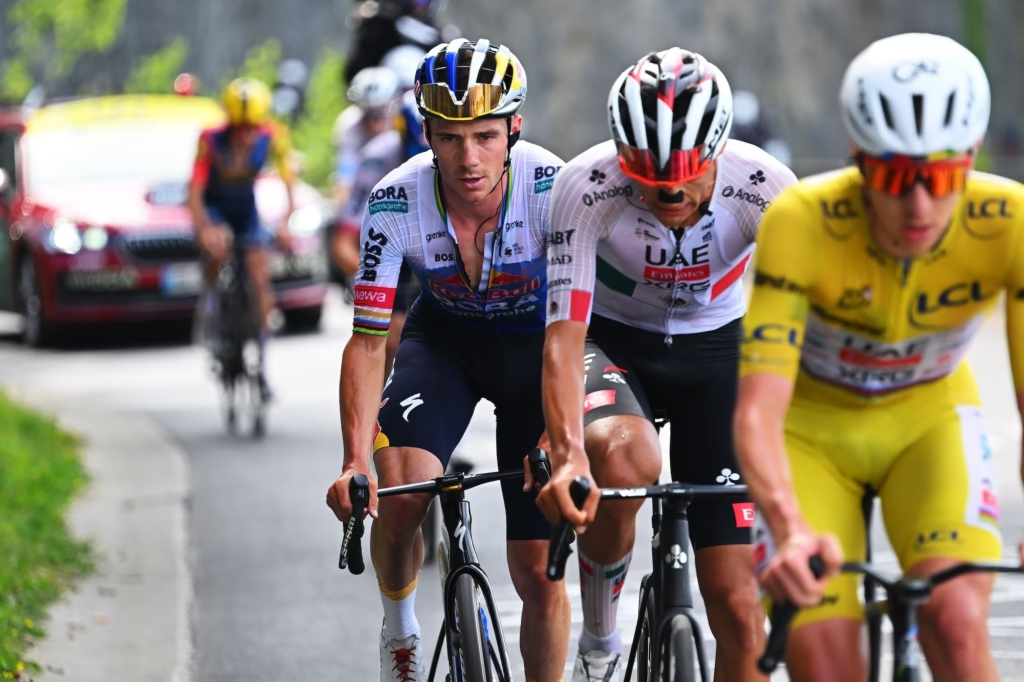 Photo Credit: Getty
Evenepoel leaves France with more than second place
Remco Evenepoel finished 6:26 behind Pogačar, a margin large enough to show that he was not genuinely close to winning yellow by Paris.
That should not turn his Tour into a failure.
Evenepoel won Stage 15 at Plateau de Solaison before dominating the 26.1km individual time trial two race days later, beating Pogačar by 28 seconds. His Stage 16 victory strengthened his grip on second overall and changed the tone of a Tour in which his climbing had previously come under pressure.
The mountain win was particularly significant. The recurring question around Evenepoel in Grand Tours has never been whether he can time trial with the best. It is whether he can remain close enough through the biggest mountain stages for that advantage to matter.
Solaison did not prove he can match Pogačar across every major climb. It did show that his stage-racing ceiling continues to move.
He leaves France as Tour runner-up with two victories rather than simply the rider who finished six minutes behind Pogačar.
Red Bull now has a much clearer Tour project
Evenepoel’s result also matters for Red Bull-Bora-hansgrohe.
The team now has direct evidence that its Tour project can deliver a podium and stage victories at the highest level. Evenepoel did not win yellow, but the central problem has become much more specific.
The question is no longer whether he can build a three-week Tour campaign around himself.
He can.
The question is how Red Bull finds six minutes against Pogačar while retaining the time-trial advantage and improving the mountain support around its leader.
Florian Lipowitz’s withdrawal after crashing during the Stage 16 time trial removed another major part of the team’s GC structure. That makes Evenepoel’s ability to hold second through the final Alpine stages more important rather than less.
Red Bull enters the next Tour cycle knowing the project works.
It also knows exactly how far there is still to go.
Vingegaard’s season was interrupted rather than answered
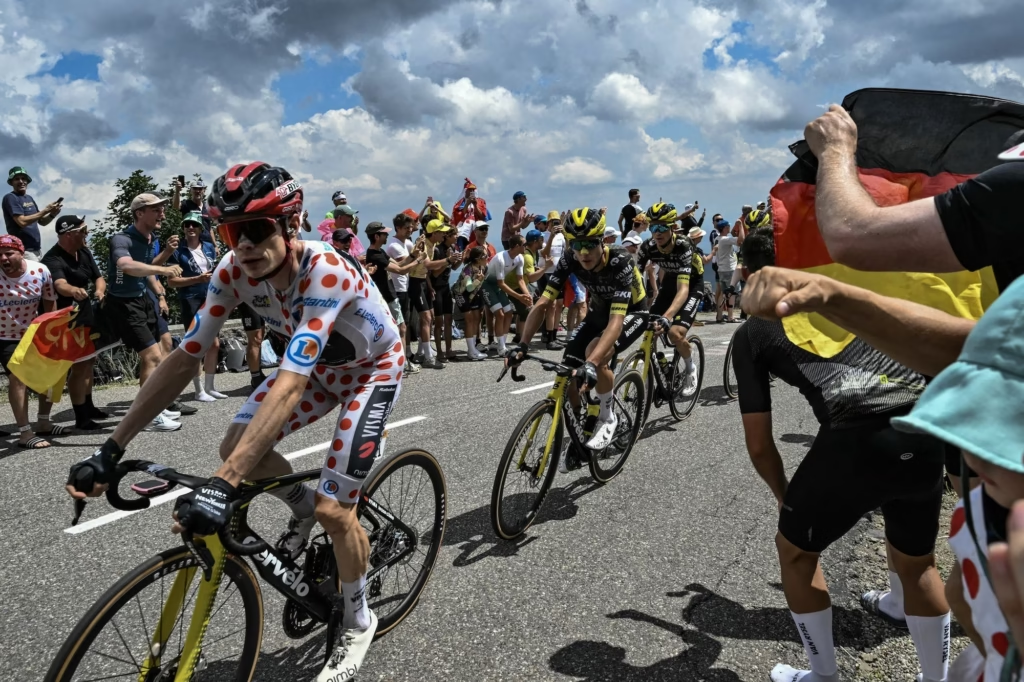
The 2026 Tour never gave us a complete conclusion to the Pogačar-Vingegaard rivalry.
Pogačar had already built a significant lead before Vingegaard crashed in Bonneville on Stage 15, so there is no serious case that Vingegaard was controlling the race before his withdrawal. Pogačar had inflicted the biggest blow on Stage 6 over the Tourmalet and towards Gavarnie-Gèdre and remained clearly ahead when the crash happened.
But Vingegaard was removed before the final Alpine block where he would have had his last opportunity to change the race.
His Stage 15 abandonment therefore leaves an awkward combination of answers and unanswered questions. Pogačar had been better. We never saw whether Vingegaard could produce one final attempt to reverse it.
The immediate issue is now his fractured collarbone and the recovery from surgery. As our look at what happens after Vingegaard’s collarbone fracture explains, being able to train again is not the same as being ready to race a Grand Tour or World Championship.
Any Vuelta ambitions now depend on recovery rather than calendar preference.
Del Toro has stopped being a future Grand Tour contender
Isaac del Toro’s third place may prove to be one of the most important results from the Tour when looking beyond 2026.
Before the race, his talent was already obvious. After Paris, there is no need to describe him as somebody who might one day become a Tour podium rider.
He already is one.
Del Toro won Stage 2 in Barcelona, remained around the front of the general classification for three weeks and eventually finished third at 9:42 while winning the white jersey. His battle with Seixas remained alive until the final mountain day, when he started with only 24 seconds in hand and ended with a 2:14 advantage.
The tension before that stage is captured in Del Toro vs Seixas: 24 seconds heading into the final mountain stage.
The result creates a problem UAE will be delighted to have. Pogačar remains the obvious Tour leader, but a rider who has finished third at his first Tour cannot indefinitely be treated only as a domestique at every major Grand Tour.
 Photo Credit: Getty
UAE’s greatest problem may be finding enough leadership races
Pogačar winning the Tour and del Toro finishing third represents almost absurd success for one team.
It also complicates the future.
UAE already has enough stage-racing depth to spread leaders across the calendar, but del Toro’s Tour has accelerated the question of how quickly he deserves his own Grand Tour programme. He demonstrated in France that he could work within Pogačar’s structure while defending his own podium position.
That does not necessarily mean it is the best long-term use of him.
In 2026 this is a luxury. Pogačar has five Tours and del Toro has his first podium.
By 2027 or 2028, leadership decisions could become much more difficult if del Toro continues improving.
The Tour may eventually become the race that revealed UAE’s biggest advantage and its most complicated internal question at the same time.
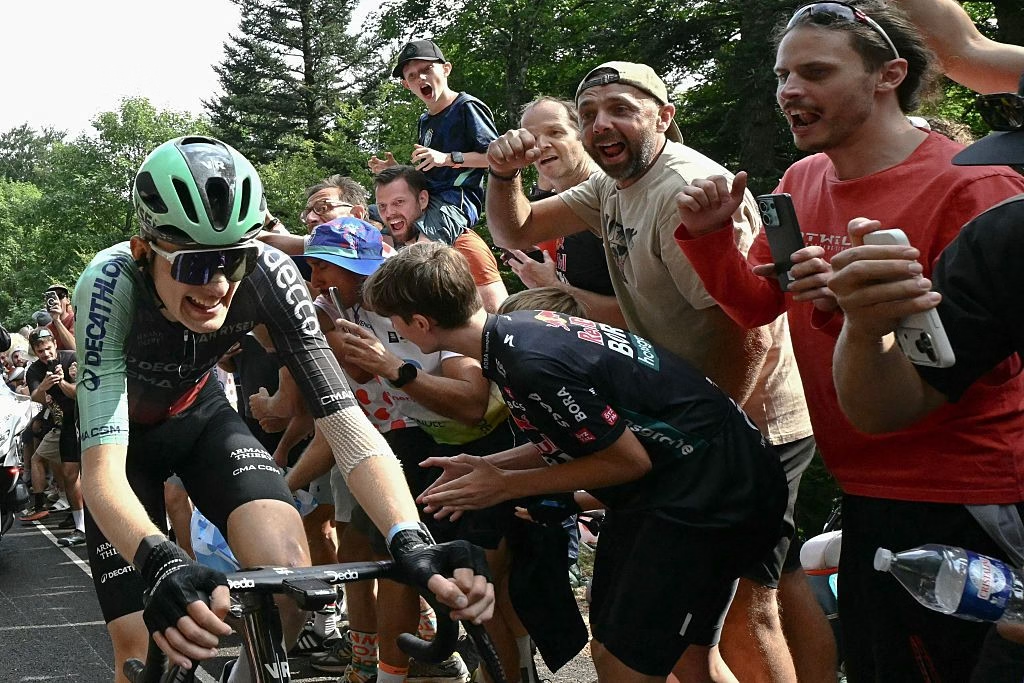
Seixas has forced France to move the timeline forward
Paul Seixas finishing fourth overall at 19 changes expectations whether anyone wants it to or not.
Before July, it was easy to frame him as one of the brightest prospects in the sport. Finishing 11:56 behind Pogačar and only 2:14 away from a Tour podium makes that description feel immediately outdated.
France will inevitably begin asking when Seixas can challenge for yellow.
That is not necessarily useful for the rider.
Decathlon CMA CGM’s challenge now is to use fourth place as evidence of what Seixas can become without making it the minimum standard he must improve upon every July. He still has years of physical development ahead and should not need to turn his entire career into an attempt to end the French wait for a Tour winner.
His 2026 result should expand his options.
It should not narrow them.
The French GC picture suddenly has depth
Seixas was not the only French rider to leave the Tour with a major overall result.
Lenny Martinez finished fifth and Jordan Jegat 10th, putting three French riders inside the final top 10. That does not suddenly mean France has found the rider guaranteed to win the Tour, but it does change the conversation.
For years, French hopes have often become concentrated around one supposed future winner. The 2026 Tour produced several different routes towards success instead.
Seixas has the extraordinary age and apparent ceiling. Martinez has developed into a serious Grand Tour climber. Jegat gave TotalEnergies a top-10 result in a race increasingly dominated by bigger WorldTour programmes.
There remains a substantial gap to Pogačar.
At least France no longer needs to place every expectation on one set of shoulders.
Pidcock’s ninth confirms GC is no longer an experiment
Tom Pidcock’s ninth place has similar implications for British cycling.
His first Tour top 10 follows third overall at the 2025 Vuelta and gives much stronger evidence that general classification racing is a genuine part of his future rather than an occasional experiment.
The Tour also showed the limitations.
Pidcock moved to fourth overall after using the Stage 13 breakaway to gain significant time, but the final Alpine block pushed him back to ninth. He could survive around the podium conversation for much of the race, but consecutive major mountain stages eventually favoured the more conventional Grand Tour climbers.
As explored in our UK-focused look at what Pidcock’s first Tour top 10 means, the important result is not that he must now turn himself into a pure GC rider.
It is that he has options.
Pidcock can begin future Grand Tours with the overall classification as a serious objective and still retain the ability to change direction towards stage hunting if the race moves away from him.
Carapaz transformed his season in three days
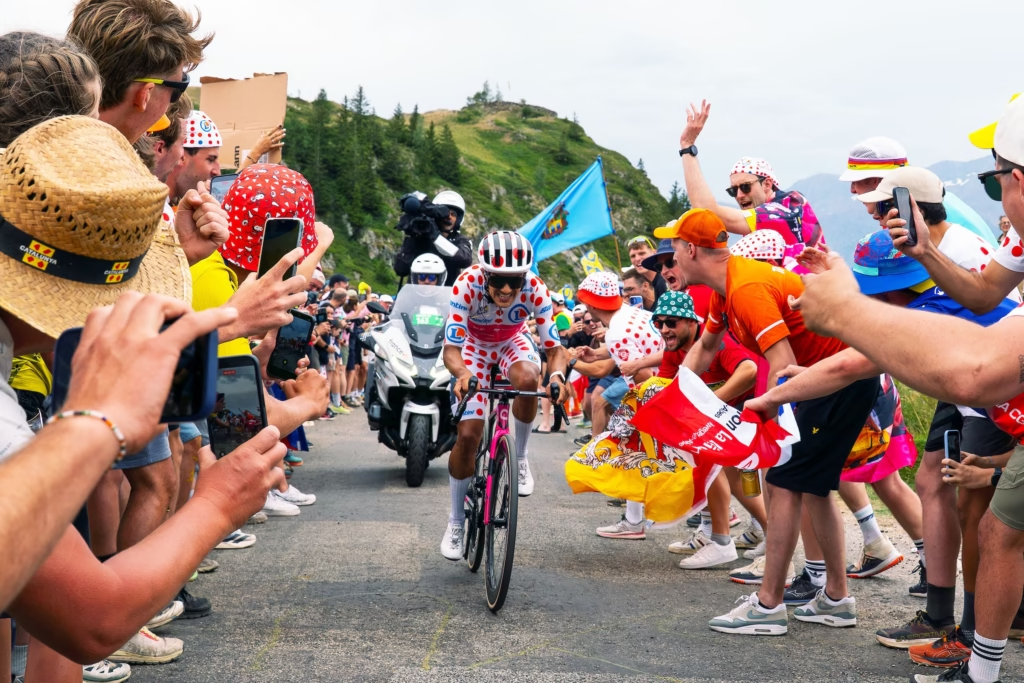
Few riders changed the narrative around their year as dramatically as Richard Carapaz.
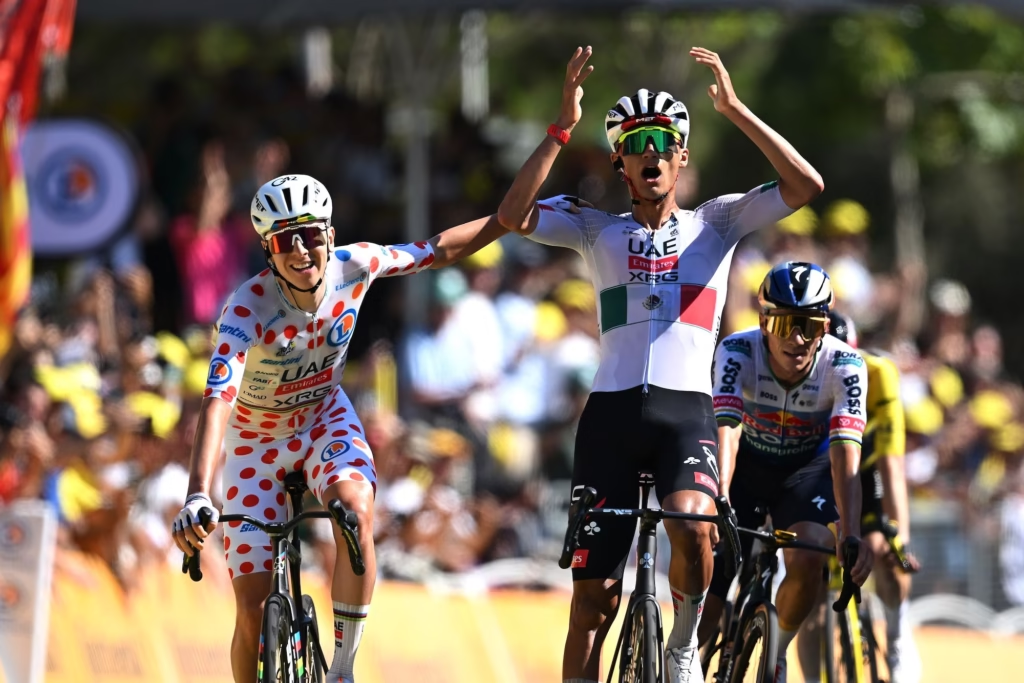
He reached the final Alpine block without a stage victory and left France with wins at Orcières-Merlette and Alpe d’Huez, the polka-dot jersey, eighth overall and the Super Combativity award.
The full story of Carapaz’s two stage wins and mountains jersey shows how quickly his Tour changed once he stopped being defined primarily by his GC position.
On Stage 18 he attacked from the breakaway and won at Orcières-Merlette. Two days later he collected 50 mountain points across the Croix de Fer, Télégraphe and Galibier, mathematically secured the polka-dot jersey and then won again after Sepp Kuss crashed twice on the final descent.
Carapaz no longer needs another major result later in 2026 to make the season successful.
The Tour has already done that.
What it may encourage is more of the same aggressive racing rather than another attempt to protect a marginal GC position. At 33, Carapaz remains at his most dangerous when he is given freedom to attack rather than asked to ride conservatively.
Pedersen’s green jersey reinforces what kind of rider he has become
Mads Pedersen’s points classification victory is also bigger than the jersey itself.
He did not win green by being the fastest pure sprinter.
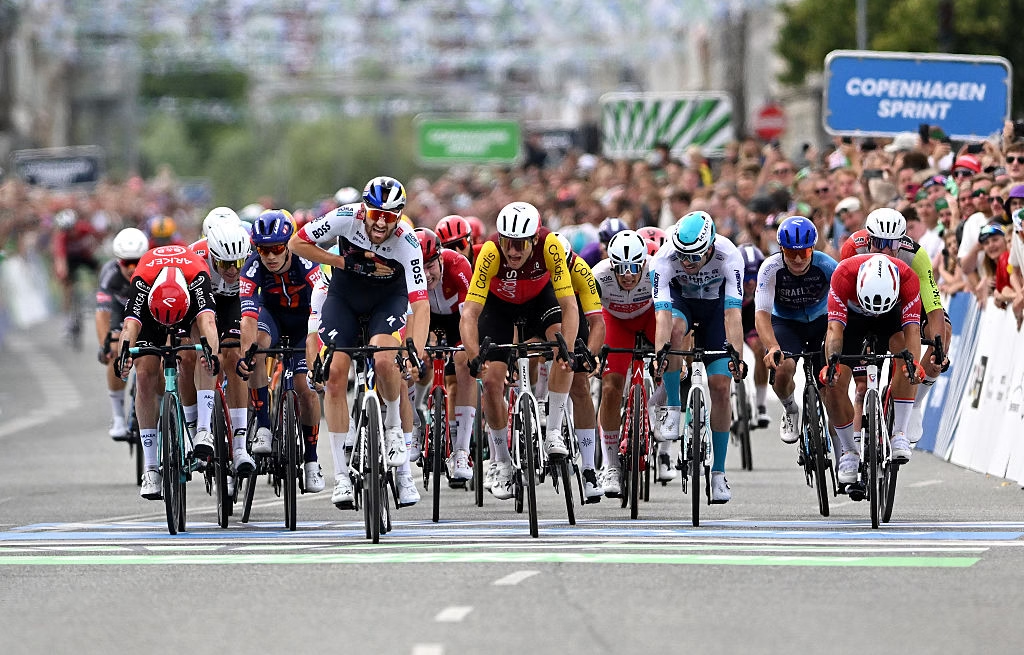
Tim Merlier won three stages. Jasper Philipsen won in Voiron. Olav Kooij and Søren Wærenskjold also beat the sprint field during the race.
Pedersen won the classification by scoring on almost every type of terrain. He won Stage 4 in Foix, took intermediate sprints and went into mountain breakaways when the pure sprinters could not follow. The possibility had been clear early in the race when we looked at whether Pedersen could win green, but the way he eventually did it demonstrated the full value of his versatility.
That matters for the rest of the season because the same qualities transfer directly into one-day racing.
Pedersen can sprint.
More importantly, he can still sprint after the race has become too hard for most other sprinters.
Green does not change his rider type.
It confirms why that rider type is so valuable.
Van der Poel leaves Paris with momentum
Mathieu van der Poel’s Tour ended almost perfectly.
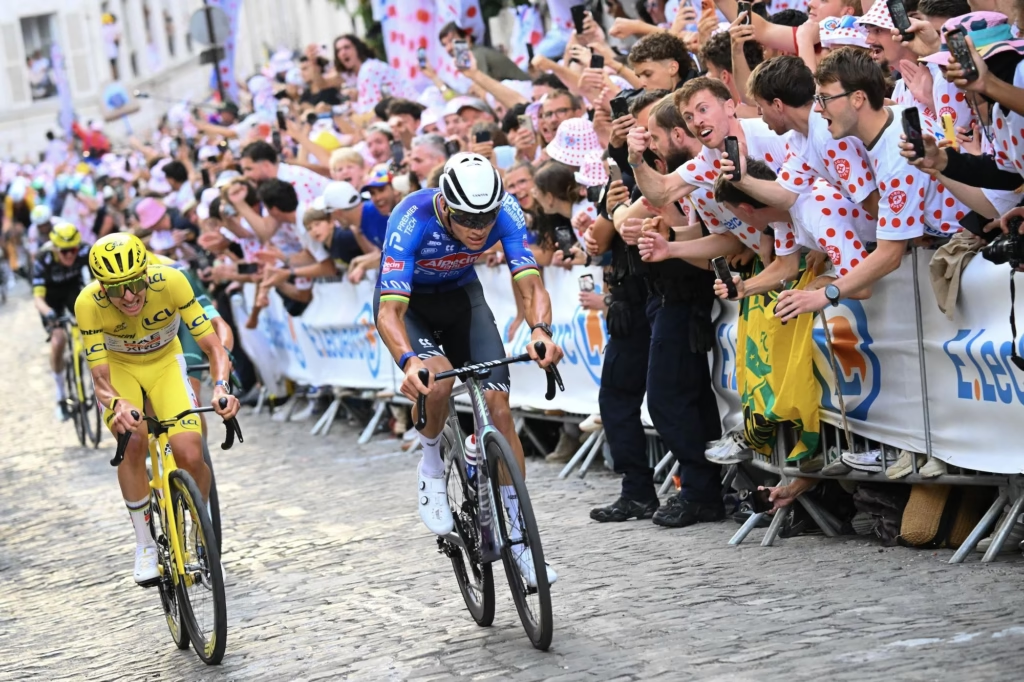
He won Stage 9 from the breakaway in Ussel and then won again on the final day in Paris, attacking the last Montmartre ascent with Pogačar before somehow holding off the peloton on the Champs-Élysées.
The full Tour de France 2026 review captures how unusual that finale became after wildfires forced the route to be shortened but Montmartre remained.
For Van der Poel, that distinction matters because the Tour is only one part of a broader season. He does not leave Paris needing to protect a GC position or recover psychologically from a three-week overall campaign.
He leaves with two victories and one of the defining images of the final stage.
That gives him momentum for whichever targets come next, rather than simply relief that July is over.
The World Championships will rearrange the Tour hierarchy
It is tempting to look at the Tour and simply carry its strongest riders directly into World Championship favouritism.
One-day racing rarely works so neatly.
National teams replace trade teams. There is no three-week hierarchy to protect. A rider who was a domestique in France can become a leader, while somebody who dominated the Tour can be isolated without their familiar support structure.
The Tour still gives us useful evidence.
Pogačar leaves France as the obvious reference point if the course suits him.
Evenepoel found some of his best form late in the race and remains one of the most dangerous long-range attackers in the sport, as well as a benchmark against the clock.
Van der Poel has just won twice.
Pedersen has demonstrated exceptional three-week endurance.
Carapaz has spent the final week attacking almost everything available to him.
The World Championships will not repeat the Tour.
They will take many of its strongest riders and ask them to solve a completely different race.
The Vuelta can rescue seasons that France damaged
The Tour also creates motivation through disappointment.
Some riders leave Paris with everything they wanted and can afford to structure the rest of the year around selective targets.
Others leave without the stage win, GC result or classification they expected.
The Vuelta becomes especially important for the second group.
That is one reason the final Grand Tour of the season often has such an unusual field. Some riders have targeted Spain for months, while others arrive because crashes, illness or poor form changed their original plans elsewhere.
Vingegaard’s injury makes his involvement uncertain.
Pogačar’s decision could make the race significantly harder for everybody else.
Other GC riders may arrive precisely because their Tour did not produce enough.
Paris therefore does not merely finish one Grand Tour.
It rearranges the next one.
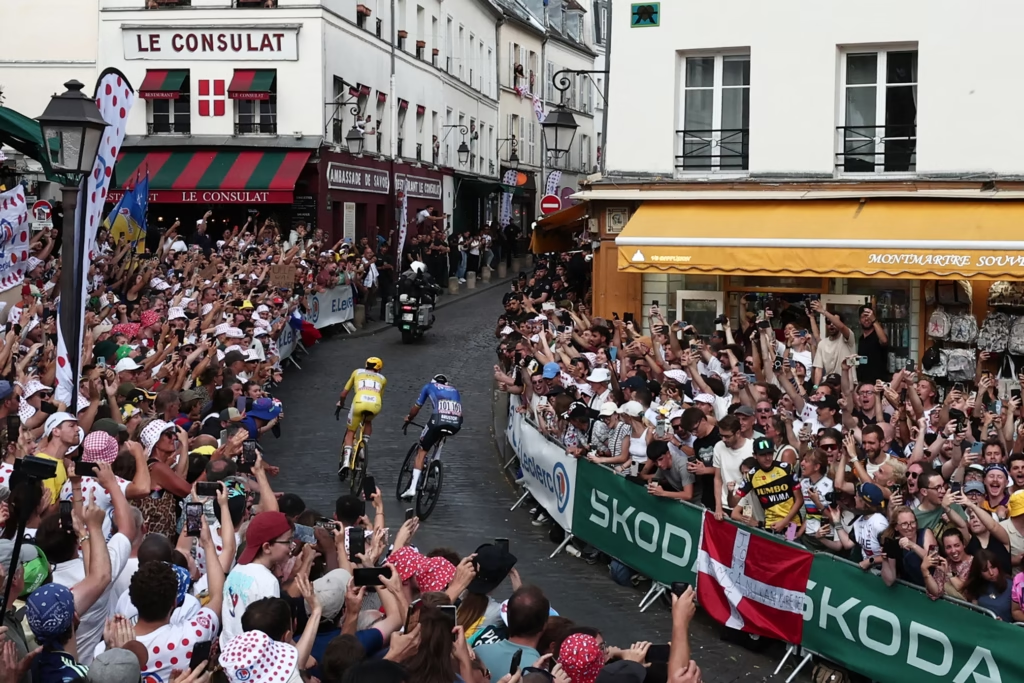 Photo Credit: Getty
July has changed several riders’ value before the transfer market settles
The Tour remains the biggest shop window in cycling.
A stage victory can change the way a rider is viewed. A breakthrough GC performance can alter what teams believe their ceiling to be, while a domestique who repeatedly survives deep into mountain stages can become significantly more valuable to teams building future Grand Tour squads.
Del Toro is the clearest example from 2026, even if UAE already knew the quality they had.
Seixas now exists in a completely different category of expectation.
Pidcock has added a Tour top 10 to his Vuelta podium.
Carapaz has reminded everyone how valuable a rider capable of repeatedly creating stage-winning opportunities can be.
The transfer market is shaped by an entire season, but nothing exposes a rider’s strengths and weaknesses as publicly as three weeks of the Tour.
Those performances will still matter long after Paris.
Teams are already learning lessons for 2027
The Tour is not simply a competition.
It is three weeks of evidence.
UAE now knows del Toro can finish on the Tour podium while operating inside a team built around Pogačar.
Red Bull knows Evenepoel can finish second and win both a major mountain stage and the individual time trial.
Pinarello-Q36.5 knows Pidcock can sustain a top-10 GC campaign across three weeks.
Decathlon knows Seixas can compete at a level that would have seemed an unreasonable expectation for a 19-year-old before the race.
Lidl-Trek leaves with Pedersen’s green jersey, the team classification and Mattias Skjelmose and Juan Ayuso sixth and seventh overall.
Each of those results alters future planning.
Teams will study the 2027 route when it arrives, but the more important information may already have been collected.
They now know more about the riders they need to build around.
Lidl-Trek showed how to have a huge Tour without yellow
Pogačar and UAE dominated the headline result, but Lidl-Trek arguably produced the most complete Tour among teams without a serious yellow jersey contender.
Pedersen won green.
Skjelmose finished sixth.
Ayuso finished seventh.
Lidl-Trek won the team classification.
That is an enormous return from a race where the team’s overall ambitions never revolved around beating Pogačar.
It also reinforces an important point about Tour success. Only one team can win yellow, and arriving without the favourite does not mean three weeks should be judged as failure.
A team can build its Tour around stage opportunities, classifications and GC depth rather than placing everything behind one leader.
Lidl-Trek managed all three.
The next generation is already inside the Tour hierarchy
Perhaps the most important long-term message from the final GC is the age of several riders near the top.
Del Toro is 22.
Seixas is 19.
Lenny Martinez is 23.
The top five therefore contained Pogačar, Evenepoel and three riders young enough that significant improvement remains realistic.
For several seasons, the men’s Grand Tour hierarchy has largely been discussed through Pogačar, Vingegaard and Evenepoel.
The 2026 Tour suggests the next group is no longer waiting behind them.
That does not mean del Toro or Seixas will beat Pogačar next July. It means teams can no longer plan the future on the assumption that the same established names will remain the only serious references.
The next generation has already reached the Tour podium.
The season now moves from control towards unpredictability
The Tour rewards teams capable of controlling a race over three weeks. The next part of the calendar increasingly rewards different qualities.
One-day races can be decided by one attack.
The World Championships remove familiar trade-team structures.
The Vuelta arrives with a different route, different conditions and a field shaped partly by what happened in France.
Riders who spent July working as domestiques may suddenly become leaders. Riders who dominated the Tour may disappear from racing for several weeks before returning for one specific target.
That shift is why the post-Tour season remains interesting even when the yellow jersey has been won as convincingly as Pogačar won it in 2026.
France told us who was strongest across three weeks.
The rest of the season asks different questions.
The Tour defined the summer without finishing the year
Pogačar’s fifth Tour will remain the central fact of the 2026 men’s season. Five stage wins, a 6:26 victory margin and entry into the five-time winners’ club are achievements big enough to frame everything around them.
The Tour de France 2026 review also shows why the consequences extend much further than Pogačar.
Evenepoel leaves France as Tour runner-up with evidence of progress.
Vingegaard begins a recovery rather than the programme he expected.
Del Toro and Seixas have accelerated the generational change.
Pidcock has confirmed a genuine Grand Tour GC dimension to his career.
Carapaz and Pedersen have classification wins that transform how their seasons should be judged.
Van der Poel leaves Paris with momentum from one of the most memorable final-stage victories of recent years.
The Tour de France has decided its own hierarchy.
It has also given the rest of the season a different starting point.

