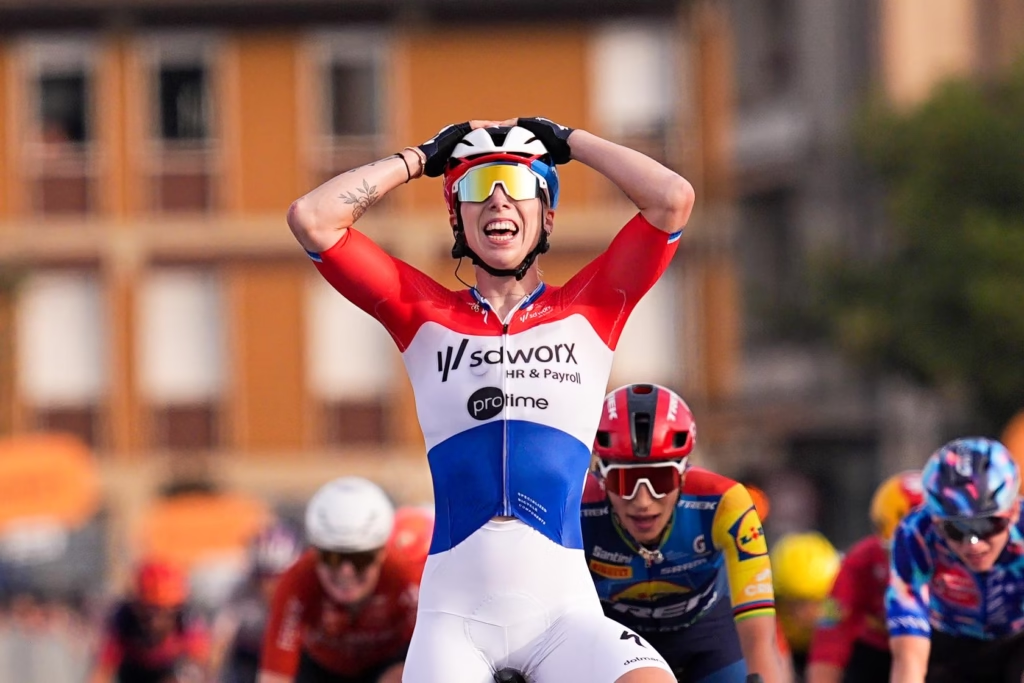
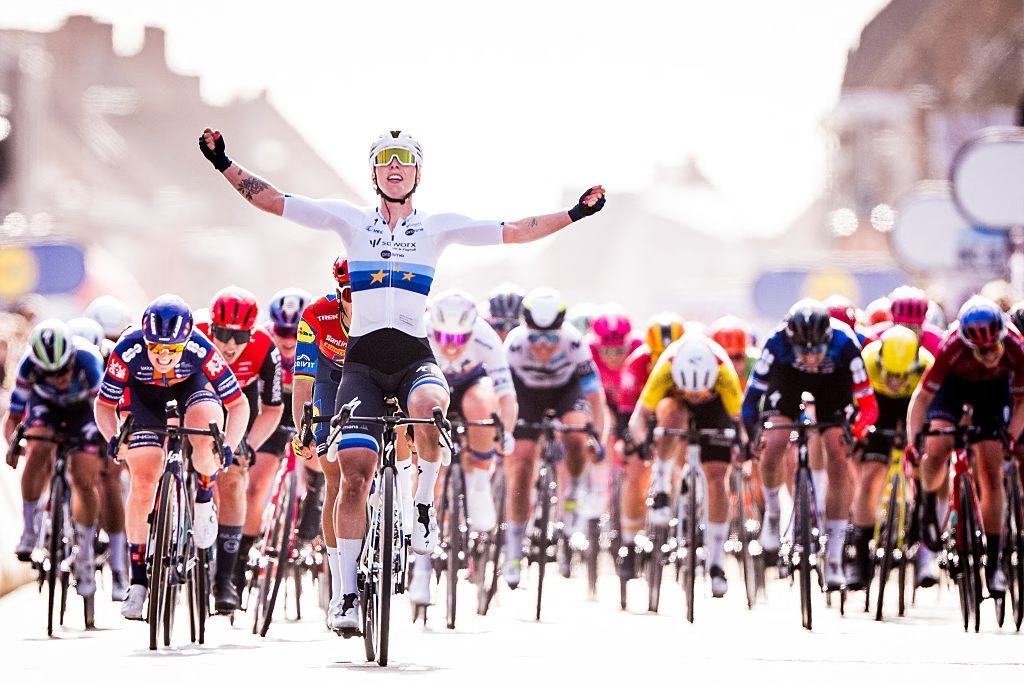
Lorena Wiebes arrives at the Tour de France Femmes 2026 as the clear sprint benchmark and the leading favourite for the green jersey.
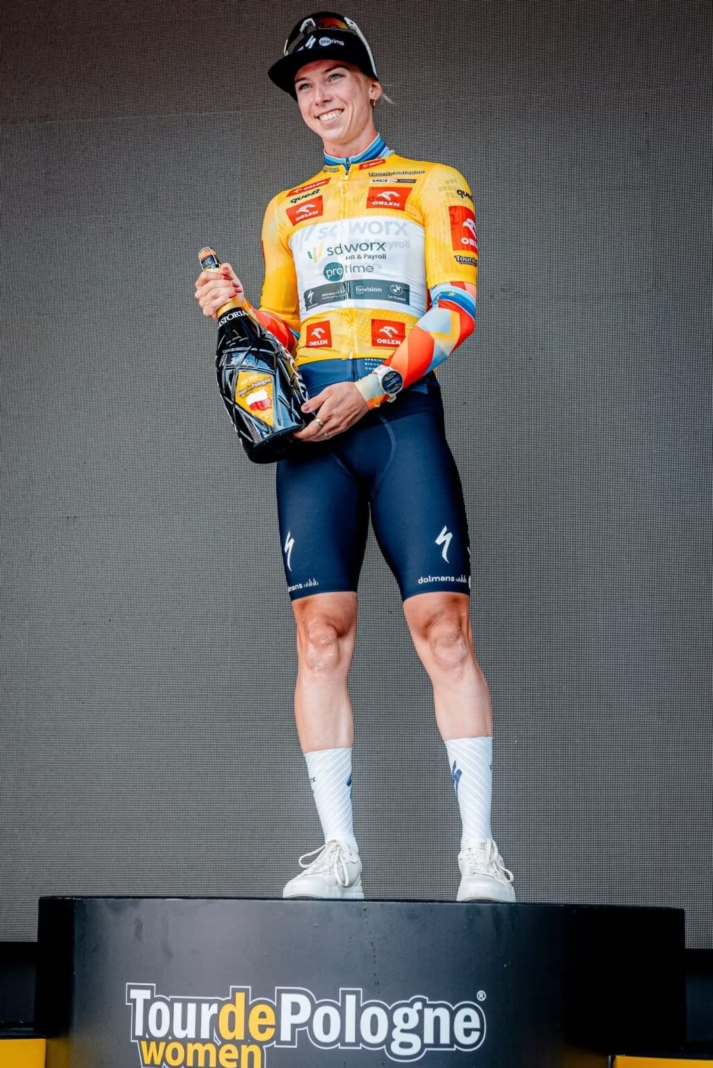
Her final race before the Tour could hardly have gone better. Wiebes won all three stages of the Tour de Pologne Women, completing a perfect sweep in Lublin and arriving in Lausanne with exactly the sort of race sharpness a sprinter wants before a Grand Tour. The speed is there, the lead-out has been tested under pressure and she has already spent three consecutive days making sprint decisions at full race intensity.
The bigger question is not whether Wiebes is fast enough to win at the Tour. She clearly is. It is whether the 2026 Tour de France Femmes route gives her enough opportunities to turn that speed into both stage victories and a points-classification win.
Across nine stages there are only three officially flat days, alongside three hilly stages, two mountain stages and the 21km Dijon time trial. Even the flatter stages are rarely completely straightforward. For Wiebes, that makes green a challenge built around maximising the first week, surviving the hardest days and making sure more versatile rivals do not accumulate too many points when the road begins to climb.
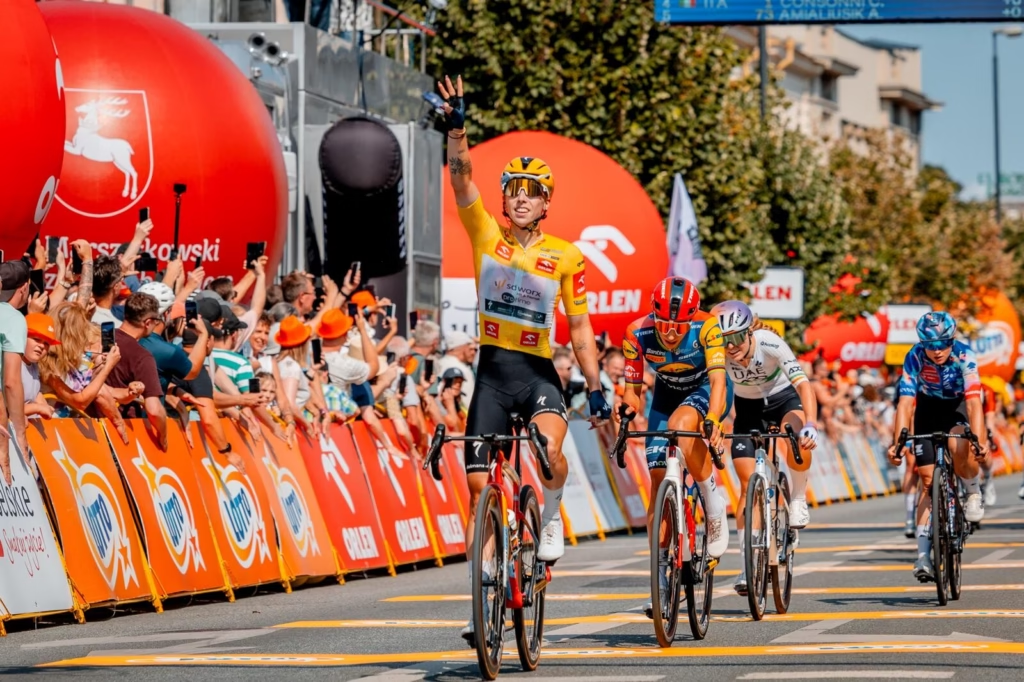
Wiebes starts as the fastest rider in the field
Any discussion of the 2026 Tour sprinters has to begin with Wiebes.
She combines elite top speed with enough climbing ability to survive terrain that removes more conventional sprinters. That gives her more opportunities than the route classification alone suggests. A stage does not have to be perfectly flat for Wiebes to remain the favourite if the peloton arrives together.
That is why our Tour de France Femmes 2026 riders to watch places her clearly at the top of the sprint hierarchy, ahead of riders such as Elisa Balsamo and Marianne Vos.
The key difference is that Wiebes can now win several types of sprint. A full peloton suits her, but so does a reduced group after moderate climbing. She can survive a more selective race and still produce the fastest acceleration at the end.
That makes stages which look borderline for other sprinters much more interesting for her.
The Tour de Pologne Women sweep is ideal preparation
Winning three stages in three days immediately before the Tour is about more than adding another set of victories to Wiebes’ season.
It means she arrives with recent experience of positioning, disrupted lead-outs and repeated sprint efforts. The opening day in Poland forced her to improvise after the sprint train broke apart, while the following stages gave SD Worx-Protime more controlled opportunities to work through its lead-out.
By Stage 3, Wiebes had completed the clean sweep.
That matters because sprinting cannot be recreated perfectly in training. The final kilometres of a real race involve rival trains, changing speed, corners, road furniture and riders fighting for the same wheel. The mechanics behind that are covered in our guide to how a bunch sprint works.
Wiebes has spent the final week before the Tour practising those decisions for real.
There should be no need to race herself into form in Lausanne.
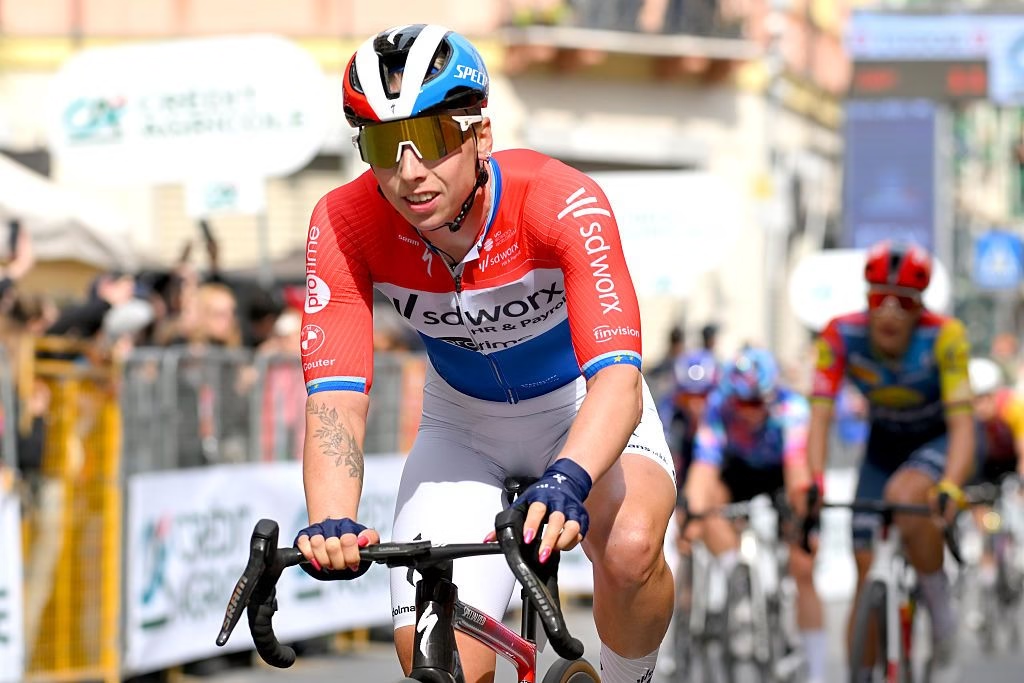 Photo Credit: Getty
Stage 1 can put Wiebes straight into yellow and green
The opening 138km Lausanne circuit is officially classified as flat, but that description is slightly misleading.
The Swiss Grand Départ route includes several climbs before a final rise towards Côte Saint-François in Lausanne. That finishing climb is enough to make the first yellow jersey contest more selective than a conventional flat sprint.
For some sprinters, that is a problem.
For Wiebes, it could be an advantage.
She has become strong enough to survive the sort of short climbing that can remove some of her faster rivals, and a reduced finish could give her fewer riders to negotiate in the final kilometre.
The stage still suits puncheurs and fast all-rounders, so it cannot be treated as a guaranteed Wiebes win. The opportunity is substantial, though, because victory would provide the first yellow jersey as well as an immediate start to the green jersey campaign.
Even a high finish matters.
There are only so many major points-scoring days in this Tour, and Wiebes cannot afford to treat the opening stage as irrelevant simply because it contains climbing.
Stage 2 to Geneva is the clearest early sprint target
The 147.9km stage from Aigle to Geneva looks much closer to the classic Wiebes opportunity.
There is climbing along the route, but the tougher sections come early enough that the sprint teams should have time to reorganise. The finish in Geneva gives Wiebes one of her clearest chances to win from a substantial peloton.
Our Geneva Stage 2 guide covers a finish where the roads around Lake Geneva should provide the major sprint teams with the sort of high-speed run-in they want.
This is the type of day SD Worx-Protime should be prepared to control.
If Wiebes is serious about winning green, the importance goes beyond winning the stage itself. The flat stages are the days where she has the greatest opportunity to create a buffer before more versatile riders begin scoring on terrain that suits them better.
Geneva is therefore one of the stages where second place is much less valuable than usual.
Maximum points matter.
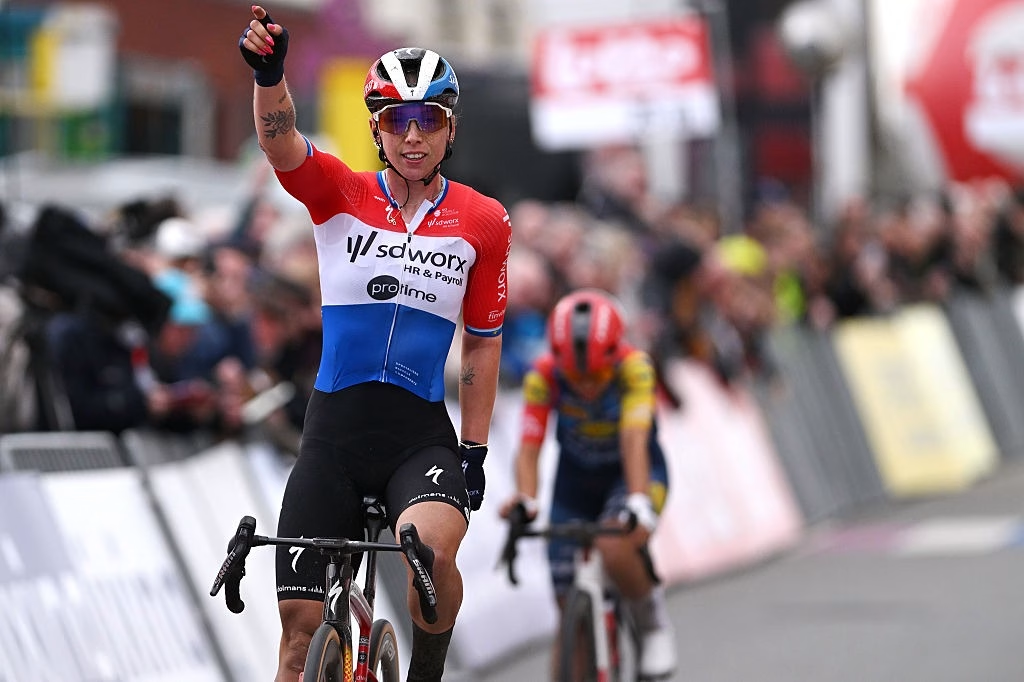
Intermediate sprints can decide the jersey
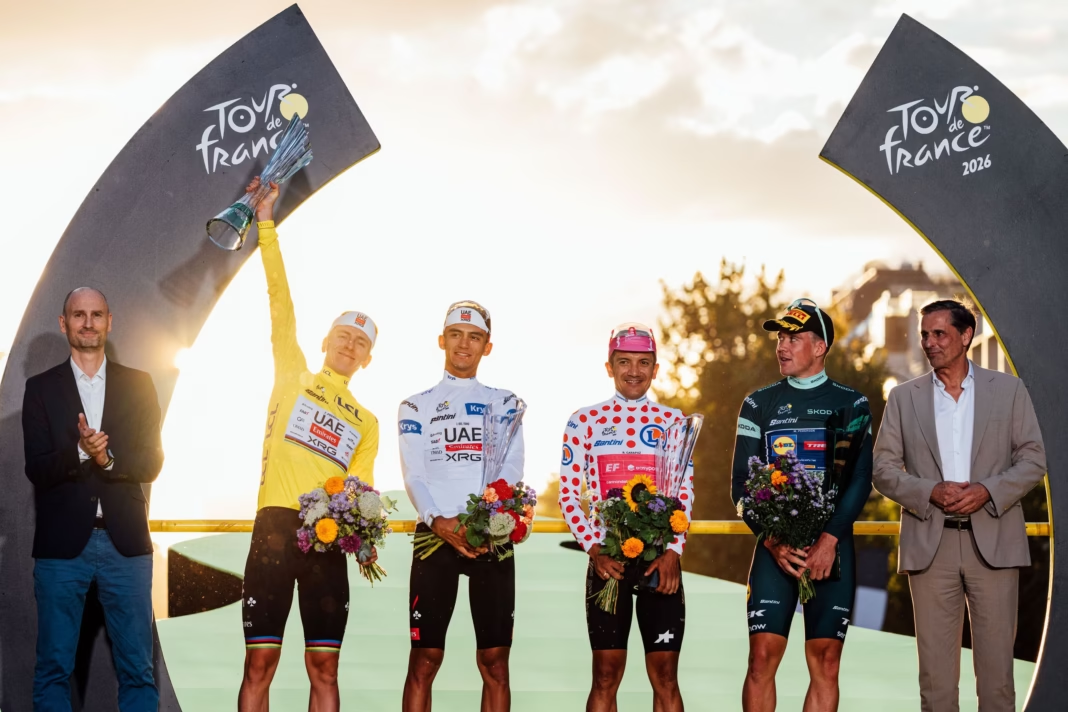
The green jersey is not awarded simply to the rider who wins the most stages.
Points are available throughout the race, including at intermediate sprints, and that creates a different tactical problem from chasing individual victories.
Wiebes may be able to win more conventional sprints than anyone else and still leave a route open for another rider if she ignores intermediate points. A rider such as Vos can stay involved in the classification because she is capable of scoring across terrain where pure sprinters disappear.
That means Wiebes has to think beyond the final kilometre.
If an intermediate sprint lies on a relatively easy section of a stage and contesting it does not compromise the finish, there is little reason to leave those points behind. The calculation changes if the sprint requires a major chase, creates unnecessary fatigue or forces SD Worx-Protime to spend teammates that will be needed later.
Green is partly about speed.
It is also about deciding when points are worth the effort.
For newer fans, our guide to what the jerseys mean in women’s stage races explains how points classifications differ from the general classification.
Stage 3 could suit Wiebes better than other sprinters
The 156.5km stage from Geneva to Poligny is officially hilly and includes the Col de la Faucille, Côte de Lajoux, Col de la Savine and later climbing towards the finish.
For a pure sprinter, this looks like a survival day.
Wiebes has a chance to turn it into something more.
The hardest climbing arrives with enough distance remaining for regrouping, particularly if several teams still believe they have a fast rider capable of winning in Poligny. If Wiebes survives close to the main peloton, the later part of the stage can swing back towards her.
This is where her development beyond pure sprinting becomes most valuable.
She does not necessarily need to win Stage 3 for it to be a good day. If Balsamo or other direct sprint rivals lose contact and Wiebes finishes near the front, the points gained can be more important than another win against the full sprint field.
Green is often built on the days when the rider scores unexpectedly well.
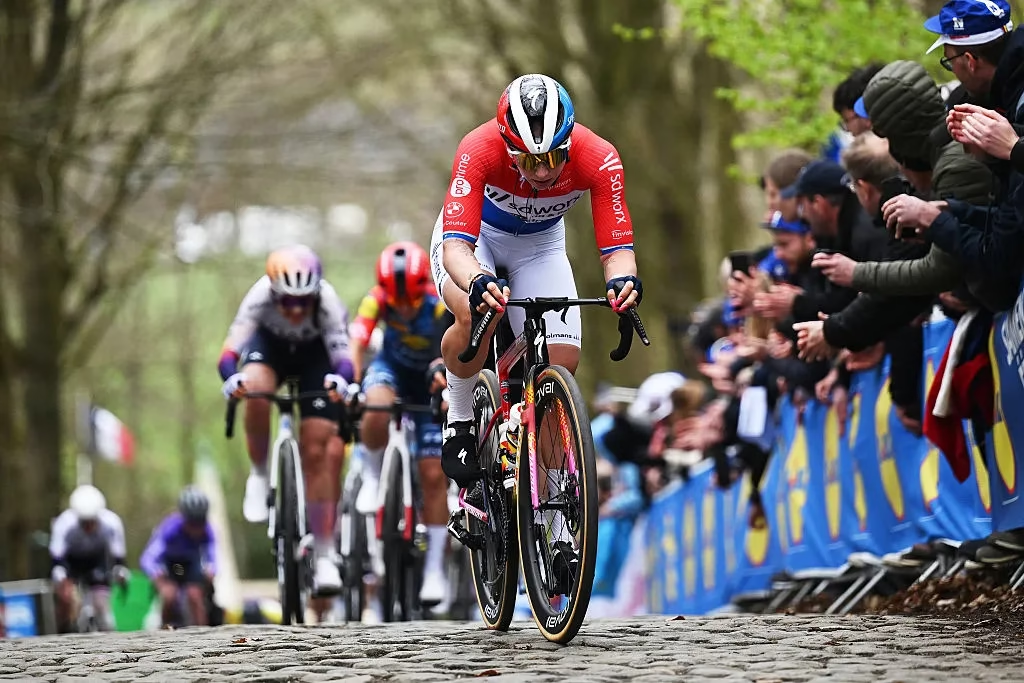
The opening three days can create the winning advantage
The first three stages are probably the most important block of Wiebes’ entire points-classification campaign.
Stage 1 offers a reduced sprint or punchy finish.
Stage 2 should provide a much cleaner sprint opportunity.
Stage 3 gives Wiebes a chance to use her climbing strength against more limited fast riders.
If she leaves that sequence with one or two victories and a substantial points lead, the complexion of the race changes. Rivals can no longer simply wait for the harder stages and hope the classification comes towards them.
They have to chase her.
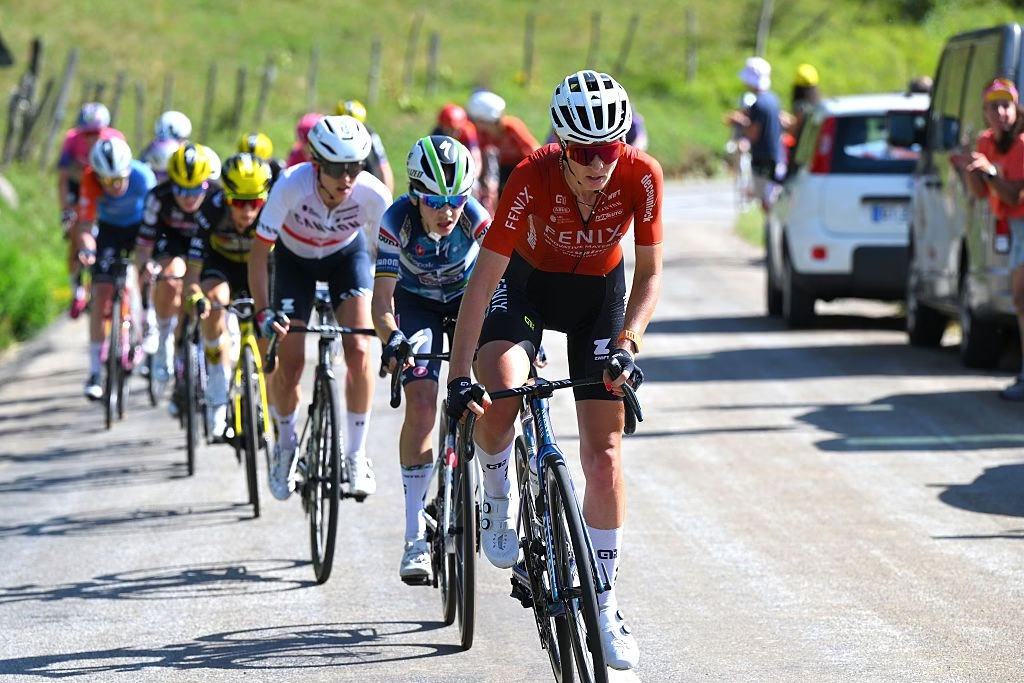
That can also alter race tactics. Teams that know they cannot beat Wiebes in a conventional sprint may begin making nominally flat stages harder, sending riders up the road or refusing to help SD Worx-Protime control breakaways.
A dominant sprinter affects the entire stage long before the final 200 metres.
Stage 4 is effectively a day off from the green jersey fight
The 21km time trial from Gevrey-Chambertin to Dijon is unlikely to have a meaningful impact on Wiebes’ points campaign.
Her job is simple: ride a strong, safe time and avoid wasting energy.
The Dijon time trial will be one of the major GC days of the race, with riders such as Demi Vollering and Marlen Reusser likely to view it very differently.
Wiebes does not need to.
A green jersey campaign still requires understanding which stages are not worth chasing.
Stage 4 is about getting through the day and preparing for the opportunities that remain.
Stage 5 is where Wiebes’ range becomes important
Mâcon to Belleville-en-Beaujolais moves the race back onto hilly terrain and creates another stage where Wiebes may be more dangerous than the route label initially suggests.
This is unlikely to be a simple bunch sprint.
The question is whether the climbing is hard enough to remove Wiebes completely.
If it is not, her rivals have a problem.
A reduced peloton containing Wiebes is often more favourable to her than a full bunch because some of the riders who would normally challenge her have already been removed. She needs fewer teammates for the lead-out and can use the stronger all-round riders around her to survive the difficult sections.
This is part of the broader development covered in our look at why women’s cycling sprint finishes are getting faster. The modern sprint field is increasingly shaped by riders capable of producing elite speed after difficult racing rather than simply waiting for flat roads.
Wiebes is the clearest example.
Stage 6 could favour the break more than the sprinters
The 153.4km stage from Montbrison to Tournon-sur-Rhône comes at a point where the Tour begins shifting decisively towards the mountains.
That may make the race difficult for sprint teams to control.
GC squads will already be thinking about Mont Ventoux. Breakaway riders will recognise that opportunities are running out. Teams without a major GC rider may have little interest in spending domestiques chasing for Wiebes.
That creates one of the biggest strategic questions for SD Worx-Protime.
How much is another green jersey points haul worth?
If several teams want the same finish, helping control the stage makes sense.
If SD Worx-Protime has to do almost everything alone, allowing the breakaway to take the stage while Wiebes protects her existing points lead could be the better option.
The Tour de France Femmes 2026 breakaway specialists will be looking at exactly these sorts of stages.
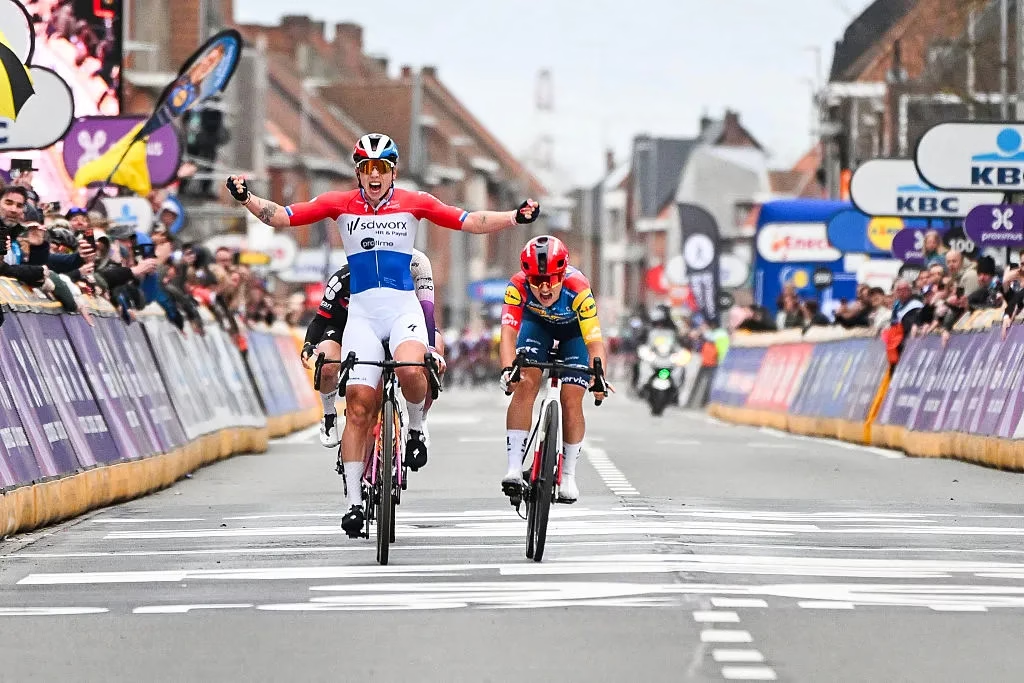 Photo Credit: Getty
Mont Ventoux changes Wiebes’ objective completely
Stage 7 to Mont Ventoux is not about winning green jersey points.
It is about remaining in the race.
The summit finish is the headline mountain stage of the 2026 Tour and the place where the general classification favourites will be trying to create the biggest gaps. For Wiebes, the challenge is entirely different.
She needs to climb within herself, find a suitable group and make the time cut.
Our Mont Ventoux guide covers the scale of the final climb and why it should be one of the decisive yellow jersey days.
For the green jersey leader, the ideal outcome is far less dramatic.
Finish.
Recover.
Keep the jersey.
There is no benefit in spending unnecessary energy simply to finish several minutes higher up the results sheet.
Stage 8 is the last huge green jersey opportunity
If Wiebes survives Ventoux with the classification under control, the 171.9km stage from Sisteron to Nice becomes the decisive day.
It is officially flat, but that does not mean straightforward.
The stage arrives immediately after Ventoux, when sprinters and their domestiques will be tired. Breakaway teams know the peloton may be reluctant to chase, and late climbs around Nice provide attackers with opportunities to disrupt the sprint.
That makes Stage 8 one of the most tactically interesting days for Wiebes.
If the peloton does bring the break back and she survives the late climbing, she becomes a huge favourite for the finish. Some more limited sprinters may already have been removed by the terrain, leaving Wiebes with the possibility of a high-value stage win against a reduced field.
The difficulty of controlling the stage is explored in our Tour de France Femmes breakaway guide, where Sisteron to Nice stands out as one of the strongest opportunities for long-range attackers.
For Wiebes, that makes the chase almost as important as the sprint.
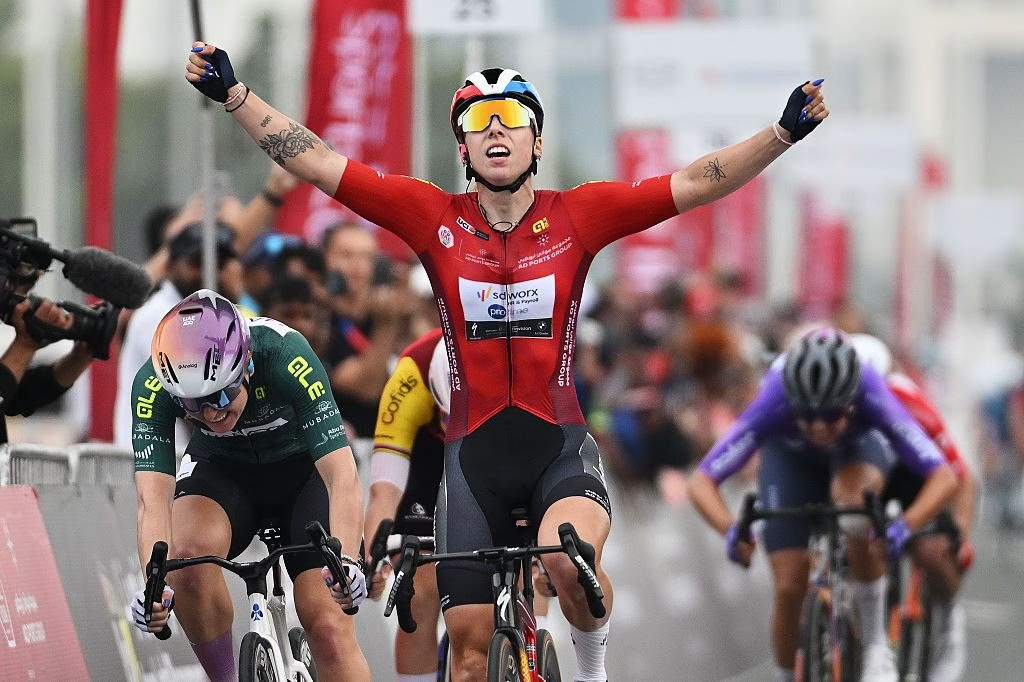 Photo Credit: Getty
Nice gives her one final flat finish before the mountainous finale
Stage 8 also carries extra significance because the following day is anything but a sprinter’s finale.
The first Nice stage finishes on the Promenade des Anglais, with the late road into the city providing the final realistic chance for Wiebes to collect a major stage haul.
The Nice finish guide also makes clear how different Stage 9 becomes.
There is no ceremonial final sprint waiting the following afternoon.
If Wiebes needs a large number of points after Stage 8, the situation is already dangerous.
Stage 9 is about protecting what she has
The final stage is only 99.2km but is classified as mountainous, with repeated climbing around Nice and multiple ascents of the Col d’Èze.
That makes the final day fundamentally different from the traditional flat conclusion to some stage races.
Wiebes cannot assume she will receive another sprint opportunity.
If she starts the stage in green, the objective is likely to be defending the jersey, staying inside the time limit and making sure a more versatile rival cannot collect enough points to overturn the classification.
The short distance actually adds danger.
There is very little neutral racing before the climbing begins, so riders can be under pressure almost immediately.
The Tour de France Femmes 2026 Nice finish guide shows why the final day should remain a genuine racing stage rather than a procession towards the Promenade des Anglais.
Wiebes wants green decided before that stage starts.
Elisa Balsamo is the clearest pure sprint rival
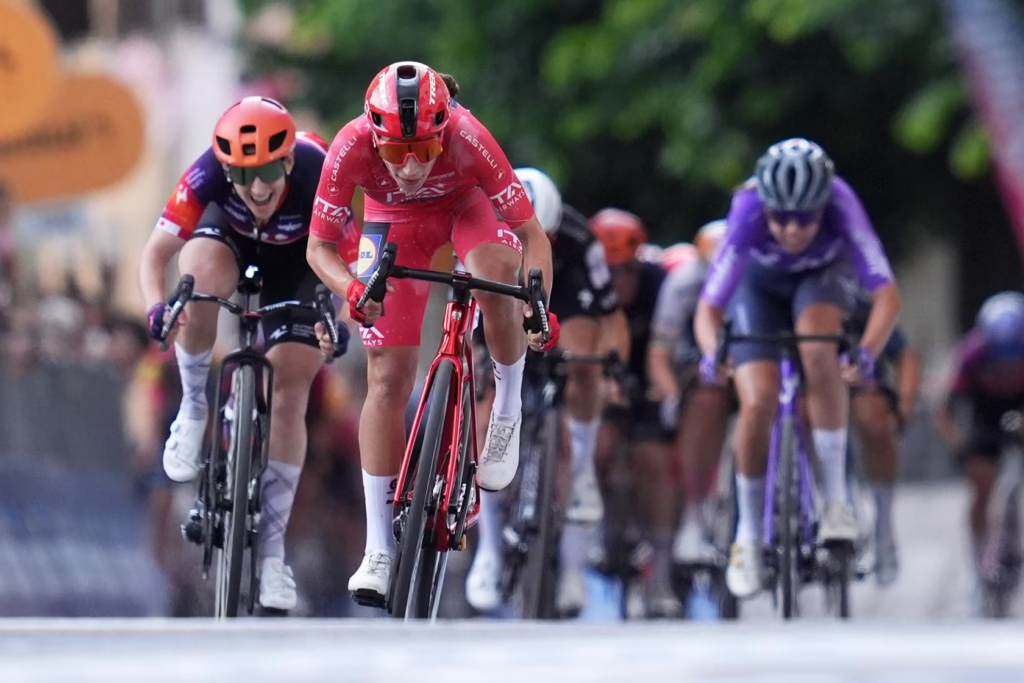
Elisa Balsamo is probably the most obvious rider capable of challenging Wiebes in a conventional bunch finish.
The former world champion brings elite speed but can also survive moderately difficult terrain, making her more dangerous than a sprinter dependent entirely on the flattest stage profiles.
That matters for green.
A rider who can finish second or third to Wiebes on the flat days and continue scoring on the hillier stages can remain in contention without necessarily beating her repeatedly.
Balsamo’s route to the jersey therefore depends on consistency.
She does not need to be faster than Wiebes every time.
She needs to avoid the stages where Wiebes takes a huge points haul while she scores nothing.
Vos remains dangerous because almost every stage offers something
Marianne Vos presents a different problem.
She is unlikely to begin the Tour as the outright favourite in a completely flat drag-strip sprint against Wiebes, but a points classification is exactly the type of competition where her versatility becomes valuable.
Vos can contest reduced sprints.
She can score after climbs.
She can pick up intermediate points on terrain where pure sprinters may not be present.
That means Wiebes can beat her convincingly in several bunch sprints and still need to keep monitoring the classification.
The harder the Tour becomes, the more useful Vos’ range becomes.
Wiebes needs to build her lead while the balance still favours speed.
 Photo Credit: Aritz Arambarri
Kopecky adds another complication inside the same team
Lotte Kopecky is also expected to give SD Worx-Protime another fast, versatile option.
That should normally help Wiebes rather than hurt her. Kopecky can survive difficult stages, cover dangerous moves and potentially take points away from Wiebes’ rivals.
The complication comes if Kopecky begins scoring heavily herself.
Wiebes is the obvious sprinter and leading green jersey option, while Kopecky can remain competitive on stages where Wiebes may be dropped. If the classification becomes close, the team has to decide how aggressively it wants to organise its riders around one jersey.
Strong teams often face these problems because they have several ways to win.
For SD Worx-Protime, the ideal scenario is Wiebes establishing a large enough lead early that there is no conflict to manage.
Green is more difficult than simply winning three stages
The most dangerous assumption would be that three sprint victories automatically deliver the points jersey.
They may not.
A crash can remove an entire opportunity.
A breakaway can take the maximum finish points.
A rival can accumulate intermediate sprints.
A hilly stage can produce a substantial swing if Wiebes is dropped while someone such as Vos remains at the front.
Then there are the mountains, where every sprinter still has to complete the stage inside the time limit to remain eligible for the final classification.
The green jersey rewards repeatability.
That is why Wiebes’ climbing and endurance development matters almost as much as her top speed.
How many stages can Wiebes realistically win?
Three is a reasonable target without requiring the Tour to unfold perfectly.
Stage 2 in Geneva is the most obvious opportunity.
Stage 1 could suit her if she survives the uphill finish with enough left for the sprint.
Stage 8 into Nice provides another major chance if the breakaway can be controlled and the late hills do not remove her.
Stages 3, 5 and 6 sit in the more uncertain category. Any of them could become Wiebes stages if the climbing is raced conservatively enough, but none should be considered guaranteed sprint days.
That gives her a broad opportunity range.
A difficult Tour could produce one or two victories.
A race where the hilly stages repeatedly come back together could produce four or more.
The important distinction is between having sprint chances and having predictable bunch sprints.
Wiebes has plenty of the former.
What Wiebes needs to do to win green
The route to the jersey is straightforward in principle.
Wiebes needs to score heavily on Stages 1 and 2, using the opening weekend to establish herself before the race becomes harder. On Stages 3, 5 and 6, she needs to remain involved whenever the terrain allows rather than conceding the points automatically to more versatile rivals.
Intermediate sprints should be contested selectively. There is little value in spending half the team to collect points early in a stage if that effort costs a win later, but leaving every intermediate uncontested creates an unnecessary route back into the classification for Vos, Balsamo or another consistent scorer.
Then comes survival.
Ventoux needs to be ridden with the time limit in mind, while Stage 8 becomes the final major chance to increase or secure the lead before the mountainous Nice finale.
The ideal green jersey campaign is not one where Wiebes tries to win everything.
It is one where she knows which points matter.
Green would show how much Wiebes has developed
Wiebes has already proved many times that she is the fastest woman in elite road cycling.
Winning the Tour de France Femmes points classification would demonstrate something broader.
It requires speed, but also climbing strength, consistency, tactical discipline and the ability to keep scoring across nine stages. The increasing speed and sophistication of women’s sprinting, explored in our feature on why women’s cycling sprint finishes are getting faster, means there is less room than ever for a favourite to rely on raw power alone.
Wiebes arrives in Lausanne with the ideal preparation: three wins from three at the Tour de Pologne Women, proven sprint speed and a route containing several stages where her ability to climb better than most sprinters can become an advantage.
The first three stages are where she can take control.
Stage 8 is where she can finish the job.
If Wiebes reaches the final mountain stage around Nice with a substantial lead, the green jersey should be hers to defend.
If she wastes the flatter days, the route becomes increasingly favourable to everyone trying to catch her.