

The 2026 Tour de France Femmes is a particularly awkward fantasy race to solve because the route rewards several very different rider types.
There are sprint opportunities for Lorena Wiebes, Marianne Vos and Elisa Balsamo. The hilly stages suit riders such as Noemi Rüegg, Puck Pieterse, Célia Gery and Kimberley Le Court-Pienaar. Dijon makes Marlen Reusser especially valuable, while Mont Ventoux and the final mountain stage around Nice put the general classification riders at the centre of the biggest points haul.
Velogames gives each manager 100 credits to select nine riders, which means simply buying Demi Vollering, Pauline Ferrand-Prévot and Paula Blasi is not enough. Those three alone cost 68 credits and leave only 32 for six more riders. The challenge is working out where paying for an expensive favourite is justified and where a cheaper rider can produce far more points per credit.
The Tour de France Femmes 2026 route makes that particularly important. Across nine stages, the race moves from selective sprinting and rolling terrain in Switzerland into the Dijon time trial, a difficult run of hilly stages and then the decisive climbing around Mont Ventoux and Nice. A good fantasy team needs ways to score across all of those phases rather than loading almost everything into one part of the race.
Why GC riders are so valuable in Velogames
The Tour de France Femmes only lasts nine stages, but the general classification still provides one of the strongest sources of repeat scoring.
A GC rider can score from an individual stage result and then benefit again from remaining near the top of the overall classification. If she stays there through several stages, those points accumulate before the final classification is settled in Nice.
That strongly favours riders who can remain competitive across the entire race rather than specialists targeting one day.
It is why Vollering costs 28 credits. You are not paying only for the possibility that she wins Mont Ventoux. You are buying a rider capable of scoring in Dijon, on the hilly stages, in the mountains and through the GC almost every day once the classification begins to settle.
The question is whether she can score enough to justify using more than a quarter of the entire budget.
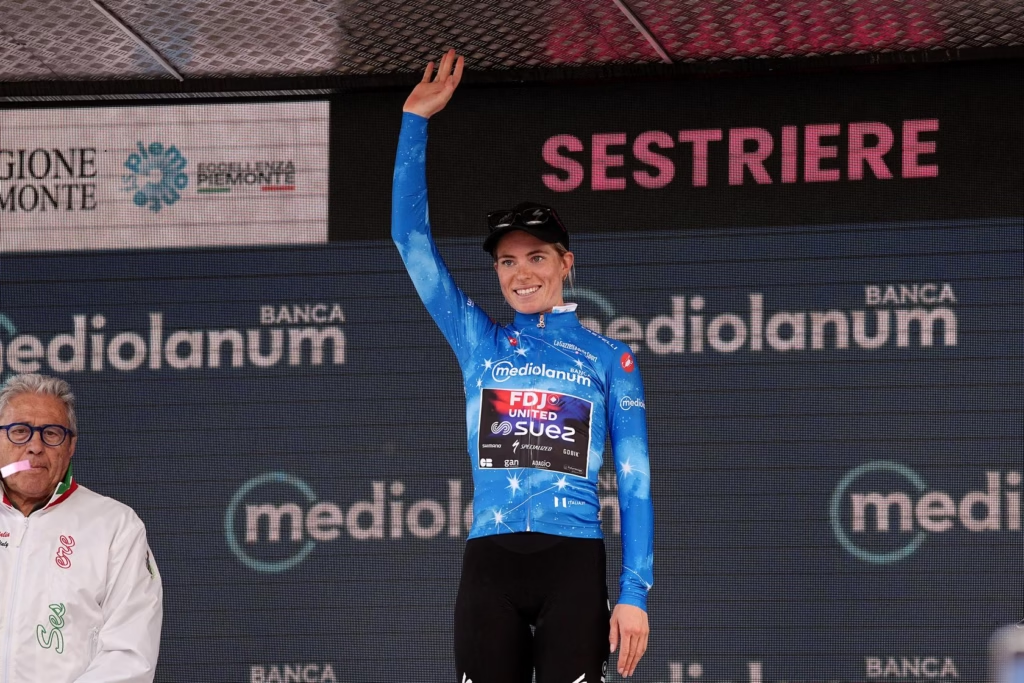 Photo Credit: RCS
Demi Vollering at 28 credits: expensive, but difficult to leave out
Vollering is the premium selection.
At 28 credits, picking her immediately determines the structure of the rest of the team. You cannot then fill the squad with riders costing 12 to 16 credits. Value further down the price list becomes essential.
There is a reason she costs substantially more than anyone else, though. Vollering has realistic points opportunities across almost every part of the race. She can finish highly on selective stages, should score strongly in the Dijon time trial, can challenge for mountain stage victories and begins among the leading candidates for the overall title.
If she takes yellow relatively early, the repeat GC scoring becomes especially valuable.
The downside is opportunity cost. Vollering costs eight credits more than Ferrand-Prévot or Blasi. Eight credits is the difference between a four-credit gamble and a rider such as Rüegg, Kristen Faulkner or Silvia Persico.
So the decision is not really Vollering against Ferrand-Prévot. It is Vollering plus a cheap rider against Ferrand-Prévot plus an eight-credit rider.
Vollering still makes sense for a conventional build because her scoring floor is exceptionally high. Leaving her out is more interesting as a deliberate differential strategy.

Pauline Ferrand-Prévot at 20 credits may offer better value
Ferrand-Prévot is eight credits cheaper than Vollering despite returning as defending champion.
That makes 20 credits extremely interesting.
Her problem is that the 2026 Tour route is not uniformly favourable. Dijon could cost her time, and a rider who spends the first half of the race outside yellow may not accumulate quite the same classification points as someone controlling the race from earlier.
The upside is enormous.
If Ferrand-Prévot arrives in Tour-winning form again, 20 credits becomes exceptional value. A rider who wins or podiums the final GC, scores heavily on Ventoux and Nice and potentially features across other classifications can easily justify that price.
She is probably the cleanest alternative for anyone building without Vollering.
Selecting both is possible too, but 48 credits on two riders forces you to search much harder for bargains.
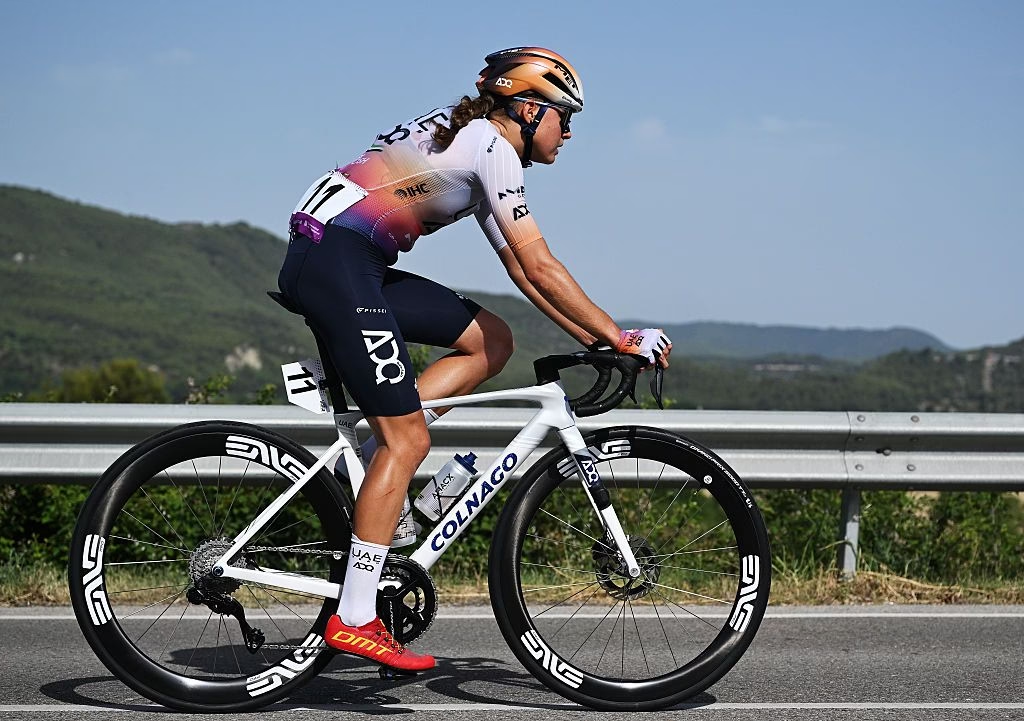
Paula Blasi at 20 credits is the aggressive GC pick
Paula Blasi costs the same as Ferrand-Prévot, which underlines how dramatically her status has changed during 2026.
She enters the Tour with a genuine route towards a major GC score and should be particularly dangerous once the race reaches the sustained climbing in the second half.
Fantasy-wise, the concern is Dijon.
If Blasi loses substantial time there, she may spend several days outside the highest GC positions before trying to recover time in the mountains. Vollering offers a broader route to points because she should be competitive against the clock as well as uphill.
But Blasi has a quality that can be useful in fantasy cycling: she races aggressively.
A rider trying to recover GC time can score through attacks, mountain positions and stage results rather than simply riding conservatively for fifth overall.
At 20 credits, she is a higher-risk option than Ferrand-Prévot but potentially a very productive one once the race reaches Ventoux.

Lorena Wiebes at 16 credits needs the sprint stages to deliver
Wiebes is the most expensive obvious sprint selection at 16 credits.
The case for her is simple. When a stage reaches a straightforward sprint, she is the rider most likely to win it.
There should be several opportunities, and even Lausanne may remain within her capabilities despite the climbing. A stage win brings an immediate return, while repeated high finishes also make the points classification relevant.
The risk is route composition.
This is not a Tour containing six straightforward sprint stages. Several finishes are selective, and the final third becomes dominated by the GC battle. If Wiebes collects two wins and several other high placings, 16 credits looks worthwhile. If the hills remove her more often than expected, the price becomes harder to recover.
She makes most sense in a team that deliberately prioritises stage points rather than spending almost the entire premium budget on GC riders.
 Photo Credit: Getty
Marianne Vos at 14 credits may be the better all-round sprint pick
Vos costs two credits less than Wiebes and probably has more stages where she can score.
That makes 14 credits one of the most attractive prices near the top of the list.
Lausanne suits her particularly well. She can contest flatter finishes but also survive terrain that removes pure sprinters, creating more opportunities for top-five stage points through the opening half of the race.
Vos can also collect points through intermediate sprints and potentially the points classification.
Her weakness compared with Wiebes is obvious: in a completely flat bunch sprint, Wiebes has the faster finish.
Fantasy managers therefore have to choose between maximum win probability on fewer stages and a wider range of scoring opportunities.
For this route, Vos at 14 is arguably the more flexible selection.

Marlen Reusser at 14 credits has enormous upside
Reusser may be one of the most interesting selections in the entire game.
At 14 credits, she costs half as much as Vollering, yet Stage 4 gives her a realistic chance of taking a major result and potentially moving very high in the general classification.
If she does, she can begin collecting GC points before the strongest climbers even reach Ventoux.
The crucial question is how long she remains there.
Reusser has developed into a much stronger stage racer and climber. If she finishes inside the top six overall while also scoring heavily in the time trial and perhaps spending time near the top of GC, 14 credits could produce outstanding value.
If Ventoux exposes her completely and she slides rapidly down the classification, the return becomes less impressive.
She is one of the best selections for managers willing to back the shape of the route rather than simply its headline favourites.

Kasia Niewiadoma-Phinney at 14 credits looks underpriced
At 14 credits, Niewiadoma-Phinney sits alongside Reusser, Anna van der Breggen and Vos.
That looks attractive for a former Tour winner with such a strong history in this race.
The time trial limits her upside slightly, but she has repeatedly shown an ability to remain high on GC through the entire Tour. That consistency matters because daily classification scoring rewards riders who stay near the front rather than only appearing on one decisive mountain.
She also suits the hilly terrain better than several pure climbers.
If Niewiadoma-Phinney finishes fourth or fifth overall, produces high stage placings and attacks through the harder days, 14 credits is easy to justify.
She may not have the outright winning probability of the 20-credit riders, but she does not need it at this price.

Anna van der Breggen at 14 credits is a calculated gamble
Van der Breggen is harder to assess.
Her historic ceiling makes 14 credits look cheap. Her current level makes the selection less automatic.
She can time trial, climb and remain high on GC, which creates multiple scoring routes. If she finishes inside the top five overall, she will probably return good value.
The question is whether Vollering, Ferrand-Prévot, Blasi, Reusser and Niewiadoma-Phinney have moved the current benchmark beyond her.
At the same price, I would prefer Niewiadoma-Phinney or Reusser.
Van der Breggen becomes more interesting as a differential in leagues where many managers are likely to select the more obvious names.
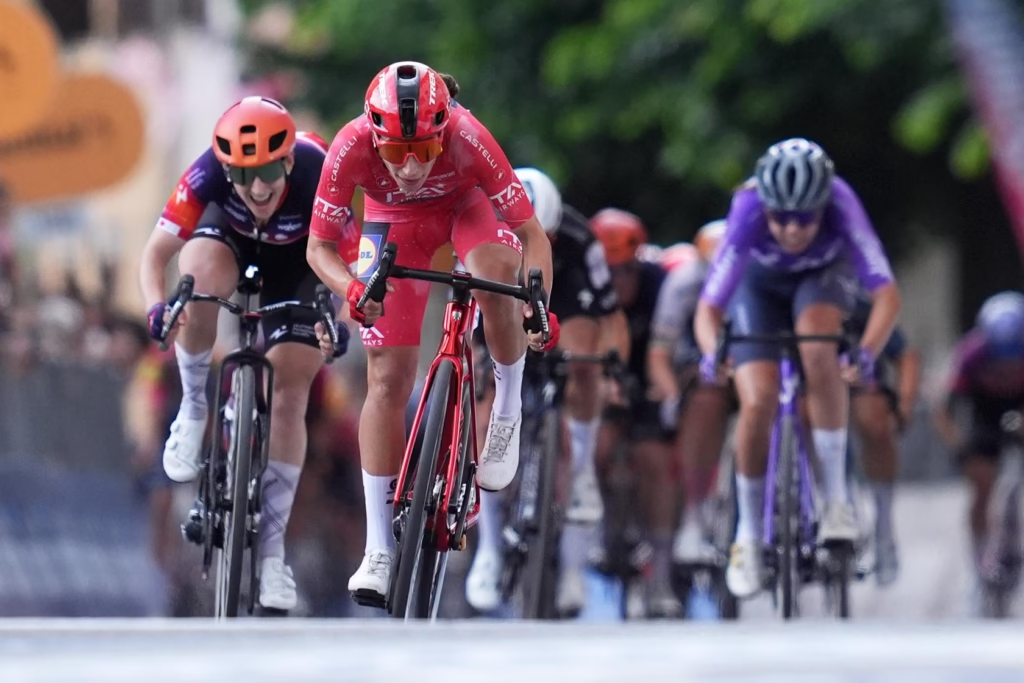
The 12-credit group is where teams can be won
The 12-credit bracket contains several riders capable of dramatically outperforming their price.
Elisa Balsamo can score repeatedly through sprint stages. Cédrine Kerbaol offers GC potential. Kimberley Le Court-Pienaar is well suited to selective finishes. Elisa Longo Borghini has the pedigree of a rider who would normally cost considerably more, while Antonia Niedermaier has enough climbing strength to become an important GC scorer if given sufficient freedom.
Puck Pieterse may have one of the broadest scoring profiles in the group. She can attack, climb, sprint from reduced groups and target stages rather than being tied completely to GC responsibilities.
This price band is where fantasy strategy becomes important.
Spending 12 credits on a rider who finishes 15th overall and never challenges for stages is expensive. Spending 12 on someone who wins a stage, collects several top-five finishes and scores through classifications can transform a team.
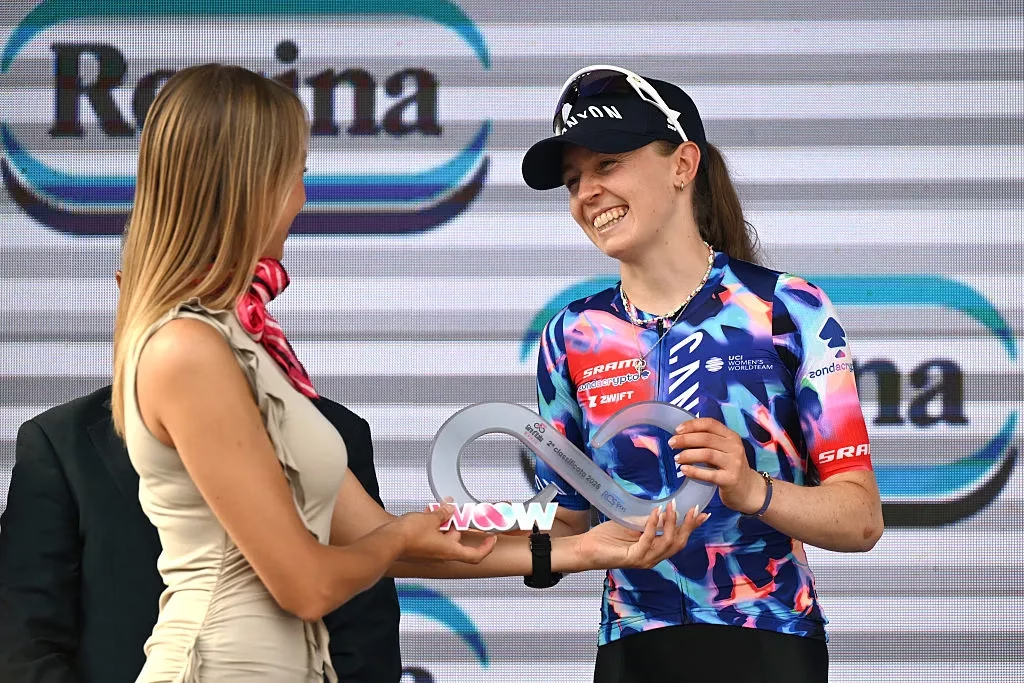
Antonia Niedermaier at 12 credits is one of the strongest GC value picks
Niedermaier looks especially interesting.
She may begin with Kasia Niewiadoma-Phinney carrying the more obvious GC responsibility at Canyon SRAM, but she has already shown that she can score heavily across a stage race.
The risk is team role.
If Niedermaier spends the Tour sacrificing herself for Niewiadoma-Phinney, her fantasy ceiling falls dramatically even if her own legs are excellent.
If Canyon SRAM allow both riders to maintain GC positions until the mountains establish a hierarchy, 12 credits becomes much more attractive.
She is the type of selection that can win a fantasy league if the race develops in her favour.
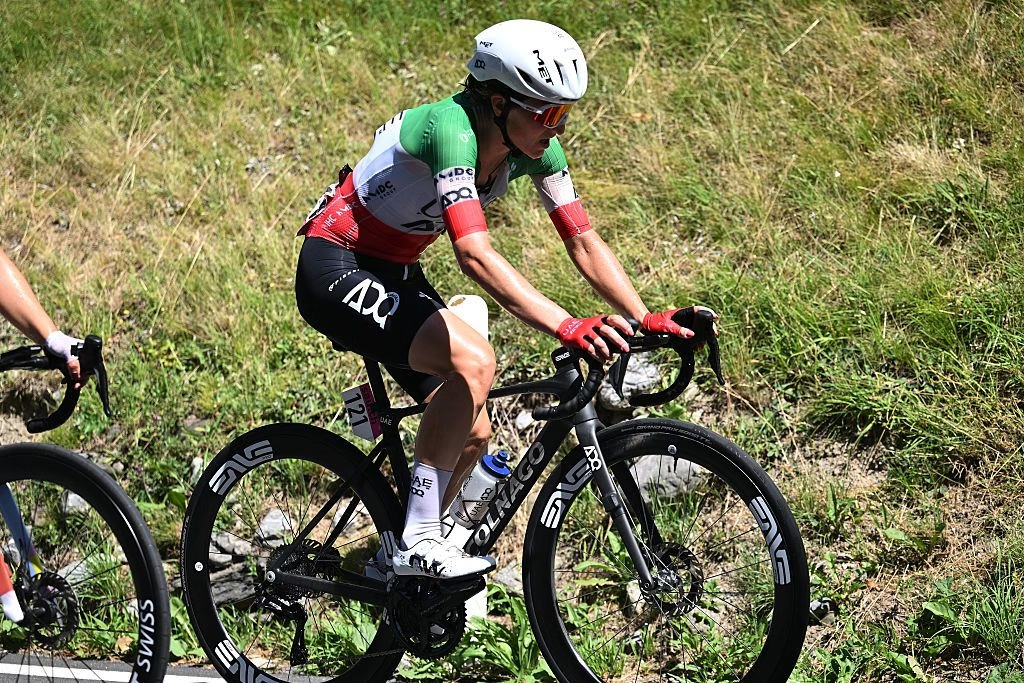
Elisa Longo Borghini at 12 credits offers pedigree at a discount
Longo Borghini is another tempting 12-credit option.
She has the time trialling, climbing ability and stage-racing experience to score across multiple categories, but UAE Team L’IMAD also have Paula Blasi as a serious GC option.
The fantasy case is therefore stronger than the pure win-probability case.
Longo Borghini does not need to win the Tour to score well. A strong Dijon result, several top-ten stage finishes and a high GC position could provide an excellent return.
The problem comes if the race establishes Blasi as the clear leader and Longo Borghini is increasingly used in support.
That is the risk managers accept for the lower price.
 Photo Credit: Getty
Lotte Kopecky at 10 credits is completely different this year
Kopecky at 10 credits immediately catches the eye because her normal reputation suggests a substantially higher price.
The reason is role.
She is not approaching the Tour primarily as a GC rider this time, which removes the consistent overall scoring that previously made her such an obvious fantasy selection.
That can actually make her more attractive at 10 credits.
Kopecky can target stages. Lausanne suits her. Several hilly days suit her. Breakaways suit her. She can chase opportunities without worrying about preserving fifth place overall.
A stage-hunting Kopecky at 10 credits could easily outperform more expensive riders if she receives genuine freedom.
She is one of the most tempting non-GC selections.
 Photo Credit: Getty
Noemi Rüegg at 8 credits may be the standout bargain
At 8 credits, Rüegg stands out.
Her 2026 performances have shown a rider capable of scoring on exactly the terrain provided by the opening part of this Tour. Stage 1 in Lausanne is an obvious opportunity, particularly because it sits on home roads and should favour riders who can survive a selective finale while retaining a sprint.
There are further hilly stages where reduced-group speed becomes valuable, giving Rüegg several possible routes towards a stage result without requiring any serious GC ambitions.
Our Noemi Rüegg Tour de France Femmes 2026 profile goes further into why the Swiss stages and the selective terrain suit her so well.
She does not need to provide major final GC points at eight credits. One stage victory plus several strong finishes would already make her extremely productive.
 Photo Credit: Sprint Cycling Agency
Silvia Persico at 8 credits can quietly accumulate points
Persico is the sort of fantasy rider who can score without ever becoming the central story of the Tour.
She climbs well, can finish strongly from selective groups and rides within a very powerful UAE Team L’IMAD squad.
The complication is the hierarchy. Blasi and Longo Borghini will command significant support on the GC stages, which could reduce Persico’s individual opportunities.
But assist scoring creates some value even when she is working for others, and there should still be stages where UAE can allow her more freedom.
At eight credits, she is a sensible balance option rather than a must-have.

Usoa Ostolaza at 8 credits is an intriguing low-cost climber
Ostolaza is another rider capable of outperforming eight credits if the Tour becomes favourable to breakaways.
She does not need to finish alongside Vollering and Ferrand-Prévot on Ventoux to score well.
A rider with climbing strength and freedom can target mountain breaks, intermediate climbs and stage placings once the GC favourites begin concentrating on one another.
Velogames teams are often improved by riders like this rather than simply selecting whichever nine names look most likely to finish highest overall.
The challenge is predicting who receives the freedom.
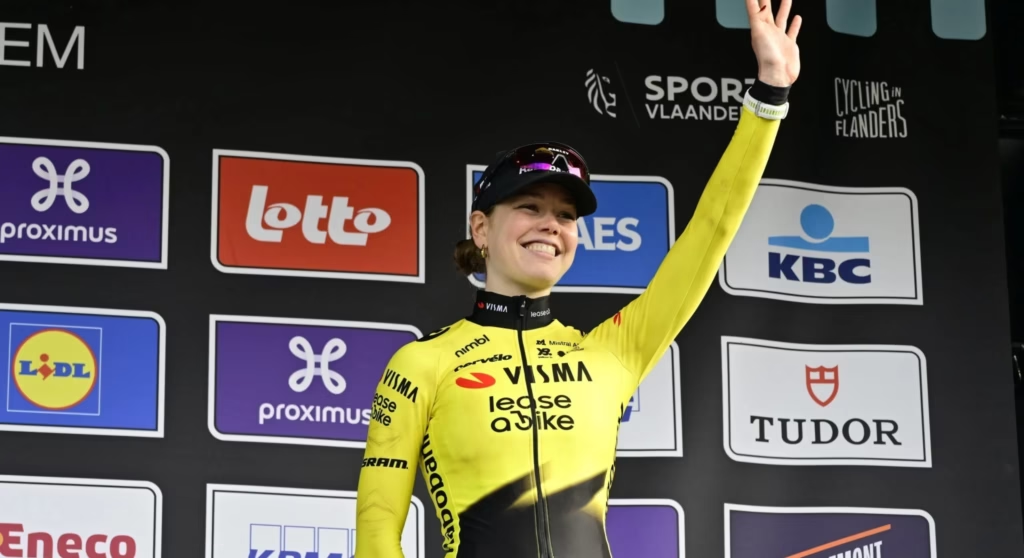 Photo Credit: Cor Vos
Lieke Nooijen at 6 credits is one of the strongest cheap picks
The six-credit bracket becomes important as soon as Vollering enters a team, and Lieke Nooijen is one of the riders who makes a premium build much easier to construct.
Part of the appeal comes from Visma | Lease a Bike’s strength. Pauline Ferrand-Prévot is one of the principal GC contenders, so Nooijen has access to assist scoring if the defending champion performs well.
But Nooijen has genuine individual upside too.
The Dijon time trial is the most obvious example. She is strong enough against the clock to target a useful stage result, and at six credits she does not need to threaten Reusser or Vollering for the win. A strong placing combined with team-assist points would already represent an excellent return.
She is therefore much more than a domestique selected because six credits happened to be left over.
The combination of time-trial potential, a strong team and several possible assist scores makes Nooijen one of the best cheap options in the game.

The rest of the six-credit bracket is about finding a role
There are several other riders worth considering at six credits.
Julie Bego has climbing and attacking potential. Lucinda Brand offers experience and the ability to get into difficult breaks. Ruby Roseman-Gannon has the speed to become relevant if the right finishes develop, while Brodie Chapman could earn value both from aggressive riding and through her place inside a UAE squad with several possible stage and GC scorers.
Pfeiffer Georgi is particularly interesting if Team Picnic PostNL allow her to approach the hilly stages with freedom.
The aim should not be finding a six-credit rider capable of finishing tenth overall.
It should be identifying a rider whose actual race role creates repeated scoring opportunities.

Ema Comte at 4 credits is the white jersey outsider to take seriously
Ema Comte is one of the four-credit riders worth actively targeting rather than merely accepting as a budget filler.
The main attraction is the young rider classification.
She is an outsider rather than one of the obvious favourites for white, but that is exactly why the price is interesting. At four credits, managers are not paying for certainty. They are looking for riders with a pathway towards scoring far beyond what the minimum price usually produces.
If Comte can stay competitive across the tougher stages and remain high enough among the eligible young riders, the white jersey competition could give her a repeated source of fantasy value. Even establishing herself as a serious contender during the opening half of the Tour would make her far more useful than a four-credit rider whose role is exclusively anonymous domestique work.
Cofidis also have more scope to let riders chase their own opportunities than several teams built completely around a Tour-winning favourite.
Comte comes with risk, but she has exactly the sort of upside worth buying for four credits.
Paula Ostiz at 4 credits has hidden value through Reusser
Paula Ostiz is another four-credit rider I would be comfortable building around.
Her most obvious source of indirect value comes from Movistar and Marlen Reusser. If Reusser produces the sort of Tour her route suggests she can, particularly in Dijon and through the general classification, Ostiz has opportunities to collect assist points without needing a major stage result herself.
That matters at the bottom of the price list.
A four-credit rider attached to one of the strongest potential scorers in the game already has a more attractive baseline than someone from a team unlikely to feature in any major result.
Ostiz also retains individual upside. Any freedom to attack, contribute to a successful team move or produce an unexpectedly high finish can quickly turn a cheap selection into a productive one.
You are effectively buying some exposure to Reusser’s success without paying another premium price.

Four-credit riders should have a reason to be there
Comte and Ostiz illustrate the way to approach the cheapest selections.
A four-credit rider should not simply be whichever name allows the team to fit beneath 100.
Comte has young rider classification upside.
Ostiz can profit from Reusser’s results through assist scoring while retaining her own opportunities.
That is preferable to a rider whose best-case scenario is simply completing all nine stages.
Cheap riders do not need to score like GC leaders. They only need to outperform the expectations attached to four credits, and having a clearly identifiable source of points is the first requirement.
Should you pick Vollering and Ferrand-Prévot together?
It is completely viable.
Together they cost 48 credits, leaving 52 for seven riders, an average of just over seven credits each.
That sounds restrictive, but Nooijen at six, Comte and Ostiz at four and several interesting eight-credit options make the structure workable.
The advantage is obvious. If the Tour becomes the Vollering-Ferrand-Prévot duel expected before the start, you own both sides of it.
The disadvantage is that you probably have to sacrifice riders such as Vos, Reusser and several of the strongest 12-credit options.
You become much more dependent on GC points.
That is a sensible conservative strategy for a large public league.
In a smaller mini-league where beating a handful of rivals matters more than protecting against disaster, backing one favourite rather than both creates more room to differentiate.

Should you pick all three main GC favourites?
Vollering, Ferrand-Prévot and Blasi cost 68 credits.
That leaves 32 credits for six riders, or barely more than five credits per selection.
I would avoid it.
The Tour contains too many stages where riders outside the GC battle can accumulate significant points, and a roster made almost entirely from four and six-credit riders becomes dependent on all three favourites delivering almost exactly as expected.
It also duplicates scoring.
If Vollering wins Ventoux, Ferrand-Prévot and Blasi cannot both win it too.
Spreading some of that investment across Vos, Reusser, Rüegg or Kopecky creates more independent ways to score.
The argument for leaving Vollering out
A no-Vollering build is risky but interesting.
Those 28 credits can buy Ferrand-Prévot plus Rüegg, or Reusser plus Vos, or two 12-credit riders with enough remaining to upgrade somewhere else.
If Vollering wins the Tour comfortably, the strategy probably fails.
If Ferrand-Prévot beats her again or if Vollering finishes second without dominating individual stages, the extra depth can compensate quickly.
This is the sort of strategy that becomes more attractive in a mini-league where you expect most rivals to select Vollering.
Matching everyone else’s 28-credit pick makes it difficult to gain ground through her.
Leaving her out creates a genuine point of difference.
One balanced 100-credit Tour de France Femmes fantasy team
A balanced team can use the entire budget while still having scoring opportunities across GC, sprinting, time trialling, stage hunting, assists and the young rider classification.
Demi Vollering, 28
Kasia Niewiadoma-Phinney, 14
Marlen Reusser, 14
Marianne Vos, 14
Noemi Rüegg, 8
Silvia Persico, 8
Lieke Nooijen, 6
Ema Comte, 4
Paula Ostiz, 4
Total: 100 credits
The structure is more important than simply fitting nine big names beneath the limit.
Vollering provides the premium GC anchor and can score through the time trial, mountains, stage results and overall classification. Niewiadoma-Phinney gives the team another high-level GC option at half Vollering’s price, while Reusser covers Dijon and offers the possibility of staying high in the classification for much of the Tour.
Vos supplies the sprint and selective-stage scoring. Rüegg is an eight-credit stage hunter with several plausible opportunities, and Faulkner offers a completely different route through time trialling, breakaways and aggressive racing.
The final three selections are not passengers.
Nooijen has individual time-trial potential and assist value from Ferrand-Prévot.
Comte has the possibility of becoming an outsider in the white jersey competition.
Ostiz gives exposure to Reusser’s success through Movistar’s assist points and still retains some individual upside.
That gives all nine riders a reason to be in the team.
A more aggressive no-Vollering approach
The other strategy is to leave Vollering out and spread the budget across more premium scorers.
Ferrand-Prévot at 20 plus Reusser at 14 and Vos at 14 costs 48 credits, exactly the same as Vollering and Ferrand-Prévot together.
But the scoring profile is much broader.
Ferrand-Prévot provides GC and mountain upside. Reusser gives the team Dijon and GC potential. Vos brings sprint, stage and points-classification scoring.
From there, riders such as Kopecky at 10, Rüegg at eight and Nooijen at six can create a roster with meaningful opportunities almost every day.
That team is more vulnerable if Vollering dominates.
It becomes more dangerous if the Tour stays open.
Do not build only for Ventoux
One of the easiest fantasy mistakes is treating the hardest stage as though it represents the whole Tour.
Ventoux matters enormously for GC.
Velogames does not begin on Stage 7.
The Tour de France Femmes 2026 riders to watch include sprinters, Classics riders and breakaway specialists for a reason. The Swiss opening stages and Dijon offer a substantial pool of points before the main climbers take over.
Rüegg could have delivered much of her fantasy value before Ventoux begins.
Wiebes could win multiple stages without ever becoming relevant to GC.
Reusser could score heavily in Dijon and then remain high in the classification.
A strong fantasy team should have something to gain from almost every stage.
Prioritise riders with more than one way to score
The strongest fantasy selections are usually not one-dimensional.
Vos can score on stages, through intermediate sprints and in the points competition. Reusser has the time trial, stage placings and GC. Kopecky can target individual stages and breakaways. Rüegg can score from selective finishes and attacking racing. Vollering can threaten across almost everything.
That is more valuable than selecting a rider whose entire Tour depends on one mountain stage.
A specialist can still be worth picking if the opportunity is strong enough, but the price needs to reflect the risk.
This is also why Nooijen, Comte and Ostiz are attractive at the cheap end. Each has more than one plausible source of value despite costing six credits or fewer.
-
 Photo Credit: Getty



Team strength matters more than it first appears
Assist scoring means managers should not consider riders entirely in isolation.
Movistar’s strength increases the attraction of Ostiz because Reusser should have several opportunities to score heavily. Visma | Lease a Bike’s GC ambitions make Nooijen more interesting even before considering her own time-trial ability.
The same principle applies across FDJ United-Suez, UAE Team L’IMAD and Canyon SRAM.
A rider may spend much of the race working rather than chasing her own results but still gain fantasy value from being part of a successful team.
It does not make a pure domestique automatically valuable.
It does make a six-credit rider from a team capable of repeatedly winning or placing highly more appealing than an equally priced rider whose squad is unlikely to feature.
The prices that stand out most
The strongest value arguments sit across several different brackets.
Niewiadoma-Phinney at 14 offers GC consistency at half Vollering’s price.
Reusser at 14 may have the best single fantasy stage in Dijon and could remain highly placed overall.
Kopecky at 10 has enormous stage-hunting upside if freed from GC ambitions.
Rüegg at 8 has several early-stage opportunities and does not require a GC result to justify her price.
Nooijen at 6 combines time-trial potential with assist scoring from one of the strongest teams.
Comte at 4 has white jersey upside that makes her much more interesting than a conventional minimum-price rider.
Ostiz at 4 provides a cheap route into Movistar’s potential success through Reusser while retaining her own opportunities.
Vollering remains expensive rather than overpriced. There is an important difference. At 28 credits, she needs to dominate a significant part of the race to become the outstanding value pick, but because she has more ways to accumulate points than almost anyone else, building around her remains the safest starting point.
The biggest decision is therefore not which four-credit rider fills the ninth slot.
It is what you believe the Tour will look like.
If Vollering controls Dijon and the mountains, pay 28.
If Ferrand-Prévot peaks again, 20 could be excellent value.
If the race remains tactically open, spreading the budget across Reusser, Vos, Kopecky and the strongest cheaper selections may produce more points than simply buying the three biggest GC names.
The 2026 Tour de France Femmes fantasy game comes down to nine riders, 100 credits and far more plausible scorers than the budget can accommodate. The winning build is likely to be the one that gets its expensive decisions right while still finding genuine points from riders such as Nooijen, Comte and Ostiz at the other end of the price list.

