The Tour de France 2026 Grand Départ in Barcelona is not just a race start. It is three days of cycling, city spectacle and logistical planning, with the team presentation on Thursday, 2nd July, the opening team time-trial on Saturday, 4th July, stage 2 finishing back in Barcelona on Sunday, 5th July, and stage 3 leaving nearby Granollers for Les Angles on Monday, 6th July.
For fans, that makes Barcelona one of the most attractive Grand Départs in years. The first stage is a 19.7km team time-trial through the city, starting by the Mediterranean seafront, passing major urban landmarks and finishing on Montjuïc. Stage 2 begins in Tarragona, follows the Catalan coast, then returns to Barcelona for a hilly Montjuïc finale. Stage 3 starts in Granollers before heading north towards the Pyrenees and into France.
The appeal is obvious: world-class riders, a major European city, a rare opening team time-trial, a Montjuïc finish and enough public transport to make the weekend manageable if you plan properly. The warning is equally obvious: Barcelona will be crowded, roads will be closed, public transport will be under pressure and the best places to watch will require patience.
This guide explains how to visit the Tour de France 2026 Grand Départ in Barcelona, where to watch, when to arrive, where to stay, how to get around and how to make the most of the weekend.
For race context, see our Tour de France 2026 Grand Départ guide, Tour de France 2026 full route guide, why Barcelona is hosting the 2026 Tour de France Grand Départ and the official Tour de France Barcelona 2026 website.
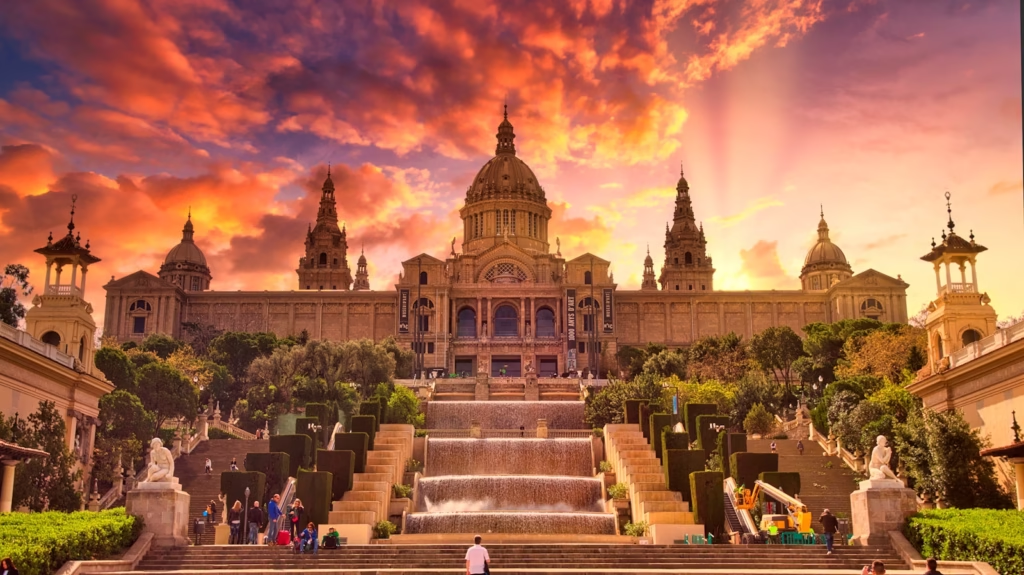
Tour de France 2026 Barcelona Grand Départ dates
The Barcelona Grand Départ runs across the first days of July, with the main public events centred on the 2nd, 4th, 5th and 6th July.
The key dates are:
Wednesday, 1st July: opening of the race permanence and press centre at Palau Sant Jordi
Thursday, 2nd July: official presentation of the 23 Tour de France teams in front of the Sagrada Família
Saturday, 4th July: stage 1, Barcelona to Barcelona team time-trial, 19.7km
Sunday, 5th July: stage 2, Tarragona to Barcelona, 178km
Monday, 6th July: stage 3, Granollers to Les Angles, 196km
For spectators, the best visiting window is from Thursday, 2nd July to Sunday, 5th July. That gives you the team presentation, the team time-trial and the second stage finish in Barcelona. If you want to see the race leave Catalonia, stay until Monday, 6th July and travel to Granollers for the stage 3 start.
The wider race then moves quickly towards the Pyrenees, so anyone turning the Barcelona trip into a longer cycling holiday can use our Tour de France 2026 Pyrenees guide to plan the next phase of the race.
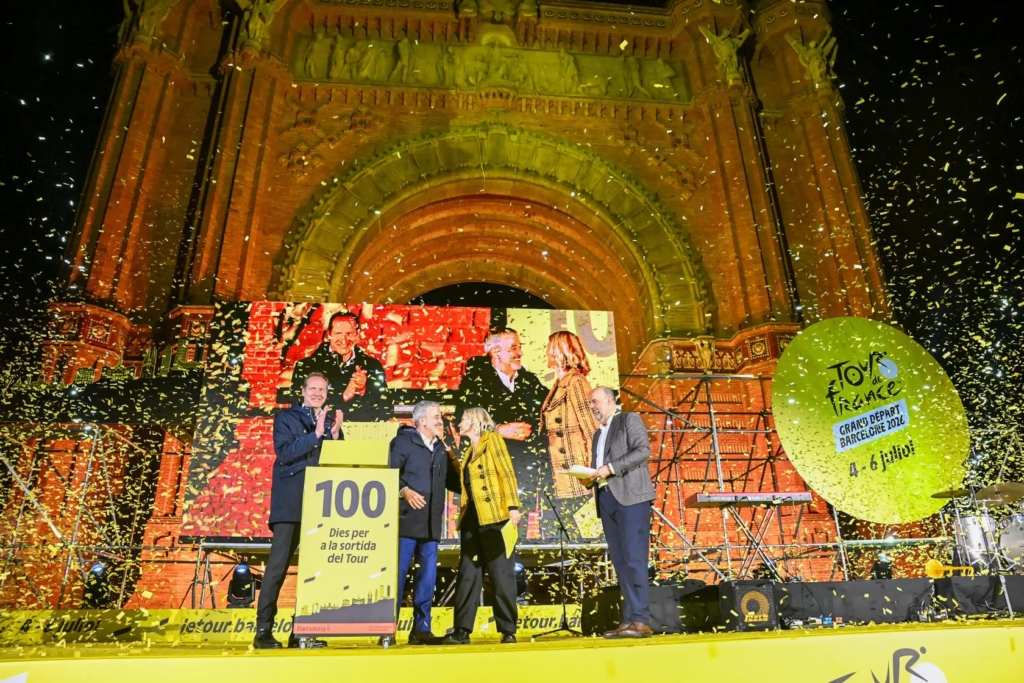 Photo Credit: A.S.O./Barcelona Ciry Council
What happens on Thursday, 2nd July?
Thursday is the team presentation day, and it may be the best option for fans who want close-up access to the riders without committing to a full race-day roadside spot.
The official team presentation is scheduled around the Sagrada Família, with the Grand Départ organisers describing the event as open to the public. The setting should be one of the most recognisable team-presentation backdrops the Tour has used, with the riders introduced in front of one of Barcelona’s defining landmarks.
If you are visiting, treat the team presentation as a major event in its own right. Arrive early, use the metro, expect crowd controls and do not assume you can cross the event area freely once the perimeter is closed. The area around Sagrada Família will be busy even on a normal summer day, and the Tour will multiply that.
For many fans, this will be the best chance to see Tadej Pogačar, Jonas Vingegaard, Remco Evenepoel, Jasper Philipsen, Jonathan Milan, Oscar Onley and the rest before the racing begins. It is also likely to feel more relaxed than stage 1, where teams will be fully focused on performance.
For more rider-focused Tour coverage, see our Tadej Pogačar at the Tour de France 2026, Jonas Vingegaard at the Tour de France 2026, Remco Evenepoel at the Tour de France 2026 and Oscar Onley at the Tour de France 2026.
Stage 1: watching the Barcelona team time-trial
Stage 1 is the centrepiece of the Grand Départ weekend. The Tour opens with a 19.7km team time-trial from Barcelona to Barcelona, the first opening team time-trial at the race for decades and one of the most tactically unusual Grand Départs in recent memory.
The route starts from the beaches and seafront, uses fast city roads, passes close to Sagrada Família, then heads towards Montjuïc. The final stretch includes climbing towards the Olympic Stadium area, with team times taken on the first rider from each team while individual GC times are recorded separately. That means the stage is not only visually spectacular, but also immediately important for the yellow jersey.
For spectators, stage 1 offers several very different experiences.
The seafront should be the best place to feel the raw speed of the team time-trial. Teams will be lined out, fully committed, and still trying to hold their formations at high speed. This is where the spectacle will feel cleanest.
The Sagrada Família area gives the most iconic city backdrop. It may also be one of the busiest places on the whole route because it links the team presentation, tourist attention and stage 1 passage.
Montjuïc is the best place if you want sporting drama. The final climbs towards the Olympic Stadium will show which teams have paced the stage well and which have started to split. It will also give you a better sense of the GC consequences than a flat roadside section.
If you only have one race day in Barcelona, choose stage 1. It is rare, important and logistically easier than trying to follow stage 2 from Tarragona.
For more detail on the race format, see our Tour de France 2026 team time-trial explainer, how the stage 1 team time-trial could change the Tour de France 2026 and Tour de France 2026 route analysis.
Stage 2: Tarragona to Barcelona and the Montjuïc finish
Stage 2 starts in Tarragona and finishes back in Barcelona. The route is a coastal stage that becomes much harder after Sitges, with the race turning hilly before a Montjuïc finale.
For visiting fans, this gives you two main options.
The first is to travel to Tarragona for the start. Tarragona has its own historic appeal and gives you a more relaxed chance to see the race depart before it heads up the coast. The downside is that you will then need to decide whether to stay there, watch along the route, or return to Barcelona for the finish. On a day with road closures and heavy transport demand, that needs careful planning.
The second option is to stay in Barcelona and focus on the finish. That is probably the better choice for most visitors. The stage will return to the city via the west, then concentrate around Montjuïc. The final circuit and uphill finish should create a much more selective stage than a simple sprint into Barcelona.
Montjuïc should be the key spectator zone on stage 2. It gives climbing, repeated race passage and a finish atmosphere. The drawback is crowding. If you want to watch there, go early and do not expect to move around freely once the race approaches.
The stage also matters because it comes immediately after the team time-trial. Any GC rider who loses time on stage 1 will be looking for a calmer day, but Montjuïc may not give them one. For more on why the first weekend already matters, see our Tour de France 2026 Grand Départ guide and where the Tour de France 2026 can be won before the Alps.
Stage 3: should you go to Granollers?
Stage 3 starts in Granollers on Monday, 6th July and heads to Les Angles in France. This is the stage that takes the race away from Barcelona and towards the Pyrenees.
For most visitors, Granollers is the optional extra rather than the essential day. If you are flying home on Monday or turning the weekend into a short Barcelona break, you can safely treat stage 1 and stage 2 as the core of the trip. If you want the full Grand Départ experience, stage 3 is worth adding.
The advantage of a stage start is that you can usually see more of the teams before racing begins. Buses, sign-on, warm-ups and the start village area often give the day a slower rhythm than a stage finish. Granollers is also close enough to Barcelona to be realistic by train, but you should allow extra time because many fans will be moving in the same direction.
The sporting value is also important. Stage 3 is the first real move towards the mountains, with the race heading north and into France. It should feel like the Tour leaving the city spectacle behind and beginning the journey towards the Pyrenees.
For the early mountain context, see our Tour de France 2026 Pyrenees guide, Tour de France 2026 mountain stages ranked by difficulty and Tour de France 2026 climbs guide.
Best places to watch stage 1
The best stage 1 viewing areas depend on what kind of experience you want.
The seafront is best for speed. The stage starts by the Mediterranean, and the early section should show teams at full velocity before the harder part of the course. This is ideal if you want clean visuals, bikes at speed and a slightly more open roadside feel.
Sagrada Família is best for atmosphere and photography. It will be crowded, but it gives the most recognisable Barcelona image of the day. If you choose this area, arrive early and expect to stay put.
Eixample and the broad city avenues are best for seeing the team time-trial formation. Teams will still be organised here, and the speed should be high. The road width may also make viewing slightly easier than the tighter parts of the course.
Plaça d’Espanya and the approach to Montjuïc are best for transition. This is where the stage begins to change from fast city riding to the final climb. Teams that have paced poorly may begin to fragment.
Montjuïc is best for sporting consequence. If you care most about who gains or loses time, this is the place. The final climb towards the Olympic Stadium will be where the strongest teams hold together and weaker ones start to crack.
For the route’s GC impact, see our Tour de France 2026 route analysis, Tour de France 2026 GC favourites ranked and Tour de France 2026 best time triallists.
Best places to watch stage 2
Stage 2 is harder to watch well because it is a point-to-point road stage rather than a short urban time-trial.
If you want the start, go to Tarragona. It gives you the pre-stage atmosphere, team buses and a historic city setting. It also lets you avoid the more intense Barcelona finish crowds.
If you want scenery, look at the coastal section between Tarragona, Sitges and the approach towards Barcelona. This is less practical if you are relying only on public transport during race closures, but it may be attractive for fans staying outside Barcelona.
If you want the race-defining moment, go to Montjuïc. The stage becomes much harder in the second half, and the final circuit includes the Montjuïc climb. This is the best option for fans who want to see the stage winner and the first real road-stage selection of the Tour.
If you want a balance between access and atmosphere, Plaça d’Espanya or the lower Montjuïc approaches may be more practical than trying to reach the top of the finish area late in the day.
Stage 2 is also worth watching through the lens of the green jersey and sprint teams. The first pure sprint opportunities come later, but positioning and energy use begin immediately. For that wider points-race context, see our Tour de France 2026 sprinters guide and Tour de France 2026 route: best days for sprinters.
Where to stay in Barcelona for the Grand Départ
Where you stay will shape the trip more than usual because road closures will make some cross-city journeys difficult.
Eixample is the best all-round base. It gives good metro access, a central position, and reasonable proximity to Sagrada Família, Passeig de Gràcia and the stage 1 route. It will be busy, but it is practical.
Sants is useful for transport. If you plan to arrive by train, travel to Tarragona, or use rail links during the weekend, Sants can make sense. It also gives reasonable access to Montjuïc and Plaça d’Espanya.
Poblenou and the seafront are good for stage 1. If you want to watch the start area or the early time-trial section, staying towards the coast can work well. The downside is that crossing the city may be difficult during closures.
Gràcia gives a slightly calmer base away from the densest race corridors, while still being connected by metro. It may suit visitors who want Barcelona atmosphere without being directly inside the main event zones.
Montjuïc itself is not necessarily the easiest place to stay, despite being central to the route. Access restrictions could make it inconvenient if your hotel or apartment falls inside an affected area.
Book early, choose free cancellation if possible, and prioritise metro access over road access. During the Tour weekend, being near a useful station will matter more than being near a taxi rank.
If you are turning the trip into a longer cycling holiday, consider adding Girona after the Barcelona stages. Our cycling in Girona guide explains why the Catalan city remains such a strong riding base.
How to get around during the Tour weekend
Do not plan to rely on cars, taxis or buses around the race route.
Barcelona’s official mobility plan places the emphasis on metro travel, with reinforced services during the Grand Départ period. Use the official TMB Tour de France travel information before travelling each day, because station access, bus diversions and service patterns may change around the race.
The city’s race circuits will be fully closed to traffic at key times, and pedestrian movement will be controlled at designated crossing points. That means you should decide your viewing area before leaving your accommodation, then stay in that zone. Do not assume you can cross the route whenever you like.
Buses will be heavily affected on race days. Bicing and local bike-share stations may also be suspended near the route. If you plan to ride your own bike around Barcelona during the event, be aware that bike access and parking may be controlled around the route.
The simplest rule is: use the metro, walk from the nearest sensible station, arrive early and avoid moving across the route once closures begin.
For fans watching from home instead of travelling, our how to watch Tour de France 2026 in the UK guide covers the broadcast options.
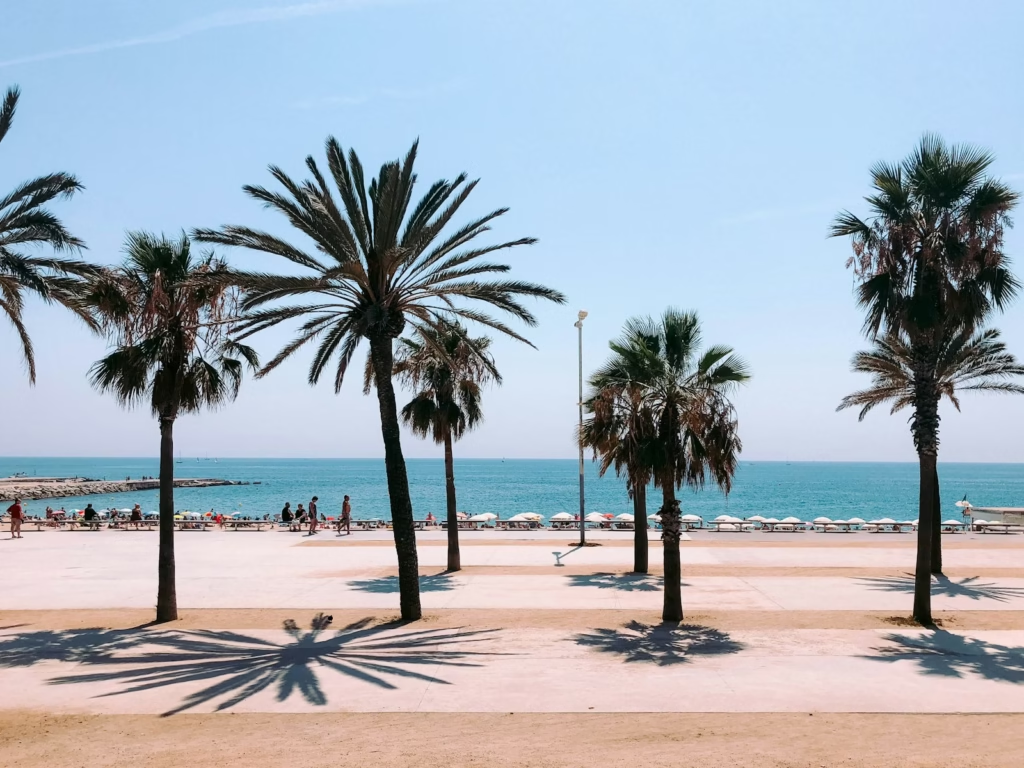
Flying to Barcelona for the Grand Départ
Barcelona-El Prat Airport is the main arrival point for UK visitors. It has frequent connections from London, Manchester, Birmingham, Bristol, Edinburgh and other UK airports, although demand around the Tour weekend may push up prices.
From the airport, you can reach the city by Aerobús, metro, train or taxi, but event closures may affect road journeys close to the race weekend. If arriving on the 2nd, 4th or 5th July, allow extra time and avoid booking accommodation that requires crossing the race route by car.
For most visitors, arriving by Wednesday, 1st July or Thursday morning, 2nd July makes the trip much easier. That gives you time to settle in before the team presentation and avoids arriving directly into the stage 1 closures.
If you are staying until stage 3, flying home on Monday evening or Tuesday is more realistic than trying to combine Granollers and an early flight.
For a shorter trip, focus on the team presentation and stage 1. For a fuller race weekend, add the stage 2 finish on Montjuïc. For a longer cycling-focused break, add Girona or the Pyrenees once the Tour leaves Barcelona.
Taking the train to Barcelona
Barcelona is also a strong rail city, especially if you are already in Spain or southern France. Barcelona Sants is the key long-distance station, with high-speed services linking the city to Madrid, Girona, Figueres, Lyon, Paris and other major centres.
For Tour visitors, Sants is useful because it gives access to both the city and wider Catalonia. If you want to watch stage 2 from Tarragona or stage 3 from Granollers, rail planning becomes important. However, race-day demand and road closures may increase pressure on public transport, so book long-distance trains early and check local services closer to the event.
A rail-based trip can work well if you want to make the Grand Départ part of a wider cycling or travel holiday. Barcelona can be paired with Girona, the Costa Brava, the Pyrenees or southern France, especially once the Tour has moved north.
For cycling travel ideas in the region, see our cycling in Girona guide and wider travel section.
Should you bring a bike?
Bringing a bike to Barcelona for the Grand Départ can be rewarding, but it needs careful planning.
The attraction is obvious. Barcelona has a strong cycling culture, and the surrounding area offers excellent riding, especially if you head towards Collserola, the coast, Montjuïc outside closures, or Girona before or after the Tour weekend. Riding part of the stage 1 or stage 2 roads before closures could be memorable.
The downside is logistics. Hotels may have limited storage. Road closures will affect movement. Bike-share and local cycling access may be disrupted around the race. Flying with a bike also adds cost and stress.
If your trip is mainly about watching the race, hiring a bike for one day or adding a separate Girona riding block may be easier than bringing your own. If your trip is a cycling holiday built around the Tour, then bringing a bike makes more sense.
Do not plan to ride freely on or across the race route during event hours. Treat the Tour days as spectator days, not training days.
For more place-led cycling travel ideas, see our guides to Andermatt and the central Swiss passes, Aosta Valley and Briançon and Serre Chevalier.
How early should you arrive at the roadside?
Arrive earlier than you think.
For the team presentation, aim to be in the Sagrada Família area well before the event begins, especially if you want a good view. The area is expected to be heavily controlled, and once it fills, movement may become difficult.
For stage 1, arrive several hours before the first team is due. A time-trial is different from a normal road stage because the viewing lasts longer, but the best spots will still fill quickly. Montjuïc, Sagrada Família and the start area will be especially busy.
For stage 2, Montjuïc will be the key destination and access may be restricted for a substantial part of the afternoon. Arrive early, bring water and food, and be prepared to stay in position.
Barcelona in July can be hot. Shade, sunscreen, a hat and enough water are essential. If you are travelling with children, older relatives or anyone with mobility issues, choose a less crowded viewing point rather than chasing the most famous spot.
If you are mainly interested in the GC story rather than roadside atmosphere, stage 1 and stage 2 should both be viewed as important. The opening weekend is not ceremonial, as explained in our Tour de France 2026 route analysis.
What to bring on race day
Bring water, sun cream, a hat, sunglasses, snacks and a portable phone charger. Barcelona in early July can feel hot even before the race arrives, and standing roadside for hours will drain you faster than expected.
Wear comfortable shoes. You may end up walking further than planned because metro exits, pedestrian crossings and race barriers may divert you away from your preferred route.
Bring a small bag rather than anything bulky. Security, crowds and narrow pavements all make large backpacks annoying.
Download offline maps before leaving your accommodation. Mobile networks can struggle around large crowds, and the city’s usual walking routes may not work once barriers are in place.
Have a second viewing option. If your first-choice area is too crowded, know where you will go instead. This is especially important for Montjuïc.
The Barcelona weekend should be treated like a major-event city break rather than a normal roadside Tour stage. Plan the viewing first, then build food, travel and sightseeing around it.
What else to do in Barcelona during the Grand Départ
The Grand Départ should be the centre of the trip, but Barcelona gives you plenty around it.
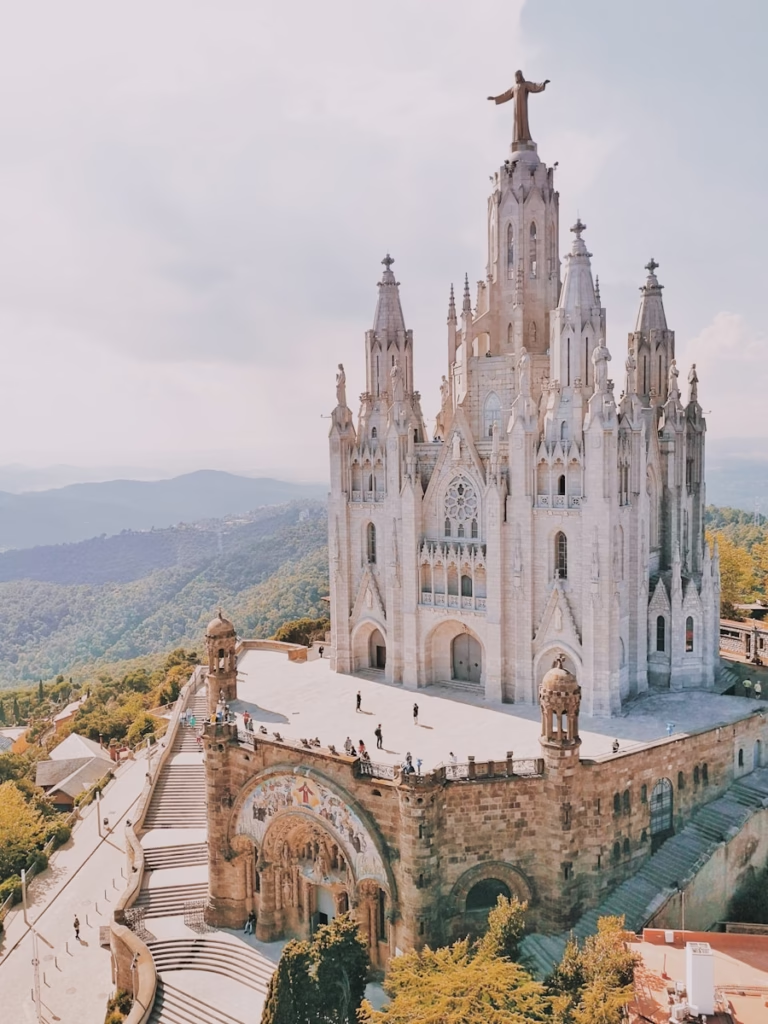
Sagrada Família is central to the team presentation and worth visiting separately if you can book a timed entry. Sant Pau is close by and may form part of the wider team-presentation atmosphere. Montjuïc gives you the Olympic Stadium, city views, gardens and museums. The seafront around Barceloneta and Port Olímpic gives you the stage 1 mood without needing to spend every hour on the race route.
The Gothic Quarter, El Born, Gràcia and Poblenou all work well for food and evening wandering once the race-day crowds begin to disperse. If you have an extra day, Girona is a natural cycling side trip, while Tarragona can be paired with stage 2.
The key is not to over-plan. The Tour will already make the city busy and slow. Leave space in the trip for walking, waiting, changing plans and simply watching Barcelona turn yellow.
For more on why the city was chosen, see our feature on why Barcelona is hosting the 2026 Tour de France Grand Départ.
Suggested two-day itinerary
If you only have two days, arrive on Friday, 3rd July and focus on stage 1.
Use Friday to collect your bearings, check metro routes, visit Montjuïc or the seafront, and decide exactly where you want to watch the team time-trial. On Saturday, 4th July, go early to your viewing point and stay there. Choose Montjuïc if you want the sporting finish, the seafront if you want speed, or Sagrada Família if you want the iconic city image.
This version is simple, focused and realistic.
It also works if you are mainly interested in the GC implications of the opening stage. The Barcelona TTT could shape the first yellow jersey and create early gaps between contenders, which is explored in our stage 1 team time-trial analysis.
Suggested four-day itinerary
For the fuller Grand Départ experience, arrive on Thursday, 2nd July.
Use Thursday for the team presentation at Sagrada Família. Friday becomes your planning and sightseeing day, with time to visit Montjuïc, check transport and enjoy the city. Saturday is stage 1. Sunday is stage 2, ideally on Montjuïc or one of the approaches into the city.
If you can stay until Monday, travel to Granollers for the stage 3 start. If not, Sunday evening or Monday morning is a good time to leave Barcelona once the race has moved on.
This is the best balance for most fans.
It gives you the ceremonial start, the race’s first decisive test and a road-stage finish before the Tour heads towards the Pyrenees. For what comes next, see our Tour de France 2026 full route guide.
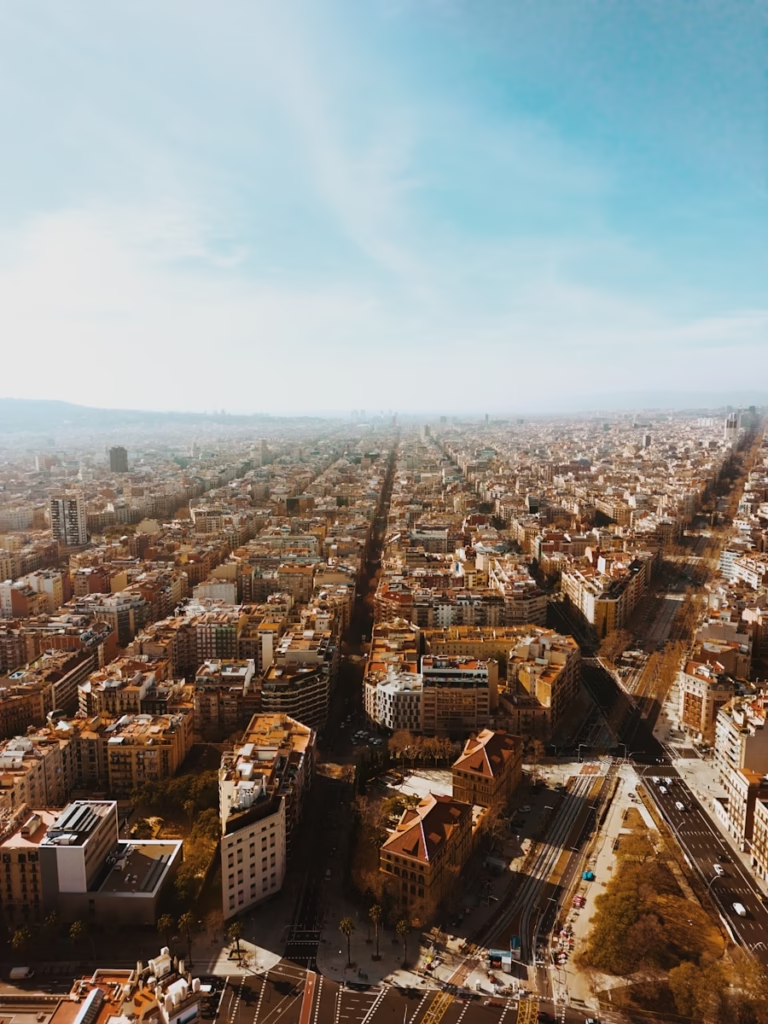
Suggested cycling-focused itinerary
If you want to ride as well as watch, give yourself more time.
Arrive before the team presentation, watch the Thursday event, then use Friday morning for an early ride before the city becomes too busy. Keep it simple: Montjuïc if accessible, Collserola if you know the route, or a coastal spin if you want something low stress.
Watch stage 1 and stage 2 as spectator days. After the Grand Départ, move to Girona for two or three days of riding, or head north towards the Pyrenees if you want to follow the race into France.
This version works best if cycling is the core of the trip rather than an add-on.
For riding inspiration, see our cycling in Girona guide and our wider travel section.
Best viewing areas ranked
- Montjuïc
The best sporting location across both stage 1 and stage 2. It gives climbing, atmosphere and potential race-defining moments, but it will be crowded and heavily controlled. - Sagrada Família
The best landmark location, especially for the team presentation and stage 1 passage. Expect enormous crowds and restricted movement. - Seafront and Port Olímpic area
Best for stage 1 speed, early time-trial formations and a more open feel. Good for photography and atmosphere. - Plaça d’Espanya and lower Montjuïc
A useful balance between access and race action. Good for seeing teams transition towards the final climb. - Tarragona
Best for stage 2 start atmosphere and a more relaxed pre-race experience, but less practical if your main base is Barcelona. - Granollers
Best for stage 3 start completists, especially if you want to see the race before it leaves Catalonia.
If you are travelling for pure sporting importance, choose Montjuïc. If you are travelling for the Barcelona image, choose Sagrada Família or the seafront. If you are travelling as part of a wider cycling trip, combine the Barcelona weekend with Girona or the Pyrenees.

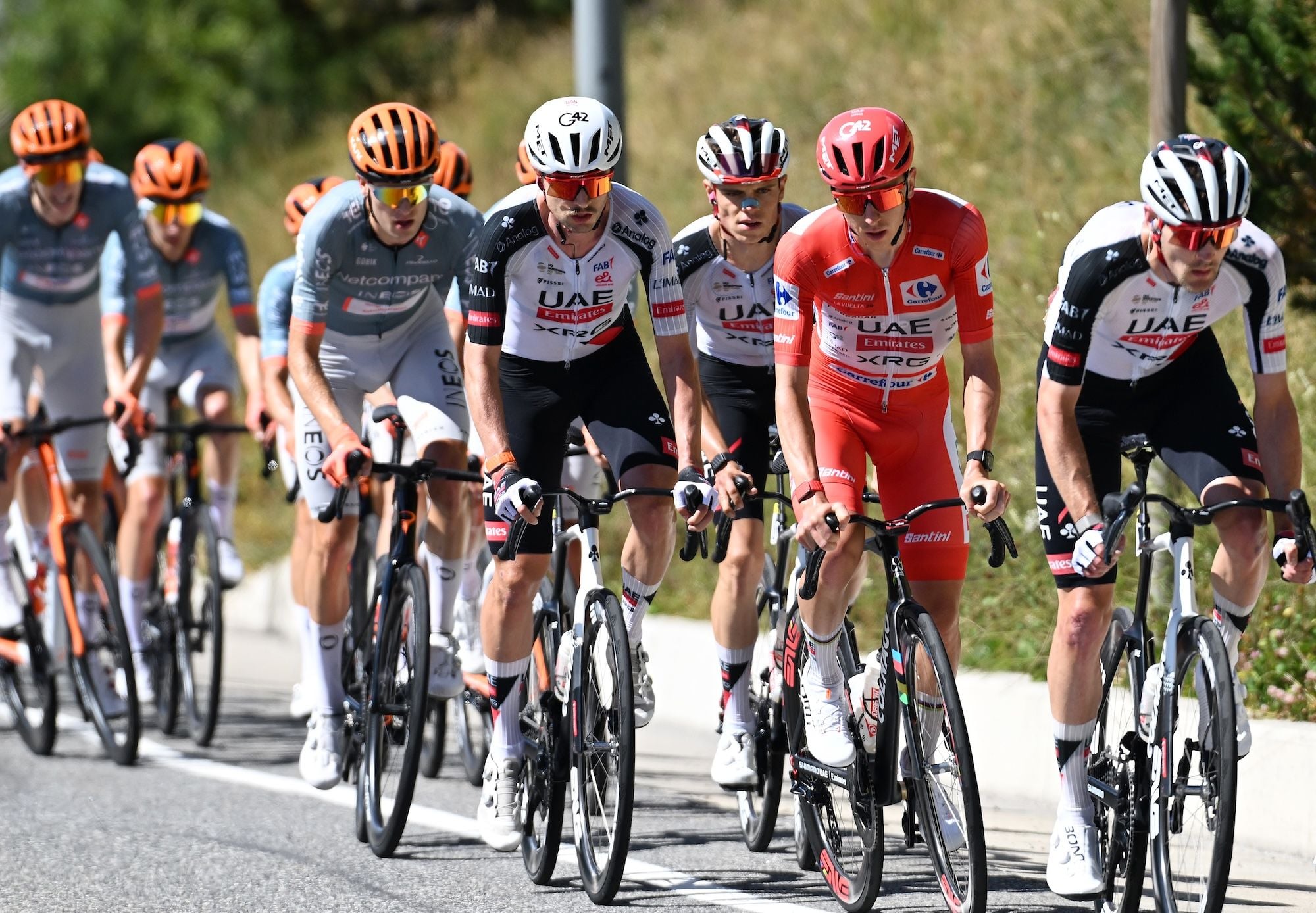
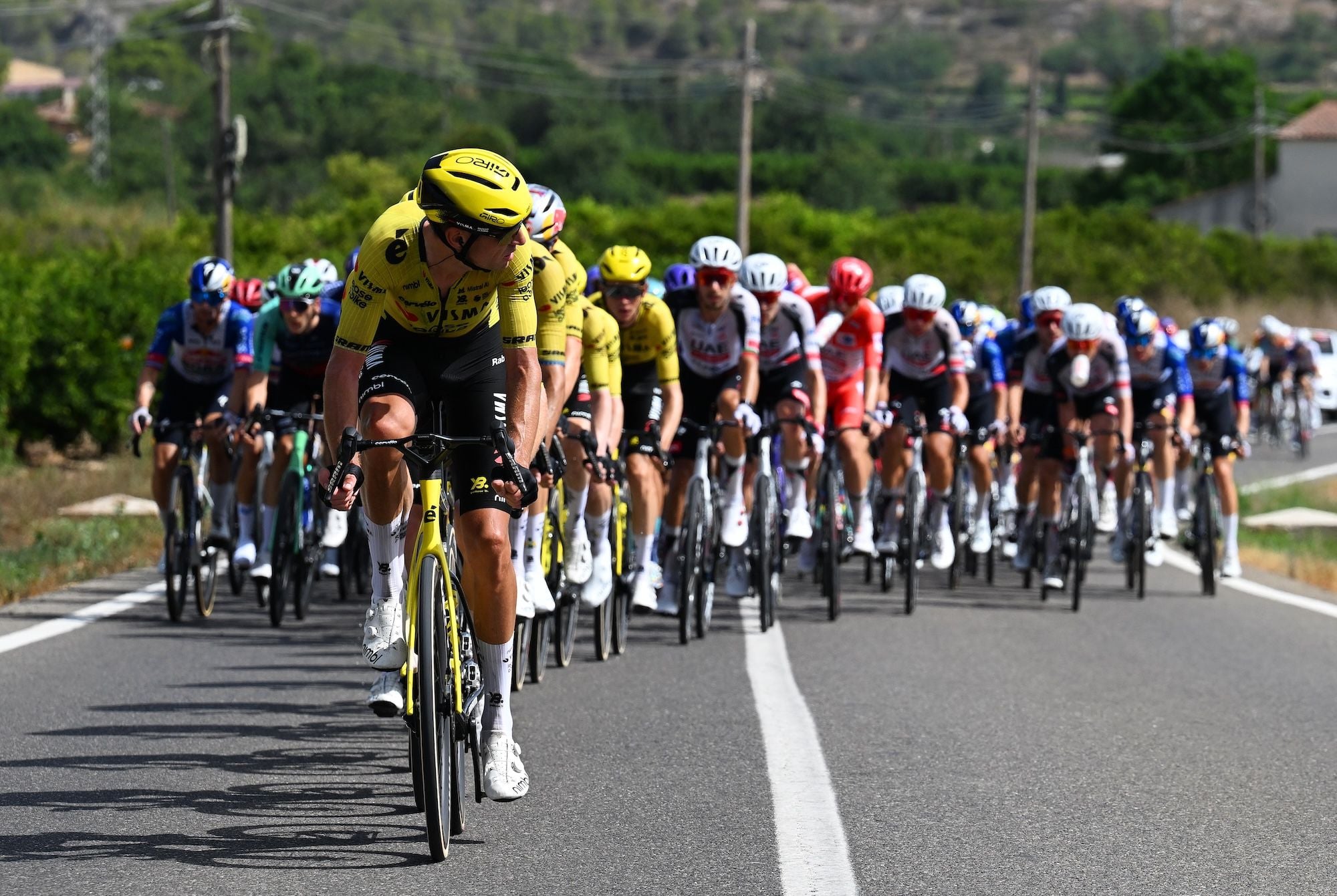
Common mistakes to avoid
Do not try to drive into central Barcelona on stage days. Road closures and traffic restrictions will make it stressful and slow.
Do not assume you can cross the race route freely. The city will use controlled crossing points and pedestrian flow systems.
Do not book accommodation without checking metro access. Being near a station matters more than being near a road.
Do not leave Montjuïc too late. If that is your target, arrive early and expect to stay.
Do not rely on buses. Many routes will be altered, suspended or delayed.
Do not treat the team presentation as a minor side event. It may draw a huge crowd and will affect the Sagrada Família area from well before the start time.
Do not overpack the day. One good viewing spot is better than three failed attempts to move across the city.
Do not assume the Grand Départ is only spectacle. The opening team time-trial could shape the GC, and stage 2’s Montjuïc finish may add more pressure before the race even reaches France.
Is the Barcelona Grand Départ worth visiting?
Yes, the Tour de France 2026 Grand Départ in Barcelona should be one of the best cycling spectator trips of the year.
It offers a rare opening team time-trial, a second stage finish on Montjuïc, a public team presentation by Sagrada Família and the chance to see the Tour start in one of Europe’s most recognisable cities. It is also compact enough that you can build a strong trip without following the race across multiple regions.
The main challenge is logistics. The same things that make Barcelona attractive, density, landmarks, public transport and large crowds, will also make the weekend demanding. A good trip will depend on choosing the right base, using the metro, arriving early and accepting that you will not be able to see everything.
For most fans, the best plan is simple: arrive by Thursday, see the team presentation, watch stage 1 from Montjuïc or the seafront, then watch stage 2 from Montjuïc or the city approaches. Add Granollers on Monday if you want the complete Catalan Grand Départ.
Barcelona will give the Tour a spectacular start. With the right planning, it can also give fans one of the most memorable race weekends of 2026.
For more Tour coverage, see our Tour de France hub, Tour de France 2026 full route guide and how to watch Tour de France 2026 in the UK guide.