The Tour de France 2026 route gives breakaway riders a lot to work with. This is not a race shaped only by pure sprint stages and high-mountain GC days. Between the Barcelona Grand Départ, the early Pyrenees, the Massif Central, the Vosges, the Jura, the Alps and the final Paris circuit, there are several stages where the peloton may struggle to impose full control.
That does not mean every hilly day will go to the break. The general classification teams will want to use the early mountains, the sprint teams will mark the flatter stages, and the points classification could keep some transitional days under tighter control than they first appear. But the route has enough awkward terrain, enough fatigue points and enough tactical uncertainty to make the breakaway battle one of the main stories of the race.
The best breakaway stages are not always the hardest stages. Sometimes a mountain stage is too important for the GC teams to ignore. Sometimes a flat stage has just enough climbing to weaken the sprinters but not enough to scare the chasing teams away. The sweet spot is usually a stage that is too hard for a straightforward sprint, not important enough for all the yellow jersey favourites, and open enough for stage hunters to commit early.
For the wider race picture, see our Tour de France 2026 full route guide, Tour de France 2026 route analysis and Tour de France 2026 stage hunters to watch.
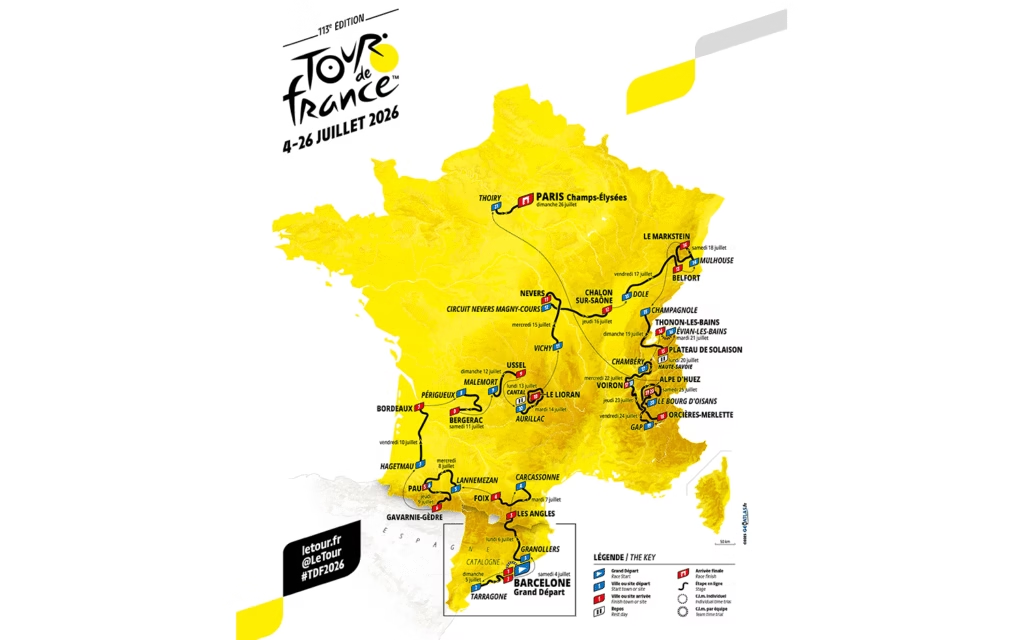
Best Tour de France 2026 breakaway stages at a glance
| Rank | Stage | Route | Why it suits breakaways |
|---|---|---|---|
| 1 | Stage 9 | Malemort to Ussel | Hilly, awkward, hard to control before the rest day |
| 2 | Stage 13 | Dole to Belfort | Long hilly day, ideal for durable stage hunters |
| 3 | Stage 17 | Chambéry to Voiron | Flat on paper, but 2,200m of climbing after the rest day and time-trial |
| 4 | Stage 4 | Carcassonne to Foix | Early hilly stage, good for puncheurs and opportunists |
| 5 | Stage 10 | Aurillac to Le Lioran | Mountain terrain, but GC interest could complicate the break |
| 6 | Stage 21 | Thoiry to Paris Champs-Élysées | Montmartre changes the usual final-stage sprint formula |
| 7 | Stage 18 | Voiron to Orcières-Merlette | Possible breakaway if GC teams hesitate before Alpe d’Huez |
| 8 | Stage 14 | Mulhouse to Le Markstein Fellering | Hard Vosges stage, but more likely GC-controlled than pure breakaway |
| 9 | Stage 15 | Champagnole to Plateau de Solaison | Huge stage, but summit finish makes GC control more likely |
| 10 | Stage 8 | Périgueux to Bergerac | Outside chance if sprint teams are tired or the wind changes the race |
What makes a good breakaway day?
A good breakaway stage needs more than hills. It needs a reason for the peloton not to chase properly.
That can come from fatigue, team priorities, awkward terrain, a weak sprint field, a difficult final, or a day placed before or after a major GC stage. Breakaways often succeed when several teams have reasons not to work and only one or two teams have a clear reason to chase.
The 2026 Tour has several of those days. Stage 9 comes before the first rest day and is awkward enough to favour attackers. Stage 13 is long and hilly, which makes it a natural stage-hunter target. Stage 17 comes after the individual time-trial and before the final Alpine block, which could make it a day where GC teams want control without necessarily wanting to spend energy.
The best breakaway riders will need more than strength. They will need timing, patience and the ability to choose the right move. In this Tour, the most obvious breakaway may not always be the winning one. Some days could take an hour or more to form properly.
For newer fans, our guide to what is a domestique at the Tour de France helps explain why some teams chase all day while others are free to attack.
1. Stage 9: Malemort to Ussel
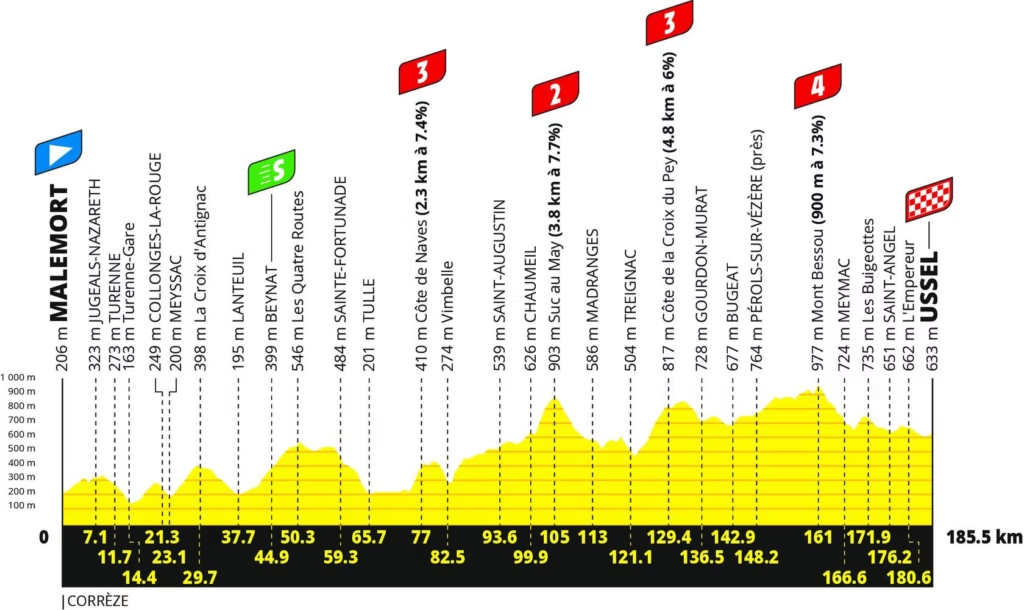
Stage 9 from Malemort to Ussel looks like the clearest breakaway day of the first half of the 2026 Tour. At 185.5km and officially classed as hilly, it has the right shape, timing and terrain to reward aggressive racing.
The key is where it sits in the race. It comes after the early Pyrenean block and just before the first rest day. By this point, the pure sprinters’ teams may already be tired, the GC teams may be thinking about recovery, and stage hunters will know this is one of their best chances before the race resets.
The route through Corrèze should be difficult to control. It is not a huge summit-finish stage, but it is rolling, awkward and likely to suit riders who can keep pressing over repeated climbs. That is usually exactly the terrain where a strong breakaway can build a gap and make the chase disorganised behind.
The finish in Ussel also helps the breakaway case. This is not a simple dragstrip sprint stage. It should favour riders who can handle a hard day, position well and still finish fast from a reduced group.
The danger for the break is that stage 9 is so obvious. When a stage looks made for attackers, every team without a sprint or GC plan wants to be in the move. That can make the start chaotic. If the break takes too long to form, the peloton may still have enough control to bring it back. But if the right group goes clear, this is the best breakaway opportunity of the race.
For more on this part of the route, see our Tour de France 2026 Massif Central guide.
2. Stage 13: Dole to Belfort
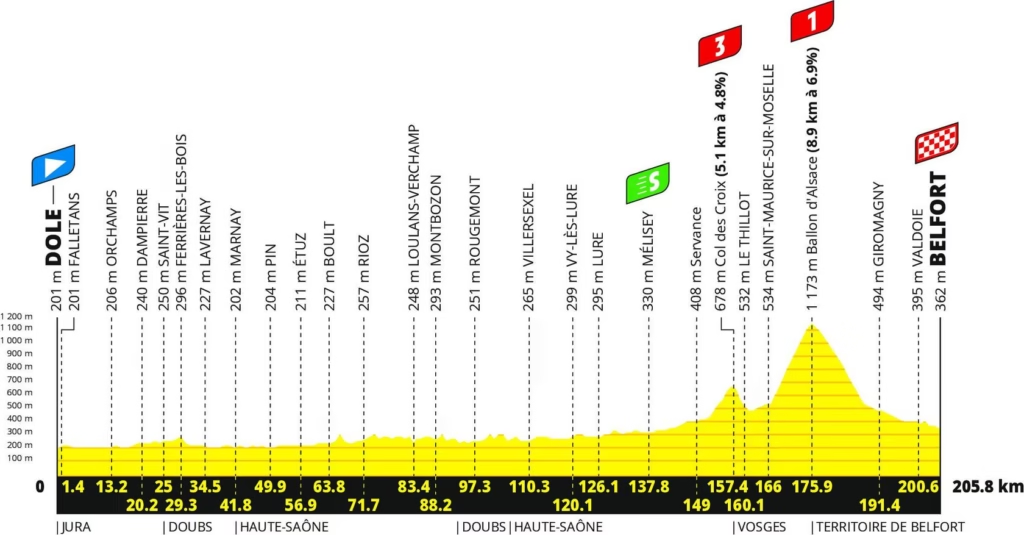
Stage 13 from Dole to Belfort is another prime breakaway stage. It is 205.8km, officially hilly, and comes after a run of flatter or more controlled days. That combination should make it very attractive to stage hunters.
The length matters. Over 200km at the Tour is never neutral, especially when the roads are not flat all day. Long hilly stages create fatigue before the final hour, and fatigue makes chasing harder. A committed breakaway with riders from several teams can become very difficult to organise against.
This is also the kind of stage where the peloton’s priorities may be divided. Sprint teams may not trust their fast men to survive. GC teams may want safety rather than a fight. Teams without a GC leader will see a clear chance. That is the perfect mix for a breakaway.
The Belfort finish also sits in an area with enough rolling terrain nearby to make the final tactical. Riders who can climb, descend, roll turns and sprint from a reduced group will be the most dangerous. It may not be a stage for pure climbers or pure sprinters, but for Classics-style riders and all-round stage hunters, it should stand out immediately.
Stage 13 could become one of the most fought-over starts of the Tour. The break may need to be big, strong and tactically balanced to survive, but this is exactly the sort of day where the winner could come from a move that forms early and slowly gains authority.
This stage also fits the wider middle-race pressure explored in our Tour de France 2026 Vosges and Jura guide, because it arrives just before the route turns more mountainous again.
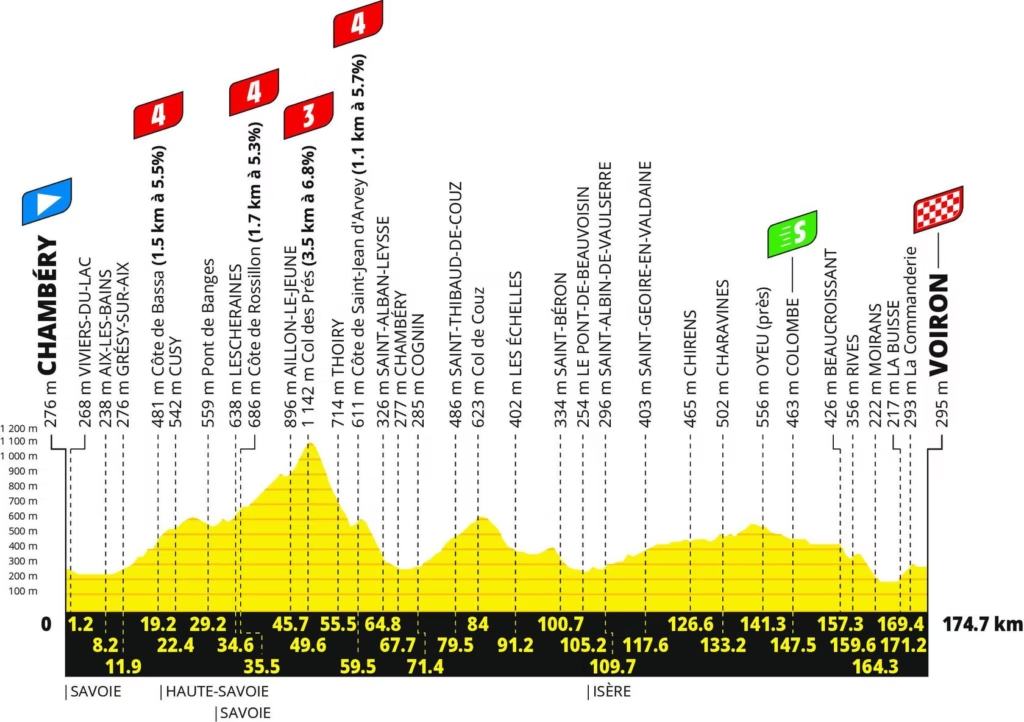
3. Stage 17: Chambéry to Voiron
Stage 17 is officially classed as flat, but that label is misleading. The route from Chambéry to Voiron is 174.7km with 2,200m of climbing, which makes it much more interesting than a routine sprint day.
Its position is also important. It comes immediately after the second rest day and the stage 16 individual time-trial. GC teams will have just spent energy on a key test against the clock, and the final Alpine block begins the following day. That makes stage 17 a classic in-between day. Everyone knows they need to stay alert, but not everyone will want to spend domestiques chasing all afternoon.
That opens the door for a breakaway. The stage is hard enough to make some sprinters uncomfortable, especially if the start is aggressive. It is also not hard enough to guarantee a GC showdown. That creates uncertainty, and uncertainty helps attackers.
The peloton’s behaviour will depend heavily on which sprinters are still in the race and which teams still have something to chase. If several fast men have already lost helpers or missed earlier chances, their teams may be desperate. If the sprint field has been thinned by the mountains, the breakaway’s chances rise.
This could be one of the sleeper breakaway days of the race. On paper it is not the most obvious, but by the third week, legs matter more than labels.
For the broader flat-stage context around Voiron, see our Tour de France 2026 sprint stages ranked and Tour de France 2026 sprinters guide.
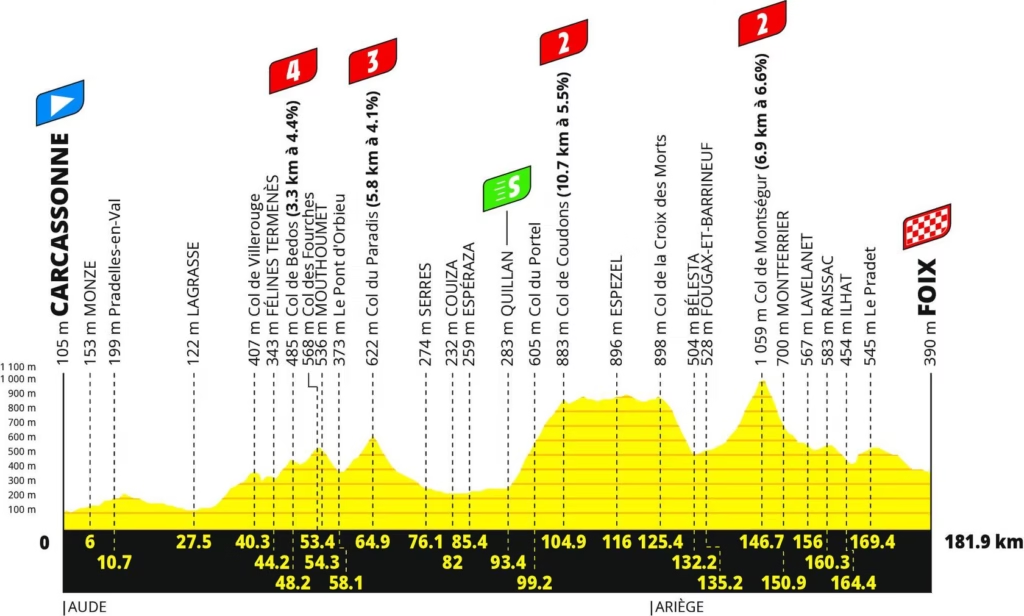
4. Stage 4: Carcassonne to Foix
Stage 4 to Foix is one of the first real opportunities for attackers. At 181.9km with 2,700m of climbing, it has enough difficulty to trouble the sprint teams but may arrive too early for the GC riders to fully open the race.
That timing is what makes it interesting. The Tour has already hit the Pyrenees by stage 3, so the race will not be easing gently into France. Stage 4 then gives puncheurs, strong rouleurs and breakaway climbers an immediate chance to test the peloton.
The route is lumpy rather than brutally mountainous. That should suit riders who can go early, handle repeated climbs and still have a finish. It is also a stage where some teams may want to place riders in the move to take pressure off their leaders or chase mountains points.
The main problem for the break is freshness. Early in the Tour, more teams still believe in their sprinters, their puncheurs and their GC options. The peloton usually has more energy and more motivation to chase. That makes stage 4 slightly less breakaway-friendly than stage 9 or stage 13.
Even so, Foix has the right profile for a dangerous move. If the start is hard and the right teams are represented, this could be the first proper breakaway victory chance of the 2026 Tour.
For the opening mountain context before this stage, see our Tour de France 2026 Pyrenees guide.
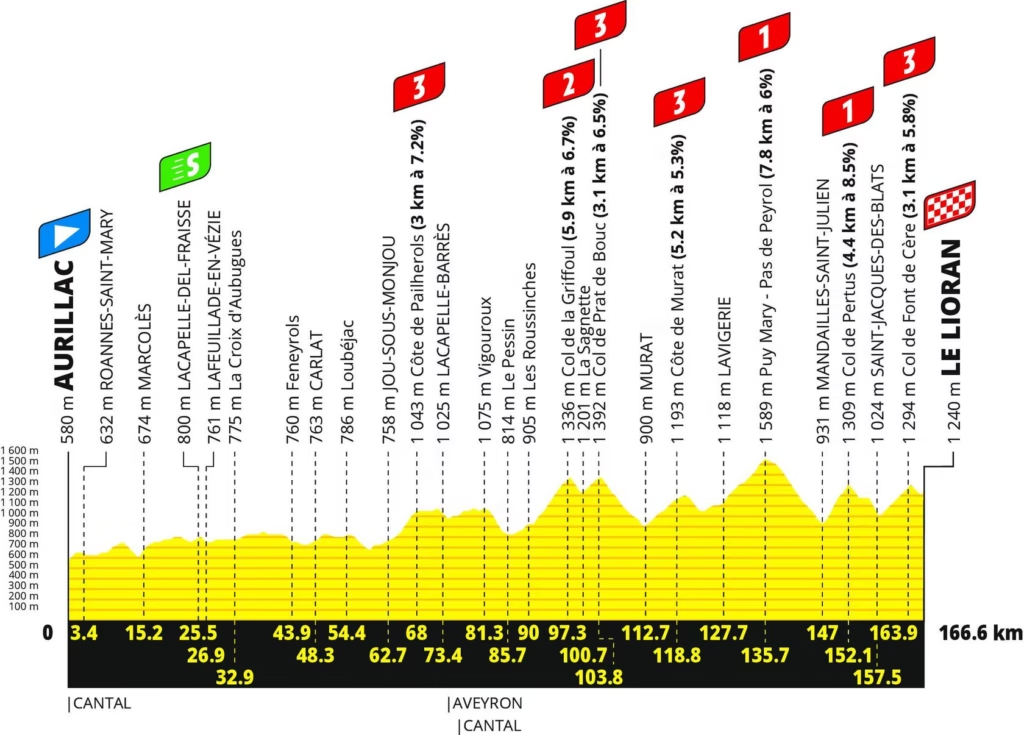
5. Stage 10: Aurillac to Le Lioran
Stage 10 to Le Lioran is one of the most tactically interesting stages on the route. It is 166.6km, officially mountainous, comes immediately after the first rest day and takes the race through the Massif Central.
On terrain alone, this should be a brilliant breakaway day. The climbs are repeated, the roads can be difficult to organise on, and the finish is not a traditional high-altitude Alpine summit. Strong stage hunters will love it.
The issue is the general classification. Le Lioran is too hard to ignore. GC riders have recent memories of this kind of terrain making real differences, and the stage comes after a rest day, when some riders can struggle to restart. That means the yellow jersey teams may not let the break take too much time.
The best outcome for the break is a two-race scenario. A strong move goes clear early, the GC teams control the gap without fully committing, and the break stays just far enough ahead to contest the stage while the favourites race behind. That is possible, but not guaranteed.
This is why stage 10 ranks below stage 9 despite being harder. It may be a better stage to watch, but it is not necessarily a safer bet for the breakaway.
For more on the GC danger of this stage, see our Tour de France 2026 route: best days for GC attacks and where the Tour de France 2026 can be won before the Alps.
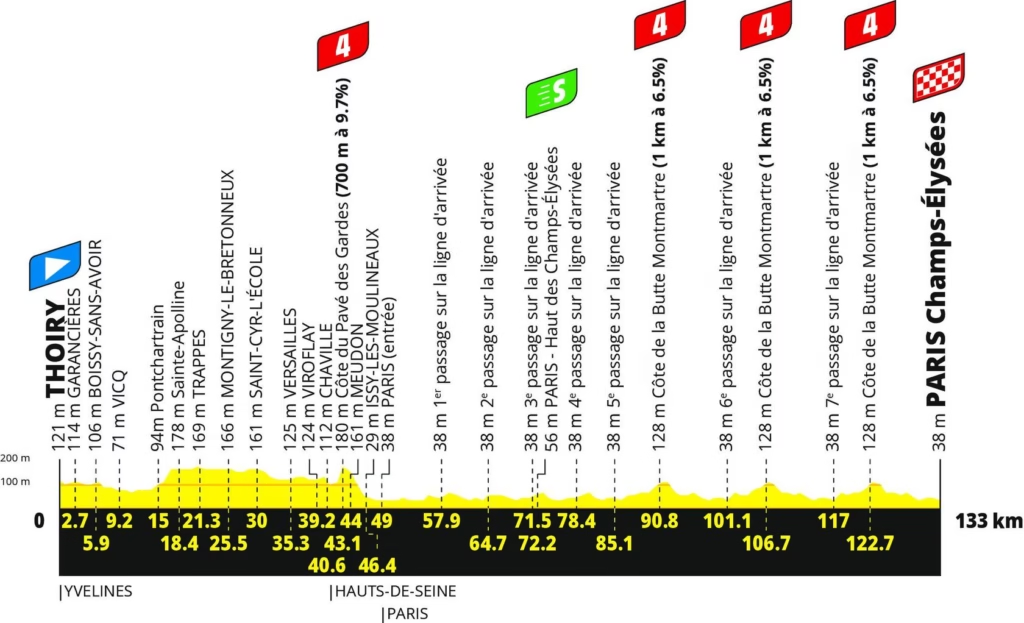
6. Stage 21: Thoiry to Paris Champs-Élysées
The final stage is no longer a guaranteed sprinter’s procession. Stage 21 from Thoiry to Paris Champs-Élysées is 133km and includes repeated ascents of the Côte de la Butte Montmartre late in the race.
That changes everything. A normal Champs-Élysées stage is controlled by sprint teams and ceremonial until the final circuits. The Montmartre version creates a much more open final. The climb is short, but it appears three times late in the stage, and that gives attackers somewhere to apply pressure.
This does not make a breakaway victory likely in the traditional early-move sense. The early break will still be hard to keep away, because the final stage carries major sprint prestige. But the late attacks on Montmartre are a different kind of breakaway opportunity. They favour riders who can launch from a reduced or stretched peloton rather than those who go from kilometre zero.
The final stage could suit Classics riders, puncheurs and powerful sprinters who can climb. It is less predictable than the usual Paris finish. A sprint is still very possible, but it may not be a clean bunch sprint, and that makes the stage much more interesting.
If the Tour reaches Paris with tired sprint trains and fewer teams committed to a chase, Montmartre could turn the final day into a genuine attacker’s stage.
For newer fans, our beginner’s guide to the Men’s Tour de France 2026 explains why the final stage is usually different from the rest of the race.
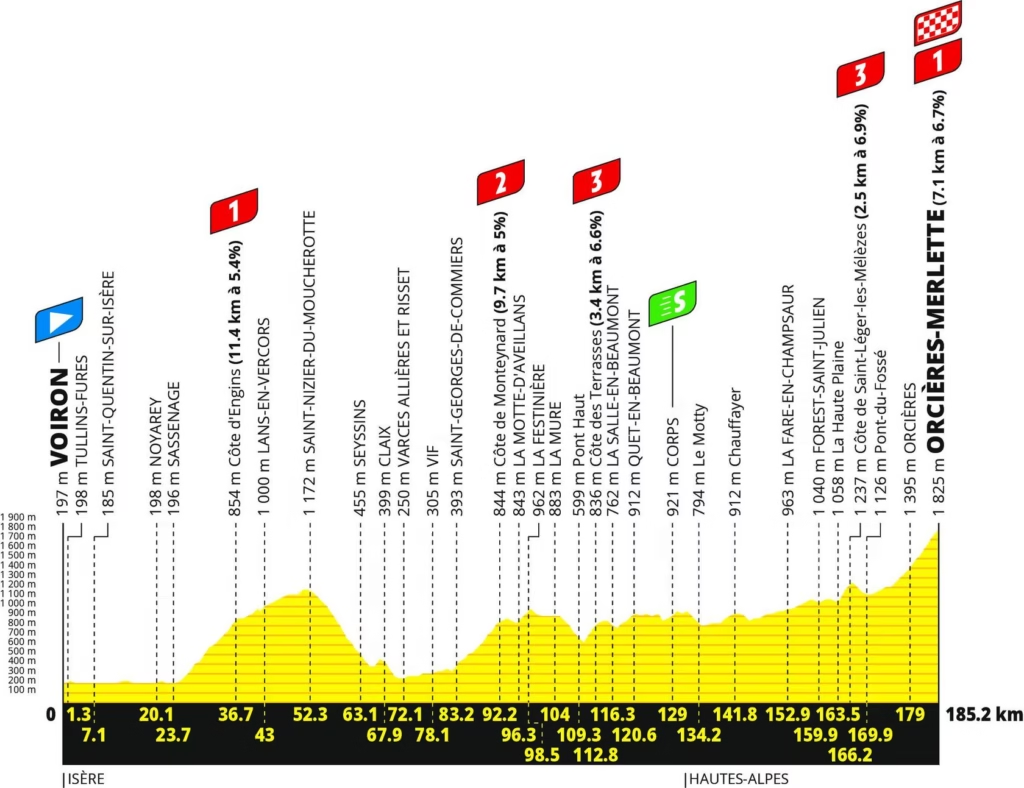
7. Stage 18: Voiron to Orcières-Merlette
Stage 18 from Voiron to Orcières-Merlette is a mountain stage and an official summit finish. That normally makes it more of a GC day than a breakaway day, but its position keeps it in the conversation.
It comes after stage 17 and before the back-to-back Alpe d’Huez stages. GC teams may have a dilemma. Do they spend everything on Orcières-Merlette, or do they ride more conservatively before the decisive final weekend? That question could give the breakaway a chance.
The stage is 185.2km with 3,900m of climbing, so any break that survives needs proper climbing quality. This is not a day for flat-road attackers trying to hang on. It is a day for climbers who have already lost time, mountain-stage specialists and riders targeting the polka-dot jersey.
The breakaway’s chance depends on the GC situation. If the race is tight and a major team wants to test rivals, the break may be caught. If the strongest teams are saving resources for the Alpe d’Huez double-header, the right move could stay away.
This is a high-risk, high-reward breakaway stage. It is less reliable than stages 9, 13 or 17, but the stage winner could easily come from the day’s early move if the GC race hesitates.
For more on the final week, see our Tour de France 2026 Alps guide and Tour de France 2026 summit finishes guide.
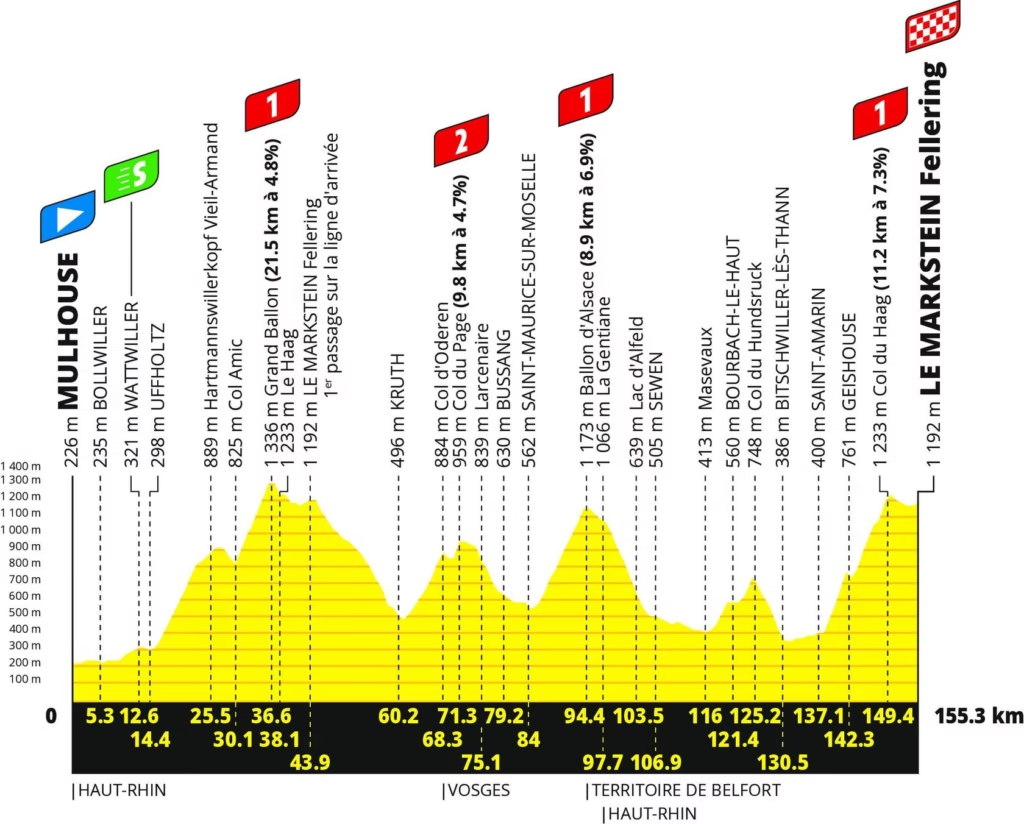
8. Stage 14: Mulhouse to Le Markstein Fellering
Stage 14 in the Vosges is a serious mountain stage. The route from Mulhouse to Le Markstein Fellering is 155.3km and forms part of the race’s middle-week climbing block.
It is breakaway-relevant because the Vosges often produce hard, tactical racing. The climbs are not as long as the Alps, but they can be steep, irregular and difficult to control. The route should appeal to climbers who are out of GC but still strong enough to survive repeated efforts.
The problem is that the GC teams may also see this as an opportunity. The stage is hard enough to expose weakness and comes before stage 15 to Plateau de Solaison. If a major team wants to apply pressure before the second rest day, the break could be caught.
That makes stage 14 a conditional breakaway day. If the GC race is settled into a pattern, the break has a chance. If the favourites are still looking to test each other, the stage could become a yellow jersey fight.
It is a good day for polka-dot jersey attackers, but not the most reliable stage-win opportunity for the break.
For more on this part of the race, see our Tour de France 2026 Vosges and Jura guide and Tour de France 2026 climbers guide.
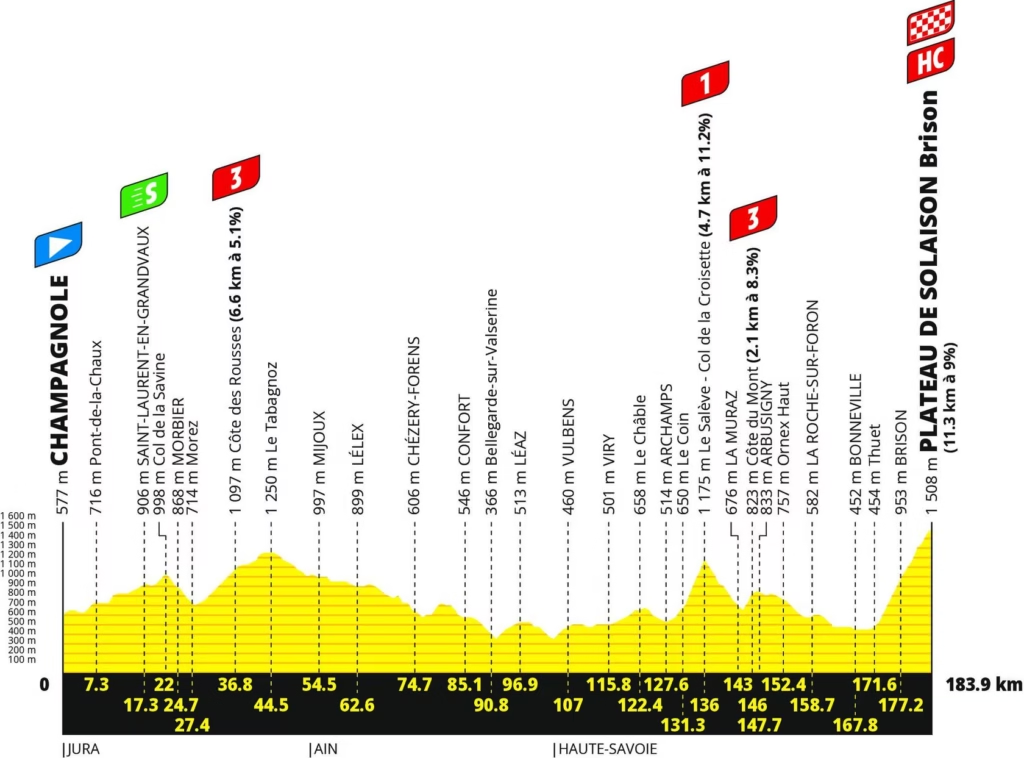
9. Stage 15: Champagnole to Plateau de Solaison
Stage 15 is a big mountain day to Plateau de Solaison. It is 183.9km and finishes on one of the five official summit finishes of the 2026 Tour. That makes it a tempting breakaway target, but also a dangerous one.
Breakaway climbers will look at this stage and see opportunity. The climb to Plateau de Solaison is hard enough to produce a proper mountain-stage winner, and the stage comes just before the second rest day. Riders who are out of GC may be willing to empty themselves.
But the same logic applies to the favourites. Before a rest day, GC teams often accept more risk. A summit finish gives them a clear place to gain time. If the yellow jersey battle is close, the strongest teams may not allow the break to take the stage.
The breakaway could still survive if the move is packed with riders no longer relevant on GC and if the peloton gives them enough space early. But compared with stage 9 or stage 13, this is more dependent on the GC situation.
Stage 15 is probably better described as a breakaway chance for climbers than a pure breakaway day.
For more on why Plateau de Solaison matters, see our Tour de France 2026 mountain stages ranked by difficulty and Tour de France 2026 summit finishes guide.
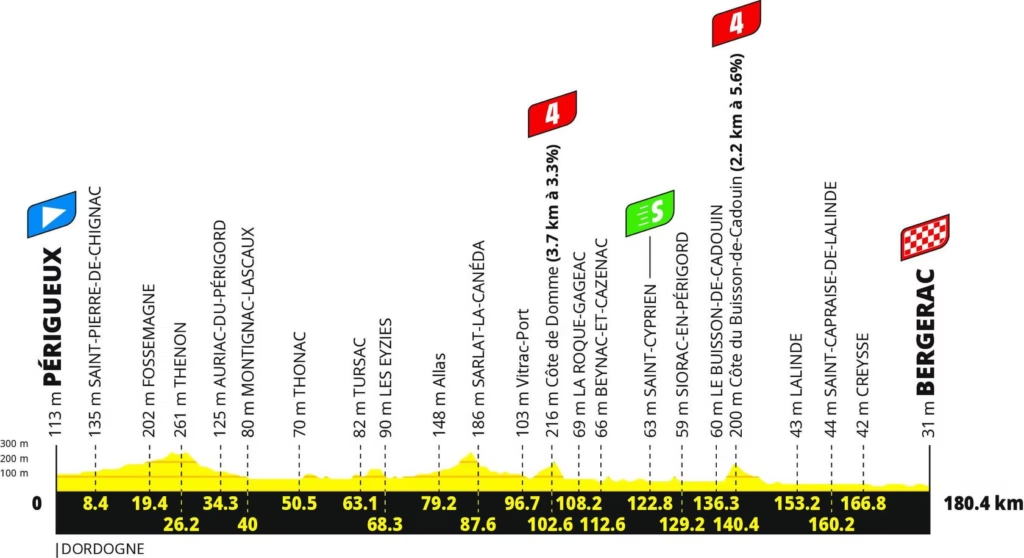
10. Stage 8: Périgueux to Bergerac
Stage 8 from Périgueux to Bergerac is officially flat and should be a sprint day. But it still has a small outside chance of becoming complicated depending on wind, fatigue and the state of the sprint teams.
By this point, the race will already have been through the early mountains. Some sprinters may have been dropped hard, some lead-out trains may be damaged, and some teams may have already missed chances. That can make a stage harder to control than it looks.
The most likely outcome is still a sprint. Bergerac is too tempting for fast men, and the flat-stage label will bring commitment from teams chasing green jersey points and stage wins. But if the break is strong, the wind gets involved, or the peloton hesitates, stage 8 has a small chance of producing a surprise.
It is not one of the best breakaway stages on the route, but it belongs in the discussion because the timing is awkward. A race that starts hard in Barcelona and heads quickly into the Pyrenees may already have tired legs before this supposedly simpler day.
For the wider sprint context, see our Tour de France 2026 sprint stages ranked and Tour de France 2026 jerseys explained.
Why some mountain stages may not favour breakaways
The 2026 Tour has eight mountain stages, but not all of them are good breakaway chances. That is the key thing to understand.
Stage 6 to Gavarnie-Gèdre is the first major mountain summit finish and likely to be important for GC. Stage 19 to Alpe d’Huez is too close to the final result to be ignored. Stage 20 is the queen stage, with the Galibier, Sarenne and Alpe d’Huez, and should be controlled by the strongest GC teams for as long as they can manage.
Those stages may still have early breakaways, but the break is less likely to contest the win. The GC race will probably catch them, or at least reduce the gap enough that the stage becomes about the favourites.
The best breakaway mountain stages are usually the ones where the GC teams hesitate. Stage 10, stage 14, stage 15 and stage 18 all have some breakaway logic, but each also has reasons for GC control. That is why the top of the breakaway list is led by hilly and transitional stages rather than the biggest Alpine days.
For the decisive mountain picture, see our Tour de France 2026 queen stage guide and Tour de France 2026 climbs guide.
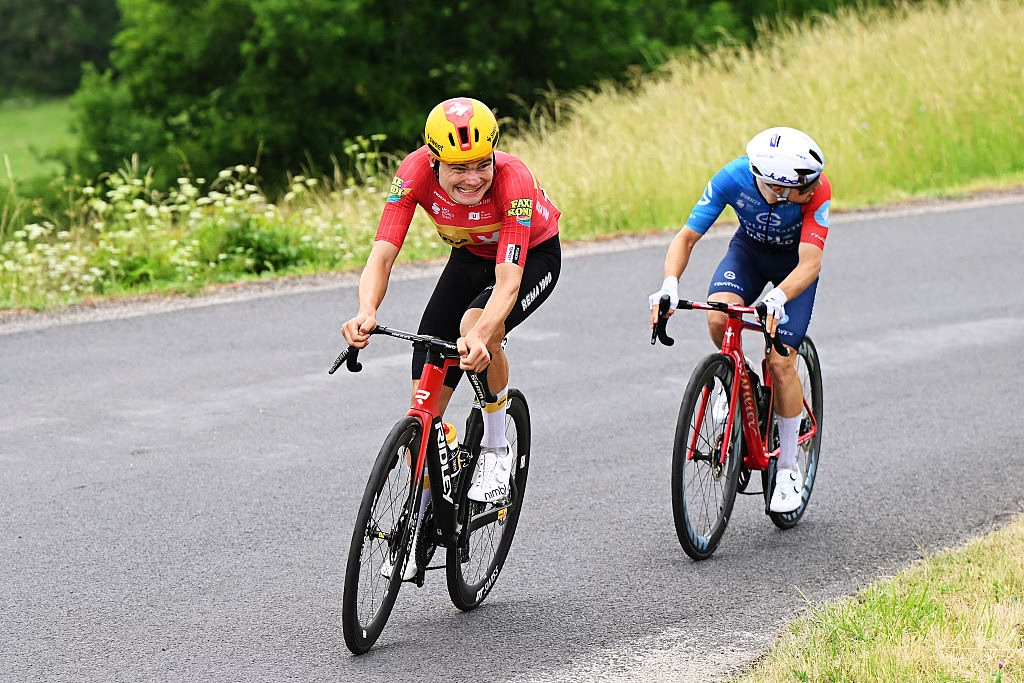
The best teams for breakaway days
The best breakaway teams at the 2026 Tour will probably be the ones without an all-consuming GC plan or a dominant sprinter to protect. Those teams can afford to attack repeatedly and commit riders to early moves.
Teams with stage hunters will target stage 4, stage 9, stage 13 and stage 17 especially. These are the days where the route is hard enough to reward aggressive racing but not so hard that only pure climbers can survive.
Teams with climbers who are out of GC may wait for stages 10, 14, 15 and 18. Those stages require better climbing legs and may become linked to the mountains classification. A rider who loses time early could become far more dangerous later in the race if the peloton stops treating him as a GC threat.
The strongest breakaway squads will also need numbers. At the Tour, one rider attacking alone from the start is rarely enough. The best moves often include riders from several teams, which makes the chase harder to organise behind.
For likely names, see our Tour de France 2026 stage hunters to watch and full start list for Tour de France 2026.
What kind of rider can win from the break?
The ideal Tour de France 2026 breakaway rider needs range. This route is not packed with easy long-range solo days. It favours riders who can climb well, roll turns, handle repeated accelerations and still finish from a small group.
For stage 9 and stage 13, the best rider type is a Classics-style attacker: strong on rolling terrain, able to survive repeated climbs and fast enough to win from a reduced group. For stage 10 and stage 18, the profile shifts towards climbing stage hunters. For stage 17, the race could suit rouleurs who can handle hills and still maintain high speed across the final hour.
A pure climber may struggle to win the hilly stages if the finale is tactical and flat enough for faster riders to return. A pure sprinter will struggle to survive the harder breakaway stages. The most dangerous riders are the ones who sit between categories.
That is why this route looks good for adaptable stage hunters rather than one type of specialist. Riders such as Mads Pedersen and Tom Pidcock could be especially interesting on stages where the race sits between sprint, hilly Classic and mountain day. For more detail, see our features on Mads Pedersen at the Tour de France 2026 and Tom Pidcock at the Tour de France 2026.
Breakaway stages ranked by likelihood
If the ranking is based purely on the chance of the breakaway winning, the order looks like this:
| Rank | Stage | Breakaway chance |
|---|---|---|
| 1 | Stage 9: Malemort to Ussel | Very high |
| 2 | Stage 13: Dole to Belfort | Very high |
| 3 | Stage 17: Chambéry to Voiron | High |
| 4 | Stage 4: Carcassonne to Foix | Medium-high |
| 5 | Stage 21: Thoiry to Paris Champs-Élysées | Medium, mostly late attacks |
| 6 | Stage 10: Aurillac to Le Lioran | Medium, but GC danger |
| 7 | Stage 18: Voiron to Orcières-Merlette | Medium, GC-dependent |
| 8 | Stage 14: Mulhouse to Le Markstein Fellering | Medium-low, GC-dependent |
| 9 | Stage 15: Champagnole to Plateau de Solaison | Medium-low, summit-finish risk |
| 10 | Stage 8: Périgueux to Bergerac | Low, but not impossible |
The most important distinction is between “breakaway forms” and “breakaway wins”. Almost every road stage will have a move. The question is whether the peloton has the motivation, terrain and manpower to bring it back.
Stage 9 and stage 13 are the strongest answers because the route and race context both point towards attackers. Stage 17 is the hidden danger day. Stage 4 is early but promising. Stage 10 may be the most exciting stage on the list, but the GC fight could pull it away from the break.
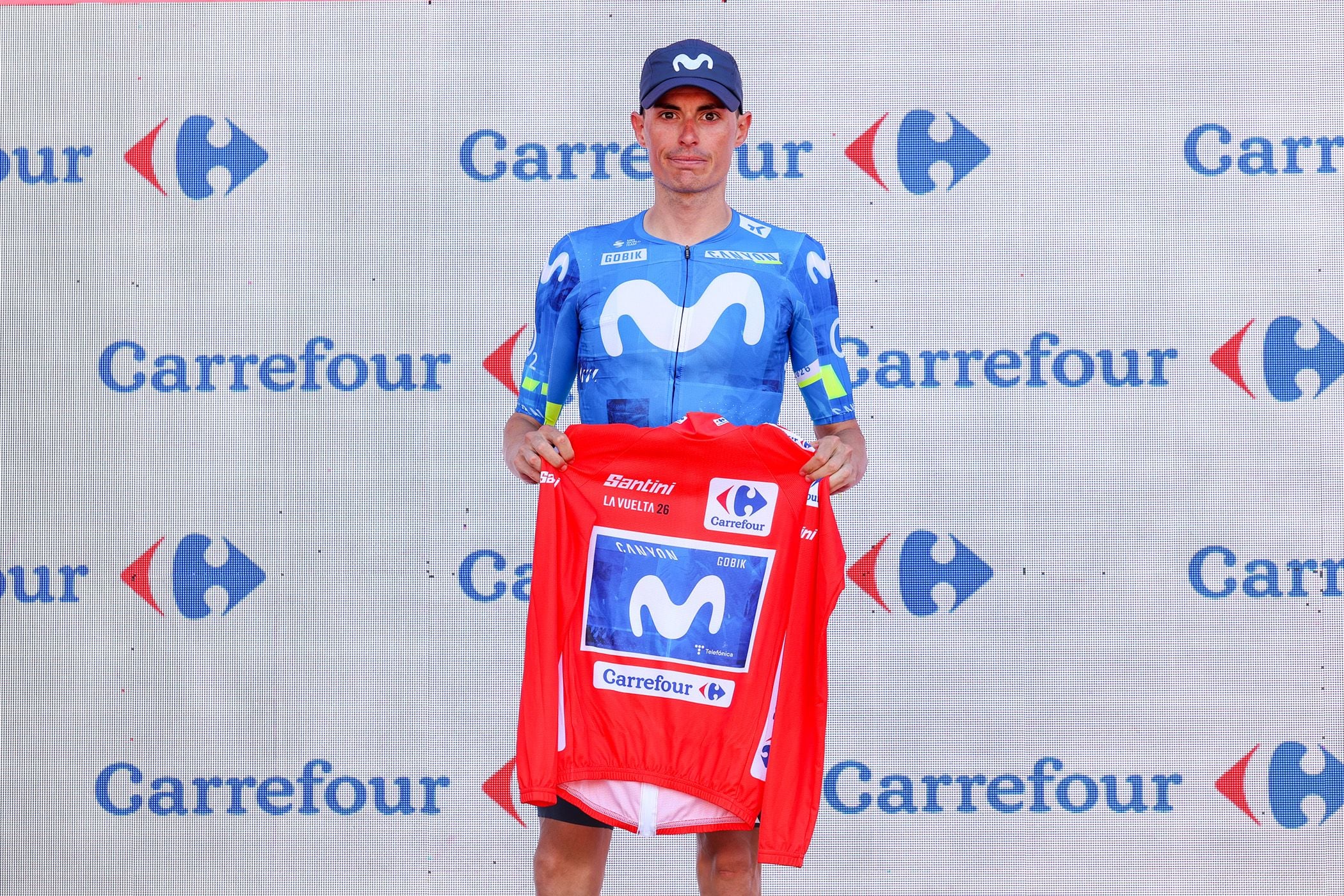
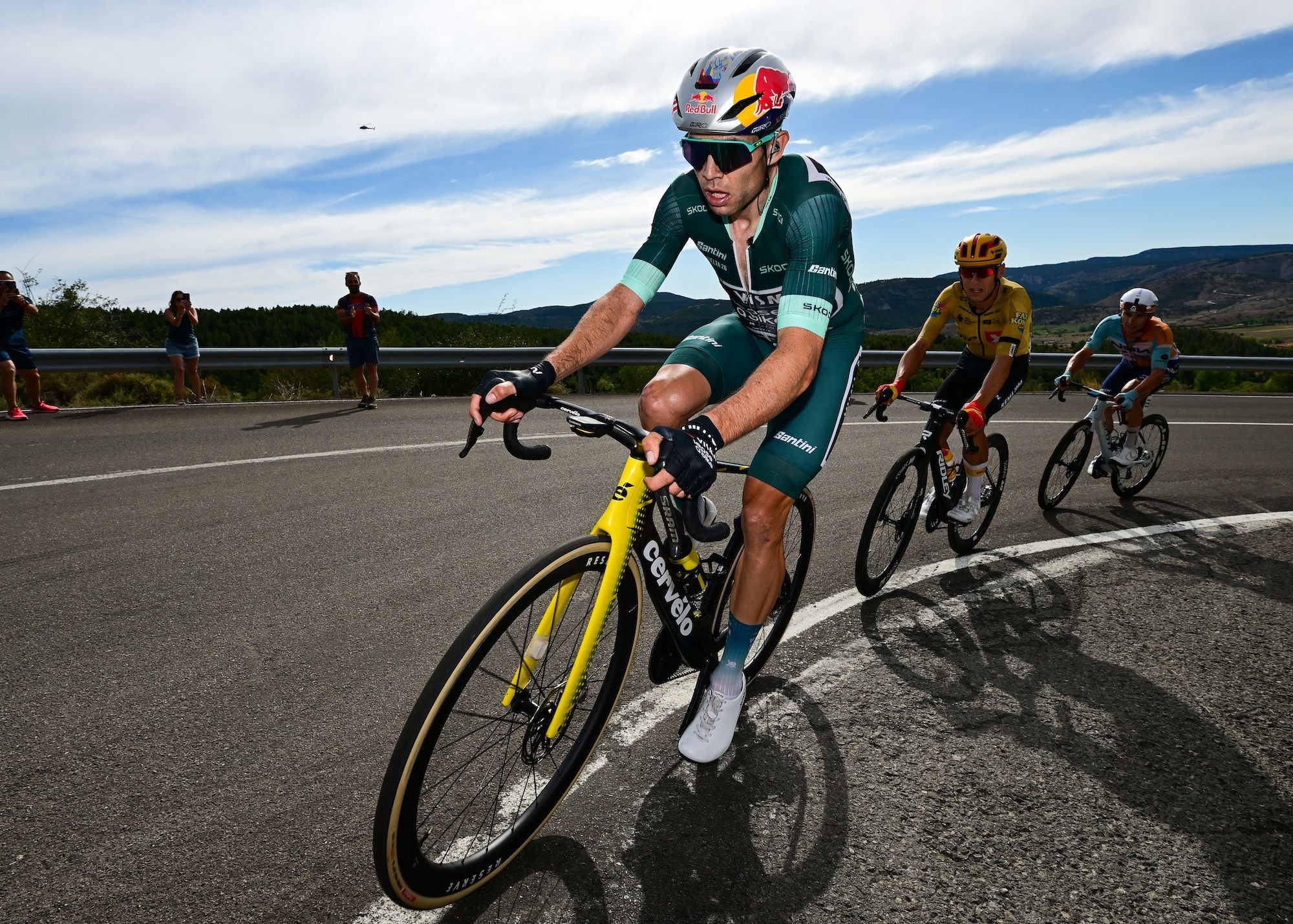
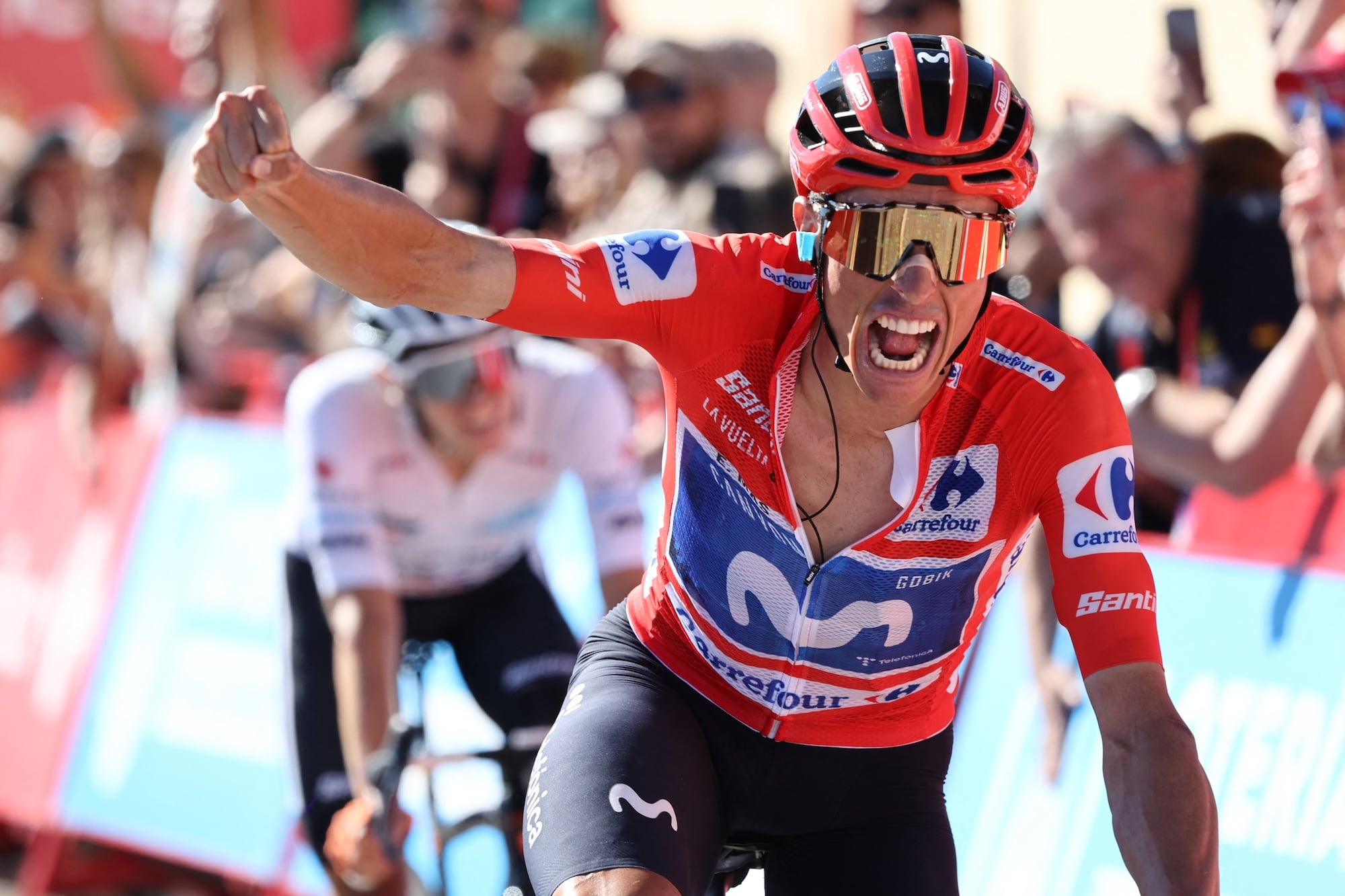
Best breakaway day for TV viewers
The best breakaway day to watch from start to finish is stage 9 to Ussel. The fight to make the break could be fierce, the terrain should keep the race alive, and the finish is open enough for tactics rather than pure climbing strength.
Stage 13 to Belfort is another excellent full-stage viewing option. Long hilly stages can sometimes look slow in the middle, but they often produce tense finales because the breakaway balance changes as fatigue builds.
Stage 17 to Voiron may be the best sleeper stage. If the peloton underestimates it, the break could gain time quickly. If sprint teams commit, the chase could be tight. Either way, it is more interesting than the flat-stage label suggests.
For GC drama as well as breakaway tension, stage 10 to Le Lioran is the best pick. It may not be the safest breakaway day, but it could be one of the best racing days of the entire Tour.
For viewing details, see our how to watch Tour de France 2026 in the UK guide.
Final verdict: the best breakaway stage of the Tour de France 2026
Stage 9 from Malemort to Ussel is the best breakaway day of the 2026 Tour de France. It has the right terrain, the right timing and the right tactical profile. It comes before the first rest day, after early mountain fatigue, and on roads that should make a controlled sprint difficult.
Stage 13 to Belfort is close behind. It is longer, hilly and likely to suit experienced stage hunters. Stage 17 to Voiron is the underrated third-week option, especially because it comes between the individual time-trial and the final Alpine block.
The mountain stages will attract breakaways too, but many of them are tied too closely to the GC battle to be considered reliable stage-win opportunities for attackers. Stage 10 to Le Lioran, stage 14 to Le Markstein, stage 15 to Plateau de Solaison and stage 18 to Orcières-Merlette all have breakaway potential, but each could be pulled back into the yellow jersey fight.
The 2026 Tour should reward stage hunters who are brave, selective and patient. The obvious move will not always be the winning one. But on the right days, especially Ussel, Belfort and Voiron, the breakaway could define the race as much as the GC favourites.
For more route coverage, visit our Tour de France hub, Tour de France 2026 full route guide and Tour de France 2026 route analysis.