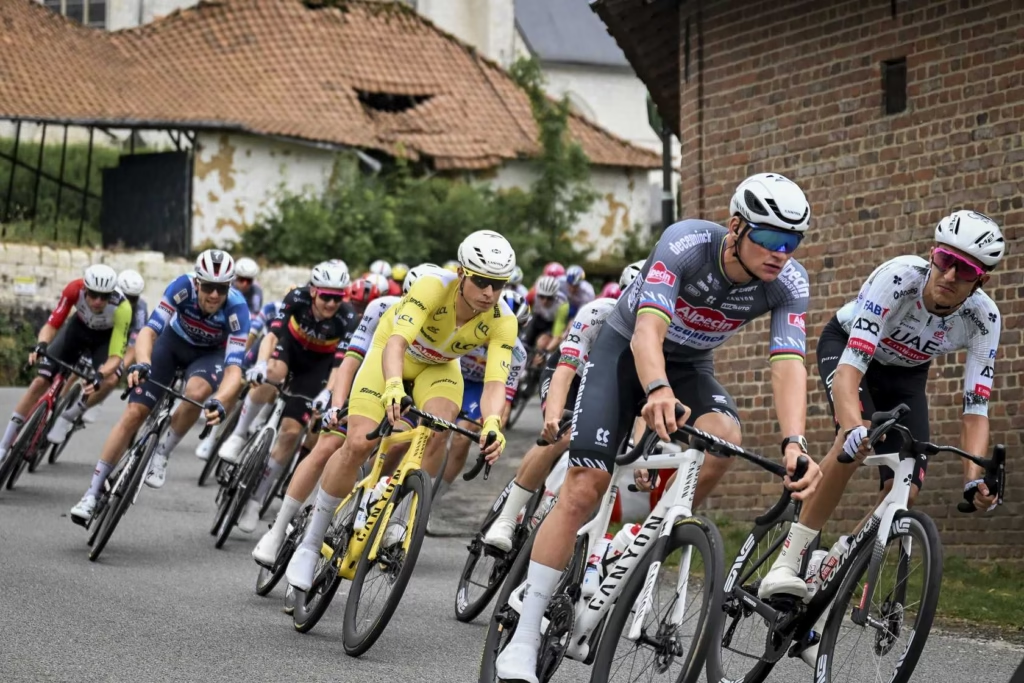
Sprinters suffer in the Tour de France mountains because they are built for a different kind of cycling. The best sprinters are powerful, explosive and fast over short distances. The best climbers are lighter, more efficient uphill and able to sustain hard efforts for long periods. When the road tilts upwards for 30, 40 or 60 minutes at a time, the advantages that make a sprinter fast on flat roads become much less useful.
That does not mean sprinters are weak riders. Far from it. A Tour de France sprinter is still one of the strongest endurance athletes in the world. They can survive huge distances, repeated accelerations, sprint finishes, crosswinds, crashes and three weeks of pressure. The problem is that mountain stages ask a very different question: how much power can a rider produce relative to their body weight, again and again, while already fatigued?
That is where the Tour becomes cruel for sprinters. Their larger muscle mass helps them produce huge peak power in a sprint, but it becomes extra weight on long climbs. Their teams may no longer be riding for a stage win. The pace is being set by GC teams, climbing domestiques and mountain specialists. The goal changes from winning to surviving.
At the 2026 Tour de France, that will matter because the route includes eight mountain stages, early Pyrenean pressure, the Massif Central, the Vosges, the Jura and a final Alpine block with back-to-back Alpe d’Huez stages. For sprinters chasing the green jersey or flat-stage wins, getting through those mountains will be just as important as winning in Bordeaux, Bergerac or Paris.
For the wider race picture, see our Tour de France 2026 full route guide, Tour de France 2026 mountain stages ranked by difficulty and Tour de France 2026 sprinters guide: who can win green?.
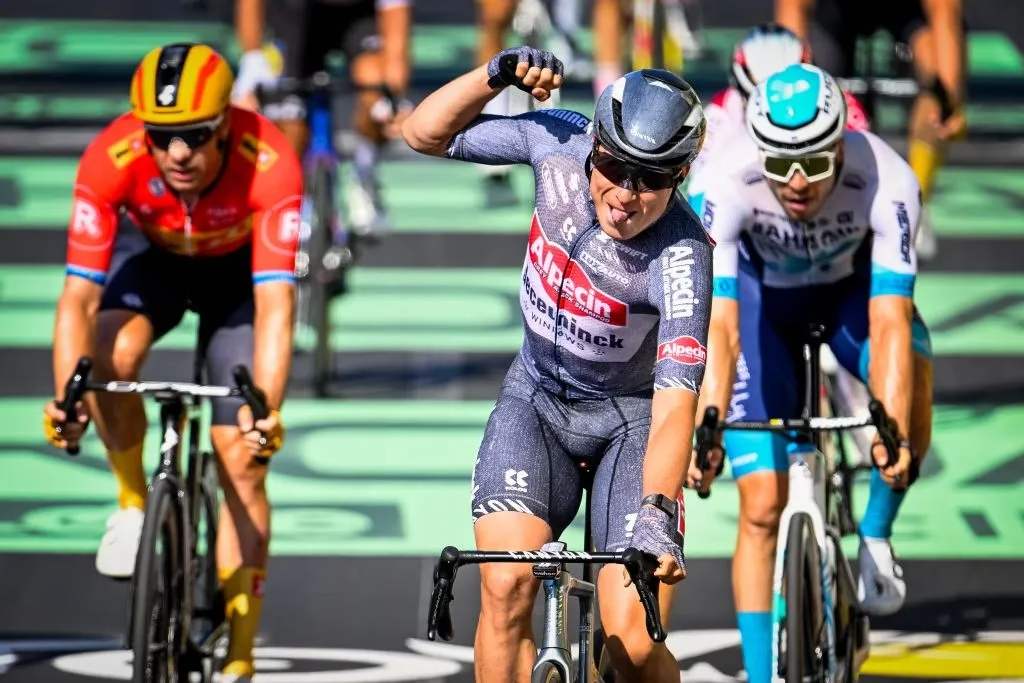 Photo Credit: Getty
Sprinters are built for power, not climbing
The most obvious reason sprinters struggle in the mountains is body type. A sprinter needs explosive power. That usually means more muscle mass, especially in the legs, hips and upper body. That muscle helps them accelerate at the end of a flat stage and produce the huge watts needed to win a bunch sprint.
On flat roads, that power is a major advantage. In the final 200 metres, a top sprinter can produce more peak power than almost anyone else in the race. That is why riders like Jasper Philipsen, Tim Merlier, Olav Kooij, Arnaud De Lie, Biniam Girmay and Mads Pedersen can be so dangerous when the road and timing suit them.
On climbs, the calculation changes. Riders are not only fighting air resistance. They are fighting gravity. Every extra kilogram has to be carried uphill. A sprinter can still produce enormous power, but if they are heavier than a climber, they may need to produce much more just to climb at the same speed.
That is why power-to-weight ratio matters so much in the mountains. A sprinter may have a bigger engine in absolute terms, but a climber can often produce more power per kilogram for the duration of a long climb. Over one short ramp, a sprinter can cope. Over a full Alpine stage, the difference becomes brutal.
For the wider sprint field, see our best sprinters at the Tour de France 2026.
Peak power and climbing power are not the same thing
Sprint power is short, violent and explosive. Climbing power is sustained. That is a completely different demand.
A sprinter’s best weapon might last 10 to 20 seconds. Their job on a flat stage is to survive in the bunch, stay protected, then unleash one maximum effort at the finish. They need acceleration, positioning, timing and nerve.
A mountain stage asks them to hold hard but controlled efforts for far longer. A climb such as the Tourmalet, Galibier, Croix de Fer or Alpe d’Huez is not about one burst. It is about repeated threshold efforts, recovery between climbs, pacing, fuelling and staying inside the time cut.
That is why some sprinters can look strong on short hills but still suffer badly in the high mountains. A punchy climb of two or three minutes is not the same as a 40-minute ascent at altitude after four hours of racing.
The Tour exposes that difference. It does not ask whether a sprinter is fit. It asks whether they can repeat a climbing effort that does not match their physiology.
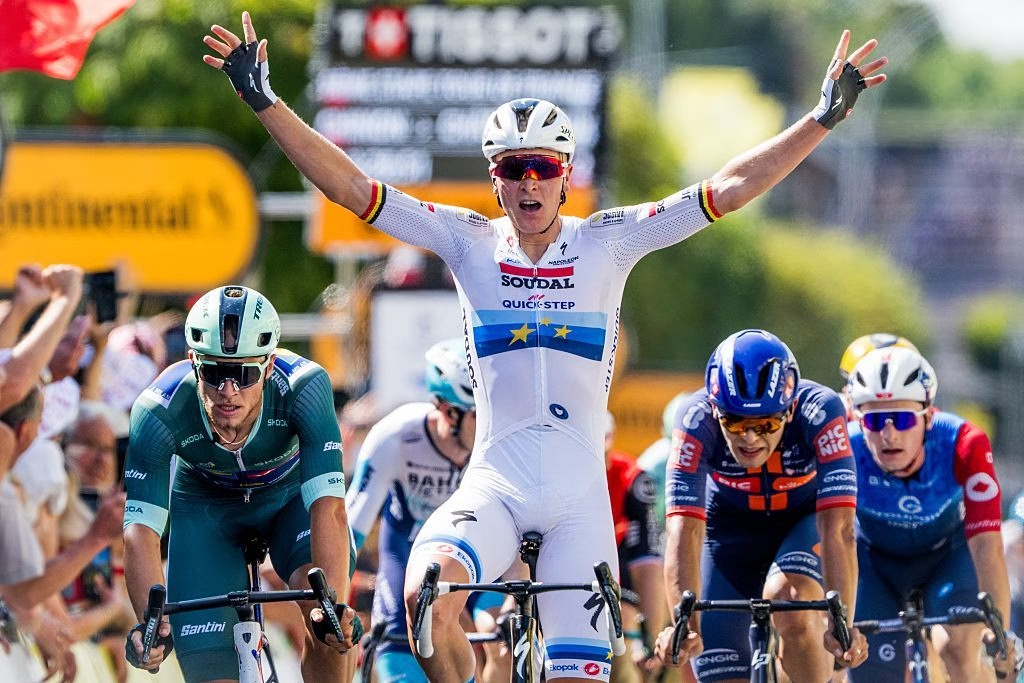 Photo Credit: Getty
Why weight matters so much uphill
Climbing is partly about how much force a rider needs to move their body and bike against gravity. The steeper and longer the climb, the more costly extra weight becomes.
A sprinter’s muscle mass is useful when accelerating on flat roads, but in the mountains it becomes weight to carry. A climber may be much lighter, meaning they can climb at a high speed with less absolute power. A heavier sprinter might produce more watts but still go slower because those watts are spread across more kilograms.
This is why sprinters often try to arrive at the Tour as light as possible without losing their sprint. It is a delicate balance. Lose too much weight and they may lose the power that makes them fast. Carry too much and the mountains become harder.
Teams know this. A sprinter’s Tour preparation is not only about top speed. It is about surviving the mountain stages without weakening the sprint. That is a difficult compromise.
For pure climbers, the mountains are where they can win. For sprinters, they are often where they try not to lose the Tour before the next sprint chance arrives. For the climbing side of that contrast, see our best climbers at the Tour de France 2026.
The pace is set by riders with different goals
Sprinters do not suffer only because the climbs are hard. They suffer because the pace is being dictated by riders who want something completely different.
On flat stages, sprint teams often control the race. They set the speed, manage the breakaway and save their sprinters for the final kilometres. The whole rhythm of the stage is built around the sprinter’s needs.
In the mountains, that changes. GC teams take over. Climbing domestiques set hard tempo. Teams chasing the yellow jersey or stage win use the climbs to drop rivals. The pace is not designed to be survivable for sprinters. It is designed to create selection.
That means sprinters are often in trouble long before the final climb. The first major climb may already be ridden fast enough to split the peloton. The second climb may remove more riders. By the final climb, the sprinters are usually in a different race entirely.
Their aim is no longer to follow the favourites. It is to manage losses, find the gruppetto and finish inside the time limit.
For more on how team aims change the race, see our how Tour de France teams work and Tour de France 2026 domestiques who could decide the race.
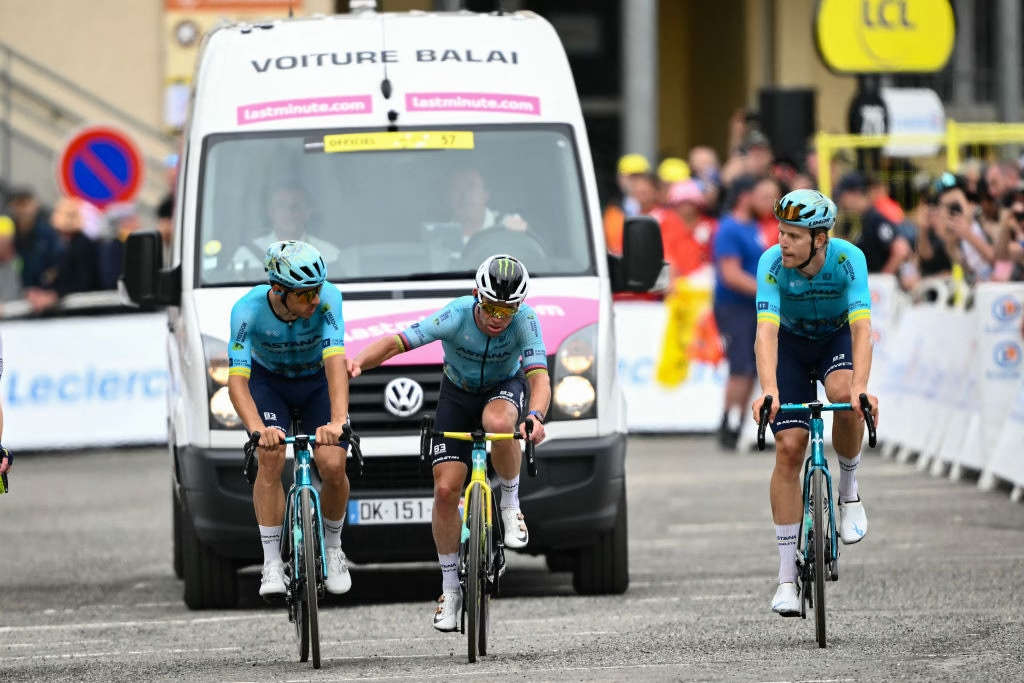 Photo Credit: Getty
What is the gruppetto?
The gruppetto is the group of riders who form at the back of the race on mountain stages. It is usually made up of sprinters, lead-out riders, heavier domestiques and anyone else who cannot follow the climbing pace of the main contenders.
The gruppetto is not a casual group. It has a job: reach the finish inside the time cut while spending as little energy as possible. Riders cooperate because they all need the same outcome. They ride steadily, share pacing and avoid panic.
Experienced sprinters know how to ride in the gruppetto. They understand when to let the peloton go, how hard to ride on the climbs, when to recover on descents and how to calculate the time limit. A rider who tries to hang on too long with the favourites may explode and lose more time than if they had settled into the gruppetto earlier.
The gruppetto is one of the Tour’s hidden tactical worlds. It does not decide the yellow jersey, but it decides whether sprinters are still in the race when the next flat stage arrives.
What is the time cut?
The time cut is the maximum time a rider can lose on a stage and still remain in the Tour. If a rider finishes outside the time limit, they can be eliminated.
The time cut is based on the stage winner’s time, the difficulty of the stage and the speed of the race. Hard mountain stages usually allow more time than flat stages, but they are also much harder to complete. That means sprinters still have to ride properly. They cannot simply roll to the finish.
The time cut is why mountain days are so stressful for sprinters. They are not racing for the stage, but they are racing against elimination. A bad day, a crash, illness, heat, poor fuelling or a very fast stage can suddenly make survival difficult.
The danger is especially high when the favourites race hard from early in the stage. If the winner’s time is fast, the allowed finishing time can still be demanding. Sprinters then need the gruppetto to work efficiently.
The Tour occasionally allows discretion if a large group misses the cut in exceptional circumstances, but riders cannot depend on that. The safest approach is to beat the limit.
For a full breakdown, see our how Tour de France time cuts work. For more on how the broader standings work, see our how the Tour de France general classification works.
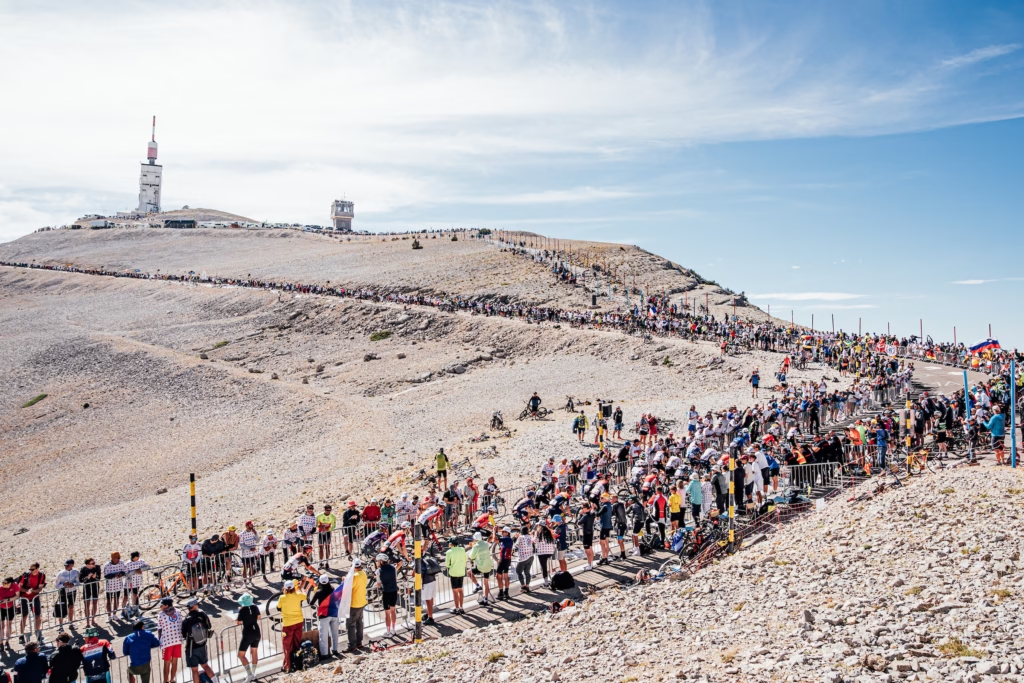
Why mountain stages can end a sprinter’s Tour
A sprinter’s Tour can end in the mountains in several ways.
The obvious one is missing the time cut. If they finish too far behind the stage winner, their race can be over. That is the nightmare scenario for any sprinter still hoping for flat stages later in the race.
The second is fatigue. A sprinter might survive the stage but spend so much energy that they lose sharpness for the next sprint. Winning a bunch sprint requires freshness, confidence and timing. If a mountain block leaves a sprinter drained, they may still be in the race but no longer at full speed.
The third is illness or dehydration. Mountain stages can be hot, long and difficult to fuel. A rider who cannot eat or drink properly may fade quickly. Once the body is empty, even a moderate climb can feel impossible.
The fourth is crashes or mechanical issues. A sprinter already near the back has less margin for error. A puncture at the wrong time can make the time cut much harder.
This is why sprinters treat mountain stages as survival days. The goal is not glory. The goal is to still be in the Tour tomorrow.
The 2026 route is especially awkward for sprinters
The 2026 Tour route gives sprinters chances, but it also gives them plenty to survive.
The race begins with a team time-trial in Barcelona, then quickly moves into climbing terrain. Stage 2 finishes on Montjuïc, stage 3 heads towards Les Angles, and stage 6 goes to Gavarnie-Gèdre after serious Pyrenean climbing. That means sprinters have to deal with difficult terrain early, before the Tour has properly settled.
The middle of the race is not straightforward either. The Massif Central, Vosges and Jura create repeated hard days where pure sprinters may not be fighting for victory but still have to spend energy. These stages can be dangerous because they are not always labelled as the biggest mountain days, yet they still contain enough climbing to hurt.
Then comes the Alps. Orcières-Merlette, Plateau de Solaison and the double Alpe d’Huez finale will be survival tests for the fastest riders. By that point, the sprinters will have already raced for more than two weeks. The problem is not only climbing ability. It is climbing ability under fatigue.
For the hardest climbing days, see our Tour de France 2026 Alps guide, Tour de France 2026 summit finishes guide and Tour de France 2026 queen stage guide.
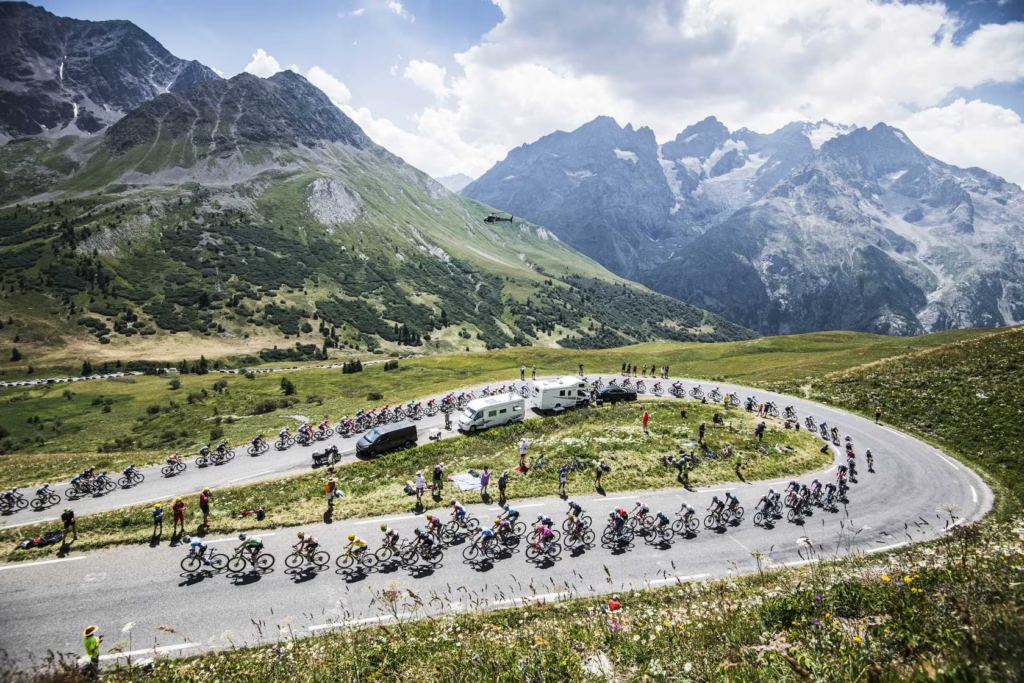
Why sprinters still have to train for mountains
Modern sprinters cannot ignore climbing. The Tour is too hard and the time cuts are too important. Even the fastest sprinter in the race has to prepare for mountain survival.
That does not mean sprinters train like pure climbers. They still need speed, strength and sprint-specific work. But they also need enough aerobic base to get through long climbs, recover between efforts and handle repeated mountain stages.
Training for a Tour sprinter is therefore a compromise. They need to be light enough and fit enough to survive the mountains, but powerful enough to win on the flat. Too much climbing focus can blunt their sprint. Too much sprint focus can leave them exposed in the mountains.
The best sprinters find the balance. They may never enjoy the Alps, but they know how to get through them.
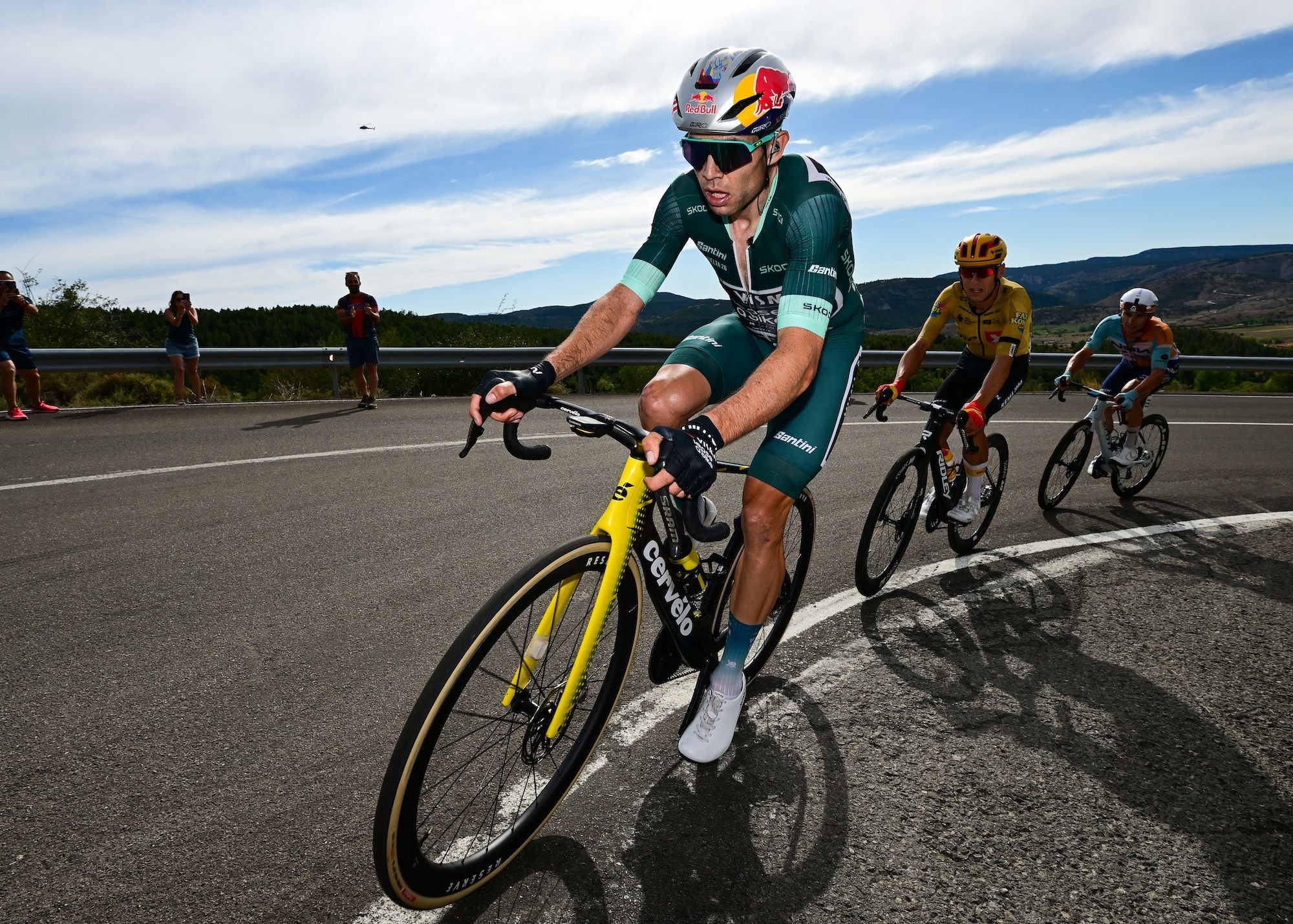
Mads Pedersen and Biniam Girmay are good examples of riders whose broader skill sets can help in a three-week race. They are not pure climbers, but they can handle harder terrain better than many traditional fast men. That can matter in the green jersey fight.
For more on how the points competition rewards more than raw speed, see our Tour de France 2026 jerseys explained.
Why green jersey contenders must survive the mountains
The green jersey is decided across the whole Tour, not only on the flat stages. That means a sprinter cannot win green if they leave the race in the mountains.
Survival is part of the points competition. A rider may win a sprint stage early in the Tour, but if they miss the time cut in the Alps, they cannot score in Paris. Meanwhile, a more durable rider can keep collecting points on intermediate sprints, hilly finishes and later flat stages.
This is why the green jersey often rewards more than pure speed. A rider who can sprint, climb respectably and recover well has a better chance across three weeks. That is especially true on routes where sprint chances are spread out and broken up by mountain blocks.
At the 2026 Tour, the points competition could be shaped by which sprinters are still fresh enough after the Pyrenees, Massif Central, Vosges, Jura and Alps. The fastest rider on stage 5 may not be the strongest by stage 21.
For more on the points battle, see our Tour de France 2026 sprinters guide: who can win green? and best sprinters at the Tour de France 2026.
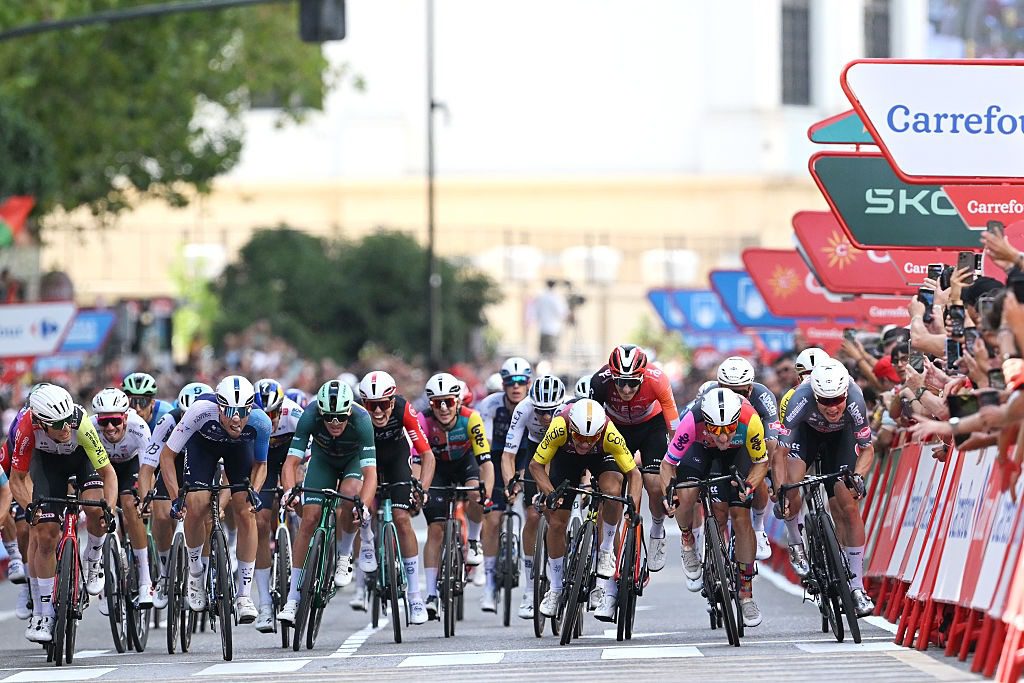 Photo Credit: Getty
Why descents do not fully save sprinters
Some sprinters are excellent descenders. Heavier riders can also be fast downhill because gravity helps them accelerate. But descents do not cancel out the damage done on climbs.
First, a rider has to reach the top of the climb close enough to the time cut. If they are already losing too much time, descending well may not be enough.
Second, descents can be technical, dangerous and mentally draining. A tired sprinter descending at high speed after a long climb cannot relax. They still need concentration, skill and nerve.
Third, descending fast does not restore energy. It may reduce the time gap, but it does not refill glycogen, repair muscle damage or solve dehydration. The next climb may still be waiting.
Sprinters can use descents to manage their day, but they cannot rely on them to survive a mountain stage alone.
Why heat makes mountain stages worse
Heat can make mountain stages much harder for sprinters. Larger riders often produce and retain more heat, and long climbs reduce airflow compared with fast flat roads. That can make cooling more difficult.
When a sprinter overheats, power drops. They may struggle to eat, drink and recover. Dehydration can also increase the risk of cramps, fatigue and poor decision-making.
In July, the Tour can be brutally hot, especially on exposed climbs or long valley roads. A sprinter already fighting the gradient may also be fighting body temperature. Ice socks, cold drinks, open jerseys and careful hydration all become part of survival.
Heat also affects the gruppetto. If the group slows too much, the time cut becomes a threat. If it rides too hard, riders risk blowing up. Managing effort in hot conditions is one of the hardest parts of mountain survival.
For the wider physical challenge, see our how hard the Tour de France really is.
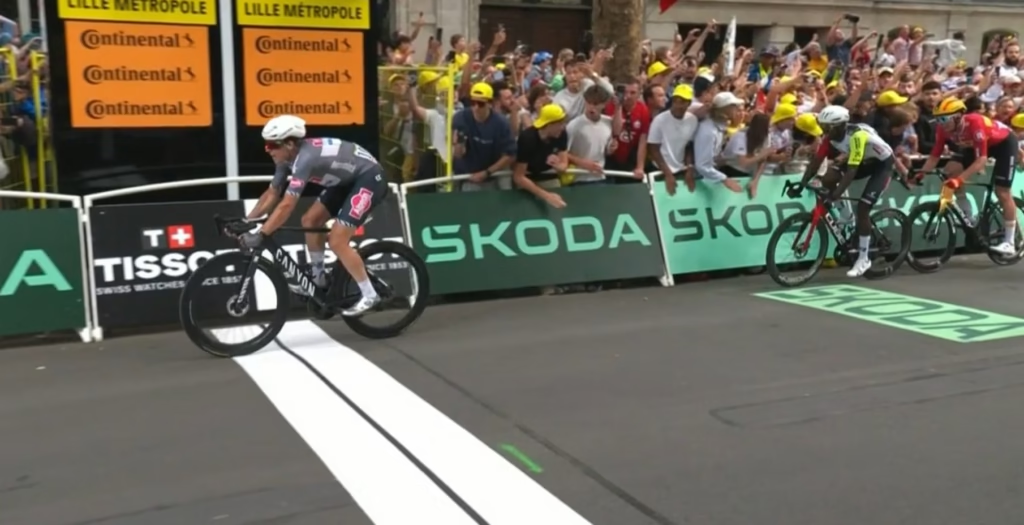
Why fuelling is difficult in the mountains
Sprinters need to keep eating and drinking on mountain stages, but that is not always easy.
The pace can be high early in the stage. Feed zones may come at awkward moments. Climbs can make it harder to eat solid food. Heat can reduce appetite. Descents require concentration, leaving fewer safe moments to reach for food.
If a sprinter under-fuels, the consequences can be severe. They may feel fine for the first climb, then suddenly collapse on the second or third. Once glycogen is low, every kilometre becomes harder.
This is why teams plan mountain fuelling carefully. Riders take gels, drinks, rice cakes, bars and bottles at specific points. Teammates may help collect food from the car. The aim is to avoid a crisis before it starts.
For sprinters, fuelling is not about preparing for a sprint finish on mountain days. It is about keeping the body working long enough to reach the finish.
Why some sprinters climb better than others
Not all sprinters suffer equally. Some are naturally better over hills and mountains than others.
A heavier pure sprinter with a very explosive profile may struggle badly on long climbs. A more versatile sprinter or classics-style fast rider may cope better because they have more endurance, better repeatability and a stronger aerobic base.
Riders like Mads Pedersen, Biniam Girmay and Michael Matthews can often survive harder terrain better than the purest flat-stage specialists. They may not climb with the GC favourites, but they can remain competitive on rolling stages and manage mountain days more effectively.
That difference matters in the Tour. A pure sprinter may be faster in a clean flat finish, but a more durable sprinter may score points on more days and arrive in the final week fresher.
The mountains therefore separate sprinters in two ways: who can survive, and who can still sprint well afterwards.
For the route days that suit different types of fast rider, see our Tour de France 2026 route: best days for sprinters and Tour de France 2026 sprint stages ranked.
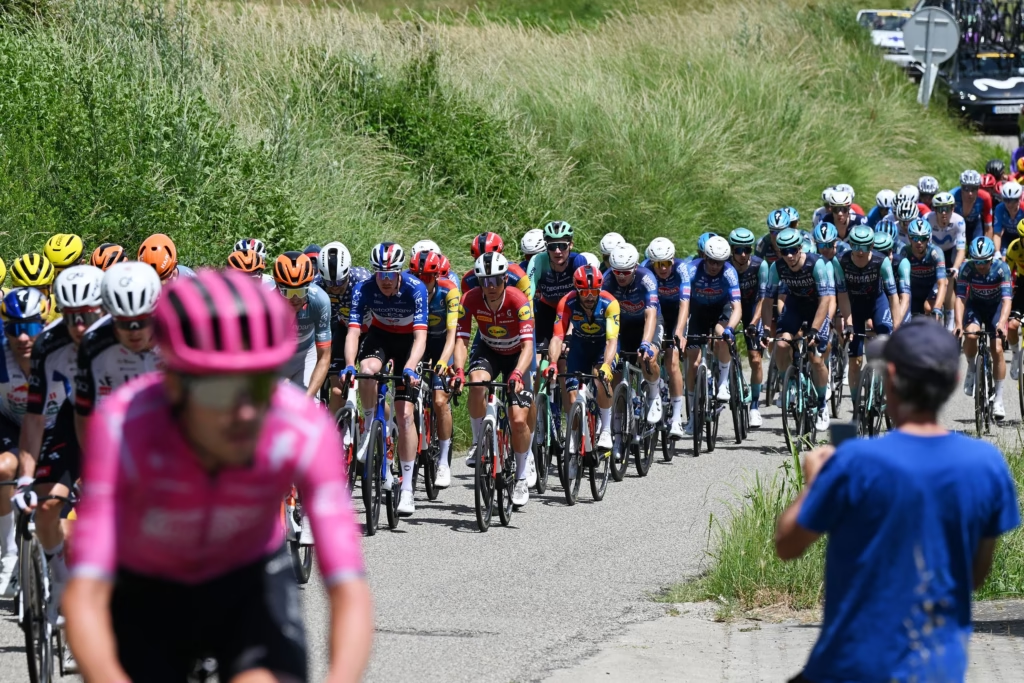 Photo Credit: Getty
How teams help sprinters survive
Sprinters rarely survive mountain stages completely alone. Their teams help them manage the day.
A teammate may stay with the sprinter in the gruppetto. Another may fetch bottles, offer encouragement or help pace the group. Lead-out riders often suffer too, but they know their sprinter’s survival protects future stage chances.
Teams also plan effort. A sprinter may be told exactly where to conserve energy, where to ride harder and where the gruppetto should form. Directors in the team car monitor time gaps and calculate the time cut.
This support matters. A sprinter who panics and rides alone can waste energy quickly. A sprinter inside an organised group has a much better chance of finishing inside the limit.
The mountain stage may not be a sprint team’s target, but it still requires teamwork.
For more on team roles, see our how Tour de France teams work and what is a domestique at the Tour de France?.
Why sprinters sometimes abandon in the mountains
Sprinters abandon in the mountains when the physical cost becomes too high, the time cut is impossible, or illness or injury makes continuing unrealistic.
Sometimes the decision is made by the road. A rider is dropped early, cannot recover and loses too much time. Sometimes it is a medical decision. A rider may be sick, dehydrated, injured from a crash or unable to produce enough power to continue safely.
Sometimes a sprinter stays in the race despite huge suffering because there are still sprint opportunities ahead. Other times, there may be no realistic reward left. If the rider is exhausted, far from form and unlikely to contest future stages, abandoning can become the sensible choice.
That is one of the harsh truths of the Tour. The mountains do not only decide the yellow jersey. They decide who gets to keep racing.
Why the mountains can shape the sprint stages that follow
A mountain stage can change the next sprint stage. A sprinter who survives easily may arrive with confidence. A sprinter who spent the day fighting the time cut may be flat, sore and mentally drained.
This affects lead-outs too. If a sprint team’s key helpers are exhausted from the mountains, the train may be weaker. A sprinter can be fast but still lose position if their team is tired.
Recovery is also cumulative. One hard mountain day can be manageable. A sequence of mountain and hilly stages can slowly drain riders. By the third week, the sprint hierarchy may look different from week one.
This is why experienced sprinters often talk about surviving the Tour as much as winning stages. The fastest rider in the first week is not always the fastest rider in the final week.
For more on recovery, see our how Tour de France riders recover between stages.
Why sprinters still enter a race full of mountains
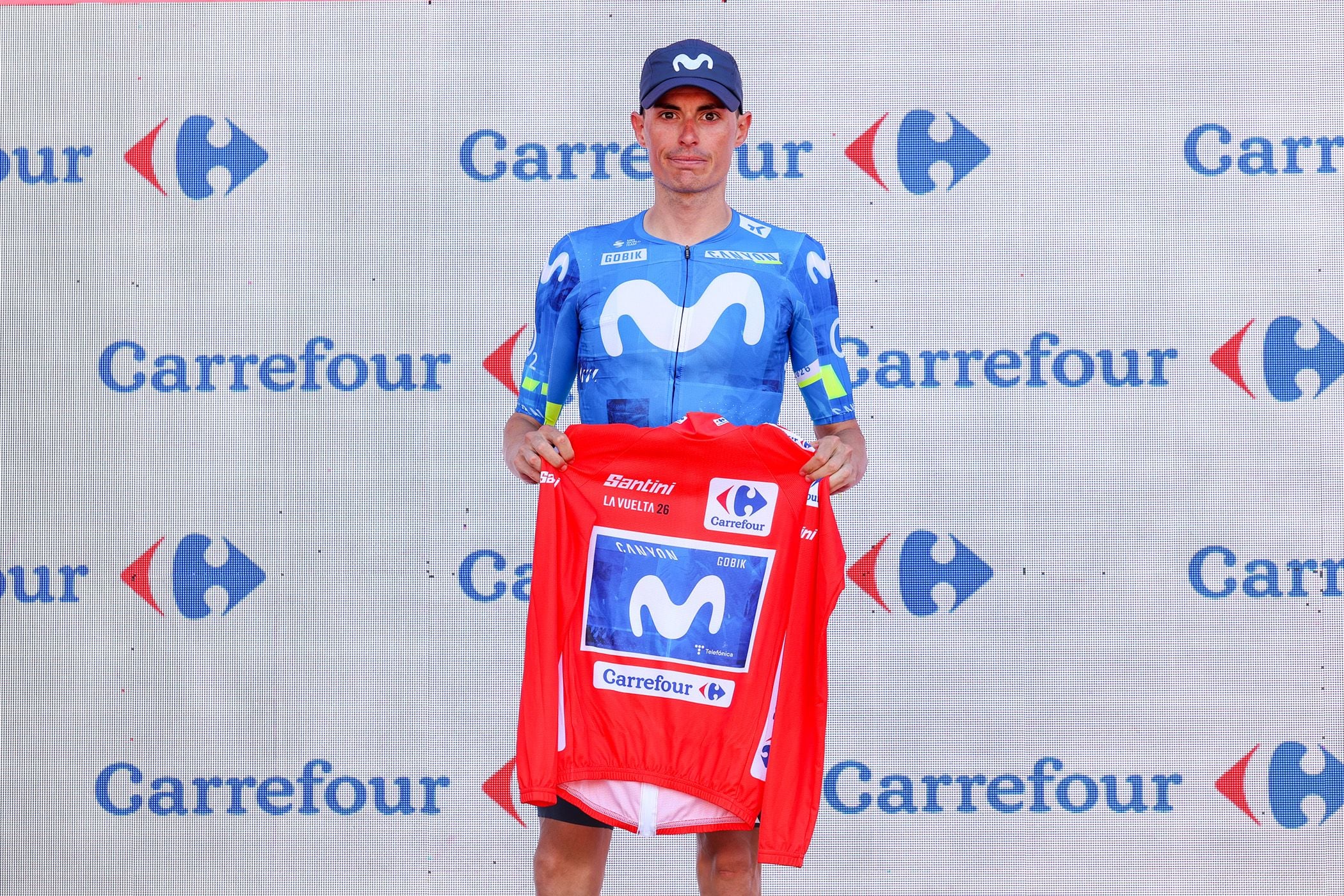
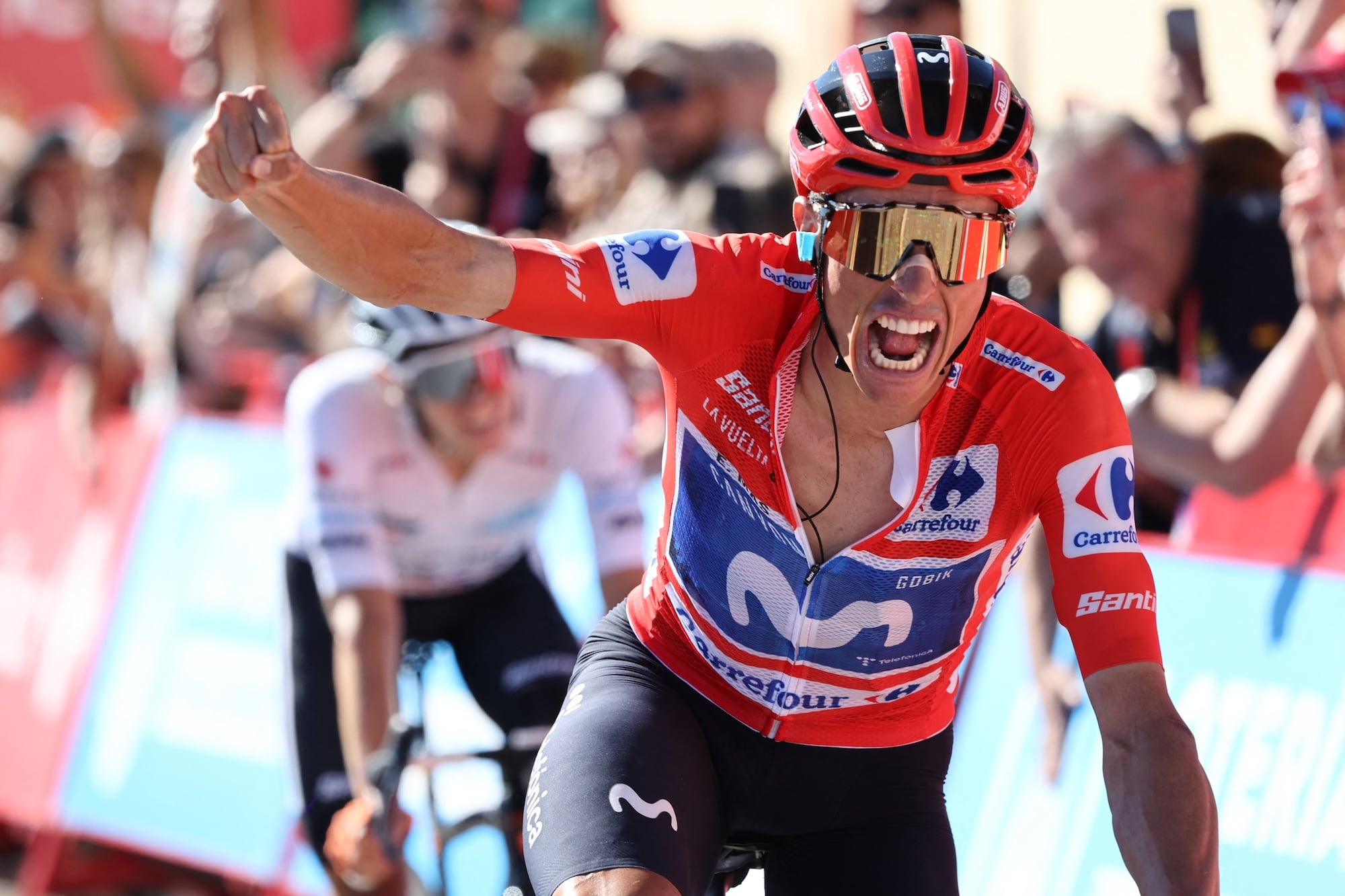
Sprinters enter the Tour because the rewards are huge. A Tour de France stage win can define a career. The green jersey is one of cycling’s biggest prizes. The Paris finish is still one of the most prestigious sprint targets in the sport.
They also know the suffering is part of the job. A Tour sprinter does not expect the mountains to suit them. They expect to endure them so they can reach the stages that do.
There is pride in that. Watching a sprinter fight through the Alps in the gruppetto may not look as dramatic as a GC attack, but it is still one of the defining efforts of the Tour. They are racing a different battle, with different stakes.
The mountains are where sprinters lose comfort, speed and sometimes hope. But if they survive, they return to the flat roads with another chance to win.
Sprinters in the Tour mountains explained simply
Sprinters suffer in the Tour de France mountains because climbing rewards light, efficient riders who can sustain power for a long time. Sprinting rewards explosive riders who can produce huge power for a short burst. Those are different physical demands.
On flat stages, sprinters use power, positioning and lead-outs to win. In the mountains, they carry more muscle uphill, lose the aerodynamic advantage of the bunch, follow a pace set by climbers and fight the time cut instead of the stage victory.
Their aim is not to beat the climbers. It is to survive, recover and reach the next sprint chance.
That is why the mountains are so important to the sprint competition. The green jersey is not won only by being fast. It is won by being fast, durable and still in the race when the Tour reaches its final week.
For more Tour de France 2026 coverage, visit our Tour de France hub, beginner’s guide to Men’s Tour de France 2026 and how to watch Tour de France 2026 in the UK.