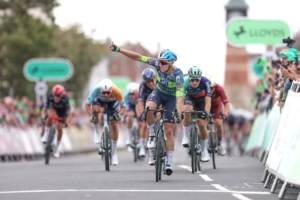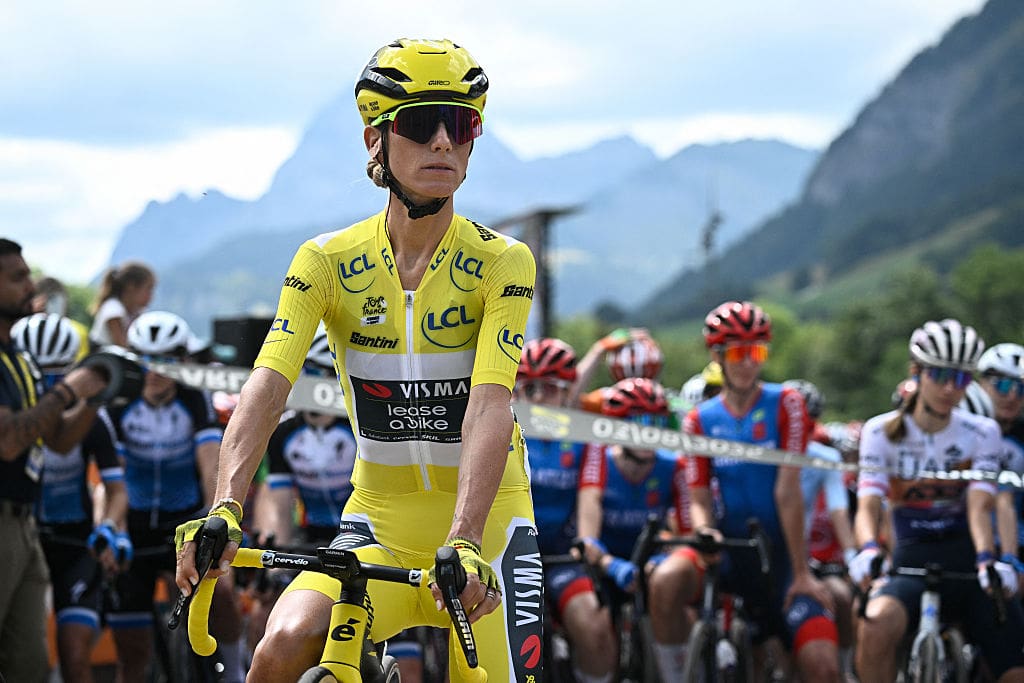
Four classification jerseys will be awarded during the 2026 Tour de France Femmes, each representing a different contest within the race.
The yellow jersey belongs to the rider with the lowest cumulative time. Green rewards the rider collecting the most points from stage finishes and intermediate sprints. The white jersey with red polka dots identifies the leader of the mountains classification, while the white jersey is worn by the best eligible young rider on general classification.
One rider can lead more than one competition at the same time. She can only wear one leader’s jersey on the road, however, which means another rider may sometimes wear a jersey without officially leading that classification.
Understanding that hierarchy makes the race much easier to follow.
The broader race format, stage types and terminology are covered in our beginner’s guide to the Tour de France Femmes 2026.
Tour de France Femmes 2026 jerseys at a glance
| Jersey | Classification | How it is decided |
|---|---|---|
| Yellow | General classification | Lowest cumulative time |
| Green | Points classification | Most points from finishes and intermediate sprints |
| White with red polka dots | Mountains classification | Most points collected on categorised climbs |
| White | Young rider classification | Highest-placed eligible rider on GC |
The four competitions use different scoring systems.
Yellow and white are based on time. Green and polka dots are based on points.
A rider may therefore be leading one classification while sitting much lower in another.

What does the yellow jersey mean?
The yellow jersey is the main prize at the Tour de France Femmes.
It is worn by the rider with the lowest total time after all completed stages.
Every rider’s recorded stage time is added together across the nine-day race. Time bonuses and penalties are also taken into account.
The rider with the lowest cumulative total leads the general classification and wears yellow during the next stage.
Winning individual stages is not essential.
A rider can win the Tour without taking a stage victory if she remains consistently close to the front and records the best overall time.
Our full explainer on what GC means in the Tour de France Femmes covers the general classification in more detail.
How is the general classification calculated?
Suppose two riders begin Stage 5 level on time.
Rider A finishes 20 seconds ahead of Rider B.
Rider A moves 20 seconds ahead in the general classification, before any time bonuses are considered.
If Rider A also wins the stage and receives a ten-second bonus, her total advantage becomes 30 seconds.
The yellow jersey standings account for:
- Actual stage times
- Physical gaps recorded at finishes
- Time bonuses
- Time penalties
- Time gained or lost in the individual time trial
The winner after Stage 9 in Nice becomes the 2026 Tour de France Femmes champion.
The role of bonus seconds is explained separately in our guide to Tour de France Femmes 2026 time bonuses.
Why riders can finish together but receive the same time
Cycling results do not always record a separate time for every rider in a group.
When riders finish together without a recognised gap, they receive the same stage time.
That means a rider can cross the line several positions behind a rival without losing time on general classification.
Finish bonuses can still separate them.
If one rider finishes second and receives six bonus seconds while another finishes fifth, both may receive the same stage time but the second-placed rider gains six seconds overall.
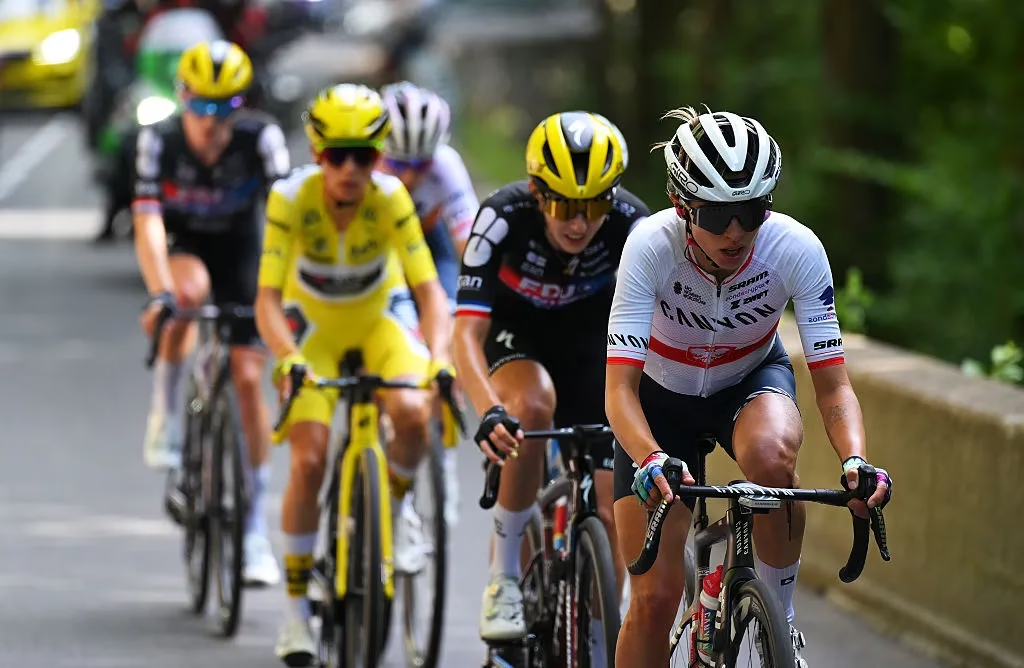
What happens if two riders are level on time?
The 2026 race includes a 21km individual time trial on Stage 4.
If two riders are tied on total general classification time, the fractions of a second recorded during that time trial can be used to separate them.
If they remain level, their finishing positions across the stages are added together. The rider with the lower total ranks higher.
The finishing position on the final stage is used as the last available tie-break if required.
The fractions recorded during the time trial therefore matter even though general classification times are normally displayed only in whole seconds.
The riders expected to gain most in Dijon are assessed in our Tour de France Femmes 2026 time-trial contenders guide.
Who is likely to compete for yellow in 2026?
The yellow jersey contest should favour complete stage racers who can climb, time trial and remain well positioned throughout the race.
The route includes:
- Three flat stages
- Three hilly stages
- Two mountain stages
- One individual time trial
- A summit finish on Mont Ventoux
- A final mountain stage around Nice
Demi Vollering and defending champion Pauline Ferrand-Prévot are among the obvious yellow jersey contenders.
Kasia Niewiadoma-Phinney, Elisa Longo Borghini, Marlen Reusser and other leading stage racers may also challenge depending on their confirmed participation and condition.
The Dijon time trial should establish an early hierarchy, but Mont Ventoux and the final stage provide enough climbing to overturn it.
The wider field is covered in our guide to the Tour de France Femmes 2026 riders to watch.
Can a sprinter wear yellow?
Yes.
The opening stage around Lausanne is a road stage, and the winner receives a ten-second time bonus.
If the main group is awarded the same finishing time, the winner is likely to take the first yellow jersey.
A sprinter or puncheur could therefore lead the race during the opening stages without being a realistic contender for the final overall victory.
The situation normally changes once the race reaches the time trial or major mountains.
Early yellow remains valuable. It gives the rider, team and sponsors significant visibility while transferring responsibility for controlling the race to that team.
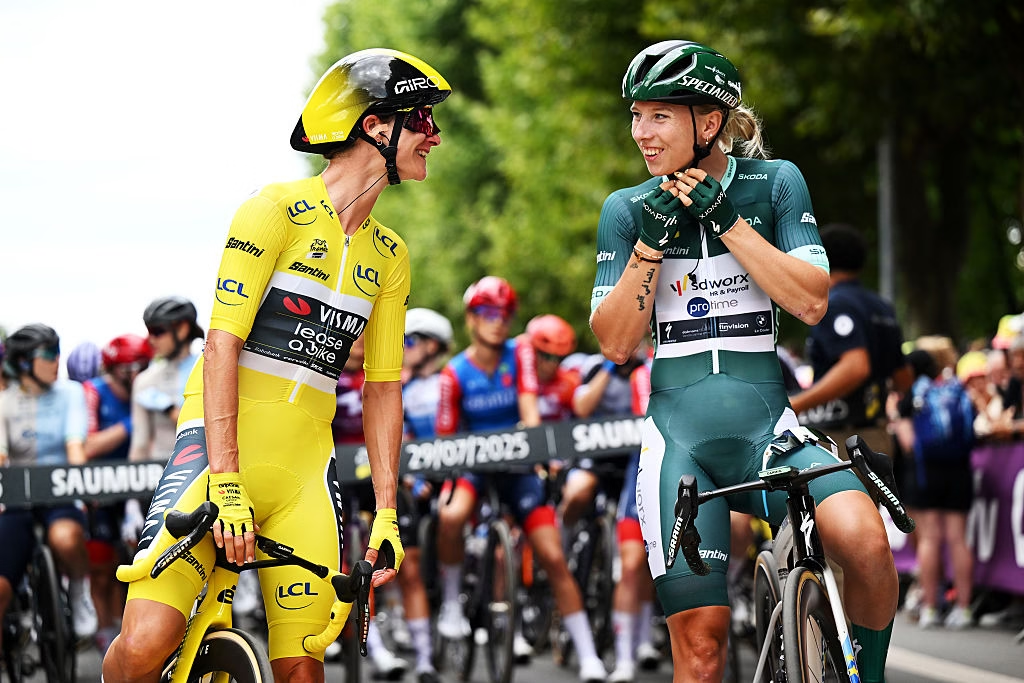 Photo Credit: Getty
What does the green jersey mean?
The green jersey is awarded to the leader of the points classification.
Riders collect points from:
- Stage finishes
- Intermediate sprints
- Different types of stages using different scoring scales
The rider with the highest total wears green.
Unlike the yellow jersey, the points classification is not based on cumulative time.
A rider can lose several minutes in the mountains and still lead green if she has collected enough points elsewhere.
How many green jersey points are available at stage finishes?
The number of points awarded depends on the type of stage.
Flat stages: Stages 1, 2 and 8
| Position | Points |
|---|---|
| 1st | 50 |
| 2nd | 30 |
| 3rd | 20 |
| 4th | 18 |
| 5th | 16 |
| 6th | 14 |
| 7th | 12 |
| 8th | 10 |
| 9th | 8 |
| 10th | 7 |
| 11th | 6 |
| 12th | 5 |
| 13th | 4 |
| 14th | 3 |
| 15th | 2 |
The large reward for victory makes the three flatter stages especially important to the green jersey contest.
A rider winning two of them would collect 100 points before considering intermediate sprints.
Hilly stages: Stages 3, 5 and 6
| Position | Points |
|---|---|
| 1st | 30 |
| 2nd | 25 |
| 3rd | 22 |
| 4th | 19 |
| 5th | 17 |
| 6th | 15 |
| 7th | 13 |
| 8th | 11 |
| 9th | 9 |
| 10th | 7 |
| 11th | 6 |
| 12th | 5 |
| 13th | 4 |
| 14th | 3 |
| 15th | 2 |
These stages reward versatile riders who can survive climbing and still finish quickly.
The smaller difference between first and second means consistency can matter more than one isolated victory.
Mountain stages: Stages 7 and 9
| Position | Points |
|---|---|
| 1st | 20 |
| 2nd | 17 |
| 3rd | 15 |
| 4th | 13 |
| 5th | 11 |
| 6th | 10 |
| 7th | 9 |
| 8th | 8 |
| 9th | 7 |
| 10th | 6 |
| 11th | 5 |
| 12th | 4 |
| 13th | 3 |
| 14th | 2 |
| 15th | 1 |
The reduced scale prevents climbers from overwhelming the points classification simply by dominating the two hardest stages.
They can still collect useful points, particularly if they are also competitive on hilly days.
Stage 4 individual time trial
The Dijon time trial uses the same points scale as the mountain stages.
The first 15 riders receive 20, 17, 15, 13, 11, 10, nine, eight, seven, six, five, four, three, two and one point respectively.
A strong time triallist can therefore add to her green jersey total even though the stage has no bunch sprint.
 Photo Credit: Getty
How do intermediate sprints affect green?
Each road stage contains an intermediate sprint where points are available to the first 15 riders.
| Position | Points |
|---|---|
| 1st | 25 |
| 2nd | 20 |
| 3rd | 17 |
| 4th | 15 |
| 5th | 13 |
| 6th | 11 |
| 7th | 10 |
| 8th | 9 |
| 9th | 8 |
| 10th | 7 |
| 11th | 6 |
| 12th | 5 |
| 13th | 4 |
| 14th | 3 |
| 15th | 2 |
Twenty-five points is a substantial reward.
A rider who repeatedly enters breakaways and wins intermediate sprints can challenge a faster sprinter who relies mainly on stage finishes.
The leading sprint teams must therefore decide how much energy to spend controlling early escapes.
Is the green jersey always won by a sprinter?
No, although the scoring favours sprinters in 2026.
The flat stages award 50 points to the winner, compared with 30 on hilly stages and 20 in the mountains or time trial.
A rider capable of winning multiple bunch sprints begins with a major advantage.
The Tour de France Femmes route is only nine stages long, however, and contains limited straightforward sprint opportunities.
A versatile rider can remain competitive by scoring on hilly days, intermediate sprints and mountain stages.
The ideal green jersey contender combines:
- Elite finishing speed
- Enough climbing ability to survive the harder stages
- A team capable of controlling breakaways
- Consistency across the full race
- The ability to finish inside the time limit
A rider must complete the Tour to win the classification.
Who could target the green jersey?
Lorena Wiebes would be the natural favourite if she starts.
The flat-stage scoring gives an elite sprinter a clear route towards green, particularly on Stages 2 and 8.
Elisa Balsamo, Charlotte Kool and other leading fast finishers could also collect heavily from sprint stages.
More versatile riders such as Marianne Vos and Lotte Kopecky may gain points across a broader range of terrain, depending on their programmes and confirmed participation.
The key question is whether the pure sprinters can build a sufficiently large advantage before Mont Ventoux and the final stage around Nice.
What happens if riders finish level on green jersey points?
The tie-break order is:
- Number of stage victories
- Number of intermediate sprint victories
- Position in the general classification
That rewards riders who have achieved the biggest results rather than simply accumulating minor placings.
A rider with two stage wins ranks above another rider on the same points total with one victory.
Both riders must finish the Tour to remain in the final points classification.
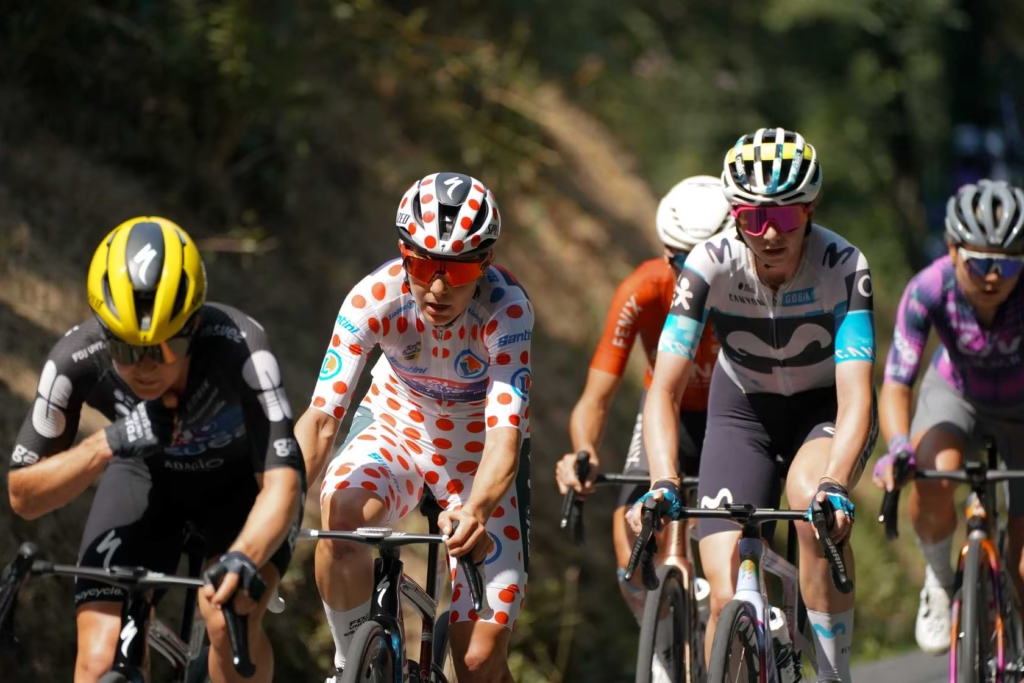 Photo Credit: A.S.O/Thomas Maheux
What does the polka-dot jersey mean?
The white jersey with red polka dots is worn by the leader of the mountains classification.
Riders collect points by being among the first to cross the summit of categorised climbs.
The harder the climb, the more points are available.
The categories used in 2026 are:
- Hors catégorie
- Category one
- Category two
- Category three
- Category four
The French phrase hors catégorie means beyond classification. These are the race’s hardest climbs.
How are mountains points awarded?
Hors catégorie climbs
| Position | Points |
|---|---|
| 1st | 15 |
| 2nd | 12 |
| 3rd | 10 |
| 4th | 8 |
| 5th | 6 |
| 6th | 4 |
| 7th | 2 |
| 8th | 1 |
Mont Ventoux is the biggest climbing landmark of the race and should provide a major opportunity to transform the classification.
Category-one climbs
| Position | Points |
|---|---|
| 1st | 10 |
| 2nd | 8 |
| 3rd | 6 |
| 4th | 4 |
| 5th | 2 |
| 6th | 1 |
Category-two climbs
| Position | Points |
|---|---|
| 1st | 5 |
| 2nd | 3 |
| 3rd | 2 |
| 4th | 1 |
Category-three climbs
| Position | Points |
|---|---|
| 1st | 3 |
| 2nd | 2 |
| 3rd | 1 |
Category-four climbs
| Position | Points |
|---|---|
| 1st | 2 |
| 2nd | 1 |
A rider’s total is calculated by adding every mountains point she collects during the road stages.
No mountains points are available during the Stage 4 individual time trial.
The position of each climb within the race can be seen in our Tour de France Femmes 2026 route guide.
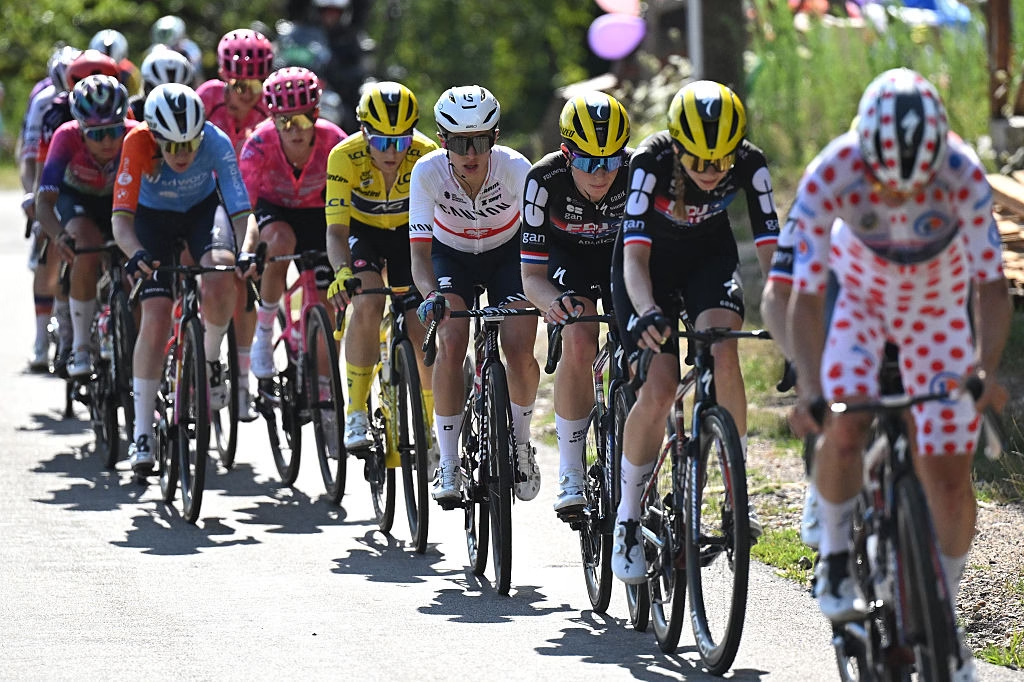 Photo Credit: Getty
Does the best climber always win the polka-dot jersey?
Not necessarily.
The classification rewards riders who collect the most points, not the rider who records the fastest overall climbing time.
A general classification favourite may be the strongest climber but concentrate only on the final kilometres of the hardest stages.
A breakaway rider can collect points across several earlier climbs before the yellow jersey group begins racing seriously.
That creates two common routes to polka dots.
One is to dominate the major mountain finishes.
The other is to enter repeated breakaways and build a lead through smaller climbs.
The 2026 route offers enough lower-category climbs for an aggressive rider to establish an early advantage before Mont Ventoux.
How can a breakaway rider win the mountains classification?
A rider targeting polka dots may attack early and enter the day’s breakaway.
She can then contest each categorised summit before the peloton arrives.
Suppose a stage contains three category-three climbs worth three points each to the first rider.
A successful breakaway rider could collect nine points without winning the stage.
Repeated across several days, those scores become significant.
The yellow jersey group may be riding faster on the final climb, but the points from earlier summits have already been taken.
The mountains classification is therefore shaped by tactical commitment as much as pure climbing strength.
The riders most likely to take that approach are included in our guide to the Tour de France Femmes 2026 breakaway specialists.
Who could win the 2026 polka-dot jersey?
The answer depends heavily on how the race develops.
A leading GC rider such as Vollering or Ferrand-Prévot could take the jersey by finishing highly on Mont Ventoux and the Nice mountain stage.
A rider who loses time in Dijon may abandon overall ambitions and begin targeting breakaways.
Strong climbers outside the central yellow jersey battle can be particularly dangerous because the peloton is more willing to let them escape.
The classification may not become clear until Mont Ventoux, where the large points reward can overturn an early leader’s advantage.
What happens when riders are tied on mountains points?
The first tie-break is the number of first places on hors catégorie climbs.
If the riders remain level, the hierarchy continues through:
- First places on hors catégorie climbs
- First places on category-one climbs
- First places on category-two climbs
- First places on category-three climbs
- First places on category-four climbs
- Final position in the general classification
That means winning the hardest climbs carries more weight than collecting the same total through lower-category placings.
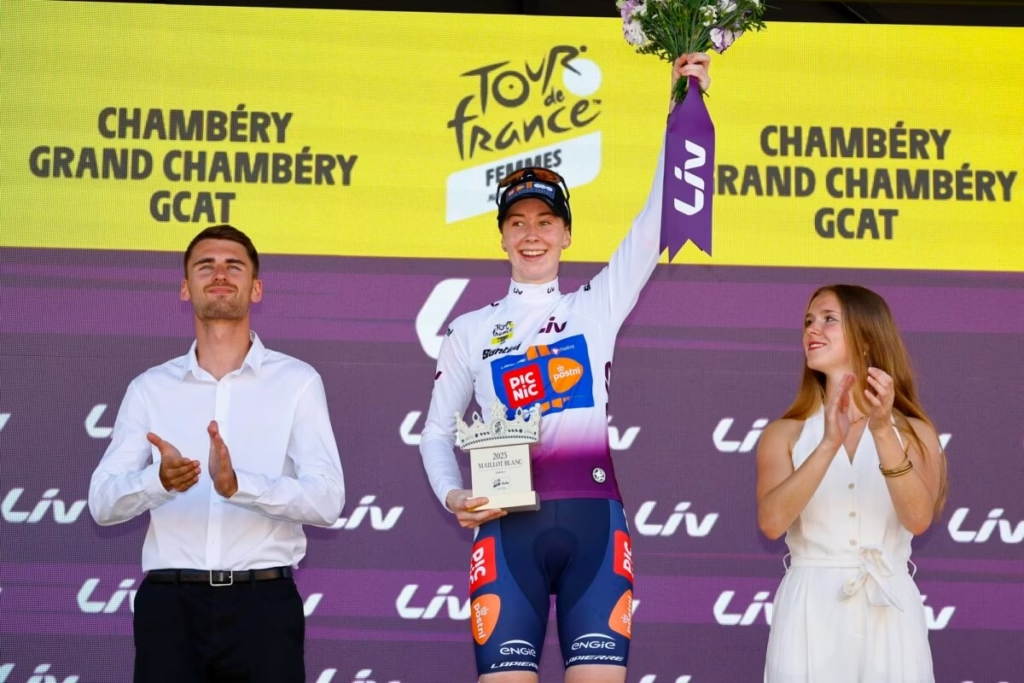 Photo Credit: Cor Vos
What does the white jersey mean?
The white jersey identifies the leading eligible young rider.
For the 2026 Tour de France Femmes, the classification is open to riders born on or after 1 January 2003.
It is based on general classification time rather than points.
The highest-placed eligible rider on GC leads the competition.
That means the white jersey is not necessarily won by the rider with the most stage wins or the highest number of young rider points. There is no separate points system.
How is the white jersey classification calculated?
The calculation is identical to the yellow jersey standings, but only eligible young riders are included.
Their stage times are added together, with bonuses and penalties taken into account.
The eligible rider with the lowest total time wears white.
A rider can therefore gain time in the young rider competition through:
- Physical gaps on the road
- The Dijon individual time trial
- Finish bonuses
- Intermediate Bonus Points
- Avoiding time losses from crashes or splits
It is effectively a race within the general classification.
Can the same rider lead yellow and white?
Yes.
An eligible young rider can lead the overall race and the young rider classification simultaneously.
She wears the yellow jersey because yellow has greater priority.
The next eligible rider in the young rider classification normally wears the white jersey on the road.
The official leader remains the rider in yellow, even though someone else is visibly wearing white.
This is known as wearing a jersey by proxy.
Why does the rider wearing a jersey sometimes not lead it?
A rider can lead several classifications but cannot wear several jerseys simultaneously.
The official order of priority is:
- Yellow jersey
- Green jersey
- White jersey with red polka dots
- White young rider jersey
Suppose one rider leads yellow and green.
She wears yellow.
The rider second in the points classification wears green on the next stage.
If the same rider also leads the mountains classification, the polka-dot jersey passes to the next available rider in that competition.
This process continues until all four jerseys have a wearer.
Example of jersey precedence
Imagine the standings after Stage 1 are:
- Rider A leads yellow, green and white
- Rider B is second in the points classification
- Rider C is second in the young rider classification
- Rider D leads the mountains classification
The jerseys would be worn as follows:
| Jersey | Rider wearing it |
|---|---|
| Yellow | Rider A |
| Green | Rider B |
| Polka dot | Rider D |
| White | Rider C |
Rider A remains the official leader of three competitions despite wearing only yellow.
The podium presentations and classification tables identify the actual leader.
 Photo Credit: A.S.O./Pauline Ballet
What if a proxy rider is a national or world champion?
Classification jerseys normally take priority when the official leader is wearing them.
A rider inheriting a jersey through the priority system may, however, continue wearing a world, continental or national champion’s jersey in circumstances covered by the race regulations.
That can mean a classification has an official leader and an eligible proxy rider without the secondary jersey being visible in the peloton.
The official standings remain the reliable way to establish who actually leads each competition.
Can a rider lose a jersey without losing time?
Yes.
The green and polka-dot classifications are based on points.
A rival can overtake the leader by scoring at a stage finish, intermediate sprint or climb even when both riders receive the same finishing time.
The white jersey can also change without an obvious road gap if an eligible rider collects bonus seconds.
Yellow changes through time differences, bonuses or penalties.
Each jersey therefore responds to different events during a stage.
Do riders have to defend every jersey?
No.
Teams normally prioritise classifications according to their main objectives.
A GC team will rarely spend substantial energy protecting an early polka-dot jersey if doing so weakens its yellow jersey campaign.
A sprinter’s team may focus almost entirely on green.
A breakaway rider may sacrifice her general classification position deliberately so she can target mountains points.
One rider can also change objectives during the race.
A contender losing several minutes in the time trial may stop pursuing yellow and switch towards stage wins or polka dots.
How does the route shape the jersey battles?
The 2026 route gives each classification a distinct rhythm.
Yellow jersey
The opening stages may produce small differences through bonuses before the Dijon time trial creates clearer gaps.
Mont Ventoux and Stage 9 around Nice should decide the final winner.
Green jersey
The three flat stages offer the largest scoring opportunities.
Stages 1, 2 and 8 award 50 points to the winner, making them essential to pure sprinters.
Intermediate sprints and the hilly stages create opportunities for versatile challengers.
Polka-dot jersey
Smaller climbs allow an early breakaway rider to take control.
Mont Ventoux and the final mountain stage provide enough points to reshape the contest late.
White jersey
The young rider battle follows the same terrain as yellow.
Eligible riders must balance the time trial against the decisive mountain stages.
The scale and variety of the race are explored further in our guide to how long the Tour de France Femmes 2026 is.
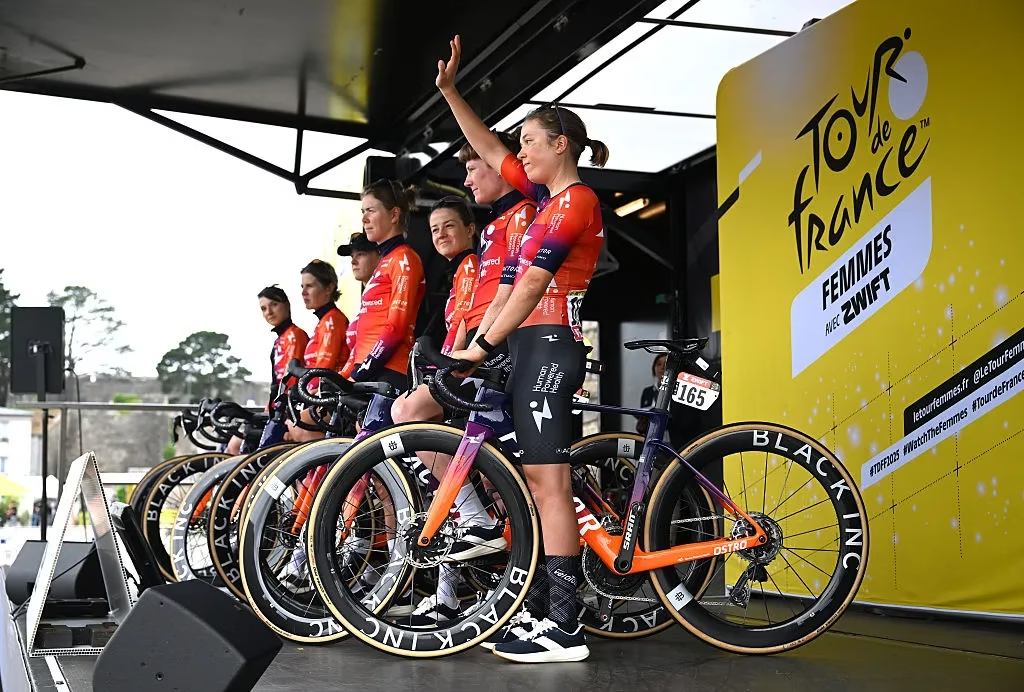
Can one rider win all four jerseys?
Theoretically, yes.
An eligible young rider could lead the general classification, points classification, mountains classification and young rider competition.
It would require extraordinary versatility.
She would need to:
- Record the fastest overall time
- Score more finish and sprint points than the leading sprinters
- Collect the most climbing points
- Meet the age requirement
The route makes such a clean sweep unlikely.
The flat-stage points scale strongly favours specialist sprinters, while the mountains classification often rewards breakaway riders.
A GC rider could realistically win yellow, white and polka dots, but adding green would be much harder.
Are jerseys awarded after every stage?
Yes.
After each stage, the leaders of the four classifications appear at the podium ceremony.
They wear their leader’s jerseys during the following stage.
The jerseys can change hands every day.
The final winners are confirmed after Stage 9 in Nice, provided they have completed the race.
A rider eliminated by the time limit cannot win a final classification.
The final stage remains fully competitive rather than ceremonial, with the concluding yellow, green, polka-dot and white jersey winners confirmed in Nice.
Our Tour de France Femmes 2026 Nice finish guide covers the setting for the last day.
What other awards exist?
The four leader’s jerseys are the most visible competitions, but the race also includes:
- The team classification
- A daily combativity award
- A final super-combativity award
- A best teammate award
The daily team classification is calculated using each team’s three best stage times.
The overall team classification adds those daily totals across the full race. A team reduced to fewer than three riders is removed from that competition.
The combativity award recognises an attacking or particularly generous ride rather than following a fixed points formula.
The best teammate award recognises selfless work performed for the team.
The financial rewards attached to the classifications are covered in our guide to Tour de France Femmes 2026 prize money.
How can beginners track the jerseys during a stage?
The simplest approach is to watch different points of the stage for each classification.
Follow yellow at the finish
Physical gaps, bonuses and the time trial determine the general classification.
Follow green at intermediate sprints and stage finishes
The largest points awards are concentrated there.
Follow polka dots at categorised summits
The television graphics normally show the climb category and points available.
Follow white alongside yellow
The young rider classification is simply the GC standings filtered by age eligibility.
A rider may be competing for several objectives at the same time.
That is why a sprint for eighth place or an attack on a small climb can matter even when it has no effect on the stage victory.
Frequently asked questions about the Tour de France Femmes jerseys
What is the most important jersey?
The yellow jersey. It identifies the overall race leader and final Tour winner.
Is the green jersey decided by time?
No. It is decided through points collected at stage finishes and intermediate sprints.
Why is the polka-dot jersey awarded?
It rewards the rider collecting the most points on categorised climbs.
Is the white jersey decided by stage placings?
No. It goes to the highest-placed eligible young rider in the general classification.
What is the age limit for the 2026 white jersey?
Riders must have been born on or after 1 January 2003.
Can a rider lead more than one jersey classification?
Yes, but she wears only the highest-priority jersey.
What is the jersey priority order?
Yellow, green, polka dots, then white.
Can the rider wearing green be second in the points classification?
Yes. That happens when the official points leader is wearing a higher-priority jersey.
Do time bonuses affect the white jersey?
Yes. White is based on general classification time, so bonuses count.
Does a rider have to finish the Tour to win green or polka dots?
Yes. The final classification winners must complete the race.
Four jerseys, four different races
The Tour de France Femmes is not one competition but several overlapping contests.
Yellow rewards the most complete stage racer.
Green rewards consistent scoring and sprinting.
Polka dots reward riders who reach categorised summits first.
White identifies the leading rider from the eligible younger generation.
Those aims can support one another or conflict.
A rider chasing green may spend energy at an intermediate sprint before a difficult finish. A mountains leader may enter a breakaway rather than remain with the GC favourites. A young rider may need to decide whether to defend white or attack for a stage victory.
The jerseys make those tactical choices visible.
Yellow remains the main prize, but green, polka dots and white can define a rider’s entire Tour.
Understanding how each is calculated makes it much easier to recognise why the peloton is chasing, why a breakaway is fighting over a minor climb and why a rider celebrates a result that did not include winning the stage.