The Women’s Cycling Grand Prix Stuttgart & Region is one of the youngest races on the European professional calendar, but its rise has been unusually quick. First held in 2023 as a UCI 1.2 event, it moved straight into the Women’s ProSeries for its second edition and has remained at 1.Pro level ever since.
Its short history can already be divided into two distinct periods. From 2023 to 2025, a different municipality within the Stuttgart region hosted the start each year before the race travelled towards a finish in Stuttgart itself. That changes in 2026. The City of Stuttgart is no longer part of the funding structure, Tamm becomes both start and finish, and the race has been renamed the Women’s Cycling Grand Prix Region Stuttgart.
Three editions have so far produced only two winners. Elena Pirrone won the inaugural race in 2023, before Eleonora Gasparrini took consecutive victories in 2024 and 2025, quickly becoming the rider most closely associated with the event.

Women’s Cycling Grand Prix Stuttgart & Region winners
| Year | Winner | Second | Third | Start | Finish |
|---|---|---|---|---|---|
| 2023 | Elena Pirrone | Kathrin Schweinberger | Linda Riedmann | Tamm | Stuttgart |
| 2024 | Eleonora Gasparrini | Lieke Nooijen | Mareille Meijering | Böblingen | Stuttgart |
| 2025 | Eleonora Gasparrini | Cat Ferguson | Linda Riedmann | Filderstadt | Stuttgart |
The fourth edition takes place on 13 September 2026, with Tamm hosting both ends of the race for the first time. Our beginner’s guide to the Women’s Cycling Grand Prix Region Stuttgart 2026 explains how that new format works.
Why was the Women’s Cycling Grand Prix created?
The origins of the race go back to the Stuttgart region’s broader investment in road cycling.
Stuttgart already possessed significant cycling history, including hosting the UCI Road World Championships in 2007. More recently, the revived Deutschland Tour finished in Stuttgart in both 2018 and 2022, while the Brezel Race had established a mass-participation event allowing amateur riders to race on closed roads around the region.
The next step was an international women’s professional race.
Plans for the event were announced in December 2022, with the first edition scheduled for July 2023. The professional race and Brezel Race would share the same cycling weekend, combining elite racing with thousands of amateur participants.
ProCyclingUK covered the original announcement of the new Women’s Cycling Grand Prix before its inaugural edition.
Former world and Olympic champion Lisa Brennauer became sporting director of the new race shortly after ending her professional career. She was closely involved in the sporting concept and route design, providing a direct connection between the organisation and the demands of the professional women’s peloton.
The intention was never to create one fixed course. Instead, the professional race would represent the wider Stuttgart region, with different municipalities taking turns to host the start and a route designed around the rolling roads of Baden-Württemberg.

2023: Elena Pirrone becomes the first winner
The inaugural Women’s Cycling Grand Prix Stuttgart & Region took place on 16 July 2023.
Tamm hosted the start, with the riders covering around 105km through the districts of Ludwigsburg and Böblingen before reaching Stuttgart. The first edition was classified as UCI 1.2, allowing a mixture of professional teams, development squads and national selections to compete.
The race immediately established an attacking identity.
Elena Pirrone, then riding for Israel-Premier Tech Roland, escaped and reached the finish alone, taking the first victory in the event’s history. Kathrin Schweinberger finished 23 seconds behind, with German rider Linda Riedmann completing the podium on the same time as the Austrian.
It was an important victory for Pirrone, who had been one of the outstanding juniors of her generation. She won both the junior road race and time-trial world titles in Bergen in 2017 but had found senior success harder to come by.
Her Stuttgart win also set an early precedent. The race had enough difficulty to reward a committed attack rather than simply delivering the peloton to a predictable bunch sprint.
Promotion to the Women’s ProSeries after one edition
The race did not remain at 1.2 level for long.
For 2024, the UCI upgraded the Women’s Cycling Grand Prix Stuttgart & Region directly to 1.Pro, placing it in the Women’s ProSeries, one tier below the Women’s WorldTour.
That represented a major step after only a single edition. It also changed the quality of field the organisers could attract, with ten Women’s WorldTour teams entered for the second running.
The 2024 Grand Prix Stuttgart preview reflected how quickly the race had developed. Instead of being a new lower-level event offering opportunities to development teams, Stuttgart had become a genuine late-season international Classic.
Its September date also positioned the race as useful preparation for the World Championships, something that helped attract riders already approaching peak form.

2024: Eleonora Gasparrini takes over
The second edition took place on 15 September 2024, with the start moving from Tamm to Böblingen.
The route covered 118.2km before reaching Stuttgart, where three city circuits provided the finale. The profile remained rolling rather than mountainous, but the repeated changes of gradient created opportunities for attacks throughout the second half.
Brodie Chapman, Dominika Włodarczyk and Floortje Mackaij were among those active earlier in the race before Anneke Dijkstra and Eva van Agt escaped inside the final 40km. Marta Lach then bridged across and launched a solo move of her own, building a lead that survived until around 3km from the finish.
That catch set up a much smaller and more tactical contest than a conventional bunch sprint.
Eleonora Gasparrini reached the decisive finale alongside Lieke Nooijen and Mareille Meijering. Nooijen committed early, but Gasparrini timed her acceleration better and passed the Dutch rider in the closing metres.
Meijering finished third, while the remainder of the field arrived only seconds behind.
The full 2024 Women’s Cycling Grand Prix Stuttgart race report shows how close the attackers came to disrupting the finale altogether.
For Gasparrini, it was the beginning of a particularly strong connection with the race.
2025: Gasparrini finds another way to win
The start moved again for the third edition, this time to Filderstadt on 14 September 2025.
At 124.2km, it was the longest edition yet and crossed the districts of Esslingen, Göppingen, Rems-Murr and Ludwigsburg before entering Stuttgart. The Hasenbergsteige again provided one of the major obstacles close to the finish, with the riders tackling it three times before the final run towards Rotebühlplatz.
The field was also considerably stronger than in the inaugural edition. Kasia Niewiadoma-Phinney, Liane Lippert, Elisa Balsamo, Chiara Consonni, Silvia Persico, Cat Ferguson and defending champion Gasparrini were among the names on the start line.
Niewiadoma-Phinney repeatedly increased the pressure on the climbs, while Karlijn Swinkels launched a dangerous late move for UAE Team ADQ. The Dutch rider remained clear deep into the final 10km before the reduced chasing group finally brought her back.
That created the platform for Gasparrini.
Instead of waiting for the sprint that had delivered her 2024 victory, the Italian attacked with less than a kilometre remaining. Ferguson reacted and closed rapidly in the final metres, but Gasparrini reached the line first to make it two Stuttgart victories in two starts.
Ferguson finished second and Linda Riedmann took third, returning to the podium two years after her third place in the inaugural edition.
The 2025 Grand Prix Stuttgart race report showed just how differently Gasparrini had approached her title defence. In 2024 she trusted her sprint from a three-rider group. In 2025 she decided not to wait for the sprint at all.
Why Eleonora Gasparrini became the race’s first specialist
Three editions are not usually enough for a race to develop a specialist.
Gasparrini managed it in two.
Her characteristics fit the event particularly well. She is quick enough to beat strong riders from a reduced group but sufficiently comfortable on repeated short climbs that teams struggle to remove her before the finish.
That versatility explains why her two victories have looked so different.
In 2024, she could afford to follow the selection and trust her sprint. A year later, with Ferguson and several other fast finishers still present, she used a late attack instead.
That makes Gasparrini difficult to race against. Rivals cannot simply make the race hard enough to remove a pure sprinter, because she handles that terrain well. Leaving her in the front group creates another problem because waiting for the line may give her the fastest finish.
Going into 2026, she owns two of the three victories in the race’s history.
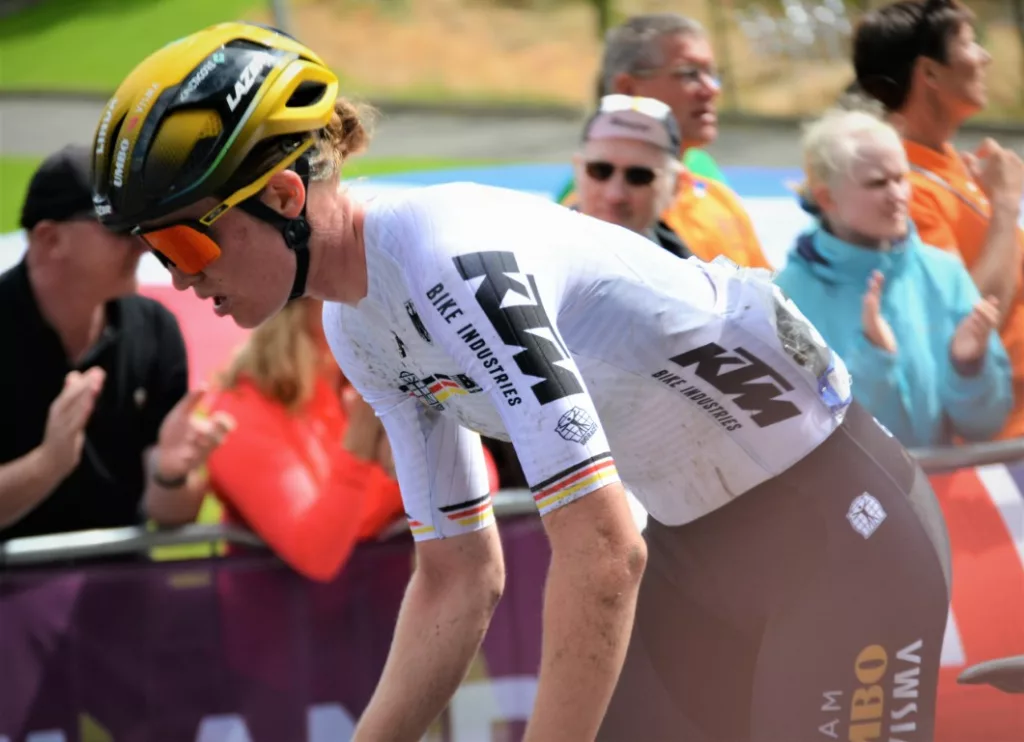
Linda Riedmann has been Germany’s most consistent rider
Gasparrini has dominated the winners’ list, but Riedmann has created another early piece of race history.
The German finished third in both 2023 and 2025, making her the only rider other than Gasparrini to appear on the podium more than once.
That has particular significance for an event created partly to strengthen the presence of international women’s professional cycling in Germany.
A German rider has not yet won the race. Riedmann has come closest to developing a comparable record of consistency on home roads, finishing behind Pirrone and Schweinberger in the inaugural edition before returning to the podium behind Gasparrini and Ferguson two years later.
Three editions, three selective finales
For all the changes in route, the first three editions share an important characteristic: none has ended with a straightforward full bunch sprint.
Pirrone won alone in 2023.
Gasparrini won from a three-rider selection in 2024.
Gasparrini then attacked from the reduced front group inside the final kilometre in 2025.
That is beginning to define what sort of race the Women’s Cycling Grand Prix is.
The Stuttgart region does not offer the long mountain passes required to favour pure climbers, but its repeated short rises, narrow roads and constant changes of rhythm make control difficult. Fast riders can survive, but they generally have to be more complete than conventional sprinters.
It is one reason Gasparrini has been so successful and why riders such as Ferguson, Riedmann, Nooijen and Meijering have featured prominently.
Why the race changed for 2026
The biggest change in the event’s short history came away from the racing itself.
The previous format had been jointly supported by the Verband Region Stuttgart and the City of Stuttgart, with another municipality hosting the professional start while Stuttgart remained central to the finish.
Financial circumstances changed ahead of 2026. The City of Stuttgart did not include further funding for the event in its current budget, forcing the organisers and regional authority to redesign the model if the Women’s Cycling Grand Prix and Brezel Race were to continue.
The Verband Region Stuttgart subsequently approved €250,000 of regional funding for 2026.
Rather than abandon the event, the race moved to a cheaper regional format. One municipality would now host both start and finish, with the surrounding roads used for the course. The host is intended to rotate between municipalities in future editions.
The change also led to a subtle but meaningful alteration in the race name.
Women’s Cycling Grand Prix Stuttgart & Region became Women’s Cycling Grand Prix Region Stuttgart.
The missing word reflects the missing city-centre finish.
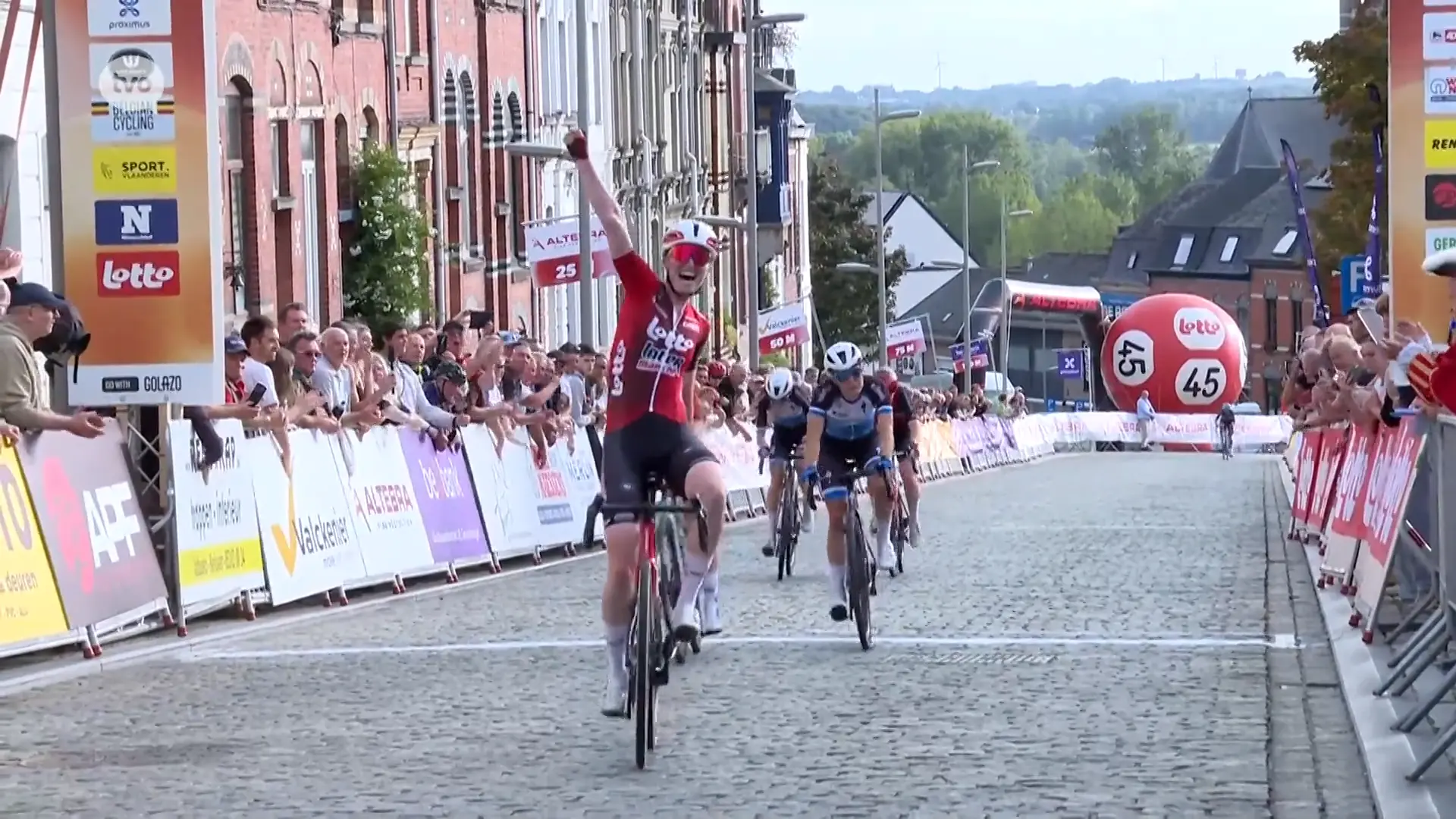

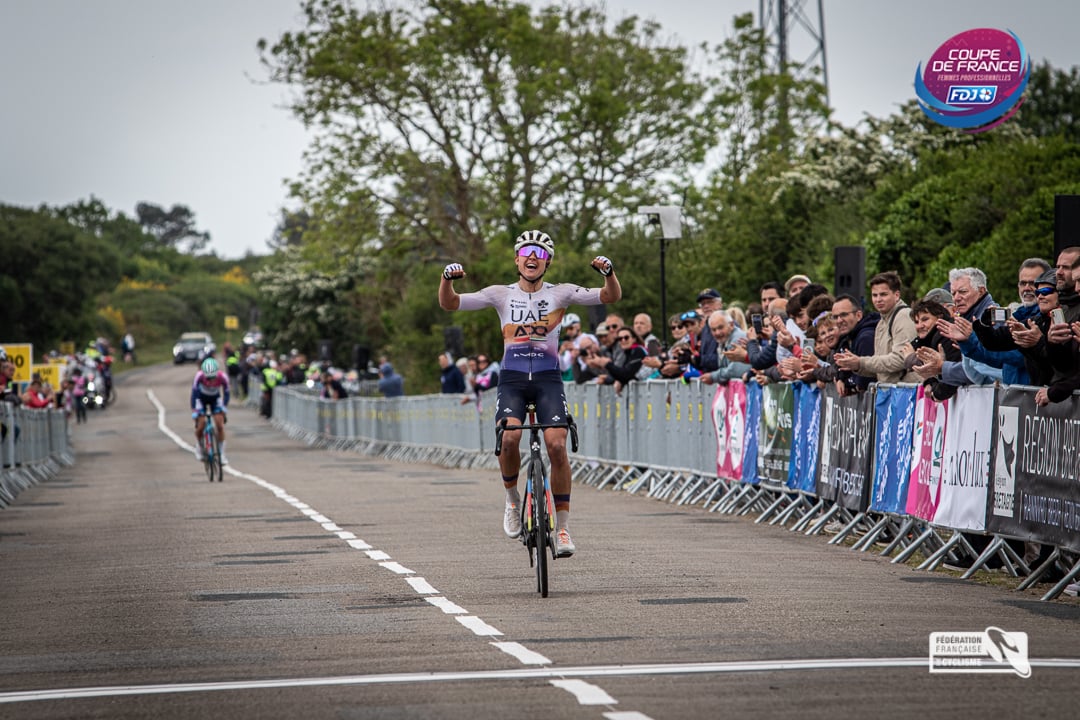
Tamm brings the race back to its starting point
There is a neat symmetry to the choice of the first host under the revised format.
Tamm will host both the start and finish on 13 September 2026, three years after the inaugural race began there.
Around 120 professional riders are expected, while the associated Brezel Race is again intended to bring thousands of amateur cyclists onto closed roads on the same day.
Most importantly, the professional race retains its UCI 1.Pro status.
That matters more than the name change. A financial restructuring could easily have resulted in the race dropping down the hierarchy or disappearing completely, especially given how young it remains. Instead, the fourth edition stays in the Women’s ProSeries.
For a closer look at the revised host concept and what it means for the race, see the 2026 Women’s Cycling Grand Prix Region Stuttgart guide.
How quickly has the Women’s Cycling Grand Prix grown?
The timeline is remarkably short.
The race was announced at the end of 2022, first held at 1.2 level in July 2023 and promoted to the ProSeries for September 2024. By 2025 it was attracting established WorldTour stars and producing a genuinely high-level late-season one-day race.
Then came another significant transition for 2026 as the financial and route model changed.
That means the event has barely had time to settle before repeatedly evolving.
What has remained consistent is the sporting character. Each edition has rewarded riders willing and able to attack, none has produced a conventional peloton-wide sprint, and the strongest fast all-rounders have tended to rise to the top.
The fourth edition therefore begins with a history that is still very short but already distinctive. Pirrone owns the inaugural victory, Gasparrini has established the first winning streak, Riedmann has twice put Germany on the podium, and Tamm now begins the race’s next phase by bringing the start and finish together for the first time.