
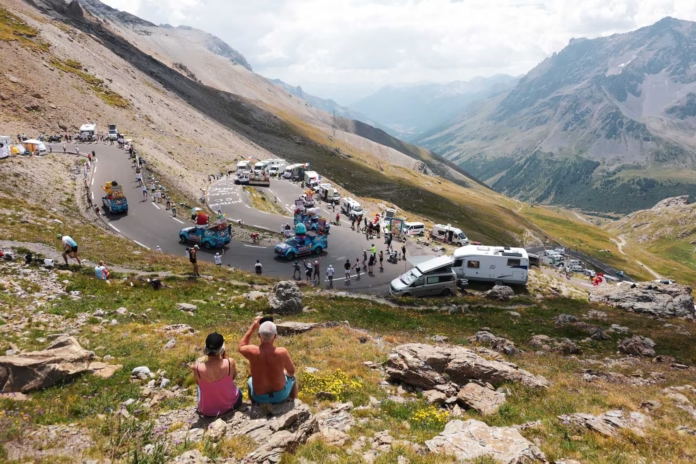
The Tour de France 2026 saves its hardest mountain sequence for the final week. After the early Pyrenees, the Massif Central, the Vosges and the stage 16 time-trial, the race reaches the Alps with three mountain stages still to come: Voiron to Orcières-Merlette, Gap to Alpe d’Huez, and Le Bourg d’Oisans to Alpe d’Huez.
That final Alpine block is where the Tour should either be confirmed or completely overturned. Stage 18 begins the process with the finish at Orcières-Merlette. Stage 19 brings the race to Alpe d’Huez on the classic road. Stage 20 then returns to Alpe d’Huez via Croix de Fer, Télégraphe, Galibier and Sarenne, giving the race one of its most severe penultimate mountain stages in years.
The Alps are not simply a scenic finale in 2026. They are the route’s final argument. Any rider still within reach of yellow will have to decide how much to risk before Paris. Any rider carrying weakness from the Pyrenees, Plateau de Solaison or the stage 16 time-trial will have nowhere left to hide.
For the wider race picture, see our Tour de France 2026 full route guide, Tour de France 2026 route analysis, Tour de France 2026 mountain stages ranked by difficulty and Tour de France 2026 summit finishes guide.
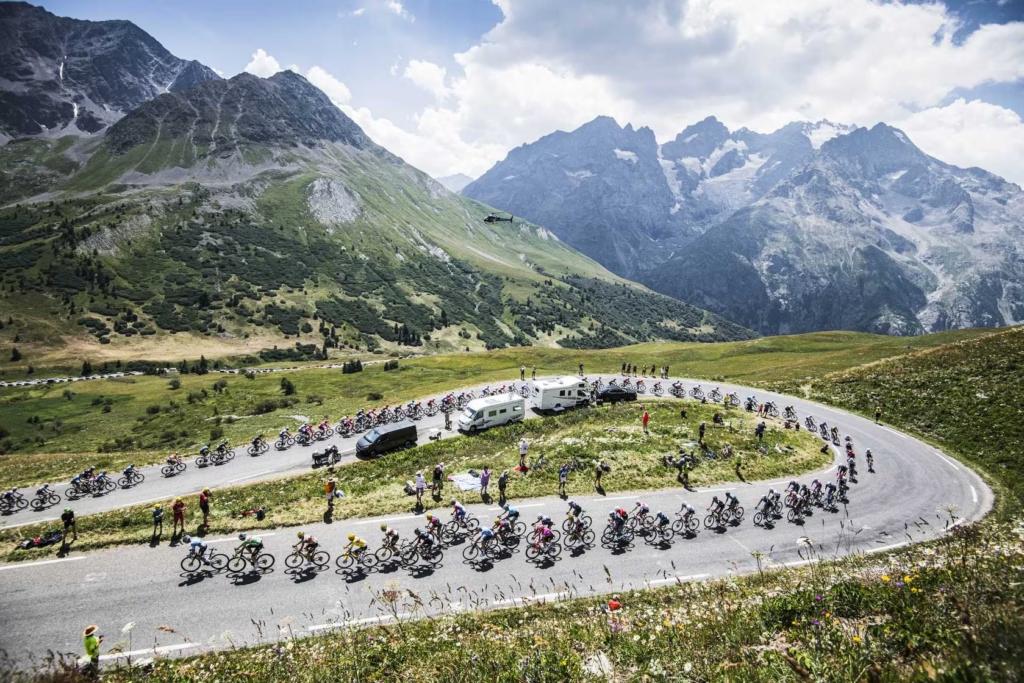
Why the Alps matter so much in the 2026 Tour
The 2026 Tour is not built around one isolated Alpine stage. It uses the Alps as a three-day final mountain block, with each stage asking a different question.
Stage 18 to Orcières-Merlette is the first post-time-trial mountain test. It comes after the stage 16 individual time-trial, which means some riders may arrive in the Alps having gained time, while others will already be under pressure to attack. Stage 19 to Alpe d’Huez is shorter and more direct, using the classic finish climb as both a stage-winning target and a GC pressure point. Stage 20 then goes much deeper, with a huge Alpine route that stacks difficulty before a second finish on Alpe d’Huez.
That sequence matters because it gives the GC contenders very little room for passive racing. A climber who loses time in the stage 16 time-trial cannot wait until the final kilometre of stage 20 and hope to fix everything. A rider who has yellow after the time-trial may have to defend across three very different mountain days. Teams that still have numbers can use them. Teams reduced to one leader and a few tired helpers may be exposed.
The Alps also come late enough for accumulated fatigue to be decisive. By then, the riders will have already faced the Barcelona team time-trial, the Pyrenees, Le Lioran, Le Markstein Fellering, Plateau de Solaison and the Lake Geneva time-trial. The strongest rider on paper still has to prove they can recover, repeat and respond.
For more on where these stages sit in the GC fight, see our Tour de France 2026 route: best days for GC attacks.
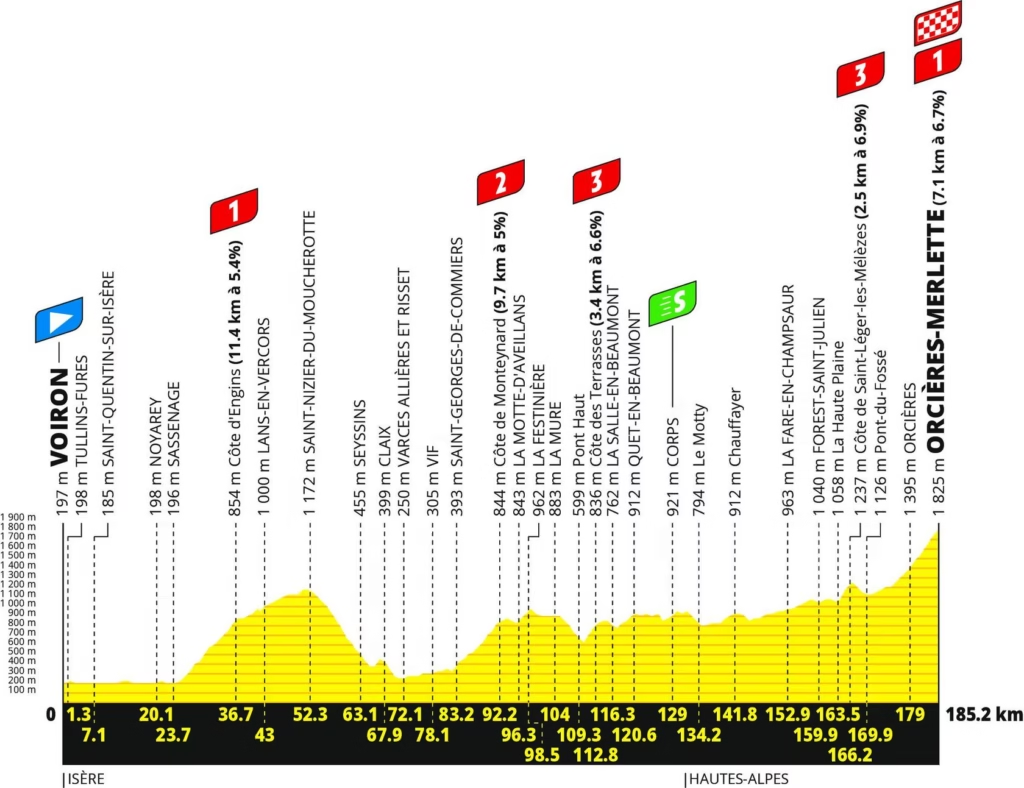
Stage 18: Voiron to Orcières-Merlette
Stage 18 is the first Alpine stage of the 2026 Tour, taking the race from Voiron to Orcières-Merlette over 185km. It is the opening act of the final mountain block, but that should not make it a soft day.
Its position is what gives it weight. The riders will have had the stage 16 individual time-trial, then the race transitions towards the Alps. By the time they reach Orcières-Merlette, the GC will have been reorganised. Time-triallists may have moved up. Pure climbers may have lost ground. Some teams will be under pressure to attack immediately rather than wait for Alpe d’Huez.
Orcières-Merlette is not the most famous climb in the race, but it has exactly the kind of profile that can create meaningful differences if the favourites arrive tired. The climb is manageable enough for teams to control if the race is calm, but hard enough to punish anyone already fading. That makes it a stage where the first important Alpine selection could come before the headline days.
The likely scenario is a controlled GC race that sharpens late. Teams with something to gain may try to test the yellow jersey, but no one will want to spend everything before two harder days. The most dangerous move may be a measured attack from a rider who wants 20 or 30 seconds, not a full-scale raid.
For riders like Remco Evenepoel, Kévin Vauquelin or Matteo Jorgenson, this could be a defensive day if they have gained time in the time-trial. For riders like Jonas Vingegaard, Felix Gall or other pure climbers, it may be the first chance to begin taking that time back.
Attack rating: 8/10
GC danger rating: 8/10
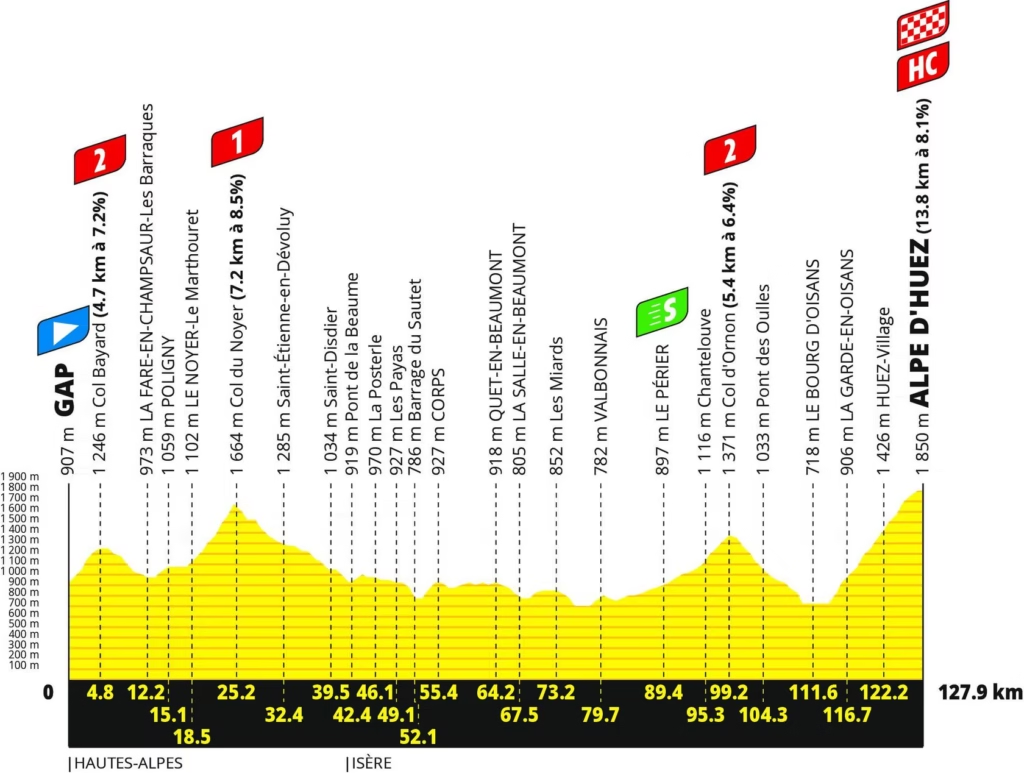
Stage 19: Gap to Alpe d’Huez
Stage 19 takes the race from Gap to Alpe d’Huez over 128km. It is shorter than stage 18 and far shorter than stage 20, but its simplicity is part of its appeal. The Tour returns to the most recognisable summit finish in cycling, and it does so on the day before an even harder Alpe d’Huez stage.
That creates a fascinating tactical problem. On one hand, Alpe d’Huez is too important to ignore. The stage win matters, the climb matters, and the crowds will make any weakness feel public. On the other hand, stage 20 is the bigger GC test. A rider who goes too deep on stage 19 may pay for it the next day.
That tension could shape the entire stage. A rider who feels strong may attack anyway, trying to take time before the hardest day. A rider defending yellow may choose to mark rather than move. A podium contender may see stage 19 as the better opportunity, knowing that stage 20’s extreme route could become too chaotic or too controlled by the strongest teams.
The classic Alpe d’Huez climb brings its own pressure. Its 21 bends are familiar, but familiarity does not make the climb easier. Riders know exactly where the steep sections come. They also know that the crowds, heat, noise and stage context can make pacing difficult. A rider who follows the emotion rather than the power meter can pay quickly.
Stage 19 may not be the queen stage, but it is still one of the best GC attack days of the Tour. It is also the day where confidence can swing sharply. A strong ride on the first Alpe d’Huez finish can change the mood before the final mountain stage. A bad ride can make stage 20 feel almost impossible.
For more on the double Alpe d’Huez story, see our feature on why back-to-back Alpe d’Huez finishes could define the Tour de France 2026.
Attack rating: 9/10
GC danger rating: 9/10
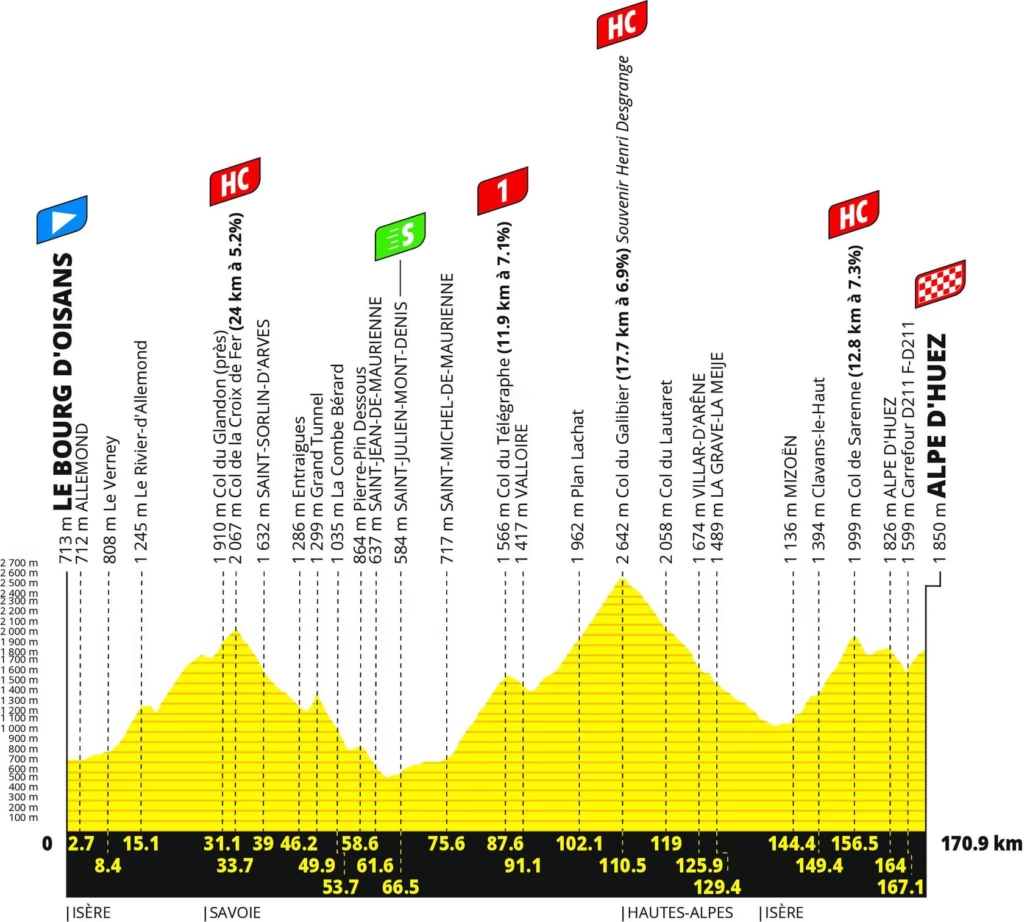
Stage 20: Le Bourg d’Oisans to Alpe d’Huez
Stage 20 is the queen stage of the 2026 Tour de France. It is also the final mountain stage of the race, which makes it the last real chance to turn the general classification upside down.
The official route takes the riders from Le Bourg d’Oisans to Alpe d’Huez over 171km. The stage includes the Col de la Croix de Fer, Col du Télégraphe, Col du Galibier, Col de Sarenne and the final climb to Alpe d’Huez. It is the hardest Alpine day and the most obvious stage for a decisive GC move.
The structure is brutal. Croix de Fer arrives early enough to start stripping teams. Télégraphe and Galibier create a long, grinding middle section that can expose anyone low on energy. The Galibier is the highest point of the race and gives the stage its altitude edge. Then, after the descent, the Col de Sarenne changes the usual Alpe d’Huez rhythm by adding a late Alpine obstacle before the final climb.
That Sarenne approach is crucial. Stage 20 is not simply another version of stage 19. It is not just the classic Alpe d’Huez climb repeated. The Sarenne makes the final hour more irregular, more exposed and more difficult to control. If a rider wants to attack before the final ascent, this is the terrain that allows it. If a team wants to isolate yellow, it has enough road to try.
The tactical stakes are obvious. If the race is close, stage 20 is where a rider two or three minutes down can no longer wait. If a favourite has a strong team, this is where they use it. If the yellow jersey is isolated, this is where everyone behind should test them. If the leader is still strong, this is where they can end the argument.
For a full stage breakdown, see our Tour de France 2026 queen stage guide. The same route also forms the basis of our L’Étape du Tour 2026 complete guide for UK riders, which gives a useful sense of how demanding this stage is even outside a Grand Tour context.
Attack rating: 10/10
GC danger rating: 10/10
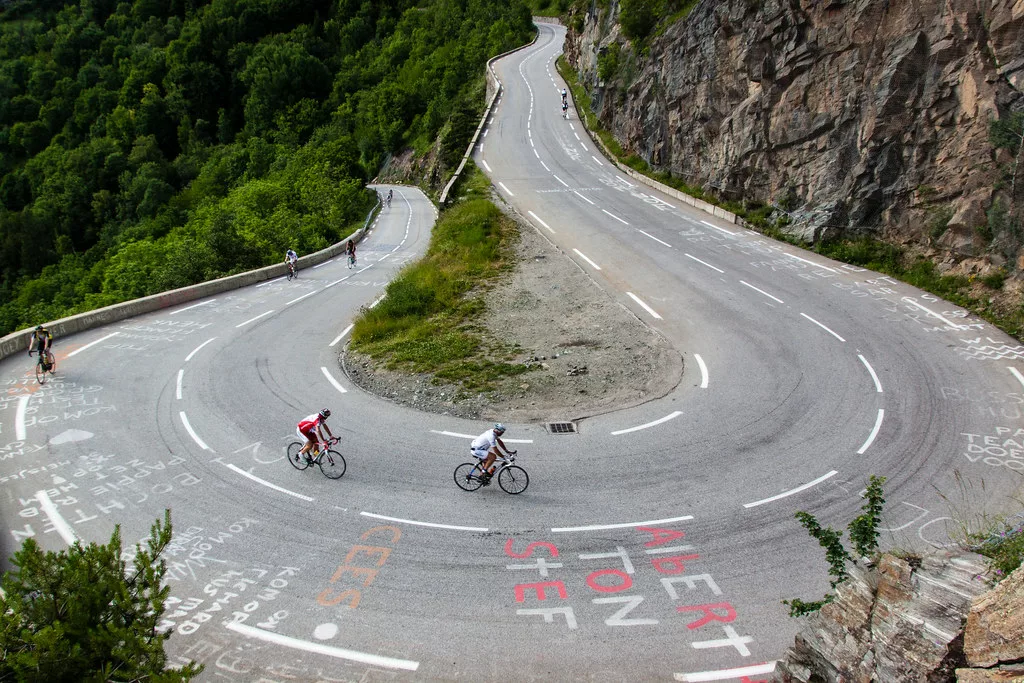
The key climbs of the 2026 Tour de France Alps
The Alpine block is defined by five climbs above all: Orcières-Merlette, Alpe d’Huez, Croix de Fer, Galibier and Sarenne.
Orcières-Merlette opens the sequence. It is not the hardest finish in the race, but it matters because it comes immediately after the time-trial phase. Its job is to expose who has recovered and who is already struggling.
Alpe d’Huez is the headline climb. It appears twice, first as the classic finish on stage 19, then again at the end of stage 20. The double use of Alpe d’Huez gives the race a clear visual and emotional centre in the final week. It also creates a rare comparison: riders will face the same finish after very different stage designs.
Croix de Fer is the first major obstacle on stage 20. Its role is not necessarily to produce the winning move, but to start weakening teams. If the pace is high there, it can make the rest of the day much more difficult.
Télégraphe and Galibier form the central engine of the queen stage. The combined climbing load is what gives stage 20 its depth. The Galibier’s altitude adds another layer, especially after nearly three weeks of racing.
Sarenne is the tactical wildcard. It is not as famous as Alpe d’Huez or Galibier, but its position makes it dangerous. Coming late on stage 20, it can be used to attack before the final climb or to force a tired race leader into a long chase.
For a broader climb-by-climb view, see our Tour de France 2026 climbs guide.
Why the stage 16 time-trial changes the Alps
The Alpine block cannot be separated from the stage 16 individual time-trial.
The 26.1km time-trial from Évian-les-Bains to Thonon-les-Bains comes just before the Alps, which means it effectively sets the scoreboard for the final mountain sequence. Riders who gain time there can approach Orcières-Merlette and Alpe d’Huez with more control. Riders who lose time may have no choice but to attack.
That is especially important for Remco Evenepoel. The time-trial is one of his clearest chances to take time from pure climbers. If he gains enough, the Alps become a defensive test as much as an attacking one. He would still need to survive the mountains, but he could force others to take the biggest risks.
For Pogačar, the time-trial can be another way to apply pressure. He may not need to win it outright, but if he gains on most GC rivals or limits any losses to Evenepoel, he enters the Alps with even more tactical freedom.
For Vingegaard, the time-trial is about keeping the door open. If he loses too much, he may need to attack heavily on stage 18, stage 19 or stage 20. If he stays close, stage 20 becomes the kind of endurance mountain test that suits him best.
That is why the Alps will not begin with a blank sheet. They begin with whatever stage 16 has already done to the race. For the full timed-stage context, see our best time triallists at the Tour de France 2026 and Tour de France 2026 team time-trial explainer.

Which riders benefit most from the Alpine route?
The 2026 Alpine route should suit riders who can recover, climb repeatedly and still attack after three weeks. That immediately brings Pogačar and Vingegaard into focus, but it also creates opportunities for riders below the top two.
Pogačar has the versatility to use all three Alpine stages. He can attack on Orcières-Merlette if the race is open, target the classic Alpe d’Huez finish on stage 19, and still be dangerous on the queen stage. The route gives him multiple chances rather than one single all-or-nothing day. For more on his overall fit, see our Tadej Pogačar at the Tour de France 2026 feature.
Vingegaard’s best stage on paper is stage 20. The long Alpine load, Galibier altitude and repeated climbing should suit a pure endurance climber. If Team Visma | Lease a Bike can make the race hard early, this is the day where he can create meaningful separation. His wider yellow jersey path is covered in our Jonas Vingegaard at the Tour de France 2026 feature.
Evenepoel’s Alpine challenge is more defensive. If he gains time in the stage 16 time-trial, he has to defend it across three mountain days. If he loses time before the Alps, he may have to choose between controlled riding and riskier attacks. See our Remco Evenepoel at the Tour de France 2026 analysis for more on that balance.
Felix Gall, Florian Lipowitz, Matteo Jorgenson, Kévin Vauquelin, Carlos Rodríguez, Oscar Onley, Thymen Arensman and Paul Seixas are among the riders who could use the Alps to move within the top five or top ten. Some may be racing for the podium, others for stage wins, but the same rule applies: the final week rewards riders who still have depth when the race is tired.
For more on that wider group, see our Tour de France 2026 dark horses for the general classification and Tour de France 2026 young riders to watch features.
Could the Alps decide the yellow jersey?
Yes, and stage 20 is the clearest reason.
The Tour may already have a strong leader before the Alps. The Barcelona team time-trial, Pyrenees, Massif Central, Vosges, Plateau de Solaison and time-trial could all shape the standings. But the Alpine block is where a narrow lead can either become secure or disappear completely.
Stage 18 can create the first cracks. Stage 19 can change the podium or force the yellow jersey to defend publicly on Alpe d’Huez. Stage 20 can decide everything because it is the final mountain day and the hardest stage of the race.
The key question is how close the race is when it reaches Le Bourg d’Oisans. If the yellow jersey lead is more than three minutes and the leader has a strong team, stage 20 may become a stage-win battle with controlled GC damage. If the gap is under two minutes, it could become one of the most aggressive final mountain stages in recent Tour history.
The route invites that. The sequence of Croix de Fer, Télégraphe, Galibier, Sarenne and Alpe d’Huez gives teams enough ground to attack before the final climb. It is not a stage where a rider has to wait for the last three kilometres. It rewards ambition, but only if the legs are still there.
Could the Alps decide the podium?
The podium may be even more vulnerable than yellow.
A rider defending first place can sometimes ride conservatively and mark the most dangerous rival. A rider defending third place cannot always do that. If several riders are within 90 seconds of the podium, the Alps can become chaotic behind the yellow jersey fight.
Stage 18 may already create movement among the top five. Stage 19 could reward a rider willing to attack on the classic Alpe d’Huez climb. Stage 20 may blow the order apart if one podium contender cracks on Galibier, Sarenne or the final climb.
That is where the race may become hardest to control. If Pogačar and Vingegaard are watching each other, a rider like Jorgenson, Gall, Vauquelin, Rodríguez, Lipowitz or Arensman could use the situation to move. The Alps are not just about who wins the Tour. They are also where a rider can turn fourth into second, or fall from the podium completely.
For the full podium landscape, see our Tour de France 2026 GC favourites ranked and Tour de France 2026 dark horses for the general classification guides.
What the Alps mean for the polka-dot jersey
The Alpine block should also be decisive for the mountains classification.
The polka-dot jersey battle may already be active through the Pyrenees, Massif Central, Vosges and Plateau de Solaison, but the Alpine points on offer should make stages 18, 19 and especially 20 impossible to ignore. Any rider chasing the mountains jersey needs to be in the right breakaways before the final weekend, or be strong enough to collect major points on the queen stage.
Stage 20 is especially important because of the number and status of the climbs. Croix de Fer, Galibier, Sarenne and Alpe d’Huez can all shape the classification, and the Galibier’s altitude adds to the prestige of the day. A breakaway climber who reaches the early climbs with a gap could take a major haul. A GC rider who wins the stage could also score enough to change the jersey battle if already close.
That makes the Alps a double contest: yellow jersey riders against each other, and climbers trying to use the same terrain for a separate prize. Sometimes those battles overlap. If a GC favourite attacks early on stage 20, the polka-dot fight may be dragged into the yellow jersey race.
For more on that classification, see our Tour de France 2026 climbers guide: who can win the polka-dot jersey?.

What the Alps mean for sprinters and breakaway riders
For sprinters, the 2026 Alpine block is about survival.
The final week offers little comfort after the time-trial. Once the race reaches Orcières-Merlette, Alpe d’Huez and the stage 20 queen stage, sprinters will be thinking about time cuts, energy management and reaching Paris. Any fast rider still chasing green will need teammates, calm pacing and good judgement. The stage wins will almost certainly be out of reach.
That makes the earlier sprint opportunities more important. The fast men cannot assume there will be easy points late in the race. For more on those stages, see our Tour de France 2026 sprint stages ranked and Tour de France 2026 sprinters guide.
For breakaway riders, the Alps are more complicated. Stage 18 could go to a break if the GC teams hesitate after the time-trial. Stage 19 may be harder because Alpe d’Huez carries so much stage prestige. Stage 20 is possible for a breakaway only if the GC situation is controlled, but if the yellow jersey fight is close, the favourites will probably dominate.
The best breakaway chance may depend on the GC gap. A dominant yellow jersey can free up attackers. A tight yellow jersey fight can close everything down. For more on where attackers should look, see our Tour de France 2026 breakaway stages ranked.
Best places to watch the Tour de France 2026 Alps
For roadside fans, the Alpine block offers three very different viewing experiences.
Orcières-Merlette should be the most manageable of the three summit finishes. It gives fans a high-mountain finish without the sheer crowd pressure of Alpe d’Huez. It may be the best option for those who want a proper GC day but slightly less chaos.
Stage 19 on Alpe d’Huez will be the classic spectacle. The 21 bends, crowds, flags and noise will make it the most recognisable viewing day of the race. It will also be busy, logistically demanding and best approached with plenty of time. Anyone wanting the traditional Alpe d’Huez experience will probably pick this day.
Stage 20 is the day for committed mountain spectators. The route offers Croix de Fer, Télégraphe, Galibier, Sarenne and Alpe d’Huez, but that also means road closures, difficult access and long waits. The Galibier and Sarenne should appeal to fans who want the hardest sporting context rather than only the biggest crowd. Alpe d’Huez will still be the final theatre.
For amateur riders planning around the same roads, the L’Étape du Tour 2026 complete guide for UK riders is the best companion piece, because it covers the stage 20 route from a rider’s perspective.
-
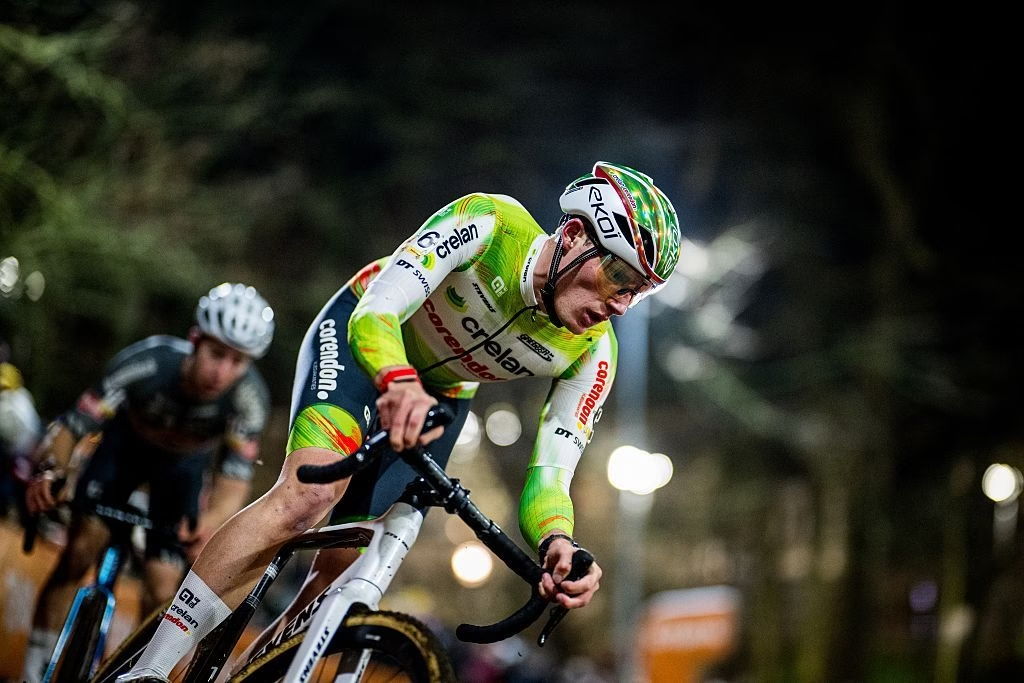
 Photo Credit: David Pintens / BELGA MAG/AFP via Getty Images
 -
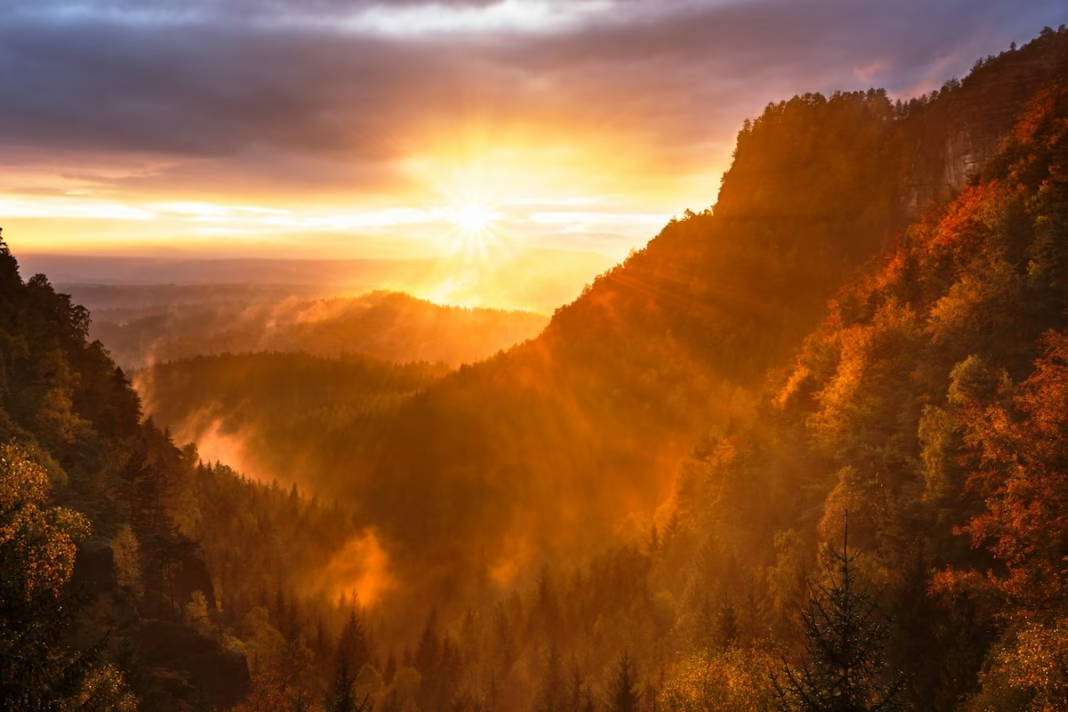
Photo Credit: BELGA MAG/AFP via Getty Images
Best Alpine stages ranked
⦿ Stage 20: Le Bourg d’Oisans to Alpe d’Huez
The queen stage, the hardest Alpine day and the final chance to change the Tour.
⦿ Stage 19: Gap to Alpe d’Huez
The classic Alpe d’Huez finish, with huge stage prestige and clear GC potential.
⦿ Stage 18: Voiron to Orcières-Merlette
The first Alpine test after the time-trial, and a stage where the race can begin to split again.
Prediction
The 2026 Tour de France Alps should be decisive, but not necessarily in the same way on each day.
Stage 18 should reveal who has recovered from the stage 16 time-trial and who is beginning to fade. Stage 19 should produce the first Alpe d’Huez showdown, with stage victory and podium positioning both at stake. Stage 20 should be the real final reckoning, especially if the race is still close enough for riders to attack before the final climb.
Pogačar has the route variety to use all three stages. Vingegaard has the pure mountain platform of stage 20. Evenepoel needs the time-trial to give him enough room before the Alps become a defensive challenge. Riders like Gall, Jorgenson, Vauquelin, Lipowitz, Rodríguez, Onley, Arensman and Seixas could all find their best or worst day here.
The biggest Alpine day is stage 20. The most iconic day is stage 19. The most underrated day may be stage 18. Taken together, they give the 2026 Tour its final shape.
If the yellow jersey fight is still alive when the race reaches Sarenne and Alpe d’Huez, the Alps will decide everything.
For UK viewing details across the race, see our how to watch Tour de France 2026 in the UK guide.

