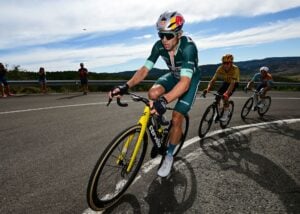
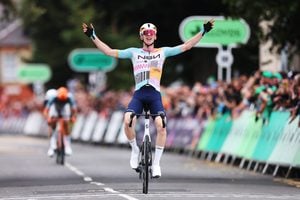
Stage 2 of the Tour de France 2026 brings the race straight back to Barcelona, but this is very different from the opening team time trial.
Saturday’s Grand Départ created the first gaps of the race. Jonas Vingegaard is in yellow after Team Visma Lease a Bike won the 19.6km team time trial, with Filippo Ganna second overall and Tadej Pogačar third after UAE Team Emirates XRG limited the damage on the final climb to Montjuïc.
Now the Tour gets its first road stage, and it is not a simple sprint.
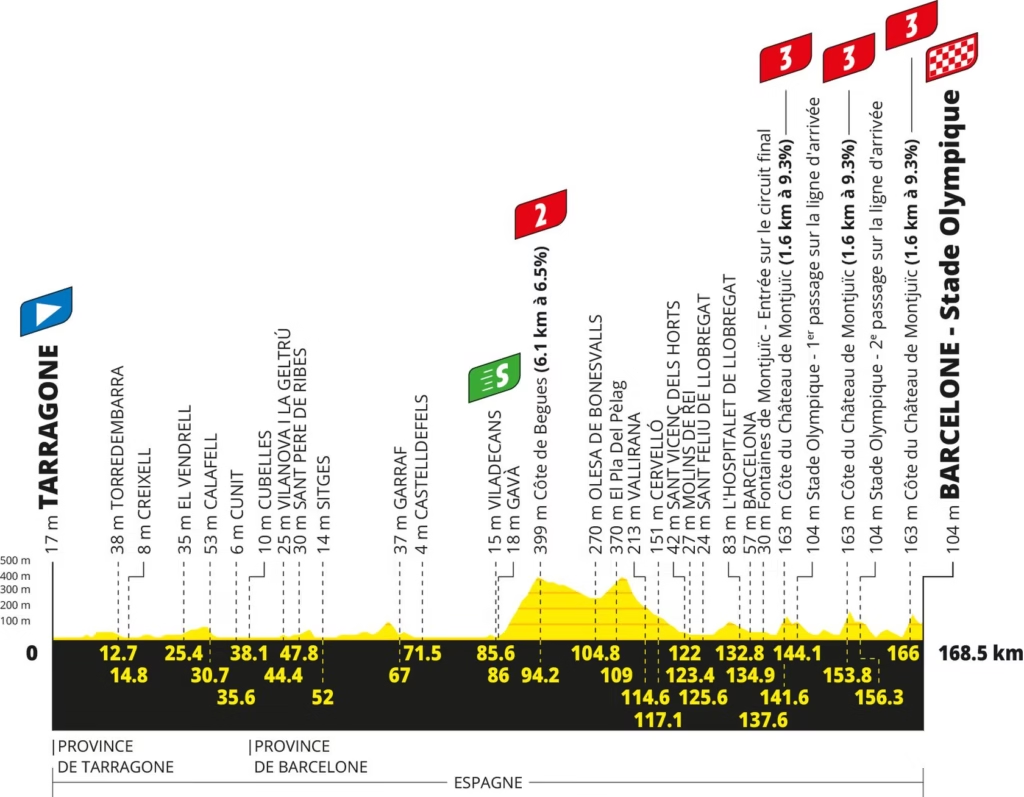
The riders face 168.5km from Tarragona to Barcelona on Sunday, with 2,500m of climbing, a category 2 ascent in the middle of the stage and three late climbs of the Côte du Château de Montjuïc. The same hill that shaped the team time trial now becomes the centre of a much more tactical road stage.
This is the first real test of control. Visma Lease a Bike have the yellow jersey, Pogačar has time to recover, several punchy riders will see a stage-winning chance, and the sprinters will already know this is probably too hard for a full bunch finish.
For the wider race picture, see our Tour de France 2026 full route guide, beginner’s guide to Men’s Tour de France 2026 and Tour de France 2026 stage 1 live viewing and start time update.
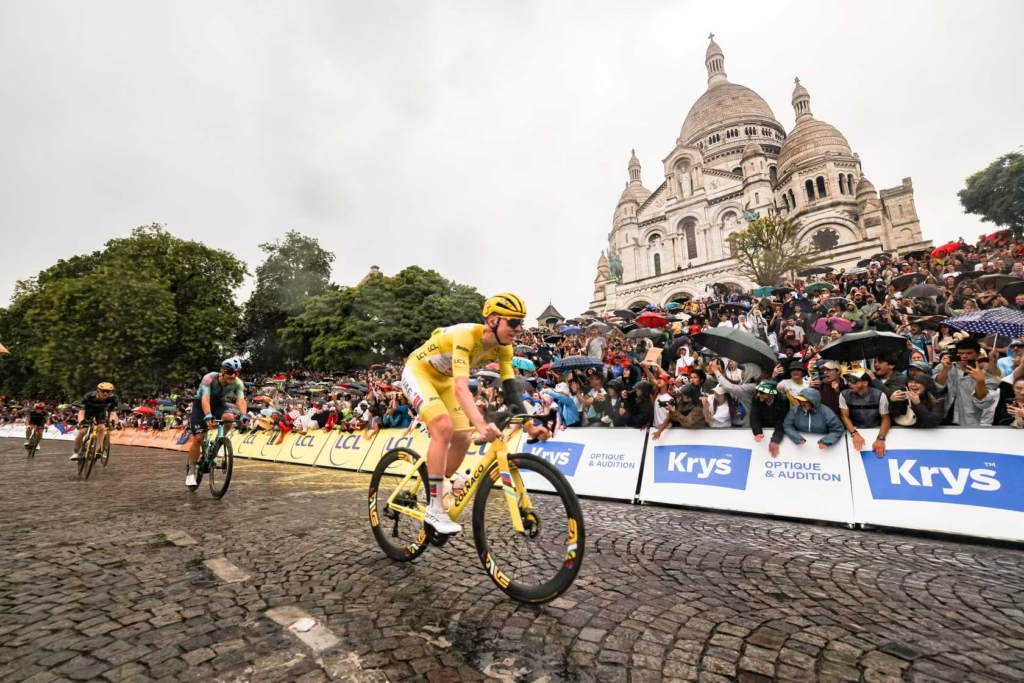
Quick answer: what is stage 2?
Stage 2 of the Tour de France 2026 is a 168.5km hilly stage from Tarragona to Barcelona. It includes the category 2 Côte de Begues and three late ascents of the Côte du Château de Montjuïc before the finish at the Olympic Stadium in Barcelona. It is likely to suit punchy climbers, classics riders and GC contenders rather than pure sprinters.
| Detail | Stage 2 |
|---|---|
| Date | Sunday 5 July 2026 |
| Route | Tarragona to Barcelona |
| Distance | 168.5km |
| Stage type | Hilly |
| Elevation gain | 2,500m |
| Start | 13:45 local time |
| Expected finish | From around 17:26 local time |
| Key climb | Côte de Begues, 6.1km at 6.5% |
| Final circuit | Three ascents of Côte du Château de Montjuïc |
| Finish | Barcelona Olympic Stadium |
| Likely winner type | Puncheur, climber, GC rider or reduced-group finisher |
Why stage 2 matters after the team time trial
The opening team time trial has already changed the tone of the race.
Vingegaard starts stage 2 in yellow, and that matters. Visma Lease a Bike did not simply avoid losses in Barcelona. They took control of the race immediately, with Vingegaard clocking 21:47 and moving into the first yellow jersey of the Tour. Ganna is eight seconds down overall, Pogačar is 12 seconds back, Juan Ayuso is 16 seconds behind, and Remco Evenepoel is already 19 seconds off yellow.
The gaps are still small, but they are not meaningless. The stage 1 team time trial was always expected to shape the opening GC hierarchy, and the new individual-time format made the final climb even more important. Our earlier guide to how the stage 1 team time-trial could change the Tour de France 2026 explains why the format was so different from a traditional team test.
Stage 2 also carries time bonuses of 10, six and four seconds at the finish, so the top of the race can shift again if the GC riders contest the stage.
That is what makes this stage awkward. It is not hard enough to guarantee a major GC battle, but it is hard enough that the yellow jersey cannot treat it as routine.
If Vingegaard finishes safely in the front group, Visma have done their job. If Pogačar attacks late and forces gaps, the Tour will already feel alive. If a puncheur wins and the GC favourites mark each other, stage 2 may become the first fight for stage honours rather than the first proper GC duel.
The route: Tarragona to Barcelona
The stage begins in Tarragona, one of the new stage towns on the 2026 Tour route, and heads along the Catalan coast before working back towards Barcelona.
The first half should encourage attacks. Breakaway riders will know this is a difficult stage to control, particularly after the intensity and heat of the opening team time trial. The peloton will still be fresh, but teams will already be thinking about Monday’s mountain stage to Les Angles. Nobody will want to waste too much energy if they do not have to.
The first major obstacle is the Côte de Begues, which comes after 94.2km. It is 6.1km long at 6.5%, which makes it a proper category 2 climb rather than a token early hill. It comes too far from the finish to decide the stage outright, but it can weaken sprint teams, split the peloton and give the breakaway a better chance of surviving deep into the finale.
From there, the race heads towards Barcelona and the Montjuïc circuit. That is where the stage changes completely. For more on the Grand Départ setting, see our guide to Tour de France 2026 in Catalonia.
The key climb: Côte de Begues
The Côte de Begues is the first categorised road-stage climb of the 2026 Tour.
At 6.1km and 6.5%, it is long enough to hurt but not steep enough to create a pure climbers-only selection. The stronger sprinters might survive it if the pace is controlled, but if a team decides to lift the speed, the race can start to lose riders quickly.
It also offers the first meaningful mountains classification points of the race. That may tempt breakaway riders who want an early polka-dot jersey bid. With only small climbs on stage 1 and a more serious mountain stage coming on stage 3, the Côte de Begues is a useful target for aggressive riders who want to get into a classification battle early.
The climb is not the finish, but it will shape who reaches Barcelona with legs left. For newer fans, our Tour de France 2026 jerseys explained guide explains how the yellow, green, polka-dot and white jersey battles can all matter on the same stage.
Montjuïc returns, but in a different race
Montjuïc was the decisive feature of stage 1, and it returns on stage 2 in a much more complicated form.
Instead of one final launch in a team time trial, the riders face the Côte du Château de Montjuïc three times in the final 30km. Each ascent is 1.6km at 9.3%, making it short, steep and hard to manage after more than 140km of racing.
The three ascents come at 141.6km, 153.8km and 166km. That means the final climb crests only 2.5km from the finish.
This is the stage’s defining detail. A late attack on the final climb could be enough to win. A reduced group could form over the top and sprint for the stage. GC riders could test each other without needing a long-range move. The gradient is severe enough to open gaps, but the short distance from the top to the finish means hesitation could be punished.
Montjuïc is not a mountain in the Tour sense, but in a stage like this, it is exactly the kind of climb that can make the race explode.
What kind of finish should we expect?
A full bunch sprint looks unlikely.
The route has too much climbing, and the final circuit is too selective. The three climbs of Montjuïc should take the pure sprinters out of contention, especially if teams with punchy riders decide to make the race hard.
The most likely outcome is one of three scenarios.
| Scenario | What it would look like |
|---|---|
| Reduced group sprint | A group of 20-40 riders survives Montjuïc and sprints at the Olympic Stadium |
| Late solo attack | A rider attacks on the final climb and holds the gap to the line |
| GC punch-up | Pogačar, Vingegaard, Evenepoel or another contender forces a small split |
The final climb is close enough to the finish that a decisive attack is realistic. The question is whether anyone wants to commit fully this early in the race.
 Photo Credit: Getty
Can Pogačar strike back?
This is the obvious question after stage 1.
Pogačar did not lose the Tour in the opening team time trial, but he did lose 12 seconds to Vingegaard. That is enough to matter, especially because Visma now have the yellow jersey and the confidence of a stage win.
Stage 2 gives Pogačar a natural response point. The repeated Montjuïc climbs are closer to his territory than a pure team time trial. A short, steep ascent late in the stage, followed by a fast finish, is exactly the type of terrain where he can test rivals without needing to burn the whole team.
That was one of the reasons the opening Catalan block always looked dangerous in our Tadej Pogačar Tour de France 2026 preview. The time bonuses add further incentive. Even if he cannot take yellow purely through bonuses, he can cut the gap, force Vingegaard to respond and remind the race that stage 1 was only the first part of the Barcelona story.
The danger for UAE is timing. If they make the stage too hard too early, they risk helping other punchy riders. If they wait too long, the final climb may not be enough to create a meaningful gap. Their ideal version is probably a controlled race into the final circuit, then a sharp acceleration from Pogačar or Isaac del Toro on the last Montjuïc ascent.
What does Visma need to do?
Visma Lease a Bike need to defend yellow without spending too much energy.
That sounds simple, but it is not. The team has just won the opening stage, and that brings responsibility. They do not need to chase every move, but they cannot allow dangerous riders too much space. They also need to keep Vingegaard safe through the final circuit, where positioning will be just as important as climbing legs.
The good news for Visma is that the stage does not force them to control everything alone. Teams with punchy stage hunters will want the breakaway within reach. UAE may also want a hard finale for Pogačar. Alpecin-Premier Tech, Groupama-FDJ United and others could also help shape the chase if they believe they have a rider for the finish.
Visma’s priority is not necessarily to win the stage. It is to keep Vingegaard in yellow, avoid splits and make sure the team does not pay too high a price before the Pyrenees. Our Jonas Vingegaard Tour de France 2026 guide sets out why his path to another yellow jersey depends on staying close and letting the harder climbing days build his case.
 Photo Credit: Getty
Who are the stage favourites?
This is not a straightforward favourites list because stage 2 sits between a punchy Classic, a GC stage and a reduced sprint.
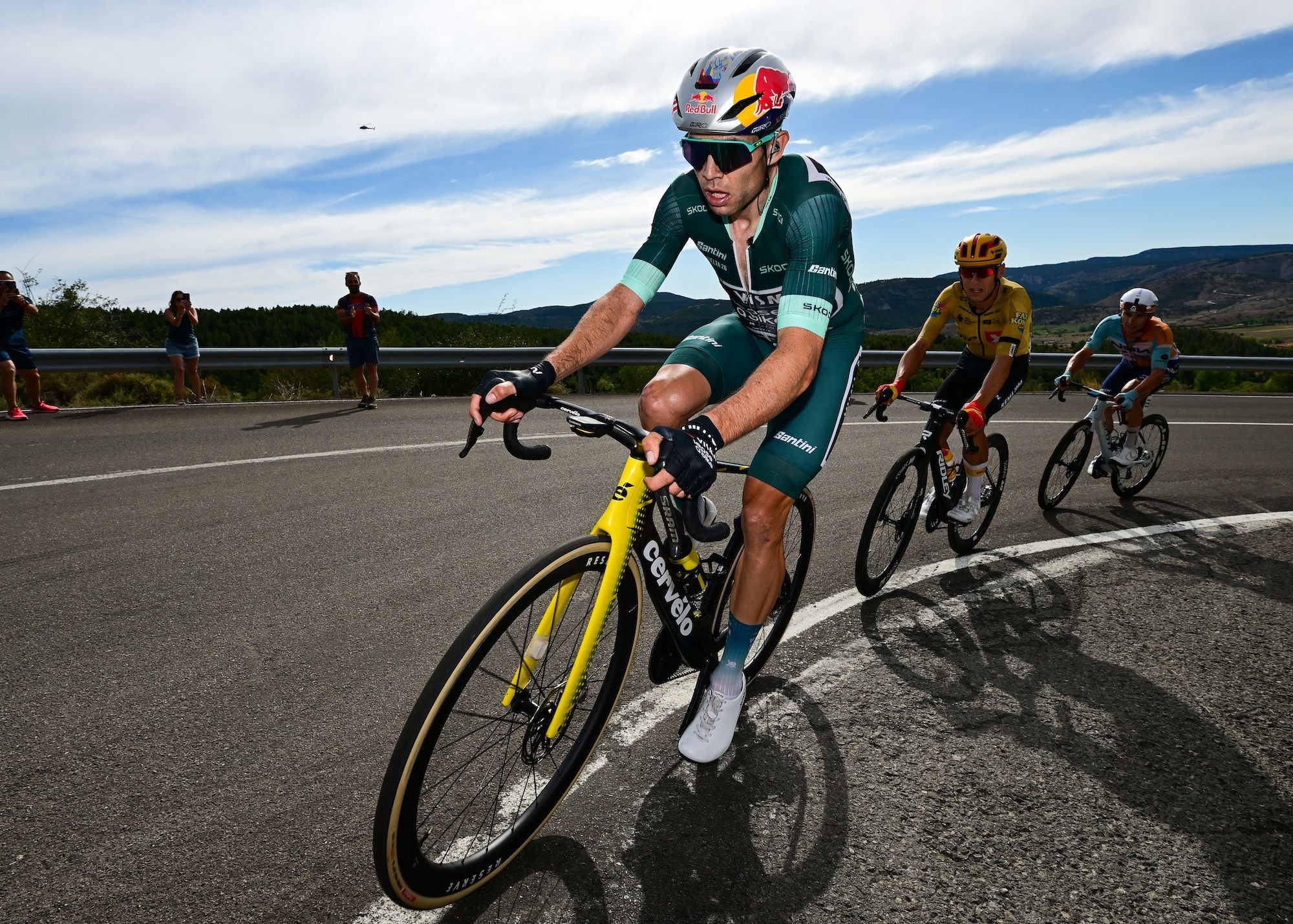
Pogačar has to be the most obvious name because the final climb suits his explosiveness. Vingegaard is less naturally associated with this kind of punchy finish, but stage 1 showed he is already in excellent condition and the yellow jersey can sharpen instincts. Remco Evenepoel may look for a move before or over the top of the final climb, especially if he wants to recover ground after Red Bull-Bora-hansgrohe’s less decisive opening day. His wider Tour case is covered in our Remco Evenepoel Tour de France 2026 preview.
Mathieu van der Poel is another major name. If he survives the climbs near the front, the finish could suit him. He can handle repeated short efforts, descend well and sprint from a reduced group. He is one of the most obvious names in our Tour de France 2026 stage hunters to watch guide because he can win stages in several different ways.
Romain Grégoire also looks interesting after Groupama-FDJ United’s strong opening ride, particularly because he was one of the early riders to fly up the Montjuïc finish in the team time trial. He is also one of the names highlighted in our guide to the best French riders to watch at the Tour de France 2026.
Juan Ayuso is another rider to watch. Lidl-Trek came close in the team time trial, and Ayuso’s punch could be dangerous on a finish like this. His wider race is covered in our Juan Ayuso Tour de France 2026 guide. Paul Seixas will also attract attention, though Decathlon CMA CGM Team may be more concerned with keeping him safe before stage 3 than asking him to go all-in on Montjuïc.
For the sprinters, the best hope is survival. This is not a day for the fastest pure sprinter in the race. It is a day for riders who can climb like puncheurs and sprint after repeated efforts.
Riders to watch
| Rider | Why stage 2 suits him |
|---|---|
| Tadej Pogačar | Explosive on short climbs and has time to recover after stage 1 |
| Jonas Vingegaard | Starts in yellow and showed strong form on Montjuïc |
| Mathieu van der Poel | Dangerous if he reaches the final climb in the front group |
| Remco Evenepoel | Could attack before or after the final climb |
| Juan Ayuso | Punchy, motivated and already prominent in Barcelona |
| Romain Grégoire | Strong uphill effort in the team time trial and good reduced-finish profile |
| Paul Seixas | Climbs well and may be tested if the race becomes selective |
| Mads Pedersen | A possible reduced-group option if he survives the final circuit |
The broader GC hierarchy is covered in our Tour de France 2026 GC favourites ranked and Tour de France 2026 contenders preview.
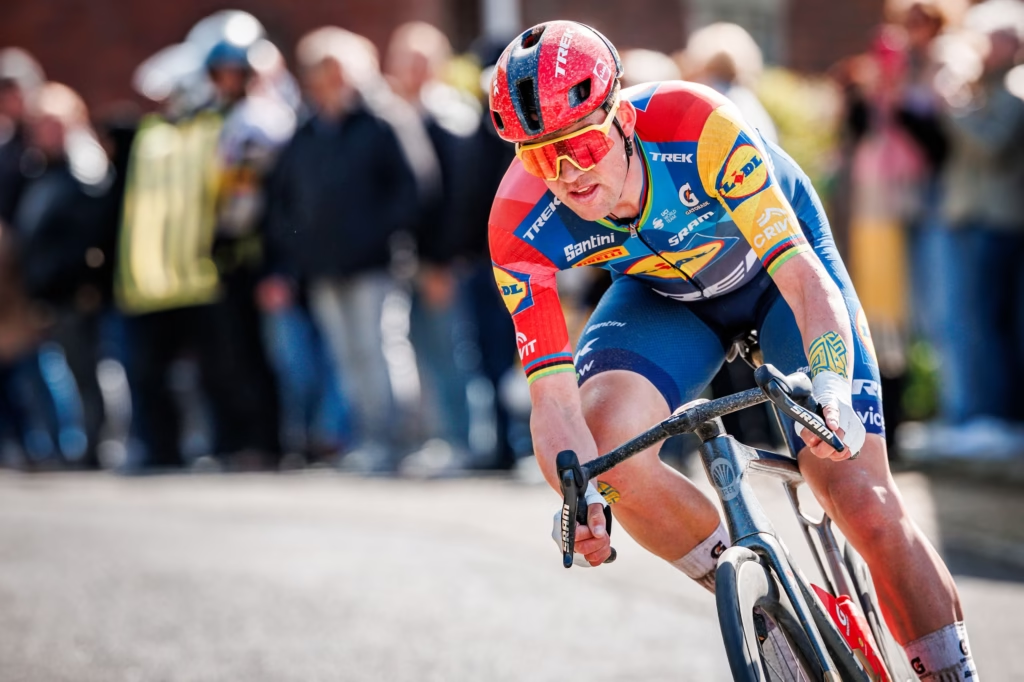 Photo Credit: Getty
What about the green jersey?
Stage 2 is also important for the points classification, but it may not be a normal sprinters’ day.
There is an intermediate sprint in Viladecans, which should interest the green jersey contenders if the breakaway has not taken the points. The finish also offers points, but only the strongest sprinters are likely to survive the repeated Montjuïc climbs.
That makes the day tricky for riders such as Jasper Philipsen, Arnaud De Lie, Biniam Girmay and other fast men. They will want points, but the finale is a problem. De Lie’s situation is especially uncertain after his stomach upset before the start of the Tour, so expectations around his early race should remain cautious. That latest update is covered in our piece on Arnaud De Lie’s Tour de France start under caution.
A rider like Mads Pedersen may be more relevant on this kind of stage, because he can handle difficult terrain better than many pure sprinters. If the race comes back together in a reduced group, the points competition could already tilt towards the all-round fast men.
For the wider points picture, see our Tour de France 2026 sprinters guide, best sprinters at the Tour de France 2026 and Tour de France 2026 route: best days for sprinters.
How stage 2 could affect the GC
Stage 2 probably will not create huge time gaps, but it can still matter.
The final climb comes close enough to the finish that small splits are possible. A rider caught behind a gap could lose five, 10 or 15 seconds before the Tour has even left Spain. Add finish bonuses, and the differences can quickly become meaningful.
For Vingegaard, the target is simple: stay in front, stay safe and avoid giving Pogačar a free chance to reduce the gap. For Pogačar, the aim is to test Visma and see whether stage 1 was simply a team result or a sign that Vingegaard has already found a sharper opening rhythm. For Evenepoel, Ayuso, Seixas and the rest, stage 2 is a chance to stay close before the bigger climbing test on stage 3.
Nobody needs to win the Tour here. But somebody could lose time through poor positioning, a late split or a badly timed response.
For newer viewers, our guide to how the Tour de France general classification works explains why seconds lost on a stage like this can still matter much later in the race.
Tactical forecast
The early break should go quickly. The question is whether the peloton gives it enough room to survive deep into the finale.
If the break contains no GC threat and no major punchy danger, Visma may be happy to let other teams chase. But the stage win is attractive enough that Alpecin-Premier Tech, Groupama-FDJ United, Lidl-Trek, UAE and possibly Red Bull may all have reasons to keep the gap manageable.
The Côte de Begues should reduce the peloton but probably not decide the winner. The real race starts when the riders enter the Montjuïc circuit. From there, every climb matters.
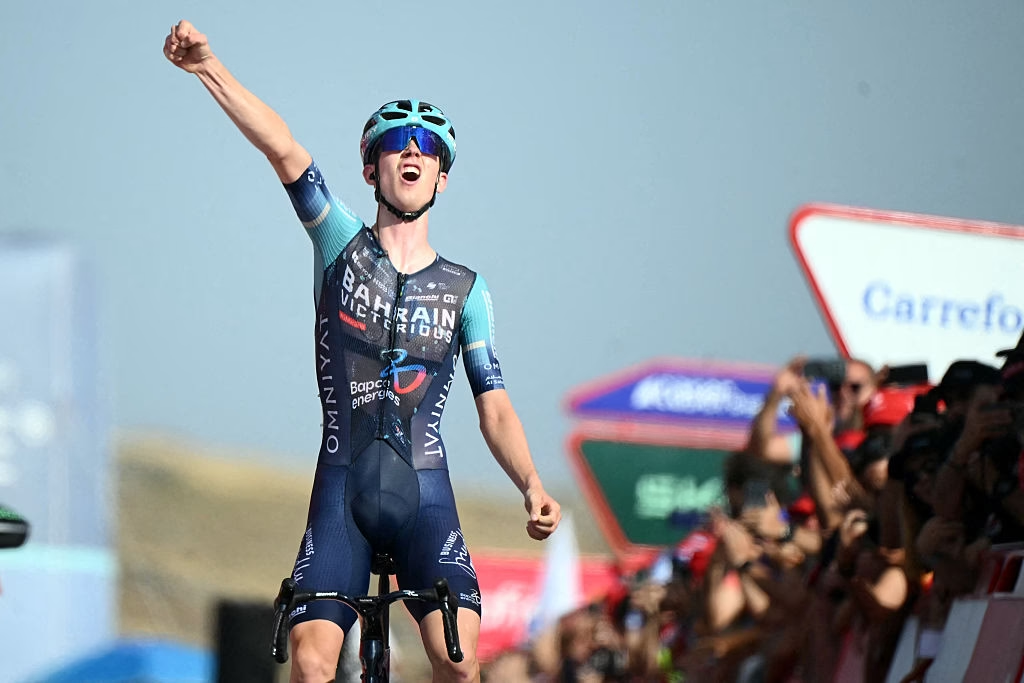
The first ascent should soften the group. The second may draw attacks or force teams to commit. The third is the launchpad. If Pogačar, Van der Poel, Ayuso or Evenepoel attacks there, the chase will have very little time to organise before the finish.
This is one of those stages where the route sits between a stage-hunter chance and a GC danger day. Our guide to the Tour de France 2026 route’s best days for GC attacks explains why the opening week leaves little room for the favourites to ride themselves in quietly.
Prediction
This looks more like a punchy finish than a GC demolition job.
The team time trial has already put Vingegaard in control, but it has also given Pogačar a clear reason to race aggressively. The finish is steep enough for the Slovene to test the yellow jersey, and the time bonuses make that temptation even stronger.
However, the stage may be too open to become a clean Pogačar versus Vingegaard duel. Van der Poel, Ayuso, Grégoire and other punchy riders will see this as one of the best early chances of the race. If the GC favourites hesitate, a classics-style rider can win.
The most likely outcome is a reduced group sprint or a late attack from the final Montjuïc climb.
One-star contenders
Romain Grégoire, Mads Pedersen, Paul Seixas, Isaac del Toro
Two-star contenders
Remco Evenepoel, Juan Ayuso, Jonas Vingegaard
Three-star contenders
Mathieu van der Poel, Tadej Pogačar
Final word
Stage 2 is exactly the kind of early Tour stage that looks manageable on paper but can become dangerous very quickly.
The race is still in Catalonia, the peloton is still settling into the Tour, and the first yellow jersey has already gone to Vingegaard. That gives the stage an immediate tension. Visma Lease a Bike will want control. UAE Team Emirates XRG will want a response. The puncheurs will see opportunity. The sprinters will fear the final circuit.
The Côte de Begues gives the stage its first serious test, but Montjuïc is where it should be decided. Three ascents of a 1.6km climb at 9.3% are enough to remove the sprinters, expose tired legs and give the best puncheurs a launchpad.
After the precision of the team time trial, stage 2 should bring something messier: attacks, positioning fights, bonus seconds and the first proper road-stage argument of the 2026 Tour.