The 2026 Tour of Chongming Island has one overwhelming favourite. On three stages this flat, with a reduced field and no Charlotte Kool, Elisa Balsamo or Chiara Consonni on the start list, Lorena Wiebes should be expected to win every stage and the overall classification unless something goes badly wrong.
That makes the more interesting contest the fight behind her. The general classification is likely to be decided by repeated sprint placings and bonus seconds, so the riders who can finish second, third and fourth day after day have a realistic route to the final podium even without beating Wiebes outright.
The 2026 Tour of Chongming Island route contains three flat stages from 9-11 October, with almost no natural climbing. Crosswinds, positioning and intermediate bonuses matter far more than elevation, while the 69-rider start list is much smaller than originally expected after a series of WorldTour withdrawals.
Lorena Wiebes should control the race
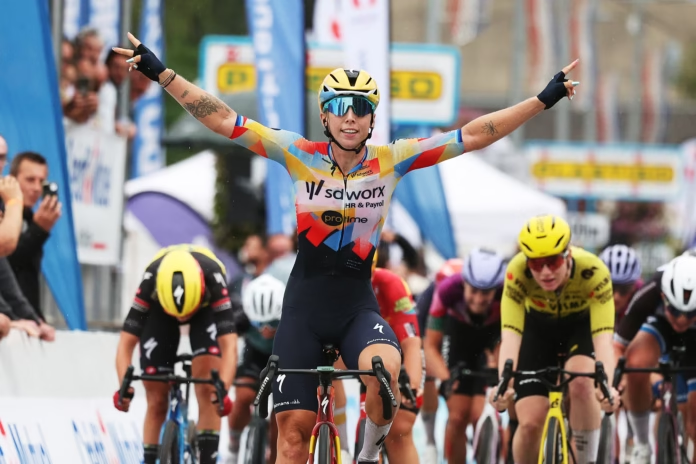
Wiebes is not simply the fastest sprinter in the field. She arrives with the strongest lead-out as well, with Barbara Guarischi, Femke Markus, Lisa van Belle and Femke Gerritse giving Team SD Worx-Protime enough control to manage all three stages.
Her 2026 season has already shown how difficult she is to beat when a race repeatedly comes back to bunch sprints. At the Tour of Britain Women she won four stages, including the final sprint in Royal Leamington Spa, and the Chongming route removes most of the climbing that prevented her from turning those wins into the overall title.
Here, the route is almost designed around her strengths. Stage 1 is 108.6km and flat, Stage 2 is longer at 129.4km but still built around exposed roads rather than climbs, and Stage 3 returns to another flat circuit around Chongming New City Park. Even the general classification is likely to reward sprinting rather than climbing.
That means the working assumption should be simple: Wiebes wins the stages, takes the finish bonuses and starts each following day in the leader’s jersey. The riders behind her need to think less about beating Wiebes and more about beating each other.
Sofie van Rooijen looks the strongest candidate for second
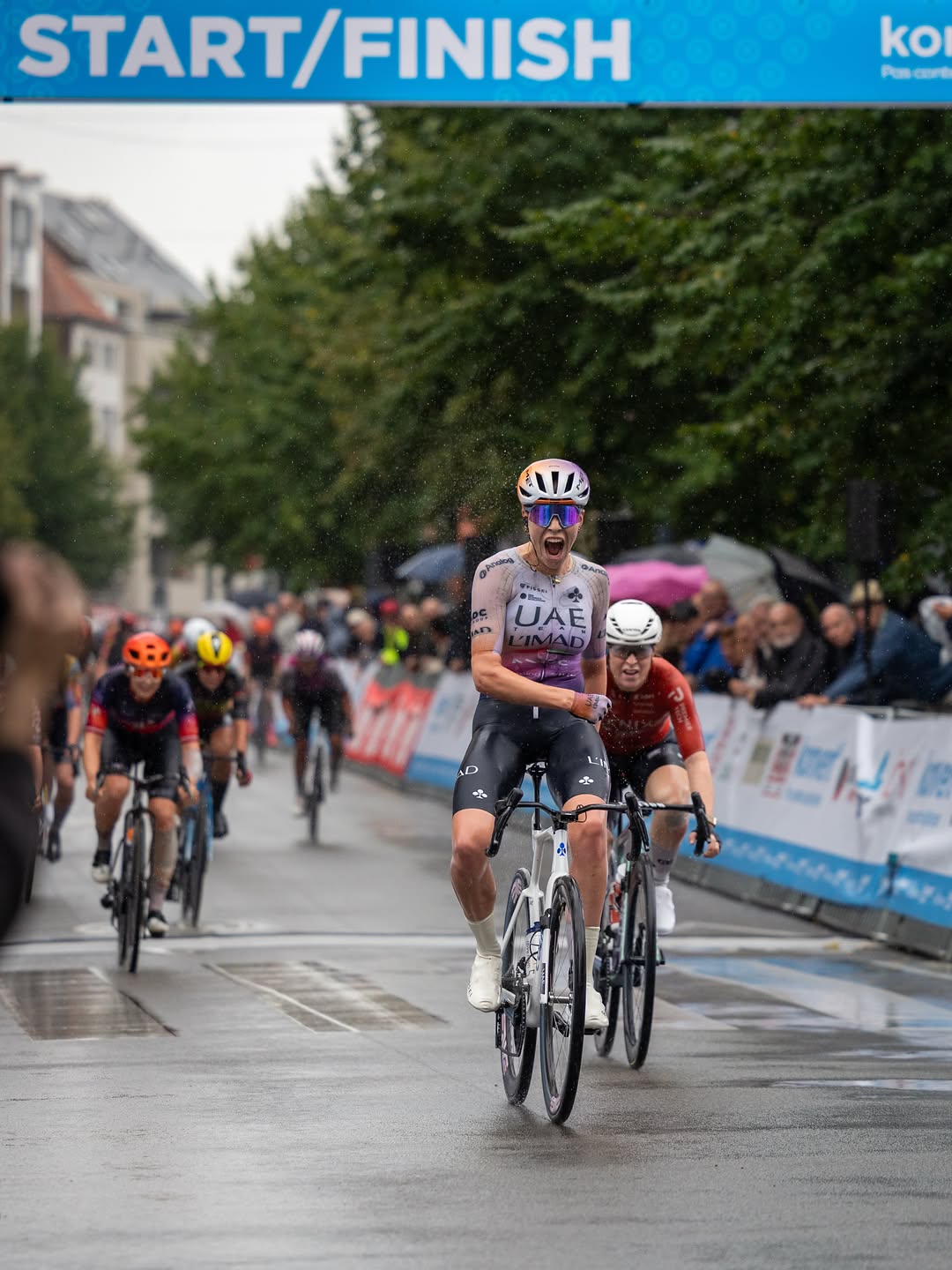
Van Rooijen is the clearest pick to finish directly behind Wiebes. She already knows how to win at Chongming, having taken Stage 2 in 2025, and she has continued to prove her sprinting level in 2026.
Her victory at Konvert Koerse Kortrijk in August came against Charlotte Kool, confirming that she can beat high-level sprint opposition when the final is right. Wiebes is still a different level of problem, but Van Rooijen does not need to beat her to finish second overall.
UAE Team L’IMAD also have several ways to support her. Lara Gillespie can either help with the lead-out or contest sprints herself, while Karlijn Swinkels is an excellent rider to have in exposed crosswind sections. That depth should make it easier for Van Rooijen to remain consistently near the front across all three days.
Ruby Roseman-Gannon remains a threat, but sits behind the pure sprinters
Roseman-Gannon is perhaps the most complete rider in the group chasing the podium, but that versatility is slightly less valuable at Chongming than outright sprint repeatability. She has the speed to finish high in the bunch sprints and is less dependent on a perfectly organised lead-out than some of the pure sprinters around her, yet Copponi’s sharper finishing speed gives the French rider the edge over three days where every stage is likely to end fast.
That matters at Chongming because the race can be more chaotic than the profile suggests. Crosswinds, narrow roads and the fight for intermediate bonuses can split teams before the final sprint, and Roseman-Gannon is well equipped to survive that kind of racing.
Liv AlUla Jayco also have Josie Talbot, who won the final stage here last year, and Quinty Ton. The team therefore have enough sprint depth to avoid putting every responsibility on Roseman-Gannon from kilometre zero.
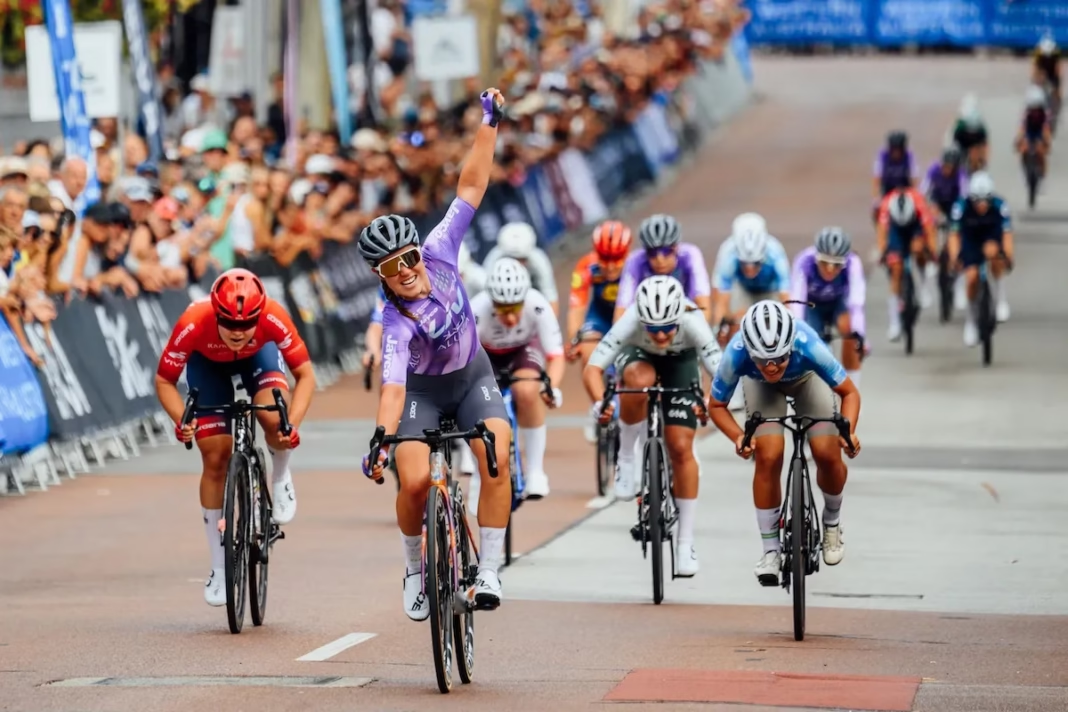
Clara Copponi is the best pick for the final podium place
Copponi is the strongest pure sprint threat behind Wiebes and Van Rooijen, which makes her the best pick for third overall. She won Ronde de Mouscron earlier this season and is exactly the kind of rider who can accumulate second and third places across three flat stages. On a race with virtually no climbing and a GC likely to be built from finish bonuses and repeated high placings, that specialist sprint profile matters more than Roseman-Gannon’s broader all-round range.
Lidl-Trek only bring five riders, but that should not matter too much on this route if they stay organised. Ava Holmgren, Marine Lenehan, Margot Vanpachtenbeke and Felicity Wilson-Haffenden can all contribute to getting Copponi into the final kilometre in position.
The key for Copponi is the intermediate sprints. If she can take bonus seconds there while Wiebes saves energy for the finish, she can build a GC advantage over riders who are relying entirely on stage placings.
Maggie Coles-Lyster is the strongest challenger to Copponi for third
Coles-Lyster has had one of her best seasons at WorldTour level and brings both sprint speed and confidence into Chongming. She won the Canadian road title in June and has repeatedly finished near the front in bunch sprints this year. On a race decided by repeated flat finishes, that makes her a stronger podium threat than Roseman-Gannon and the most obvious rider to challenge Copponi for third.
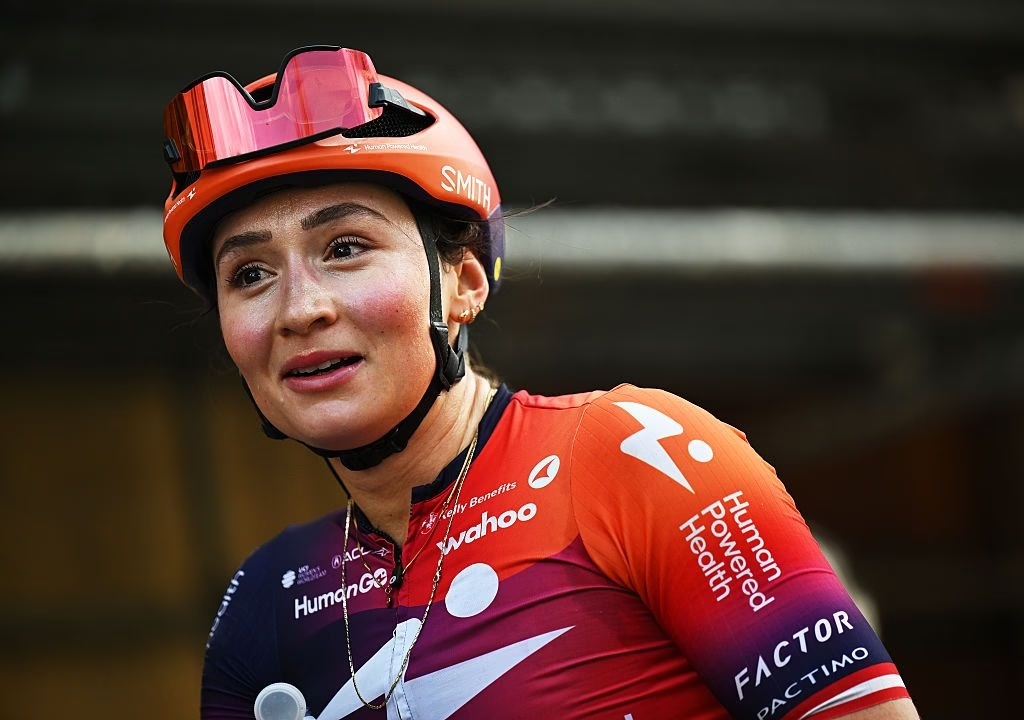
Human Powered Health may also have the deepest sprint group outside SD Worx-Protime. Kathrin Schweinberger, Silvia Zanardi, Jente Koops, Marta Jaskulska and Katia Ragusa give the team multiple riders who can either lead out Coles-Lyster or chase bonuses themselves.
That depth is a strength, but it can also create a tactical question. If Coles-Lyster is clearly the GC rider from Stage 1 onwards, the team can build everything around her. If Schweinberger or Zanardi starts taking high placings too, Human Powered Health may find itself with several riders close together on time but no single rider maximising every bonus opportunity.
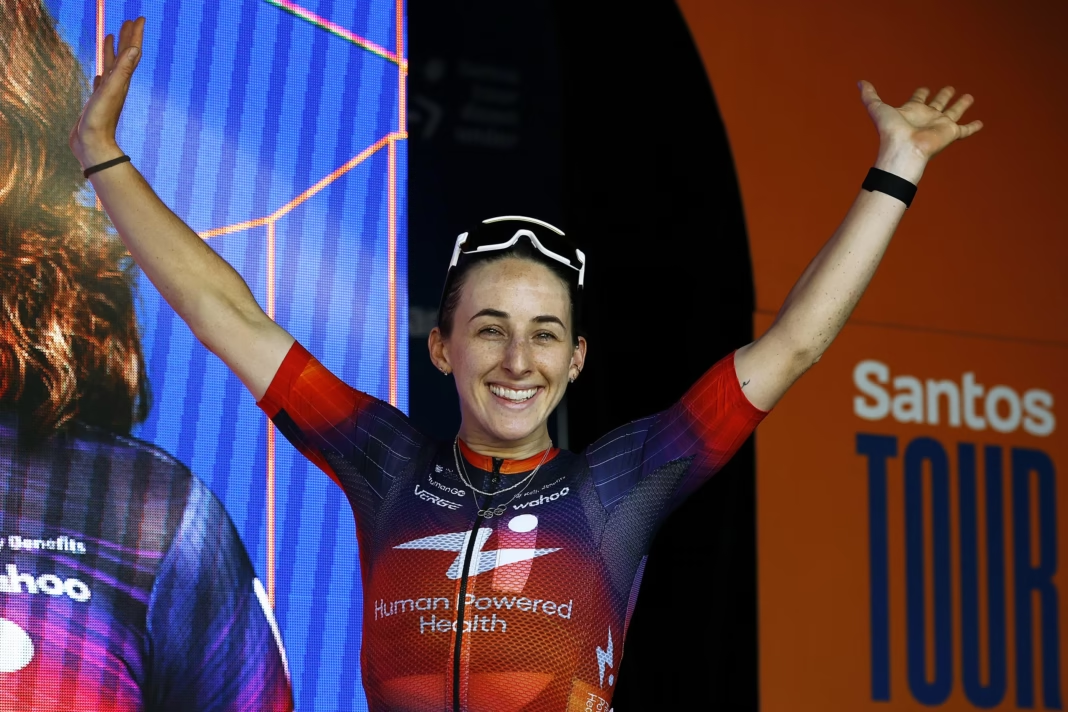
Kathrin Schweinberger and Silvia Zanardi can collect the seconds others miss
Schweinberger is especially interesting because she has already shown how well she handles Chongming’s style of racing, winning Stage 1 in 2025. She may not have the outright speed of Wiebes or Van Rooijen, but she is excellent at positioning and can score repeatedly when the race becomes messy.
Zanardi is another rider who can turn consistency into a high GC finish. Neither needs to win a stage to threaten the podium. A sequence of fourths, fifths and intermediate sprint bonuses could be enough if one of the headline challengers loses position on a single day.
Josie Talbot already knows how to win here
Talbot took her first Women’s WorldTour victory on the final stage of the 2025 Tour of Chongming Island. That makes her more than a support rider for Roseman-Gannon, particularly if Liv AlUla Jayco decide to split responsibilities between the two Australians.
Her challenge is consistency. Winning one stage is very different from finishing near the front in all three, and the overall podium will probably go to riders who avoid a single poor sprint rather than those who simply produce one exceptional result.
Lara Gillespie is the wildcard inside UAE Team L’IMAD
Gillespie is quick enough to make the podium conversation complicated. If UAE commit fully to Van Rooijen, she can become one of the most valuable lead-out riders in the race. If circumstances give her freedom, she is capable of scoring enough herself to affect the overall classification.
That makes UAE one of the few teams able to change plan mid-race. If Van Rooijen loses time through a split or crash, Gillespie gives them another rider who can immediately become a GC option.
Intermediate bonuses could decide second and third
The stage finishes will naturally dominate attention, but the intermediate sprints may decide the final podium. If Wiebes concentrates on the stage victories rather than contesting every bonus point on the road, the riders behind her have an opportunity to build small but important time gaps before the final kilometre.
That should favour teams prepared to race aggressively rather than wait for three straightforward sprints. Van Rooijen, Copponi, Roseman-Gannon and Coles-Lyster all have reason to target those seconds, particularly because the difference between second and fifth at the finish may be very small.
Could the smaller field make Wiebes vulnerable?
The only serious argument against a clean Wiebes sweep is that the reduced 69-rider field gives SD Worx-Protime fewer large WorldTour teams to share the work of controlling breakaways. An aggressive move in crosswinds could also create a more complicated stage than the route profile suggests.
Even then, SD Worx-Protime have little reason to panic. The distances are short, the terrain is flat and most of the strongest rival teams also want sprint finishes because their best GC riders are sprinters. UAE, Lidl-Trek, Liv AlUla Jayco and Human Powered Health all have an interest in bringing moves back.
That shared incentive is why Wiebes remains such a strong favourite. Her rivals may want to beat her, but they also need the same race structure she does.
Tour of Chongming Island 2026 podium prediction
1. Lorena Wiebes
2. Sofie van Rooijen
3. Clara Copponi
Coles-Lyster is the rider most likely to dislodge Copponi from third, with Roseman-Gannon next in line. Schweinberger, Zanardi, Talbot and Gillespie all have a realistic route to a high overall finish if they consistently collect intermediate bonuses and avoid losing position in the sprints.
The history of the Tour of Chongming Island shows how often the race has rewarded pure sprint consistency. In 2026, the identity of the winner looks unusually straightforward. The real uncertainty starts immediately behind her.
-
 Photo Credit: Luc Claessen/ISPA
 -
 Photo Credit: Unsplash / Chris Linnett