
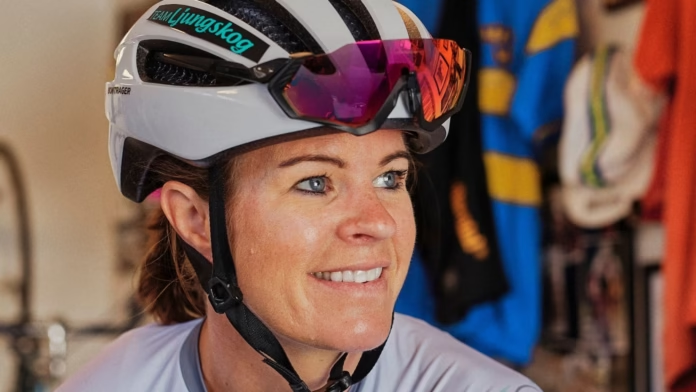
Susanne Ljungskog won consecutive road world championships, finished second in the Grande Boucle Féminine, won the Tour de l’Aude twice and built a collection of victories stretching from Primavera Rosa to the Holland Ladies Tour.
That is already enough to put her among the outstanding riders of her generation.
Yet Ljungskog can be surprisingly easy to overlook when the great names of women’s cycling around the turn of the century are discussed. She raced alongside Jeannie Longo, Leontien van Moorsel, Joane Somarriba, Judith Arndt, Nicole Cooke and the emerging Marianne Vos, without ever developing quite the same mythology around her career.
The results deserve another look.
Ljungskog was not simply a rider who happened to produce two exceptional World Championship performances. She could win one-day races, time trial, climb well enough to challenge for major stage races and remain competitive throughout a long season.
Her place in the wider history of women’s cycling comes from that breadth as much as the two rainbow jerseys.

Sweden had already found a champion before the rainbow jerseys
Ljungskog was born in Halmstad in 1976 and began winning senior Swedish titles remarkably early.
She became national road and time trial champion in 1994 at only 18, beginning a domestic record that would eventually include eight Swedish road titles and four against the clock.
By the late 1990s she was also producing international stage-race results.
She finished second overall at the Thüringen Rundfahrt in 1998, winning a stage, and took two stages at the Tour de l’Aude during the same season. Third overall at the Holland Ladies Tour followed in 1999.
Those results already showed a rider whose strengths were difficult to reduce to one category.
Ljungskog could time trial well enough to protect a general classification, climb well enough to remain with selective groups and still finish quickly when necessary.
The bigger victories arrived soon afterwards.
Primavera Rosa put Ljungskog among the leading Classics riders
The 2001 season was an important step.
Ljungskog won the Primavera Rosa, the women’s version of Milan-San Remo that formed part of the UCI Women’s Road World Cup between 1999 and 2005.
She also won the Grand Prix Suisse Féminin later that year and finished third overall at the Tour de l’Aude.
Primavera Rosa was particularly useful evidence of the sort of rider she had become.
The race used the familiar Ligurian roads associated with Milan-San Remo and rewarded riders who could survive repeated climbing before still producing something in the finale. Ljungskog was neither a pure sprinter waiting for the finish nor a climber who needed the race to become brutally selective.
She occupied the space between the two.
That would become increasingly important over the following seasons.

The first world title came at Zolder in 2002
Ljungskog’s first rainbow jersey came at the 2002 World Championships in Zolder, not Plouay in 2000.
Zinaida Stahurskaia had won the 2000 title in France. Ljungskog’s breakthrough came two years later in Belgium.
The 128km race around Zolder was expected to favour the faster riders, but the final lap became increasingly complicated as attacks and crashes disrupted the field.
Nicole Brändli, Joane Somarriba and Sara Carrigan formed the decisive late move.
Ljungskog bridged across in the final kilometres.
That decision won the race.
She reached the leaders shortly before the finish and then beat Brändli and Somarriba in the sprint, becoming Sweden’s second elite women’s road world champion after Marianne Berglund in 1983.
The complete list of road cycling world champions shows how significant the timing was. Ljungskog’s victory came between Rasa Polikevičiūtė in 2001 and a title defence that would make the Swedish rider considerably harder to dismiss as someone who had simply read one championship race perfectly.
She was about to do it again.
Hamilton made her a back-to-back world champion
The 2003 World Championships in Hamilton presented a very different test.
Where Zolder had been relatively fast, Hamilton contained repeated climbing and steadily removed riders throughout the race. Barely half the starters reached the finish.
Jeannie Longo spent much of the closing kilometres alone ahead of the favourites before finally being caught near the end.
Ljungskog remained patient behind.
The surviving front group was down to 16 riders before the finish, where she beat Mirjam Melchers and a 20-year-old Nicole Cooke to retain the rainbow jersey.
Winning consecutive world road titles is rare enough.
Doing it on markedly different courses tells a deeper story.
Zolder rewarded timing and speed.
Hamilton required far greater climbing resilience and repeated efforts.
Ljungskog won both.
The runner-up that day was another of the defining riders of the period, and ProCyclingUK’s history of Mirjam Melchers provides another view of the level Ljungskog was racing against.
The world titles were part of two enormous seasons
Focusing only on October understates what Ljungskog achieved around the championships.
In 2002 she won the Giro della Toscana overall, took three stages there and finished second overall at the Grande Boucle Féminine Internationale.
The Grande Boucle was the principal French women’s stage race of the period and one of the hardest events available on the calendar. Ljungskog also won its final individual time trial.
Her second place overall showed that she was capable of sustaining a general classification challenge across a long stage race rather than merely winning selective one-day events.
The following season was at least as strong.
In addition to retaining the world title, Ljungskog won the Holland Ladies Tour and defended her Giro della Toscana crown. She also finished third at the Tour de l’Aude and won stages there and at the Thüringen Rundfahrt.
The Holland Ladies Tour victory is particularly useful when assessing her range because the race traditionally rewards riders capable of dealing with crosswinds, sprinting, positioning and time trials.
Ljungskog returned to win it again in 2006. ProCyclingUK’s history of the Simac Ladies Tour traces the race back through its Holland Ladies Tour years and a winners list that includes many of the most complete riders in women’s cycling.
Ljungskog belongs naturally among them.

Losing the rainbow jersey did not end her peak
Judith Arndt succeeded Ljungskog as world champion in 2004, but there was no abrupt decline once the rainbow jersey disappeared.
Ljungskog won Swedish road titles in 2004, 2005 and 2006, adding national time trial victories as well.
Her 2005 campaign was particularly strong.
She won the Gran Premio Castilla y León World Cup race and captured a third overall victory at the Giro della Toscana.
She also finished second at the Tour of Flanders, losing only to Flexpoint team-mate Mirjam Melchers.
The pair had escaped after Melchers attacked before the Muur van Geraardsbergen and Ljungskog bridged across on the climb. They reached the finish together before Melchers accelerated away in the closing metres.
The race itself produced one of the strangest conclusions in its history when a large chasing group was sent the wrong way and subsequently disqualified.
Ljungskog’s second place nevertheless remains significant.
The history of Tour of Flanders Women shows just how quickly the young race attracted the strongest Classics riders in the world. In only its second edition, two former or reigning world champions were already deciding the race between themselves.
Ljungskog also finished second in the season-long Women’s Road World Cup standings in 2005.
She was no longer wearing rainbow bands, but there was little evidence that she had stopped being one of the best road racers in the sport.
2006 showed almost every part of her range
The 2006 season may be the best single illustration of Ljungskog’s versatility.
She won both the Swedish road race and time trial championships.
She won the Holland Ladies Tour overall.
She took the Open de Suède Vårgårda World Cup race on home roads.
She won Durango-Durango.
She took a mountain stage at the Giro d’Italia Femminile and finished third overall.
She was also second at the Tour de l’Aude.
There are riders who can win one-day Classics and riders who can spend a week defending a GC advantage.
Ljungskog repeatedly did both.
Her victory at Durango also places her on a winners list packed with elite climbers and all-rounders. ProCyclingUK’s look at Durango-Durango shows a race later won by riders including Marianne Vos, Emma Pooley, Emma Johansson, Annemiek van Vleuten and Anna van der Breggen.
Ljungskog fitted comfortably into that company.
The Tour de l’Aude became her late-career masterpiece
If the world championships defined the first half of Ljungskog’s peak, the Tour de l’Aude defined the second.
She won the race overall in 2007 and 2008.
The Tour de l’Aude was one of the most important stage races in women’s cycling, regularly attracting the strongest riders on the international calendar and offering enough climbing and time trialling to expose any weakness in a general classification contender.
Ljungskog had been trying to win it for years.
She had finished third in 2001 and again in 2003, won several stages and taken second overall in 2006.
Then, in 2007, she finally converted that consistency into overall victory.
The same season brought another major stage-race success when she won Emakumeen Bira, one of the leading Basque races of its era.
A year later she successfully defended the Tour de l’Aude title.
By then Ljungskog was 32, six years removed from her first world championship, yet still capable of winning one of the hardest stage races on the calendar.
That longevity matters.
Her career was not built around one extraordinary three-year period followed by gradual decline. She continued adding major victories deep into the decade.

Tour de Berne and the Chrono des Nations added still more variety
Ljungskog’s 2008 season included victory at the Tour de Berne, another round of the Women’s Road World Cup.
She also won the Chrono des Nations in both 2007 and 2008.
Those time trial victories are easy to overlook because the road world championships dominate her reputation, but they reinforce how complete she was.
Ljungskog was never the dominant time trial specialist of the era in the way riders such as Leontien van Moorsel or Kristin Armstrong could be.
She was simply good enough against the clock that it became another way for her to win rather than a discipline she needed to survive.
That is a recurring theme throughout her palmarès.
Very few types of race automatically removed her from contention.
Eight Swedish road titles showed remarkable longevity
Ljungskog’s national championship record stretched almost the length of her elite career.
She became Swedish road champion in:
- 1994
- 1996
- 1997
- 1998
- 2003
- 2004
- 2005
- 2006
She also won four Swedish individual time trial titles.
The gap between her first road championship at 18 and her final title more than a decade later shows how long she remained central to Swedish women’s cycling.
That national dominance mattered because Sweden did not have the depth of professional infrastructure available to riders from the Netherlands, Germany or Italy.
Ljungskog spent most of her professional career racing for foreign teams, including Farm Frites-Hartol, Vlaanderen-T-Interim, Team S.A.T.S., Flexpoint and Menikini-Selle Italia.
She had to build an international career away from home while continuing to carry much of Sweden’s expectation at major championships.
Her teams reflected the instability of the era
Ljungskog’s career also crossed an unsettled period for women’s professional teams.
Sponsors changed frequently.
Structures disappeared.
Even leading riders often moved every few seasons because there was no guarantee that a successful team would exist the following year.
Flexpoint became one of Ljungskog’s most important teams during the middle of the decade, bringing her together with Mirjam Melchers and giving her the environment in which she produced some of her strongest stage-racing seasons.
When Flexpoint closed after 2009, Ljungskog agreed to join the South African MTN Energade team for 2010.
That move was supposed to open another stage of her career.
Instead, she never received the ending she had expected.
Haemochromatosis brought an abrupt retirement
Ljungskog had struggled during the 2009 season without initially understanding why her body was no longer responding normally.
Tests eventually revealed haemochromatosis, a condition in which excessive iron accumulates in the body.
Treatment required regular removal of blood to bring her iron levels down.
For a professional endurance athlete, that created an impossible balance. Treating the condition left her needing significant time to recover before she could train properly again. Allowing the iron levels to rise brought fatigue.
Ljungskog initially hoped the problem could be managed well enough for her to continue racing in 2010.
By May, she accepted that it could not.
She retired at 34.
It was an unusually abrupt end for someone who had won the Tour de l’Aude only two years earlier and had planned to keep racing.
There was no farewell season and no final World Championships.
Her career simply reached the point where elite performance and the treatment her health required were no longer compatible.
-
 Photo Credit: quentinphotographiebe
 -
 Photo Credit: Getty
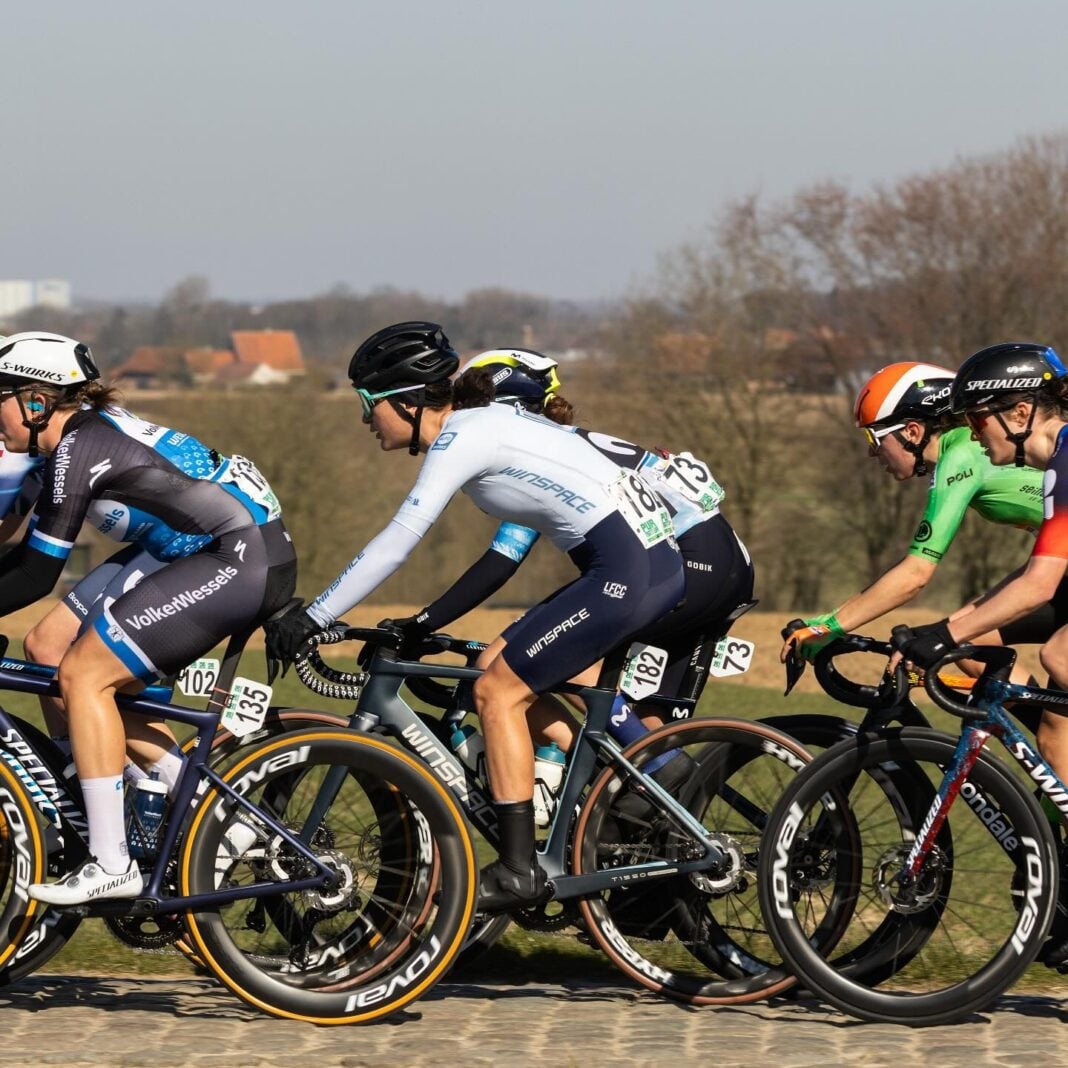
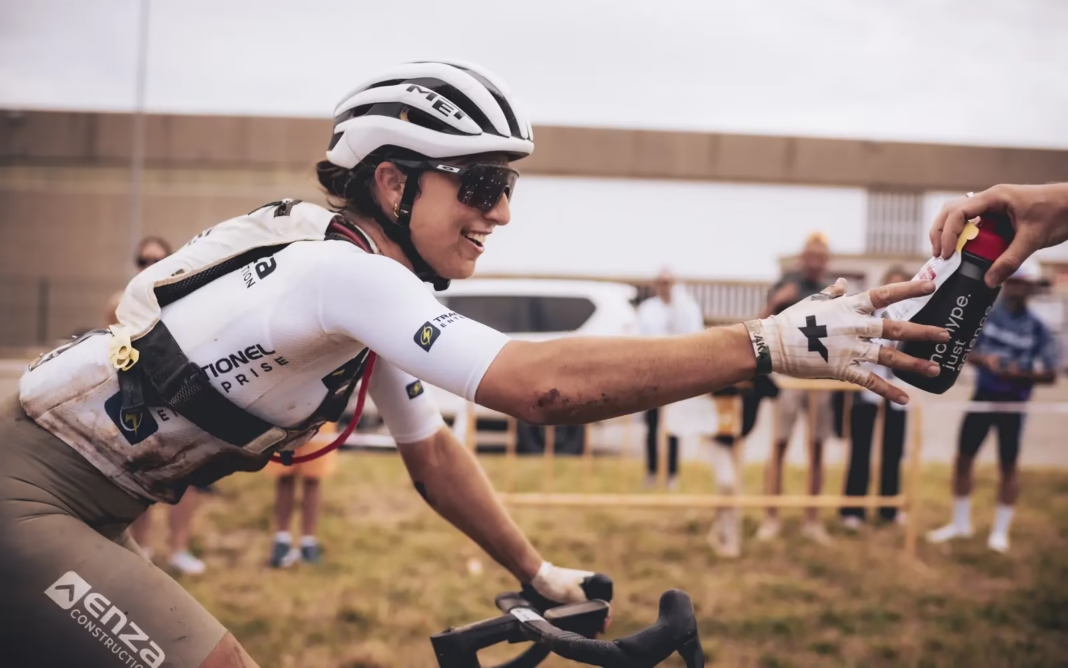
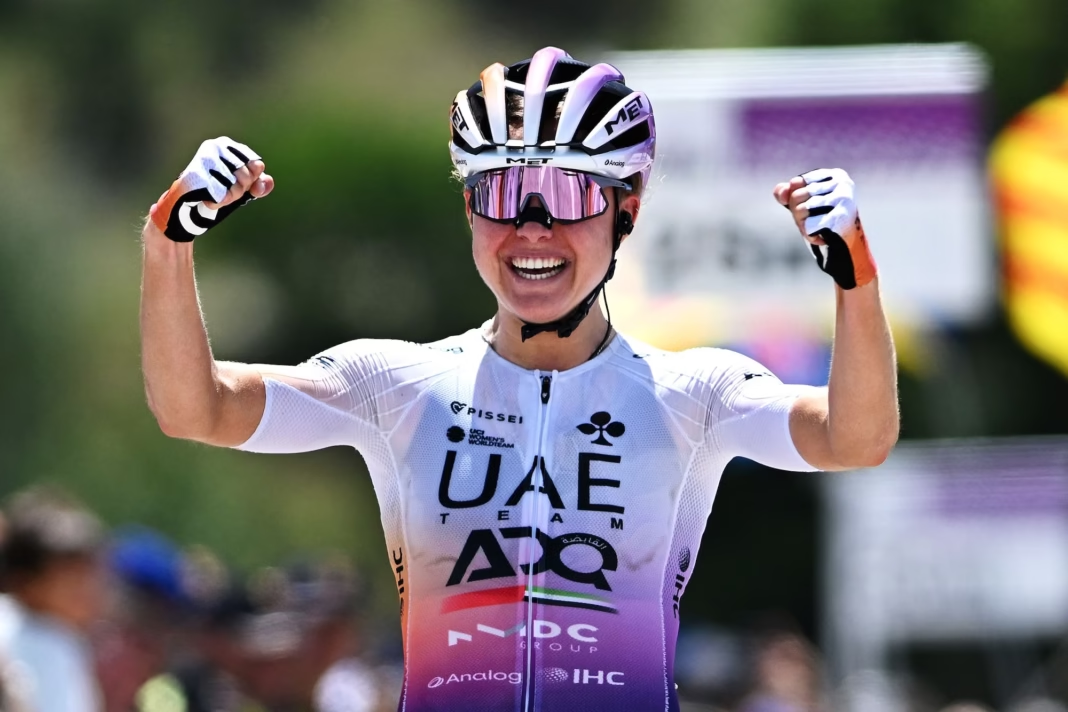
Susanne Ljungskog’s major career results
The headline victories only begin to show the range:
- 2002 and 2003 UCI road world champion
- 2001 Primavera Rosa winner
- 2001 Grand Prix Suisse Féminin winner
- Second overall at the 2002 Grande Boucle Féminine Internationale
- Giro della Toscana overall winner in 2002, 2003 and 2005
- Holland Ladies Tour winner in 2003 and 2006
- 2005 Gran Premio Castilla y León winner
- Second at the 2005 Tour of Flanders
- 2006 Open de Suède Vårgårda winner
- Third overall at the 2006 Giro d’Italia Femminile
- Tour de l’Aude winner in 2007 and 2008
- 2007 Emakumeen Bira winner
- 2008 Tour de Berne winner
- Chrono des Nations winner in 2007 and 2008
- Eight Swedish road race titles
- Four Swedish individual time trial titles
That is not the record of a rider defined only by two championship days.
Why Ljungskog deserves a closer look
The consecutive rainbow jerseys remain the obvious entry point into Susanne Ljungskog’s career.
They should be.
Winning one World Championship is enough to define a career. Winning another twelve months later, on a different type of course, puts a rider into a much smaller group.
But the more revealing part of Ljungskog’s record comes afterwards.
She kept winning.
She won a World Cup Classic, finished second at Flanders, challenged for the Giro, twice won the Tour de l’Aude and remained capable of beating specialists in individual time trials.
Her results stretch from fast one-day races to mountainous stage races without ever suggesting that one format was obviously her natural limit.
That is what makes her career worth revisiting.
The early 2000s contained enough extraordinary women’s cyclists that even a double world champion could become slightly obscured by the names around her.
Susanne Ljungskog deserves better than that.
The rainbow jerseys were the peak of the story, not the whole of it.

