The 2026 UCI Road World Championships arrive in Montréal without several riders who would ordinarily have featured prominently in the battle for the rainbow jerseys. Some never reached the point of selection, others have been forced out by crashes or illness in the final weeks, and a handful have chosen to end their seasons rather than travel to Canada.
Tadej Pogačar is by far the most consequential absence. The two-time defending men’s road race champion had been expected to shape the entire championship before his Vuelta a España crash ended his season. The women’s races have lost significant names too, including Pauline Ferrand-Prévot, Anna van der Breggen, Marianne Vos, Mischa Bredewold, Justine Ghekiere, Urška Žigart and Chloé Dygert.
The absences do not leave either elite race short of contenders. The men’s World Championships road race preview still contains Remco Evenepoel, Wout van Aert, Isaac del Toro, Paul Seixas and Tom Pidcock, while the women’s road race preview is headed by Demi Vollering alongside Katarzyna Niewiadoma-Phinney, Elisa Longo Borghini, Lotte Kopecky, Marlen Reusser and Magdeleine Vallières Mill.
What has changed is the tactical picture around them.
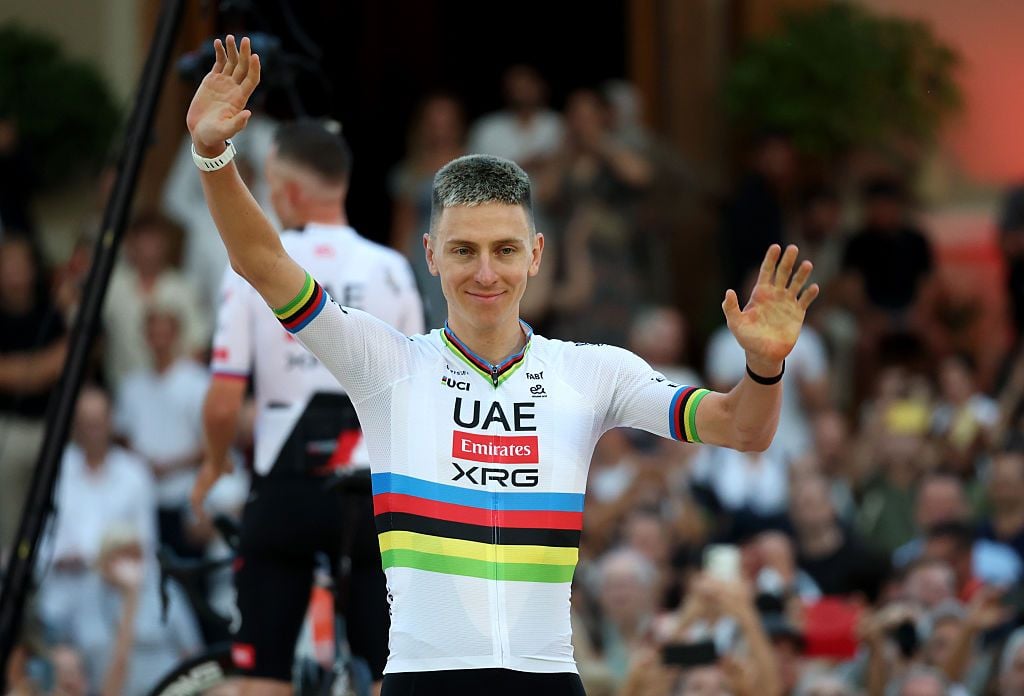 Photo Credit: Getty
Tadej Pogačar will not defend the rainbow jersey
The biggest missing name is also the rider who would otherwise have defined the men’s race.
Pogačar won the World Championships in Zürich in 2024 and Kigali in 2025 and was due to arrive in Montréal chasing a third consecutive rainbow jersey. The Mount Royal circuit looked particularly suitable to him, combining repeated climbing with a long race where endurance becomes increasingly important.
His season instead ended during Stage 8 of the Vuelta a España.
Pogačar crashed heavily while wearing the red jersey and was diagnosed with a concussion, displaced fracture of his left collarbone and a stable C7 cervical fracture. The collarbone required surgery, and any possibility of returning for the World Championships was subsequently abandoned.
The full sequence is covered in ProCyclingUK’s report on Pogačar’s season-ending Vuelta crash.
His absence changes far more than Slovenia’s leadership.
With Pogačar present, several countries would have expected him to attack and built their race around responding. Without him, there is no single rider everyone can assume will take responsibility for breaking the race open.
Slovenia now turn towards Primož Roglič, supported by riders including Matej Mohorič and Jan Tratnik, while the absence of Pogačar gives Belgium, France, Great Britain and Mexico considerably more freedom to dictate the race themselves.
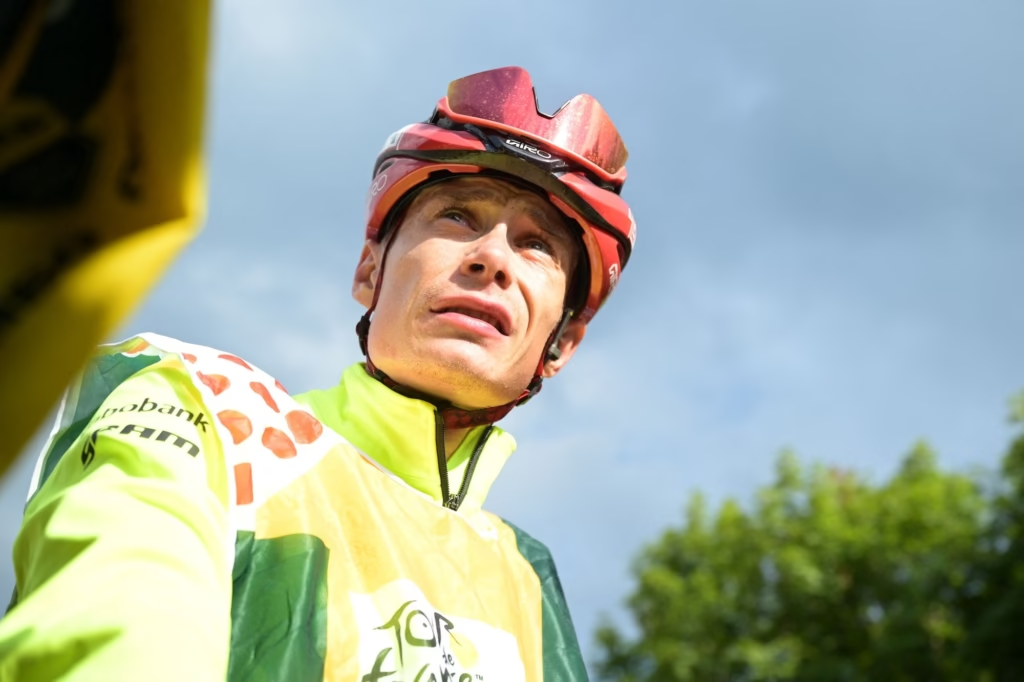 Photo Credit: Getty
Jonas Vingegaard’s season ended after the Tour de France
Jonas Vingegaard will also be missing from Montréal after his 2026 season was ended by the collarbone fracture he suffered at the Tour de France.
The Dane crashed during Stage 15 while sitting second overall and was unable to continue. His recovery subsequently took long enough for Team Visma | Lease a Bike to rule out any racing during the remainder of the season.
World Championships appearances have never been central to Vingegaard’s career in the same way as the Grand Tours, but Montréal was a route where his climbing ability would have been relevant.
The men face 273.7km and 3,803 metres of climbing, with most of that elevation concentrated into 12 laps around Mount Royal. ProCyclingUK’s World Championships course guide shows why riders capable of repeatedly producing several-minute climbing efforts are expected to dominate the final part of the race.
Vingegaard will instead focus completely on preparing for 2027.
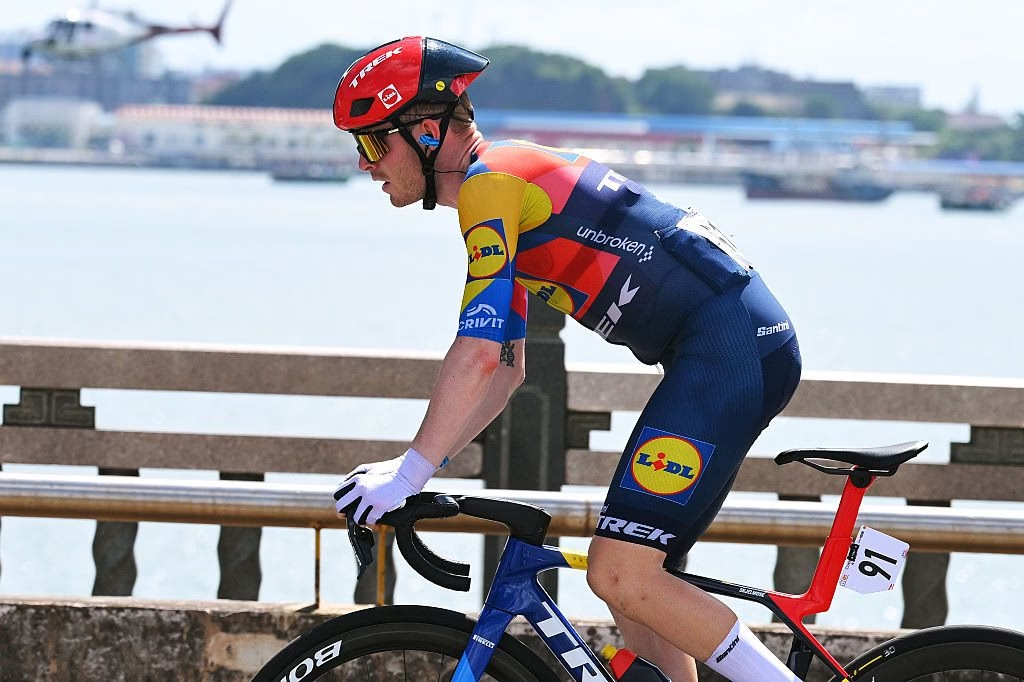 Photo Credit: Getty
Mattias Skjelmose withdrew after the Vuelta
Mattias Skjelmose was supposed to be one of Denmark’s principal options in Montréal but pulled out after reaching the end of the Vuelta a España exhausted.
Skjelmose began the final week in Spain inside the top 10 overall before dropping to 13th by Granada. Rather than attempt to recover and travel directly to Canada, he told Danish national coach Michael Mørkøv that his body was no longer capable of producing the level required for Worlds.
That is a meaningful loss for Denmark.
Skjelmose’s combination of climbing ability and one-day racing strength made Montréal a natural target, particularly on a circuit requiring repeated short efforts rather than one sustained mountain ascent.
Anton Charmig takes his place after finishing third at GP Québec, while Mads Pedersen remains one of Denmark’s main cards.
Skjelmose’s withdrawal is also a reminder of the difficult scheduling around Montréal. Riders coming directly from the Vuelta have only a short recovery window before a 273km championship, and the effect of three weeks in Spain will not be the same for everybody.
 Photo Credit: SWPix.com
Tim Wellens chose not to ride for Belgium
Tim Wellens is a different type of absentee.
He is not missing the World Championships because of a new injury and was in good enough form to win the Tour of Britain earlier in September. Instead, Wellens had already decided after a difficult end to the Tour de France that he would not make himself available for Montréal.
Illness and poor form during the final week of the Tour disrupted his planned build-up. At that point he did not believe he would be ready for Worlds and committed to a different late-season programme with UAE Team Emirates-XRG.
His subsequent return to form made the decision more noticeable. Wellens won the Tour of Britain and was contacted by Evenepoel about reconsidering, but chose to stick with the plan he had already made.
That removes an extremely useful rider from Belgium’s team.
Wellens would not necessarily have been the outright leader with Evenepoel and Van Aert available, but the Mount Royal circuit is exactly the type of terrain where his ability to attack, climb and work deep into a hard one-day race could have been valuable.
Belgium still arrive with one of the strongest teams in Montréal. They simply do so without one of the riders who could have made their numerical advantage even greater.
 Photo Credit: Getty
Jay Vine misses the time trial after Vuelta illness
Jay Vine is one of the most significant absentees from the elite men’s individual time trial.
The Australian won silver behind Evenepoel at the 2025 World Championships in Kigali and had Montréal’s 39.2km test as a major late-season objective.
Illness at the Vuelta changed that plan.
Vine abandoned during Stage 12 on the road to Calar Alto and did not recover sufficiently to be included in Australia’s World Championships team.
His absence matters particularly because Montréal presents a very different time trial from Kigali. The Canadian course contains only 220 metres of climbing and should reward sustained aerodynamic power across almost 40 kilometres.
The full field is analysed in ProCyclingUK’s men’s World Championships time trial preview, where Filippo Ganna and Stefan Küng emerge as Evenepoel’s clearest challengers.
Without Vine, Australia are represented in the elite men’s time trial by Conor Leahy.
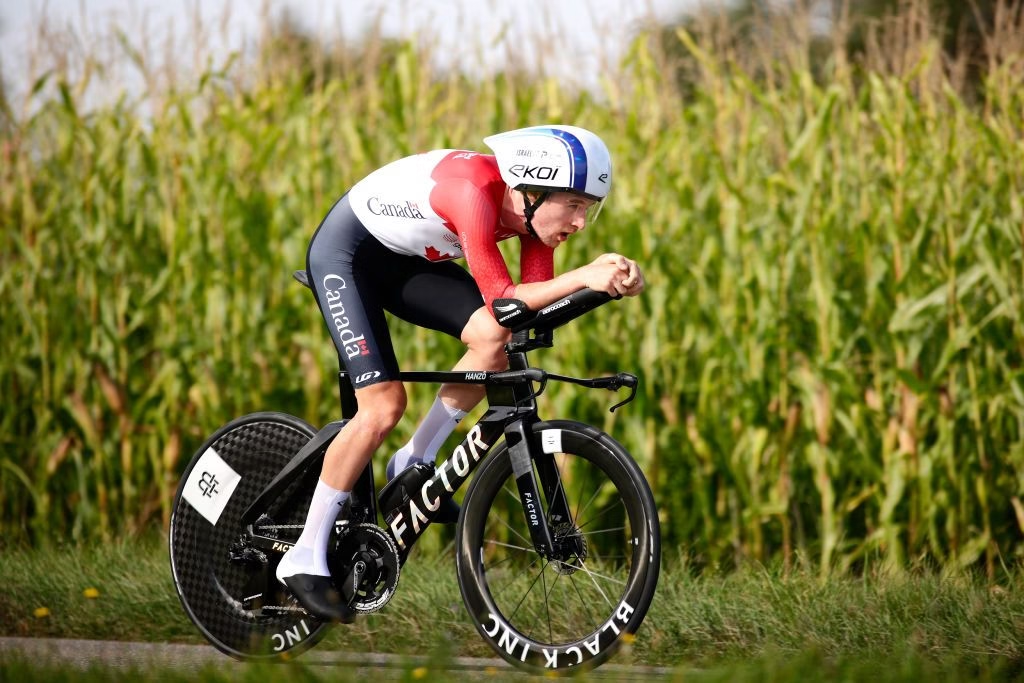 Photo Credit: Getty
Derek Gee-West misses the time trial but still hopes to ride the road race
Derek Gee-West has not withdrawn from the World Championships completely, but his home championship has already been significantly reduced.
The Canadian crashed at GP Montréal and later confirmed that he had suffered rib fractures. He will therefore miss both the individual time trial and mixed relay.
Gee-West is still attempting to recover in time for the elite men’s road race on 27 September.
That makes him slightly different from the other riders on this list. His participation in the headline road event has not yet been ruled out, but Canada have already lost him from two races where he had originally been selected.
It is particularly frustrating timing after Gee-West spent the Canadian WorldTour races preparing on many of the same roads that will be used at Worlds.
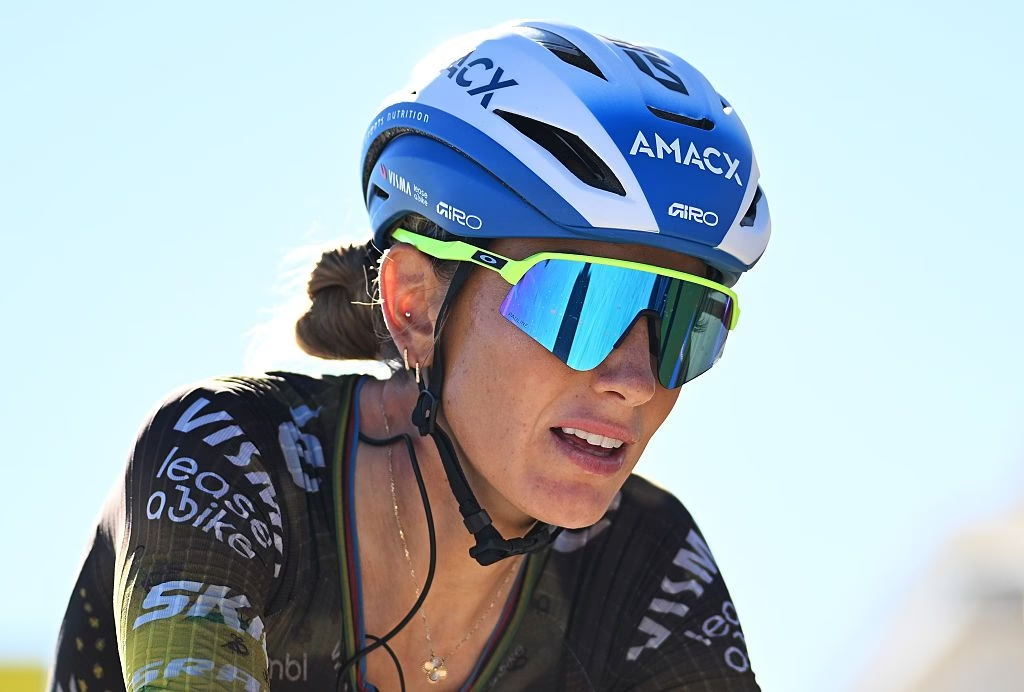 Photo Credit: Getty
Pauline Ferrand-Prévot has ended her season
Pauline Ferrand-Prévot will not contest the women’s road race despite a Montréal course which would normally put her firmly into the conversation.
The 2025 Tour de France Femmes winner has not raced since abandoning this year’s Tour before Stage 8. Her title defence had already unravelled during the mountain stages before illness brought her race to an end.
Visma | Lease a Bike subsequently confirmed that Ferrand-Prévot would take the rest of the year to rest and recover, ending her 2026 season.
It closes a difficult campaign without another attempt at the rainbow jersey she first won on the road in 2014.
Ferrand-Prévot’s absence is particularly noticeable because Montréal looks well suited to her strengths. The women complete eight Mount Royal circuits, creating a race where climbing ability, repeated accelerations and one-day endurance all matter.
France will instead build around a younger group headed by national champion Célia Gery, with Juliette Berthet, Cédrine Kerbaol, Evita Muzic, Maëva Squiban, Marie Le Net and Léa Curinier also selected.
Ferrand-Prévot’s difficult Tour and the questions it created for the rest of her year were covered in ProCyclingUK’s 2026 Tour de France Femmes review.
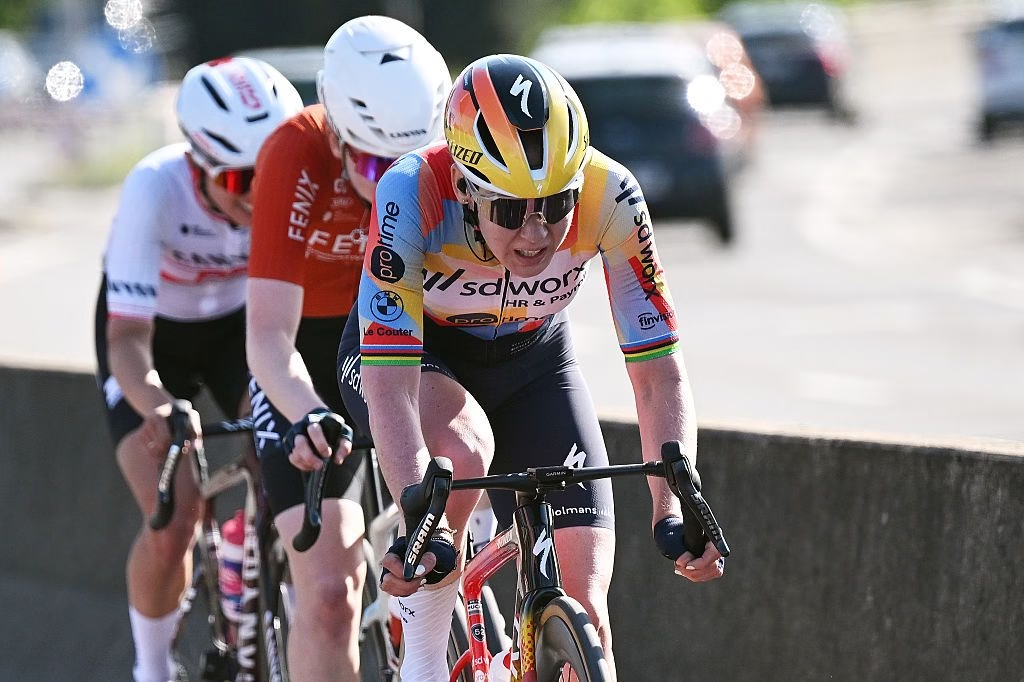 Photo Credit: Getty
Anna van der Breggen misses another chance at the rainbow jersey
Anna van der Breggen is one of two former Dutch world champions missing from a team built firmly around Vollering.
Van der Breggen has been struggling with illness and was not considered ready for Montréal.
The absence is substantial given her World Championships record.
She won the elite road race in 2018 and 2020 and finished second behind Reusser in the 2025 individual time trial in Kigali. A rider with that combination of championship experience, climbing ability and strength against the clock would ordinarily have been useful in both Montréal events.
Instead, the Netherlands have simplified their hierarchy.
Vollering is the clear road race leader, while Lieke Nooijen joins her in the individual time trial.
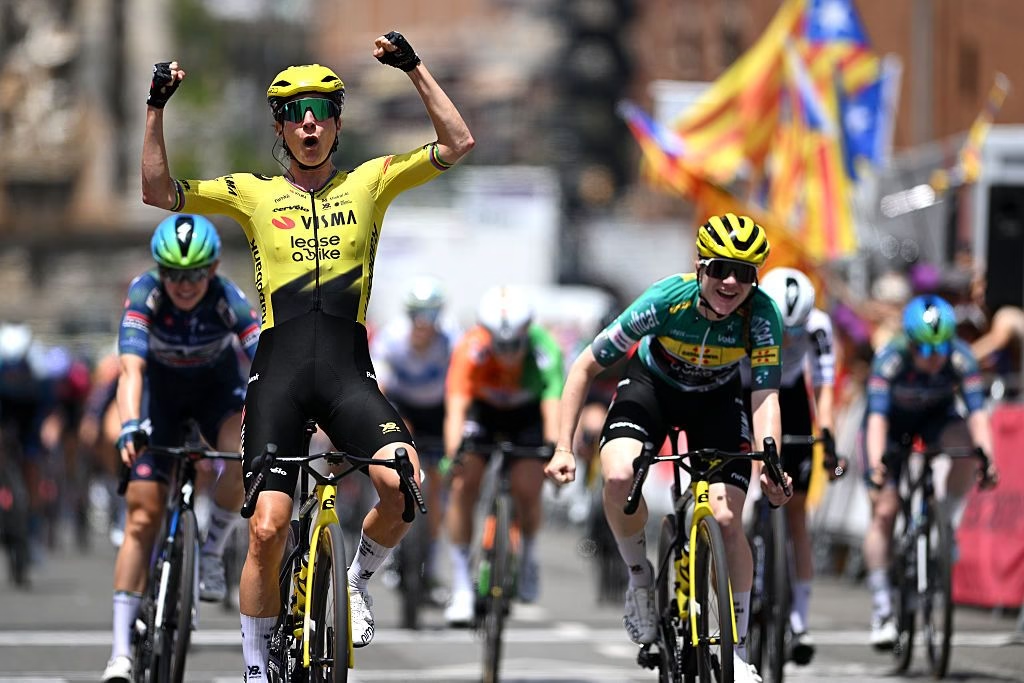 Photo Credit: Getty
Marianne Vos has not been selected
Marianne Vos will also be missing from the Dutch team.
Unlike Bredewold, her absence is not the result of a last-minute injury. The three-time road world champion has had a disrupted 2026 and was not selected for Montréal, with the Dutch coaching staff pointing to a compromised preparation during a difficult year following the death of her father.
Vos is instead expected to focus on the Gravel World Championships in Australia in October.
At 39, she remains capable of influencing major races, but her results this year have not matched the level required to displace riders better suited to a demanding Mount Royal course.
Her absence, alongside Van der Breggen’s, also removes an enormous amount of championship experience from the Dutch team.
Vollering nevertheless has considerable support available through Puck Pieterse, Riejanne Markus, Lieke Nooijen, Karlijn Swinkels and Femke de Vries.
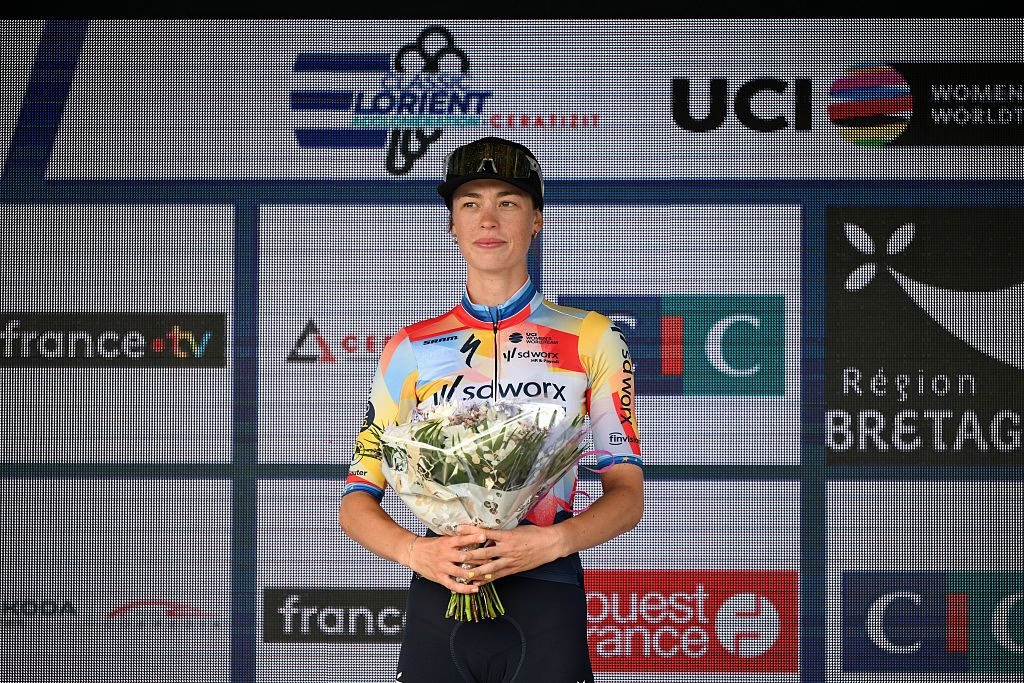 Photo Credit: Getty
Mischa Bredewold broke her pelvis days after selection
Mischa Bredewold was initially part of that Dutch team before crashing during the Faun Tour Femmes.
What first appeared to be an accident requiring treatment for cuts turned out to be considerably more serious. Medical examinations found an ischiopubic fracture of her pelvis, while an elbow wound also required surgery.
Her season is over.
The timing was particularly unfortunate because Bredewold had been in strong late-season form and offered the Netherlands another powerful one-day option behind Vollering.
Amber Kraak has been called into the team as her replacement.
ProCyclingUK covered the injury in detail when Bredewold was ruled out of the World Championships.
 Photo Credit: AG Insurance-Soudal
Justine Ghekiere’s season ended with a fractured kneecap
The same Faun Tour Femmes also removed Justine Ghekiere from Belgium’s Worlds plans.
Ghekiere crashed during the opening stage and initially completed the race before withdrawing the following morning. Subsequent examinations in Belgium identified a small, non-displaced fracture of her patella.
That ended her season immediately.
Ghekiere had already been selected as part of the Belgian road race squad and would have been particularly useful once the Montréal circuit started reducing the field.
Her climbing ability gave Belgium a rider capable of staying close to Kopecky through the hardest laps rather than requiring the two-time world champion to manage every move herself.
Sandrine Tas has been called up in her place.
The implications for Belgium are covered more fully in ProCyclingUK’s report on Ghekiere’s World Championships withdrawal.
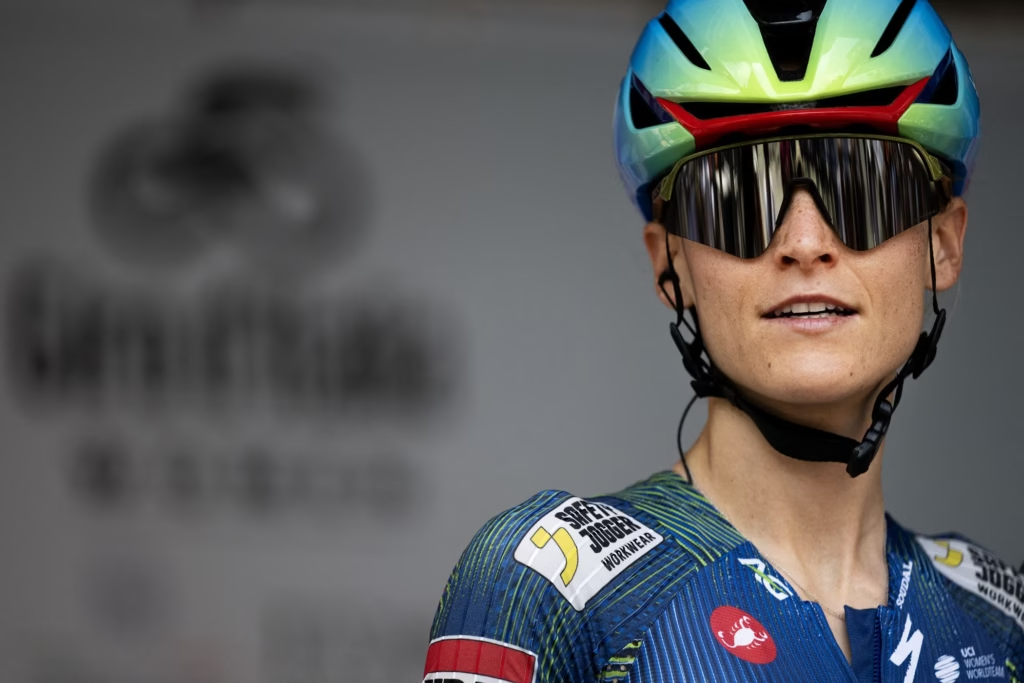 Photo Credit: Getty
Urška Žigart fractured her jaw for a second time
Urška Žigart had been selected to lead Slovenia’s women in Montréal before another crash at the Faun Tour Femmes ended those plans.
The 29-year-old was sitting third overall when she crashed during Stage 3. Medical examinations subsequently revealed another fracture of her jaw.
It is the same injury she suffered at the Tour de Suisse earlier in the summer.
The repeated fracture makes another quick comeback unrealistic, and her 2026 season is now expected to be over.
Žigart had produced several of the strongest stage-race results of her career this season, including sixth overall at La Vuelta Femenina and eighth at the Giro d’Italia Women. On a climbing-heavy Montréal course, she would have been Slovenia’s obvious women’s road race leader.
Her withdrawal leaves Nika Bobnar as Slovenia’s only elite woman at the championships.
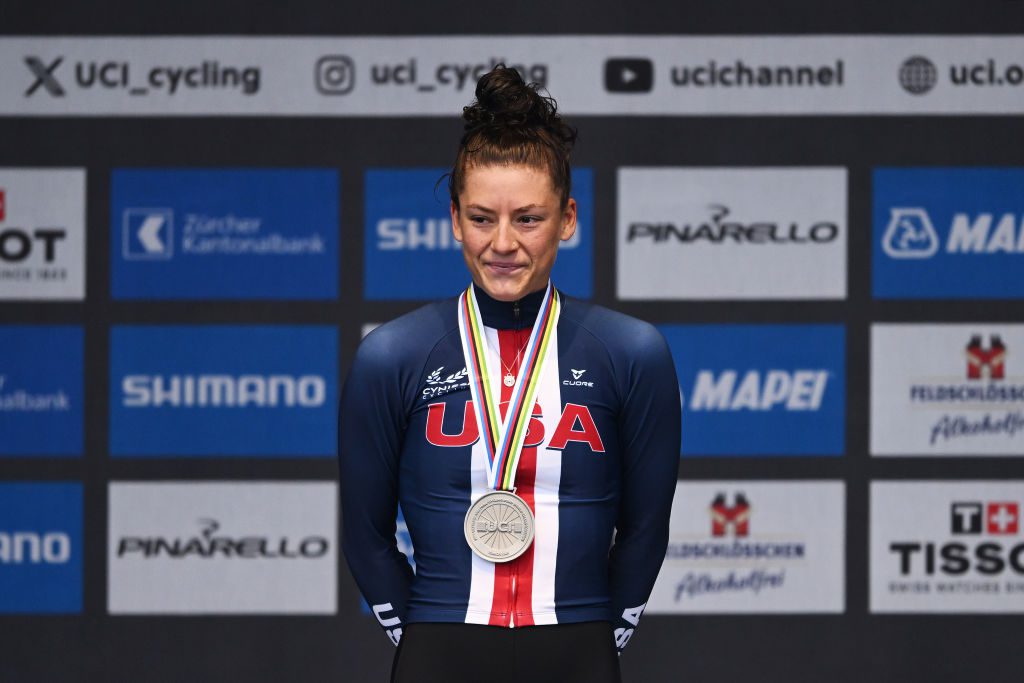 Photo Credit: Getty
Chloé Dygert is still recovering after a difficult 2026
Chloé Dygert is another major name absent from both the women’s road race and individual time trial.
The American is a two-time world time trial champion and finished second in the elite road race in Zürich in 2024, which alone would normally make her one of the first riders to consider when the World Championships arrive.
Her 2026 season has instead been dominated by physical problems.
Dygert has barely raced since crashing out of Paris-Roubaix Femmes and has undergone further treatment and surgery during a prolonged rehabilitation period. Her comeback did not progress far enough for Montréal and she was not included in the United States selection.
That is particularly significant for Sunday’s individual time trial.
A 39.2km course with limited climbing would normally be favourable to Dygert’s power and pursuit background. Instead, the American challenge against the clock comes from Kristen Faulkner and Taylor Knibb.
The rest of the medal contenders are covered in ProCyclingUK’s women’s World Championships time trial preview.
The missing riders change the races in different ways
Pogačar’s absence changes the entire men’s road race because he was the defending champion and the rider most countries would have expected to force the decisive move.
Skjelmose and Wellens remove tactical options from Denmark and Belgium. Vingegaard takes another elite climber out of a course built around accumulated elevation. Vine and Dygert reduce the depth of the individual time trials.
The effect in the women’s race is more spread out.
Ferrand-Prévot would have been another major climbing contender. Van der Breggen and Vos take experience away from the Netherlands, while Bredewold and Ghekiere remove important support from two of the strongest national teams. Žigart’s withdrawal effectively dismantles Slovenia’s original women’s plan.
None of those absences make Montréal weak.
They do make it different.
The 2026 World Championships course already creates enough tactical possibilities through repeated Mount Royal laps. Removing several riders who would ordinarily command attention leaves even more room for attacks from those who have made it to Canada.