The Tour de France 2026 has two rest days, but they are not simply pauses in the race. They sit at two important points in the route, giving riders a chance to recover, reset and prepare for the next phase of the general classification battle.
The first rest day comes on Monday 13 July in Cantal, after the race has crossed from the Barcelona Grand Départ, through Catalonia, into France and over the first major mountain test in the Pyrenees. The second rest day comes on Monday 20 July in Haute-Savoie, after the race has moved through the Massif Central, the Vosges and the Jura, and before the decisive final week begins with the stage 16 individual time trial.
That timing matters. The Tour is never divided neatly into three equal parts, but the rest days help create its rhythm. The first gives riders a chance to recover after a demanding opening block. The second is a final reset before the race turns towards the Alps, Orcières-Merlette, back-to-back Alpe d’Huez finishes and the Paris finale.
Rest days can look quiet from the outside, but they can shape the race. Some riders come out of them fresh. Others feel blocked, heavy or flat. Teams have to manage recovery, travel, media, sponsor duties, treatment, nutrition, sleep and a short training ride, all while trying not to disturb the routine that has carried riders through the first part of the Tour.
For the wider route context, see our Tour de France 2026 full route guide, Tour de France 2026 route analysis and beginner’s guide to Men’s Tour de France 2026.
Tour de France 2026 rest days
| Rest day | Date | Location | Comes after | Comes before | Why it matters |
|---|---|---|---|---|---|
| Rest day 1 | Monday 13 July 2026 | Cantal | Stage 9: Malemort to Ussel | Stage 10: Aurillac to Le Lioran | Reset after the opening block, Pyrenees and first hilly transition |
| Rest day 2 | Monday 20 July 2026 | Haute-Savoie | Stage 15: Champagnole to Plateau de Solaison | Stage 16: Évian-les-Bains to Thonon-les-Bains ITT | Final recovery before the time trial and Alpine showdown |
The first rest day follows a varied opening phase. Riders will already have faced the Barcelona team time-trial, Catalan roads, the move into France, the first major mountain finish at Gavarnie-Gèdre, sprint stages and the hilly stage 9 to Ussel. It is not a gentle first week.
The second rest day is even more important for the general classification. It comes after the Plateau de Solaison summit finish and before the race resumes with the only individual time trial of the 2026 Tour. That creates a very specific challenge: riders need to recover, but also restart sharply against the clock.
For the key race blocks either side of the rest days, see Tour de France 2026 Pyrenees guide, Tour de France 2026 Massif Central guide and Tour de France 2026 Alps guide.
When is the first Tour de France 2026 rest day?
The first rest day of the Tour de France 2026 is Monday 13 July in Cantal.
It comes after stage 9, a hilly 185.5km stage from Malemort to Ussel, and before stage 10, the Bastille Day mountain stage from Aurillac to Le Lioran. That makes it an important pause between the race’s opening block and its move into the Massif Central.
By this point, the riders will have already been through a lot. The race opens with a 19.6km team time-trial in Barcelona on Saturday 4 July, then continues through Catalonia and into France. The first week includes early GC pressure, transition stages, sprint opportunities and a major Pyrenean summit finish at Gavarnie-Gèdre.
That is why the Cantal rest day will be welcome. It gives sprinters, GC riders, climbers and domestiques a chance to absorb the opening nine stages. But it is not a full day off in the normal sense. Riders will still ride, stretch, eat carefully, handle media obligations and stay focused on the next stage.
The timing is also awkward. The race resumes on Bastille Day with stage 10 to Le Lioran, a mountain stage that could be attacked hard. Any rider who comes out of the first rest day sluggishly could be punished immediately.
For the stages leading into the first rest day, see Tour de France 2026 stage 1 preview, Tour de France 2026 Grand Départ guide and Tour de France 2026 route: best days for breakaways.
 Photo Credit: Getty
Why the first rest day matters
The first rest day matters because it comes after the Tour has already started to take shape, but before the race has become fixed.
By the evening of stage 9, the first yellow jersey hierarchy should be clear. The Barcelona team time-trial will have created early gaps. Gavarnie-Gèdre will have tested the climbers. The sprint teams will have had chances. Breakaway riders may already have started to target the hilly days. The first abandonments, crashes or illnesses may also have changed team plans.
The Cantal rest day gives teams a chance to review that opening block. GC teams can look at whether they are ahead or behind schedule. Sprint teams can decide how much energy to spend chasing in the next block. Breakaway riders can pick future targets. Teams with injuries or illness can work out whether to defend, attack or reset ambitions.
It also matters because the stage after the rest day is not easy. Stage 10 from Aurillac to Le Lioran is a mountain stage in the Massif Central and lands on Bastille Day. French teams and riders will be motivated, breakaway riders will see a chance, and GC teams may not want to give too much freedom if the overall standings are close.
That makes the first rest day a hinge point. It closes the opening act and sets up the next phase of the race.
For the next block, see Tour de France 2026 Massif Central guide and Tour de France 2026 route: best days for GC attacks.
When is the second Tour de France 2026 rest day?
The second rest day of the Tour de France 2026 is Monday 20 July in Haute-Savoie.
It comes after stage 15, the mountain stage from Champagnole to Plateau de Solaison, and before stage 16, the individual time trial from Évian-les-Bains to Thonon-les-Bains. That makes it one of the most important recovery days in the entire race.
The riders will reach the second rest day after a demanding middle block. The route will already have passed through the Massif Central, a flat stage into Chalon-sur-Saône, a hilly stage to Belfort, the Vosges finish at Le Markstein Fellering, and the steep summit finish at Plateau de Solaison. The race will not yet be in its final Alpine phase, but the riders will already have absorbed a lot of climbing.
The stage after the rest day is crucial. An individual time trial straight after a rest day can be difficult because riders have to restart at full intensity after 24 hours without racing. Some riders respond well. Others feel blocked. Against the clock, there is nowhere to hide.
That makes the Haute-Savoie rest day different from the first one. The Cantal rest day sets up another road stage. The second rest day sets up a precise, high-pressure GC test.
For more on what comes next, see best time-triallists at the Tour de France 2026 and Tour de France 2026 route analysis.

Why the second rest day matters
The second rest day matters because it is the last pause before the Tour becomes brutally decisive.
After Monday 20 July, there is no more recovery day. The race restarts with the stage 16 individual time trial, then moves through stage 17 to Voiron, stage 18 to Orcières-Merlette, stage 19 to Alpe d’Huez, stage 20 over the Croix de Fer, Télégraphe, Galibier, Sarenne and Alpe d’Huez again, then the final stage to Paris.
That final week is too hard for anyone to bluff. Riders need to arrive at the second rest day with enough energy left to handle the clock, the Alps and the pressure of the yellow jersey fight. The rest day can help, but it can also disturb rhythm.
A GC rider who has been building form may not want too much disruption. A rider carrying fatigue may need the pause badly. A rider with a small injury may use the day for treatment. A rider who has suffered in the previous block may hope the rest day acts as a reset.
The team staff also face a delicate task. They must help riders recover without letting them switch off. That means managing massage, nutrition, hydration, sleep, media, travel, bike checks and the short training ride. The best rest days look quiet because the team has controlled every detail.
For the hardest stages after the second rest day, see Tour de France 2026 summit finishes guide, Tour de France 2026 mountain stages ranked by difficulty and Tour de France 2026 queen stage guide.
What do riders do on a Tour de France rest day?
A Tour de France rest day is not a full day on the sofa.
Most riders still go out for an easy ride. The aim is to keep the legs moving, maintain routine and avoid feeling heavy the next day. The ride may be short and controlled, often with teammates and staff nearby. Riders are not training hard, but they are also not doing nothing.
The rest of the day is carefully structured. Riders eat, hydrate, nap, have massage or physiotherapy, speak to medical staff, check equipment, do interviews and spend time off their feet. GC leaders and star riders often have more media duties, which can make rest days less restful than they appear.
Nutrition is especially important. Riders need to replace energy without overeating. They also need to manage hydration, especially in a hot Tour. By the second rest day, small mistakes in food, drink or sleep can matter more because accumulated fatigue is already high.
Teams also use rest days for planning. Directors review the route ahead, decide which stages to target, talk through GC tactics and adjust roles. A rider who looked strong in the opening week may get more freedom. A rider who is struggling may move into a support role.
Rest days are recovery days, but they are also management days.
For more on the science and routine of recovery, see how do Tour de France riders recover between stages?.
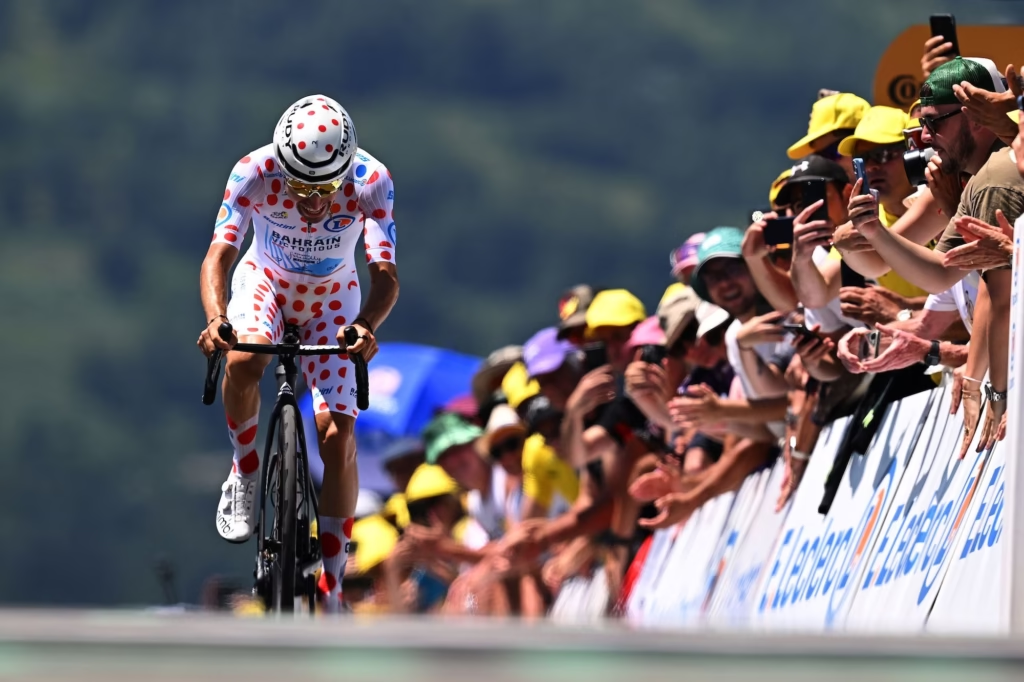
Why riders can struggle after rest days
The day after a rest day can be dangerous because the body has to restart.
Riders are used to racing every day during the Tour. Their bodies settle into a rhythm: wake up, eat, travel, warm up, race, recover, sleep, repeat. A rest day breaks that pattern. For some riders, that is exactly what they need. For others, it can leave the legs feeling blocked.
That is why rest-day rides matter. Riders want to stay loose without adding fatigue. Too little riding can make the next day feel heavy. Too much can reduce the benefit of the rest. The balance is individual, and experienced riders usually know what their bodies need.
The 2026 route makes this especially important. Stage 10 after the first rest day is a mountain stage to Le Lioran. Stage 16 after the second rest day is an individual time trial. Neither gives riders much room to ease back in.
The time trial is particularly unforgiving. On a road stage, a rider with heavy legs can sit in the bunch for a while and wait for the race to develop. In a time trial, the effort starts immediately. If a GC contender feels bad after the rest day, the clock will expose it.
For the GC riders, that makes both rest days tactical risks as well as recovery opportunities.
How rest days affect the general classification
Rest days can affect the general classification in subtle ways.
They rarely create time gaps directly, because no racing takes place. But they can change the condition of riders before the next decisive stage. A rider who recovers better may climb more strongly. A rider who sleeps badly, eats poorly or feels flat may lose time the next day. A team that uses the day well may come back sharper tactically.
The first rest day could influence the Massif Central and the hilly stages that follow. A GC team that has already taken time may choose to defend. A rider who has lost time may begin looking for aggressive opportunities. Breakaway riders may target stage 10 or the later hilly days.
The second rest day has a clearer GC link. It comes before the stage 16 time trial and the final Alpine block. A rider who exits that rest day well could gain time against the clock, then carry momentum into the Alps. A rider who exits it badly may spend the final week defending a position that previously looked secure.
This is why rest days are often discussed seriously inside teams. They are not neutral. They can change the way riders feel, and in the Tour, how riders feel often becomes how the race looks.
For more on the yellow jersey battle, see Tour de France 2026 contenders preview, Tour de France 2026 GC favourites ranked and how the Tour de France general classification works.
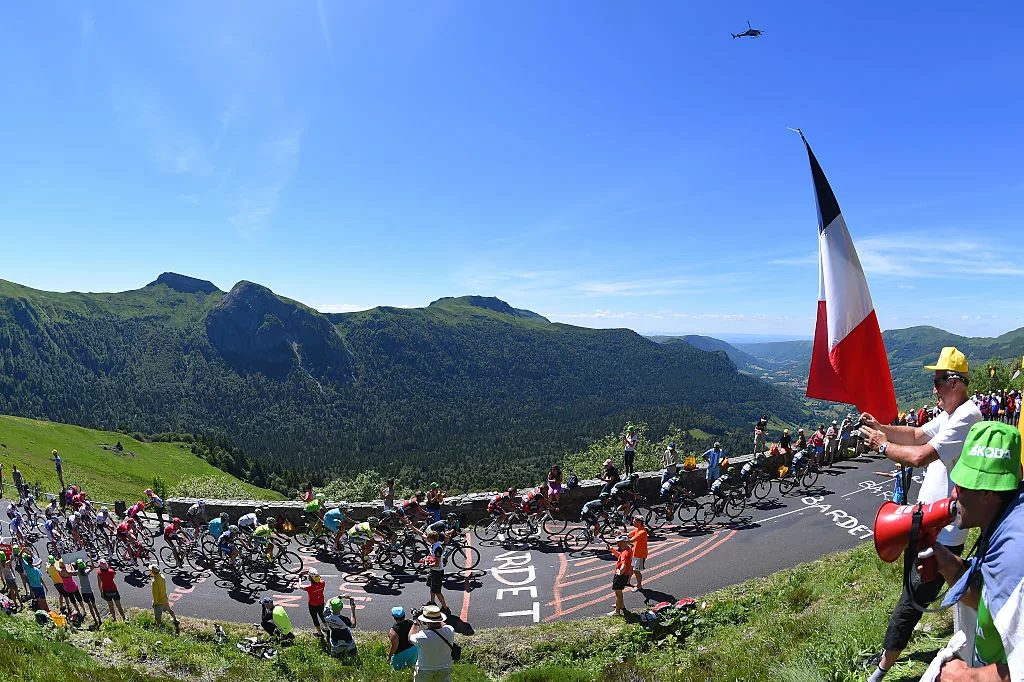
Rest day 1 and the Massif Central
The first rest day sets up one of the more awkward parts of the 2026 Tour.
Stage 10 from Aurillac to Le Lioran comes immediately after the Cantal rest day. It is a mountain stage in the Massif Central, but it is not the same kind of stage as the high Alps or Pyrenees. The climbs are shorter, more irregular and well suited to aggressive racing.
That makes it difficult for GC teams to control. A strong breakaway could go clear. French riders may be especially motivated because the stage falls on Bastille Day. Teams that lost time in the opening block may try to make the race harder. Riders targeting the polka-dot jersey may also see an opportunity.
For GC leaders, the question is how much energy to spend. The Alps are still far away, but the Tour can be lost on days that look slightly less obvious. A bad restart after the rest day could mean losing time on a stage that some riders may have hoped to survive quietly.
That is why the first rest day matters beyond recovery. It leads into a stage that could punish hesitation.
For more on this part of the route, see Tour de France 2026 Massif Central guide, Tour de France 2026 route: best days for breakaways and Tour de France 2026 climbers guide.
Rest day 2 and the stage 16 time trial
The second rest day leads directly into one of the most important GC tests of the race.
Stage 16 is the individual time trial from Évian-les-Bains to Thonon-les-Bains. At 26.1km, it is long enough to matter but not so long that it becomes the only decisive point of the Tour. It should suit riders who can combine sustained power, pacing and enough climbing strength to handle the terrain.
That makes the rest day before it especially important. Remco Evenepoel will see stage 16 as one of his best chances to gain time. Tadej Pogačar should also be strong. Jonas Vingegaard will want to limit losses if the route favours more explosive or powerful time-trial riders. Riders such as Juan Ayuso, Matteo Jorgenson, Carlos Rodríguez, Florian Lipowitz and Antonio Tiberi also need to keep the damage under control.
A rest day before a time trial is a strange challenge. Riders need to feel fresh, but not sleepy. Calm, but not switched off. Recovered, but ready to go deep from the first pedal stroke.
If one favourite comes out of the rest day better than the others, stage 16 could reshape the race before the Alps even begin.
For more on the time-trial battle, see best time-triallists at the Tour de France 2026, Tour de France 2026 team time-trial explained and Tour de France 2026 route analysis.
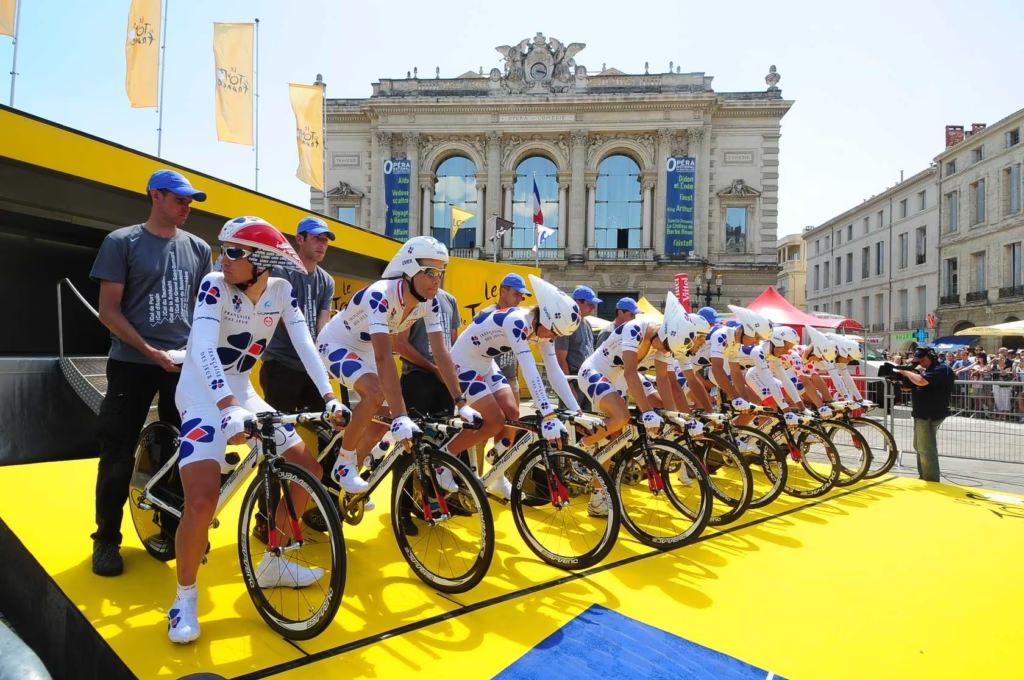 Photo Credit: A.S.O./Bruno Bade
Rest days and sprinters
Rest days matter for sprinters too, not just GC riders.
The opening half of the 2026 Tour gives sprinters several chances, but the race also includes enough climbing to make survival a major part of their job. The Pyrenees arrive early, then the Massif Central, Vosges, Jura and Alps keep adding pressure. A sprinter who reaches the rest day tired, sore or close to illness may still have a long way to go before Paris.
The first rest day gives sprint teams a chance to reset after the opening block and look ahead to flatter stages in the middle of the race. The second rest day is more complicated because the final week is dominated by time trial and mountain terrain. For some sprinters, the focus may simply be to survive the Alps and reach the Paris finale.
Rest days also affect lead-out riders. A sprinter may get the headlines, but the support train has to recover as well. If a lead-out rider is carrying fatigue, the sprint team may lose structure in the next flat stage.
For more on the sprint race, see Tour de France 2026 sprinters guide, best sprinters at the Tour de France 2026 and why sprinters suffer in the Tour de France mountains.
Rest days and breakaway riders
Breakaway riders often look at rest days differently from GC favourites.
A rider targeting stage wins may use the rest day to choose the next opportunity. The 2026 route has several stages where breakaways could matter, especially around Ussel, Le Lioran, Belfort, the Vosges, the Jura and some of the transitional Alpine days. The rest day gives riders and sports directors time to identify which stages are worth attacking.
The first rest day is especially useful for this. It comes just before stage 10 to Le Lioran and ahead of a block where breakaway racing could become important. Riders who lost time intentionally or naturally in the opening week may become more dangerous after the rest day because they are no longer a GC threat.
The second rest day can also reset breakaway ambitions, but the final week is harder. GC teams may control the key Alpine stages more tightly, especially if the yellow jersey battle is close. That does not make breakaways impossible, but it changes the calculation.
The best breakaway riders use rest days to plan, recover and choose carefully. Attacking every day is not brave if it leaves nothing for the right day.
For more on that tactical side, see what is a breakaway in the Tour de France?, Tour de France 2026 breakaway specialists to watch and Tour de France 2026 breakaway stages ranked.
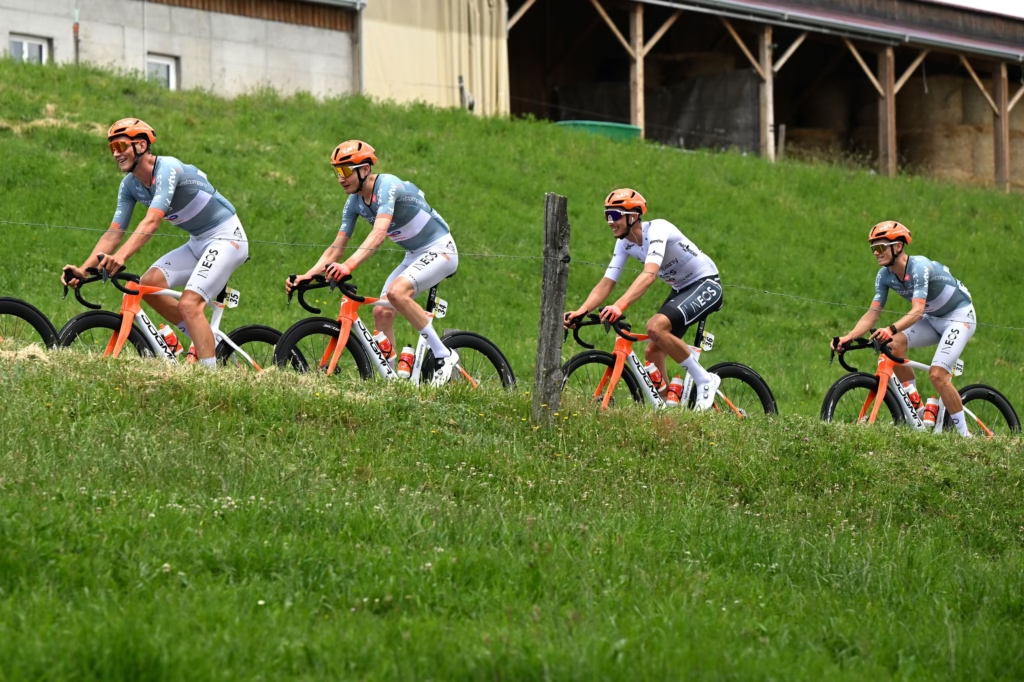
Rest days and team staff
Rest days are not quiet for team staff.
Mechanics clean and check bikes, prepare time-trial equipment, inspect tyres, replace parts and organise spare bikes. soigneurs handle massage, laundry, food preparation, bottles, recovery routines and rider comfort. Doctors and physios monitor injuries, illness, soreness and fatigue. Directors review tactics and prepare the next block of stages.
The second rest day in 2026 will be especially busy because of the stage 16 time trial. Teams will need to prepare time-trial bikes, helmets, skinsuits, pacing plans and recon details. Riders will need to know the route, the wind, the corners and the effort pattern.
For a GC team, the rest day can feel like a control room. Every detail matters because the next mistake may be public. If a rider is uncomfortable on the time-trial bike, if equipment choices are wrong, or if recon is poor, the result can be time lost.
That is why the Tour’s rest days are often more stressful for staff than for viewers. The race pauses, but the work does not.
For more on team roles, see how do Tour de France teams work?, what is a domestique at the Tour de France? and Tour de France 2026 domestiques who could decide the race.
Are Tour de France rest days real rest?
Yes and no.
They are real rest days because there is no stage, no neutral start, no race convoy and no finish-line pressure. Riders get more time off the bike than usual, and teams can focus on recovery. That makes a difference during a three-week race.
But they are not full rest days in the normal sense. Riders still train lightly, follow strict nutrition plans, do media, receive treatment, attend team meetings and stay inside the race routine. The Tour does not stop being the Tour just because there is no stage that day.
For some riders, the mental pause is as important as the physical one. The constant stress of positioning, crashes, time gaps, transfers and stage finishes builds up. A day without racing can help reduce that pressure. But for GC leaders, the attention can remain intense. A rest day press conference can feel almost as draining as a normal stage morning.
The best riders and teams manage rest days without making them feel unusual. They recover, but they do not switch off completely.
Do rest days help or hurt riders?
Rest days help most riders, but not always in the same way.
For a rider carrying fatigue, a rest day can be vital. It gives the body a chance to absorb the previous block and repair some of the damage. For riders with minor injuries, it can be the difference between staying in the race and falling apart.
For riders in excellent rhythm, though, a rest day can be awkward. Some athletes prefer the repeated routine of racing. They know how their body responds to stage after stage. When that rhythm breaks, they can feel heavy the next day.
This is why rest-day management is individual. One rider may need more sleep. Another may need a slightly longer ride. Another may need treatment, quiet time or extra food. Teams have general plans, but the best ones also know the differences between riders.
In 2026, the day after each rest day is hard enough to show who handled the pause best. Stage 10 and stage 16 are both real tests. They will not allow riders to drift back into the Tour slowly.
How fans can use the rest days
Rest days matter for fans too.
If you are watching the Tour on TV or live stream, the rest days are useful chances to catch up. They are good days to read route previews, review the GC standings, watch highlights, check the next mountain stages and plan which stages to follow live.
If you are travelling to the race, rest days can be useful transfer days. They may give fans time to move from one region to another, especially before the final week. The 2026 race moves from Cantal after the first rest day into the Massif Central block, then from Haute-Savoie into the final decisive week.
If you are watching roadside, the rest days can also be the right time to reposition for key stages. The second rest day, in particular, comes before the stage 16 time trial and the Alpine finale. Fans planning to watch Orcières-Merlette, Alpe d’Huez or the queen stage will need to think carefully about travel, accommodation and road access.
For more on watching the race, see Tour de France 2026 live stream guide by country, what it is like to watch the Tour de France on the roadside and how to visit the Tour de France 2026 Grand Départ in Barcelona.

Tour de France 2026 rest day FAQs
How many rest days are there in the Tour de France 2026?
There are two rest days in the Tour de France 2026. The race has 21 stages across 23 days, with the rest days placed on Monday 13 July and Monday 20 July.
When is the first rest day of the Tour de France 2026?
The first rest day is Monday 13 July 2026 in Cantal. It comes after stage 9 from Malemort to Ussel and before stage 10 from Aurillac to Le Lioran.
When is the second rest day of the Tour de France 2026?
The second rest day is Monday 20 July 2026 in Haute-Savoie. It comes after stage 15 to Plateau de Solaison and before the stage 16 individual time trial from Évian-les-Bains to Thonon-les-Bains.
Do riders ride on Tour de France rest days?
Yes. Most riders do a short, easy ride on rest days to keep the legs moving and maintain routine. They do not train hard, but they usually avoid doing nothing.
Why can riders struggle after a rest day?
Some riders feel heavy after a rest day because their race rhythm has been interrupted. The body has to restart after a day without racing, which can be difficult if the next stage is intense.
Why does the second rest day matter so much in 2026?
The second rest day matters because the race resumes with the stage 16 individual time trial, then moves into the final Alpine block. Riders who recover well could gain time immediately, while those who restart badly may lose ground before the mountains.
Tour de France 2026 rest days verdict
The Tour de France 2026 rest days are not just gaps in the calendar. They help divide the race into three clear phases.
The first rest day in Cantal comes after the opening block, the Barcelona Grand Départ, the first Pyrenean mountain test and the hilly transition to Ussel. It lets teams reset before the Massif Central and the Bastille Day stage to Le Lioran.
The second rest day in Haute-Savoie is even more important. It comes after Plateau de Solaison and before the stage 16 individual time trial, Orcières-Merlette, back-to-back Alpe d’Huez finishes and the Paris finale. It is the last chance for riders to recover before the Tour becomes decisive.
For GC riders, sprinters, domestiques, breakaway specialists and team staff, rest days are part of the race rather than a break from it. They can protect a yellow jersey challenge, revive a fading rider or expose someone who restarts badly.
The Tour is won on the road, but in 2026 the two Mondays without racing may still help decide who has enough left for the final week.
For more Tour de France coverage, visit our Tour de France hub, Tour de France 2026 full route guide and Tour de France 2026 contenders preview.