Elisa Balsamo’s victory at the 2026 Classic Lorient Agglomération was more than another addition to an already substantial collection of sprint wins.
Plouay asked a different question.
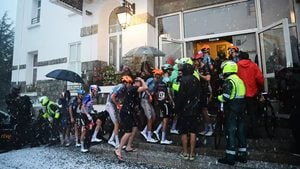
The 172.6km race contained almost 2,800 metres of climbing, wet roads, repeated attacks and the return of the Côte de Ty Marrec to the decisive final circuit. The field was reduced to only 76 finishers and several of the pre-race favourites disappeared before the sprint.
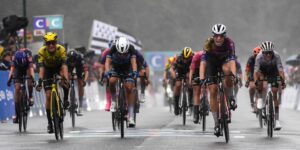
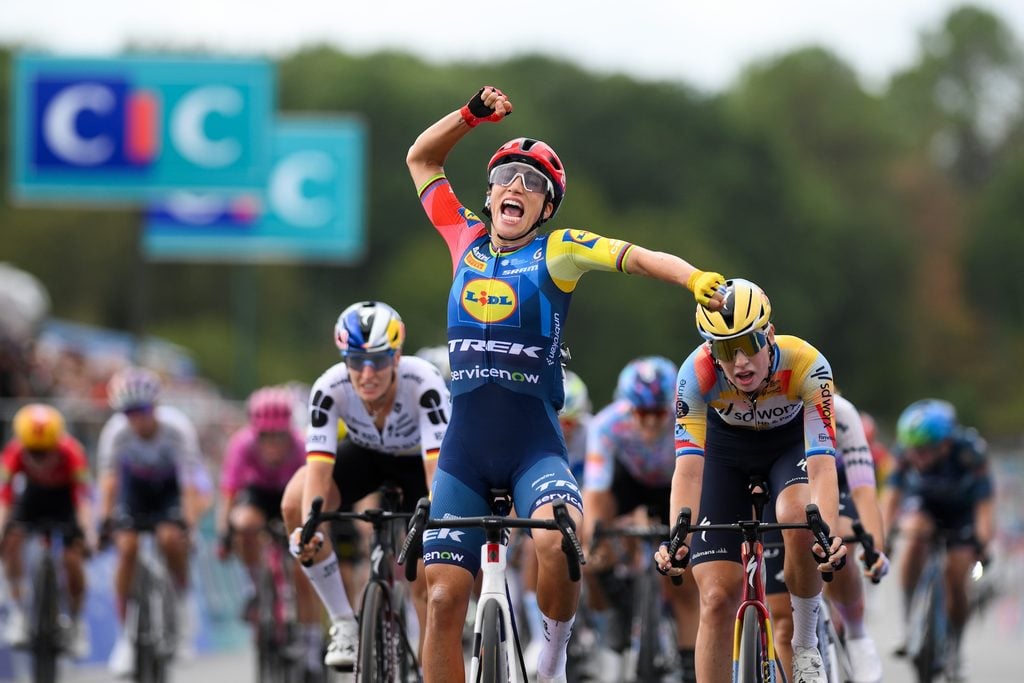
Balsamo survived all of it before coming past three-time defending champion Mischa Bredewold in the final metres.
With the Tour de France Femmes and Tour of Britain Women completed and the World Championships in Montréal now less than a month away, that matters. Balsamo has shown that her late-season form extends well beyond conventional bunch sprinting. Bredewold’s winning streak has ended without any obvious decline in her level. Franziska Koch has added another major one-day podium, while Célia Gery and Eleonora Gasparrini again showed that they are increasingly prepared to shape WorldTour races rather than wait for them to unfold.
Most strikingly, the result demonstrated the extraordinary depth Italy could take towards Montréal.
The Classic Lorient Agglomération 2026 race report covers how Balsamo won in Plouay. The more interesting question now is what the race told us about the final weeks of the season.
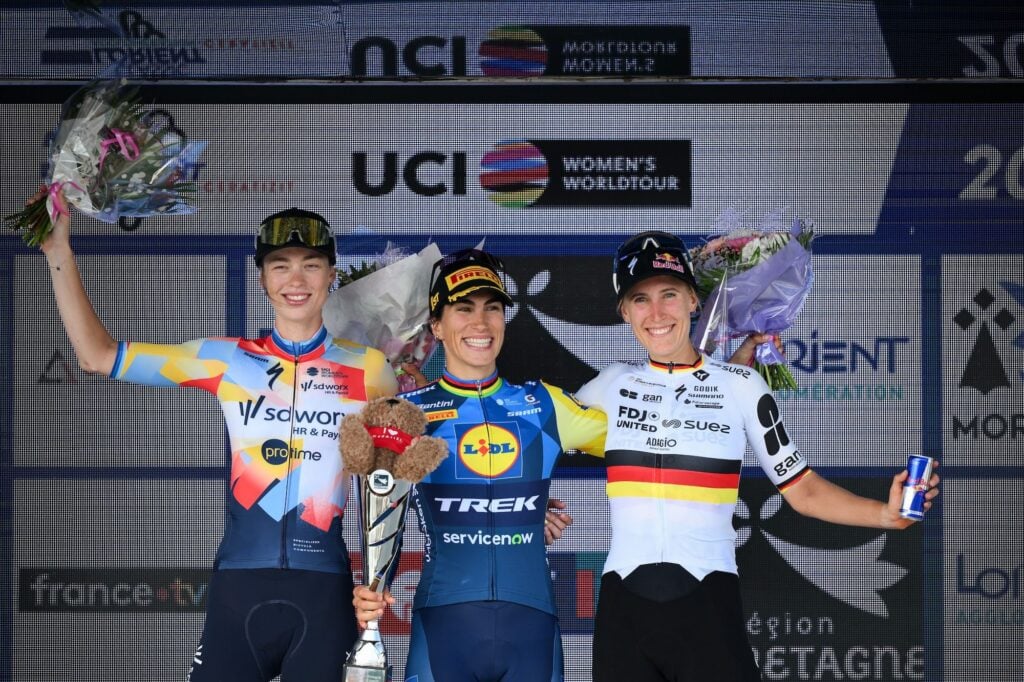
Balsamo has added another dimension to an already strong 2026
Balsamo’s 2026 season had already been successful before she reached Plouay.
Her Giro d’Italia Women included four stage victories, with the final one coming when she won Stage 6 in Brescello. She then finished second behind Lorena Wiebes on Stage 2 of the Tour de France Femmes and returned to winning form in August by taking the Egmont Cycling Race Women in Zottegem.
What Plouay added was a different type of victory.
This was not a race controlled until the final kilometre for Balsamo.
Anna Henderson gave Lidl-Trek early representation in the breakaway, but once the race returned to Plouay the attacks kept coming. Maëva Squiban went clear before Ty Marrec. Gery and Gasparrini attacked on the climb itself. The group was repeatedly reduced and Lidl-Trek had to use Niamh Fisher-Black and Fleur Moors to bring the final dangerous move back.
Balsamo still survived.
Then Bredewold opened the sprint early and forced her to chase before she could come past in the final metres.
That is considerably more informative for September than another straightforward flat-stage victory.
Montréal now looks much more realistic for Balsamo
The World Championships should still be substantially harder than Plouay.
The elite women’s road race on Saturday 26 September covers 180.4km with 2,570 metres of climbing. After the approach into Montréal, the riders face eight laps of the Mount Royal circuit, repeatedly tackling Camillien-Houde, the steep Côte de la Polytechnique and the rising finish on Avenue du Parc.
The cumulative climbing should provide the strongest puncheurs and climbers with more opportunities to remove Balsamo than they had in Brittany.
But Plouay demonstrated why Italy cannot treat her simply as the rider they preserve in case the World Championship stays easy.
Balsamo can absorb repeated short climbs remarkably well when in this sort of condition.
That was already one of the reasons she featured prominently among ProCyclingUK’s Tour de France Femmes riders to watch. She does not possess Wiebes’ outright speed, but she combines sprinting with a level of climbing resistance that considerably broadens the races she can win.
Plouay strengthened that case.
If the strongest riders fail to completely destroy the field in Montréal, nobody will want to reach the final kilometres with Balsamo still present.
 Photo Credit: Cor Vos
Italy’s depth may be the biggest national-team takeaway
Balsamo’s victory was only part of the Italian story.
Eleonora Gasparrini finished fourth. Soraya Paladin was fifth. Eleonora Ciabocco finished seventh and Letizia Borghesi tenth.
Five Italian riders finished inside the top 10.
Gasparrini’s performance was particularly revealing because she did not simply wait for the sprint. She attacked with Gery over Ty Marrec and forced Lidl-Trek to make a substantial effort to close the move. She then recovered well enough to finish fourth.
That combination of aggression and finishing speed is enormously useful in national-team racing.
Paladin brings years of experience in difficult one-day races. Ciabocco continues to develop into a rider capable of surviving increasingly selective WorldTour finales. Borghesi gives Italy another durable option.
At the centre of the group is Balsamo, who already knows what it takes to win a World Championship.
Trade-team tactics cannot simply be transferred into national-team racing, but Italy’s selectors could hardly have asked for a more encouraging collective result four weeks before Montréal.
Bredewold lost the streak, not her status
There will inevitably be disappointment around Bredewold because history was available.
She had won Classic Lorient Agglomération in 2023, 2024 and 2025 and was trying to become the first rider to win four consecutive editions.
Balsamo ended that run.
The result did not show any significant weakening of Bredewold’s ability on these roads.
The pre-race contenders preview placed her at the centre of the favourites precisely because Plouay rewards the unusual combination she possesses: enough strength for the repeated climbs, excellent positioning and a sprint that becomes increasingly dangerous after a difficult race.
She demonstrated all three again.
Bredewold survived the attacks, reached the finale despite having fewer team-mates around her and still produced a sprint strong enough to finish second behind one of the fastest riders in the peloton.
That distinction matters for September.
Second to Balsamo is not evidence that Bredewold’s form is fading at the end of a long season. It is evidence that she remains capable of reaching the decisive part of a difficult one-day race with a winning sprint.
The Netherlands have an extraordinary range of possible options for Montréal, but Bredewold has again shown why she belongs in that discussion.
The Plouay streak ended.
Her late-season relevance did not.

Franziska Koch is carrying serious form into September
Koch’s third place deserves more attention than it may receive behind the Balsamo-Bredewold story.
The German champion did not simply wait for the sprint either.
FDJ United-Suez repeatedly tried to make the finale difficult through Gery, while Koch herself attacked after the earlier breakaway was caught. She was unable to create the decisive separation but still survived the remaining moves and sprinted to third.
It continues an exceptional period for Koch.
She won both German national titles in June, taking her first elite time-trial championship before completing a third consecutive road-race victory.
Plouay confirms that the form has survived through the summer.
Germany may not arrive in Montréal with the single outstanding favourite, but Koch gives them a rider capable of contributing to the race rather than merely trying to survive it.
She can attack before the finish, handle repeated climbs and still sprint effectively after a selective four-hour race.
That combination is increasingly valuable on the Montréal circuit.
Célia Gery is already racing like an established WorldTour leader
Gery finished eighth.
The position alone badly understates her influence on the race.
On the final ascent of Ty Marrec, the 20-year-old attacked with Gasparrini and created the move Lidl-Trek most urgently needed to close.
That followed a season in which Gery has repeatedly moved beyond the category of promising young rider.
She won Brabantse Pijl Women in April, became French road champion in June and then won Stage 7 of the Giro d’Italia Women from another aggressively raced finale.
She also completed her first Tour de France Femmes.
Plouay added another piece of evidence.
Gery is no longer entering Women’s WorldTour races hoping to collect encouraging placings around the established leaders.
She is making the attacks that force those leaders’ teams to chase.
There is a significant difference between those two stages of development.
Montréal’s repeated climbing and championship-style racing could suit her exceptionally well, whether France use her as a protected option or as one of the riders expected to begin forcing the selection before the final lap.
Gasparrini showed that UAE have more than a sprint option
Gasparrini’s fourth place was arguably one of her most complete one-day performances of the season.
UAE Team L’IMAD used several different cards.
Squiban attacked with around 12.5km remaining.
Once she was caught, Gasparrini went with Gery on Ty Marrec.
When that attack was brought back, Gasparrini still had enough left to finish fourth.
That is valuable because Gasparrini is easily categorised through her finishing speed.
Plouay demonstrated why that is becoming too simplistic.
If rivals assume she will wait for a sprint, she can attack.
If they bring her back, she may still contest the finish.
The same versatility was visible earlier in August when UAE Team L’IMAD kept Gasparrini high in the Tour of Britain Women GC after The Great Orme.
Her development gives both UAE and Italy more tactical possibilities than a rider who requires one specific type of finish.

Lidl-Trek showed why one-day races are rarely won by the leader alone
Balsamo provided the finish, but Lidl-Trek’s wider performance was one of the strongest arguments to take from Plouay.
Henderson made the seven-rider early breakaway and removed any obligation for Lidl-Trek to chase through the middle of the race.
Once the race returned to Plouay, the team still had options around Balsamo.
Fisher-Black and Moors were central to bringing Gery and Gasparrini back after Ty Marrec. Margot Vanpachtenbeke then helped position Balsamo for the sprint.
That gave Lidl-Trek solutions in every phase.
Henderson covered the early race.
The climbers dealt with the late attacks.
The remaining riders delivered the fastest finisher.
That matters for the final trade-team races of 2026 because making the race hard is not automatically enough to beat Balsamo if Lidl-Trek can surround her with this much climbing strength.
She does not have to answer every move herself.
Plouay showed exactly how dangerous that makes the combination.
Ty Marrec changed the race even though it did not produce a solo winner
The return of Ty Marrec was the main route story before the start.
The expectation was that bringing one of Plouay’s defining climbs back into the decisive finale would give attackers a much better opportunity to stop riders such as Bredewold and Balsamo reaching the sprint.
That happened tactically.
It simply did not happen decisively.
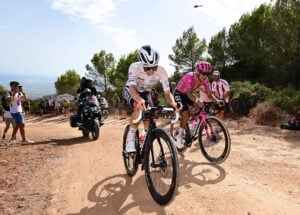
Squiban attacked before the climb.
Gery and Gasparrini attacked on it.
The front group was stretched and reduced.
Lidl-Trek had to chase hard.
The 2026 Classic Lorient Agglomération route guide identified Ty Marrec as a much stronger late launchpad than the race had possessed in recent editions, and the actual race supported that assessment.
What it also showed is that the climb alone does not guarantee an attacking winner.
The best Plouay riders still need both sides of the equation.
They need to survive the attrition and have something left once the road turns towards the Boulevard des Championnats du Monde.
Balsamo was the rider who combined those qualities best.
For the wider historical context of why that balance has produced so many different types of winner, ProCyclingUK’s history of Classic Lorient Agglomération traces the race from its World Cup years through to the modern Women’s WorldTour event.
Kim Le Court’s DNF does not erase her Tour of Britain form
Kim Le Court-Pienaar arrived in Plouay as one of the clearest favourites after an outstanding Tour of Britain Women.
She did not finish.
On a day when only 76 riders reached the line, Le Court-Pienaar was among those whose race ended before the decisive sprint.
That should not immediately be interpreted as a reversal of the form she showed six days earlier.
At the Tour of Britain she attacked to win on The Great Orme and then sealed the first stage-race overall victory of her career in Royal Leamington Spa.
The post-Tour of Britain form guide identified Le Court-Pienaar as one of the riders carrying the clearest Championship-level condition towards Montréal.
One difficult afternoon in Brittany does not undo that.
It does provide a useful reminder of how narrow the margins become in one-day racing.
A strong stage-race rider can recover from one poor moment across five days. At a World Championship, there is no second chance.
The Tour de France hierarchy is becoming less useful by the week
Plouay also reinforces how quickly the Tour de France Femmes is becoming a less reliable guide to current form.
The Tour finished three weeks earlier.
Since then, riders have recovered differently, followed different programmes and moved towards different objectives.
Le Court-Pienaar won the Tour of Britain.
Balsamo has returned to winning form and now taken Plouay.
Koch is producing major one-day results.
Gery continues to improve.
Gasparrini has shown another dimension to her racing.
This is why the final month of the season needs to be considered differently from July and early August.
ProCyclingUK’s analysis of what the 2026 Tour de France Femmes meant for the rest of the season highlighted how fragmented the calendar becomes after the Tour, particularly with the 2026 Tour de Romandie Féminin postponed until 2027.
Classic Lorient Agglomération has now completed the European Women’s WorldTour programme.
The WorldTour itself does not return until the Chinese races in October.
For many of the major riders, that makes Montréal the obvious centre of the next month.
-
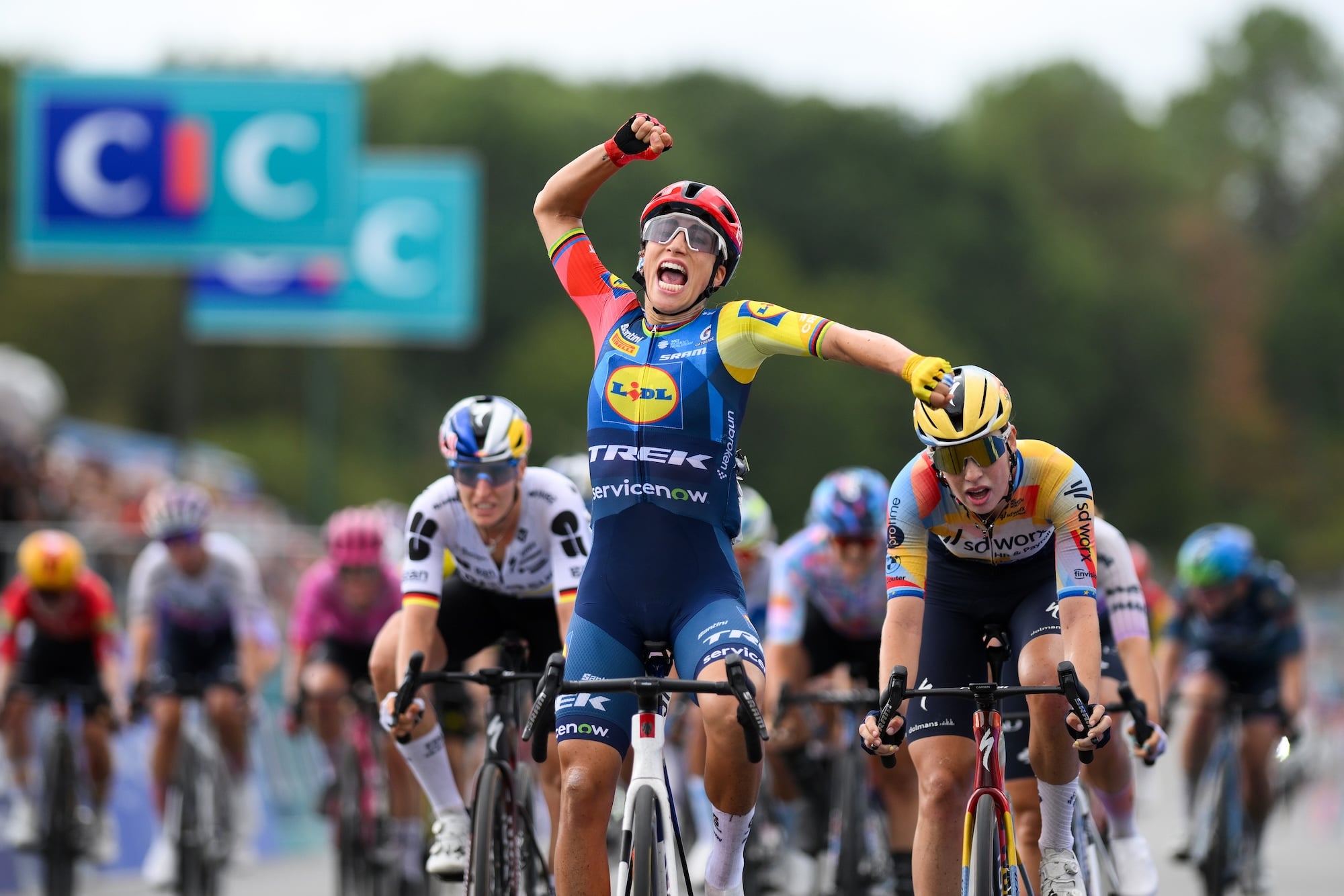 Photo Credit: Getty
Britain and Plouay have produced two very different form checks
The Tour of Britain and Classic Lorient Agglomération have been particularly useful because they asked different questions only six days apart.
Britain tested riders across five stages.
Le Court-Pienaar proved she could attack on the hardest climb and then defend a race lead. Wiebes won four stages. Liane Lippert repeatedly showed strong selective-race form.
Plouay reduced that to one afternoon.
There was no opportunity to recover from a poorly timed attack or one difficult section.
Balsamo emerged with the strongest result.
The Italians emerged with remarkable collective depth.
Bredewold and Koch confirmed their one-day form.
Gery and Gasparrini showed the confidence to attack when the race was at its most difficult.
That makes the analysis of what the Tour of Britain Women means for the rest of the season worth reading alongside Plouay rather than replacing it.
The two races have provided complementary evidence.
Montréal is close enough that Plouay form matters
The elite women’s World Championship road race takes place on Saturday 26 September.
There are only four weeks between Plouay and Montréal.
That changes the meaning of a result like this.
In April, a strong Classic can be treated as one step within a long season.
At the end of August, there is considerably less time for the hierarchy to transform.
The Montréal race contains eight laps of Mount Royal, repeated climbs, steep ramps and a rising finish. Plouay was not a replica, but it demanded several of the same qualities: endurance, positioning, repeated climbing efforts, tactical awareness and the ability to finish after the race had already become selective.
Balsamo showed all of them.
Bredewold showed again why she remains one of the strongest riders in difficult one-day races.
Koch confirmed her form.
Italy demonstrated exceptional depth.
Gery showed that she is increasingly willing to make the move rather than wait for somebody else to do it.
Gasparrini proved she can attack and still sprint afterwards.
That is what Classic Lorient Agglomération changes for the final part of the 2026 season.
The race did not simply give Balsamo another victory.
It strengthened Italy’s hand for Montréal, confirmed several late-season form trends and moved Balsamo much further up the list of riders nobody will want beside them when the World Championship reaches its final lap around Mount Royal.