Winning the elite road race at the World Championships is not always a reliable measure of a rider’s career. Some of cycling’s greatest champions have never worn the rainbow jersey on the road, while others have built far smaller palmarès around the one afternoon when everything went right.
That is partly what makes the World Championships different. There is one opportunity each year, the course changes dramatically and riders compete for national teams rather than the trade teams that support them for the rest of the season. A climber might wait years for suitable terrain. A sprinter can reach the peak of a career during a run of mountainous championships. Even the strongest Classics rider can find that national-team tactics leave them isolated at exactly the wrong moment.
The complete list of champions in ProCyclingUK’s Road World Championships winners and records guide contains most of the obvious all-time greats. Eddy Merckx, Fausto Coppi, Bernard Hinault, Peter Sagan, Marianne Vos, Jeannie Longo, Annemiek van Vleuten and Anna van der Breggen all won the elite road title.
The list of riders who never did is nearly as remarkable.
With the 2026 road races in Montréal approaching, several current riders also have another opportunity to remove themselves from it.
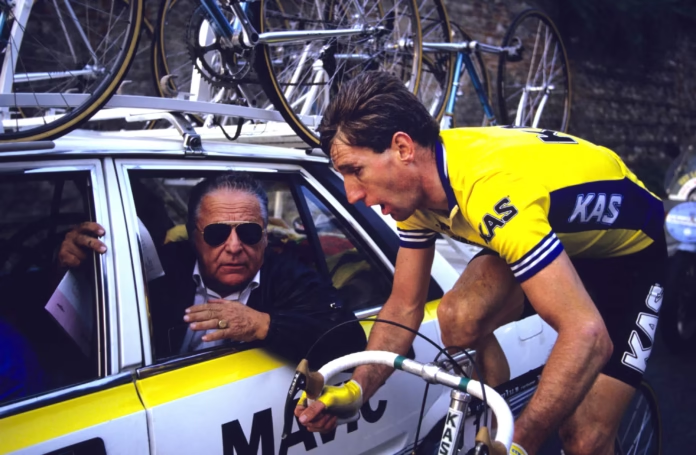
Sean Kelly is probably the most surprising men’s omission
If the question is not simply who had the biggest career, but who most obviously should have become road world champion, Sean Kelly has perhaps the strongest case.
Kelly was one of the finest one-day racers cycling has produced. He won nine Monuments: two Milan-San Remos, two Paris-Roubaix, two Liège-Bastogne-Liège victories and three editions of Il Lombardia. Only the Tour of Flanders escaped him, and even there he finished second three times.
He could sprint, survive difficult climbing, handle terrible weather and remain competitive after exceptionally long races. In other words, he possessed almost every quality traditionally associated with the World Championships.
He never won it.
Kelly took bronze in 1982 and again in 1989. The latter was particularly painful. On a rain-soaked championship in Chambéry, he reached the decisive group but finished third behind Greg LeMond and Dimitri Konyshev.
His wider record only makes the omission stranger. Kelly also won the Vuelta a España, seven consecutive Paris-Nice titles and four Tour de France points classifications.
For a rider whose career was built around winning the hardest one-day races on the calendar, no rainbow jersey remains an obvious gap.
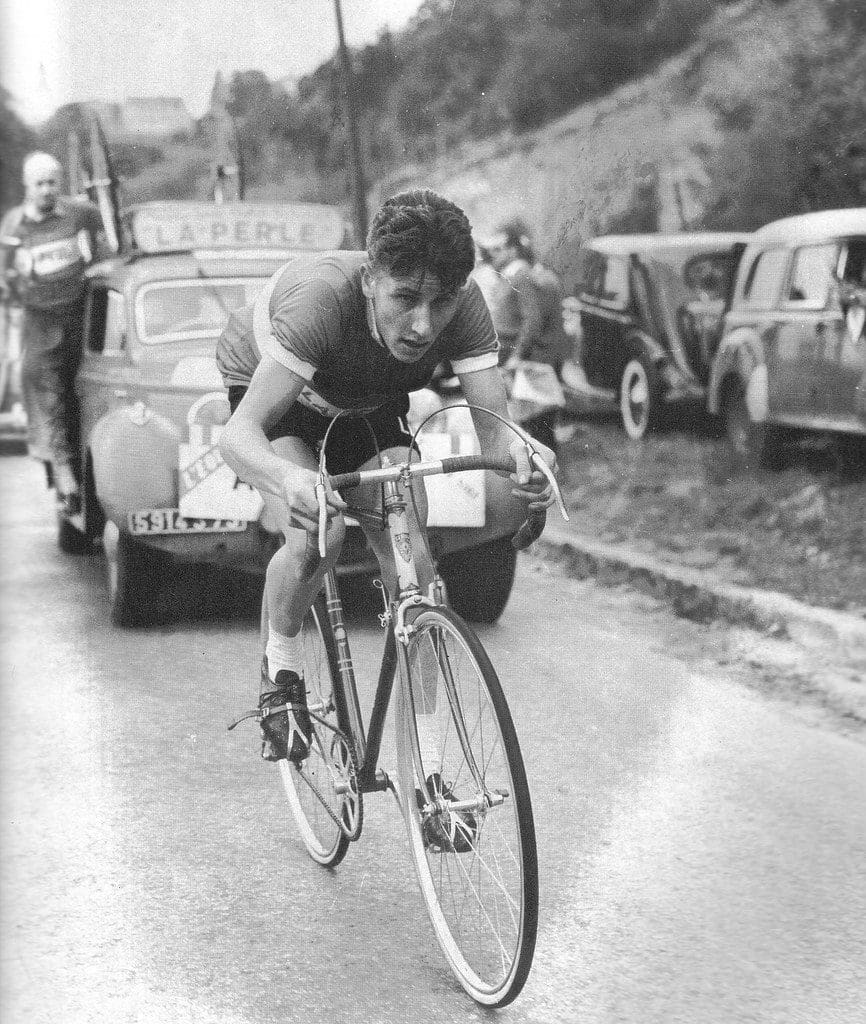
Jacques Anquetil had perhaps the greatest overall palmarès without one
If the measure is simply career size, Jacques Anquetil is difficult to beat.
Anquetil won five Tours de France, two Giros d’Italia and the Vuelta a España. He was the first rider to win all three Grand Tours and also won Liège-Bastogne-Liège, Gent-Wevelgem and nine editions of the Grand Prix des Nations.
His World Championships record never matched the rest.
The closest he came was at the Nürburgring in 1966, where Rudi Altig beat him and Anquetil took silver ahead of his great French rival Raymond Poulidor.
Fourteen appearances at the professional road Worlds produced no title.
Anquetil was better suited to stage racing and time trials than unpredictable one-day racing, so his absence is not as surprising as Kelly’s. Even so, a rider with eight Grand Tour victories and a major Classic on his palmarès finishing his career without the road rainbow jersey remains unusual.
Gino Bartali lost some of his best Worlds years to the war
Gino Bartali provides a very different example.
He won three Giros d’Italia, two Tours de France, four Milan-San Remos and three editions of Il Lombardia. At his peak he was one of the strongest climbers and one-day racers in the sport.
Yet he never even reached a World Championships podium.
Bartali was seventh in 1936 and 12th when the Worlds returned in 1946, but those dates explain part of the story. The championships were not held from 1939 through 1945 because of the Second World War, removing several seasons which overlapped almost perfectly with Bartali’s prime.
He had won the Tour in 1938 and Milan-San Remo in 1939 and 1940. There was simply no World Championship to contest.
Few riders on this list had as many realistic opportunities taken away before the race even started.
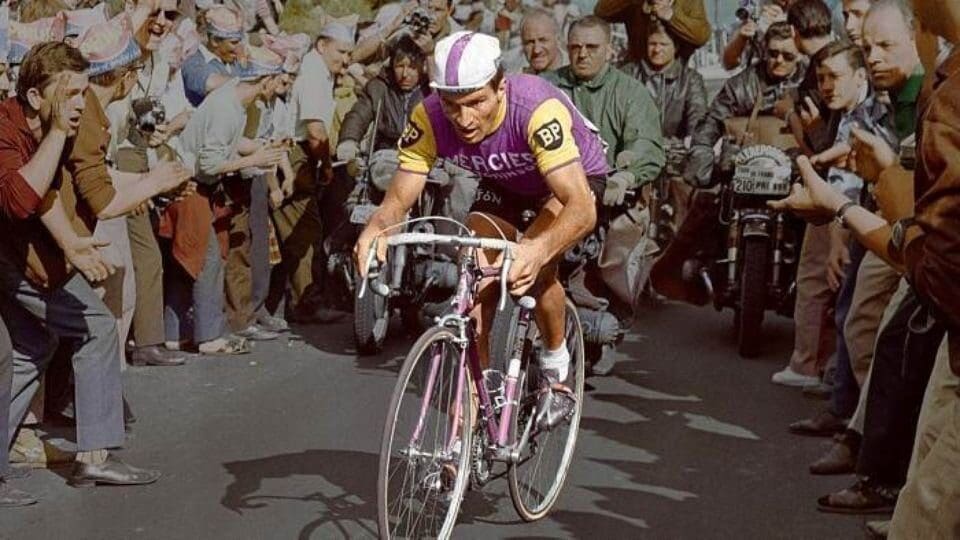
Raymond Poulidor found another way to finish second
Raymond Poulidor’s career is remembered for repeatedly finishing behind other great champions, and the World Championships fitted the pattern.
He collected four elite road race medals without winning: bronze in 1961, 1964 and 1966 before silver behind Merckx in Montréal in 1974.
That 1974 result is particularly relevant as the World Championships return to the same city in 2026.
Poulidor’s career contained a Vuelta a España victory, Milan-San Remo, La Flèche Wallonne, two Paris-Nice titles and eight Tour de France podiums.
He never won the Tour and famously never wore yellow, but the missing rainbow jersey was arguably an even closer call. Unlike the Tour, he repeatedly reached the Worlds podium.
Eighteen starts and 17 finishes also make Poulidor one of the most persistent World Championships riders in history.
Roger De Vlaeminck won every Monument but never the Worlds
Roger De Vlaeminck’s absence is almost as striking as Kelly’s.
The Belgian won all five Monuments and collected 11 Monument victories in total, including a record-equalling four Paris-Roubaix titles.
A rider capable of winning Flanders, Roubaix, Milan-San Remo, Liège and Lombardia clearly had enough range to cope with almost any World Championships course.
His best opportunity came in 1975.
Hennie Kuiper escaped to win in Yvoir, leaving De Vlaeminck to take silver. He never got closer.
Merckx was still collecting world titles during the first half of De Vlaeminck’s career, while Freddy Maertens and Francesco Moser emerged later. Belgium’s depth could be an advantage, but it also meant De Vlaeminck rarely arrived with an entire national team organised around him.
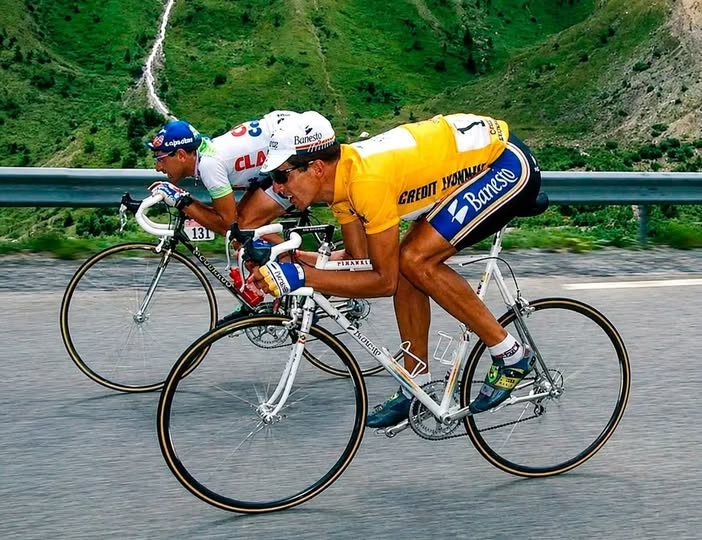
Miguel Indurain came within 19 seconds
Miguel Indurain belongs with Anquetil in the category of stage-racing giants whose missing road title feels less surprising stylistically but extraordinary when looking at the overall palmarès.
Indurain won the Tour de France five years running from 1991 to 1995 and completed the Giro-Tour double in both 1992 and 1993.
The same 1993 season almost brought a road world title.
At Oslo, Indurain finished second, 19 seconds behind Lance Armstrong, after having already won both the Giro and Tour that summer.
He subsequently became elite time trial world champion in 1995 and Olympic time trial champion in 1996. The rainbow bands therefore appeared on his career record, just never from the road race.
Wout van Aert is the outstanding active men’s example
Among current riders, Wout van Aert has inherited Kelly’s problem.
Few riders are better suited to such a wide range of World Championship courses, yet Van Aert has repeatedly ended up with medals rather than the rainbow jersey.
He was second behind Julian Alaphilippe at Imola in 2020 and second again behind Mathieu van der Poel in Glasgow in 2023. He also took Olympic road race silver in Tokyo.
His road palmarès already contains Milan-San Remo, Strade Bianche, Amstel Gold Race, Gent-Wevelgem and Tour de France stages ranging from bunch sprints to mountain days and time trials. Add his cyclo-cross world titles and there is little doubt about his championship pedigree.
What remains missing is the elite road rainbow jersey.
Montréal gives him another chance. The 2026 men’s World Championships road race preview looks at a course where repeated Mount Royal climbs should make the race difficult without completely excluding a rider with Van Aert’s power.
At 32, there should still be opportunities beyond 2026, but the number is no longer unlimited.
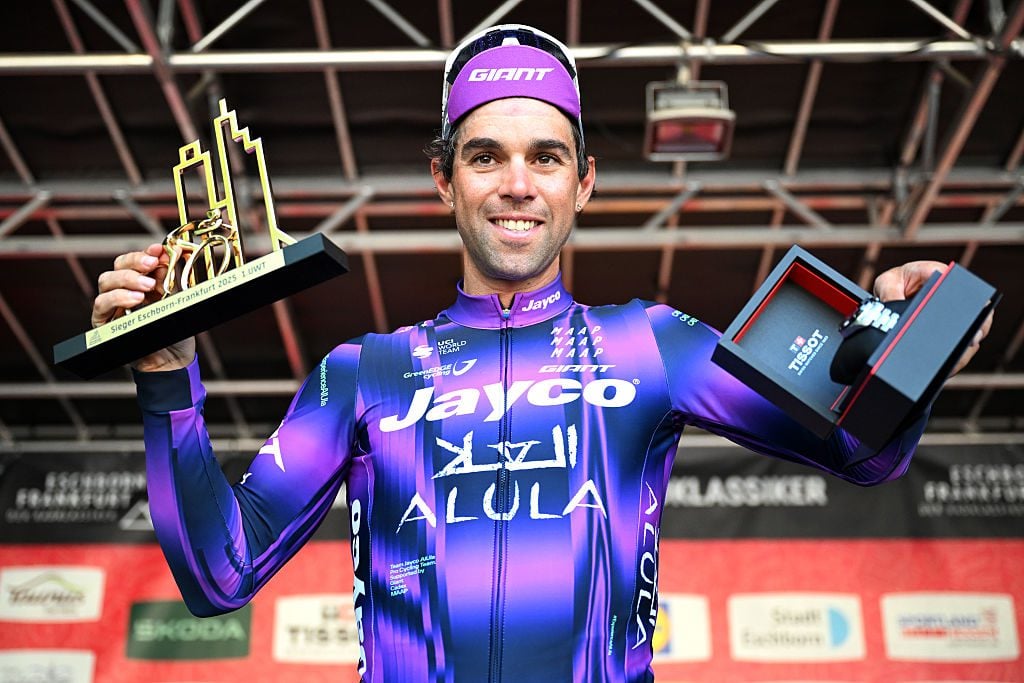
Michael Matthews has been remarkably close
Michael Matthews does not have Van Aert’s overall palmarès, but few active riders have been as consistently close at the World Championships.
He took silver behind Peter Sagan in Richmond in 2015 and bronze in both 2017 and 2022.
That gives him three elite road race medals without a victory.
Matthews has also won Grand Tour stages, the Tour de France points classification and major one-day races including GP Québec and GP Montréal.
The latter is particularly relevant in 2026. Few riders know the Montréal style of racing better.
He is another rider for whom the absence of a world title feels less like a lack of suitability and more like a career spent running into somebody slightly stronger on the day.
Primož Roglič has the palmarès, but not the Worlds record
Primož Roglič has a stronger stage-racing palmarès than either Van Aert or Matthews but a much weaker relationship with the road Worlds.
Four Vuelta victories and a Giro d’Italia put him among the major Grand Tour riders of his era, alongside victories in Liège-Bastogne-Liège and several major one-week races.
His best road World Championships result, though, is sixth from Imola in 2020.
That makes Roglič a good example of the distinction between best rider never to win Worlds and most surprising rider never to win Worlds.
His career is easily big enough.
His World Championships record suggests the race has simply never been central to what made him great.
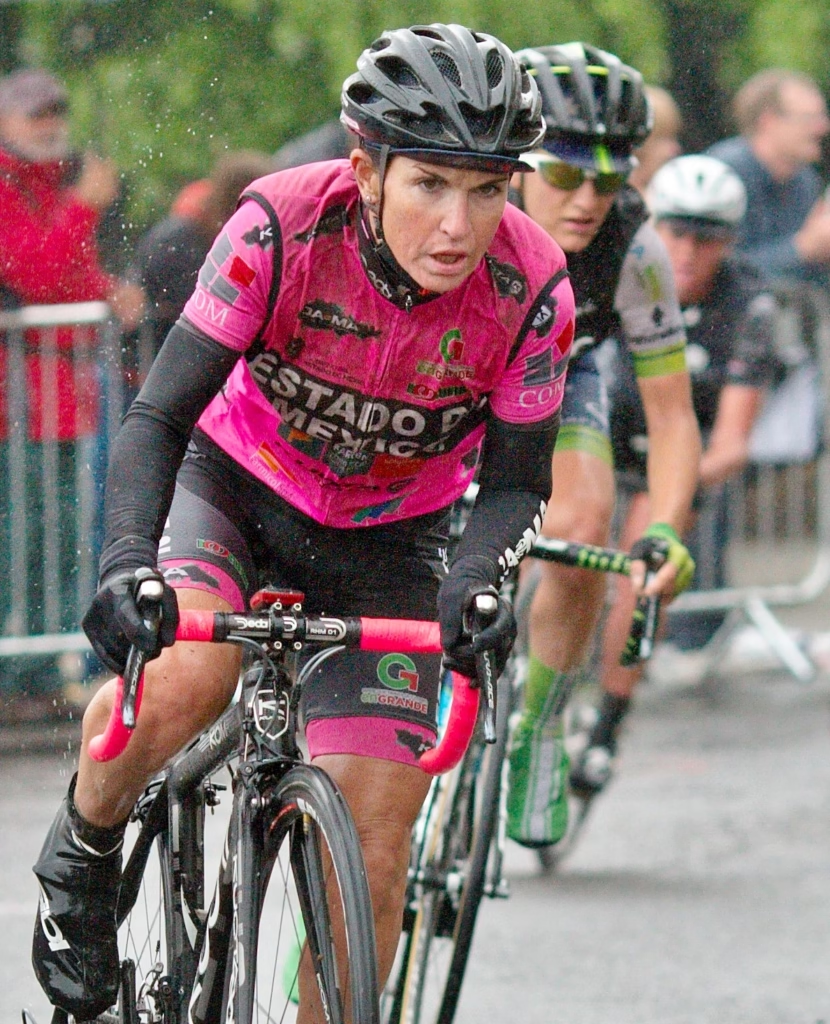
Fabiana Luperini has the biggest women’s stage-racing palmarès without a road world title
On the women’s side, Fabiana Luperini is the historical name that immediately stands out.
Five Giro d’Italia Femminile victories would already make the case. Luperini also won the Grande Boucle Féminine three years running from 1995 to 1997 and La Flèche Wallonne three times.
For several seasons she was the dominant stage racer in women’s cycling.
The extraordinary part is that she never came particularly close to becoming road world champion.
Her best result was 12th in Lisbon in 2001.
That separates her from many others on this list. Kelly, Poulidor, Canins and Longo Borghini repeatedly reached World Championships podiums. Luperini accumulated some of the biggest victories available in women’s cycling without ever producing the equivalent result at the Worlds.
Her strengths were best expressed over repeated climbing and multi-day races rather than one afternoon of tactical racing.
Still, eight victories across the Giro and Grande Boucle without a road rainbow jersey is one of the largest gaps on any palmarès.
Maria Canins twice finished second
Maria Canins came much closer.
The Italian won the Tour de France Féminin in 1985 and 1986 and followed those victories with overall success at the Giro d’Italia Femminile in 1988.
She also collected 15 Tour stage victories and six Italian road titles.
The World Championships escaped her by one place twice.
Canins was silver medallist in 1982, when Mandy Jones won for Great Britain at Goodwood, and finished second again in 1985 behind Jeannie Longo.
Those results came during an era in which Longo increasingly dominated championship racing, eventually collecting a record five elite road world titles.
Canins had enough climbing ability to dominate stage races and enough one-day strength to reach two Worlds podiums. She just never found the winning combination.

Joane Somarriba won five major Tours and a time trial world title
Joane Somarriba’s career has another conspicuous gap.
The Spaniard won the Giro twice and the Grande Boucle Féminine three times. In 2003 she also became elite time trial world champion.
Her best road race result was bronze in 2002.
Somarriba therefore had a rainbow jersey, just not the one from the road race.
Like Indurain, her strengths naturally favoured stage races and the race against the clock. That makes the missing road title understandable, but five overall victories in the two biggest women’s stage races of the period put her firmly among the strongest riders never to win it.
Nicole Brändli came closest in 2002
Nicole Brändli won the Giro d’Italia Femminile three times, in 2001, 2003 and 2005.
She was also a winner at Trofeo Alfredo Binda and GP Plouay and three times Swiss road champion.
At the 2002 World Championships in Zolder, she finished second behind Susanne Ljungskog.
Brändli was also twice silver medallist in the World Championships time trial, giving her three elite Worlds silver medals across the two disciplines without ever winning one.
That makes her one of the less obvious but strongest examples from the early 2000s.
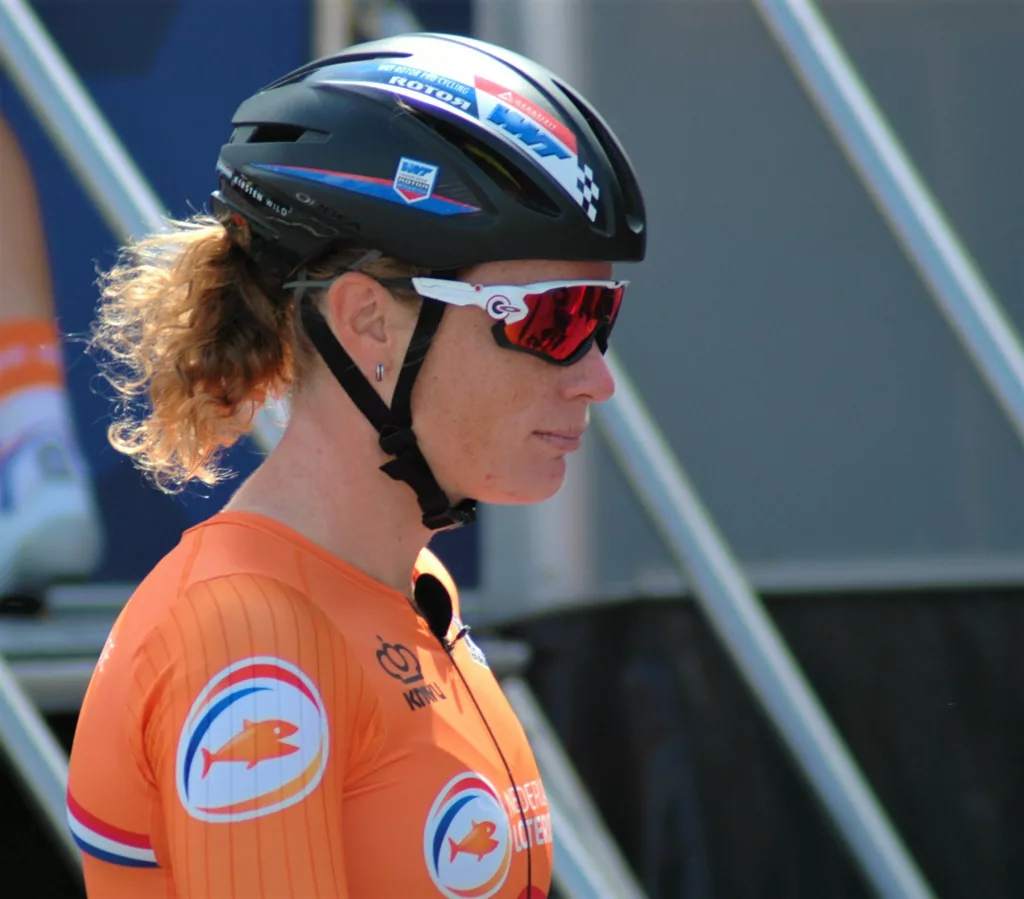
Kirsten Wild was beaten in the perfect Worlds for her
For Kirsten Wild, the painful year was 2016.
The Doha World Championships offered the sort of flat course that rarely appears in the women’s elite road race. Wild was one of the obvious favourites if the race came down to a sprint.
It did.
She finished second to 20-year-old Amalie Dideriksen.
Wild’s road career included victories at Gent-Wevelgem, RideLondon and numerous major stage-race sprints, alongside a hugely successful track career.
Unlike a climber who might never receive the right World Championships course, Wild got one that suited her almost perfectly.
She still left without the rainbow jersey.
Elisa Longo Borghini may have the strongest active women’s palmarès without it
If the question is which active woman has built the fullest career without becoming road world champion, Elisa Longo Borghini has an exceptional case.
She has won the Giro d’Italia Women twice, the Tour of Flanders twice, Paris-Roubaix Femmes, Strade Bianche and Trofeo Alfredo Binda twice.
At championships, she has been almost relentlessly consistent.
Longo Borghini took World Championships bronze in 2012, 2020 and 2024. She has also won two Olympic road race bronze medals.
Three Worlds bronzes without gold is already unusual. Add two Olympic medals, major Classics and stage-race victories and the missing rainbow jersey becomes one of the few obvious omissions from her career.
The 2026 women’s World Championships road race preview explains why Montréal gives her another plausible opportunity. Long races, repeated climbing and difficult tactical racing are normally favourable to her.
At 34, however, there are fewer championships ahead than behind.
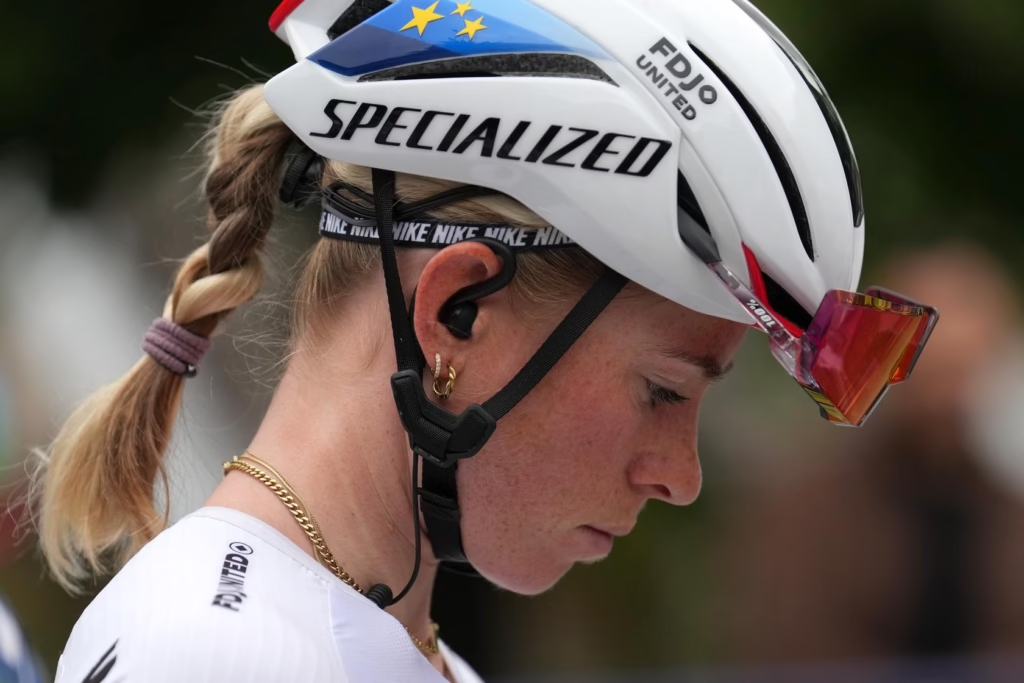 Photo Credit: RCS
Demi Vollering could leave this list very quickly
Demi Vollering’s palmarès has reached the point where a missing road world title is becoming noticeable rather than unusual.
She has now won the Tour de France Femmes twice, La Vuelta Femenina twice and the Giro d’Italia Women, alongside major one-day victories at the Tour of Flanders, Strade Bianche, Amstel Gold Race, La Flèche Wallonne and Liège-Bastogne-Liège.
She has already been close at Worlds.
Vollering finished second to Lotte Kopecky in Glasgow in 2023.
Unlike several retired riders in this article, time is still clearly on her side. She is 29 and has demonstrated that she can win on courses ranging from the Flemish Classics to high mountains.
That versatility should create repeated opportunities whenever the World Championships produce a climbing or Ardennes-style course.
Montréal is one of them.
Niewiadoma-Phinney has spent years knocking on the door
Katarzyna Niewiadoma-Phinney also belongs in the conversation.
She has won the Tour de France Femmes and Amstel Gold Race, while collecting an extraordinary number of podiums and top-five finishes across the Ardennes Classics, Flanders and major stage races.
Her best World Championships result is bronze from Leuven in 2021.
Niewiadoma-Phinney’s difficulty has rarely been getting into the final selection. It has been turning those positions into victories against riders with either a stronger sprint or greater ability to make the decisive separation.
The rainbow jersey would fit her career particularly well because championship racing rewards exactly the sort of aggression she has spent years relying on.

Who has the best palmarès without a road rainbow jersey?
There are several ways to answer it.
On the men’s side, Jacques Anquetil has arguably the biggest overall career. Eight Grand Tour victories alone make that difficult to challenge.
For one-day racing, Sean Kelly is the glaring omission. Nine Monument victories and two Worlds bronzes without ever becoming world champion feels more surprising than Anquetil’s absence.
Roger De Vlaeminck is close behind because he won all five Monuments, while Poulidor’s four Worlds medals make him the king of near misses.
Among the women, Fabiana Luperini has the largest historical stage-racing record without the title. Five Giros and three Grandes Boucles is difficult to look past.
For the combination of stage races, Classics and championship results, Elisa Longo Borghini may now have the strongest all-round case. Three World Championships bronzes, two Olympic bronzes, two Giros, Flanders, Roubaix and Strade Bianche leave very little else to win.
Vollering is rapidly building a palmarès capable of overtaking even that, but she also has more time to change the answer.
Who could still become world champion?
Among the active men, Van Aert remains the clearest example of a rider whose career seems built for a road world title. Matthews has already accumulated three medals, while riders such as Tom Pidcock still have enough years ahead to build both their palmarès and their World Championships record.
Roglič and Jonas Vingegaard have careers large enough to belong in the wider discussion, but the championship needs a very specific route before either becomes an obvious candidate.
The women’s side contains more riders with realistic opportunities.
Vollering should continue to find suitable Worlds courses for several seasons. Longo Borghini is still competitive enough to win one if the race develops correctly. Niewiadoma-Phinney has repeatedly shown she can reach the decisive phase, while Marlen Reusser already owns two time trial rainbow jerseys and has the power to turn a difficult road race into a long-range attack.
That is the attraction of the list heading into every World Championships.
Some names remain on it forever. Others disappear in a single afternoon.
Kelly, Anquetil, Luperini and Canins no longer have that opportunity. Van Aert, Longo Borghini, Vollering and Niewiadoma-Phinney still do.
By the end of the weekend in Montréal, at least one of cycling’s biggest current omissions could already be gone.