The Tour de France 2026 reaches the Massif Central at an awkward point in the race. The Pyrenees have already bitten, the sprinters have had a run of opportunities, and the first rest day is close enough for riders to start thinking about survival. Then comes the terrain that rarely looks decisive in the same way as the Alps, but often hurts more than expected.
Stage 9 from Malemort to Ussel and stage 10 from Aurillac to Le Lioran form the core of the Massif Central block. Stage 9 is officially hilly, 185.5km long and loaded with 3,300m of climbing. Stage 10, coming after the Cantal rest day, is a mountain stage of 166.6km with 3,800m of climbing and a finish at Le Lioran. Together, they make one of the most dangerous transitional sections of the 2026 Tour.
This is not a block built around one famous climb in the way that the final week is built around Alpe d’Huez. It is more subtle than that. The Massif Central hurts through repetition, road texture, constant changes of rhythm and the difficulty of controlling a race that never quite settles. It can expose tired teams, reward breakaways, unsettle sprinters and force GC riders to stay alert before the more obvious mountain stages arrive.
For the wider route picture, see our Tour de France 2026 full route guide, Tour de France 2026 route analysis, Tour de France 2026 mountain stages ranked by difficulty and Tour de France 2026 climbs guide.
Why the Massif Central matters in the 2026 Tour
The Massif Central matters because it arrives just when the race could otherwise breathe.
By stage 9, the Tour has already dealt with the Barcelona team time-trial, the hilly return to Barcelona, the mountain finish at Les Angles, the hilly stage to Foix, the sprint day to Pau, the high Pyrenean stage to Gavarnie-Gèdre, and the back-to-back sprint chances in Bordeaux and Bergerac. A more straightforward route might then give the peloton a calmer run into the first rest day. The 2026 Tour does not.
Instead, it sends the race into Corrèze and Cantal, where the roads keep rising and falling. The result is a block that can create damage without needing a headline summit finish. A rider who has already suffered in the Pyrenees can lose more here. A team that has spent too much effort controlling sprint stages can suddenly be short of helpers. A breakaway rider who has been waiting for a stage that is too hard for sprinters but not obvious enough for GC control will see an opportunity.
The Massif Central is also important because of what comes next. After stage 10, the race heads towards more sprint chances, then the Vosges and Jura, then the stage 16 time-trial and the Alps. Any GC rider who loses composure here may spend the next week trying to fix a problem that should never have happened.
That is why this block belongs in the race-winning conversation, even if it is unlikely to decide the yellow jersey outright.
For more on how the race can shift before the final Alpine phase, see our where the Tour de France 2026 can be won before the Alps feature and Tour de France 2026 route: best days for GC attacks.
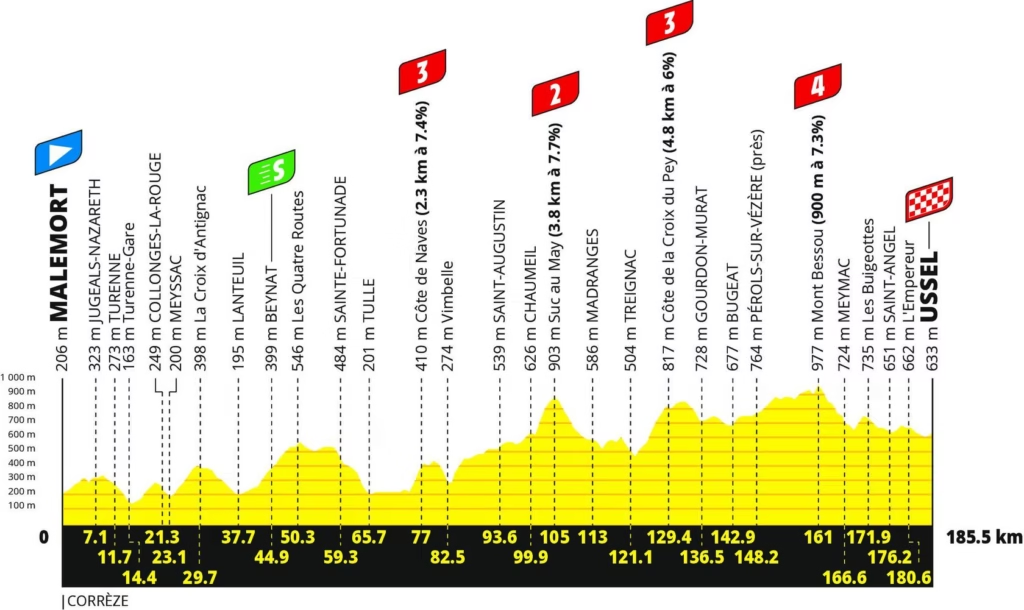
Stage 9: Malemort to Ussel
Stage 9 is one of the most interesting hilly stages of the 2026 Tour. Malemort to Ussel is 185.5km long, with 3,300m of climbing, and it comes immediately before the first rest day. That placement alone changes the stage’s character. The official route details are available on the Tour’s stage 9 Malemort to Ussel page.
This is not a day for pure sprinters. It is long, heavy and repetitive, with enough climbing to make control difficult and enough distance to make the breakaway fight expensive. The official stage framing points towards a breakaway day, with the race heading into Corrèze and using climbs such as Suc au May and Mont Bessou to create selection before the final run towards Ussel.
The key to stage 9 is accumulation. The peloton may not explode on the first climb, but the repeated efforts can gradually strip the race down. Every rise matters a little. Every descent demands attention. Every chase costs more than it would on a flat day. By the time the race reaches the decisive middle and late sections, the strongest all-rounders and breakaway riders should have a genuine chance to make the day their own.
For the GC favourites, stage 9 is probably more about avoiding trouble than attacking. But that does not make it harmless. A badly timed puncture, a missed split, a leader isolated after a team misjudges the breakaway, or a hard tempo over Suc au May could all create stress before the rest day.
This is also a good day for riders who can handle rolling terrain and sprint from a reduced group. A classics-type rider with climbing strength, a durable sprinter like Mads Pedersen, or a breakaway climber with a fast finish could all look at Ussel as one of the better non-mountain opportunities of the Tour.
For more on this kind of terrain, see our Tour de France 2026 breakaway stages ranked and Mads Pedersen at the Tour de France 2026 features.
Attack rating: 8/10
GC danger rating: 6.5/10
Breakaway rating: 9/10
The first rest day in Cantal
The first rest day comes in Cantal on Monday, 13th July, and it arrives at an interesting moment. The riders have already been through a hard opening week, but the race has not yet reached the most obvious decisive blocks. That makes the rest day less of a reset and more of a checkpoint.
For sprinters, it is a chance to recover after the early mountain and hilly stages. For GC riders, it is a chance to assess whether the Pyrenees and Ussel have exposed any problems. For teams, it is the moment to take stock of who still has numbers, who is carrying injuries, and who has spent too much energy already.
The rest day also sits before one of the trickier stages of the race. Stage 10 to Le Lioran is not an easy restart. The peloton comes back from rest into a mountain stage with 3,800m of climbing, and that can be dangerous. Rest days can blunt some riders and refresh others. The first hour of stage 10 may tell us who has responded well and who has woken up heavy.
That is part of the Massif Central’s difficulty. It does not give the peloton an easy road out of the rest day. It asks for immediate focus.
For the broader rhythm of the race, see our Tour de France 2026 full route guide and Tour de France 2026 route analysis.
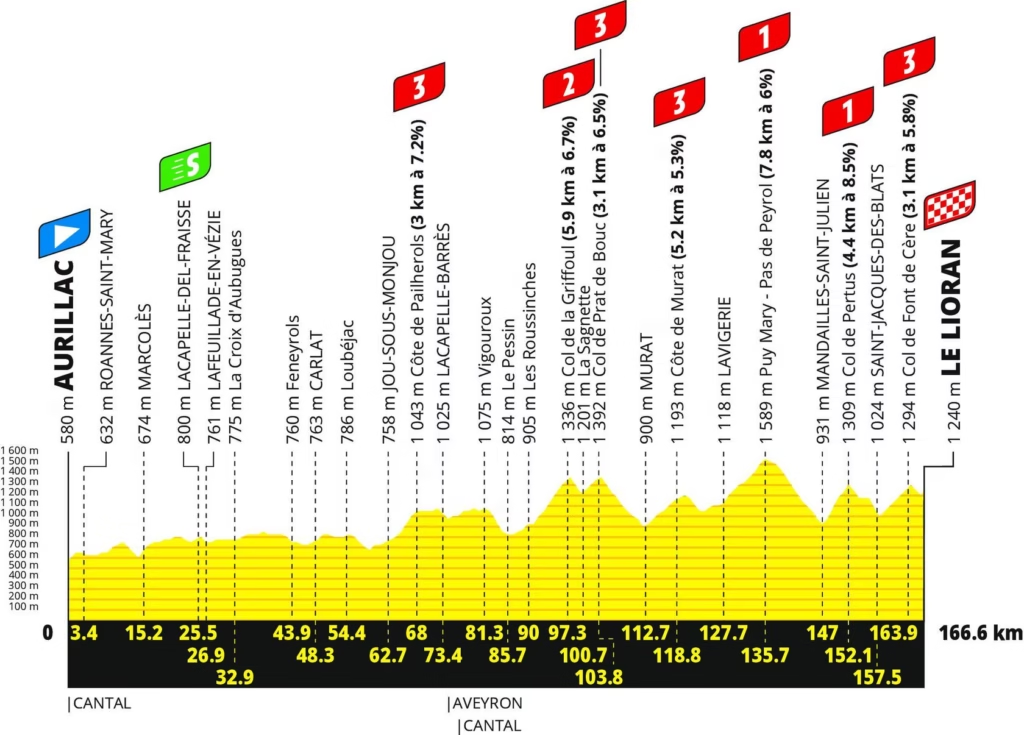
Stage 10: Aurillac to Le Lioran
Stage 10 from Aurillac to Le Lioran is the main Massif Central mountain stage of the 2026 Tour. At 166.6km and 3,800m of climbing, it is a serious day, and it comes straight after the first rest day. That combination makes it one of the most important stages before the Vosges, Jura and Alps. The full official stage profile is listed on the Tour’s stage 10 Aurillac to Le Lioran page.
Le Lioran is familiar Tour terrain, and the Massif Central roads around Cantal are rarely simple. The climbs are not as high as the Alps or Pyrenees, but they can be steep, irregular and hard to control. This is a stage where the repeated climbing matters more than any single number. Teams have to manage position all day, not just on the final ascent.
The race may be difficult to control because different groups will want different things. Breakaway riders will see a major opportunity. Polka-dot contenders can score on the climbs. GC teams may not want to give dangerous riders too much space, but they may also be reluctant to spend heavily with so many hard stages still to come.
That balance could decide the stage. If a strong breakaway goes early and no GC team commits fully, Le Lioran could go to the attackers. If one of the main GC squads decides to test rivals after the rest day, the stage could become more selective than expected.
For the yellow jersey favourites, this is not necessarily a day to win the Tour, but it is a day where weakness can appear. A rider who is slightly off after the rest day can lose contact on repeated climbs. A team that mismanages the middle of the stage can find its leader isolated. A GC contender who wants to test the field before the Vosges and Alps may use the final third of the stage to apply pressure.
For more on where this stage sits in the full mountain hierarchy, see our Tour de France 2026 mountain stages ranked by difficulty guide.
Attack rating: 8.5/10
GC danger rating: 8/10
Polka-dot rating: 8/10
The key climbs of the Massif Central block
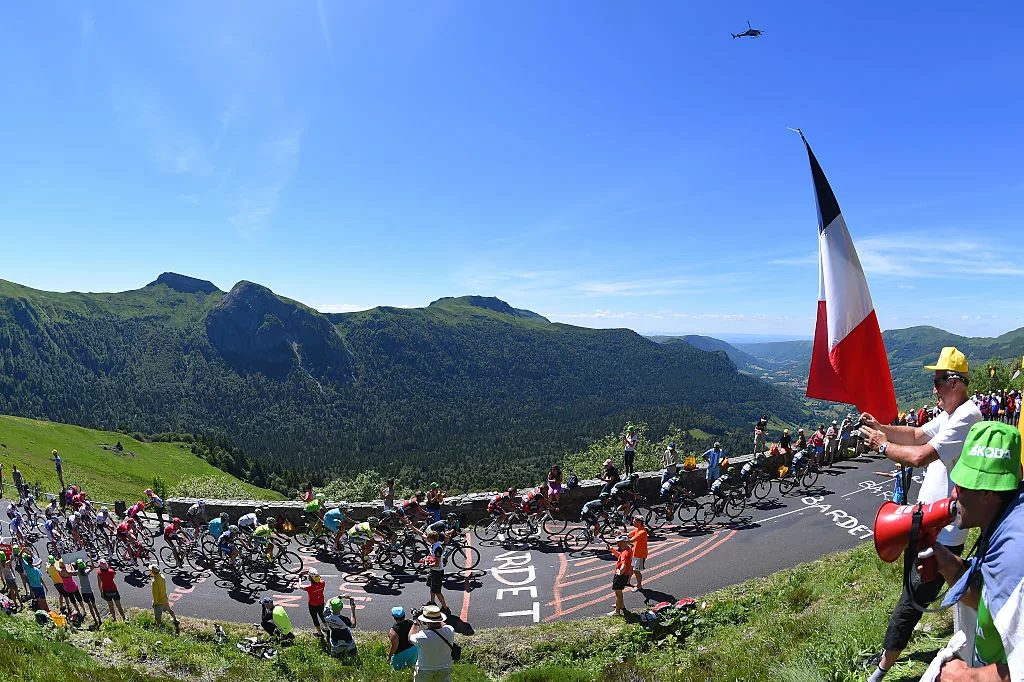
The Massif Central section is defined by repeat climbing rather than one iconic summit. That is why it can be so awkward. Riders do not simply wait for one final climb. They have to handle a whole day of changing gradients.
Suc au May is the key selection point on stage 9. It comes after the race has already absorbed a lot of climbing, and its steep ramps can break up the strongest breakaway group or force a selection behind. It is exactly the sort of climb that suits riders with punch and durability rather than pure high-mountain diesel power.
Mont Bessou is another important feature of stage 9. Once the race has been sorted by the harder ramps, Mont Bessou helps continue the pressure before the final kilometres towards Ussel. The combination makes stage 9 hard to reduce to a simple breakaway or sprint day.
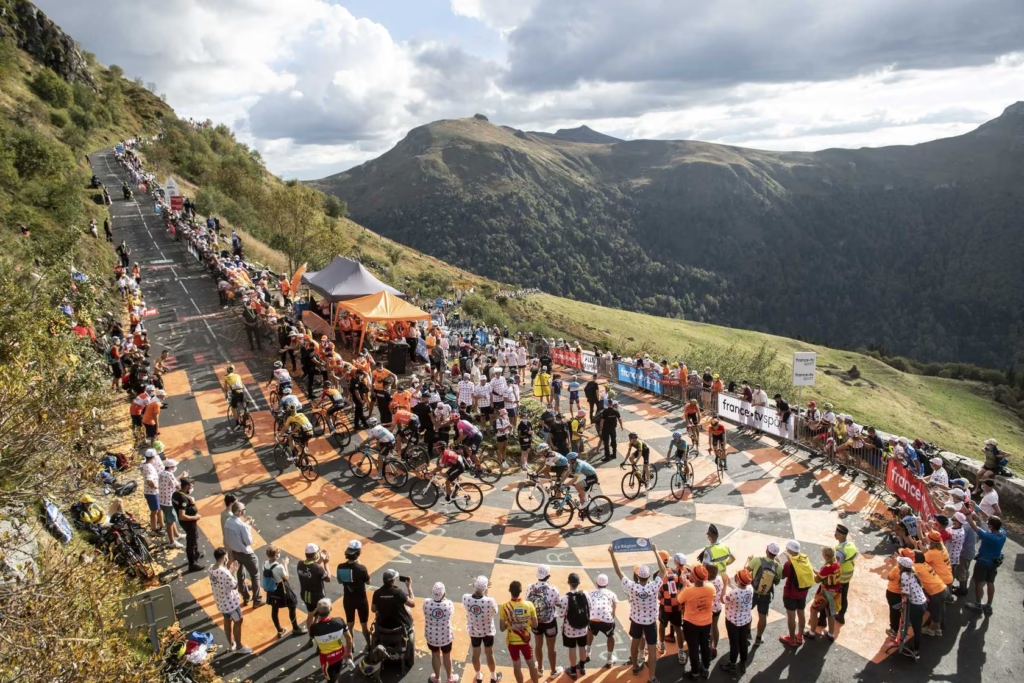
Le Lioran gives stage 10 its central identity. The finish is not just about the final few kilometres, but about how the Cantal climbs have softened the race beforehand. By the time the peloton reaches the final phase, the strongest riders may not need a long attack to open gaps. The stage itself will have done much of the work.
The climbs in this block may not have the mythology of the Galibier, Alpe d’Huez or Tourmalet, but they can still shape the race. They force riders to work all day, and that is often where the Tour starts to expose depth.
For the wider climbing context, see our Tour de France 2026 climbs guide and Tour de France 2026 Pyrenees guide.
Why stage 9 could be one of the best breakaway days
Stage 9 has almost everything a breakaway rider wants: distance, climbing, awkward timing and no obvious sprint-team incentive to chase.
At 185.5km, the day is long enough to make the breakaway fight meaningful. With 3,300m of climbing, it is too hard for most pure sprinters. With the first rest day coming immediately after, teams may be willing to spend everything if they have the right rider in the move. That combination should create an aggressive opening.
The GC teams may prefer to control rather than chase. They will want to avoid letting dangerous riders go too far, but they may not want to burn through domestiques before the rest day and stage 10. If the right composition forms, the peloton could settle into management mode.
That gives riders outside the GC picture a huge chance. A strong rouleur-climber, a classics rider with stamina, or a stage hunter who can handle steep ramps could all make Ussel a season-defining day.
Pedersen is interesting here because of his range. He is not a climber in the GC sense, but he has the strength to survive harder terrain than most pure sprinters. If the green jersey battle becomes complicated, stage 9 could be one of the places where he takes points or even chases the stage.
For the broader sprint and points picture, see our Tour de France 2026 route: best days for sprinters, Tour de France 2026 sprinters guide and Tour de France 2026 jerseys explained guides.
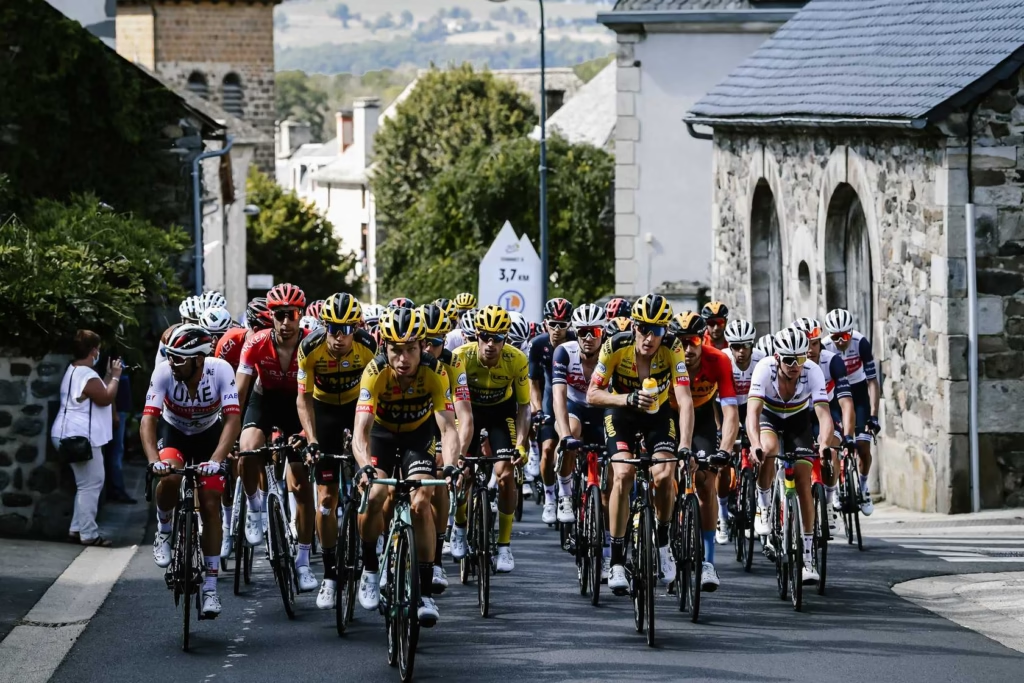 Photo Credit: A.S.O./Pauline Ballet
Why stage 10 is more dangerous than a normal post-rest-day stage
Post-rest-day stages are always unpredictable. Some riders come back refreshed. Others come back flat. Stage 10 makes that uncertainty more important because the race restarts with a proper mountain day.
The danger comes from the first hour. If the breakaway battle is hard, riders who are slow to restart can be under pressure immediately. If the GC teams decide to ride hard early, a poor rest-day response can be exposed before the final climb. If the weather is hot, the stage can feel even more draining because the body has to reawaken into race stress quickly.
This is especially important for riders who have already shown minor weakness. A rest day can reset morale, but it can also give riders too much time to think about what has gone wrong. A bad stage 10 can quickly turn a small concern into a real GC problem.
For the main favourites, the question is whether anyone wants to test the race here. Tadej Pogačar has the range to attack almost anywhere. Jonas Vingegaard may prefer the higher mountains but cannot ignore a chance to expose rivals. Remco Evenepoel will be focused on limiting damage and keeping the race in reach for the time-trial. Riders just below them may see Le Lioran as a more realistic opportunity than the final Alpine giants.
That makes stage 10 tactically rich. It could be a breakaway day. It could be a GC probing day. It could even be both.
For the main GC contenders, see our Tadej Pogačar at the Tour de France 2026, Jonas Vingegaard at the Tour de France 2026 and Remco Evenepoel at the Tour de France 2026 features.
Which riders benefit most from the Massif Central?
The Massif Central should suit riders with endurance, punch and recovery. It is not only about pure climbing. It is about handling repeated stress and staying alert on terrain that keeps changing.
For Pogačar, the Massif Central offers opportunities without obligation. He can use the terrain to apply pressure if he senses weakness, but he does not have to make the race explode. A hard stage 10 could still suit him because he is so comfortable when the road becomes irregular.
For Vingegaard, the block is more about avoiding unnecessary losses before the bigger mountains. The Le Lioran stage may not be his ideal terrain compared with the Alps, but he cannot allow rivals to take time cheaply.
For Evenepoel, the priority is control. He will want to stay close through the Massif Central, conserve what he can, and keep the GC equation alive for stage 16’s individual time-trial.
For riders such as Matteo Jorgenson, Felix Gall, Kévin Vauquelin, Florian Lipowitz, Carlos Rodríguez, Oscar Onley, Thymen Arensman and Paul Seixas, the Massif Central could be more important. These are the riders who may need to move before the final Alpine block or use medium-mountain stages to climb the top five or top ten.
For more on the wider GC field, see our Tour de France 2026 GC favourites ranked, Tour de France 2026 dark horses for the general classification, Tour de France 2026 young riders to watch and Oscar Onley at the Tour de France 2026 features.
What the Massif Central means for sprinters
For sprinters, the Massif Central is mostly about survival, but it also shapes the green jersey.
Stage 9 is too hard to treat as a normal sprint stage. Stage 10 is a mountain stage. That means the pure fast men are unlikely to be chasing stage wins here, but the points classification can still shift. A rider like Pedersen can use stage 9 to score where Philipsen, Milan or Merlier may not. A rider like Biniam Girmay or Arnaud De Lie may also look at the hilly terrain as a way to complicate the green jersey fight.
For Jonathan Milan, the goal is efficiency. He needs to survive without spending too much. For Jasper Philipsen, the same applies, although he may be more comfortable if the road becomes messy. For Pedersen, the Massif Central is not only something to get through. It can be part of the plan.
This is the difference between stage-winning speed and points-classification resilience. The green jersey contenders who can score on awkward days will keep the pure sprinters under pressure.
For more on that battle, see our Jonathan Milan at the Tour de France 2026, Jasper Philipsen at the Tour de France 2026 and Mads Pedersen at the Tour de France 2026 pieces.
What the Massif Central means for the polka-dot jersey
The Massif Central is a meaningful block for the mountains classification.
Stage 9 brings repeated climbing and enough points to interest breakaway climbers. Stage 10 is a proper mountain stage and could give a serious boost to whichever rider has committed to the polka-dot jersey by that point. The race may still be early enough for the competition to feel open, but not so early that points can be ignored.
This is the sort of terrain where a non-GC rider can build a mountains classification campaign. The climbs are hard enough to count, but not so high-profile that the yellow jersey group automatically sweeps everything. A rider who gets into the right break on both stages could leave Cantal with a serious platform.
The key is whether the GC teams let them. If stage 10 is ridden hard by the favourites, the biggest points may stay with the front of the overall race. If the breakaway goes clear, the polka-dot contest could change quickly.
For more on the mountains competition, see our Tour de France 2026 climbers guide: who can win the polka-dot jersey? and Tour de France 2026 jerseys explained.
 Photo Credit: A.S.O./Charly López
What the Massif Central means for team strength
The Massif Central is where team depth starts to show.
In the opening week, fresh teams can hide weaknesses. By stage 9 and stage 10, the race has already used up energy. The riders who have been controlling sprint stages, protecting leaders through the Pyrenees and chasing breakaways may no longer have the same snap.
That matters on terrain like this. If a GC leader is isolated on a medium-mountain stage, rivals can test them without committing to a full Alpine attack. If a sprint team has lost control, the green jersey fight changes. If a team has two or three strong riders in a breakaway, the stage can become tactically difficult for everyone else.
This is especially important for teams with GC and stage-win ambitions. They need to decide whether to spend resources or save them for the next week. A team that misjudges this block could reach the Vosges and Jura already damaged.
For more on the support riders likely to shape the race, see our Tour de France 2026 domestiques who could decide the race feature.
Best places to watch the Massif Central stages
Stage 9 offers several good roadside options because the terrain is spread across the day. The climbs around Suc au May and Mont Bessou should be among the most interesting places to watch because they are likely to shape the breakaway and reduce the front of the race. Ussel gives the finish atmosphere, but the decisive racing may start earlier.
Stage 10 is the better stage if you want a mountain finish experience. Le Lioran should draw the biggest crowds because it is the stage finish and a known Tour site. The Cantal climbs before the finish may offer a better view of the race forming, especially if you want to see the breakaway and GC group under pressure before the final kilometres.
For fans watching from home, stage 9 may be one of the best breakaway days of the first half of the Tour, while stage 10 is the more important GC day. If you only have time to watch one, choose stage 10. If you love tactical racing and stage hunters, stage 9 may be more rewarding.
For broadcast information, see our how to watch Tour de France 2026 in the UK guide. For the broader travelling fan angle, see our guide to how to visit the Tour de France 2026 Grand Départ in Barcelona.
-
 Photo Credit: Getty
Best Massif Central stages ranked
⦿ Stage 10: Aurillac to Le Lioran
The main GC day of the block, with 3,800m of climbing and a mountain finish after the rest day.
⦿ Stage 9: Malemort to Ussel
A major breakaway and attrition day, with 185.5km, 3,300m of climbing and hard roads before the first rest day.
The ranking is close because the stages ask different questions. Stage 9 is better for breakaways and awkward racing. Stage 10 is more likely to affect the overall classification.
Prediction
The Massif Central will not decide the 2026 Tour de France outright, but it may decide who reaches the second week in control and who arrives already chasing.
Stage 9 to Ussel looks like one of the strongest breakaway opportunities of the race. It is long, hilly, badly timed for sprint teams and useful for riders who can handle repeated climbing. It may also be a valuable points day for riders such as Mads Pedersen if the green jersey race becomes more than a pure sprint contest.
Stage 10 to Le Lioran is the bigger GC test. Coming after the first rest day, it has the potential to expose riders who have not recovered properly. It may not produce huge gaps between the main favourites, but it can still show weakness, force teams to spend resources and move riders around in the top 10.
Pogačar has the freedom to test rivals here. Vingegaard needs to stay alert. Evenepoel needs control. Riders like Jorgenson, Gall, Vauquelin, Lipowitz, Rodríguez, Onley, Arensman and Seixas may see the block as a chance to gain ground before the route becomes even more severe.
The most likely outcome is a breakaway win on stage 9 and a GC-relevant selection on stage 10. The Massif Central is not the race’s headline mountain range, but it is exactly the kind of place where the Tour can become harder, messier and more revealing than expected.
For the next phase of the route, see our Tour de France 2026 Vosges and Jura guide and Tour de France 2026 Alps guide. For full race coverage, visit our Tour de France hub.